

All Contributions (1)
 New orientations for the EU’s humanitarian action (debate)
Date:
14.12.2021 16:53
| Language: EN
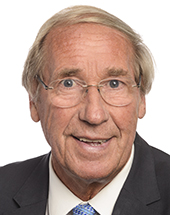
Madam President, the world does not come to rest: Afghanistan, civil war in Ethiopia, hunger as a result of climate change in Madagascar, hunger and violent conflicts in the Sahel, military escalations in Yemen, displacement in the midst of a pandemic, to name just a few. The report on new orientation for the EU’s humanitarian action comes at a time when crises are being exacerbated, and when the number of people suffering from humanitarian crises has increased from around 90 million in 2015 to nearly 240 million this year. Its aim is not to suggest tailormade solutions to the crises we face to date, but to provide policy recommendations that mitigate the crises in general. Following the communication the Commission published in March this year, the EU’s humanitarian action, the report underlines the four fundamental principles of humanitarian action: that is humanity, impartiality, neutrality and independence. They are the core of humanitarian action and must not be compromised. Some challenges: we are alarmed at the number of serious violations of international humanitarian law. We therefore need close monitoring of violations. Responsible individuals or entities have to be listed in relevant EU sanction regimes. Gender—based violence is another serious aspect: 70% of women become victims of gender—based violence and conflicts and disasters. Given the number of people in need is rising, the humanitarian budget needs to rise as well. The European Member States should spend a fixed share of their GNI on humanitarian aid, and we call on the Commission to report on the disbursement. The humanitarian—development—peace nexus should become the general approach of programming in order to bridge the gaps between the policy areas, while the distinct character and principles of humanitarian aid have to be respected. So far, a few words on the report. I feel honoured and I’m thankful that I was the standing rapporteur for humanitarian aid and had the opportunity to be the rapporteur on this important fight. This is my last report and my last speech in the European Parliament. I would like to use my speech today in the plenary to say goodbye and farewell to all of you. I was always fascinated by development cooperation. I started in the 80s in Nicaragua with the Solidarity Group when this country was on a really good path. When I became a Member in 2009, from the beginning I was in the Committee on Development (DEVE) and committed to the values. And I was on the delegation to the ACP and for me it was my environment that allows me to work on policies that construct a better future for the people in partner countries. During my mandate, the contact with people in partner countries remained very important to me. What I learned from them inspired me and gave me strength for the work in Parliament. This is why I want to thank you for all your cooperation and support during the last years. I thank you, Commissioner Janez Lenarčič, for the close and trustful cooperation directly between us two, even last year and the one before at Christmas. I want to thank Commissioner Jutta Urpilainen for a fantastic input from the development side. I thank you, colleagues, for the balanced and good cooperation that we generally have in the Committee on Development, but also in the delegation to the ACP. I thank my colleagues from the S&D family, from the German SPD delegation, and especially I would like to mention my coordinator, Udo Bullmann, and thank him and his prudent management of our working group and, Udo, the continuous support you gave. A big thank you goes to the DEVE Secretariat and I would like to mention, because he was very much involved in this report, Manuel Manrique Gil, who also supported me in a number of other important files. Thanks to the S&D team and the longstanding support I had and to my own team. My work in the European Parliament comes to an end, and it was a good time. I have heard that there is a life outside Parliament and I will work more actively for my Foundation, Kick for Help, with sports and especially football projects. In developing countries, the Foundation helps youth, girls and women to develop team spirit, fair play and self—determination. It was Nelson Mandela who said – and this is how I want to conclude – that sport has the power to change the world. Let’s use this wonderful opportunity more in our developing cooperation. Let’s just do it! Thank you very much.