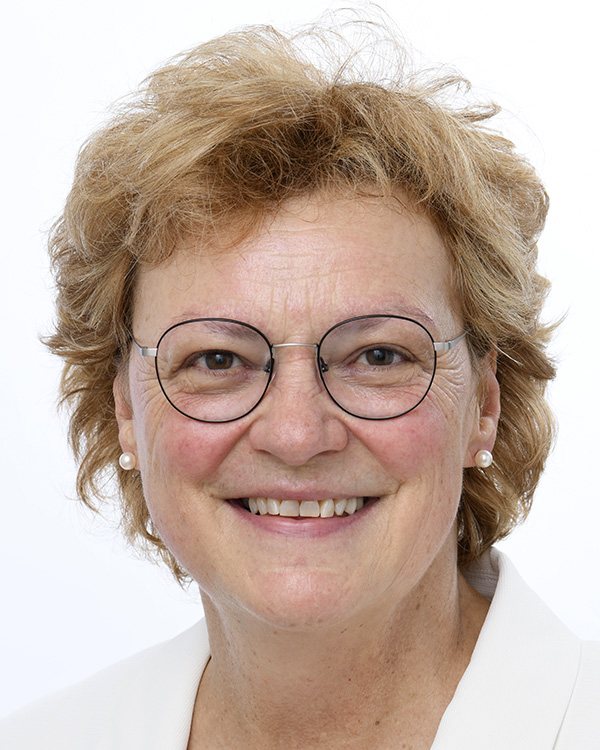
 Debate contributions by Monika HOHLMEIER
| Rank | Name | Country | Group | Speeches | |
|---|---|---|---|---|---|
| 1 |

|
Lukas SIEPER | Germany DE | Non-attached Members (NI) | 321 |
| 2 |
|
Juan Fernando LÓPEZ AGUILAR | Spain ES | Progressive Alliance of Socialists and Democrats (S&D) | 280 |
| 3 |
|
Sebastian TYNKKYNEN | Finland FI | European Conservatives and Reformists (ECR) | 247 |
| 4 |
|
João OLIVEIRA | Portugal PT | The Left in the European Parliament (GUE/NGL) | 195 |
| 5 |
|
Vytenis Povilas ANDRIUKAITIS | Lithuania LT | Progressive Alliance of Socialists and Democrats (S&D) | 183 |
All Contributions (23)
 Pending approval of the Hungarian national plan for Security Action for Europe (SAFE) funding in light of persistent concerns around the allocation of public funding (debate)
Date:
20.01.2026 20:58
| Language: DE
Madam President, Greetings to both the Commission and the Council! Viktor Orbán's government wants a EUR 16 billion loan from the SAFE programme. In 2023, the European Commission halted the disbursement of over €20 billion due to serious breaches of the rule of law. threats to the independence of the judiciary, rampant corruption, threats to journalists, similar attacks against European companies and their Hungarian employees, restrictions on scientific freedom and much more. Autocrats, oligarchs and kleptocracies from Orbán family and friends unit Divide the country. In early 2024, Viktor Orbán freed up around €10 billion for his purposes by abusing the unanimity principle for his purposes. We'll take a close look at where these funds end up. Because the European Parliament wants to support the vast majority of the Hungarian population and not kleptocratic rip-offs. Orbán stages himself as a Putin understander and isolates Hungary from the European Union in defence policy. We want to see Hungary in peace, freedom and the rule of law and social market economy and not in dependence on a cruel imperialist despot from Russia. Orbán's government makes Hungary dependent on autocratic China. Chinese investment, as part of reciprocal global trade, is the one thing that puts the Hungarian population at risk of becoming dependent on China for credit. Most recently, in 2024, with a loan of EUR 1 billion, a quarter of Hungary’s debt abroad is held by China, according to public sources. The Commission is right to investigate whether unfair foreign subsidies have been used in different projects with Chinese companies. In October 2025, there were reports of an espionage network controlled from the representation of Hungary to the EU between 2012 and 2018. Dear Commission, are you quite sure that EUR 16 billion in defence spending is properly housed in this Hungarian government?
Implementation of the rule of law conditionality regime (debate)
Date:
17.12.2025 15:26
| Language: DE
Mr President! Commissioner! Dear colleagues! In some respects, today's parliamentary debate has not always been a highlight. I rarely have so much disinformation, so much conspiracy theory – and dear Commissioner, I thank you for the fact-based answer that was indeed right. It does not examine one Member State, but 27 on the basis of the decision of 27 Member States, on the basis of a judgment of the European Court of Justice, which considered the corresponding regulation to be in order and adequately adapted to the Treaty of Lisbon, which was adopted by Parliament by a large majority. If a Member State like the Hungarian government, and I do not mean the Hungarians, I mean that the Hungarian government does not follow the rules that we actually want to see for the Hungarians in all equality in the area of corruption, in the area of tenders, in many areas. When I see that we are told as Committee on Budgetary Control that there is supposedly no fraud at all within Hungary, there are no cases at all. If there are cases of financial fraud here in Europe, they will be prosecuted by the European Public Prosecutor's Office. They are even published, and you can even watch them. Unfortunately, this is no longer happening in Hungary with the oligarchy. But this is not about Hungary, it is about our common values, about our common approach. That is why I am saddened when you see, for example, with regard to media freedom, that Mr Putin can continue his disinformation, influence elections in our country and that people here in the EU also partially defend it. It has nothing to do with the rule of law. But we have freedom of expression. If you were in Russia with Mr Putin, you would not be able to express that opinion. We in Europe are allowed to express opinions, even if they are so erroneous and confused and confused. That's what really sets us apart. But a liberal democratic rule of law must be able, even those who cheat it and who try to use taxpayers’ money incorrectly or enrich themselves personally – then you must have the opportunity to intervene. And we want to do that in the future.
Implementation of the rule of law conditionality regime (debate)
Date:
17.12.2025 13:32
| Language: DE
No text available
Presentation by the Council of its position on the draft general budget – 2026 financial year (debate)
Date:
10.09.2025 15:39
| Language: EN
Dear President, Commissioner, Minister, dear colleagues, first, I would like to present the best regards, the best greetings of Johan Van Overtveldt, who will join us again when he can be back in Strasbourg and in Brussels, but he is on a good way of recovering. First, I would like to thank the Minister that he is coming personally because we are not always used to the Ministers doing like this, so thank you very much for your presence. Secondly, the Council suffers under a situation that the Council produced: the MFF until 2027 is too small. The problem is that the challenges have changed a lot. First we had COVID-19 and suddenly then we were facing a war, we were facing trade problems, we were facing totally new geostrategic constellations. So this means that this MFF has to fulfil duties that were not foreseen in 2020. This gives to me one question that the Commission already has raised. The Council is talking about competitiveness, about innovation, about boosting industry for more taxes, for more possibilities, for better competitiveness and then you are cutting horizon. This is contradictory. The Council is taking decisions in the area of security, border control – explicitly migration, stopping illegal migration or regular migration. But then we need Frontex and then we need the growing up – as the Council has decided it. This is a decision of the Council, together with the Parliament, on the proposal of the Commission. So I think we are facing huge challenges in the area of defence. The Parliament was very flexible in this area in the help to Ukraine, so we were accepting Article 122, we were accepting everything, but I don't see the quick reaction of the Council in the area of defence. What is with our future common missile defence shield? If we start with this in 2029, Putin perhaps is already here. So – I am saying it in a sarcastic way – we need to be quicker, and I hope that our Member States will remember that the MFF is too small to tackle all these challenges. So this is the reason why I would ask the Member States to guarantee not future outside funds, new funds, like the COVID-19 fund. We have an MFF, we have here Parliament, we have here democratic scrutiny, we have here codecision, we have a treaty. Please guarantee that we take the decisions together because the Parliament is ready to do so.
Discharge 2023 (joint debate)
Date:
06.05.2025 14:53
| Language: DE
Madam President, Mr President, Commissioner, Mr Minister! This time I have not forgotten the Presidency of the Council, as I did last time. First of all, I would like to thank the Court of Auditors very warmly for the excellent cooperation and for the fact that we always get very good advice, as well as – even with different views that we have – the shadow rapporteurs, with whom we normally agree very reasonably. What I am concerned about is one point that Commissioner Serafin raised: Not every mistake is fraud, but we often have such complicated regulations that even with serious efforts by so many an organization and many a university or a medium-sized company, it is difficult to know all the regulations that we have adopted that have to be followed. For this reason, I also share your view that we need to bring some things a little bit closer together, simplifying them. But a warning ahead of time: National plans are not the goal, because if we make national plans, then this Parliament would de facto become a kind of breakfast parliament, and we would go back to 1979. We then look at what the Member States are doing, and at the same time there are no longer any European programmes, there are no longer any cross-border programmes, and if there is a bit of CO2 If he saves money in his house, then this is immediately declared a European project. It can't be like that. We must finally implement a wide range of European projects that have been waiting for years to be implemented. A final point on a colleague who said that the NGO contracts could not have been seen. However, all colleagues from the CONT Committee were able to consult them. You have to stop it. If the Greens didn't do it, then we can't do anything for it, or the S&D wouldn't have done it, then we can't do anything for it. But they were publicly visible to CONT members, so to speak, and everyone had to or could do it, and whether or not they did it is the decision of the individual. What is important to me about NGOs is the fairness of the distribution, that the concentration of funds stops and that it is transparent and that there is no more lobbying.
Discharge 2023 (joint debate)
Date:
06.05.2025 13:00
| Language: DE
Mr President, Commissioner, dear Mr President! One, two, three – all presidents and presidents and commissioners. I am extremely pleased that we are meeting together today for the discharge. There is a novelty in the European Parliament that, following a request from AFCO in CONT, the Greens and the Social Democrats have decided that they do not want a resolution at all. It just said that it was Ethics body must be based on legal principles of a proper nature and can only be proceeded with accordingly. But I see this as relatively relaxed because I say: We have an excellent President, Roberta Metsola, and a very good Secretary-General, who obviously does his job very well. We also have a good report from the European Court of Auditors. I greatly regret that democracy does not mean that you can only get away with your own opinion, but democracy means that you may have to approach each other. This has not been possible for you today, Daniel, in this case, obviously, after I offered you that we generally renounce the topic, but it is just as it is. I see it as relaxed. However, I see discharge in this respect against a background that is extremely important and I would like to emphasise explicitly that the European Parliament's right of codecision in budgetary matters must not be called into question. It must not be questioned that we have a budgetary discharge right at all, that we still have the possibility to check what expenditure is being made, which is obviously not the case with the RRF. Trying even more constructs in the future to make national plans through Article 122 as well as in an RRF would mean that neither the Court of Auditors has direct insight nor that Parliament can actually make use of its task of budgetary discharge. In the second place: We also have a necessary and important discussion about so-called non-governmental organisations and the transparency with which they appear here in public or influence legislative procedures. After all, we have found a lot of work programmes in which some networks believe that they can engage in non-transparent lobbying, and the special report of the European Court of Auditors, contrary to what the press release has also been about green and red, finds very clear shortcomings and also criteria that explicitly point out that non-transparent lobbying has not been explicitly mentioned. We can't put the Kaili case behind us and then say: Certain do not have to be transparent and certain do not have to justify and spend their funds accordingly or state in the transparency register that they have no economic interest at all in reality in a mass of legislation in areas that affect the economy intensively or even promote economic interests, act accordingly and even formulate in wording how they intend to influence parliamentary decision-making flows here as non-transparently as possible or those in the Council or even those in the Commission. Nor can the Commission lobby the Commission through non-governmental organisations. This is not necessarily the smartest and best way If we are in the process of preparing the multiannual financial framework, the consequences must be drawn from it. In the case of NGOs in all areas, not only LIFE, by the way, the appropriate consequences must be drawn. I would like to thank the Commission for being on the way and for finding a sensible way to increase transparency accordingly and to steer the whole thing in a meaningful way, without being against NGOs. I am for NGOs, but I am against political lobbying only covertly about NGOs.
Recent legislative changes in Hungary and their impact on fundamental rights (debate)
Date:
02.04.2025 14:55
| Language: DE
To respond in a completely Christian way – Christian means respecting people as they are and accepting each other as they are, rather than enacting rules that force people to go on the defensive, to stop expressing their opinions, to stop showing what they really are and who they really are. This is what I mean by European free values, which – frankly – are currently not respected in Hungary.
Recent legislative changes in Hungary and their impact on fundamental rights (debate)
Date:
02.04.2025 14:52
| Language: DE
Madam President, Commissioner, ladies and gentlemen! Several colleagues from the Hungarian side or from the right side have mentioned that it would allegedly go beyond European legislation and competence. I want to make it clear here where one definitely does not comply with the European rules. We have the free movement of goods, we have the free movement of capital, we have the freedom of establishment, we have the freedom of people to move wherever they want and where they want to take up their profession and where they want to go. What are you doing under your government? Kleptocratically tackle one sector at a time, and that consequently means what the colleague has just described – Hungarian workers pay the price by losing their jobs because companies are no longer competitive. Secondly, a free internal market also requires compliance with the rules of the free internal market. This means that one must also be prepared to have an independent judicial system. An education in which every person can decide what he wants to study, how he wants to study, what education he wants to do and since does not have to be subject to corresponding regulations of an ideological nature. Above all, I call on you to finally stop with your stupid price caps, because this entails huge import-export difficulties. This creates huge difficulties in raising prices for people, and in the end you have a huge inflation rate, high unemployment – and the Hungarian population suffers from high prices. Finally, take note of the European single market, and Commissioner, go to the CJEU when new infringements take place in this sector.
EU financing through the LIFE programme of entities lobbying EU institutions and the need for transparency (debate)
Date:
22.01.2025 18:00
| Language: DE
Dear Daniel, I am accustomed to denunciations from you by now, but to say it dryly, you are against the entry in the transparency register. Organisations are promoted without being listed in the Transparency Register. Haven't we just called for this as an EU Parliament? Secondly: We do not demand the cancellation of funds, but we only demand transparency for the expenditure and that here not indirectly the Commission sends us covert NGOs as lobbyists, who put pressure on MEPs shortly before voting with mass mails via Commission platforms and thus practice lobbyism within the institutions. I want her to be a Honest broker to be. Do you think the principle is not valuable?
EU financing through the LIFE programme of entities lobbying EU institutions and the need for transparency (debate)
Date:
22.01.2025 17:18
| Language: DE
Madam President, Commissioner, ladies and gentlemen! In terms of budget relief, we discovered massive problems with LIFE contracts. The contracts were awarded by CINEA, under the responsibility of the Directorate-General for the Environment, then by Commissioner Sinkevičius. We had received hints from whistleblowers, and there are many questions: How can Commission Treaties provide guidance on the manipulation of legislative procedures, with content and number of amendments for trilogues and votes for Members and Council officials? It is astonishing that a Directorate-General supports intensification of Commission proposals through activist networks. Lawsuits against farmers, authorities, companies and infrastructure were among the project programs. Fundamental standards of the rule of law should be dismantled. Fighting free trade agreements such as Mercosur was also one of the objectives of the promotion. The goal was to organize mass protests, mass e-mail campaigns, in order to publicly pressure MPs who took a different view than the networks. I am already receiving wild suspicions, dear colleague friend, that have been distributed from your network.Bubble, This discussion does not deserve that. It cannot be the case that the Directorate-General for the Environment has other parts of the Commission lobbying under the guise of certain NGOs. Two of the activist networks are not even in the EU Transparency Register. Others do not name their large donors, although large donations from third countries and companies also flow. Why were problematic contracts not detected during internal audits? If it were Frontex, you'd be asking for tens of special sessions, investigative committees, and whatever. Firstly: EU funds must be spent on clearly defined objectives that are in line with EU legislation. Secondly: We must be able to track the transparency of the spending of the funds. Thirdly: We call for an examination of these contracts by the Internal audit service. Promote the diversity, Commissioner, of civil society organisations – we fully agree – and the constructive commitment to a forward-looking society. We are in favour of a fair distribution of EU funds. Only support organisations registered in the EU Transparency Register that identify key sources of funding and respect EU values. Prohibit covert lobbying within the Commission and ensure a clear separation of powers.
Presentation of the Court of Auditors' annual report 2023 (debate)
Date:
23.10.2024 12:58
| Language: DE
Dear Mr President, dear Commission! But a very warm greeting goes to the European Court of Auditors, to President Tony Murphy and his entire team, and to rapporteur Jan Gregor and his team! Thank you very much for this really valuable report, which is an excellent basis for us. I want to address three key points that go through my mind. Firstly, with regard to the Corona Recovery Fund: I am fascinated that Daniel Freund mentions Italy in particular, but forgets Spain and the ruling Greens and Social Democrats there, that he does not mention that Spain was not able to give an overview at all, let alone explain the corrupt conditions whose cases are now known to the media. It makes no sense to look only at the opposing party, but we want to control the budget and not party politics. bashing operate here. Therefore, for this reason quite clearly: Member States have an obligation to fully reflect the final beneficiaries of the Corona Recovery Fund. We then agreed on 100, but they don't either. Particularly funny is, for example, the Slovak case, where the Ministry of Environment has received 573 million for adaptation to climate change. Or in Bulgaria, where you simply give 22 million to a ministry, and we have no idea where the money is really going. This is not the way to deal with taxpayers' money, it is not acceptable. Secondly: The Court of Auditors has revealed that there are national recurring budget expenditures in the field of human resources, as well as exchanged national projects, which are now suddenly reflected in the Corona Recovery Fund. That is, we are simply replacing national spending so that national budgets can save money, so to speak, and that is called the Reconstruction Fund. I know that not everything is like that, but these cases must not exist, and the Member States should abide by the rules of law that they themselves have agreed with us. The last and short third point is: Hungary always complains that allegedly the expenses would inexplicably not go to them. But it is explicable: massive violations of tendering rules, massive violations of internal market rules, wanton and arbitrary damage to European companies as well as to Hungarian workers. Dear Hungarians, that's enough! Finally, stick to the common European rules, in all fairness!
Protecting the EU budget and ensuring that EU funds do not benefit entities or individuals linked to terrorist or Islamist movement (debate)
Date:
09.10.2024 20:09
| Language: DE
Madam President, Commissioner, ladies and gentlemen! What bothers me about the debate here is the undifferentiated nature of – I'm really saying now – the outside left and the outside right. Firstly, the Commission for the most part does not finance terrorist organisations, to be clear, but the vast majority are normal means. But we have problems in reviewing some organizations that, under the guise of justice and beautiful, beautiful headlines, are actually and in reality planning the exact opposite. I have called on the Commission on several occasions to scrutinise this matter more strictly, to cooperate more closely with the relevant authorities in the Member States and, in future, to ensure that a Turkish university, which in reality does not seek a peaceful neighbourhood association at all, but does exactly the opposite, is not financed. Such funding, in the context of pre-accession aid to the European Union, simply cannot be true. Secondly, I cannot accept that there are people here who trivialize Hamas. The reason why we have this situation today is that Israeli citizens – civilians – have been massacred and murdered and tortured in a way that simply cannot be reversed here. On the one hand, I would ask that, when it comes to UNRWA, we are of course aware that we need support for the Palestinian civilian population, but on the other hand, we must also note that people have moved within UNRWA who clearly belong to terrorism and who must not be financed.