 Debate contributions by Jeroen LENAERS
| Rank | Name | Country | Group | Speeches | |
|---|---|---|---|---|---|
| 1 |

|
Lukas SIEPER | Germany DE | Non-attached Members (NI) | 321 |
| 2 |
|
Juan Fernando LÓPEZ AGUILAR | Spain ES | Progressive Alliance of Socialists and Democrats (S&D) | 280 |
| 3 |
|
Sebastian TYNKKYNEN | Finland FI | European Conservatives and Reformists (ECR) | 247 |
| 4 |
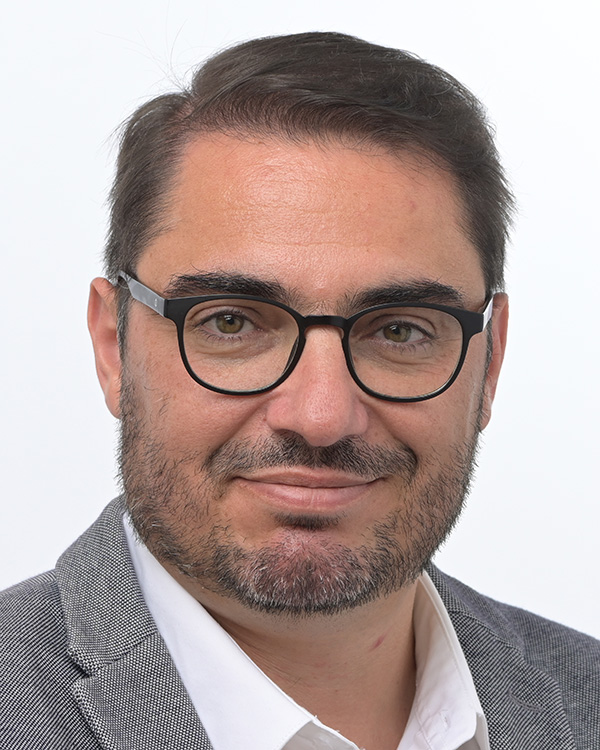
|
João OLIVEIRA | Portugal PT | The Left in the European Parliament (GUE/NGL) | 195 |
| 5 |
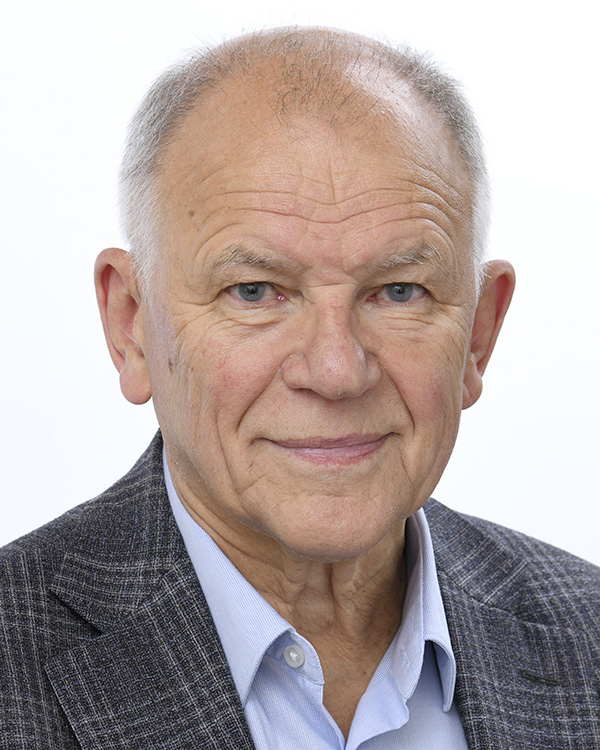
|
Vytenis Povilas ANDRIUKAITIS | Lithuania LT | Progressive Alliance of Socialists and Democrats (S&D) | 183 |
All Contributions (52)
 Presentation of the programme of activities of the Cyprus Presidency (continuation of debate)
Date:
20.01.2026 10:48
| Language: EN
Madam President, dear Commissioners, dear President Christodoulides, thank you for being here today and for setting the right tone for the months ahead. Yes, the world feels more unstable, more fragmented and more unpredictable than before, but this is not a moment for despair. It is a moment for confidence – if we stand together as Europeans, we can emerge stronger. And that means investing where it truly matters: in our security, in our economic resilience, in our competitiveness and in managing migration. Too often we hear voices here, of the extremes in this House, offering the same destructive answer: to tear down our common umbrella in the middle of a global storm and then complain about getting wet. That is not leadership. When the storm grows stronger, Europe does not throw away its umbrella – we build a bigger, a stronger, a more resilient one together. Cyprus speaks of 'an autonomous Union', and the EPP fully agrees. This is a historic moment and an existential test, and Europe must rise to the occasion. But autonomy does not mean isolation, and the second half of your slogan, 'open to the world', is just as vital. Global trade is under pressure. Europe must diversify through ambitious trade agreements with partners like Mercosur, India and beyond. You cannot complain about Europe's competitiveness while closing every door to the outside world. This presidency understands that strength and openness go hand in hand. And that is exactly what we need in Europe right now.
Tackling AI deepfakes and sexual exploitation on social media by making full use of the EU’s digital rules (debate)
Date:
20.01.2026 08:18
| Language: EN
Madam President, dear Commissioner, dear Cyprus Presidency, apps that undress or sexualise images are not innovation, they're exploitation, abuse overwhelmingly directed against women and children and they should never be legal. And the testimonies of victims are heartbreaking. Take the case of Olivia, abused as a child and rescued years ago. Yet in 2024, new images of her appeared, photorealistic AI creations trained on her original abuse material. For victims like Olivia, the abuse does not end when the crime ends. And Olivia is not an isolated case. This year alone, the Internet Watch Foundation identified almost 3 500 AI videos like that with child sexual abuse, compared with just 13 the year before. Each number represents a child whose suffering is being reproduced and normalised. It's a small but inadequate step for platforms like Grok to restrict sexualised images of real people, while still allowing fabricated abuse. AI-generated abuse is never harmless. It normalises violence and increases real-world risks. This Parliament has already called for stronger child online safety – now we need action. An EU-wide ban on AI-generated child sexual abuse material, and the systems that produce it. Platforms must put responsibility before profit, safety must be built in by design, because taking material down after the abuse has taken place is simply not enough. Europe must lead. We cannot allow technology, or those who profit from it, to decide if and how our children are protected.
Motion of censure on the Commission (debate)
Date:
19.01.2026 19:24
| Language: EN
Madam President, Commissioner, a motion of censure is one of the strongest tools of democratic scrutiny this Parliament has. It exists to hold the executive to account when it is truly necessary – not to serve as a campaign prop in national political theatre. Yet that is exactly what we are witnessing today. 110 Members from the far right signed this motion. But looking at this room, apparently it was not important enough to actually change some dinner plans and to be at the debate. This motion is not about accountability; it is about headlines. We are in the midst of a global storm and this is not the moment for political sabotage. Too often the extremes in this House try to block common European solutions, ensure problems remain unsolved and then weaponise those issues for political gain. That is not opposition, it is a strategy of self-destruction. And it is certainly not leadership. When the geopolitical storm grows stronger, Europe does not throw away its common umbrella. We make a bigger, stronger, more resilient one – together. Under President von der Leyen, this Commission has shown leadership, reducing regulatory burden for businesses, bringing migration back under control and standing firmly with Ukraine not by slogans, but with action. On all these issues – migration, economic recovery, security – the far right has only fear to offer, but never solutions. Where are the self-declared friends of Mr Trump today? Where is Orbán? Now, a US President openly threatens sovereign nations. Where are Ms Weidel and Mr Wilders? Now, American blackmail puts at risk the livelihoods and jobs of Dutch and German workers. They are silent because they don't fight for European citizens, workers or farmers, they fight for the agenda of Trump and Putin. After last weekend, it must be clear: Europe must diversify its trading partners. And this is what this Commission is doing – saving European jobs. And that is exactly what the authors of this motion try to sabotage. They oppose trade agreements like Mercosur and then complain about job losses in Europe. It's hypocrisy. And Europe does not need theatrics; we need leadership. Let us not turn this Parliament into a parody. Reject this motion, defend real scrutiny and show Europeans that when it truly matters, we choose leadership over spectacle.
Order of business
Date:
19.01.2026 16:23
| Language: EN
Madam President, I rise on point of order, pursuant to Rule 163, and I would like to draw the attention of the Parliament to a grave new development in Slovakia affecting the fundamental rights of EU citizens and the rule of law as a whole. Last month, in December 2025, the Slovak Government enforced a new Criminal Code amendment that effectively criminalises freedom of expression. Citizens are now threatened with six months of prison for questioning the Venice Decrees. These historical laws are being used today in 2026 to confiscate the land and forest of ethnic Hungarians. This is not an historical act. It's a live and ongoing breach of the rule of law. We call on, first of all, the Commission to take a strong stance on this. Commissioner McGrath is with us today, but we also call on the LIBE Committee in this House to follow up on this, to urgently look at it and to revert back to this issue in one of the upcoming plenary sessions.
Enhancing police cooperation in relation to the prevention, detection and investigation of migrant smuggling and trafficking in human beings; enhancing Europol’s support to preventing and combating such crimes (debate)
Date:
24.11.2025 19:21
| Language: EN
Madam President, Commissioner, thanks to all the colleagues who have contributed to today's debate, and thank you for the broad support for the regulation, for the approach we will adopt tomorrow. Also, thanks to those who didn't agree with this. I heard one colleague warning about the fact that this regulation will have an impact. – well, this is exactly what it should do. It must have an impact. It must have an impact to increase our fight against migrant smuggling gangs, against criminal gangs who abuse the vulnerability of very vulnerable people and often put them in very dangerous positions. We need to work better as a European Union. This is a cross-border challenge, which we need to address in a cross-border manner. Increasing the capabilities of Europol in that regard, increasing the capabilities, increasing the information-sharing between Member States and Europol, increasing the human resources and the competences of Europol to do exactly that is a very important step that we will have big support for in this Parliament tomorrow. So thank you all very much and let's see you at the vote tomorrow.
Enhancing police cooperation in relation to the prevention, detection and investigation of migrant smuggling and trafficking in human beings; enhancing Europol’s support to preventing and combating such crimes (debate)
Date:
24.11.2025 18:10
| Language: EN
Madam President, dear Commissioner Šuica, dear colleagues, at the end of this legislative procedure, let me first of all thank all the colleagues who have worked with us on this file. I think the cooperation was excellent. I would also like to thank the team of the Commission, Commissioner Brunner – your colleague, Ms Šuica – for his excellent work, the team from the Council presidency, our budget rapporteur and all the colleagues who have worked on this. Today, over 90 % of migrants who come illegally to the European Union rely on smugglers – criminal gangs who exploit very vulnerable people and treats them simply as a business opportunity. Often, these people are exposed to dangerous journeys and subjected to violence and abuse. These criminal networks adapt rapidly, shifting routes, exploiting new technologies and changing their modus operandi with extraordinary speed, generating up to EUR 6 billion a year. These are exactly the reasons why it is so important to conclude this revision. It is also part of a much broader European effort to reinforce and safeguard the Schengen area, to strengthen the protection of Europe's external borders, and to enhance the internal security for all EU Member States and citizens. This package represents a decisive step and sends a strong message: smugglers and human traffickers will no longer operate with impunity within the European Union. Rather than creating an entirely new regulation, as originally proposed by the Commission, we agreed with the Council to introduce targeted amendments into the existing Europol Regulation, and this approach ensures continuity, legal clarity and a swift reinforcement of Europol operational capabilities. Let me highlight some of the concrete progress we achieved. First, we are strengthening Europol's institutional framework by formally establishing the European Centre Against Migrant Smuggling within Europol. For the first time, this centre is codified in the regulation. It will coordinate data sharing, reinforce operational support, and bolster cooperation between Europol and other relevant agencies as well as the national actors in EMPACT. Secondly, Europol will now receive enhanced operational and data handling capabilities. The regulation reinforces information exchanges between Member States and Europol, including access to valuable intelligence from immigration liaison officers deployed in third countries. Third, Europol's mandate now also covers the digital dimension of migrant smuggling and human trafficking, including activities conducted on social media platforms. This is essential because much of the work of these criminal networks these days takes place online. To implement all of these new responsibilities, Europol will receive substantial additional human and financial resources: an extra budget of EUR 50 million and 50 new posts. These reinforcements will ensure that Europol can truly deliver on its mandate. Now, beyond these sectoral improvements, we have also taken some first horizontal steps towards a more effective Europol. This includes strengthening Europol's capacity to process biometric data under strict safeguards and this is an increasingly indispensable tool in the fight against organised crime. We also acknowledge the important role of deployments and operational task forces, enabling Europol to better support Member States through analytical, operational, technical and forensic expertise. Its mandate is also extended to criminal offences linked to breaches, for instance, of EU restrictive measures. These broader horizontal improvements form the first building block for a much-needed future reform of Europol that we expect very soon. Colleagues, this revision is an important and necessary reinforcement of Europol. At a time when criminal networks are increasingly aggressive, sophisticated and transnational, it equips Europol with new tools, new resources and a clearer mandate while laying the groundwork for a more ambitious overhaul in next year's revision.
Framework for achieving climate neutrality (A10-0223/2025 - Ondřej Knotek) (vote)
Date:
13.11.2025 09:55
| Language: EN
Thank you very much – it is not technically a point of order, because the Rules of Procedure are very clear on these secret ballots and, therefore, if 144 people ask for it, it shall be a secret ballot. But at the same time, we also believe that the transparency and accountability of this House is crucial and that citizens have a right to know how their elected representatives vote. We very strongly believe in this from the EPP perspective and would ask you, Madam President, for the next Conference of Presidents to address this, to put this on the table so we can have an exchange with each other on how to deal with these kind of requests in the future. Thank you.
Conclusions of the European Council meeting of 23 October 2025 (debate)
Date:
13.11.2025 07:46
| Language: EN
Madam President, President Von der Leyen, dear colleagues, the October European Council reminded us of how much is at stake in Europe at the moment: the security of our borders, the competitiveness of our economy and the trust of our citizens. We cannot afford hesitation, but we must act with ambition, decisiveness and responsibility. In that sense we welcome the Council conclusions, although it is also very clear that more needs to be done. On Ukraine – we welcome the Council's firm commitment to stand with the Ukrainian people for as long as it takes. This is not just about solidarity, it is about our security, our credibility and the defence of international law. It is deeply regrettable that only 26 of our Member States could endorse that commitment. With regards to the frozen Russian assets, we understand the sensitivity and we count on Member States to find solutions swiftly on those assets and to make sure that we can use them for Ukraine's reconstruction. A clear signal must be sent: those who destroy must pay for the damage they caused. I very much connected to this on defence. The urgency could not be greater – in recent weeks we have seen drones, unidentified balloons violating EU Member States' airspace. A deliberate testing of Europe's resolve. These are not isolated incidents, but these are warnings and these are warnings that we should take very seriously. We must work across the board to accelerate our work on European Defence – Readiness 2030. We cannot wait for 2030 for capabilities that we need today. Competitiveness must be at the core of everything we do because without strong economies we cannot finance our social model, our green transition or our defence. We welcome the Council's strong language on simplification, its commitment to drastically reduce administrative burdens for our companies and SMEs, and to make simplicity by design the new rule of law-making. This Parliament will have the opportunity today to mirror that commitment in the vote on the omnibus. The EPP has proposed several amendments to achieve just that, and we call on all colleagues to support them. If 27 heads of states and governments from different political colours can do it, so should we. Finally, on migration, we need to finally take back control of migration in Europe. The pact will be implemented next year, but the first report under the pact by the European Commission already shows that progress is possible when Member States cooperate. We are seeing faster border procedures, more effective returns, and a decrease in arrivals. But more needs to be done – we need a strong and ambitious return regulation, we need more cooperation with third countries, and the EPP is ready to lead the work in Parliament on this. Colleagues, our citizens are not asking for big words or political drama – they are asking for results. They want to see safe borders, fair rules for businesses and support for those who are defending our freedom. That is the task before us and that is what the EPP will continue to deliver on.
Commission Work Programme 2026 (debate)
Date:
21.10.2025 13:24
| Language: EN
Madam President, Madam Commission President, Commissioner, dear colleagues, the EPP welcomes the Commission's 2026 work programme as an important blueprint for a stronger, more independent and more united European Union, and the emphasis on unity, speed and ambition must guide us in addressing today's challenges. For us, the key priorities remain Europe's competitiveness, security and migration, although I admit that on migration, the proposals are on the table and it is up to us in this House to finally deliver. On the other two, though, we expect the Commission to be more courageous, determined and ambitious than ever. Competitiveness must come first and let me point out three points. One, our companies, especially our SMEs, need breathing space in order to innovate and grow. Simplification, reducing bureaucracy is crucial and must go hand-in-hand with investments and a positive competitiveness agenda. We need to indeed unleash the full potential of the single market and the 'Draghi plus' sounds very welcoming. We like steps like the 28th regime, GDPR simplification, the savings and investments union next to supporting our industrial sectors, bringing down energy costs and strengthening the position of our farmers. Secondly, we must learn from the past. Much of this mandate has been spent in improving or correcting already existing legislation. This is necessary, but when it comes to new legislation, we must get it right from the start. We also must not be afraid to withdraw existing proposals or legislation. The third point – new legislation must be carefully considered. Simplifying with one hand while piling on new rules with the other makes no sense. We will also scrutinise the 2026 programme through this lens, and there is work to do. Next, competitiveness security remains a top priority both internally and externally, and I am very happy that now the Commission work programme explicitly also mentions the Drone Defence Initiative. I missed it in earlier leaks and this is why it's always good to prepare also with the newest proposals, but it is very important. For the EPP, flagship projects like an EU drone wall must be fully and rapidly developed. The clock is ticking and is not running in our favour. When it comes to internal security, we also fully support strengthening Europol and Frontex with better resources, improved data access and enhanced operational capabilities. We must stand shoulder to shoulder with those who protect us everyday – police officers, they deserve our support and our protection so that they can perform their duties in keeping all of us safe. Above all, and you already mentioned this Commission President, we must fiercely protect our most vulnerable – our children. The online world can be a dangerous place, filled with threats like cyberbullying and exploitation. This is why our EPP initiatives to combat cyberbullying and to keep children safe online are not just policies, they are a solemn promise to create a safe digital environment where every child can grow, learn and thrive without fear. The EPP stands ready to work closely with the Commission and with all colleagues in this House to keep Europe competitive, secure and united. Together, we must build an independent EU fit for today's challenges and for tomorrow's opportunities.
Changing security landscape and the role of police at the heart of the EU’s internal security strategy (debate)
Date:
21.10.2025 09:39
| Language: NL
Mr President, a secure European Union requires more than just strong borders or military readiness. It also requires robust police capacity and real cooperation. Cross-border crime, cyber threats and hybrid attacks affect our freedom on a daily basis and therefore internal and external security needs to be better integrated. No more separate domains, but collaboration to close gaps and respond faster. Coordination is not a luxury, but a bitter necessity. We need to invest in more police capacity so that corps can act effectively, including in border regions where drug trafficking is flourishing. At the same time, we are strengthening European cooperation. Those two go hand in hand. Sturdy on the streets and connected in Europe. The strengthening of Europol is crucial in this respect. More resources, more human resources to effectively support police colleagues in the Member States. But more is needed. In many Member States, the police are under pressure: too little influx, high workload, increasing violence, limited career prospects, young talent dropping out, especially when it is so badly needed, agents being spit on, harassed and attacked during their work, which undermines our rule of law. Whoever guarantees our safety must be safe. This is also a task for Europe. I call once again on the Commission to do so: develop a European approach to systematically map violence against the police with comparable data, targeted policies and better protection of our enforcers. What we don't measure, we can't solve, and we have to solve this.
After 10 years, time to end mass migration now - protect our women and children (topical debate)
Date:
10.09.2025 12:01
| Language: NL
Mr President, on 19 August in the Netherlands, Lisa, 17 years old, was brutally murdered. A suspect was arrested at an asylum seekers' centre. A young life snatched away, a family broken. This is more than a personal tragedy. This affects our sense of security and the foundations of our society. But it is precisely in such moments of great sadness and deep emotion that we must beware of overly political reflexes. From the far right, a framing sounds that sows fear and reduces migration to a threat to our women and children. And with that, you play people against each other without offering real solutions. At the same time, on the left-hand side, migration is too often perceived as a mere act of solidarity. As if there should be no limits to reception, housing or integration. As if the capacity of our society is unlimited. It too easily overrides the concerns of many citizens. We take safety and carrying capacity seriously, but at the same time remain true to that human dignity. We want fast and fair procedures and an integration policy that really works. Those who seek security in Europe must also respect that security. And those who cause insecurity must immediately bear the consequences. Yes, we have a mission to better protect our women and children. If women don't feel safe on our streets, we as a society lose the core of our freedom. We cannot reduce migration to fear alone, nor can we look away from where security is at stake.
State of the Union (debate)
Date:
10.09.2025 11:09
| Language: EN
... a strong and competitive Europe and we extend an open hand to all pro-European forces to do it together, but we need more than nice words, we need actions to deliver for our citizens.
State of the Union (debate)
Date:
10.09.2025 11:09
| Language: EN
I lost at least 20 seconds because of the booing, Madam President. The EPP chooses ... (The President cut off the speaker)
State of the Union (debate)
Date:
10.09.2025 11:09
| Language: EN
Well, I was interrupted, Madam President. Do you choose a Europe that properly manages migration, protects our border, or do you keep dragging your feet on the proposals that have already been put on the table by this Commission?
State of the Union (debate)
Date:
10.09.2025 11:08
| Language: EN
Madam President, President von der Leyen, thank you for setting out your clear vision today and also for reminding us that also in this House, sometimes, we are so busy with debating the small print that the world is writing a new chapter without us, and Europe simply cannot afford this. At a time of war on our continent, of increased global competition, we need to respond with unity and with responsibility. And yes, only the pro-European democratic forces in this House can achieve this together. But for all the attacks from the Socialists, the Liberals and the Greens today on this issue, we are still waiting for a real commitment on delivering in this agenda, and for us, this is the autumn of truth. Do you choose a competitive Europe, cutting red tape and driving innovation, or do you choose a Europe drowning in bureaucracy and trade war, putting at risk the livelihoods of millions of people? Do you choose a Europe ... (The President cut off the speaker)
European Climate Law (vote)
Date:
09.07.2025 10:10
| Language: EN
No, I will use a little bit less, Madam President. The EPP Group will not support this urgent procedure. I would also say – listening to some of the colleagues – let's also keep it a little bit realistic. We're not voting today on the climate law. We're voting on which procedure we are going to use. I think it's interesting to hear from colleague Wölken about, indeed, the use of urgent procedures, because it was the S&D Group that was complaining about this, describing it as bypassing the normal democratic processes of this House, and we can only do it when we have proper justification. For us, this justification is not here today. The Commission proposal by Commissioner Hoekstra from the EPP has been on the table for one week. We will work on it, we will assess it, we will try to improve it. The Council is working on it at the same time and we want to work alongside the Council in a parallel process. We don't want undue delays, we don't want blockages; we just want to work on this proposal with the normal proceedings of this House.
European Climate Law (vote)
Date:
09.07.2025 10:10
| Language: EN
Three minutes? Okay.
Bulgaria's adoption of the euro on 1 January 2026 (A10-0113/2025 - Eva Maydell) (vote)
Date:
08.07.2025 10:28
| Language: EN
Mr President, so the EPP is against this request to adjourn the vote on Bulgaria's adoption of the euro. Let's also be frank about what this is really about: Ms Laykova is not interested in the Rules of Procedure or some fantasy allegations on conflict of competence, especially coming from a shadow rapporteur with the same nationality on the same file. What this is really about is that Ms Laykova and her friends in the ESN Group would rather have Bulgaria join the rouble than the euro. So, all the correct procedures have been followed. This House is ready to vote, so let's do so.
Presentation of the programme of activities of the Danish Presidency (debate)
Date:
08.07.2025 09:09
| Language: EN
Madam President, Commissioner, colleagues, dear Prime Minister, welcome. You have big shoes to fill after the success of the Polish Presidency, but the EPP is ready to cooperate with your Presidency at a crucial time for our European Union. While it's no secret that we do not belong to the same political family, I am happy to see a socialist leader here responsible, pragmatic and ready to engage. Perhaps in that sense, the Danish Presidency could be a good bridge-building Presidency. Because for the EPP, this is not about politics. It is about content. We particularly support the focus on three essential pillars. On defence, our message is clear: Europe is at a turning point. Russian aggression continues and the world is becoming more dangerous. We need to strengthen our defence industry, invest in capabilities and deepen cooperation with our allies, especially in support of Ukraine. The EPP stands firmly behind this, just like we stand firmly behind Denmark on the issue of Greenland. On competitiveness, colleagues, let's be honest. While other global players race ahead, Europe risks suffocating under its own regulation. We need to make it easier to do business, to innovate, to grow, to compete, especially for our SMEs and family businesses. We need less ideology and more common sense, and this will also be our focus during your Presidency. Finally, on migration, the EPP has long called for a fair, firm and effective system. We must tackle illegal migration, protect our external borders, combat trafficking networks, and ensure that those in genuine need are supported, while returning those who are not. Prime Minister, your priorities are closely aligned with those from the European Commission. We need less moral posturing and more real solutions. On this issue, you will find in the EPP a partner you can work with and rely on, and we rely on you as well to engage and convince your colleagues – also in this European Parliament, also those from your own political family, because, as you might have noticed, that part of the Chamber forgot to applaud that specific section of your speech. President, we stand ready to work with the Danish Presidency to make Europe stronger, safer and more competitive.
Combating the sexual abuse and sexual exploitation of children and child sexual abuse material and replacing Council Framework Decision 2004/68/JHA (recast) (A10-0097/2025 - Jeroen Lenaers) (vote)
Date:
17.06.2025 10:43
| Language: EN
Yes, thank you, Madam president, just to ask you, according to Rule 60(4) of the Rules of Procedure, to refer the file back to the committee to start interinstitutional negotiations.
Combating the sexual abuse and sexual exploitation of children and child sexual abuse material and replacing Council Framework Decision 2004/68/JHA (recast) (debate)
Date:
17.06.2025 08:36
| Language: EN
Madam President, thank you to all colleagues participating in the debate today. Thank you to all the colleagues, the shadows from the other groups, the colleagues from the FEMM Committee, for the work throughout this whole procedure so far. It has come to this point today where we will vote, I hope, with the same overwhelming majority as we already did at the committee level to protect our children even better. Thanks also to the Commission for the proposal they have done, but also for the commitment and the endorsement of the Parliament's position today. Of course, as we see in many of these debates, a lot of colleagues show up to take our responsibility as lawmakers, to provide for good laws for the protection of our children; and then there are some who show up simply for polarisation and politicisation, only for the benefit of their own echo chambers. But I would like to say to the first group, let's stick together. Let's do this in a constructive way. Let's make this law a reality as soon as possible. I would also like to ask to be very precise when we're speaking about this legislation. I heard some colleagues complaining about the concept of consent in this legislation, saying that children can never give consent for sexual relations, and of course, this is true. But we also have to realise that the age of sexual consent in many Member States is not the same as the age of adulthood. Specifically for this group of minors, it is absolutely important that we have a clear definition of consent – that we have a clear rule, as the Commissioner already said, that freezing or not saying anything can never be understood as consent, specifically because we need to protect also this group of children. So, thank you all very much. I count on your support in the vote today. I count on your support in the negotiations with the Member States to make sure that the level of ambition that we have here in this Parliament today is at least matched also on the Council side. Like I said as a conclusion to my first introduction here, protecting children is not a choice – it is our deepest and most profound responsibility. Let's live up to that responsibility together.
Combating the sexual abuse and sexual exploitation of children and child sexual abuse material and replacing Council Framework Decision 2004/68/JHA (recast) (debate)
Date:
17.06.2025 07:32
| Language: EN
Thank you, Mr Vistisen. First of all, a small correction: this legislation does not create a new centre. The centre is already there through the regulation, which is still under negotiation. But regardless of that, the centre is there to make research, to help victims, to have reporting. What power does this centre have in your mind that would interfere with the Member States' own responsibility to protect children? Because simply there is none.
Combating the sexual abuse and sexual exploitation of children and child sexual abuse material and replacing Council Framework Decision 2004/68/JHA (recast) (debate)
Date:
17.06.2025 07:01
| Language: EN
Madam President, dear Commissioner, dear colleagues, I know it's customary to always thank the shadows and colleagues for the great work we've done together, but I would like to say this time I really mean it from the bottom of my heart. I think we had an excellent cooperation from left to right, leading to a unanimous adoption of this report in the LIBE Committee. It is a huge, huge step in further protecting our children in Europe, which is so important. Personally, a couple of years ago, I met a father whose child – a little girl – was abused. In the investigation they discovered that the abuser had made use of a so-called 'paedo manual': an instruction book on how to win the trust of children, how to abuse and exploit them, and how to get away with it. Hundreds of pages of sickening, horrific, disgusting content. The worst of it was that this book, as such, was not even banned in any country of the European Union. This father started a fight. He managed to get it banned in the Netherlands, in Germany and Belgium. Today, in this Parliament, we take a huge step in getting this type of books banned throughout the whole of Europe. So I would like to thank Marcel Jeninga and his Stichting Strijd Tegen Misbruik for his fight. He's with us here today in the plenary Chamber. Thank you very much; we will keep joining your fight. But this is not the only thing that we do with this legislation. One of the things that is most concerning for us all is the huge increase of the use of artificial intelligence when it comes to generating child sexual abuse material. Based on the statistics of NCMEC, there is an increase of over 1 000 % in the last year alone. With this legislation, we criminalise AI-generated child sexual abuse material in the same way that we do with real child sexual abuse material, because these models have to train on real material. From AI-generated child sexual abuse material, it's only a very small step to abusing children in real life. It needs to stop, just like we need to stop other technological developments when it comes to abusing children, like live streaming, when people in Europe are sitting behind their laptops or their screens, while children thousands of miles away from here are being abused in front of a camera because those people here in Europe pay for it. We need to adapt our legislative framework to be able to fight those people. A third important element is the statute of limitations. One very specific thing about victims of child sexual abuse is that very often they are only ready much later in life to come forward and to file charges against the perpetrators, and I would like to thank the very brave men and women I met from the Brave Movement and their testimonies on how it is for victims of child sexual abuse to become a victim, to realise that you are a victim and to have the courage to file charges against your abuser. Many times, like I said, it takes a long time. In many Member States we see that by the time victims are ready to file these charges, the justice system says 'I'm sorry, but the deadline has run out'. There cannot be a deadline for justice when it comes to child sexual abuse, and this is also one of the key innovations in this legislation – we will make sure that victims of child sexual abuse will get justice, can get justice, and we will support them on that way. There are many other measures when it comes to the clear definition of consent, when it comes to a child-centred approach on investigations and victim support, when it comes to more cooperation between different authorities and the renewed focus on prevention. This is an ambitious file, I know, but can you ever be ambitious enough when it comes to protecting our children? I think the need is there. I've already mentioned the data from NCMEC: in 2010, there were about 1 million reports of child sexual abuse online; in 2023, we are talking about 36 million. In 13 years, we went from 1 million to 36 million. This is only the crimes that are being reported. The need for action is there. I thank the Commission for the proposal. I think it was a very good start. I thank all the colleagues for making this proposal even more ambitious, leading to this unanimous vote from left to right in the LIBE Committee to show this ambition. What I would like to ask is also for the Member States in the Council to step up and match our ambition to make sure that together we can protect children. Protecting children is not a choice. It is perhaps our deepest and most profound responsibility. Let's live up to that responsibility together.
State of play and follow-up two years after the PEGA recommendations and the illegal use of spyware (debate)
Date:
16.06.2025 16:00
| Language: EN
Mr President, Madam Executive Vice-President, imagine for a moment that someone is reading every message you've ever sent. Somebody is watching every video you've ever watched, listening into your private conversations with your children, your doctor, your partner. And this isn't fiction. It's happening also today. Also in Europe. Spyware like Pegasus doesn't just intercept data, it invades our dignity. And yes, there can be, of course, exceptional circumstances where it can be used by authorities to fight terrorism, to fight serious organised crime. But what we've learned in this Parliament after speaking to over 200 people, numerous fact finding missions and several elaborate studies is that, also in the EU, it is abused by certain Member States to spy on opposition colleagues, to spy on journalists, and to spy on activists. And it requires a strong response because this is not only about national security, it is also about protecting the rule of law and the EU and the European Commission. It has a role. It has competences when it comes to protecting the rule of law. Even better, we have a responsibility to do so. And we also know what to do because our recommendations were very clear. Set up effective a democratic and judicial oversight mechanism, as well as provide citizens with access to legal remedies, regulate the trade in and the use of spyware based on the conditions that we have formulated together here, make sure that the invocation of national security is indeed always subject to independent review and oversight, and several more recommendations. They're all there. What we need is action. And this is where I am a little bit disappointed in the European Commission. Two years ago, the Commission, in its response to our investigation, said that they were exploring the possibility of a non-legislative initiative. Now, this doesn't sound very ambitious in itself, but still you managed to overpromise and under deliver. Sadly, I have to conclude that the previous Commission did not do its job in this regard. So I'm really counting on you also, Executive Vice-President Virkkunen, to make a difference here. I welcome your clear condemnation today, and I agree with you that further work is needed. So let's get to action. Let's do this further work and let's protect all of our citizens from abuse.
State of play and follow-up two years after the PEGA recommendations and the illegal use of spyware (debate)
Date:
16.06.2025 16:00
| Language: EN
Mr President, Madam Executive Vice-President, imagine for a moment that someone is reading every message you've ever sent. Somebody is watching every video you've ever watched, listening into your private conversations with your children, your doctor, your partner. And this isn't fiction. It's happening also today. Also in Europe. Spyware like Pegasus doesn't just intercept data, it invades our dignity. And yes, there can be, of course, exceptional circumstances where it can be used by authorities to fight terrorism, to fight serious organised crime. But what we've learned in this Parliament after speaking to over 200 people, numerous fact finding missions and several elaborate studies is that, also in the EU, it is abused by certain Member States to spy on opposition colleagues, to spy on journalists, and to spy on activists. And it requires a strong response because this is not only about national security, it is also about protecting the rule of law and the EU and the European Commission. It has a role. It has competences when it comes to protecting the rule of law. Even better, we have a responsibility to do so. And we also know what to do because our recommendations were very clear. Set up effective a democratic and judicial oversight mechanism, as well as provide citizens with access to legal remedies, regulate the trade in and the use of spyware based on the conditions that we have formulated together here, make sure that the invocation of national security is indeed always subject to independent review and oversight, and several more recommendations. They're all there. What we need is action. And this is where I am a little bit disappointed in the European Commission. Two years ago, the Commission, in its response to our investigation, said that they were exploring the possibility of a non-legislative initiative. Now, this doesn't sound very ambitious in itself, but still you managed to overpromise and under deliver. Sadly, I have to conclude that the previous Commission did not do its job in this regard. So I'm really counting on you also, Executive Vice-President Virkkunen, to make a difference here. I welcome your clear condemnation today, and I agree with you that further work is needed. So let's get to action. Let's do this further work and let's protect all of our citizens from abuse.