 Debate contributions by Marit MAIJ
| Rank | Name | Country | Group | Speeches | |
|---|---|---|---|---|---|
| 1 |
|
Lukas SIEPER | Germany DE | Non-attached Members (NI) | 239 |
| 2 |
|
Sebastian TYNKKYNEN | Finland FI | European Conservatives and Reformists (ECR) | 216 |
| 3 |
|
Juan Fernando LÓPEZ AGUILAR | Spain ES | Progressive Alliance of Socialists and Democrats (S&D) | 191 |
| 4 |
|
João OLIVEIRA | Portugal PT | The Left in the European Parliament (GUE/NGL) | 143 |
| 5 |
|
Vytenis Povilas ANDRIUKAITIS | Lithuania LT | Progressive Alliance of Socialists and Democrats (S&D) | 140 |
| 6 |
|
Maria GRAPINI | Romania RO | Progressive Alliance of Socialists and Democrats (S&D) | 117 |
| 7 |
|
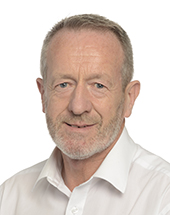
Seán KELLY | Ireland IE | European People's Party (EPP) | 92 |
| 8 |
|
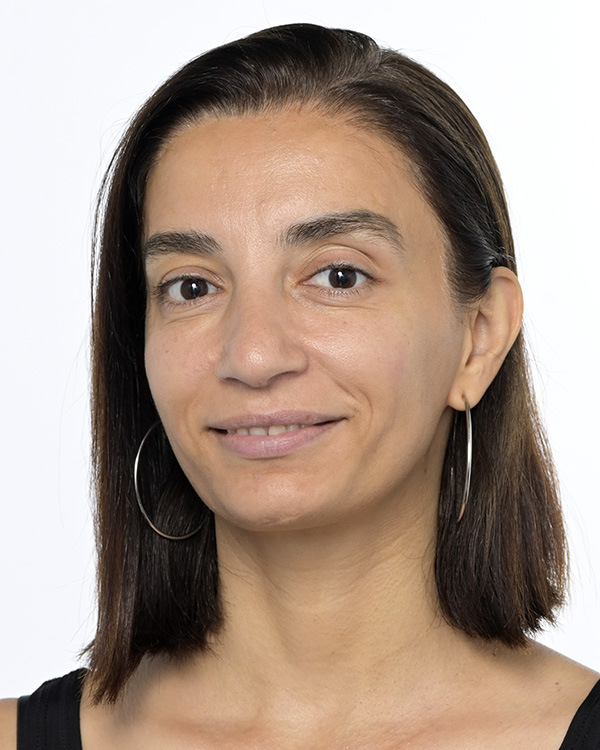
Evin INCIR | Sweden SE | Progressive Alliance of Socialists and Democrats (S&D) | 88 |
| 9 |
|
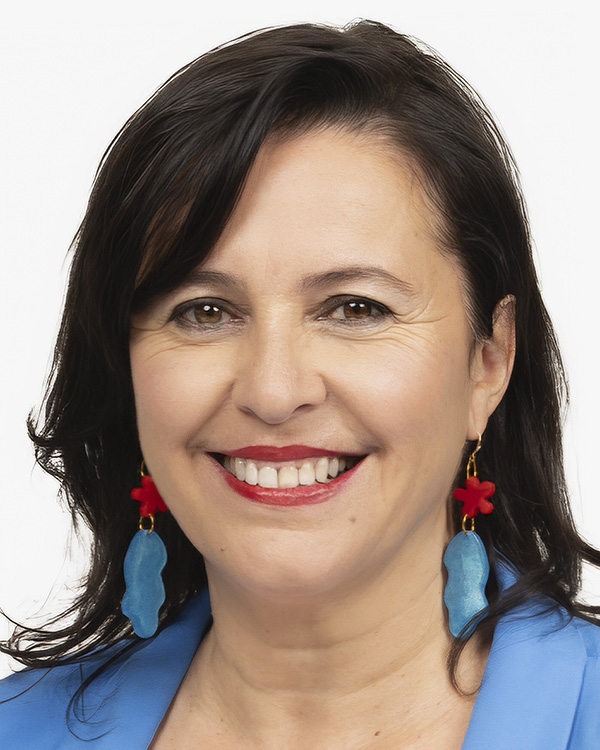
Ana MIRANDA PAZ | Spain ES | Greens/European Free Alliance (Greens/EFA) | 82 |
| 10 |
|
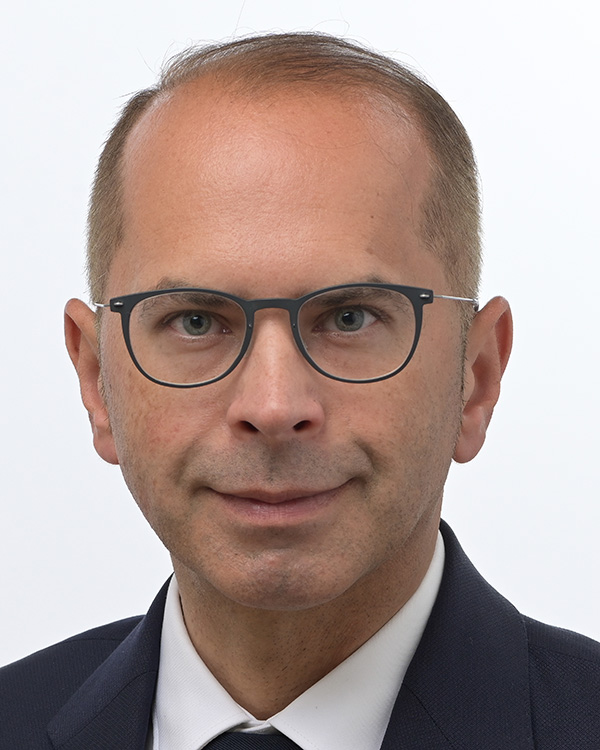
Michał SZCZERBA | Poland PL | European People's Party (EPP) | 78 |
All Contributions (49)
 Implementation of the rule of law conditionality regime (debate)
Date:
17.12.2025 13:59
| Language: NL
Mr President, when we think of democracy, we often think of elections. Democracy is so much more than that. Democracy is freedom of expression, feeling safe on the streets, being able to love who you want and a strong civil society. Democracy also gives people the power to question power critically. Democracy also includes the rule of law, which means that a country that does not adhere to those important values will suffer the consequences. That is why it is so important that we have systems "with European money". That we can freeze that European money if governments misbehave, for example when they want to control universities or when judges can no longer speak their law independently. This system could be significantly strengthened in the next Multiannual Financial Framework. It is also important for the Commission to use this system. We will continue to question the Commission on this.
Presentation of the European Affordable Housing Plan (debate)
Date:
16.12.2025 14:37
| Language: NL
Mr President, the Commission's proposals are very good, for example the proposal to adapt State aid rules. The fact that we have a presentation today on the Affordable Housing Plan makes today a historic day. Nevertheless, you say that the Commission's plans are a step in the right direction in terms of improving the functioning of the market. But don't we romanticize market forces too much as a solution? After all, without government intervention, prices also rise. How do you intend to stop speculators by further liberalising the market?
EU strategy for the rights of persons with disabilities post-2024 (debate)
Date:
26.11.2025 16:55
| Language: NL
No text available
The situation of Christian communities and religious minorities in Nigeria and the Middle East, and Europe’s responsibility to protect them and guarantee freedom of conscience (topical debate)
Date:
26.11.2025 12:30
| Language: NL
No text available
Escalation of the war and the humanitarian catastrophe in Sudan (debate)
Date:
25.11.2025 15:20
| Language: EN
Mr President, Commissioner, I think we all feel sympathy and solidarity with the people of Sudan, with the people of el-Fasher who were besieged, where rape as a weapon of war took place, where starvation as a weapon of war took place. And unfortunately this is not only in el-Fasher, this is also in other places in Sudan. The RSF, the Rapid Support Forces, commit these atrocities, but the SAF also commit atrocities. And it's good that we have humanitarian assistance, and it is good that our Commissioner has also said that we need more access for humanitarian assistance. We need more funds for humanitarian assistance because we need to support the people of Sudan, and we need to support the organisations in Sudan. However, solidarity and empathy alone are not going to end this war and are not going to end the suffering of the people in Sudan. We know what fuels this war. We know the richness of the soil of Sudan fuels the war. We know the illicit trade in gold fuels the war. So we must also act. We must stop block minerals from entering into the European Union. And we also must call a spade a spade: I think we must call the UAE and must make sure that they do not continue their support to RSF and to other actors. We must ask the Commission to stop the trade negotiations with the UAE as long as this is going on.
2024 budget – assessing the implementation of the gender mainstreaming methodology in the EU budget (A10-0212/2025 - Marit Maij) (vote)
Date:
25.11.2025 11:52
| Language: EN
Mr President, thanks to the colleagues that have worked with me on this report. Gender equality is an objective that is enshrined in the primary law of the EU, and a principle that should be at the core of all EU policies, and that is what we will be voting for in a minute. Some of you asked why gender mainstreaming is necessary in all EU programmes and funds. What does gender have to do with the development of medicines? Well, if medicines are designed for the average person, which is still a man, they will work less for women and might even overlook dangerous health consequences for women. What does gender have to do with human resources? Well, the average pay gap in the European Union is still 13 % and the average pension gap is a staggering 29 %. And what does gender mainstreaming have to do with the building of roads and of bridges? Well, my colleagues, we want roads and bridges to be safe for everyone that uses them. Today is the International Day for the Elimination of Violence Against Women, and we have talked about the dangers for all women. Therefore, there should be light on the roads and safe havens when we need to stop. And, when it is safe for women, it is safe for everybody. Medicines for all, safe roads, safe buildings, comfortable safety belts, honest wages, liveable pensions – I can continue. These are all important reasons for gender mainstreaming. And if that does not convince you, improving gender equality would lead to an increase of the EU GDP per capita by 6.1 % to 9.6 %, which amounts to EUR 1.95 trillion to EUR 3.15 trillion. And that, my friends, is something that I would vote in favour of.
Combating violence against women and girls, including the exploitation of motherhood (debate)
Date:
23.10.2025 08:43
| Language: NL
Mr President, this week there was a report from GREVIO, and that was hard work. The Netherlands does far too little against violence against women. Ten years ago, the Netherlands signed the Istanbul Convention on preventing and combating violence against women, but in practice it is doing far too little to combat it effectively. The consequences are immense. Women and girls are not safe on the street, at home, at school or at work. Every week eight women are murdered in the Netherlands and every day there are six in the European Union. Women who are killed because they are women. What is needed is more money, more policies and more actions to effectively combat violence against women. For example, criminalizing psychological violence, but also pro-actively prosecuting offenders. I expect the Commission to come up with real policies in the coming period, and I also expect the Member States to come up with real policies against violence against women, and with legislation. Just signing a treaty is very nice, but it does not prevent violence. We need action.
Renewing the EU-Africa Partnership: building common priorities ahead of the Angola Summit (debate)
Date:
21.10.2025 20:18
| Language: NL
Mr President, we are talking about the renewal of the EU-Africa partnership and it is impossible to talk in the menu about how important this relationship between the EU and Africa is. That is why I would like to highlight two points. Firstly, there is the importance of people-to-people exchanges, getting to know each other and working together, especially young people going to study in Africa or young people coming to study in Europe. Researchers working together to address today's challenges, such as climate change, poverty reduction and gender equality. Programmes such as Erasmus+ and Horizon should therefore be strengthened. The second is the importance of fair trade and fair investment. We need the raw materials and minerals from the African soil for our energy transition and for our digital transition. But we must take much more action to ensure that the mining that goes with it does not harm people and nature, and that blood minerals do not enter the European Union. Africa is our neighboring continent and in the Netherlands we say: ‘Better a good neighbour than a distant friend.’ Let that be the spirit of the renewed EU-Africa partnership.
Second World Summit for Social Development (debate)
Date:
08.10.2025 17:24
| Language: NL
Mr President, Commissioner, as many as 50 million people today live and work in modern slavery. There are also people in Europe who work in deplorable working conditions and are being exploited. At the same time, we are organising a summit in a country like Qatar, a country known for the exploitation of workers. Is it fair, then, to hold this summit in Qatar at the very least, when we know that there are gross human rights violations taking place there? We are talking about social development. We need to work on this World Summit on Social Development. At the same time, we note that more than a hundred countries are so deeply in debt that they have to cut back on social development. They have to cut back on care and education and the result of those big cuts is a global economy. Gender Poverty Gap. Indeed, we see that it is often women who work in the care, social security and education sectors – and they lose their jobs. We need to increase funding from social development programmes to women’s rights and women’s organisations so that we can quickly achieve SDG 5, the Sustainable Development Goal for gender equality.
Establishment and functioning of European Works Councils - effective enforcement (debate)
Date:
08.10.2025 15:53
| Language: NL
Mr President, Commissioner, imagine the following: you have been working for years at a beautiful, large company with branches in the Netherlands, Poland, Spain and perhaps in many other countries. However, the workload is increasing, while decisions are made elsewhere. No one listens to the people who actually do the work. Until the works council intervenes and makes clear: We also have a voice and we want to make it clear what the employees think. Then there will be a policy, for example against the increasing workload or to promote training and further learning. There is room for consultation and mutual respect. This is exactly what works councils do: They bring democracy and co-determination to the workplace. They ensure that employees are not ignored, that their concerns are not dismissed, that they are actually heard. This becomes even more important in companies that operate internationally. Because what good is participation in the Netherlands if the decisions are taken in London or Frankfurt? That is why we need strong European works councils.
Situation in Afghanistan: supporting women and communities affected by the recent earthquakes (debate)
Date:
07.10.2025 17:25
| Language: NL
Mr President, Commissioner, how can you ask for help if your voice cannot be heard? How can you be helped if you are not allowed to receive medical help from a man, but women are not allowed to work? There are no more options for many women in Afghanistan. The earthquake, which caused hundreds of deaths and thousands of injuries, revealed that women's protection had been crumbling for a long time. So yes, we have to stand up for the affected areas, but that does not solve the problems of women’s rights, which lie beneath the rubble. The EU must speak out more strongly against the ban on women continuing to learn, the ban on women going to a park, the ban on women working, also working as humanitarian workers. That has to disappear. It is good that the European Union has funds for humanitarian aid, but we must make sure that it reaches women as much as men.
This is Europe - Debate with the Prime Minister of Luxembourg, Luc Frieden (debate)
Date:
07.10.2025 09:44
| Language: EN
Madam President, dear Prime Minister, dear colleagues, the cooperation between Luxembourg, the Netherlands and Belgium is special. For decades, the Benelux have seen economic, political, cultural and social cooperation and integration at our border regions and between our countries. And that cooperation ensures that these three founding Member States have a strong say in the European Union. Also thanks to this Prime Minister. I would also like to thank this Prime Minister for something else: 'My body, my choice' – the right for women to make our own decisions on bodily integrity and bodily autonomy. As a Christian Democrat leading a centre‑right coalition, you support embedding abortion into the Constitution. Christian Democrats and conservatives in this Parliament can learn from the Luxembourgish Prime Minister, and so can the Government of the Netherlands, where abortion is still officially a criminal act. Abortion should be decriminalised. Access to safe abortion should be acknowledged as a right in my country and in the European Charter of Fundamental Rights. Thank you, Prime Minister. My body, my choice.
Case of Victoire Ingabire in Rwanda
Date:
10.09.2025 20:09
| Language: NL
Mr President, Commissioner, in Rwanda it is safe on the streets, but it is not safe to speak out. There are leading sporting events, there is economic progress and security, but these are a stark contrast to the political situation in Rwanda. Victoire Ingabire is one of the many political opponents of the regime who is stuck for her political opinion. And now for the second time. After her first arrest, she received an amnesty after eight years. But now she is stuck again and her children are also here to plead for her, because they cannot have contact with her either. It is a trend of oppression and of threat to political opponents that we see in Rwanda. And that is why we also ask the European Union and the Member States to ensure that Victoire, and also the nine other leaders of her party, are released and that they can have a fair trial in freedom, that politicians can express themselves, can participate in elections and that everyone, journalists and civil society, has freedom of expression in Rwanda.
Cohesion policy (joint debate)
Date:
09.09.2025 14:40
| Language: NL
Mr President, Commissioner, cohesion policy is an essential part of the European Union and ensures that all regions can continue to develop economically and socially, and that everyone benefits from that very important European single market. Cohesion policy plays an important role in developing jobs – job creation – and social inclusion. Cohesion policy must be able to continue to do so in the future. To this end, we must also commit ourselves in the future to a separate European Social Fund, with its own budget, in the next multiannual financial framework of the European Union. The next European Social Fund should be more than just a wash-up; it should be a fund that people can use, whether it is to develop skills for the next job, or to socially participate in the European Union and in society. Because with an anti-social Europe, we are lost.
European Social Fund (ESF+): specific measures to address strategic challenges (debate)
Date:
09.09.2025 13:43
| Language: NL
Mr President, Commissioner, I would also like to thank all colleagues for their valuable contribution during this important debate and also during the negotiations and the process towards it. We have seen time and time again that the ESF+ is indispensable for developing the European Union in the way we want it to be. A European Union where physical safety and social security go hand in hand. We cannot give in to one of the two, because without social resilience, our society is lost. Tomorrow we will vote on the outcome of the negotiations of the ESF+ revision. But for me, this marks the beginning of the next challenge. Ensure that the future Multiannual Financial Framework and thus the next European Social Fund is one for all. That people can be retrained with ESF+ money. That we ensure that people who do not automatically come along in society get a boost. That we fight child poverty. That we fight homelessness and that we see that the mantra of competitiveness should not lead to free money for large companies. We demand a ring-fenced budget for the ESF+ with goals that we can take seriously. I want to get to work on this, because a strong Europe is a social Europe.
European Social Fund (ESF+): specific measures to address strategic challenges (debate)
Date:
09.09.2025 13:19
| Language: EN
Mr President, dear colleagues, dear Executive Vice‑President, dear Roxana, today we are discussing the already much discussed European Social Fund Plus. The ESF+ is the core fund for the European social agenda and is so important in achieving skills development, social inclusion and in ending, for example, child poverty. Just before the summer, the Commission proposed a revision of the ESF+ to address today's strategic challenges. What we see happening everywhere, when it comes to the Commission agenda, is what we also saw here. The revision paved the way to add the so-called competitiveness agenda by increasing the possibilities for large companies to receive funds, especially in the defence sector. This should happen in an urgent matter, something we still oppose. As the S&D, we stand for a Europe that defends its external safety and, at the same time, ensures that we leave no one behind within our European common ground. The ESF+ does exactly that, making Europe more social, as we promised our voters. Together with the colleagues, during the negotiations with the Council and with the Commission, we achieved great successes in this matter. We ensured that the money that will be allocated for the defence industry will be for skills development in dual-use, and ensuring that people possess the right skills to have a place in our society. We also ensure that smaller beneficiaries should have a priority in access to the funding, ensuring that our civil society can still access the funding. I want to thank not only the shadow rapporteurs, but also the Council for ensuring this good achievement. On the rule of law. As the Commissioner already mentioned, we ensure that all funding that could possibly be reprogrammed to the new programmes will be checked by the rule of law mechanism, the Common Provisions Regulation and the horizontal enabling conditions. We have it in black and white from the whole College of Commissioners that they will do so, and we will hold them accountable. For this, the Executive Vice-Presidents Mînzatu and Fitto take the responsibility. Let me make one thing clear: when the rule of law is not respected, we cannot accept showing any flexibility. So far, we have managed to safeguard the main mission of the ESF+, supporting people and children in the most vulnerable situations, and supporting smaller beneficiaries in civil society. What we want for the future of the ESF+ is clear. It must be said that what we have seen for now is worrying. The ESF+ should be a separate, independent fund with a dedicated budget. The aim of the fund should always be to help people – to help people find a place in the labour market and to to promote social inclusion. It should be a fund that has a clear objective and that ensures that no one is left behind, that has earmarked funding for specific objectives, like the Child Guarantee, like the Youth Guarantee, for the most deprived and, of course, to support the much‑needed skills development. I am ready to fight for the ESF to be of meaning for the coming period in the future of Europe, because we cannot have a European Union without a strong social foundation. The social foundation is also the security that we have in Europe.
One-minute speeches on matters of political importance
Date:
08.09.2025 19:22
| Language: NL
Mr President, at least six women have been murdered in the Netherlands this summer because they are women. Six women are killed every day in Europe because they are women. One-third live under physical or sexual violence. That's more than 50 million women in Europe. Living with fear is the reality for girls and women in Europe, for millions. And that has to stop. Not by teaching girls and women to defend themselves with pepper spray or with keys between the knuckles, but by teaching men to stop bullying, raping and killing women. Feminicide – femicide – is not an isolated phenomenon. It is part of a culture of sexism and intimidation, and that has been ignored for too long. That is why European countries must do everything in their power to speed up legislation and policies for the safety of girls and women in Europe. All girls and women in Europe have the right to safety – at home, at school, at work and on the street.
Outcome of the Conference on the Financing for Development in Seville (debate)
Date:
09.07.2025 18:04
| Language: NL
Mr President, Commissioner, Minister, last week in southern Europe the code was red because of the warm weather. But for more than a hundred countries, living in flaming debt, it's been code red for a long time. We were in hot Seville for the International Conference on Financing for Development. Without understanding the position of the European Parliament, because the right wing here in Parliament first weakened the report and then voted down. And then applauded, when in reality millions of people die because less aid goes to developing countries, more than 700 million people live in extreme poverty and that number has been increasing for decades. One hundred countries pay more in debt and interest than they have available in their budgets for social policy, health and infrastructure combined. The system is broken. By 2025, there will be a record number of more than 3,000 billionaires worldwide. This system produces more billionaires every time, while people also die of starvation. This system is morally corrupt and that is why it is so painful that this Parliament has not taken a position and that the European Commission has also placed an asterisk on the paragraphs on international debt relief and the reform of the international financial system. The next step is now to proceed with the implementation of the final document of the Conference on Financing for Development and to repair the broken international system. Because we still have a chance to fix it, and we shouldn't let that chance go.
Democratic Republic of the Congo-Rwanda peace deal agreement (debate)
Date:
09.07.2025 17:26
| Language: NL
Mr President, I met her last month in Congo, a 15-year-old girl. At home, a gang member raped her so brutally that she had to be helped and stitched in the hospital. She wanted to return home as soon as possible to go back to school. Mathematics is what she likes best. But she doesn't dare go home anymore. She asks me if I have children. Yeah, I have two kids. She doesn't want any more children, because she doesn't trust men. She doesn't know if she can ever trust them again. Sexual violence is a sign of life. Yet this peace agreement makes no mention of justice and restitution for victims in the conflict. The existence of a peace agreement is an important step, but it does not address the causes of the conflict: the economic inequality, illegal mining and also the responsibility of M23. More humanitarian aid is needed, especially for victims of sexual violence. The international community must also focus on the causes of the conflict and prosecute and bring to justice the perpetrators of war crimes.
Rise in violence and the deepening humanitarian crisis in South Sudan (debate)
Date:
18.06.2025 17:07
| Language: NL
Mr President, Commissioner, South Sudan is a fertile country, rich in mineral resources. And yet it is one of the poorest countries in the world. For many decades, and certainly since independence, South Sudan has been plagued by war and conflict. Civilian villages are being bombed. Girls and women are raped. Sexual violence is used as a weapon and political opponents are locked up without trial. More than 2 million people have been displaced and more than 9 million South Sudanese are dependent on humanitarian aid. Yet even medical posts are under attack, including recently a Doctors Without Borders clinic. Foreign powers and corrupt leaders benefit from this unstable situation, as it gives them easy access to South Sudan's mineral resources. The European Union must indeed secure humanitarian aid and access to it. It must support women's organisations on the ground, step up diplomatic pressure on leaders and work to revive the 2018 peace agreement. South Sudanese do not deserve silence. They deserve solidarity and justice.
Arrest and risk of execution of Tundu Lissu, Chair of Chadema, the main opposition party in Tanzania
Date:
07.05.2025 18:46
| Language: NL
Mr President, Commissioner, Tundu Lissu may face the death penalty in Tanzania. And what is his crime? Opposition to the Tanzanian government. There are charges hanging over his head for spreading false information and treason. Betrayal is punishable by death in Tanzania. In October 2025, there will be elections in a country where opposition leaders are now being rolled up in a wave of arbitrary arrests. The EU and Tanzania are partners, partners in development, trade and sustainability. That is why a transparent and inclusive dialogue is needed, for the freedom of expression, the freedom of our fellow politicians and of human rights defenders, journalists and civil society organisations. The EU must speak out more strongly against the death penalty in our partner countries, including in Tanzania. Human rights, democracy and freedom of expression are not non-committal concepts. We call on the Commission and the Member States to follow the case of Tundu Lissu and to ensure that he is given a fair trial and that he is released.
Discharge 2023 (joint debate)
Date:
06.05.2025 14:22
| Language: NL
Mr President, in this debate I would have liked to talk about the agreements that we, as shadows also during the negotiations, for example following the reports on the working conditions and contracts of cleaners in the European agencies, agreed on gender equality in staff policy and its implementation or training against cross-border behaviour. But I am going to use my speaking time to speak, precisely in this debate on transparency and the orderly use of European taxpayers’ money – one of our European values – about another essential European value, namely the strength of civil society organisations. The Commission finances and subsidises businesses and civil society organisations in Member States, of all kinds: Left, right, conservative, progressive. Together they form the fabric of our society. That is precisely why it is so bad that Members of this House are trying to undermine it with half-truths and outright lies. For example, it is claimed that the Commission only finances NGOs on condition that they lobby Parliament. Of course, it turned out not to be true. This is an example of how something straight is spoken crookedly. But for the populists in this Parliament – even in the EPP – it does not matter if something is true, as long as it sounds good. This undermines the fabric of our society and undermines our important European values. In these uncertain times, let us strengthen and not undermine Europe in all its diversity.
Topical debate (Rule 169) - Social Europe: making life affordable, protecting jobs, wages and health for all
Date:
02.04.2025 12:51
| Language: NL
Mr President, Europe and social policy are not often linked, despite the fact that many of the rights we take for granted came from European policy. These include family leave, the maximum number of working hours and the minimum number of vacation days, pay transparency, anti-discrimination laws and the right to strike. We've already achieved a lot, but we're not there yet. Standstill is backwards. The right is on a collision course in terms of social policy and wants to reverse what we have achieved. We can't let this happen. I continue to fight for the protection of workers and migrant workers by working for fewer temporary employment opportunities and fewer opportunities for subcontracting, which lead to shadowy constructions and exploitation.
Targeted attacks against Christians in the Democratic Republic of the Congo – defending religious freedom and security (debate)
Date:
01.04.2025 19:35
| Language: NL
Mr President, colleagues, High Representative, the need in the Democratic Republic of Congo remains high. There are still a huge number of casualties in the conflict, many civilian casualties, including religious communities. As in many countries in the region, the Congolese population is mainly the victim of the struggle for rich soil. Everyone wants to benefit from the minerals and raw materials. Groups such as M23 and other rebels use brutal force. Sexual violence is used as a weapon in warfare to tear communities apart. The EU should provide more humanitarian assistance and in particular to the victims, women and children, of sexual violence. Belgium has not remained silent and is now experiencing the repercussions of Rwanda. We as Member States must continue to speak out and we must also support the countries that do so. Finally, we also need to look at ourselves, High Representative, because we need to rethink our relationship with Rwanda when it comes to dealing with those critical minerals. Because those minerals and the money they yield are used to finance and facilitate this conflict.
Dramatic situation in Gaza and the need for an immediate return to the full implementation of the ceasefire and hostage release agreement (debate)
Date:
01.04.2025 19:16
| Language: EN
Madam President, I wanted to make a point of order. Well, actually, I wanted to make probably my colleague's point of order, because I think it's totally outrageous if we disagree and if we disagree, we disagree heavily – that's okay. But we should not accuse each other of antisemitism in this room.