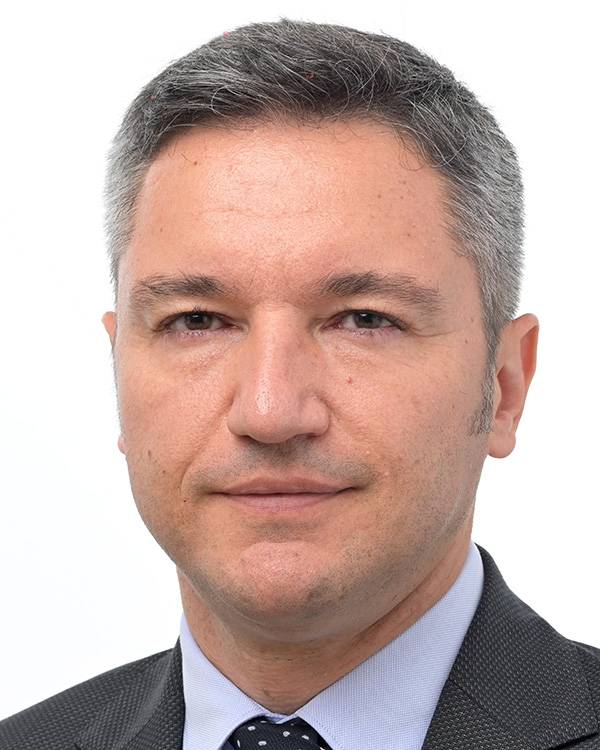
 Debate contributions by Kristian VIGENIN
| Rank | Name | Country | Group | Speeches | |
|---|---|---|---|---|---|
| 1 |

|
Lukas SIEPER | Germany DE | Non-attached Members (NI) | 321 |
| 2 |
|
Juan Fernando LÓPEZ AGUILAR | Spain ES | Progressive Alliance of Socialists and Democrats (S&D) | 280 |
| 3 |
|
Sebastian TYNKKYNEN | Finland FI | European Conservatives and Reformists (ECR) | 247 |
| 4 |
|
João OLIVEIRA | Portugal PT | The Left in the European Parliament (GUE/NGL) | 195 |
| 5 |
|
Vytenis Povilas ANDRIUKAITIS | Lithuania LT | Progressive Alliance of Socialists and Democrats (S&D) | 183 |
All Contributions (26)
 Preparations for the EU-India summit (debate)
Date:
21.01.2026 17:07
| Language: EN
Madam President, Madam High Representative, colleagues, the next EU-India summit is an important opportunity to strengthen a partnership that matters for Europe's economic future. India is not only one of the world's fastest growing economies, it is also a partner with whom Europe can shape a more resilient, innovative and competitive global economy. A well-designed trade agreement can help diversify supply chains, reduce dependencies and strengthen Europe's industrial base. But above all, it must deliver real economic value, especially for sectors that create quality jobs. Artificial intelligence and advanced technologies, medicines and life sciences are clear priorities. Europe and India have complementary strengths in research skills and innovation. Closer cooperation can boost productivity and ensure that technological progress translates into social progress as well. Finally, as strategic partners for more than 20 years, EU and India share the responsibility to support peace, stability and the rules-based international order grounded in dialogue and multilateral cooperation.
Framework for strengthening the availability and security of supply of critical medicinal products as well as the availability of, and accessibility of, medicinal products of common interest (debate)
Date:
19.01.2026 18:38
| Language: BG
No text available
Presentation of the EU Cardiovascular Health Plan (debate)
Date:
16.12.2025 16:58
| Language: BG
No text available
Digital Package (debate)
Date:
25.11.2025 19:41
| Language: BG
Mr President, Commissioner, colleagues, today's debate is about proposals for changes that affect the very foundations of European digital legislation. Under the pretext of ‘simplification’, steps are proposed that will reduce the protection of personal data, confidentiality of communications and citizens’ rights directly protected by the Treaties and the Charter of Fundamental Rights of the European Union. This is not a technical correction. This is a weakening of standards that build people's trust and the stability that businesses rely on. If we blur the definitions and allow for a wider use of personal data without clear safeguards, we risk not just a lower level of protection – we risk legal fragmentation. And one more important thing: weakening protection undermines all legislation – the Artificial Intelligence Act, the Digital Services Act, the Digital Markets Act – all based on rules and definitions laid down in the General Data Protection Regulation. Our message should be clear: data protection and confidentiality are not an obstacle, but a condition for innovation, trust and competitiveness.
Framework for achieving climate neutrality (A10-0223/2025 - Ondřej Knotek)
Date:
13.11.2025 11:39
| Language: BG
Madam President, today we voted on the new climate law, a key instrument for the future of Europe and Bulgaria. It is not just a normative act, it is a decision whether we will live in a cleaner, more secure environment and whether we will have a more competitive economy. For Bulgaria, the stakes are particularly high. Our households and businesses are already feeling the pressure of the energy transformation, so we must also clearly identify the problems associated with ITS2, the new emissions trading system for transport and buildings. It can lead to higher fuel and heating prices, and at this stage there are insufficient protections for vulnerable citizens and small businesses. That is why I supported postponing ITS2 for the time being to 2028. I supported the updated interim target of reducing emissions by 2040, because it gives the necessary predictability to plan investments in Europe and Bulgaria, without which neither industry nor the energy sector can make long-term decisions. At the same time, we must ensure that the green transition is fair, that citizens are not left to pay the price themselves, and that climate neutrality efforts go hand in hand with support, investment and solidarity.
European Maritime Safety Agency (A10-0217/2025 - Sérgio Humberto)
Date:
13.11.2025 11:32
| Language: EN
Madam President, dear colleagues, today we approved the updated regulation for EMSA, the European Maritime Safety Agency – a vital step forward for maritime safety, decarbonisation and sustainable governance. By supporting this regulation, I reaffirm my commitment to ensuring that our maritime sector adapts to the new geopolitical realities, strengthens environmental standards, and deploys modern training and governance frameworks. For our country, this regulation matters because our shipping, port infrastructure and maritime services must align with the highest European standards to remain competitive and resilient. The renewed EMSA mandate gives us stronger oversight and support so that tragedies at sea, environmental incidents and safety risks are better prevented, and our businesses operate on a level playing field. At the same time, I emphasise the need for EU policy to reflect fairness and proportionality, ensuring that smaller maritime nations and regional ports are not overburdened, that technical assistance and funding are accessible, and that training and capacity-building do reach all actors.
Discontinuing seasonal time change (debate)
Date:
23.10.2025 13:32
| Language: BG
Mr President, Commissioner, it is time to stop turning the arrows back and forth twice a year. Summer time was introduced with the idea of energy efficiency, but today all evidence suggests that there are no such benefits. Meta-analyses and studies from around the world confirm that the effect on energy consumption is zero, and the negatives are real. People suffer from disturbed sleep, decreased concentration and health risks, without society earning anything. I'm not saying anything new. This discussion has been going on for 7 years now. The European Commission has long proposed ending seasonal time changes with overwhelming support from European citizens. And here comes the logical question: How will we convince Europeans that we are capable of solving the big questions of peace and war, of global security and climate change, when we cannot even agree on something so simple? I fully support the initiative of the Spanish Government to put an end to the time change. Let the European Union show that it can act decisively, and let citizens turn to their governments, on which the final decision depends.
The ongoing assault on the democratic institutions and the rule of law in Bulgaria (topical debate)
Date:
22.10.2025 12:27
| Language: BG
Madam President, Commissioner, on behalf of the Group of Socialists and Democrats in the European Parliament, I declare that democracy, fundamental rights, the rule of law are the foundation of the European Union and any attack on them in any Member State is an attack on the whole Union. But also the political abuse of these issues undermines citizens' trust and is counterproductive. Over the years, the European Union has developed mechanisms to monitor a country's ability to maintain the highest standards. I will mention the European Commission's annual reports on the rule of law, the introduction of conditionality in the allocation of funds from the European budget, the establishment of the European Prosecutor's Institute. The European Parliament has a specialised committee where these issues can be discussed – the Committee on Civil Rights, Justice and Home Affairs and its monitoring group on democracy, the rule of law and fundamental rights. Today, however, Renew, misled by its members from Bulgaria, hysterizes the problems that the country has been facing not since yesterday: a weakened and insufficiently effective judicial system, a number of important out-of-office judicial bodies, ambiguity around the anti-corruption commission – all this is the result of political instability and chaotic reforms in recent years. And what are you offering us today? Propaganda debate in the European Parliament, suspension of funds for Bulgaria, European political interference in the work of the Bulgarian court. The man who, as prime minister, ordered the arrest of the opposition leader is complaining today about an investigation by a mayor conducted in accordance with the legal order. The leaders of two parties with which the liberals ruled together only a year ago are being demonized. Together they inflicted a pogrom on the Bulgarian constitution, which further created uncertainty in the judicial system. I'll stop there, I just want to make it clear that there are no innocents. The solution is not in political campaigns against Bulgaria and debates in Strasbourg, but in systematic and constructive work between the government and the opposition in Sofia. For our part, we will support the conduct of a well-prepared mission of the said monitoring group in Bulgaria and we will rely on it to make the most accurate assessment of the situation and to give recommendations.
Institutional consequences of the EU enlargement negotiations (debate)
Date:
21.10.2025 11:49
| Language: EN
Mr President, Commissioner, colleagues, this report reminds us that Europe has both the responsibility and the capacity to continue its enlargement with those partners who have already met the criteria. Enlargement and institutional reform must advance together – not as competing goals, but as mutually reinforcing processes. The prospect of EU membership remains one of the strongest engines for transformation, stability and reconciliation across our continent. Completing the Union towards the south-eastern and eastern edges is therefore not only a matter of geography, but of fulfilling the European project's promise of unity and stability. Our Union's institutions are already capable of welcoming the enlargement frontrunners, provided we continue to strengthen their efficiency, transparency and legitimacy. The ongoing reflection on institutional reform is not a precondition to enlargement, but a necessary preparation, ensuring that, when new members join, our decision-making remains effective and our values intact. Europe's strength lies in its ability to adapt without hesitation and expand without division. Let us therefore move forward with confidence.
World Mental Health Day - addressing the socio-economic factors (debate)
Date:
09.10.2025 09:32
| Language: BG
Mr President, today we celebrate World Mental Health Day, a day in which we remember that there is no health without mental health. Increasingly, we realize that mental well-being depends not only on our personal strength or attitude, but also on the conditions in which we live. Socio-economic factors such as poverty, unemployment, low income, social isolation and inequality have a profound impact on the human psyche. When a person lives in constant stress, without a stable income or a secure environment, anxiety and depression become not just a personal, but a social problem. Therefore, the fight for mental health must also be a fight for social justice. More investment is needed in education, affordable healthcare and support programmes for vulnerable groups. We need to talk openly about mental health, without shame and stigma, and create a society in which help is close to every person, regardless of their social status. The European Mental Health Strategy adopted in 2023, which focuses on prevention, access to care and combating stigma, is a good start, but concrete measures are also needed. Today, let's take a step forward to a world where mental health is a right, not a privilege. A world where care, understanding and solidarity are at the core of human dignity.
New Strategic EU-India Agenda (debate)
Date:
07.10.2025 18:26
| Language: EN
Mr President, Commissioner, colleagues, today we discuss the partnership between the two largest democratic unions in the world – that's the European Union and the Indian Union. Our relationship has been forged over the years, yielding remarkable achievements in trade, investment, scientific collaboration and cultural exchange. Now, in a rapidly changing world, it is imperative that the European Union and India deepen their cooperation in critical areas that will shape the future. Our commitment to peace, respect for international law, multilateralism and a rules-based international order must be unwavering. Together, we can champion diplomacy, foster stability, and uphold the principles that have long ensured global security and prosperity. Climate change remains an existential threat. Our partnership in clean energy, sustainable development and environmental protection is crucial for securing a liveable planet for future generations. Artificial intelligence presents both tremendous opportunities and significant risks. By aligning our approaches to regulate it, the EU and India can ensure AI development is ethical, transparent and respects fundamental rights. As digital technologies underpin every aspect of our societies, we also must work together to build resilient digital infrastructures and establish common standards to protect privacy and security. (The speaker concluded in a non-EU language)
2023 and 2024 reports on North Macedonia (debate)
Date:
08.07.2025 18:12
| Language: BG
Madam President, I only have a minute to say three things: Citizens of North Macedonia: Bulgaria wants your country to be a member of the European Union. Whatever they say to you, in the face of Bulgarians and Bulgarian MEPs, you have friends. To the rulers of Skopje: stop creating a parallel reality in your country, looking for excuses and excuses. You have gone so far as to accuse the European Union of not being democratic. Invest efforts in our common European future instead of creating contradictions about our common past. The facts of the past cannot be erased, but we can create together the facts of our European future. Change the Constitution, respect the rights of Bulgarians, accept them on an equal footing with the representatives of other peoples and give a chance to good-neighborliness. To my colleagues here: the report we are discussing today has created a lot of tensions and conflicts. In the end, no one will remember what it says, only the comments and scandals will remain. Therefore, in the future, it should be approached more carefully, more transparently and the European Parliament should not open issues that it cannot solve. Finally, human rights are always at stake and cannot be traded politically on any account. Courage, Mr. Georgievski!
Institutional and political implications of the EU enlargement process and global challenges (debate)
Date:
19.06.2025 07:42
| Language: BG
Commissioner, enlargement is not only a historic commitment, but also a strategic priority. It is an investment in the security, stability and prosperity of the entire continent. However, the enlargement of the Union also presents us with a number of institutional challenges: more complex decision-making mechanisms, the need to adapt the budget and strengthen democratic legitimacy. In this context, the abolition of the unanimity principle is often proposed as a one-size-fits-all solution. But let us be honest, this will not remedy the most significant problem – the lack of sufficient trust between Member States. The Treaties already offer a number of instruments, such as enhanced cooperation, constructive abstention, which we can use. They make it possible to move to a decision by qualified majority on any matter, provided that this is decided by unanimity. Treaty change is a complex and slow process without guarantees of the end result. We must therefore make the most of the current legal framework, otherwise we risk weakening the European Union and blocking the enlargement process indefinitely. As a representative of Bulgaria, one of the last countries to join, I would like to emphasise clearly: The responsibility in this case is two-fold. Candidates also need to do their job and make the necessary changes to apply European standards in every area. Only in this way will the process retain the support of citizens, which is most important, both in the candidate countries and in the Member States, in order to achieve together a democratic, solidarity-based and good future for every European.
2023 and 2024 reports on Moldova (debate)
Date:
17.06.2025 15:42
| Language: BG
Mr President, Commissioner, colleagues, the Republic of Moldova is an example of consistent progress on the path to membership of the European Union. Only two years after submitting its application, the country has not only been granted candidate status, but has also started accession negotiations. This is an expression of real political will, despite serious domestic and foreign policy challenges. Last year's referendum made it clear that European integration for Moldova is not just a geopolitical choice, but a value choice. The European Union remains committed and will continue to assist Moldova, but success depends first and foremost on Moldova itself. The pace of implementation of the commitments made must be maintained and the greatest challenges in the long term remain the rule of law, the fight against corruption and a lasting solution to the Transnistrian conflict. I would like to congratulate the authorities in the country who helped this year in Taraclia to open a branch of the Bulgarian University of Ruse. This is a strategic contribution to European integration through education. I count on the support for the Bulgarian community in Moldova to be maintained in other aspects of the state policy. Bulgaria is and will remain a reliable partner for Moldova's European and democratic future. I thank the rapporteur for the excellent report and call for his support.
Democratic legitimacy and the Commission’s continued authorisation of genetically modified organisms despite Parliament’s objections (debate)
Date:
07.05.2025 19:59
| Language: EN
Madam President, Commissioner, I reiterate our deep concern regarding the Commission's continued authorisation of genetically modified organisms in direct defiance of this Parliament's repeated objections. The European Parliament has rejected nearly 50 GMO authorisations, raising concerns about biodiversity, food safety and environmental sustainability. Yet despite this consistent opposition, the Commission continues with approvals, often without a qualified majority and against the will of both Parliament and a divided Council. The risks posed by GMOs are not hypothetical. They are rooted in legitimate scientific uncertainty and long-term concerns about the loss of biodiversity through monocultures, potential harm to pollinators, dependency on herbicides, and resistant crops. These authorisations mainly serve the commercial interests of large, primarily US-based companies, rather than European farmers and consumers. We believe in a sustainable agricultural future rooted in science, responsibility and democratic legitimacy. Therefore, our opposition to GMOs will remain.
2023 and 2024 reports on Serbia (debate)
Date:
06.05.2025 19:49
| Language: EN
Mr President, dear colleagues, Serbia remains a key partner and an essential part of our shared European future in the European Union. Its path to membership must remain open but strictly conditional on real progress in democracy, the rule of law, the fight against corruption, media freedom and the protection of minorities. As the 2023 and 2024 Commission reports underline, progress has been made, yet serious shortcomings persist. Most telling, I believe, are the massive protests led by Serbian students recently, sparked by the canopy collapse of the Novi Sad train station that tragically claimed 16 lives. They were not just about the victims; they expose the deeper public frustration with unaccountable governance, misuse of public funds and the erosion of democratic norms. These protests are not a threat to stability, they are a call for it – a call for normalisation and democratic accountability. There is no need for a fundamental change in the EU's approach towards the country, although we must remain clear about the values we defend. Our assessment should take into account the complex geopolitical position of Serbia. Respectful but firm communication is a better option than disengagement, and this is what those hundreds of thousands of peaceful protesters expect from us.
Full accession of Bulgaria and Romania to the Schengen Area: the urgent need to lift controls at internal land borders (debate)
Date:
26.11.2024 17:48
| Language: BG
No text available
Taxing the super-rich to end poverty and reduce inequalities: EU support to the G20 Presidency’s proposal (topical debate)
Date:
09.10.2024 12:03
| Language: BG
Member of the Commission. - Mr President, colleagues, we welcome the initiative of the G20 to start working towards a fairer taxation of the ultra-rich. In recent decades, their taxes have fallen globally, leading the richest to become even richer, and divisions and social inequalities have deepened. The richest generate their income growth primarily from their available wealth. They also have much easier opportunities to exploit mismatches and divergences between countries' tax legal frameworks. I truly hope that this initiative will bridge these gaps so that we can begin to bring justice back to today's interconnected and increasingly unsustainable world. Taxing billionaires is just a first step. The European Union must speed up work on harmonising tax systems in the Member States so that individuals or corporations do not benefit from loopholes in legislation. Only in this way will we be able to generate additional resources for policies that matter to people. Tax justice is also becoming a central issue for the socialists in Bulgaria, and we are in favour of a comprehensive tax reform – the abolition of the flat income tax and the return of progressive taxation. Introduction of a second tax rate on the profits of companies and specific measures for corporations that realize ....
Strengthening Moldova's resilience against Russian interference ahead of the upcoming presidential elections and a constitutional referendum on EU integration (debate)
Date:
08.10.2024 14:41
| Language: EN
Mr President, dear colleagues, although there are just 12 days until the elections and referendum in Moldova, the EP cannot remain silent following the scale of foreign interference in the internal affairs of the country. I would like to draw your attention to the fact that the strong, destructive role of oligarchs in the national politics in Moldova is not an exception. We have seen and still see such cases not only in our eastern neighbours, but also in central and eastern Europe. The deep and complex influence of such figures distort the political process and often deprive citizens from choosing freely the future of their own country. I raise my concern on the possible implications of the current situation on the security in the country, as well as on the relations of the government not only with Transnistria, but also Gagauzia. We need to act responsibly, and I would advise that we work closely with the OSCE, its mission to Moldova, and respectively with ODIHR and the OSCE Parliamentary Assembly. The EU membership perspective has created additional tools for the international community to help Moldova restore its territorial and political integrity, and we should not allow that these new tools are misused in the opposite direction.