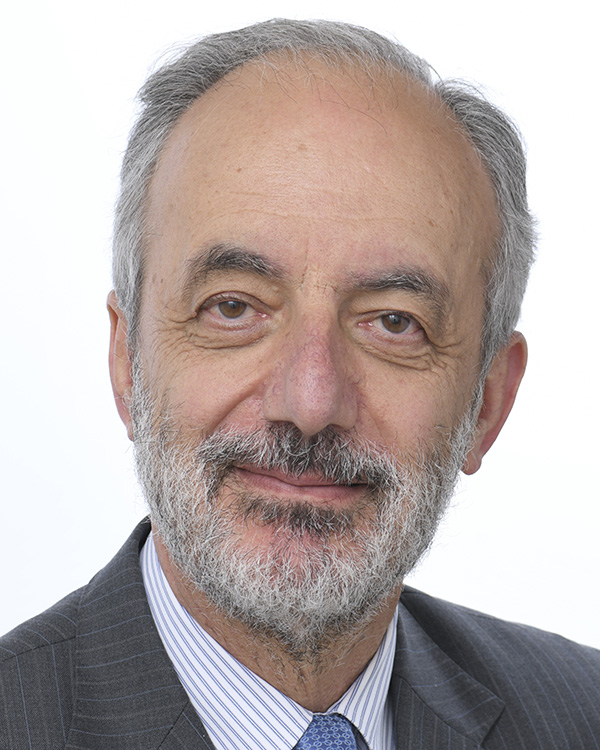
 Debate contributions by Francisco José MILLÁN MON
| Rank | Name | Country | Group | Speeches | |
|---|---|---|---|---|---|
| 1 |

|
Lukas SIEPER | Germany DE | Non-attached Members (NI) | 321 |
| 2 |
|
Juan Fernando LÓPEZ AGUILAR | Spain ES | Progressive Alliance of Socialists and Democrats (S&D) | 280 |
| 3 |
|
Sebastian TYNKKYNEN | Finland FI | European Conservatives and Reformists (ECR) | 247 |
| 4 |
|
João OLIVEIRA | Portugal PT | The Left in the European Parliament (GUE/NGL) | 195 |
| 5 |
|
Vytenis Povilas ANDRIUKAITIS | Lithuania LT | Progressive Alliance of Socialists and Democrats (S&D) | 183 |
All Contributions (62)
 Russia’s disinformation and historical falsification to justify its war of aggression against Ukraine (debate)
Date:
17.12.2024 19:01
| Language: ES
Madam President, in the face of Russian propaganda, we must insist that the invasion of Ukraine is an illegal and unjustified aggression, which openly violates the European security architecture and the commitments made by Russia in the Helsinki Final Act, the Paris Charter and the Budapest Agreement. Moreover, it is a clear violation of the most basic principles of international law, such as the non-use of force, which the entire international community accepted after World War II. Russian propaganda, which uses media such as RT, its embassies, informal channels and social media, wants to spread a false version of the reasons for the invasion of Ukraine. At the same time, it seeks to divide and polarize our societies. Its aim is to distort reality and sow distrust, insecurity and even fear in Western countries. We have to be very active to counter this disinformation. Externally, the European External Action Service, the Union delegations and the embassies of the Member States have to play a diligent role and try to combat the indifference of many countries to Russia's behaviour, and even, in some cases, the understanding of this behaviour. I am thinking especially of some countries in the so-called 'global south'. In this regard, I welcome the sanctions imposed yesterday by the Council against some disinformation factors abroad. We must combat Russian propaganda and also prevent Moscow from finding ways in third countries to evade the impact of our economic sanctions.
Need to adopt an ambitious international legally binding agreement on plastic pollution, including in the marine environment
Date:
28.11.2024 14:06
| Language: ES
Mr President, Commissioner, I thank you for the information you have provided on the draft UN agreement on plastics that is now being negotiated in Korea, in Busan. Plastic pollution is one of the main problems of the environment and, in particular, of the marine environment. It is essential that we be ambitious in this negotiation. I am a member of the Committee on Fisheries and I am aware of the importance of clean oceans, as it is fishermen who suffer the most from the pollution of the sea. I am going to stop at microplastics, which must occupy an important place in Busan's negotiation. The maritime transport of plastics must be regulated in a stricter way to avoid the dumping of plastic pellets or pellets. At European level, we are all making progress. As you know, in April Parliament set out its position on the proposal for a regulation on the prevention of plastic pellet losses and we included maritime traffic in our position. I hope that the Council will soon conclude its work and that interinstitutional negotiations will begin as soon as possible. But we all know that European negotiations are not enough. We must involve the entire international community and also achieve global regulation. That is why we must work firmly within the framework of this United Nations Agreement, as well as within the International Maritime Organization (IMO). In the IMO we need stricter binding rules on pellets, such as the use of high-strength packaging and under-cover stowage procedures in all cases. I end with two questions, Commissioner: What is the place of plastic pellet pollution in the Busan negotiations? And secondly, what progress are we making in this area as the European Union in the IMO? What are we doing within the IMO? It's another important question.
Reinforcing EU’s unwavering support to Ukraine against Russia’s war of aggression and the increasing military cooperation between North Korea and Russia (debate)
Date:
26.11.2024 09:51
| Language: ES
No text available
EU-US relations in light of the outcome of the US presidential elections (debate)
Date:
13.11.2024 17:17
| Language: ES
Madam President, the United States is our most important strategic partner. We are united by broad and intense ties, we also share values, our economies are increasingly integrated... The strategic relationship must continue regardless of political changes. Both sides face very serious geopolitical challenges: the war in Ukraine, the rise of an increasingly rival China, the crisis in the Middle East and global threats such as climate change, pandemics, terrorism, drug trafficking... For all these reasons, transatlantic relations remain essential and, the United States, the indispensable partner. We should not devote ourselves to cultivating differences. Instead of trade confrontations, let us promote a positive agenda by strengthening, for example, the Trade and Technology Council. We must continue to be able to hold regular – hopefully annual – summits to coordinate actions at the highest level. Together we will be stronger than separately; the international context requires it. For its part, Europe must also adopt a more active attitude: for example, developing a strong defence industry and continuing to help Ukraine. And America, the Trump Administration, must also understand that, acting together with us, we can work better for security and prosperity on both sides of the Atlantic.
Protecting our oceans: persistent threats to marine protected areas in the EU and benefits for coastal communities (debate)
Date:
24.10.2024 13:06
| Language: ES
Madam President, Commissioner, the oceans face many threats, it is true: climate change, pollution from waste and dumping, plastics, maritime transport, hydrocarbon exploitation, illegal fishing ... We must protect the oceans, but without falling into maximalist extremism: protection is not incompatible with all human activity. The so-called "European Ocean Pact" should have a holistic, comprehensive vision that seeks to integrate human activities in a sustainable way and in dialogue with those affected. The next conference in Nice must be properly prepared. I focus now on fishing: Protecting the oceans is vital, including for the livelihood of our fishermen. The European fisheries sector is highly regulated, carries out sustainable fishing, fights illegal fishing and contributes to our food security: We must ensure their prosperity and competitiveness. I would like to stress the importance of RFMOs, regional fisheries management organisations. Precisely, the agreement on marine biodiversity on the high seas, known as BBNJ, recognizes the role of RFMOs and the regulations they adopt. In RFMOs and other international organisations, we need, Commissioner, leadership from the European Union to ensure that our high standards are globalised: In this way, we will achieve not only real protection of the oceans, but also the level playing field that our fishermen want so much. Marine protected areas, as you point out, require special treatment, but this must be based on scientific criteria and take into account the specific objectives of the area in question, not mere percentages. For example, if it is about protecting seabirds, it makes no sense now to insist on a ban on bottom trawling. We cannot fall into the demonization of certain fishing gears as does, for example, the marine action plan presented last year by the European Commission.
EU actions against the Russian shadow fleets and ensuring a full enforcement of sanctions against Russia (debate)
Date:
23.10.2024 18:32
| Language: ES
Madam President, in June 2022 we banned the import of Russian oil by sea into the European Union and also the transport of Russian oil by sea to third countries for a price higher than that set by the G7, but in recent weeks the press has widely denounced that more than 70% of Russian oil transported by sea uses the so-called Russian ‘shadow fleet’. Last September, this fleet had transported more crude than ever before. The consequences are worrying: on the one hand, the measures imposed to cut the revenues of the Russian economy, in particular from its budget, by which it sought to weaken the Russian war machine, are breached. On the other hand, these ships, old and poorly secured, represent a danger to maritime safety and the environment. Incidents, spills from this fleet have already been reported. A serious incident could cause a major catastrophe. I welcome the measures that the Commission has put in place in recent months and that the Commissioner has explained to us today, and I see that he wants to further strengthen them. There are, of course, many ships that are still operational. We must monitor and limit as much as possible the activity of this fleet. It is certain that their coverage, transhipments, flag changes, breaches of environmental legislation, etc., must be monitored. We must also improve coordination between European countries, which must strengthen their means of investigating incidents and the activities of vessels of this fleet transiting their waters. According to the international press, there have been accidents in European waters this year with these types of ships that have not been investigated. I also find it useful to put pressure on states that lend their flag to so-called 'shadow ships' or provide facilities for successive flagging.
Prevention of drug-related crimes, their effect on European citizens and the need for an effective European response (debate)
Date:
09.10.2024 16:55
| Language: ES
Madam President, Mr Vice-President Schinas, thank you for that comprehensive briefing. Drug trafficking does not understand borders and requires international cooperation. This is precisely one of the pillars of the EU Strategy. Today Europe is the world's first cocaine market. From Latin American countries come much of the stash through European ports. I know of the Vice-President's concern for ports and I believe that this alliance of ports that he has created is very necessary. Police cooperation and the exchange of information between the European Union and the countries of the Latin American region is particularly relevant. In the declaration adopted at the European Union-CELAC Summit last year, leaders pledged to continue fighting illicit drug trafficking. I welcome the progress made, for example an agreement between Ecuador, and also Europol. Finally, I have to say that I am somewhat surprised - I was going to say perplexed - because the Pact for the Future adopted in New York just two weeks ago does not contain any explicit reference to international drug trafficking. None. I don't know if it's because we're thinking about a drug-free future. The Millennium Declaration, 24 years ago, did. I do not understand who negotiated this pact on behalf of the European Union.
Outcome of the Summit of the Future: transforming global governance for building peace, promoting human rights and achieving the sustainable development goals (debate)
Date:
08.10.2024 17:17
| Language: ES
Madam President, in the international community the world is far from being more peaceful, more prosperous and more just, the objective of the famous Millennium Declaration adopted in 2000 by the United Nations. Now we are going through a very difficult and dangerous stage. Challenges such as climate change, pandemics, organised crime or mediocre economic growth proliferate. Wars and conflicts are also increasing and worsening. The Pact for the Future has just been adopted, but, paradoxically, in the current situation in the world and in Europe we seem to be returning to the blackest past. Especially on this continent, in Europe, with Russia's terrible war of invasion against Ukraine, which has already lasted two and a half years, as if the prohibition of war and the use of force were no longer in force. In the southern neighbourhood, the conflict with the Middle East, following the terrorist attacks a year ago, continues to escalate into a regional war and we do not even know how far it can extend. Ladies and gentlemen, the area of prosperity and good neighbourliness sought by Article 8 of the Treaty on European Union today seems like a chimera. Confrontation and war prevail in our neighbourhood, not cooperation. We need to regain respect for the most basic principles of international law. The illegal anachronistic revisionism of Putin's Russia must not prevail. I welcome the emphasis that the Pact for the Future places on international law, but I think it should have been more forceful in condemning war. And I'm done. Is a consensual reform of the UN Security Council desirable? I would like it to include a permanent seat for the European Union, which must strengthen its foreign, security and defence policy. We need greater unity of the twenty-seven, greater cohesion and greater unity of purpose.
The case of José Daniel Ferrer García in Cuba
Date:
18.09.2024 18:33
| Language: ES
Madam President, the situation in Cuba has not improved: serious shortages persist, medicines, food, electricity, water, etc. are lacking, and human rights are still not respected. Six months ago this Parliament adopted a resolution on the worrying increase in the number of political prisoners in Cuba. The number exceeds a thousand prisoners arbitrarily imprisoned in inhumane conditions, many of them even minors. A particularly symbolic and important case is that of José Daniel Ferrer, human rights defender and opposition leader; Unjustly detained on several occasions, his situation was the subject of a specific resolution by this Parliament in November 2019. Following the peaceful protests in 2021, he was imprisoned again, and remains in prison, incommunicado and in deplorable conditions: There are serious fears about your state of health. We in the European Union must once again demand the release of José Daniel Ferrer and all political prisoners; In addition, it is urgent to impose sanctions against those responsible for human rights violations on the island and to consider suspending the Political Dialogue and Cooperation Agreement with Cuba.
Organised crime, a major threat to the internal security of the European Union and European citizens (topical debate)
Date:
18.09.2024 12:02
| Language: ES
Madam President, organised crime is one of the most serious threats to security in Europe, as my colleague Mr Zoido has just described very well. I want to focus on one specific aspect: drug trafficking. And a fact: Since 2020, the European Union has become the largest cocaine consumption market in the world. I would like to make a few brief considerations. Firstly, I believe it is necessary for the European Commission to redouble its efforts and offer a joint response to this scourge. It is true that security is a primary responsibility of the Member States, but we cannot forget that drug trafficking transcends borders and requires a common response at European level. In addition, we must increase cooperation and exchange of information with third countries, mainly those in Latin America. The Commissioner referred to Europol's data exchange agreements with Brazil, Ecuador, and it seems to me that it was also Bolivia. I believe, along these lines, that what needs to be done is also to follow up on the declaration adopted in September 2023 following the meeting of EU interior ministers with their Latin American counterparts, with the so-called CLASI. Are you planning to hold the annual ministerial meeting set out in last year's declaration in the coming months, Commissioner? Another key aspect is the role of European ports, one of the priority themes in the new EU roadmap adopted in October 2023. Around 70% of drug seizures in the EU take place in ports. It is essential to strengthen the controls and the means in them. I am very pleased that, in Spain, for example, the port of Vigo in my region, Galicia, is renewing its container scanner system to improve the detection of drug caches. We must also promote inspections and controls at ports of origin and cooperation with ports in third countries must be strengthened. The European Ports Alliance is a step in the right direction. Latin American countries are also working to create their own network, which I think is a great idea. And both alliances should cooperate closely. I would like to know what the Commission intends to do with the Copolad III programme, which has been in place since 2021 and expires in January 2025. Do you think of its renewal? I heard the other day – from a Latin American source – that no, for lack of funding. This worries me a lot.
Situation in Venezuela (debate)
Date:
17.09.2024 19:32
| Language: ES
Madam President, I would like to start by regretting that the High Representative is not joining us today in this important debate on the situation in Venezuela. On July 28, as has already been repeated, presidential elections were held and, despite all the obstacles and difficulties that the regime imposed on the opposition candidacy, it was clearly and forcefully victorious, as many international organizations could prove, but Maduro, instead of respecting the clear popular will, intensifies the repression, threatens, imprisons, allows mistreatment of the detainees and even their death. The legitimate winner of the elections is Edmundo González Urrutia, but he has had to leave the country. This Parliament, the home of European democracy, must recognise his victory and declare him president-elect. This declaration would also be important to put pressure on the governments of the Member States, urging them to act accordingly and to actively contribute, together with other members of the international community, to ensuring that the will of the Venezuelan people is respected. Ladies and gentlemen, we must increase the pressure on Maduro and his regime: We cannot be silent, we cannot resign ourselves, we cannot be accomplices in the policy of fait accompli that he carries out. In addition, it would be very convenient for the Member States to support the lawsuit that other Latin American countries have filed against Venezuela in the International Criminal Court and also to ask the prosecutor to request an arrest warrant against Maduro. In addition, we must strengthen EU sanctions against the Venezuelan regime and continue to demand the release of all political prisoners, including, incidentally, more than a hundred minors, and even European citizens. The message seems clear to me: let us strongly support the decision of the Venezuelan people and declare Edmundo González Urrutia president-elect. It is not a time for ambiguities, it is not a time for silence, nor is it a time to look the other way.
Continued financial and military support to Ukraine by EU Member States (debate)
Date:
17.09.2024 09:11
| Language: ES
Madam President, I reiterate what I have been saying in the last two years in this house: we need to step up our military assistance to Ukraine in its legitimate response to the Russian aggression. We are in a war in which there is a great difference between Ukraine and Russia in terms of human and material resources. Moreover, the Putin regime knows no limits or restrictions: It strikes the entire territory of Ukraine indiscriminately, attacks energy infrastructure, Ukrainian factories, even health centres, regardless of the harm to the civilian population. On the contrary, Ukraine uses limited means and attacks military targets with very restrictive rules that prevent it, for example, from reaching legitimate military targets on Russian territory, such as air bases and missile launch bases. I am confident that this imbalance can be corrected, as we called for in the resolution adopted by a large majority last July. Ladies and gentlemen, despite the bold intervention in Kursk, the situation in the Donbas of the Ukrainian Army is very precarious and the Russian troops are continuing their advance. The European Union and the Member States must continue to provide military assistance to Ukraine; in particular, we need to speed up the production of ammunition. To paraphrase the High Representative, Mr Borrell, it is more ammunition and faster. Finally, sanctions evasion remains a matter of concern. We need to strengthen our means to monitor compliance with sanctions in the Member States themselves and continue to put pressure on third states to stop helping Russia circumvent sanctions.