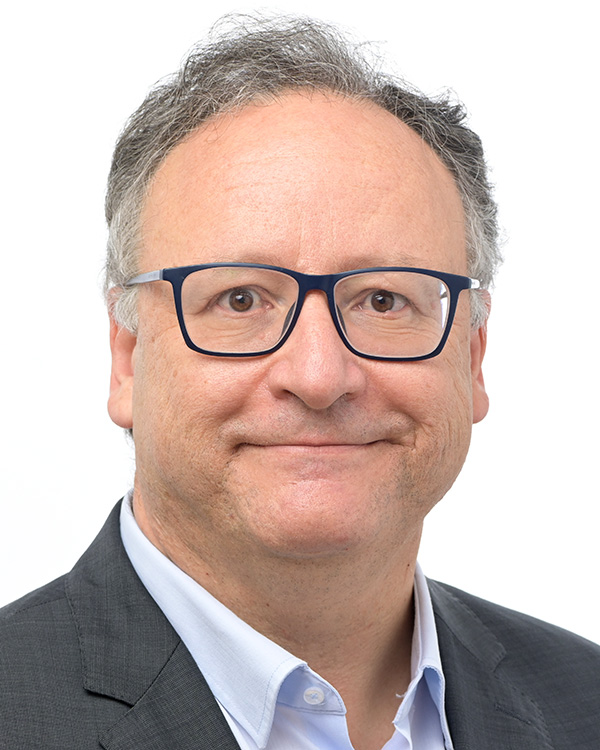
 Debate contributions by Francisco ASSIS
| Rank | Name | Country | Group | Speeches | |
|---|---|---|---|---|---|
| 1 |

|
Lukas SIEPER | Germany DE | Non-attached Members (NI) | 321 |
| 2 |
|
Juan Fernando LÓPEZ AGUILAR | Spain ES | Progressive Alliance of Socialists and Democrats (S&D) | 280 |
| 3 |
|
Sebastian TYNKKYNEN | Finland FI | European Conservatives and Reformists (ECR) | 247 |
| 4 |
|
João OLIVEIRA | Portugal PT | The Left in the European Parliament (GUE/NGL) | 195 |
| 5 |
|
Vytenis Povilas ANDRIUKAITIS | Lithuania LT | Progressive Alliance of Socialists and Democrats (S&D) | 183 |
All Contributions (99)
 Brutal repression against protesters in Iran (debate)
Date:
20.01.2026 16:22
| Language: PT
No text available
Dramatic global rise in violent attacks against humanitarian workers and journalists (debate)
Date:
18.12.2025 14:06
| Language: PT
No text available
Arbitrary arrest and sentencing of academics Bahruz Samadov and Igbal Abilov in Azerbaijan
Date:
17.12.2025 19:26
| Language: PT
No text available
The deepening democratic crisis in Georgia (debate)
Date:
17.12.2025 16:55
| Language: PT
No text available
The urgent need to combat discrimination in the EU through the horizontal anti-discrimination directive (topical debate)
Date:
17.12.2025 13:20
| Language: PT
Madam President, Commissioner, Minister, ladies and gentlemen, the principle of equality is, alongside the principle of freedom, one of the founding principles of modern Western democracies. Westerners, in the sense that we democrats value the concept of the West as heir to the great Enlightenment tradition, as opposed to the way the far right refers to it. Today we are debating the Horizontal Anti-Discrimination Directive, because Europe is truly facing a moment of choice. In a context of clearly increasing hatred, exclusion and fear, inaction itself becomes a political decision and a truly dangerous one. Unfortunately, when the Council postpones, discrimination advances. Human dignity manifests itself in access to health, education, housing and essential services. It manifests itself in the daily life of all types of minorities: sexual minorities, persons with disabilities, the elderly, religious minorities, and all those living at the intersection of multiple discriminations. The European Union also exists to protect people. And protecting people often requires political courage – especially when authoritarian forces try to relativise equality. That is why adopting this directive is not a symbolic gesture, it is an act of undelayable political responsibility.
Bilateral safeguard clause of the EU-Mercosur Partnership Agreement and the EU-Mercosur Interim Trade Agreement for agricultural products (A10-0254/2025 - Gabriel Mato) (vote)
Date:
16.12.2025 11:37
| Language: PT
Madam President, the EU-Mercosur Agreement is very important geopolitically and geo-economically, especially in the present international context. The agreement will certainly result in significant advances for the economy of both trading blocs – with savings in tariffs, increased foreign investment and economic growth – and, above all, in deepening ties between two blocs made up of democratic countries that respect the rule of law and human rights and are committed to sustainable development. I would also like to highlight the extraordinary role played by the Brazilian President, President Lula da Silva, over the years, in ensuring that this agreement materialises. But today, we are not going to vote on this agreement. What we are going to do today (as has already been rightly said) is to vote on an instrument that responds to the wishes of part of the agricultural sector and the concerns of policy-makers in several European countries. That sector and those countries have asked for more guarantees, and those guarantees are here. They are improved here, moreover, by the work done in this Parliament, by the openness and involvement of various political groups in the search for the broadest possible consensus. We shall therefore vote in favour, and I reiterate the appeal just made by the Member who preceded me.
Phasing out Russian natural gas imports and improving monitoring of potential energy dependencies (debate)
Date:
16.12.2025 08:29
| Language: PT
Madam President, Commissioner, ladies and gentlemen, for too long we have ignored, or at least pretended to ignore, the geopolitical risks associated with the excessive concentration of energy sources. The invasion of Ukraine has clearly exposed our energy dependency on Russia – Russia which has been using energy as a tool of coercion. The effects have been dramatic for our security, for our economy and for European families and businesses. By phasing out Russian gas imports permanently, we strengthen our strategic autonomy while strengthening our energy system. And we will do so on the basis of solidarity between Member States – improving existing infrastructure, developing interconnections, diversifying suppliers and investing in sustainable energy sources. But our dependence is not limited to gas. In this Parliament, we have repeatedly stressed the need to extend the ban to other forms of energy from Russia. That is why we welcome the European Commission's commitment to come forward early next year with a proposal to eliminate imports of Russian oil. The Commission will certainly count on Parliament's support for such an initiative.
EU political strategy on Latin America (debate)
Date:
07.10.2025 19:18
| Language: PT
Madam President, Commissioner, I naturally share the various considerations that have already been made here about the importance of strengthening cooperation between the European Union and Latin America for geopolitical, economic, civilisational and cultural reasons. I have nothing to add. I will therefore concentrate on a specific issue which has already been dealt with here and which has to do with the internal situation in Brazil. It is absolutely unacceptable to create any confusion between the Cuban dictatorship and Brazilian democracy. Brazil is even an example to the world, with what has been going on in recent times. What happened was as follows: There was a president who, in the final phase of his term, realizing that he was going to lose the elections, drew up a plan, with a view to carrying out a coup d'état that would prevent the inauguration of the elected president, in this case President Lula, and also presupposed the assassination of some of the main figures of political life and judicial life in Brazil. The plan was a macabre plan. It was a plan that advanced towards the assassination of President Lula and some of the leading figures in Brazilian politics. What happened was that the Federal Supreme Court, in the full exercise of its powers and in respect of the principle of the separation of powers, took a resolution, by four votes against one, to consider that Jaír Bolsonaro was guilty of an attempted coup d'état and, as such, was duly convicted. This is an example to the world. Brazil is not a problem. Brazil is an example.
The EU’s role in supporting the recent peace efforts for Gaza and a two-state solution (debate)
Date:
07.10.2025 11:59
| Language: PT
Madam President, Minister, Commissioner, on 7 October my first word is for the survivors of the pogrom carried out by the ruthless Hamas terrorists exactly two years ago, for the injured and for those who remain abducted, it is unclear under what conditions. My solidarity also goes to Israeli families in mourning or who have since lived in anguish over the fate of their loved ones. There is, however, today a very broad consensus on the glaring disproportion of the response given by Israel. After two years of carnage in the Gaza Strip, some light finally appears at the end of the tunnel. There seems to be a plan. This will require opening on both sides to take steps to achieve it. Let us note, moreover, that this advance is not due to the European Union, which continues to play a role of mere extra on a stage where it was obliged to be one of the main actors. Perhaps there was no alternative, or there seems to be no alternative, to that plan, but it is no less true – and we must say so here – that this plan can carry with it neocolonial traces of very bad memory. We cannot therefore uncritically adhere to this plan under any circumstances. We must remain vigilant.
Investments and reforms for European competitiveness and the creation of a Capital Markets Union (debate)
Date:
08.09.2025 16:36
| Language: PT
Madam President, Commissioner, ladies and gentlemen, I would like to begin by welcoming the author of this report, Mrs Aurore Lalucq. It's an excellent report. The Draghi Report is absolutely clear in pointing out as one of the fundamental reasons for the lack of European competitiveness the very low levels of investment, when compared, for example, with the United States. Despite high levels of savings, even higher than in the US, Europe invests €800 billion less per year than it should to have a thriving and productive economy. Interestingly, in this Parliament, the insistent and absolutely legitimate comparison with the United States – let us remember, a federation of states with a robust budget and federal taxes – is brought to us by political groups that resist any kind of federalist deepening of the European project. Europe needs to overcome this chronic deficit quickly and will only do so if it rescues the European budget from its irrelevance, if it assumes the need to create permanent investment instruments and if it moves towards the creation of its own revenues at Union level. This will certainly require wide-ranging political changes.
Arbitrary arrest and torture of Belgian-Portuguese researcher Joseph Figueira Martin in the Central African Republic
Date:
09.07.2025 19:11
| Language: PT
Mr President, Commissioner, Joseph Figueira Martin is an expert in transhumance and pastoralism who has had the supreme misfortune to fall into the clutches of the Wagner Group, mercenaries who are now thriving in Africa at the expense of the destabilization, violence and suffering of many Africans. Joseph is a Belgian citizen, a Portuguese citizen and a European citizen. Despite this, he has been incarcerated for more than a year in a Central African Republic prison, under deplorable conditions, on the pretext of the absurd accusation of being a spy for the United States. He has not yet been questioned by a judge, much less tried. He's extremely debilitated. You risk life in prison with hard labor. In view of the seriousness of the situation of our European compatriot, it is unthinkable that the European Union should not move worlds and funds to obtain his immediate release, including, if necessary, by reminding the authorities of the cooperation programmes with the country and the respect for human rights that it is obliged to observe, for example, in the framework of the Samoa Agreement between the European Union and the ACP States.
Outcome of the Conference on the Financing for Development in Seville (debate)
Date:
09.07.2025 18:26
| Language: PT
Mr President, Commissioner, Minister, when developed countries help developing countries, which is a moral obligation, they are also helping themselves. Extreme poverty leads to inequality, exodus, conflict and war. It causes these countries to be weakened in the concert of nations, more vulnerable to foreign influence and destabilisation, terrorism, corruption and systematic human rights violations. This has negative effects on the most prosperous countries as well. Unfortunately, what we have seen is a backlash in development support, notably from the United States with the end of USAID, which may have – and is already having – increasingly visible tragic consequences for millions of people. And while the enormous convergence on the Seville compromise reached is to be welcomed, the withdrawal of the negotiations by the United States is yet another confirmation that it is up to the European Union, at this historic moment, to live up to its responsibilities.
Democratic Republic of the Congo-Rwanda peace deal agreement (debate)
Date:
09.07.2025 17:37
| Language: PT
Mr President, Commissioner, at first sight, this peace agreement even seems to be relatively encouraging news in the current panorama of the African continent. It is essentially a transaction between those two countries and the United States of America: ceasefire and minerals in exchange for investment. However, accountability and reparation for the very serious human rights violations committed by both sides were left out of this agreement. This agreement will bring peace, but it will maintain impunity. Conflict will not disappear, it will only be opportunistically suspended, which means that, at any moment, it can be opportunistically re-ignited. For that very reason, the European Union should not be left to a role of mere observer. It must strive to address the root of instability and violence in this region and must put the protection of the civilian population first and foremost by conditioning its relations with Rwanda. First of all, the complete withdrawal of its troops and affiliated militias from the Democratic Republic of Congo and thus suspending the Memorandum of Understanding with that country until that happens.
Financial activities of the European Investment Bank – annual report 2024 (debate)
Date:
07.07.2025 17:33
| Language: PT
Mr President, Commissioner, Mr Vice-President, I would like to begin by thanking you for all the cooperation that the Bank has given us in drawing up this report. The debate proceeded as expected. Those who are in favour of the major political priorities of the European Union are, of course, in favour of those which are the Bank's investment priorities. Those who are against the major political priorities of the European Union are against the Bank's investment programme. Just now, Mr Oliveira was very clear about that, saying exactly that. What would be strange, however, is that the European Investment Bank should adopt priorities which are contrary to, or even different from, those which are the priorities, the policies, clearly adopted at the level of the Commission and Parliament, and which have been democratically supported by the peoples of Europe. The European Union, I said earlier, needs to create new investment instruments. It has done so. There is progress towards realising these new investment tools, including the ongoing effort to promote a Capital Markets Union and complete the Banking Union. That is absolutely fundamental. The Bank does not, of course, have the capacity to meet all European investment needs. Despite all this, it has made a very important contribution and that contribution has been in areas that seem very relevant to us. I will end by quoting the EIB Group’s Strategic Roadmap 2024‐2027, which are the following areas: the climate bank, which has sparked fierce opposition from the far right, but this is understandable – not least because it has a climate-change denialist outlook; digitalisation and the deployment of new technologies, which will allow us to catch up with other more advanced economies than our own; the security and defence industry, a political choice resulting from the geopolitical transformations that have taken place in recent years; a modern cohesion policy, which is also a majority option; agriculture and the bioeconomy; Europe’s social infrastructure – and here I want to emphasise precisely the housing dimension – and high-impact investments outside the EU, as well as the Capital Markets Union. I believe that these, being options of the Bank, are clearly majority options in this House. In any case, as rapporteur, I would like to thank everyone for their contribution to this interesting debate.
Financial activities of the European Investment Bank – annual report 2024 (debate)
Date:
07.07.2025 16:27
| Language: PT
Mr President, Commissioner Albuquerque (I am particularly pleased to be my compatriot), ladies and gentlemen, today in this plenary we are discussing the report drawn up over several months on the financial activities of the European Investment Bank in 2024. I highlight the constructive and open spirit with which all shadow rapporteurs participated in the negotiations. The dialogue has always been frank and honest. I believe that, in the end, we have a balanced report, consistent and aligned with the main objectives set at the beginning of this process. As this is a report on the merits and shortcomings of the Bank's past activity, it should also be a forward-looking exercise that highlights the new challenges facing the European Union and finds new areas of activity where the Bank can play an even more important role. It is true that the EIB has been fully aligned with the political priorities of the European Union. However, it is also absolutely clear that, given the colossal scale of the challenges ahead, we cannot address them with just one more call on the EIB to do what is the responsibility of the public authorities: drastically increase public and private investment capacity in Europe. I would now like to specifically address some of the most relevant topics in this report. Firstly, the role of the EIB in investing and promoting competitiveness. The investment gap identified in the Draghi report amounts to €800 billion annually. All economists know, and have said, that reproductive investment is the necessary condition for future economic growth. And while we recognise the important role the EIB has played in financing European priorities, it is also clear that the needs far exceed the Bank's additional capacity. The European Union must therefore make the creation of its own investment instruments a top priority. We also consider it essential for the promotion of investment and European competitiveness that the Capital Markets Union is further advanced and the Banking Union completed. In this report, we also call on Member States to give serious consideration to the need for a capital increase of the European Investment Bank. Finally, it is crucial to preserve the Bank's triple A, a key asset that is largely the result of its strong alignment with the European Union's strategic priorities, first and foremost the European agenda for the transition to a green economy. And I would now like to talk precisely about the central role of the European Investment Bank as a climate bank in the European Union and underline its alignment with the EU sustainable finance framework, including by integrating, where applicable, the taxonomy criteria, supporting the energy transition by financing sustainable and clean technologies, and its active contribution to efforts to decarbonise the European economy. More than 50% of EIB investment is currently dedicated to these areas, which we naturally welcome. This level of ambition must be maintained in the future, not only because it is necessary to continue transforming human activity and making it compatible with the limits of the planet, but also because it is in this area that Europe can anchor its economic competitiveness. We recognise the EIB’s pioneering role in the green bond market and the scale of its work in this area. The EIB is now the world's largest issuer of green bonds, a leadership that naturally needs to be maintained. The Bank should also remain particularly committed to tackling energy poverty, the need to strengthen preparedness for extreme climate events and supporting the populations most affected by the green transition, which also means investing in the re-skilling of workers, a concern that also applies to the digital transition that we are undertaking. As regards the security and defence sector and its financing, the report highlights the doubling of investment from 23 to 24 and is expected to double again by 25 to reach €2 billion. I think it is widely agreed in this House that the impacts of the ongoing geopolitical changes demand from Europe another leadership capability in its diplomatic and military dimensions. Europe should invest more in its defence, as it should seriously value its external action, of which the Global Gateway is a key example. However, we believe that investment supported by the EIB should continue to fulfil the dual-use criterion - civil and military. This is for several reasons: firstly, the EIB eligibility criteria and financial allocations in this area have been continuously updated, including in recent months; because the Commission has introduced new instruments and funding sources for defence under initiatives such as ReArm and SAFE; and finally, because the financing of the purchase of arms and ammunition could have a negative impact on the reputation and adaptation of the Bank’s credit. In this regard, we would also like the EIB to clarify whether the decision not to set a ceiling for defence financing has any impact on the other policy priorities. It is crucial that it is clear in this House that additional investment in defence will not come at the expense of the other areas of intervention. And on those other areas of intervention, I would like to say that we consider it crucial that the EIB continues to finance investment in social infrastructure. I would like to highlight the EIB's contribution to increasing the supply of affordable and energy-efficient housing and to welcome the EUR 10 million investment plan planned for the next two years. However, the data provided to us by the Bank itself point to much higher needs. We are talking about 1.5 million new homes and 5 million renovated homes per year, which will mean an annual investment volume of between EUR 300 and 400 billion. Once again, it is clear that the Bank can only play a complementary role and that public and private investment in the EU must be promoted. We also welcome the EIB’s focus on cohesion policies, which are key to correcting regional asymmetries and promoting social inclusion, and welcome the Bank’s work in stimulating youth employment, access to vocational training and encouraging innovation. Finally, I would like to stress the importance of dialogue and cooperation between this Parliament and the Bank. The Bank's growing importance calls for greater democratic accountability. S&D does not, however, want to undermine the EIB's autonomy. We respect and protect it. But we believe it is essential that an interinstitutional agreement be established between Parliament and the European Investment Bank, something that this House has been calling for and which, once again, appears in this report.
Institutional and political implications of the EU enlargement process and global challenges (debate)
Date:
19.06.2025 08:08
| Language: PT
Mr President, Commissioner, the enlargement process is intrinsic to the European project and even to the very European spirit that underlies it. It is not only the incoming countries that have benefited from the advantages of European integration; the founding countries themselves have already benefited from this advantage. Just look at the German case: it was his integration into the European institutions that allowed him to reintegrate into the international community after the dark Nazi period. After all, it is now a matter of welcoming new countries and new peoples into the EU. The new enlargement that we now have on the horizon must be inspired by the same spirit of sharing and fraternity. But we can hardly accommodate new members with the same institutional architecture and the same treatise collection. The problem is that we are navigating the tumultuous waters of recent years – Brexit, the pandemic, the energy crisis, the invasion of Ukraine – with a sea charter designed almost 15 years ago for a predictable and peaceful climate. In that sense, I would like to recall the formal request made by this House in 2022, and for the first time in its history, calling on the Council to initiate a convention for the revision of the Treaties, in line with the conclusions of the Conference on the Future of Europe. This request has been disregarded by the Council. It is probably time for this Parliament to be heard more by the European Council.
Case of Ahmadreza Jalali in Iran
Date:
18.06.2025 18:02
| Language: PT
Mr President, Commissioner, ladies and gentlemen, recent events in the Middle East have made some forget the true nature of the Iranian regime. This debate reminds us that Iran is one of the most sinister and deadly theocracies in the world. Torture and indiscriminate execution of political opponents or brutal repression of women are just a few examples. But we can also talk about the detention of citizens of European nationality in order to blackmail the European Union and its Member States. This is the case of Professor Ahmad Reza Djalali, a dual Swedish and Iranian national. Therefore, regardless of the current context and the hypothetical outcome of the Israeli intervention, the European Union must increase its pressure on the Iranian authorities to put an end to the death penalty, the obtaining of confessions through torture, the arbitrary detention of dissidents and European citizens and other atrocities that have been its hallmark in recent decades.
Rise in violence and the deepening humanitarian crisis in South Sudan (debate)
Date:
18.06.2025 17:18
| Language: PT
Madam President, Commissioner, ladies and gentlemen, while we are rightly mobilising and indignant at the suffering of other peoples, we continue to despise the suffering of the Sudanese people. Indiscriminate bombings, systematic use of sexual violence and restrictions on humanitarian aid. There are at least 100 000 dead and 11 million displaced. There is currently no sign from the European Union of consistent diplomatic efforts to resolve this problem. There is no accountability for regional actors fuelling the conflict – starting with the United Arab Emirates, the main support of paramilitary militias trying to take control of the country. The European Union has not yet even been able to impose sanctions against those principally responsible for the cycle of violence in Sudan and those principally responsible also for the supply and acquisition of weapons, despite the various recommendations issued by this Parliament to that effect. There will perhaps be a place in future history books to highlight the international community's indifference to this horrendous war, the deadliest of our time.
Safeguarding the rule of law in Spain, ensuring an independent and autonomous prosecutor's office to fight crime and corruption (debate)
Date:
18.06.2025 13:56
| Language: PT
Mr President, Commissioner, a few years ago, when a referendum was held in Catalonia, a number of voices were raised here in the European Parliament, calling Spanish democracy into question. And I stood up at the time and made a speech saying that we could agree or disagree with the way Mariano Rajoy's government was dealing with the Catalan issue, but that under no circumstances did we have the legitimacy to call into question the democratic character of Spain. And I praised even the process of democratic transition in Spain. And today I come here to say exactly the same thing; Spain is a great democratic country, Spain is one of the great democracies of Europe. There is a plan of political confrontation between parties that is normal and natural and takes place in all countries. It also happens in my country. It is part of democracy. Now, the problem with our democracies is when the center parties start behaving like radical parties. I'm not surprised by what the far right says. Nothing surprises me. For the far right, the great criminal offence in Spain is simple: The left is in government. The left to govern is for the far right, already in itself, a criminal offense, because if they really did, the left was not governing, it was in jail, as it has always been in the period of Francoism, and as it has been in many countries of Europe whenever the far right has ruled. That's the difference. But the People's Party is another party. The Popular Party is a founding party, with the PSOE, of Spanish democracy. The People's Party has ruled for many years and, therefore, I do not come here to make any reference to the situations of corruption of this or that. When there is corruption, it has to be tackled. When there is corruption, it must of course be dealt with properly. But are you saying that the democratic rule of law is at stake in Spain? I read the Spanish press every day and see many newspapers that are highly critical of the government. Anyone who looks at the Spanish press every day sees brutal attacks on Prime Minister Pedro Sanchez, as is not the case in my country. I must say that in my country this does not happen on the same terms as it does in Spain. The political debate in Spain is a more polarized debate than it is in Portugal. Maybe one day will be different. We go to social media and we see the same thing. There is an ongoing process of changing the judicial system that is in line with what is happening across Europe. Therefore, it is absolutely (“...”)
Stopping the genocide in Gaza: time for EU sanctions (topical debate)
Date:
18.06.2025 11:23
| Language: PT
Madam President, it is with double sadness that I address this House today; Sadness for the suffering of the Palestinian people and sadness for what Israel has become. In its theoretical foundations, there was a time when early Zionism was a form of humanism, and today Israel is the absolute negation of that same humanism. The Israeli government's plan for the total seizure of Gaza territory is a blatant violation of international law and amounts to pure and harsh ethnic cleansing. Israel responded with barbarism to the barbarism and thereby lost all sense of reason following the heinous attack of 7 October 2024. The European Union's response to the ongoing killing in the Gaza Strip cannot be limited to suspending the Association Agreement, but must clearly go further. In view of the extreme gravity of the situation, it is imperative for the European Union to move swiftly with individual sanctions on Israeli political and military leaders, including asset freezes. It must also move forward with a full embargo on arms supplies to Israel and a ban on trade with illegal settlements. These measures are essential to protect the Palestinian people.
Upcoming NATO summit on 24-26 June 2025 (debate)
Date:
18.06.2025 09:12
| Language: PT
Mr President, Madam High Commissioner, history does not teach us everything, but it does teach us some things. The pacifists of the 1930s became, for the most part, supporters of Nazism in the 1940s and supporters of the Soviet totalitarian system in the 1950s and 1960s. That's how they ended up. They have stopped defending democratic regimes. NATO has played a key role in recent decades in defending precisely a set of values and principles that are exactly the same as those that inspire the European Union and that underpin the model of the liberal democracies that make up our alliance of countries. We are at a particularly difficult time. There are tensions within NATO itself; there is erratic behaviour on the part of the United States; there is certainty that Europe needs to do more for its own defence and that we need to increase the volume of investment in this sector. I am not one of those who thinks that we should have certain absolutely pre-established numbers, such as 4% or 5%. We will have to act according to our needs and also according to our possibilities. Under no circumstances should we call into question other aspects and other absolutely essential commitments. But the truth is only one: there is no national sovereignty, no European sovereignty, if we do not have the capacity to defend ourselves against our enemies. We are not the ones who choose our enemies. It is our enemies who choose us as their enemies.
80 years after the end of World War II - freedom, democracy and security as the heritage of Europe (debate)
Date:
08.05.2025 07:53
| Language: PT
Mr Bugalho and my dear friend, I believe that there are certain circumstances in which we must know how to transcend our political positions. There are times for the most banal and everyday political dispute, and there are other times when we have to be above it. And if there is an example in Europe – and in the last century there have been several – one of them was and is arguably that of General De Gaulle. Being here today in Strasbourg, being here today in France, it would seem to me an enormous injustice that no one in this Parliament refers to that absolutely extraordinary figure of the 20th century in Europe who was General Charles de Gaulle. De Gaulle represents everything, it represents the most important thing a man of state can represent, the struggle for freedom, courage, the willingness to take the risk of life in the name of higher values.
80 years after the end of World War II - freedom, democracy and security as the heritage of Europe (debate)
Date:
08.05.2025 07:50
| Language: PT
Madam President, on 18 June of the already distant summer of 1940, a French army general, in absentia from the established power, issued a challenge to his compatriots: Charles de Gaulle is one of the most suggestive manifestations of the role of the individual in history and of the importance of free action in the course of human events. Hannah Arendt, after attending Adolf Eichmann's trial in Israel, developed the idea of the banality of evil. The man who accepts to be an uncritical piece in a monstrous institutional mechanism becomes irrevocably an agent of evil. There is no innocence in the peaceful acceptance of perfidy. Eichmann, in his dreadful normality, represents the human being bureaucratized and reduced to a non-moral condition. De Gaulle represents the opposite of all this. He knew the risks he was taking. In a conversation with friends, he said, "They're going to take me for an adventurer, and yet I've never been an adventurer. They will say that I am a rebel because I refuse to obey certain orders. But the true rebels are those who do not obey the most sacred duty: defend his country to the last possibility, alongside his last ally. Maybe they'll put me to death. Until now, the generals had condemned to death the simple soldiers who were going to leave the battlefield. This time they will condemn a general who refused to flee that same battlefield. This is the great lesson of Charles de Gaulle. We, in certain circumstances, cannot escape the battlefield.
Resilience and the need to improve the interconnection of energy grid infrastructure in the EU: the first lessons from the blackout in the Iberian Peninsula (debate)
Date:
07.05.2025 14:04
| Language: PT
Madam President, Commissioner, ladies and gentlemen, I must say that I am not going to enter into any debate here on the merits and demerits of the action of the Portuguese Government for a very simple reason: I respect the principle of subsidiarity in this matter and do not transpose to the European Parliament matters that can and should be dealt with in national parliaments, in particular in the Portuguese Parliament. Portugal and Spain are leading the way in converting their energy savings, valuing renewable energy sources, which puts them in a very advantageous position to achieve the objectives of the European Green Deal. This is due, of course, to some geoclimatic features of the Iberian Peninsula. In Portugal, more than two thirds of all electricity consumed today comes from renewable sources. This is a huge step towards energy autonomy. I should also remind you that in 2021, the Portuguese government shut down two power plants that were still burning coal, which unambiguously delivered the environmental benefit and is also an important political signal of Portugal’s commitment to the green transition. The key word in this issue, for the assessment of the impact of the blackout, is the word ‘transition’. A transition entails challenges and often means having to deal with unexpected situations. And, therefore, where we have to bet is on the modernization of networks, on the digitization of networks. The debate cannot be between renewables and (...)
EU support for a just, sustainable and comprehensive peace in Ukraine (debate)
Date:
07.05.2025 08:09
| Language: PT
Madam President, we live in strange times. Never has the European Union been so isolated, and never has the European Union been so necessary to the world. No, this is not a paradox; this is a finding – and it is a finding that imposes political and moral obligations on us. Of course, we didn't always do everything right. And those who warn of some inconsistencies in European foreign policy and in the various European countries are right. But we cannot fail to recognise that, in spite of everything, it is the European Union that has contributed in the world so that values are progressively superimposed on force and so that international law can supersede mere checks and balances. And the case of Ukraine is a paradigmatic case. We are facing an illegal and unacceptable war, a war that must be condemned, without any doubt, morally and politically. And we have an obligation to the Ukrainians. Our obligation to the Ukrainians is an obligation to ourselves, to the values that inspire us and that we constantly proclaim. And, therefore, any peace process in relation to Ukraine must rely, first of all, on the principle of respect for the sovereign will of the Ukrainian people, which has expressed itself in blood in recent years.