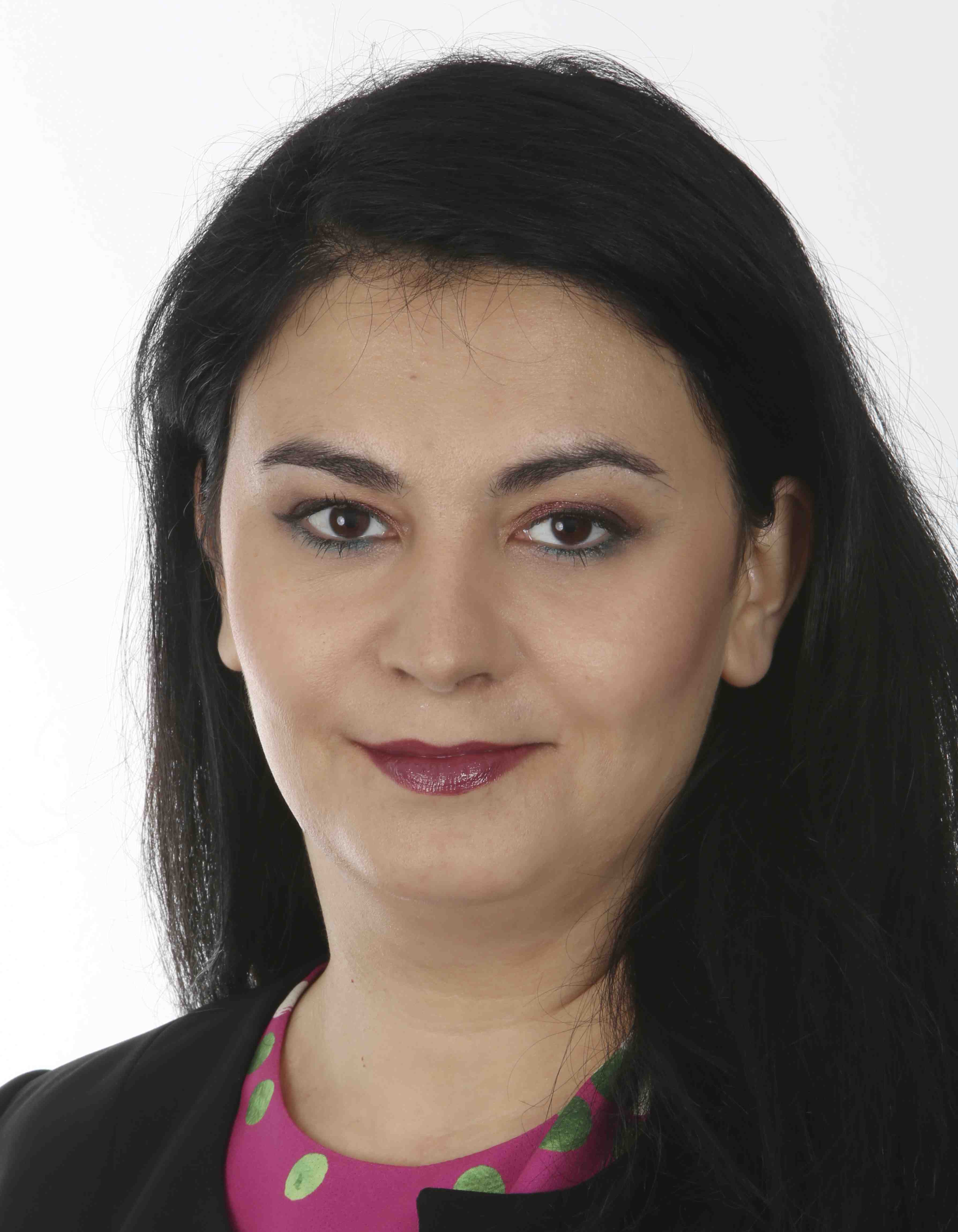
 Debate contributions by Georgiana TEODORESCU
| Rank | Name | Country | Group | Speeches | |
|---|---|---|---|---|---|
| 1 |

|
Lukas SIEPER | Germany DE | Non-attached Members (NI) | 321 |
| 2 |
|
Juan Fernando LÓPEZ AGUILAR | Spain ES | Progressive Alliance of Socialists and Democrats (S&D) | 280 |
| 3 |
|
Sebastian TYNKKYNEN | Finland FI | European Conservatives and Reformists (ECR) | 247 |
| 4 |
|
João OLIVEIRA | Portugal PT | The Left in the European Parliament (GUE/NGL) | 195 |
| 5 |
|
Vytenis Povilas ANDRIUKAITIS | Lithuania LT | Progressive Alliance of Socialists and Democrats (S&D) | 183 |
All Contributions (46)
 Democratic legitimacy and the Commission’s continued authorisation of genetically modified organisms despite Parliament’s objections (debate)
Date:
07.05.2025 19:56
| Language: RO
Madam President, by her apparent generosity. The European Commission is unveiling legislation that no longer fits the weather and times, allowing GM plants to be imported into animal feed. Today, while we are discussing in plenary, whether we want to accept it or not, despite the European ban, genetically modified plants are already in the feed of animals and, implicitly, of humans, without being sure of the consequences for the human body, because neither the Commission nor the European Parliament actually solves the underlying problem of European agriculture: Lack of global competitiveness. After dozens of agricultural reforms and layers of legislation, the European farmer became trapped on his own farm. It produces hard and expensive because of the strict, patchy legislation to sell cheaply and insufficiently compared to its non-EU counterpart. If we want crops that are resistant to the new climate conditions, sufficient crops for both animals and people, and an agricultural sector that is environmentally and health-friendly for Europeans, it is time to rely less on the cloth and more on science. New plant breeding techniques would have saved us today from unnecessary debate and would have given European farmers back the lost edge over global competitors.
Malta's Golden Passport scheme circumventing EU sanctions against Russia (debate)
Date:
07.05.2025 16:36
| Language: RO
Mr President, it is the sovereign right of each Member State to decide who can become its citizen, and this right must not be undermined by a broad interpretation of the Union Treaties. Golden visa investment programmes can be a legal and legitimate instrument for raising capital and economic development. Let us not forget that other Member States have similar schemes, but we see again the double standard applied to smaller countries. Let's tell the truth: if Malta offered overnight citizenship to migrants, it would not have made anyone uncomfortable in Brussels. The problem with "golden visa" schemes is that they allow states to make money other than through loans. If we really want to talk about the ‘do not sell our citizenship’ principle, then let us do it fairly and not selectively. In Romania, a law has just been given to reduce the period of obtaining Romanian citizenship only for migrants. So we can make them fast-forward European citizens, but we do not accept and do not want other rich citizens from outside the EU.
Delivering on the EU Roma Strategy and the fight against discrimination in the EU (debate)
Date:
02.04.2025 17:52
| Language: RO
Mr President, the Roma are the largest ethnic minority in the EU, with around 12 million citizens, of whom more than one million live in Romania. Despite the EU Roma strategic plan and national support programmes, they continue to face the same serious problems: extreme marginalisation, poor socio-economic conditions, discrimination, violence, unemployment, poverty, poor housing and poor health standards. It all starts with education. In Romania, 70% of the Roma population is affected by poverty and school dropout. Studies show that about two thirds of Roma have either not graduated from any class or have only graduated from the top 8. These problems could be solved by implementing specific educational programmes adapted to Roma traditions and lifestyles and with an adequate allocation of resources, both financial and human. Programmes should target both children and young people and adults and could contribute to the long-term social inclusion of this disadvantaged community. We are helping refugees and victims from third countries, but we are not investing enough in solving the problems of the Roma community. Our lives, all of us, would be much better if we made sure that through education we would make their lives better.
The importance of trans-European transport infrastructure in times of stalling economic growth and major threats to Europe’s security (debate)
Date:
02.04.2025 16:07
| Language: RO
Mr President, the development of transport infrastructure within the EU is one of the best strategic directions that we can pursue both from an economic or military perspective and in terms of the cohesion of the European project. Unfortunately, in Romania, due to profoundly incompetent governments, we have long delays with the implementation of projects included in the TEN-T network, both on the area of speed roads and especially on rail. Many projects are still stuck in bureaucracy: documentation, feasibility studies, tenders, approvals and clarifications. And here is also the fault of the current European Commission, which seems to have taken its hand off Romania and lets the government in Bucharest go at its snail pace. The second relevant observation is that the Starline network was thought very badly about Romania. If the current government hasn't told you, I'll tell you. To get from Bucharest to Brussels, you have to change trains three times, once in Sofia, once in Frankfurt and once in Paris. A distance of 2 100 kilometres turns into 2 850 kilometres. A Bucharest-Budapest connection would be more normal and natural and would cover a larger part of Romania, crossing it, but it was not wanted.
Topical debate (Rule 169) - Social Europe: making life affordable, protecting jobs, wages and health for all
Date:
02.04.2025 12:29
| Language: RO
Mr President, dear colleagues, how can we talk about social Europe and making life accessible to all if the level of exposure to poverty in the Union is above 21%, i.e. the risk of poverty reaches more than one in five of our citizens. The situation is even worse when we talk about Romania, where one in three citizens is at risk of poverty, which unfortunately reaches the highest level in the EU. What are we doing specifically for these people? We are preparing a strategy against poverty and we have a European Pillar of Social Rights, established almost ten years ago. We are investing through the main financial instrument, the European Social Fund Plus, more than five and a half billion euros in actions to help eradicate poverty. However, from 2015 to 2023, the risk of poverty decreased by only 2.6 percentage points, so we are not doing enough. By comparison, EU humanitarian and civil protection aid to third countries amounts to around €1.65 billion per year, more than €700 million more than aid to the Union's poor. Not to mention the money given to third countries or the financial envelope allocated to the Green Deal. When will we start putting European citizens and their needs first?
Union of Skills: striving for more and better opportunities to study, train or work in the EU and to bring our talents back home (debate)
Date:
12.03.2025 14:46
| Language: RO
Mr President, Commissioner, ladies and gentlemen, the Commission is talking about a skills union and bringing talent home. We agree. We at Gold have been talking a lot about the need to repatriate the diaspora. But where was this concern of EU bureaucrats 20 years ago, when millions of Romanians and Eastern Europeans were forced to leave because their own economies were suffocated by the policies imposed by Brussels? There is talk of creating better opportunities in the EU, but what kind of opportunities and for whom? Because while the EU opens its arms wide to migrants and sends money to support countries on other continents, our young people don't seem to be prioritised. A European future for Europeans, and not for others, means concrete and generous financial solutions to support education and retraining. It means vocational schools, scholarships and financial support for young people to complete their education cycle, as well as real anti-poverty policies. If we want a strong Europe, every state must be strong, not just a few capitals. It is not forced migration and mobility that saves Europe, but real opportunities and the best possible education for all citizens.
Need for targeted support to EU regions bordering Russia, Belarus and Ukraine (debate)
Date:
12.02.2025 15:39
| Language: RO
Madam President, since the beginning of the conflict, 5.2 million Ukrainian refugees have arrived or passed through Romania. We opened our arms wide and received them, we gave them housing and humanitarian aid, schools for children and then jobs for adults. Ukrainian grain transited through Romania even at the cost of serious road damage. We helped with a lot of money, even with the donation of the only functioning Patriot system we had. We helped because we understood the drama and the need, because we know better than many Europeans what it means to have enemies of the Russians. But Romania is terribly close to war. Russian drones sometimes fall on Romanian territory, and from villages in the Danube Delta you can hear bombings across the border from Ukraine. The aid that the EU intends to provide to Ukraine must also be extended to the neighbouring countries of this war, which have also suffered financial losses. If the EU helps only Ukraine, but not the EU countries already affected by the conflict, the message received by the European citizen paying taxes is that others matter more than we do. Solidarity must not be selective. Conclusion: European money for Romania and for the other EU countries neighbouring the war.
Boosting vocational education and training in times of labour market transitions (debate)
Date:
11.02.2025 13:58
| Language: RO
Mr President, looking to the future, education and training will continue to be key pillars of excellence. Romania condemned its future when it closed its arts and crafts schools. Vocational education is the basis of education in all the advanced states of the world, while in our country the project of educated Romania was to produce university diplomas on a conveyor belt, to enrich private schools, and our university graduates not to be good at anything. What good are diplomas? We have university graduates who are now unskilled workers in the diaspora, in construction or agriculture, or cashiers at supermarkets in the country. At the same time, we wait for weeks when we need the services of an electrician or plumber, simply because we don't have enough. Our young people leave the country or learn to make money from something else, but not from skilled trades, because the Romanian state does not teach them either books or skills. It is time to restart vocational education and give young people a secure future by learning a trade. Only in this way will we be able to contribute effectively to the increase of the birth rate and to the economic development of our country.
Addressing EU demographic challenges: towards the implementation of the 2023 Demography Toolbox (debate)
Date:
22.01.2025 14:03
| Language: RO
This is not hate speech, this is a pragmatic issue. Do we put the European citizen first or not? We are in a European institution and we are elected by Europeans to represent the interests of the member countries of the European Union. This means prioritising the interest of the European citizen. Let me remind you of one thing about my country: Romania has given many migrants who left the country legally in order to seek better working conditions and to seek a better life in other countries, and they have not always been well received, they have not always been much respected, but that does not mean that we have to make a comparison between the situation of legal migrants and the situation of illegal migrants.
Addressing EU demographic challenges: towards the implementation of the 2023 Demography Toolbox (debate)
Date:
22.01.2025 14:01
| Language: RO
Mr President, the fact that the European Union has a big demographic problem is nothing new. Studies, reports, policy lines, strategic agendas: all demonstrate that the birth rate is declining and that we cannot and do not believe that we must fill the gap of European citizens with migrants from non-EU countries. In order to solve the demographic problem, we need to take two directions: firstly, to encourage birth rates by offering pragmatic housing solutions, cheap housing for young people and tax breaks for families with many children, as well as programmes for the gradual return of mothers to work. Secondly, to increase the economies of the member countries, so that the minimum wage level of citizens is sufficient for young people to take on the role of parents. In conclusion, good houses and salaries. Without them, we will see a collapse of European civilisation and a de-Europeanisation caused by the growing phenomenon of migration. Look around, don't you think we're slowly being colonized? Do we still want to have European civilization in 50 years or not?
The Hungarian government’s illegal espionage of EU institutions and investigative bodies (debate)
Date:
21.01.2025 16:21
| Language: RO
Mr President, I am a firm supporter of the presumption of innocence, but if the revelations prove to be true, I would like to ask: What do you call yourself when the European institutions come to control a firm of your son-in-law and you have the internal secret services track those officials and illegally access their phones to sabotage their investigation? First of all, you call yourself corrupt, because interventions of this kind on public officials are part of the corruption deeds. Second, you call yourself an amateur in espionage. You've been shamefully caught, so you're not good at it. And third, worse than anything, you call yourself an impostor or hypocrite. You, the great fighter against globalism and the European establishment, are using exactly the globalist methods of removing your enemies. You're doing exactly what Donald Trump's Democrats did. Mr Orban, if the revelations are true, I would like to warn you that Hungarian citizens frequently cross the border to Transylvania, that is, to Romania, to make their purchases, because food is cheaper in my country and the standard of living is better. Perhaps you should be more concerned about the welfare of the Hungarian people than any other subject.
Misinformation and disinformation on social media platforms, such as TikTok, and related risks to the integrity of elections in Europe (debate)
Date:
17.12.2024 15:29
| Language: RO
Mr President, Article 10 of the European Convention on Human Rights enshrines freedom of expression. Everyone has the right to freedom of expression. This right includes freedom to hold opinions and to receive and impart information and ideas, without interference by public authorities and regardless of frontiers. The only permissible limitations to this essential right of the human being concern national security, territorial integrity or public safety, the protection of law and order, the prevention of crime, the protection of health or morals, the protection of the reputation or rights of others. Online platforms such as TikTok, Facebook, Instagram, X are contemporary means of expression, gradually replacing the classical means. Today, not only journalists or public figures can easily issue opinions in the public space, but any citizen through them. Today, more than ever, everyone's opinion matters. A limitation of the right to freedom of expression, based only on assumptions, without concrete evidence that we find ourselves in the realm of the restrictions allowed by the ECHR, transforms freedom into censorship and democracy into dictatorship.
Regional Emergency Support: RESTORE (debate)
Date:
16.12.2024 17:57
| Language: RO
Madam President, many European countries, including Romania, have been affected this year by natural disasters and money is rapidly needed for the reconstruction of homes and infrastructure, as well as for social and health support. I welcome the fact that this is one of the few times that such a fast-track procedure has been chosen, and I am pleased that I have been able to contribute to this acceleration of funding as rapporteur on my political group. However, I would like to point out that the use of cohesion funds for emergencies must be the exception and not the rule, their purpose being to help Member States stabilise their economies, not to rebuild after natural disasters. For calamities we should have other money available that can even meet the needs of the countries affected. That is why I believe that the new multiannual financial framework must provide for an appropriate budget for the prevention and management of natural disasters, otherwise we risk being in the same situation next year.
Strengthening children’s rights in the EU - 35th anniversary of the adoption of the United Nations Convention on the Rights of the Child (debate)
Date:
28.11.2024 08:48
| Language: RO
Madam President, the UN Convention, the most important act ever signed by the states of the world to protect the rights of children, states, among other things, a fundamental thing to which I would like to refer. Governments must provide money or other forms of support to help children in vulnerable families. Thirty-five years after the signing of this convention, we still have terribly poor children in Europe. We still have children who go to bed hungry, who do not have clothes or shoes for the winter, who do not have school supplies, children who do not even dare to dream of gifts or Santa Claus. Where have we gone wrong as Europeans that we have not been able to eradicate poverty in Europe? How come national governments have not prioritised the needs of children and complied with the UN Convention? Why don't we financially stimulate families whose children have outstanding educational outcomes, so as to encourage children to continue school and effectively combat school dropout? Here are just a few questions whose answers would be better not to pass another 35 years.
Stepping up the fight against and the prevention of the recruitment of minors for criminal acts (debate)
Date:
27.11.2024 13:15
| Language: RO
Mr President, the future of humanity cannot exist without children. It is for them that we live, for them that we fight every day, including here in the European Parliament, to build a safer and better world. Their innocence is complemented by a corresponding fragility. They can easily become victims of criminals eager to use them. Recent reports show that 40% of young people involved in criminal gangs are under the age of 18, with alarmingly high rates of children as young as 12 or 13 involved in organised crime, as minors under the age of 14 are not criminally liable in many countries around the world. We cannot stand by while vulnerable children become victims of criminal exploitation. It is time to step up the fight against this plague. Preventive measures should focus on the most effective education and the most professional police. However, just as importantly, we must ensure that these children, when rescued, receive support for reintegration into society and rehabilitation. Together we can break the cycle of exploitation, protect our children and build a safer and fairer world for all.
The devastating floods in Spain, the urgent need to support the victims, to improve preparedness and to fight the climate crisis (debate)
Date:
13.11.2024 15:03
| Language: RO
Madam President, recent natural disasters in Spain, Romania, the Czech Republic, Croatia, Italy, Poland, Cyprus or Slovakia have caused serious damage to the populations of these areas. Hundreds have died and entire communities have been left in ruins, with significant damage to infrastructure, housing and business. Extensive reconstruction efforts will be needed in many cities and villages to rehabilitate damaged infrastructure and buildings, while ensuring that the reconstruction process is more resilient to future challenges. There is an urgent need for a common European approach to reduce pressure on local, regional and national budgets and reduce the risk of increased territorial inequalities caused by disasters. Immediate action is needed to mitigate the social and economic impact of these natural events. The Commission must therefore speed up and simplify the process of accessing European funds for reconstruction following the natural disasters that have occurred in recent months. Recent events have highlighted the importance of a fast and efficient mechanism allowing for the prompt use of these funds at a critical time for European citizens.
Closing the EU skills gap: supporting people in the digital and green transitions to ensure inclusive growth and competitiveness in line with the Draghi report (debate)
Date:
24.10.2024 07:26
| Language: RO
Mr President, Romania urgently needs the reopening of vocational schools of arts and crafts. We have become a country of university graduates who do not know how to do anything and who do not find jobs matching their diplomas, so they either go to unskilled jobs across borders or engage in such services even in the country. Today, in Romania, an electrician earns better than a lawyer or an engineer, for example, and even so you can't find him to hire him. This critical image of my country risks being reflected on Europe soon. If we do not allocate a lot of money for vocational education, we will end up importing such workforce only from outside the borders of the European Union, while our own citizens will be socially assisted. Collaboration between the European Union, the private sector and educational institutions is essential. We need to create partnerships that gather resources and expertise to ensure that training programmes meet the needs of tomorrow.
Prevention of drug-related crimes, their effect on European citizens and the need for an effective European response (debate)
Date:
09.10.2024 16:46
| Language: RO
Madam President, drug trafficking is one of the biggest current threats to the physical and mental health of new generations, as well as the main source of income for organised crime groups. If the origin of cocaine is mainly related to South American countries, heroin from Afghanistan, the European country that produces the largest quantities of synthetic drugs is the Netherlands, and the main way of introduction into EU countries is through international courier companies. Therefore, information and routes are known, only control measures need to be tightened up. Did you know, for example, that sending a parcel by courier from the Netherlands does not require even an identity card? Anyone can send any product they want to any EU country without any control whatsoever. And once drugs enter the country, they are sold mainly to young people, even children, because the price for synthetic drugs is small and the punishments are too mild. In order to obtain their daily doses, a user becomes a trafficker over time and in this way the phenomenon of drug use increases. The European Union, which today knows how to say "No" firmly to products from Russia or China, must have the same strength to say "No" to drugs, regardless of the control measures that would be needed to prevent and combat this phenomenon.
Organised crime, a major threat to the internal security of the European Union and European citizens (topical debate)
Date:
18.09.2024 11:31
| Language: RO
Madam President, despite the efforts made at the level of the European Union and the Member States to ensure that citizens can live in safety, organised crime is coming as a scourge capable of undoing, through crime and terror, everything that has been built well before. Europol tells us that drug production and trafficking remains the largest criminal business in the EU, involving almost 40% of active criminal groups. We are therefore facing an alarming increase in the smuggling of toxic substances, waste, hazardous residues with a high potential for risk to the environment and people, and the conflict in Ukraine has also made us more vulnerable in the fight against tobacco smuggling. Organised crime is a form of terrorism and Europe has a duty to prevent and combat any danger to its citizens. The time has come to prioritise the lives and safety of Europeans over others. In order to effectively prevent and combat this phenomenon, two essential things are needed: first, the increase of penalties, and second, the confiscation of the property and money of the persons involved in such activities, because without money and means, the crimes remain only at the stage of intent. The European Union, which opens its doors wide to immigrants, is responsible and responsible for ensuring the safety of its citizens, which is why it must allocate additional funds to equipping and training law enforcement forces in the Member States.
The devastating floods in Central and Eastern Europe, the loss of lives and the EU’s preparedness to act on such disasters exacerbated by climate change (debate)
Date:
18.09.2024 09:02
| Language: RO
Madam President, dead people, destroyed families, thousands of homes affected, impassable roads, whole villages where children will no longer be able to go to school and where dozens of families have no place to sleep tonight. These people are also Europeans. Romania has been hard-pressed since the aggression against Ukraine began. The market was invaded by Ukrainian grain, which caused immense damage to Romanian farmers. The roads used by Ukrainian trucks have worn out due to outdated tonnage. All this time, whenever Europe needed our involvement and help, we were there. Today, Romania needs the involvement of Europe. Romanian children, like Ukrainian children, have the right to go to school tomorrow. Romanian parents, like Ukrainian parents, have the right to sleep peacefully at night, knowing that they have a roof over their head and food for the children the next day. I stand before you today and tell you that it is time for Europe to treat Romanian citizens, who are European citizens, with the same love and friendship as it does Ukrainian citizens.
One-minute speeches on matters of political importance
Date:
16.09.2024 20:19
| Language: RO
Mr President, the European Union is facing an unprecedented challenge: The shortage of labor, while the birth rate is falling. People leave our country to work more and more often outside the EU, and we are forced to import labor from other continents, often unskilled. The explanations for this exodus are many, but I would dwell on an essential one: people's need for housing and the financial impossibility of affording one. Property is what keeps you connected to your country and family, gives you the responsibility to get more involved in the needs of the community, gives you the courage and confidence to start a family and have children. Lack of property, per a contrarioIt makes you independent, but fickle, untied to a particular country, without having the confidence to stay long-term in one place and invest in it, always looking for better elsewhere. If we really care about our young people and we want them to thrive here, in the European Union, to work here, pay taxes here and have children here, then we owe it to them to provide them with conditions, that is affordable housing, with European and national support, because that is the only way we convince them to stay here, at home.