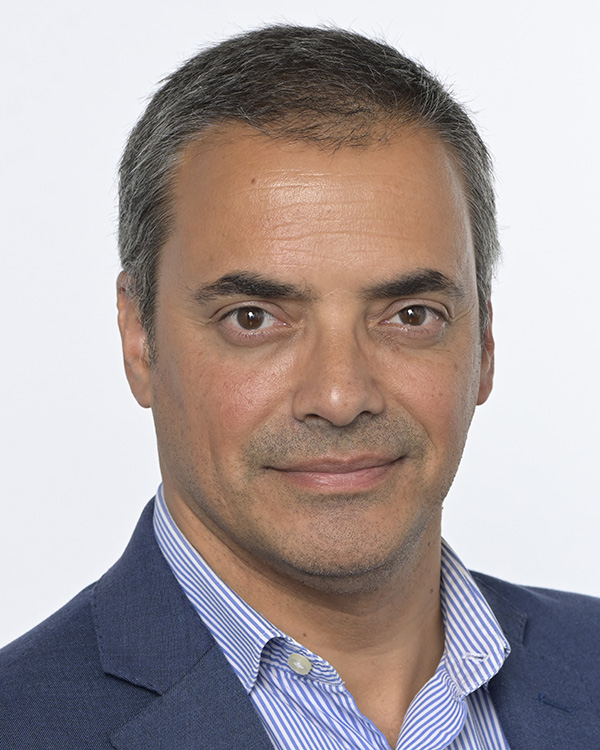
 Debate contributions by André RODRIGUES
| Rank | Name | Country | Group | Speeches | |
|---|---|---|---|---|---|
| 1 |

|
Lukas SIEPER | Germany DE | Non-attached Members (NI) | 321 |
| 2 |
|
Juan Fernando LÓPEZ AGUILAR | Spain ES | Progressive Alliance of Socialists and Democrats (S&D) | 280 |
| 3 |
|
Sebastian TYNKKYNEN | Finland FI | European Conservatives and Reformists (ECR) | 247 |
| 4 |
|
João OLIVEIRA | Portugal PT | The Left in the European Parliament (GUE/NGL) | 195 |
| 5 |
|
Vytenis Povilas ANDRIUKAITIS | Lithuania LT | Progressive Alliance of Socialists and Democrats (S&D) | 183 |
All Contributions (31)
Madam President, Commissioner, ladies and gentlemen, after listening to all the speeches in this debate, I recall a famous sentence summarising, I believe, what we have been talking about here today: Now this is not the end. It's not even the beginning of the end. But it is perhaps the end of the beginning. We have a lot of work ahead of us. In this time of uncertainty, progress and setbacks, with growing political tensions, with increasing pressure on available resources, with an increasingly polarised political climate, this Parliament is setting an example of how we can overcome differences, blur divergences and work towards common consensus and solutions. This proposal, as I have already said, does not solve everything, but it is a step in the right direction and demonstrates that it is possible to combine simpler rules with more and better support, without weakening environmental rules or social protection. It now remains for us not to forget the many difficulties faced by producers and, above all, to listen carefully to what they are saying and the reasons that lead them, once again, to take to the streets already this month. Let us all continue to work on solutions. Because that is what European farmers expect of us.
Madam President, Commissioner, ladies and gentlemen, after a simplification exercise in 2024, the second simplification proposal presented by the European Commission in May 2025 sought to respond directly to the calls from farmers and the conclusions of the strategic dialogue with the sector on the future of European agriculture. I want to start by saying clearly what this proposal is not: It is not a magic wand that solves all problems in the rural world, in particular income. Nor will it be the silver bullet that will solve all the challenges of those who work the earth. But it is a help and it is an important help. What we are putting to the vote this week is a simplification package of rules that have all too often become incomprehensible, contradictory and disproportionate for those who have to apply them on a day-to-day basis. The mandate that this Parliament adopted was clear: effectively simplify for farmers and national and regional administrations, strengthen crisis response capacity and improve the environmental and social objectives enshrined in the 2021 reform. It was with this mandate that we entered the negotiations. We comply with three guiding principles: simplifying what does not work, making the environmental and social basis of the CAP clearer and more achievable, and strengthening subsidiarity, without fragmenting the internal market or weakening our common ambition. Today, with the agreement we have reached with the Council and supported by almost all the political groups in this House in the Committee on Agriculture, we are presenting a concrete response to the demand for respect and trust that comes to us from farmers in the four corners of the European Union. It's not perfect, it's not total, but it's real. Firstly, the income of farmers and the rural world. We have increased the simplified payment for small farmers by more than 50%, rising from EUR 1 250 to EUR 3 000 per year, reducing red tape and bringing predictability to income. We have also created a new instrument for rural economic initiatives, with support of up to EUR 75 000, capable of supporting the setting up of young farmers, the creation of new rural businesses and the diversification of the rural economy. Then, on environmental cross-compliance, we adopted a more rational definition of permanent pasture that avoids artificial interventions in the soil just to preserve an administrative status, thus giving farmers more legal certainty. In the rules that protect the most sensitive soils, we have prevented the erosion of agricultural land and safeguarded biodiversity on farms. As regards crop rotation, farms of less than 30 hectares are allowed to no longer be subject to controls and penalties, which represents a clear gain in proportionality for thousands and thousands of small farms across the Union. I would also stress two essential elements for me, namely strengthening social and territorial cohesion. As regards social conditionality, it remains fully in force and the Commission has committed to finalise, by the first half of 2027, a study assessing the impact of these labour protection rules to support the upcoming CAP reform. And for the outermost regions, we have opened up the possibility of transferring up to 25% of the specific second pillar allocation to reinforce POSEI. Finally, and administratively, this is a simplification with real impact. It establishes as a rule a single face-to-face check per holding per year, based on a risk assessment. Advances can reach up to 70% of direct payments and 85% in rural development. Ladies and gentlemen, as rapporteur, I would like to thank the shadow rapporteurs, the Presidency of the Council, the Commission and the technical teams for their work throughout this process. Much more could be said about this proposal – which, I repeat, does not solve everything, but improves the lives of those who bring food every day to the table of Europeans – but time is scarce. I would therefore ask you to vote in favour; farmers, the rural world and a CAP that is simpler, fairer and closer to reality.
 Fishing opportunities 2026: ensuring the sustainability of fish populations, marine ecosystems and coastal communities
Date:
26.11.2025 18:16
| Language: PT
No text available
One-minute speeches on matters of political importance
Date:
24.11.2025 21:25
| Language: PT
No text available
Madam President, according to Rule 60(4), I request referral back to the committee responsible for interinstitutional negotiations.
Common agricultural policy (joint debate)
Date:
07.10.2025 15:15
| Language: PT
Madam President, Commissioner, ladies and gentlemen, first of all I would like to thank everyone for their contribution to this debate today. The proposal we are debating today does one essential thing: It paves the way. With its approval – as I hope – tomorrow, we will immediately enter into negotiations with the Council and the Commission to try to reach a consensus that will allow it to enter into force at the beginning of next year. The truth is that European farmers and agriculture can no longer wait. The environmental transition is done with farmers, not against farmers. That is why we advocate conditionality with proportionality for small farms, realistic tolerances when the climate fails and support for those who need it most. But it must also be said that it is possible not to create formulas that empty the environmental objectives. It is therefore a question of focusing results on the ground and not of deregulating. Although many seem to be more committed to ending the CAP than to securing its future, this Parliament knows what its fellow citizens expect. The data shows this: 92% of Europeans consider agriculture and rural areas decisive for our future; 77% recognise that the Common Agricultural Policy fulfils its role in ensuring food supply and 70% believe that the CAP benefits the whole of society, not just farmers. Let us therefore be consistent with this confidence. This proposal is therefore also a test of the credibility of the institutions. Or we show that we listen to those who work the land and produce solutions that alleviate the lives of those who produce or, again, we postpone. I choose responsibility. Move forward now with balance and common sense, to simplify without unprotecting, modernize without excluding, streamline without defunding. Finally, once again, I would like to express my sincere thanks to the shadow rapporteurs for the demanding work, constant availability and constructive spirit with which they have contributed to this report, which I hope will receive your support tomorrow in the votes.
Common agricultural policy (joint debate)
Date:
07.10.2025 12:54
| Language: PT
Madam President, Commissioner, ladies and gentlemen, over the last few years farmers have made themselves heard on the roads of Europe, in the squares of our cities, outside and inside this Parliament. And European farmers have been very clear: want to produce and want less paperwork; fewer duplications; more time in the field, with stable rules. This is what we are talking about today: restore predictability to those who produce the food that comes to our tables, to those who care for our territory and guarantee the future of the rural world. The proposal we are bringing in response to the European Commission's proposal is not intended to rewrite the CAP, but to make it simpler and more accessible. It is not perfect, but in the face of the reality of the terrain, rather made than perfect. What we are proposing here is a course correction against European bureaucratic inertia. Cut context costs without cutting rights. Earn efficiency without losing rigor. Accelerate payments without giving up controls. We have also done this work with the purpose of helping the public administration to do what it should: serve as a single access bridge and not as access to doors of an infinite labyrinth, so that information circulates between entities and the same document is not requested two, three, four times from the same farmer. Less friction in procedures means fewer errors, more focused inspections and more timely payments. And so, too, trust is restored. That's also why we give a signal to those who need it most. Small and medium-sized farms will have a simpler and more stable regime at the scale of their reality, as well as greater support. Those who walk the field every day do not want administrative labyrinths, but rather predictable supports to be able to invest, plan and continue. At the same time, we make it very clear: Simplification does not mean deregulation. We do not give up the essential safeguards or the commitment, first of all, to dignity in agricultural work. Receiving public money requires respect for labour standards and transparency in the use of funds. And serenely, serenely but simply, let me also tell you: there is no future for agriculture without an environment and there is no protected environment without farmers with incomes. Also, let me point out that we have adapted the Commission's proposals to the level of risk management tools, adjusting the threshold for losses and allowing methodologies adapted to permanent crops, young people and new farmers. Resilience yes, but with accountability and transparency. Finally, we have introduced more agile mechanisms for Member States to amend their strategic plans, allowing for quick adjustments, without opening structural discussions in each review. This ensures predictability and speed. Two words that were hardly used to being combined with the CAP. Madam President, Commissioner, ladies and gentlemen, the common agricultural policy needs something very simple: Speak the language of those who work the land. Let us make the policy work where it really counts, on the ground, with the more than 9 million European farmers, from the island of Flores, in the Azores, in the heart of the Atlantic, to the eastern end of Romania, from the frozen north, from Finland to the sunny sun of Andalusia. I ask for your support to take a concrete step, to give back time, to give back income and to give predictability to European agriculture. History is not written with promises, it is written with decisions. And the right decision today is to approve this report and to make its measures concrete, to make reality concrete. Finally, I would like to thank all of them, including my fellow shadow rapporteurs, for the work they have also done to make this report a reality.
Post-2027 Common Agricultural Policy (debate)
Date:
10.07.2025 07:40
| Language: PT
Madam President, Commissioner, we run the risk of having a CAP that is little more than an acronym. To undermine it, reduce its budget or turn it into a national fund is to undermine the income of millions of producers and their families, our food security and territorial cohesion. The post-2027 CAP must respect those who work the land, it must have a fair and stable budget, indexed to inflation, so that support does not become cuts in disguise. A CAP worthy of the name cannot bear the brunt of the just transition alone, nor can it fail to support producers when everything is lost due to climate change. A CAP worthy of the name must protect small and medium-sized farmers, ensure generational renewal and strengthen programmes such as POSEI, which is essential for regions such as the Azores. The Commission should not deceive itself, nor should it deceive others. Fewer rules, with less support, have only one name: Disaccountability. History will tell who defended the CAP and who abandoned it.
European Ocean Pact (debate)
Date:
17.06.2025 09:00
| Language: PT
Madam President, Commissioner, the United Nations Ocean Conference has once again been clear. Marine degradation is accelerating and, without immediate action, the future of marine life and, as a result, of all of us will be compromised. In this context, I welcome the European Commission's proposal on the European Oceans Pact. In particular, I would stress the recognition of the fundamental role of fishermen in the management of our seas, the common fisheries policy, blue innovation and the safeguarding of the outermost regions and artisanal fleets, without forgetting the international dimension of the European Union's seas policy. Portugal, the Azores and Madeira have here a historic opportunity to lead. But, let us be frank, without a powerful financial lever, from which a proper, comprehensive and dedicated fund of the European Union must emerge, the Pact risks being only a manifesto of good intentions. Our ambition therefore needs to be funded. The reconversion of the fisheries sector should be further supported and words really need to translate into more action and investment.
Strengthening rural areas in the EU through cohesion policy (debate)
Date:
16.06.2025 18:46
| Language: PT
Dear colleague, Mr Oliveira, first of all I would like to thank you for the question and for the opportunity I have to be able to answer it. It is obvious that we do not share the same political vision; I believe that this report has many positive aspects and my intervention has focused precisely on those positive aspects. But we don't have the world we want, we have the world we have, and that means acting in the face of that reality to transform it. This report – and the focus on rural development as a priority in its many dimensions – seeks exactly to strengthen this presence in the rural world and also to strengthen the Common Agricultural Policy in its second pillar. There are many things we can even agree on that need to be corrected. But that is not the scope of this intervention, let alone what this report now refers to.
Strengthening rural areas in the EU through cohesion policy (debate)
Date:
16.06.2025 18:43
| Language: PT
Madam President, Commissioner, the report we are discussing today proposes long-overdue responses to the structural challenges of rural areas. More investment in public services, infrastructure, digitalisation, support to employment and local communities. It also underlines the urgency of halting depopulation, strengthening the role of women and young people, supporting SMEs and ensuring that rural areas are not left behind in the energy transition. But let us have no illusions; without a more ambitious, articulate and simple rural development policy, none of these responses will be realised. Some want to end the second pillar of the CAP; Here we clearly say no. Rather, it should be strengthened and better articulated with a truly decentralised cohesion policy anchored in territories and their communities. Action and ambition are needed, and these need to be reflected in the next Multiannual Financial Framework. It is now up to the Commission, the Member States and this Parliament to take their responsibility towards the rural world and not to vote to abandon it.
A revamped long-term budget for the Union in a changing world (debate)
Date:
06.05.2025 12:22
| Language: PT
Mr President, Commissioner, we need a new vision for a new time in the world and for a new moment in our history. To do this, we need a Community budget with greater resources to meet greater challenges, which opens up the possibility of new sources of funding to meet the new demands of our collective life, which continues to support economic, social and territorial cohesion, which deepens the single market, which reduces inequalities, poverty and social exclusion, which supports the traditional sectors of agriculture and fisheries and looks at the new potential in innovation, in the oceans and in space, which does not abandon our climate ambitions, but also reinforces the urgency of our security and our defence, which realises that we need to address the housing crisis and the aspirations of our young people, which defends our outermost regions. A budget capable of asserting the European Union and responding to the challenges of modernity – this is what this Parliament aspires to, and this is what this proposal stands for.
European oceans pact (debate)
Date:
02.04.2025 13:27
| Language: PT
Mr President, Commissioner, Minister, Europe is the most maritime of the continents. This is therefore the time to affirm a blue Europe, where healthy seas coexist with sustainable coastal communities. The European Ocean Pact must be a binding commitment to restore, protect and sustainably manage our maritime ecosystems and support the communities that depend on them. Keeping fishermen and coastal communities at the heart of the decision-making process; unlocking the economic and social potential of new activities, in particular science and the blue economy; fully protecting the most environmentally sensitive areas, eliminating harmful practices and strengthening international cooperation – these are just some of the principles to follow for a new era of European leadership in the oceans. But for the pact to be effective, it must also be accompanied by appropriate and additional funding, in addition to the European Maritime, Fisheries and Aquaculture Fund. In the European Union, as is already the case in the Azores, sea and land are just one – our home. So let us know how to take care of it.
A Vision for Agriculture and Food (debate)
Date:
13.03.2025 08:40
| Language: PT
Colleague, thank you very much for your questions, the first of which I must say is that we have been advocating for a long time the need to have a real balance in the food chain, so that producers are not, in fact, the poor relative of this same chain, thus ensuring greater equality in the distribution of income. As for the question you are asking about quotas (which, as you know, are many years old), the truth is that we cannot take a position that goes against what is inevitable. And, as we all know, at the time, the quota system was over. It was an inevitability. Despite all the constraints it may have created, the truth is that the sector has been able to overcome this same embarrassment in a positive way.
A Vision for Agriculture and Food (debate)
Date:
13.03.2025 08:38
| Language: PT
Mr President, Commissioner, the need to ensure a fair and stable income for today's farmers and to build a sector that is attractive enough to attract tomorrow's farmers are priorities with which, I am sure, we all agree. However, they will only be achievable with a robust budget capable of addressing the complex challenges facing the sector. In this context, it is essential to maintain coherence and interconnection between funds linked to agriculture, as well as to defend and strengthen the role of partnerships with regional and local authorities in their implementation. I therefore welcome the recognition in the Vision for Agriculture and Food of the specificities of the outermost regions and the importance of the POSEI scheme. However, Commissioner, this programme needs to be updated – which has not been the case for more than a decade – so that it can have funds that truly match the real needs of the agricultural sector in these regions, thus doing justice to those who work in it.
Stepping up international action to protect whales following Iceland’s decision to extend commercial whaling until 2029 (debate)
Date:
22.01.2025 19:33
| Language: PT
Madam President, Commissioner, ladies and gentlemen, if the decision of the previous Icelandic Government is upheld, more than two thousand whales could disappear from our oceans by 2029. This measure not only threatens the preservation of these species, but also blatantly ignores global calls for the protection of marine ecosystems and the conservation of biodiversity. Whaling is an archaic activity that should not take place today, especially when there are sustainable alternatives that protect and value tradition, ecosystems and the economy. I come from a region, the Azores, where whaling was an integral part of our culture and our economy, but which we ended in 1987. Today, in the Azores, there is a whole new economic sector resulting from the preservation and observation of cetaceans, with marine ecotourism having an annual economic impact of more than EUR 210 million and generating jobs and wealth. The two species concerned by this authorisation, the minke whale and the fin whale, are protected species, and the fin whale is even one of the species at risk. We therefore urge the new Icelandic Government to reverse this authorisation as soon as possible, the international community to unite against this decision and to promote the necessary diplomatic efforts for Iceland to review its position. It is imperative that we ensure the protection of endangered species in the name and in defence of the future of our planet.
Challenges facing EU farmers and agricultural workers: improving working conditions, including their mental well-being (debate)
Date:
18.12.2024 17:08
| Language: PT
Mr President, Mr President-in-Office of the Council, one of the issues that really affects the sector is the inequality that exists in the sector, and certainly we all need to think about bringing together and getting a compromise so that our producers can achieve more balanced incomes and thus see greater redistribution and greater justice. I think that is what we are all focused on, especially if we do not forget that the problem that we have today of food inflation being higher than the average inflation that exists in other products should lead us to reflect on the importance that there is of introducing compensation mechanisms that can balance the sector.
Challenges facing EU farmers and agricultural workers: improving working conditions, including their mental well-being (debate)
Date:
18.12.2024 17:05
| Language: PT
Mr President, Commissioner, working conditions in agriculture are difficult, with a significant precariousness of employment contracts, more than a quarter of the workforce is seasonal and the contribution of a large number of migrants, often also without adequate social and labour protection. But there are other dimensions that truly concern our producers. There are concerns about the income and future sustainability of the sector. The Commission has just released the report "Prospects for European Agriculture 2024-2035" and the scenario is not encouraging: the value of agricultural production whose annual growth is less than the annual increase in production costs; a forecast reduction in farmers’ incomes in real terms of more than half a percent, taking into account inflation; and the chronic problem of an ageing sector, growing labour shortages and the huge challenge of generational renewal. All of this requires action. The introduction of a social conditionality mechanism in the previous revision of the CAP was an important measure to raise labour standards. But now, more than ever, it is important that in the vision for the future of agriculture and food – which we look forward to – agricultural producers and workers are put at the centre of the discussion.
The situation in Mayotte following the devastating cyclone Chido and the need for solidarity (debate)
Date:
17.12.2024 19:58
| Language: PT
Madam President, honourable Member, what I think is really important and fundamental today is that we can all speak with one voice to support those who are victims of a tragedy and that we do not use that same tragedy to make policy in a way that does not concern and cannot clearly respond to the victims of a tragedy. Being able to confuse something that affects so many people in an outermost region and wanting to confuse and bring up the problem of immigration does not honour the victims of Mayotte and it is therefore regrettable that it did so.
The situation in Mayotte following the devastating cyclone Chido and the need for solidarity (debate)
Date:
17.12.2024 19:56
| Language: PT
Madam President, Commissioner, I would firstly like to express the solidarity of my region, the Azores, and my country, Portugal, with the people of Mayotte, who have been severely affected by the devastation caused by Cyclone Chido. The outermost regions of the European Union are well aware of the power that geography and climate have over their development possibilities. And, unfortunately, they are increasingly aware of the hardships that nature has often imposed on their populations and territories. Hurricane Lorenzo in 2019 in the Azores, the volcanic eruption in Las Palmas in the Canary Islands in 2022, fires in the Autonomous Region of Madeira and Cyclone Chido in Mayotte are just the latest examples. Now it is crucial that the physical distance that separates us from these fellow citizens does not represent distancing or alienation and that European solidarity arrives quickly and with practical effects. We must, as a matter of urgency, support Mayotte.
Protecting our oceans: persistent threats to marine protected areas in the EU and benefits for coastal communities (debate)
Date:
24.10.2024 13:20
| Language: PT
Madam President, Commissioner, the European Union has set ambitious targets for the protection of at least 30% of marine waters by 2030. But let us be under no illusions, this can only be ensured if we actually ensure the involvement of fishermen, fishing communities, aquaculture professionals, environmental NGOs and other relevant actors and if we also ensure that proper compensation is provided so that fishing professionals are not victims of this process. I therefore welcome the example of my region, the Azores, which a few days ago approved the restructuring plan for the fisheries sector, proposed by the Socialist Party, which provides compensation to all professionals affected by the creation of marine protected areas. With a budget of more than €10 million for the period 2025-2030, this plan will accompany the implementation of the 30% protection of the sea in one of Europe’s largest exclusive economic zones. This is the example that the Union must follow, with the definition of an ambitious fund to accompany and finance a true ocean pact.
One-minute speeches on matters of political importance
Date:
07.10.2024 21:16
| Language: PT
Madam President, today I bring to this House the worrying reports on the proposals that the European Commission is developing for the future EU budget. If what has been widely reported is true, the Commission's proposal for the post-2027 Multiannual Financial Framework may be radical, inflexible, centralistic and unacceptable. On the horizon is the exclusion of Europe's regions from participating in and deciding on the choices that most influence the future of their territories and their populations, by concentrating the management of all funds and programmes between Brussels and the governments of the Member States. This is a wrong and dangerous option. Wrong because cohesion policy and shared management are a success story in the Union, and dangerous to the objectives of promoting economic, social and territorial cohesion as enshrined in the Treaties, but also because it will increase divisions and resentments. Let us all be on the alert for an inclusive and decentralised Union.
Droughts and extreme weather events as a threat to local communities and EU agriculture in times of climate change (debate)
Date:
19.09.2024 08:32
| Language: PT
Mr President, ladies and gentlemen, the floods that have hit Central and Eastern Europe and the devastating fires that are still burning in the north and centre of Portugal are dramatic examples of how the effects of climate change are present today in the lives of our farmers and other citizens. This is the time to express our deepest solidarity with all the affected populations and to express our heartfelt thanks to the firefighters and all the rescue teams involved. But we need action. The climate is not sympathetic to our hesitations and our citizens will not forgive them. As we have counted on European mutual assistance in combating these phenomena, we must now support the rapid recovery of the affected territories and redouble our efforts in adapting to the effects of climate change. I am therefore pleased to see a European Strategy for Water Resilience announced in the mission letters of the Commissioners-designate. But I remind you that this was already a promise that remains to be fulfilled. This strategy cannot therefore be a mere reflection paper. We need urgent, immediate and concrete action, and we need to allocate financial resources to safeguard the future of agriculture and rural communities. The time to act is now.
Outcome of the Strategic Dialogue on the Future of EU Agriculture (debate)
Date:
16.09.2024 16:46
| Language: PT
Mr President, Commissioner, I welcome the conclusions of the Strategic Dialogue on the future of agriculture, in particular the consensus reached between farmers, agri-food producers, consumers and environmental organisations. This is an important basis for our future work, which already contains many elements relevant to our reflection. But in order to have a more sustainable and fair agriculture, it is essential to value the diversity of European agriculture. Protecting disadvantaged regions, cutting red tape and improving the incomes of small and medium-sized farmers are crucial. It should not be forgotten that two thirds of European agriculture comes from farms of less than five hectares. In the case of Portugal and the outermost regions, such as the Azores, it is also essential to obtain an update and improvement of support under POSEI. Fair finance, generational renewal, climate change and social, economic and environmental sustainability are major challenges to be addressed. Let us therefore continue the dialogue, in particular with those who are on the ground and without whom there is no future for European agriculture.