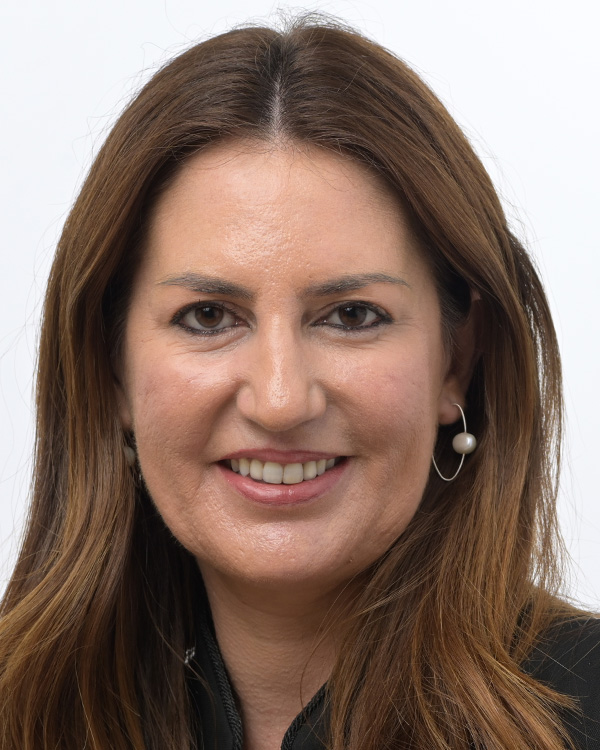
 Debate contributions by Maravillas ABADÍA JOVER
| Rank | Name | Country | Group | Speeches | |
|---|---|---|---|---|---|
| 1 |

|
Lukas SIEPER | Germany DE | Non-attached Members (NI) | 321 |
| 2 |
|
Juan Fernando LÓPEZ AGUILAR | Spain ES | Progressive Alliance of Socialists and Democrats (S&D) | 280 |
| 3 |
|
Sebastian TYNKKYNEN | Finland FI | European Conservatives and Reformists (ECR) | 247 |
| 4 |
|
João OLIVEIRA | Portugal PT | The Left in the European Parliament (GUE/NGL) | 195 |
| 5 |
|
Vytenis Povilas ANDRIUKAITIS | Lithuania LT | Progressive Alliance of Socialists and Democrats (S&D) | 183 |
All Contributions (29)
 A new action plan to implement the European Pillar of Social Rights (debate)
Date:
22.01.2026 09:48
| Language: ES
Madam President, Madam Vice-President, the European Pillar of Social Rights is one of the Union's great commitments, but it will only be credible if it translates into quality employment and real opportunities, especially for young people and the most vulnerable groups. Progress is positive but very uneven across Member States. It is therefore necessary to take action with active policies and effective reforms. This new plan is an opportunity to move forward realistically and effectively. I would like to highlight the strategic role of the social economy. We are talking about a model rooted in the territory that responds to the real needs of the communities, creates quality employment and is able to grow and export without relocating. This makes it a vector of prosperity and stability for our regions. However, recognition is not enough. If this new plan is to deliver, the social economy must be fully integrated into it, applying the lessons learned from the mid-term review of the EU action plan for the social economy. The key is financing, because social and economic cohesion is not consolidated without resources. The next budget must respond to this ambition. The social economy must have a clear place in the European Social Fund and in the future European Competitiveness Fund. Because European competitiveness is also built on cohesion, stability and territorial roots. We will support an ambitious, balanced and financially credible plan. To leave out the social economy would be to give up years of work in a model that puts people at the centre and strengthens Europe's productive base.
Online piracy of sports and other live events: urgent need to address unsolved issues (debate)
Date:
21.01.2026 19:07
| Language: ES
No text available
The 28th Regime: a new legal framework for innovative companies (debate)
Date:
19.01.2026 17:14
| Language: ES
Madam President, Commissioner, since the beginning of the parliamentary term, the Commission has a clear mandate: give real content to competitiveness. Europe has the talent, but it lacks the tools to ensure success. The 28th regime is the passport of economic freedom so that entrepreneurs can open their company without taking weeks in paperwork. With this step forward, in just forty-eight hours any idea will become a company in a 100% digital way. That undertaking is not an obstacle course: We want our companies to have agility to compete, simplicity to attract private capital and legal certainty so that our founders are not forced to sell their dream too soon. With our proposals, our companies will be born global, with a single market, without seams, and with automatic recognition by the 27 Member States. We don't want talent to migrate; We want innovation and capital to find their home here, generating wealth and quality employment. Let's be ambitious. Let us take this legal framework forward so that the European genius does not find glass ceilings; that every idea has the opportunity to grow and succeed here in the European Union.
Enhancing police cooperation in relation to the prevention, detection and investigation of migrant smuggling and trafficking in human beings; enhancing Europol’s support to preventing and combating such crimes (debate)
Date:
24.11.2025 19:07
| Language: ES
No text available
First anniversary of the DANA floods in Spain: improving EU preparedness (debate)
Date:
22.10.2025 16:01
| Language: ES
Mr President, Commissioner, a year ago the torrential rains killed more than 200 people in Valencia and left hundreds of families shattered. A key question still resonates in the heads: How is it possible that we did not have the necessary infrastructure to prevent – or at least mitigate – this disaster? Knowledge was not lacking, investments were identified, but resources were lacking, and this cannot happen again. This Parliament acted responsibly, urgently amending cohesion policy to support reconstruction, and with the mid-term review we have reaffirmed our commitment: give more flexibility and responsiveness to regions. However, while it has taken almost a year for the national Government to mobilize the resources made available to it, the regions are acting immediately. This is the case in a region like mine, Murcia – also affected by the Danas – which has increased investment in water infrastructure by up to EUR 30 million. Investing with meaning and purpose saves lives. That is why cohesion policy must remain in the hands of the regions, because they are best aware of the challenges and threats they face.
Changing security landscape and the role of police at the heart of the EU’s internal security strategy (debate)
Date:
21.10.2025 10:04
| Language: ES
Mr. President, two weeks ago, an agent was stabbed through his helmet. Has anyone thought about their family or their peers? Two years ago, two civil guards were killed fighting drug trafficking in a boat. Has anyone thought about those who are still going out today to protect our borders? How many more names do we not know because some governments refuse to collect cases? How many cops doubt if this is worth it? How hard is that silent illness that so many face in solitude! That is why this Parliament has to say loud and clear that it is worth going out to defend freedom and the rule of law. It's worth it and we have to protect them. Organized crime respects no borders. We need a common strategy, reliable data and sufficient equipment to ensure your safety. We must recognise law enforcement agencies as high-risk professions, because to defend our agents is to defend the freedom of all Europeans.
Establishment and functioning of European Works Councils - effective enforcement (debate)
Date:
08.10.2025 15:29
| Language: ES
Madam President, European competitiveness is also measured by how we support those who create value in our productive fabric. And supporting does not mean imposing more obstacles, but facilitating that each company can advance, innovate and generate quality employment. Because when a company spends more time meeting requirements than producing, when the standard replaces innovation, we all lose: workers, investors and, ultimately, Europe. In Europe, too much bureaucracy and complex processes are precisely the gears that jam the production line. Simplification and predictability are not just pretty words. They are the tools to make organizations more agile, strong and competitive in the global market. If we want Europe to be an attractive place that creates value and creates quality and protected jobs, we must focus on removing obstacles rather than adding them. We must ensure that the policies we develop here enable these entities to move forward efficiently, foster innovation and compete successfully in an increasingly demanding world. Europe and its competitiveness depend on it.
A new vision for the European Universities alliances (debate)
Date:
11.09.2025 07:06
| Language: ES
Mr President, Europe will not be competitive without a commitment to higher education. This strategic tool we are talking about today has shown that cross-border cooperation works, that joint degrees can be offered and the mobility of students and researchers can be standardised. This commitment has to be accompanied by concrete actions, starting with the allocation of sufficient resources in the next budget and reinforcing programmes, because without investment we will lose young European talent. In Spain we continue to suffer the scourge of structural youth unemployment, with insufficient investment in innovation and a university system disconnected from the productive fabric. The future requires alliances for quality education, promoting joint research projects and orienting vocational training towards digital skills. The Commission should lead by example and support all universities that want to be part of this project: Only in this way will we build the competitive Europe we promise.
European Social Fund (ESF+): specific measures to address strategic challenges (debate)
Date:
09.09.2025 13:27
| Language: ES
Mr President, cohesion policy is not a luxury or a last-minute resource. It is the backbone of the European project, which ensures that no region is left behind and which transforms the lives of European citizens. With this mid-term review we have shown that Parliament complies. We have worked quickly and reached a balanced agreement that makes it possible to strengthen and make the funds more flexible, but without undermining their essence. Cohesion does not mean improvising or covering up any emergency. It means investing smartly in priorities that really matter: water, housing, decarbonisation or defence. Sectors that are strategic for our economy, for our security and for everyday European life. We have introduced clear, realistic incentives that motivate Member States to reschedule quickly. Now, the responsibility is on your roof. I address especially those governments with low or no execution: There are no more excuses. Advertisements or press conferences without questions are not enough. We must invest, we must manage, we must transform funds into concrete responses for citizens. This mid-term review comes in a timely manner. It is now up to the Member States and the Commission to demonstrate with facts that Europe works, that funds are translated into projects and that cohesion remains the best tool for real responses. Cohesion Policy is Europe at its best. Let us defend it, use it rigorously and make it a lever for a future of growth, competitiveness and security.
Ninth report on economic and social cohesion (debate)
Date:
05.05.2025 19:10
| Language: ES
No text available
Topical debate (Rule 169) - Social Europe: making life affordable, protecting jobs, wages and health for all
Date:
02.04.2025 12:12
| Language: ES
Mr President, Commissioner, social Europe is not fuelled by propaganda or empty promises, it is built on essential pillars that defend free and quality education and a dynamic business fabric that drives innovation and growth. However, there are countries in the Union that do exactly the opposite and jeopardise the progress of the European project. As the labor market shifts at an unprecedented speed driven by the technological revolution, the gap between acquired skills and employer demands continues to grow. And yet the implementation of the European Social Fund is ridiculous, in some countries directly zero euro. The Commission presented a plan that seeks, among its priorities, to align the educational and academic bases to the labour market. But, ladies and gentlemen, Spain seems to be rowing against you: Sanchez's government has begun a crusade against private universities instead of strengthening a system that trains young people for the future. It dares to do so even by leading unemployment in Europe. Having European universities - public or private - among the best think tanks in the world must be a common project, the basis of this century's enlightened and competitive Europe. This debate is entitled 'Protecting jobs', but how can jobs be protected if education is not protected and businesses are suffocated? Europe has talent, ideas and a project: the necessary ingredients for a future that underpins the welfare state of the next generations.
Union of Skills: striving for more and better opportunities to study, train or work in the EU and to bring our talents back home (debate)
Date:
12.03.2025 15:07
| Language: ES
Madam President, Madam Vice-President, ladies and gentlemen, the Skills Union initiative is a key proposal to strengthen Europe's competitiveness through the professional development of Europeans. Artificial intelligence, automation and the green transition are changing the dynamics of the European labour market. If we want to lead these changes we must ensure that citizens have the tools to seize these opportunities and not be left behind. From our Group we support this initiative, as we defend a strategy that promotes innovation and training, promoting technological education from an early age, strengthening vocational training, aligning education with market needs and facilitating job retraining. We are also committed to a more agile recognition of competences at European level, eliminating barriers to labour mobility and ensuring that any European can work in any country with the same opportunities. Europe's competitiveness will not come from more bureaucracy, but from talent, the preparation of citizens and support for businesses, SMEs and the self-employed. If companies have a future, European employment, too. It is an important step that must be followed by reforms and concrete proposals, because in good words the world is full, but what is really real is the percentage of unemployed Europeans. That must be our absolute priority.
European Semester (joint debate)
Date:
12.03.2025 09:09
| Language: ES
Mr President, thank you very much to all the speakers, the Commission and the Council. The groups mentioned a number of topics: demographics, social economy, poverty, housing, employment... and this report talks about all this. That's why I ask you again: the Commission, responsibility for the structural changes we need and, the Council, active implementation of these reforms; because to comply with the country-specific recommendations is to comply with European society, especially with future generations. Our goal is clear: work for the long term of the European project. That is why we cannot afford uncontrolled debt growth or, in other words, that it is not linked to solid economic growth. We are talking about simplification and, even so, some groups still want to regulate without society having asked for it. This has been the problem of recent years: regulation on regulation; And today we are here trying to remove the sticks that have been put on the wheel of the European business fabric. And finally, in terms of employment, we must also comply. How is it possible that countries with high unemployment rates have minimal European Social Fund Plus implementation data? In some cases, they have not even spent a single euro, ladies and gentlemen. Demand, commitment and compliance. That's what I'm asking everyone.
European Semester (joint debate)
Date:
12.03.2025 08:06
| Language: ES
Mr President, Commissioner, the report on the European Semester is a key document for coordinating our economic, fiscal and social policies in the European Union. Through it, we seek to ensure that the Commission's priorities are reflected in its subsequent preparation of the Semester and that, ultimately, Member States take effective measures to promote sustainable growth, job creation and fiscal stability. But let's go to the most relevant part of the report. First of all, fiscal responsibility. We must ensure that debt sustainability in the Member States is supported by sound economic growth. To this end, it is imperative that governments align their fiscal policy by ensuring that indebtedness does not hypothesize future generations. The new governance model is clear and fiscal plans already include necessary reforms. But we must be more demanding. Only my country, Spain, has been failing to comply with the same recommendations for years. We underline the importance and urgency of accelerating the implementation of Next Generation EU funds, which ends in December 2026. This is the time when the Member States have had more funds and we must demand responsibility and management from them. Are they making use of these funds? What are they spending them on? These are legitimate questions that demand responsibility. On the other hand, employment and training are key elements for the competitiveness of the European Union, Vice-President Mînzatu has already said. Upskilling and reskilling needs to be supported to ensure future-proof skills. Therefore, we propose greater investment in vocational training, adapting the skills of young people to the needs of the market. We cannot allow so many young Europeans to remain without opportunities. Remember: They are the future of Europe. Let us also make work easier for our companies, for SMEs, for the self-employed: They are the ones who are creating quality jobs on our continent. If companies have a future, so does European employment. With regard to housing, Member States need to increase investment in social and affordable housing while implementing more streamlined regulation. There will be no solution to the housing crisis if we do not increase supply. To do this, it is necessary to put an end to so much bureaucracy and make existing funds truly responsive to this crisis. And, above all, let's protect those who have their savings in the real estate market, who are the ones who can help increase the supply right now. Let's give them legal certainty, that they are not afraid that they may lose their home, their life insurance. I want to mention demographics. This must be everyone's priority so that Europeans are not forced to leave their place of origin for opportunities. I therefore invite you to declare the European Year of Demography so that the right to stay becomes a reality. Commissioners, the social economy is a key asset for our welfare state. Its work is incalculable and we must protect it. We also call for an update of the European Disability Strategy, creating a European guarantee of employment and skills. And I do not forget families, keys to the European project and our future. We create a European card for large families, whose contribution to our society must be recognised by all Member States. I conclude: I hope that this report will serve the Commission as a roadmap and solid framework to ensure balanced, sustainable and inclusive growth in the European Union. I count on your support to advance these priorities.
Cutting red tape and simplifying business in the EU: the first Omnibus proposals (debate)
Date:
10.03.2025 17:44
| Language: ES
Mr President, Europe urgently needs innovation, growth and jobs. To achieve this, it is essential to reduce the bureaucracy that suffocates our companies. That is why, from the European People's Party, we welcome the omnibus package and the advances that propose the elimination of unnecessary obstacles, creating a more competitive and innovation-friendly economic environment. This package is a step in the right direction, but there is still room for improvement. Reducing administrative burdens must go further so that European companies can grow without unnecessary regulatory hurdles. A clear example is the obligations imposed by the Corporate Sustainability Reporting Directive which imposes on many companies the drafting of sustainability reports, even when they are already part of corporate groups that present these data in a consolidated manner. With the omnibus package, changes have been introduced that eliminate redundancies, but European companies continue to devote a lot of resources to complying with bureaucratic demands instead of focusing on their business. The strategic autonomy we talk so much about will not be possible if we do not make things easier for those who produce, innovate and create wealth in Europe. We must compete on an equal footing with other regions of the world. We continue to work to make this package even more ambitious in removing administrative burdens.
Boosting vocational education and training in times of labour market transitions (debate)
Date:
11.02.2025 13:53
| Language: ES
Mr President, Commissioner, today we are at a crucial stage for the future of employment. Labour shortages and generational renewal, together with technological advances such as artificial intelligence, are transforming our labour market and, in the face of this, it is our responsibility to ensure that no one is left behind. That is why we must start from the beginning, investing in training for citizens, especially in the professional future of young people, because, without jobs, there will be no European project or competitiveness worth it. Commissioner, we urgently await the Union's proposal on competences under the Competitiveness Compass. There is an urgent need to work on a coherent strategy that strengthens the cooperation between companies and training centres needed to meet the challenges of the future. In this sense, it is essential that vocational training evolves effectively to adapt to new labor demands and that our education and training systems are aligned with the real needs of the market. But let's not just talk about vocational training, let's talk about making a more ambitious European Social Fund, recognizing university micro-credentials and boosting employment in older people with continuous training. Ladies and gentlemen, the competitiveness of the European Union is based on people. Investing in their training is undoubtedly investing in the future of Europe.
Need to enforce the Digital Services Act to protect democracy on social media platforms including against foreign interference and biased algorithms (debate)
Date:
21.01.2025 10:08
| Language: ES
Madam President, in a world where digital is inseparable from everyday life, we must ensure that our democracies are not violated. As elected deputies, we have a responsibility to defend its pillars also in the digital world. The DSA was an essential milestone, ensuring the freedom of expression of its citizens and their independence and preventing algorithmic manipulation. Social networks must protect the free opinion of their users without it being overshadowed by commercial interests, political or foreign interference. We have seen the shadow of doubt spread over certain platforms that do not provide the required transparency. That is why we must demand the effective implementation of the Digital Services Act. To defend the EU’s digital sovereignty is to protect our democracy, our freedom and our rule of law against foreign powers that seek to weaken our values with their bot farms. Freedoms of information and expression are not only compatible with, but strengthened by, this Regulation.
Challenges facing EU farmers and agricultural workers: improving working conditions, including their mental well-being (debate)
Date:
18.12.2024 16:10
| Language: ES
Mr President, I would like to raise my voice in the face of this silent crisis that our continent is going through: the mental health of our farmers. This sector that feeds Europe and sustains our rural economies is on the verge of collapse by the very depletion of those who devote their lives and resources to sustaining it. Our farmers face alarming levels of stress, anxiety and depression stemming from economic uncertainties, which are the result of years of green policies without impact assessment. It is no coincidence that in some Member States the suicide rate among farmers is 20% higher than the national average. Not only that: the latest report from the European Agency for Safety and Health at Work confirms mental health in agriculture as a priority that needs to be addressed urgently. Because it is no longer a question of farmers being compensated for the sheep killed by wolves, but of every farmer being able to wake up every day with the certainty that their work and effort will be rewarded. Ladies and gentlemen, we must act firmly. Let's invest in social infrastructures that ensure the mental health of our countryside. Let's use the CAP to fund expert advice. Let's get farmers more involved and narrow the generation gap that is driving them into the abyss. Our farmers cannot and should not wait any longer. If we do not take care of your health, we will end up paying for it in Europe. Let us support those who feed us, because our growth depends on their well-being.
Misinformation and disinformation on social media platforms, such as TikTok, and related risks to the integrity of elections in Europe (debate)
Date:
17.12.2024 16:17
| Language: ES
Mr. President, the great digital public square has revolutionized our society, opening up enormous opportunities, but also exposing us to serious risks. This debate is crucial because, unlike those of us who fight for a public, healthy and quality debate, respecting the freedom of expression of those who use disinformation as a mechanism of social manipulation, today we find ourselves with serious vulnerabilities associated with the bot farms that have operated on TikTok during the elections in Romania. The European Union provided itself in the previous legislature with legal tools to combat this type of situation through the Digital Services Act and is already acting. This regulation provides a framework for demanding transparency and accountability from digital platforms. It is essential that these tools are used not only to react to incidents, but also to prevent the manipulation of future democratic processes. Digital skills education and the promotion of critical thinking are fundamental pillars for citizens to be able to discern between the true and the false in the digital information tumult. I therefore advocate a policy of freedom of expression that is inclusive and equitable. For us to build a true digital democracy in Europe, we need platforms that are transparent, that implement the Digital Services Act and that fight foreign interference. We Spaniards live it in Catalonia and today it is Romania who suffers. Because diversity of ideas is the essence of democracy, but manipulation is the root of its death.
Regional Emergency Support: RESTORE (debate)
Date:
16.12.2024 17:40
| Language: ES
Madam President, Commissioner, welcome. I would like to begin by sending a message of solidarity with the victims of the island of Mayotte, whom we hope this reform can also help with reconstruction. Today, the European Union responds urgently by mobilising cohesion policy to tackle the social emergency and immediately rebuild regions devastated by climate events such as the one in the Spanish Levant. A reconstruction that must leave aside climatic ideologies that in the past rejected works that would have mitigated the devastation in Valencia. While the Spanish Government hijacks the aid funds and conditions them on the approval of their budgets, from here we make the funds available to those affected. In the face of the petty politics of the one who hid herself as Commissioner Ribera, we show that there is a responsible policy. Ladies and gentlemen, today the European Union will go ahead with an emergency measure, but we cannot continue to draw resources from the piggy bank destined for the future of our regions because a Europe without regions is a Europe without a future. We know that this reform will hardly be enough to repair all the damage, but it is a traction engine so that States can start working with the backing of the European Union. The Union undertakes to advance up to 25 % of the money and to co-finance 95 % of the measures needed to alleviate and rebuild. It is now the turn of national governments. It's your responsibility.
Rise of energy prices and fighting energy poverty (debate)
Date:
27.11.2024 15:12
| Language: ES
Madam President, in the European Union more and more households are finding it difficult to heat their homes and the percentage of those unable to do so has risen to 10%. One in ten European households suffers from energy poverty. Despite the dramatic situation described by the numbers - but suffered by people - our institutions have, on many occasions, legislated under a climate ideology that, instead of solving the problems, contributes to the fact that the cost of living of families does not stop increasing. The Draghi Report has already pointed out that one of Europe's weak points is the price of energy. This problem is not only affecting households, but it is also drowning our industry and destroying our competitiveness. We all know that among the reasons for the increase in energy prices is obviously the infamous Russian invasion of Ukraine and that, in order to lower energy prices, we should make use of all the clean and cheap energy sources at our disposal. But then, I ask you, why have you made the minister who has made Spain the main European partner for Russian gas and the biggest anti-nuclear activist vice president for a Clean, Just and Competitive Transition? It is time for this Parliament to react. Let's face the energy crisis with common sense and effective solutions. The climate doesn't understand ideology.
Question Time with Commissioners - Challenges in the implementation of cohesion policy 2021-2027
Date:
26.11.2024 14:58
| Language: ES
No text available
The devastating floods in Spain, the urgent need to support the victims, to improve preparedness and to fight the climate crisis (debate)
Date:
13.11.2024 15:40
| Language: ES
Madam President, ladies and gentlemen, I thank you for your words of support and I ask that what happened in Valencia not be forgotten. There are still many missing people to be found and those affected to help. Two months ago we defended it in Parliament, following the floods in central Europe and the fires in Portugal: we must make sure that the financial aid reaches the last affected. If we really want this to be the legislature of European housing and competitiveness, let us start by giving confidence to those who have lost their homes, so that they can soon resume their lives, and to those who have lost their businesses, so that they can generate wealth again. Let's put water and its management at the center and promote an investment plan that allows its management in times of drought and its containment in times of crisis. Ladies and gentlemen, do you really believe that anyone who went into hiding and did not want to take responsibility for this tragedy can be a Commissioner? Her name is Teresa Ribera.
Closing the EU skills gap: supporting people in the digital and green transitions to ensure inclusive growth and competitiveness in line with the Draghi report (debate)
Date:
24.10.2024 08:28
| Language: ES
Mr President, it is time for competitiveness and innovation to once again be the guiding principles of our European project. However, in a world of unstoppable technological development we must take into account a fundamental premise: leave no one behind. Digital inclusion is not just a matter of access, but of competences. Therefore, it is essential to implement training programs that train citizens, especially the most vulnerable. We must ensure that our educational institutions offer programs that develop digital skills, preparing us for the coming transitions and market demands. Investing in digital education and attracting talent and investment should be the social basis of the new European competitiveness. With these measures, we will not only ensure growth for all citizens, but we will also strengthen the Union's competitiveness on the global stage. It is time to act and ensure that all Europeans are part of this transition to a more digital future.
The important role of cities and regions in the EU – for a green, social and prosperous local development (debate)
Date:
23.10.2024 17:06
| Language: ES
Mr President, if we really want our regions and cities to advance and be the driving force behind the development of the European project, we must give them their well-deserved role in European politics. Our municipalities and regional governments are seeing how, on many occasions, their access to co-financing is being hindered, either because they must anticipate the funds they do not have, or because the central government does not take them into account. The European Union does not need a Next Generation 2.0. What our regions and municipalities need is autonomy and flexibility to manage cohesion funds efficiently, as we cannot depend on the ideological intentions of a central government like Spain's for our regions to thrive. The centralisation of European funds is counterproductive in states as decentralised as ours. It is critical that we give local authorities the power they need to develop, design and implement these projects. Only in this way will we give our cities and regions the importance they deserve in the future of the European project.