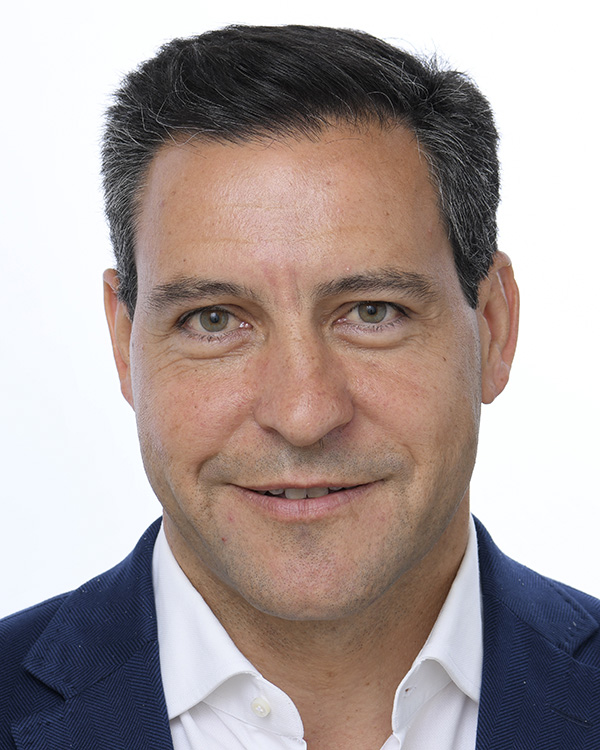
 Debate contributions by Raúl DE LA HOZ QUINTANO
| Rank | Name | Country | Group | Speeches | |
|---|---|---|---|---|---|
| 1 |

|
Lukas SIEPER | Germany DE | Non-attached Members (NI) | 321 |
| 2 |
|
Juan Fernando LÓPEZ AGUILAR | Spain ES | Progressive Alliance of Socialists and Democrats (S&D) | 280 |
| 3 |
|
Sebastian TYNKKYNEN | Finland FI | European Conservatives and Reformists (ECR) | 247 |
| 4 |
|
João OLIVEIRA | Portugal PT | The Left in the European Parliament (GUE/NGL) | 195 |
| 5 |
|
Vytenis Povilas ANDRIUKAITIS | Lithuania LT | Progressive Alliance of Socialists and Democrats (S&D) | 183 |
All Contributions (31)
 Online piracy of sports and other live events: urgent need to address unsolved issues (debate)
Date:
21.01.2026 19:13
| Language: ES
Mr President, ladies and gentlemen, online piracy of sporting events is by no means marginal. It is a cross-border phenomenon, massive and perfectly organized, and against which, unfortunately, the European Union does not have a unitary response, but 27 absolutely unequal, absolutely ineffective and absolutely insufficient national responses. And the question now would be: Is it possible to end piracy? The answer is yes. In fact, we have some tools that are proving to be effective in some states. Dynamic and real-time blocking is a perfectly effective tool that could be made or made binding by the Commission tomorrow. A Commission that confines itself, solely and exclusively, to making recommendations and leaving the solution in the hands of States. And this regulatory vacuum, together with these differences in regulation by states, makes pirates move to those countries that have more lax regulations and, from there, harm everyone. That is, the inaction of some harms everyone. The Commission must as soon as possible propose a common legal basis with rapid proportional procedures and, of course, guarantees of fundamental rights that genuinely serve in a unitary and joint way to put an end to online piracy of sporting events. It is not a question of a lack of technology, it is a question, at the moment, of a lack of political will, which we are calling on the Commission to do.
Presentation of the automotive package (debate)
Date:
16.12.2025 17:44
| Language: ES
Madam President, today, with the announcement of the package of measures for the automotive sector, realism, common sense and responsibility begin to prevail at the ideological whims of some in this House. Today we begin to understand that talking about the future of the automotive industry is not having a debate on climate policy; whereas it is not a question of choosing between protecting the environment or protecting the automotive industry, but the other way around, of trying to make climate objectives compatible with the aim of maintaining the competitiveness of what was, until recently, our flagship industry; whereas progress can be made in reducing emissions without hampering employment in a sector as important as the automotive sector. They were wrong in the past those who thought that the industry would endure everything, that technological solutions could be imposed, from politics, without having the market. And the market reacted and put the sector on the brink of crisis. Today, with the presentation of the package, citizens begin to win, workers begin to win, the automotive industry begins to win and the concept that we have some of competitiveness. Today, with the announcement of the package of measures for the automotive sector, those who, like the Prime Minister of my country, continue to think that economic policy must be subordinated to maintaining an absurd and sectarian climate agenda, lose. Today I think Europe is starting to win.
Outcome of the UN Climate Change Conference - Belém (COP30) (debate)
Date:
27.11.2025 10:23
| Language: ES
Thank you. What I am aware of is that the German Government, like all the parties that are part of the European People's Party, is committed to technological neutrality, to the diversification of energy sources and to energy efficiency. Also, by the way, in Germany.
Outcome of the UN Climate Change Conference - Belém (COP30) (debate)
Date:
27.11.2025 10:20
| Language: ES
Mr President, the Belém Summit leaves us with a conclusion that many would not want to hear. Realism has been imposed. Beyond passionate speeches, the symbolism of holding the Summit in the middle of the Amazon, the reality is that the main objective pursued, which was to get an agreement to put a date on the end of fossil fuels, has not been achieved. The problem is recognized, but there are no plans, no tools, no deadlines. Everything stays in generalities. For what the Belém Summit has served is to begin to demonstrate the failure of climate catastrophism, of the discourse of fear, of dogmatism. A much more realistic approach begins to be imposed, an approach that recognizes that the energy transition is going to be problematic, it is going to be difficult and it is also going to be uneven. An approach that truly bets on technological neutrality, on efficiency, on the diversification of energy sources. An approach to be led by the European Union. But we must not regard the Belém Summit as a failure. From our point of view, it has been a turning point in climate policy to move from rhetoric to starting on solid ground. We do not have a problem of lack of climate awareness, of environmental awareness. We have a problem of lack of results and, if we want results, we must move away from dogmatism and focus on solutions that are pragmatic, that are possible, that are proportional and that are also socially accepted. If we abandon dogmatism and focus on citizens and climate change, we will achieve the goals we all pursue in this House.
Digital Package (debate)
Date:
25.11.2025 19:38
| Language: ES
Mr President, Madam Vice-President, those of us who, from the beginning of the legislature, had been calling for measures to help us effectively boost competitiveness, those of us who had been talking about the need to harmonise, simplify and speed up regulation, were calling for a package such as the one presented last week. A text that, unlike other regulatory packages of the Commission, does represent an ambitious bet to make more agile and more efficient the regulation that affects companies - specifically digital regulation - and that also has the virtue of putting on the table tools for the achievement of the objectives it pursues: boosting innovation, cutting red tape, simplifying the current regulatory framework, reducing costs, breaking down barriers. And that responds, by the way, to a concern that we share with European industry. The The digital framework at the moment is too complex: It presents rules that overlap, generate uncertainty and, ultimately, clearly hamper our competitiveness. That logically implies curbing innovation. Digitalisation must, in any case, be a competitive advantage, never an administrative burden for companies, let alone an excuse for demagoguery.
UN Climate Change Conference 2025 in Belém, Brazil (COP30) (debate)
Date:
22.10.2025 18:55
| Language: ES
Madam President, a new COP and a new opportunity, a new race to demonstrate how committed we all are in the fight against climate change; and a new CP which, of course, the European Union wants to lead. In the light of what I have heard here, I see how easy it is to talk about great objectives, pompous principles, global challenges, and how difficult it is to translate them later into concrete commitments, into real policies that really help to advance the decarbonization process. And why? Because, once again, the same thing happens again: We're not realistic. We set targets without taking into account the real possibilities of our economy and businesses or the needs to advance economically in the European Union; We don't even listen to the industry, because we take action and set targets behind its back. We have already seen what has happened in the automotive sector and the situation it is in at the moment: We have learned nothing from the mistakes of the past, and now we dare to talk about ambitious new targets, increasing the pace of decarbonisation by 2035 and 2040, when we are far from achieving the 2030 targets. I call that, honestly, hypocrisy: climate hypocrisy. Honestly, there is no need to go further and set new and more ambitious goals. Let us focus on making it possible for our economy to achieve the primitive goals, which we initially set for 2040; help our companies, help our industry and make it compatible with the principle of competitiveness of our economy. Let us not subordinate industrial policy to climate policy, let us learn from the mistakes of the past.
Establishment and functioning of European Works Councils - effective enforcement (debate)
Date:
08.10.2025 15:46
| Language: ES
Madam President, Commissioner, we started this legislature by saying that this was going to be the competitiveness legislature. All of this is based on what the Draghi report said. And we were all clear that achieving competitiveness, achieving it, was not a matter of big slogans, big headlines or declarations, but required, of course, concrete actions, structural reforms and clear strategies to be dealt with urgently. In those we are, for example, processing omnibus packages to reduce the administrative burden on companies. And that is how all the legislative initiatives presented here should move forward. We share, of course, the spirit of the initiative. We are fully aware of the need to strengthen social dialogue. We congratulate, of course, the rapporteur on the work he has done. But we must be careful that none of the initiatives presented here involve more costs, more bureaucracy, more ambiguity or more administrative burdens for businesses. Europe needs social dialogue, of course. Europe needs to protect workers' rights, of course, but it also needs efficiency, realism and balance. We need strong companies, with the capacity to invest, to innovate, to create jobs. And trying, of course, to avoid anything that limits their ability to compete. We believe that progress can be made in an environment that protects workers' rights, but we believe that that must always be compatible with reducing burdens for companies, bureaucratic as well.
Europe’s automotive future – reversing the ban on the sale of combustion cars in the EU (topical debate)
Date:
08.10.2025 12:27
| Language: ES
Mr President, Commissioner, the game in which we are playing the future of the automotive industry has begun. Winning or losing means maintaining or destroying our flagship industry of the European economy and also millions of jobs. And today we already know that we will not win the game at all if we bet on absolute electrification in the year 2035 and that we will only win the game if we know how to guarantee the competitiveness of the sector before and after that year 2035. And for this we must correctly play three cards. The charter of pragmatism, that of time and that of dialogue. Pragmatism to recognize that there is no single technological solution to reduce emissions. And this is not a resignation in the face of the failure of the implementation of the electric vehicle in Europe. It is more than assuming that the decarbonisation process must, in any case, be economically sustainable, technically possible and technologically open. The second card is the time card. The process cannot be imposed abruptly. We need to introduce the flexibility criterion. Industry, and also the market, needs time and certainty. Time to implement the model and certainty to properly channel investments. Asking for time is not asking for delays in deadlines, it is assuming that the process must be fair, viable and orderly. And finally, the dialogue. Dialogue with the companies, with the sector and also, by the way, with the workers. Dialogue as a bridge between climate ambition and the reality of our industry. The transition to decarbonized mobility is not going to be won with impositions of either time or technology, but with the intelligence to properly play these three cards.
Devastating wildfires in Southern Europe: the need to strengthen EU aid to restore the massive loss of forests and enhancing EU preparedness (debate)
Date:
09.09.2025 11:39
| Language: ES
Mr President, I should like to begin by thanking those who have spoken before me. This is particularly true for me, who come from Castile-Leon, one of the regions which, unfortunately, has suffered the most this summer from the devastating fires that have ravaged southern Europe. Extraordinary meteorological circumstances have caused extraordinary fires in an extraordinary number. In the face of this, two attitudes: This is what the Commission and the Council have just shown, which is ours, that of responsibility, solidarity, unity and commitment for the future, and that of those who, once again – we will see it later – try to make partisan use of it, trying to gain political advantage from misfortune, from desolation, even from death. We are not going to fall into the trap, we are not going to use this intervention or this debate to show what the Government of Spain or other governments have been able to do wrong, better or before. Let us use this debate to serve as a turning point to ensure that, in the future, when there are fires again – which there will be again – we will be able from the European Union – and also from the States – to respond more quickly, more effectively and faster to them. And that is not achieved at all with demagogic speeches. It is achieved, firstly, by involving States in prevention plans and also in forest strategies. This is also achieved by improving coordination and cross-border cooperation. And finally, of course, by improving the financing of prevention, extinction and recovery policies in the affected areas. In short, this is achieved with the commitment expressed by the Commission - and fully shared by us - that forestry policy must, in the future, truly become a policy for all, a Community policy.
EU Preparedness Union in light of the upcoming wildfire and droughts season (debate)
Date:
09.07.2025 14:58
| Language: ES
Madam President, Commissioner, the fire season has unfortunately already begun. They know very well in the province of Tarragona and in the region of Marseille, that they are not living an abstract threat in the form of fires, but are suffering in their own flesh a tragedy in human terms, in economic terms and, of course, also in ecological terms; It is also a threat that grows year by year. It is true that the European Union has increased funding for fire-fighting measures, but it is also true – and it must be acknowledged – that their effectiveness has so far been very limited. There is a lack of long-term planning, a lack of objective distribution criteria and a lack of focus also on prevention and not so much on extinction. The competence in forestry is exclusive to the States, but the European Commission – we believe – can promote coordination and harmonisation of measures. Coordination to make measures more effective - often financed by the European Union itself - and also to achieve a long-term prevention planning strategy and, along with this, of course, real investment to improve local capacities in firefighting and something that for us is extraordinarily important: active management of the territory. Depopulated areas in Europe are the best fuel for the spread of fires. In order for fire-fighting policies to be effective, we also need to focus on boosting rural areas and, of course, fighting depopulation.
Need for the EU to scale up clean technologies (debate)
Date:
08.07.2025 12:17
| Language: ES
Mr President, Commissioner, it is clear, we all agree that Europe needs to accelerate the deployment of clean technologies, a process that is absolutely necessary for the achievement of the objectives we have set ourselves in this legislature: industrial competitiveness, energy sovereignty and, of course, the achievement of climate objectives. But in order to address this process, in addition to very good words, very good intentions - it is clear and you have said this - pragmatism, determination and, above all, ambition are needed. And not only that, it is also necessary to put aside the old dogmatic clichés and some ideological prejudices that have proven to be so harmful in the past. In addition, it must be clearly stated and, consequently, acted upon. Energy transition in Europe is impossible without nuclear energy. If we really want energy sovereignty in Europe, we need nuclear energy. If we really want affordable prices in the European Union, we need nuclear power. We therefore need nuclear energy to be treated on an equal footing with renewable energy. We need the remaining anti-nuclear biases to be removed from European legislation. We have the example of Germany, of its error and of its subsequent rectification. Let's act in that direction. Let us heed the letter that 12 European governments have recently sent to the Commission, asking it to make progress in the development of nuclear energy, and help us - I conclude with this - to prevent the government of my country, against the times and against all economic, social and environmental logic, from continuing with its plan to dismantle the nuclear power plants that exist in our country, solely and exclusively on a whim...
Amending Regulation (EU) 2023/956 as regards simplifying and strengthening the carbon border adjustment mechanism (debate)
Date:
21.05.2025 18:32
| Language: ES
Mr President, Commissioner, tomorrow the first of the reforms of the omnibus package is approved, a necessary and urgent step that will allow us to continue orienting our industrial policy towards the objective of competitiveness, but which will also allow us to simplify, clarify and relax some of the rules of sustainability, without thereby losing our capacity for growth. It will also, of course, allow us to free some importing companies from the burdens that weigh on their ability to generate wealth. All this under the prism of an unavoidable objective on our part. A primary objective that should govern each and every decision taken, not only in the economic field, but also in the climate field. And it is that all decisions must always be, and in any case, useful so that our companies can expand, can grow and can generate wealth and also employment. Only in this way will we achieve that objective of competitiveness. As the reform of the Carbon Border Adjustment Mechanism is planned, we are absolutely sure that it will allow us not to lose effectiveness in the objective of reducing emissions and, at the same time, it will help us to reduce the administrative burden of large importing companies, while eliminating unnecessary obstacles for small importers. We are talking about 180 000 importers who are going to get rid of the obligations of the Carbon Border Adjustment Mechanism. We are also talking about simplification and flexibility for those still obliged. We are talking, in short, about maintaining the effectiveness of the model, without hampering our industry. That's the way. It is the path that we have been demanding since the beginning of this legislature. A path that, let us not deceive ourselves, will only lead us to success, that is, to make our economy really competitive, if we face it with ambition, without complexes and learning from the mistakes we made in the past.
Action Plan for Affordable Energy (debate)
Date:
13.03.2025 10:06
| Language: ES
Mr President, the Commission points out in its communication that nuclear energy is key to decarbonisation, also to security of supply and, of course, to lowering the cost of energy. In line with this, most EU states are considering new investments in the field of nuclear energy or at least extending the lifetime of their plants. There is only one country whose government is going against it and is considering the closure of the nuclear power plants that exist in its territory: Spain. And it does not do so for technical or security reasons. It does so solely and exclusively by sectarianism, by ideological radicalism. It is the legacy of Mrs. Ribera, the legacy she leaves us in Spain, and has as an immediate consequence the closure, in 2027, of the Almaraz nuclear power plant, a nuclear power plant that generates 7% of the electricity consumed in our country. Needless to say, what will be the impact in economic terms, employment and, of course, also in the price of the electricity bill we pay in our country. So while in Europe the debate arises around the lowering of the cost of energy, in our country we are still anchored in the debate of "renewable yes, nuclear no". Understand that it is impossible to move forward in this way. It is not at all the time of energetic and ideological dogmatisms. It is time for economic pragmatism. If we do not understand this, it is impossible for us to assume the concept of competitiveness.
Social and employment aspects of restructuring processes: the need to protect jobs and workers’ rights (debate)
Date:
12.03.2025 15:51
| Language: ES
Madam President, if we really want to bet on the competitiveness of our economy, it is clear that we cannot continue to accept that industrial relations continue to be trapped in models that, we know, are outdated and, above all, are serving solely and exclusively to curb investment and the growth of our companies. We need, of course, to introduce tools that serve to energise, speed up and simplify, including in the field of industrial relations. But let's not fool ourselves: This cannot and will never be achieved by initiatives that seek to limit and condition decisions that are purely entrepreneurial, nor by introducing more bureaucracy or more rules that serve solely and exclusively to introduce more obstacles within companies. We are aware that, in the face of the imminence of a crisis, moments of labor conflict are generated; But what we cannot do in the face of an imminent crisis is to act by trying to strengthen the role of trade unions within companies. I think it would be far more sensible if we were concerned, first of all, with trying to prevent business crises from happening and that, if they do take place, they will have the least possible economic impact, also, of course, in terms of employment. It is not a question of ideologies, it is a question – simply and simply – of sensibility.
Action Plan for the Automotive Industry (debate)
Date:
12.03.2025 10:15
| Language: ES
Madam President, Commissioner, thank you for the speed, thank you for listening to the sector before taking decisions and thank you also for the importance that is finally being given to the automotive sector. First of all, we must recognize that this Plan represents an important step forward, mainly because it solves some of the immediate problems facing the sector, such as the issue of sanctions. But, nevertheless, we must also be sincere: The Plan, from our point of view, falls short. Technological neutrality is not only a slogan, it is an absolute necessity. We cannot link our future to a solution when innovation and technology offer us multiple paths to decarbonize and, in addition, gain in competitiveness. Let's have a much more open technological vision, much more realistic. Betting on electrification as the only solution condemns us to dependence and, therefore, to relocation. Decarbonisation is an unavoidable goal, of course, but it can't be a trap for our industrial development at all. Therefore: fewer dogmas, more freedom, more neutrality, but also fewer limitations, fewer prohibitions and more incentives.
Clean Industrial Deal (debate)
Date:
11.03.2025 19:27
| Language: ES
Madam President, the United States is withdrawing from climate policies. China, a leader in renewables, is also a leader in pollution. It is a golden opportunity for Europe to take climate leadership. A good opportunity if we know how to play our cards well, some cards that in the past we have not been able to play properly: We are punishing industrial policy for achieving over-ambitious climate targets. The result we have already known: we have not achieved objectives and we have hampered our competitiveness. The good news is that the Commission is willing to react; is willing to take on the mistakes made and, from them, rectify them in order to change the dynamics of industrial policy. And this is important, bearing in mind that competitiveness objectives can only be achieved if we are aware that industrial policy and climate policy must go hand in hand, coordinated, and industrial policy must never be subordinated to climate policy. And that's the Clean Industry Pact. A Pact which, firstly, speaks of 'clean', not 'green', and, secondly, refers primarily to industry. It is a good first step – short, perhaps, but a good first step – solid in terms of its principles, less in terms of its objectives; and we would have liked it to be, without a doubt, something more ambitious. We will have to wait for the normative development of the Pact to demonstrate whether there is such a willingness to rectify the mistakes of the past and to really push forward industrial policy in the European Union. For this we ask for determination, courage, but, above all, speed. There's not a minute to lose in the race.
Restoring the EU’s competitive edge – the need for an impact assessment on the Green Deal policies (topical debate)
Date:
18.12.2024 12:54
| Language: ES
Mr President, Madam Vice-President, sometimes when we talk about competitiveness, we have the majority of us here who are clear about what our shortcomings are, what are even the objectives to be achieved, and we begin to agree on what the tools must be to restore competitiveness to our economy; In that regard, we warmly welcome President von der Leyen's announcement of the Clean Industrial Pact. The important thing is missing, which is to succeed in developing the tools, the instruments that should serve us to reorient these excessively ambitious climate policies and make them compatible with the equally necessary industrial and energy policies that finally ensure the competitiveness of our economy. The Clean Industrial Deal, which must of course be born from a thorough analysis of the impact of Green Deal policies on our industry, cannot be at all a reshaping operation or even a simple update of Green Deal policies. The Clean Industrial Pact should be the first step in a paradigm shift in industrial policies in the European Union, a pact that should reflect the ambition of the European Union to put at the same level the objective of decarbonization with the objective of competitiveness and a pact that assumes as a fundamental principle the need to reformulate those policies that, in order to achieve the climate objectives, we know are hindering or have hindered the competitiveness of our industry. Many duties, little time, but a fundamental challenge: restoring the economy while maintaining decarbonisation targets. Nothing else.
Topical debate (Rule 169) - Budapest Declaration on the New European Competitiveness Deal - A future for the farming and manufacturing sectors in the EU (topical debate)
Date:
27.11.2024 12:19
| Language: ES
Mr President, we of course support the content of the Budapest Declaration. It is a text very much in line with the Commission's programme and also with the Letta and Draghi reports which, for the most part, we share in this House. We are already clear about our weaknesses, we are already clear about our threats, we are also clear about our strengths, and we even agree on generic objectives. Now, six months after the elections, it is time to get to work as a matter of urgency. Every day we let go is a day we lose to the rest of the world. Our economy depends on European industry and European industry needs our support now more than ever. It needs us to be by its side and to be flexible, to be tangible, to be, of course, agile and, above all, to be effective. We can only make our industry competitive if we are able to encourage innovation, boost productivity, cut costs, cut red tape; But above all, we can only make our industry truly competitive if we do not subordinate industrial policy to climate policy. Decarbonisation and competitiveness are two objectives that we must achieve together and hand in hand, not at all sacrificing our industry for the achievement of any of the decarbonisation objectives. If we are clear about this and if we also work in dialogue, on the basis of consensus, our industry will do well, our economy will do well, and therefore the Europe we believe in will do very well.
The devastating floods in Spain, the urgent need to support the victims, to improve preparedness and to fight the climate crisis (debate)
Date:
13.11.2024 15:32
| Language: ES
There is no question, but I will give you an answer. Do you know what happened after you, the Galician left, grossly used an ecological misfortune that occurred in Galicia? That the citizens, who are very intelligent, sent you and your socialist partners to the streets. That is what happened in Galicia and that is, perhaps, what will happen also in the future in our country. Ladies and gentlemen, when the will of the citizens is manipulated, they react and I am sure that here too they will react to those who try to manipulate misfortune solely and exclusively to benefit politically and electorally. Ladies and gentlemen, you should be ashamed.
The devastating floods in Spain, the urgent need to support the victims, to improve preparedness and to fight the climate crisis (debate)
Date:
13.11.2024 15:30
| Language: ES
Madam President, I come from a country where, when there is a misfortune - and there are a few - some have the sole objective of generating a story that favours their political and electoral interests. It happened with the Prestige. It happened recently with COVID-19 and, of course, it had to happen now too, it could not be less. Thus, while the media and political satellites - as we have just seen - are determined to generate a story that makes the Popular Party responsible for this and any misfortune that happens in Spain, we find a Government whose minister responsible for the management of the river that overflowed has not yet come forward, no longer to ask for forgiveness or to assume any responsibility, but only and exclusively to side with the victims, so as not to harm their career here in Brussels. Only in this way is it understood that a president of the Government refuses to assume the national emergency, simply to not show his face and assume his responsibilities. Only in this way is it understood that aid from other States should be refused. Only in this way is it understood, ladies and gentlemen, that the President of the Government of my country dares to publicly state that "if anyone needs something, let them ask for it", while people died in the streets. Meanwhile, of course, the delivery of humanitarian aid to Valencia is conditioned on the approval of the General State Budget. Ladies and gentlemen, it would be very naive to think that there will be no more catastrophes in my country. It would be very naive to think that the left is not going to behave in an unworthy way as it is doing. I am in a position to ask for the involvement of the European Union, the Community institutions and the Member States, so that this misfortune can serve as a turning point and so that, once and for all, we take seriously the need to prevent natural disasters.
The crisis facing the EU’s automotive industry, potential plant closures and the need to enhance competitiveness and maintain jobs in Europe (debate)
Date:
08.10.2024 11:24
| Language: ES
Madam President, yes, of course, and although there has been no question, I will try to give an answer. In the European People's Party we are extremely clear that the industrial policies, the development policies and the industrial future of the European Union, must always be compatible with climate policies and always be coordinated with them, and never be subordinated to them.
The crisis facing the EU’s automotive industry, potential plant closures and the need to enhance competitiveness and maintain jobs in Europe (debate)
Date:
08.10.2024 11:19
| Language: ES
Madam President, the crisis in the automotive sector is no longer a threat. It is an absolute reality. Faced with this reality, citizens, especially those millions of workers in the automotive sector who today do not see their future work clearly, demand urgent and forceful actions from all of us. Therefore, it is absolutely essential that we get down to work to promote reforms and reorient our policies and our strategies, including climate, if we do not want to be dragged down by a doped foreign competition. The extraordinarily ambitious climate policy is one of the burdens of the automotive sector. The emission reduction targets we set for the sector today are far from being achieved. The response of the Community institutions can in no way be to punish producers and impose extraordinarily high and unjustified fines on them. The review of the Emissions Regulation needs to be undertaken now – ahead of 2025 – in order to revise the interim targets and also to honestly introduce the role of biofuels and synthetic fuels and thus ensure the principle of technological neutrality. We must also address the future in 2035 and beyond 2035 and the role that plug-in hybrids will play thereafter. If we do not do it now, if we do not act urgently and forcefully, we will pay for it in terms of employment and in terms of the destruction of what is still the European Union's flagship industry today.
The future of European competitiveness (debate)
Date:
17.09.2024 13:46
| Language: ES
Madam President, we agree, of course, to a large extent with the analysis made by Mr Draghi in his report, as well as with the need to adopt measures as soon as possible to curb this process of loss of competitiveness and to address as soon as possible the measures to put it into effect. It is necessary, of course, to take action and change our political priorities by bringing to the forefront those that allow us to recover competitiveness and simultaneously initiate a necessary process of reindustrialization of our economy. I would like to draw attention to one of the flagship sectors of European industry: the automotive sector. A sector that is now under threat, undoubtedly weighed down, among other things, by the loss of the balance between industrial policy and climate policy and by the limited flexibility we have given it to achieve the objectives we have entrusted to it, without even knowing or properly assessing whether these were feasible or not. The achievement of the objectives of competitiveness of the automotive industry expressed in the Draghi report, with which we mostly agree, requires that beforehand all, absolutely all, including all the members of the College of Commissioners, assume the non-subordination of the same to the principles of decarbonization and understand the strategic character that has had, that has and that must have the automotive sector from the point of view of both economic and social.