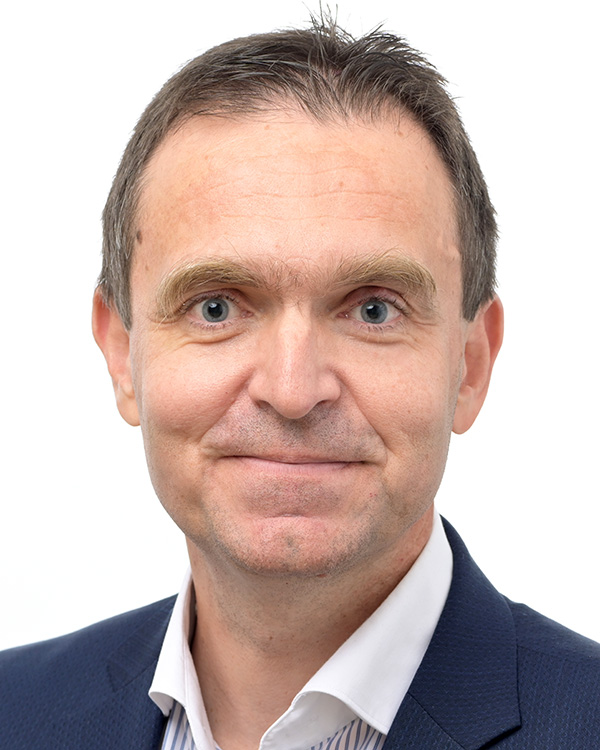
 Debate contributions by Ľudovít ÓDOR
| Rank | Name | Country | Group | Speeches | |
|---|---|---|---|---|---|
| 1 |

|
Lukas SIEPER | Germany DE | Non-attached Members (NI) | 321 |
| 2 |
|
Juan Fernando LÓPEZ AGUILAR | Spain ES | Progressive Alliance of Socialists and Democrats (S&D) | 280 |
| 3 |
|
Sebastian TYNKKYNEN | Finland FI | European Conservatives and Reformists (ECR) | 247 |
| 4 |
|
João OLIVEIRA | Portugal PT | The Left in the European Parliament (GUE/NGL) | 195 |
| 5 |
|
Vytenis Povilas ANDRIUKAITIS | Lithuania LT | Progressive Alliance of Socialists and Democrats (S&D) | 183 |
All Contributions (11)
 The 28th Regime: a new legal framework for innovative companies (debate)
Date:
19.01.2026 17:13
| Language: EN
Madam President, Vice-President, Commissioner, colleagues, the global digital landscape is dominated by giant companies, despite Europe's enormous consumer base. No company with a valuation over 500 billion was created from scratch in the last 50 years, and there are only two European companies in the global top 20. Start-ups are often leaving Europe to scale up elsewhere. What does it mean? Europe failed to build a truly single market for capital. Our goal should be to allow European startups to seamlessly operate across Member States. Full harmonisation went nowhere. We need a special regime for fast-growing companies which is internationally competitive. New legal forms should be just a starting point. We risk another failure if other elements are not sufficiently taken into account, like taxation, employment law or insolvency procedures. Big steps are sometimes necessary. You cannot cross a chasm in two small steps.
Financial activities of the European Investment Bank – annual report 2024 (debate)
Date:
07.07.2025 16:47
| Language: EN
Mr President, Commissioner, colleagues, the EIB Group is a very important financial institution in achieving European policy goals and since we have new challenges, I think we also need a reprioritisation of the work of the EIB. I will mention basically four areas where I think that we need to prioritise things and all those four areas are connected to innovation and competitiveness. The first one is about risk capital, venture capital and equity financing. We have a lot of debt financing in Europe, but we have a problem to attract equity financing and to help start-ups and SMEs. The second one is still, of course, the climate goals. We should focus much more on competitive green technologies where Europe has a clear advantage also globally. The third one is defence and security where I think that, given the current circumstances, the EIB cannot stay outside this business and I think mainly focusing on dual‑use technologies can make a difference to European financing. And my fourth point is that actually we mentioned a lot of areas where EIB should invest, but I warn a bit that we should not overburden the EIB and we should stay clearly focused on the areas most relevant for the current policy challenges of the European Union.
Implementation report on the Recovery and Resilience Facility (debate)
Date:
17.06.2025 11:29
| Language: EN
Madam President, Commissioner, colleagues, the Recovery and Resilience Facility is an important testing case for the European Union for at least two reasons. The first one is that there is a unique combination of reforms and investments to finance the green and digital transitions, and it might be a useful tool to prioritise our economic policies. The second reason is that joint borrowing to finance European public goods is also an innovative example worth considering also in other cases. So, what have the lessons been so far? The results are a little bit mixed, but my assessment is mostly positive. For the future, I would like to point out the following shortcomings which should be addressed before launching a similar instrument in the future. The first one is that, in my view, more focus is needed on European value added in the investment. The second one is that we need ex-ante agreement on the financing, because otherwise it can crowd out a lot of different expenditures in the MFF. An outcome-based evaluation: it is not spending the money that is important, but spending it wisely. Better administrative capacities in order not to crowd out other European funds at national level. And more granular definition of reforms and higher transparency. I hope that with these lessons, we can build a more resilient and better Europe.
Savings and Investments Union (debate)
Date:
31.03.2025 16:47
| Language: EN
Mr President, Commissioner, the diagnosis is clear. Europe has a lot of savings on the one hand, and the desperate need for investments on the other. And there is no functional bridge between the two sides. Deep and liquid capital markets, more risk‑taking and equity investments are absolutely necessary to harness the full potential of an economy with 450 million people. Attempts to create a capital market union have yet failed. What will be different with the new acronym SIU? Two things come to my mind. The first one is the perspective. Capital market union is a very technical term with no appeal to citizens, businesses or entrepreneurs. Savings and investments are more understandable, but focus on citizens' financial wealth and financing Europe's global competitiveness is an even better alternative. Second, urgency. In times of gloomy global outlooks, trade wars and protectionism, Europe needs to mobilise all its internal sources of growth. In my view, compared to the current plan, we should be even more ambitious and we should work all together.
Action Plan for the Automotive Industry (debate)
Date:
12.03.2025 10:24
| Language: SK
Madam President, Commissioner, dear colleagues, in the past, people around the world have been kidnapped from European cars. They were synonymous with progress, quality, exclusivity. However, the industry is gradually losing competitiveness, threatened by state-subsidised electric cars from China, as well as fully privately funded models from the United States. In addition, new tariffs on the other side of the Atlantic could inflict another blow on the industry. Action is needed. It was too late yesterday. Three steps are very important to me. Firstly, the European Union will only be successful if international trade returns from power games to meaningful rules. We need to make the most of the market power of 450 million people for tough and confident negotiations. Secondly, we need to invest, innovate and connect. The key word is networks: charging stations, power grids, user networks, autonomous cars... Thirdly, the price: mechanisms will have to be found to price the initial investment.
Competitiveness Compass (debate)
Date:
12.02.2025 14:39
| Language: EN
Mr President, Commissioner, colleagues, I have three points. The first one is that the Competitiveness Compass is an important additional step after the Draghi and Letta reports. But still, it is just a compass. It shows the way forward, but without action it will not get us any closer to our main goal of regaining the competitiveness of the Union. So we need to seize the momentum and act swiftly. Second, simplification is clearly a necessary condition for improving competitiveness, but building a truly single market is absolutely vital. The strength of a market with 450 million people predisposes us to become a powerful global player. Abolishing remaining barriers will help us not to end up as breakfast for the strongest international players. And third, long wish lists are quite common also in national debates. But then the Finance Minister comes and with him the reality check. So we are sometimes chasing too many goals without a clear idea of how to finance those, and therefore an honest debate about the EU budget, NGEU, the MFF, European public goods and Savings and Investment Unions is necessary. In other words, we need a European financial deal.
VAT: rules for the digital age (A10-0001/2025 - Ľudovít Ódor) (vote)
Date:
12.02.2025 11:06
| Language: EN
Madam President, I just wanted to thank all the stakeholders for supporting this initiative, because I guess that this clearly shows that Parliament is now going in the right direction. This is about using the funds which are lost in the VAT regime every year for much better purposes. And since we are in need of reforming our budgets and making funds available for consolidation, in many countries, including Slovakia, e-invoicing is quite important, also a platform‑economy regime and a one‑stop point for VAT registration. According to estimates, there are EUR 20 billion available for other purposes if we can fight against tax fraud and corruption. So at the end, I would like to ask this plenary to support this proposal.
Topical debate (Rule 169) - Budapest Declaration on the New European Competitiveness Deal - A future for the farming and manufacturing sectors in the EU (topical debate)
Date:
27.11.2024 12:31
| Language: EN
Mr President, colleagues, I am very glad that our first debate after the vote for the new Commission is about competitiveness, and I am also glad that there is a significant overlap between the Budapest declaration and the programme of the new Commission. There is more a broad consensus in this House that actually we need to close the innovation, skill and security gaps vis-à-vis our global competitors. Of course, it is important to know what, but even more important to know is how to do this. In this regard, I have two points. The first one is about change management. Reforms are never easy. We should continue to seek for viable solutions together with businesses, farmers and citizens in general. Successful transformations are those broadly supported by the public. Status quo is a road to stagnation and instability. My second point is about financing the necessary transition. We should be careful when simply throwing money on problems. It can ease the symptoms but never cures the disease. Therefore, we need money together with reforms and not just talking about raising money and throwing it at problems.
Closing the EU skills gap: supporting people in the digital and green transitions to ensure inclusive growth and competitiveness in line with the Draghi report (debate)
Date:
24.10.2024 07:47
| Language: SK
Mr President, Commissioner, dear colleagues, the European Union must manage two major transformations in the coming decades - the green and the digital - with an ageing population. This mission is doomed from the beginning, unless we get rid of the vices of the twentieth century. What are they? Firstly, we should not prepare young people for a particular profession, but we need to teach them the skills to cope with these challenges. Secondly, let's stop dividing life into education and subsequent work. Let us not be naive, that today's knowledge will be enough for us in 30 years. It is digitalisation and artificial intelligence that can help us to continuously learn at a pace and in a way that suits us. Thirdly, let's not pretend that the excellent average quality of universities is enough. The European Union has more. We need excellence for global success and we need to become a magnet for foreign talent. In the twentieth century, we got accustomed to the fact that investment is only about machines, concrete and asphalt. In the twenty-first century, they should be mainly about human capital.
U-turn on EU bureaucracy: the need to axe unnecessary burdens and reporting to unleash competitiveness and innovation (topical debate)
Date:
23.10.2024 12:14
| Language: EN
Mr President, Vice-President, Commissioner, colleagues, for many of our voters, Brussels is a synonym for bureaucracy. This is problematic for at least two reasons. First, it helps populists and far-right parties to attack the union and overshadows important achievements at the EU level. Second, it creates unnecessary burden for our companies and we are losing the global race, especially in the area of the digital transformation. But what can we do? I strongly support quantitative targets to decrease the unnecessary burden. One in, one out rules, sunset clauses, or mandatory regulatory impact assessment. But it is still not enough because our benchmark is still the status quo. We should change that. We should follow best practices at the global level, design optimal environments for innovation from scratch, testing zones, and maybe also 28 regimes. Otherwise, we really risk finding ourselves in an old joke: if it moves, tax it, if it keeps moving, regulate it, and if it stops moving, subsidise it.
Empowering the Single Market to deliver a sustainable future and prosperity for all EU citizens (debate)
Date:
21.10.2024 16:56
| Language: SK
Madam President, as we also see from this debate, a real single market is something that we can build on in this House, and we must do our utmost in the coming years to extend this concept to other sectors. I would like to draw attention to three things that are a priority for me. First of all, the world has become smaller and the markets have changed a bit. The digital world is dominated by the best. The winner takes almost everything, enough is no longer enough. We need really strong European global players, not dozens of dwarfs. Secondly, the world of innovation is also about risk. Unfortunately, our bank-dominated financial system and, like citizens, prefer less risk, and therefore without the Union, savings and investments, as well as better financial literacy, this will remain the case. We have money, but we can't get it to innovative companies. And thirdly, with good ideas and business, we cannot tolerate barriers in crossing every internal border.