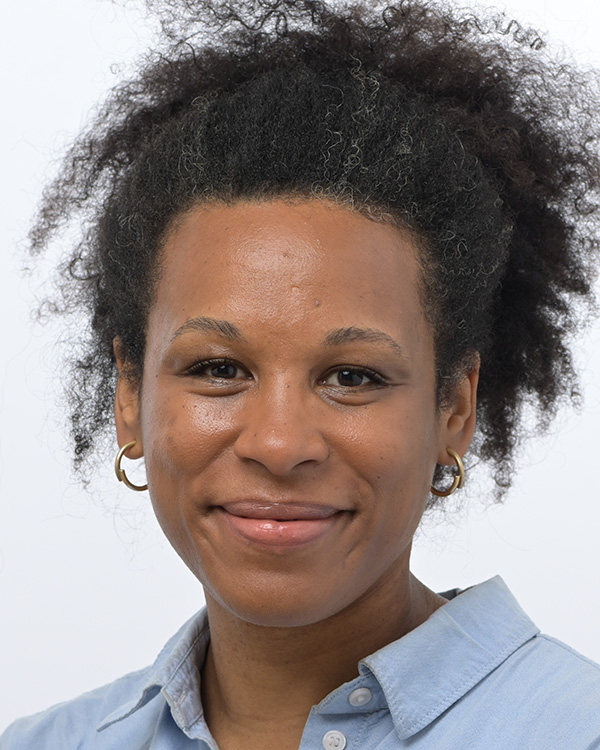
 Debate contributions by Nela RIEHL
| Rank | Name | Country | Group | Speeches | |
|---|---|---|---|---|---|
| 1 |

|
Lukas SIEPER | Germany DE | Non-attached Members (NI) | 321 |
| 2 |
|
Juan Fernando LÓPEZ AGUILAR | Spain ES | Progressive Alliance of Socialists and Democrats (S&D) | 280 |
| 3 |
|
Sebastian TYNKKYNEN | Finland FI | European Conservatives and Reformists (ECR) | 247 |
| 4 |
|
João OLIVEIRA | Portugal PT | The Left in the European Parliament (GUE/NGL) | 195 |
| 5 |
|
Vytenis Povilas ANDRIUKAITIS | Lithuania LT | Progressive Alliance of Socialists and Democrats (S&D) | 183 |
All Contributions (19)
 One-minute speeches on matters of political importance
Date:
15.12.2025 21:15
| Language: EN
Mr President, if Trump can snap his fingers and take rights away from European citizens on our very own soil, then something is wrong. This is not hypothetical. Trump has placed two Europeans, one UN official and one ICC judge, on a sanction list – a sanction list that is usually reserved for terrorists – simply because they did their job. They insisted that international law be applied to everyone, also to Netanyahu and companies that are benefiting from the ongoing genocide. If Trump can attack people with public visibility, imagine what happens to everyday citizens speaking up for Palestine. Only a united Europe can fence off American bullying – only a united Europe can protect our courts and our citizens. Some will try to convince you of the contrary, but people do want the United States of Europe, and Volt is here to make it happen.
Escalation of the war and the humanitarian catastrophe in Sudan (debate)
Date:
25.11.2025 15:27
| Language: EN
Mr President, as I speak here, innocent people in Sudan continue to be executed, bombed, raped or left to starve, for over two years now. Yet today is the first time we are talking about the extent of this crisis in this House. Let us say it how it is – the suffering of people in African countries has been normalised for far too long. The world has grown numb, as if starvation and violence are somehow part of the continent's identity. They are not. What is happening in Sudan is not a conflict between two equal sides. External actors like the United Arab Emirates are fuelling the violence because a weakened Sudan is easier to exploit for resources, and the Sudanese people become collateral in someone else's power games. Today, that collateral means 14 million people displaced, hundreds of thousands of people trapped and starving, and women and girls raped as a weapon of war. The EU cannot be a bystander to the genocide warnings. Not again. The supposed ceasefire we just learned about is urgently needed, but lasting peace has to go hand in hand with accountability for war crimes and rule of law. We already see Trump rolling up with his next peace plan on his delusional mission for a Nobel Peace Prize, but once again he is ignoring Sudanese voices and instead striking deals with the UAE – the very actors destabilising the country. This has failed before and will fail again. Instead, let's push for a civilian-led peace process. Let's finally act like the EU's values mean something.
Audiovisual Media Services Directive obligations in the transatlantic dialogue (debate)
Date:
23.10.2025 07:01
| Language: EN
Madam President, good morning everyone, our cultural sovereignty is not for sale, our film industry is not for sale. The President of the US talks about 'making Hollywood great again', but the problem isn't investing in the American film industry, it's trying to do it on our dime and against our laws. Threatening Europe's cultural rules is not acceptable. Our laws protect creators, children and independent media. Let me be clear: culture will never, ever be a bargaining chip in any trade negotiation. President von der Leyen, we need to send a clear message across the Atlantic: Europe will not back down. First, European citizens decide what rules govern their culture. Second, our audiovisual sector as a source of jobs and creativity must be defended. Our sovereignty and credibility are on the line. Culture is key to preserving our diversity and Europe's soft power. The AVMSD is not just a law on paper, it's a shield for Europe's culture. When we updated it in 2018, we made a deliberate choice: protect European works in a fast-changing media world, keep harmful content away from our children and guarantee independent media regulators. Yes, this means big platforms like Netflix or Disney+ must invest in European stories, but it also creates the blockbusters of tomorrow right here in Europe. No, the AVMSD is not a barrier, it's a shield. No, the AVMSD is not a distortion of trade, it opens doors for European talents. Look at the success of Borgen, Lupin or Money Heist: these are all European works that have reached global audiences, mostly through big platforms like Netflix. If it was not for the AVMSD, major audiovisual platforms – which are mainly American – would probably not invest so much in European productions. Given the power that these platforms wield, we must make sure European stories remain visible in Europe. The sustainability of our audiovisual sector depends on it, as does our cultural diversity. Mr Trump, attacking European rules to protect Hollywood is hypocritical. If you really care about American creators, meet them, talk to the guilds. They told us last May, when we were in LA, that 100 % tariffs on foreign films is a bad idea. Many American productions export to Europe because of lower costs: it's business, not a culture threat. Art and culture thrive by opening doors, not closing them. European and American cinema have always grown together. Let's keep it that way. Now, I would like to thank my CULT colleagues for their support and introduce my oral question to the Commission on the AVMSD obligations in the transatlantic dialogue. The administration of US President Donald Trump has recently targeted as foreign trade barriers the provisions of the Audiovisual Media Services Directive (AVMSD) applying to streaming industries. In particular, it has focussed on investment obligations aimed at promoting European content and cultural diversity and a requirement for the catalogues of providers of on-demand audiovisual media services to meet a quota of at least 30 % of European works and give these works appropriate prominence. Furthermore, within the context of the ongoing trade negotiations, President Trump also stated his intention to impose a 100 % tax on films made outside the United States. First, the AVMSD is a cornerstone of the EU's audiovisual policy, aiming to create a single market for audiovisual media services in the EU while promoting cultural diversity. Does the Commission consider that backtracking on the principles of the AVMSD would be detrimental to the European culture model given the context of very strong international competition within the audiovisual media sector? And second, is the Commission in favour of recognising the crucial importance of the AVMSD in defending Europe's cultural sovereignty and diversity and the soft power of the EU, both in its negotiation with the United States and also in evaluating the AVMSD prior to its potential review in 2026?
Establishment and functioning of European Works Councils - effective enforcement (debate)
Date:
08.10.2025 15:37
| Language: EN
Madam President, imagine this: you are called into the office and told 'we have to let you go'. You ask why and they answer 'headquarters decided'. No warning, no explanation, no chance to say a word. Yet, you are the one paying the price for decisions made miles away by people who have never set foot into your work. Decisions that change your life and your future. That is not fair and that is not the Europe we believe in. That's why we changed the rules. With this new law, actually, European Works Councils will finally give workers a real voice. No more decisions taken in Paris that destroy jobs in Berlin without talking to workers first. From now on, when a decision could affect your job, your pay, your health – no matter where it's taken – your voice must be heard. And when those decisions are taken, at least 40 % of the room must be women, and that's always a better decision then, no? When workers are heard, companies do better. They find solutions, they avoid layoffs and they protect people, not just profits. This is what Europe is about: making sure our citizens are heard and protected wherever they live. Making sure that borders are never an excuse to leave responsibilities somewhere else. So, I think we altogether and Dennis Radtke did a very good job, and thank you for this.
The EU’s role in supporting the recent peace efforts for Gaza and a two-state solution (debate)
Date:
07.10.2025 12:07
| Language: DE
Madam President, Why is it that we talk so much about and so little about the Palestinians? You notice that I almost miss the words, today, October 7, when I think of the suffering of the October 7 massacre and when I think of the suffering of the genocide that began thereafter. How is it that a picture of the Israeli military has been almost uncritically taken over in the German media for two years – this narrative of picture until Tagesschau – Do Palestinian voices have much to say? And now Trump's peace deal: It is not Palestinians who should decide their own country from the outset, but a so-called supervisory board under the US president and Tony Blair. This has colonial undertones that are hard to miss. I wonder: Why is freedom of self-determination not the basic principle when we discuss the future of Palestine and Israel? The EU stands for freedom and peace. Now it has to be proven that this applies to all people. Yes, the negotiations are a glimmer of hope. But it needs the pressure and support of the EU. There can be no freedom without self-determination. Palestinians have the right to their own state, their own land and an independent government.
Intergenerational fairness in Europe on the occasion of the International Day of Older Persons (debate)
Date:
06.10.2025 17:48
| Language: EN
Madam President, young people do not care about politics. All that they care about is Instagram and TikTok. Really? The truth is, young people around the world are flooding their streets to demand change now. In Serbia, students demonstrated for democratic freedom. In Nepal, they stood up against corruption and nepotism. In Morocco, they demand investment in education and also healthcare. What about young Europeans? Far from not caring about politics, they are protesting against climate change and for global justice. Thousands marched only yesterday in Brussels for a sustainable future. Millions took to the streets all across Europe demanding peace and justice for Gaza. Young people are at the front line of today's most important battles, but too often they are being disregarded. We need to listen and to take action now. It's on us to build their future they are fighting for. Colleagues, I'm not only speaking as a politician here – I'm also speaking as a former teacher and as a mother. Let's stop asking whether young people care about politics, and start proving that politics cares about young people.
Need for a strong European Democracy Shield to enhance democracy, protect the EU from foreign interference and hybrid threats, and protect electoral processes in the EU (debate)
Date:
10.09.2025 17:17
| Language: EN
Madam President, have you noticed how military language has become very common these days? You just heard it again this morning, I guess, and you may like that or even dislike that but the truth is, our daily lives are being weaponised. Across Europe we see how hybrid warfare undermines our societies. Russia's disinformation tries to destroy our trust in democracy itself. If we want to defend Europe, we must strengthen the foundations of our democracy. Culture is one of these foundations – it's how we express free thought, the way we connect and our source of identity and belonging. Independent media is another foundation. Reliability and stability in times of disinformation is how we actually grow – and that is not a given. And, of course, education. For active citizenship and critical thinking, basic and civic education are a must. There is no Democracy Shield without these foundations. Defending Europe means more than stopping military attacks – it means strengthening and protecting democracy from within and investing in people.
State of play of implementation of the European Media Freedom Act in the Member States (debate)
Date:
08.07.2025 11:33
| Language: DE
Mr President! What does it mean when media freedom erodes in the heart of Europe? With the EMFA, the EU has made a clear commitment to safeguarding media freedom. But according to Reporters Without Borders, journalists in Germany are increasingly under fire. They are experiencing attacks on the open street from the right, they are experiencing censorship, they are experiencing political pressure, especially when they report on the genocide in Gaza. Critical reporting is not protected, but specifically prevented. Only this week a case was brought to me by a journalist who tried to place a very critical article in very established and actually known for critical journalism newspapers. He was rejected everywhere except for the Friday, Probably because of fear of backlash. This borders on self-censorship and that is highly alarming. The report of the Reporters Without Borders must ring the alarm bells. Media freedom is not only threatened in the periphery, it is crumbling at its core. The credibility of the EU now depends on whether we are prepared to defend media freedom at home and elsewhere throughout Europe.
80 years after the end of World War II - freedom, democracy and security as the heritage of Europe (debate)
Date:
08.05.2025 07:29
| Language: EN
Madam President, what is the most important EU value to you? To that question, young Europeans answered: human rights, democracy and peace. Eighty years after World War II, these values are still our most important heritage. But as Russia's invasion of Ukraine has shown, peace and democracy are not a given – they call for a commitment. A commitment to not remain silent when extremist regimes deliberately starve civilians and commit war atrocities. A commitment from democratic forces to raise strong firewalls against the far right in Europe. And a commitment to remain vigilant when our allies progressively turn their back on democracy, censoring researchers and activists or threatening the rights of minorities and women. But what does this actually mean for us? It means we cannot compromise on the freedom of our artists, our universities, our citizens. Europe must remain a hub of creativity, of knowledge and also of democracy, providing equal opportunities for all. It means we cannot let foreign forces interfere in our democratic processes, be it in the ballots or on social media. And it means we cannot be complicit when fundamental rights are being walked over, all in this very Union. Turning a blind eye would be a betrayal to the lessons our grandparents painfully learned. Our European Union youth is rightfully demanding us to stay loyal to this heritage. More than a celebration, today's anniversary is a reminder of Europe's responsibility.
Discharge 2023 (joint debate)
Date:
06.05.2025 13:41
| Language: EN
Mr President, together with my CULT shadow rapporteurs, I reviewed the DG EAC, the EAC Executive Agency and the Translation Centre. The Translation Centre is essential for multilingual work across all our institutions. We welcome improvements in public procurement, gender parity and exploration of AI and machine translation. Regarding the Commission, we appreciate DG EAC's work on Erasmus+, the Solidarity Corps and Creative Europe. The discharge exercise showed again for Erasmus+, the best-known EU programme, that demand far outweighs the provision in every sector. In 2023, EAC frontloaded EUR 100 million to support Ukraine through Erasmus+, an important but exceptional response. Going forward, we must integrate candidate countries more and increase the budget. We also observed frontloading in Creative Europe for two years and now are seeing a return to a steady growth and welcome the additional reinforcement. This programme is the livelihood of the cultural sector in Europe and saved many artists and freelancers over the pandemic.
European Cultural Compass as a driving force for economic competitiveness and resilience (debate)
Date:
31.03.2025 17:31
| Language: EN
Madam President, Commissioner, dear Glenn, I thank you for your statement and your great commitment to making this a very co-creative process. I really appreciate that, and I believe we are on the right track, but let's not underestimate the challenge we face here. There is a hybrid war knocking at our doors. Storytelling, clicks on social media and censorship are weaponised against civilians. To withstand this, we need vibrant civil societies. We need feelings of belonging together and courage to speak back. This is what culture is actually for. We need a European agenda for culture to protect our pluralistic democracies and societies. The culture sector needs security when it comes to plannability, freedom of expression, access and representation. Let's commit to improving the condition for cultural workers. We now have the opportunity to set very clear guidelines. First, we need to guarantee artistic freedom. The European Media Freedom Act has been a great success in preserving journalists' independence, and now we need the same level of legislation to protect freedom of expression for artists and creators. Second, we need solid and sustainable funding for the cultural sector. As we are now discussing the next MFF, let's secure at least 2 % of the overall budget for culture. This is a matter of preparedness, of resilience and of defence. Lastly, we need a European strategy on cultural relations and to understand Europe as a global cultural actor, not with a paternalistic worldview, but as a key to foreign policy based on mutual respect. Let's make this happen.
Union of Skills: striving for more and better opportunities to study, train or work in the EU and to bring our talents back home (debate)
Date:
12.03.2025 14:36
| Language: EN
Mr President, dear Commissioner, it's time to acknowledge the reality. An unreliable US, an emboldened Russia and hybrid warfare knocking at our doors. But let's be clear: peace isn't just secured by military alone, it's safeguarded by people upholding our democracies. To protect European democracy, we must strengthen it against these destabilisation efforts. This is why we need widespread, high‑quality education in Europe. Everyone has has the right to be active citizens, be trained for coming changes and leverage their potential against destabilisation. Many of the high costs Europe faces today are a result of failing to prepare for them in the past in time, whether on defence, energy or climate. When we act too late, we end up paying dearly. So one thing is very clear: we need a Union of Skills now, so thank you very much for that. Investing in people is not just a choice; it's a necessity, and an urgent one. Let's be even more ambitious. When we say people need training, let's make a wider training directive. When we say strengthen Erasmus, let's significantly increase the budget. When we say active citizenship and hybrid war, let's define strategic targets of civic education.
Russia’s disinformation and historical falsification to justify its war of aggression against Ukraine (debate)
Date:
17.12.2024 18:38
| Language: EN
Madam President, 'Sigma Boy'. Do you know 'Sigma Boy'? If you are an eleven-year-old girl in, for example, Germany or even Ukraine, you probably do. 'Sigma Boy' is a viral Russian trope used on social media that communicates patriarchal and pro-Russian worldviews. It's most popular with young teenagers and only one example of Russian infiltration of popular discourse through social media. Russia has understood how to embed these ideas in a society: target young Ukrainians on their phones, change the stories of Ukrainians telling their own society. Last week, Ukraine's Minister of Culture pointed out to me that cultural heritage does not only include history books and also museums, but Ukrainian language, music and also current Ukrainian influencers. Russia targets this all. Here, the EU must stand in strong support and target even these subtle infiltrations and falsifications.
Misinformation and disinformation on social media platforms, such as TikTok, and related risks to the integrity of elections in Europe (debate)
Date:
17.12.2024 14:21
| Language: DE
Mr President, where do we go when we do not know something? Well – online. For me personally, it's Google, some might also go on TikTok. Particularly for the younger generation, social media platforms are the place to gather information also on politics. Social media is where elections are decided nowadays. We cannot deny this, but we need to respond to this. We need to make sure that this does not compromise the democratic process, that the algorithmic logic of which content does well is not a deciding factor on electoral outcomes. With TikTok we risk overseeing the Trojan horse coming for our democracy. Yes, parties and politicians should meet people where they are and speak to them in a way they want to be spoken to. But no, that does not mean that facts become relative or that truth is a question of the most clicked video. One first step was the DSA calling out negative effects on elections. So for the Bundestag elections: Let's not talk about pet bans and gender craze, but about climate crisis and social justice.
Closing the EU skills gap: supporting people in the digital and green transitions to ensure inclusive growth and competitiveness in line with the Draghi report (debate)
Date:
24.10.2024 07:16
| Language: EN
Mr President, as the Draghi report outlines, the question of skills is not just one of preparing the labour force for changing demands, but also about giving people the tools to adapt and engage with a changing world and benefit from new technologies. This is what competitiveness should mean. As a teacher, I have great respect for traditional classrooms, but classrooms are only just the beginning. At the moment, only 40 % of European adults train every year. This is very far from the 60 % target that the EU set itself to reach by 2030. Training must be a lifelong commitment. Lifelong learning, development, developing digital skills, must be a fundamental right and not just a privilege reserved for a few. This isn't just about preparing for tomorrow's jobs. It's about empowering everyone to thrive in a world that is always evolving. So what does this actually mean? First, we need to address the lack of investment in skills. Every euro spent on training is a euro invested in our economy and society. This needs to be reflected in public budget decisions. Second, we need to establish an individual right to training for every European worker. But beyond this, we must break down the barriers that prevent skills and qualifications being recognised across borders. Let us make lifelong learning the new norm!
Facing fake news, populism and disinformation in the EU - the importance of public broadcasting, media pluralism and independent journalism (debate)
Date:
07.10.2024 19:09
| Language: EN
Madam President, this is true – I saw it on TikTok. Until a few weeks ago, I was working as a teacher back in Germany and that is what my 16-year-old students would tell me on a regular basis. As a teacher it was my job to train young people to recognise and also withstand disinformation. And believe me, that wasn't easy. I was not only confronted with young people telling me that they believed everything they saw on the internet, but also with their parents and that is, in times of hybrid wars, an actual security risk. A resilient society needs access to free public and factual information. This is our responsibility to our youth. We make sure that independent broadcasting remains available and is not at the whim of political moods in our Member States. If we don't actively protect and also foster the important work of independent journalists in Europe, all 16-year-olds will not be able to access reliable information and that is the future we are facing.