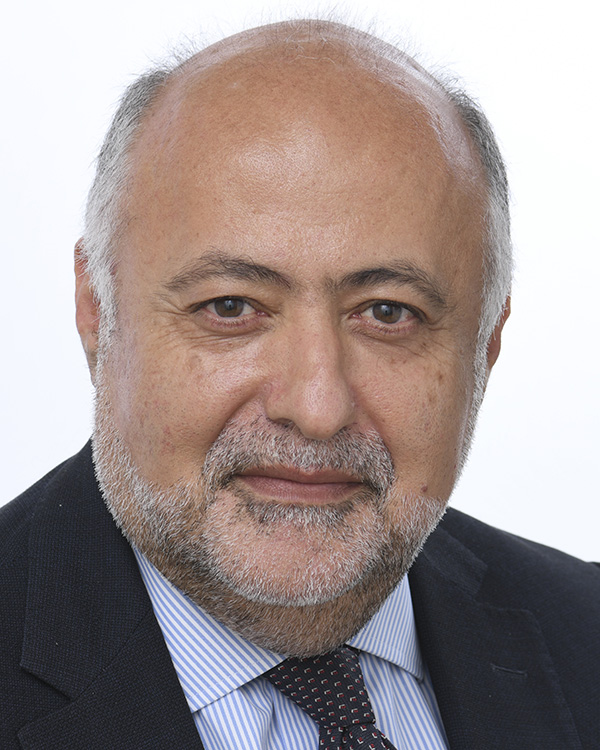
 Debate contributions by Dimitris TSIODRAS
| Rank | Name | Country | Group | Speeches | |
|---|---|---|---|---|---|
| 1 |

|
Lukas SIEPER | Germany DE | Non-attached Members (NI) | 321 |
| 2 |
|
Juan Fernando LÓPEZ AGUILAR | Spain ES | Progressive Alliance of Socialists and Democrats (S&D) | 280 |
| 3 |
|
Sebastian TYNKKYNEN | Finland FI | European Conservatives and Reformists (ECR) | 247 |
| 4 |
|
João OLIVEIRA | Portugal PT | The Left in the European Parliament (GUE/NGL) | 195 |
| 5 |
|
Vytenis Povilas ANDRIUKAITIS | Lithuania LT | Progressive Alliance of Socialists and Democrats (S&D) | 183 |
All Contributions (54)
 Escalation of violence in the Middle East and the situation in Lebanon (debate)
Date:
08.10.2024 10:08
| Language: EL
Madam President, ladies and gentlemen, we all understand the consequences of a possible extension of the war, the dramatic consequences. The solution in the region is absolutely clear that it cannot be military. It can only be politics. Here too, the European Union can play a more decisive role. We recently saw, in the motion for a resolution at the United Nations, 13 Member States of the European Union voting in favour, 12 abstaining and 2 voting against. We must have a unified strategy for the Middle East. It is a crucial issue both for the European Union and for peace in the world. We need a solution that guarantees Israel the right to exist safely and, at the same time, leads to the creation of a Palestinian state on the basis of UN resolutions. At the same time, we must help Lebanon to stabilise the situation there, because there will also be multiple repercussions. One and a half million people are displaced. Many of them will go to Europe. The European Union must therefore act more decisively.
The extreme wildfires in Southern Europe, in particular Portugal and Greece and the need for further EU climate action on adaptation and mitigation (debate)
Date:
07.10.2024 20:18
| Language: EL
Madam President, ladies and gentlemen, unfortunately the phenomena of the climate crisis, the extreme phenomena that we have been experiencing in recent years, are no exception. It will be the new normal. In my country they have been expressed both in the form of large fires and in the form of floods and action is needed on three levels. The first level concerns prevention, how we prepare to deal with such phenomena that will appear more and more often. The second level is what we do when a phenomenon breaks out, in civil protection. Here, too, we need better cooperation at European level in order to deal with such phenomena, because no single state can deal with them. The third has to do with how we stand by people when they have been devastated by such phenomena. And here we need to increase the resources of the Solidarity Fund. The citizens of Europe need to see us beside them when faced with such phenomena. We are pioneers as Europe in the green transition. In order to cope with the phenomena that will occur in the meantime, we need to increase speed. Obviously we cannot eradicate these extreme phenomena. But we can help people cope with their consequences.
The devastating floods in Central and Eastern Europe, the loss of lives and the EU’s preparedness to act on such disasters exacerbated by climate change (debate)
Date:
18.09.2024 09:45
| Language: EL
Mr President, our societies and citizens are constantly facing the consequences of the climate crisis. In recent days, these consequences have taken the form of extreme events, with floods in Eastern and Central Europe and fires in Portugal – events that are increasingly affecting my home country, Greece, with the most typical being the floods in Thessaly last year. We must not wait for a catastrophe to come to face a situation that is the new reality. And these are not statistics and figures; These are changes that affect our daily lives. Extreme events are one form of the consequences of the climate crisis. We see the phenomenon of water scarcity and the great impact on agricultural production, as our farmers are constantly faced with unusual weather conditions. Millions of people live in conditions of great uncertainty. We need to hear their voice. While times have changed, I'm afraid we're going by the standards of other times. Alongside the implementation of the Green Deal, it is a matter of immediate survival to deal with the effects of the climate crisis. The resources at our disposal are not sufficient. We also need to speed up assistance procedures, cut red tape and strengthen our coordination. It is impossible for each country to address problems of this magnitude and intensity on its own. People are waiting to see Europe next to them in conditions of extreme crisis. So we have to adapt to the times that have changed. Conditions have changed; We need to change, too.
One-minute speeches on matters of political importance
Date:
16.09.2024 20:04
| Language: EL
Mr President, I am from Greece, a country that has known the migration problem very well for many years, not only because it is located at Europe's external borders and in an unstable geopolitical region, but also because hundreds of thousands of people – in a very short time – have reached Evros and the Greek islands. Many times my country's government has been criticised for pursuing a strict but fair immigration policy. For many years, the logic was "let the first-receiving countries deal with the problem". Today it is clear – and loudly – that migration concerns the whole of Europe and is not addressed by unilateral actions to close land borders. A European response is needed with stricter protection of the external borders, protection of the Schengen area – an important European acquis, solidarity between us and fair sharing of obligations, cooperation but also pressure on third countries to accept returns. Europe has borders and the decision of who enters Europe must be our decision and not that of the smugglers.