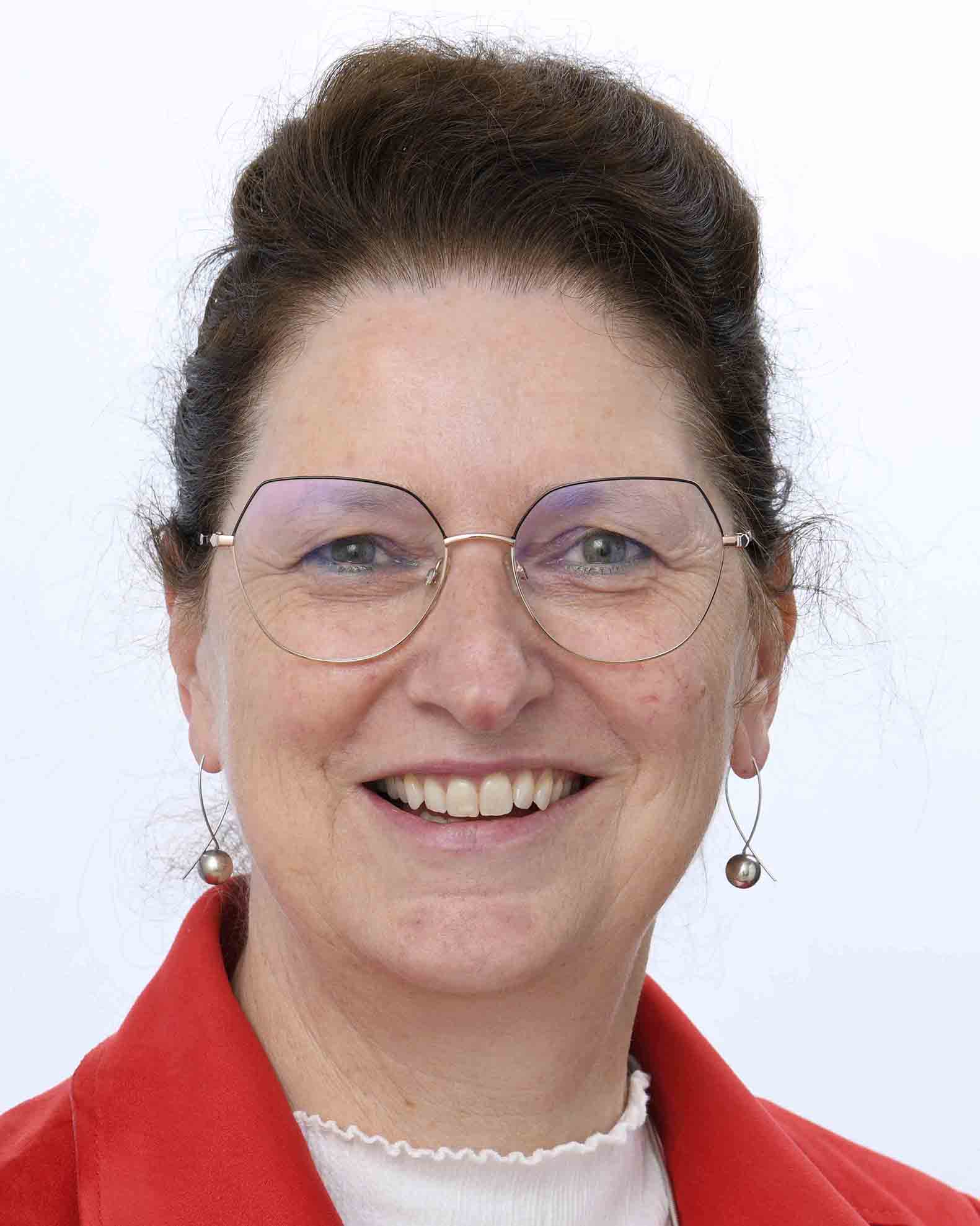
 Debate contributions by Christine SINGER
| Rank | Name | Country | Group | Speeches | |
|---|---|---|---|---|---|
| 1 |

|
Lukas SIEPER | Germany DE | Non-attached Members (NI) | 321 |
| 2 |
|
Juan Fernando LÓPEZ AGUILAR | Spain ES | Progressive Alliance of Socialists and Democrats (S&D) | 280 |
| 3 |
|
Sebastian TYNKKYNEN | Finland FI | European Conservatives and Reformists (ECR) | 247 |
| 4 |
|
João OLIVEIRA | Portugal PT | The Left in the European Parliament (GUE/NGL) | 195 |
| 5 |
|
Vytenis Povilas ANDRIUKAITIS | Lithuania LT | Progressive Alliance of Socialists and Democrats (S&D) | 183 |
All Contributions (14)
Madam President, Commissioner! Dear colleagues! With this package, we have shown that simplification is possible if we really want it. I am proud that I have been able to make my contribution as a shadow rapporteur and that my proposals on the definition of permanent grassland and arable land and on making erosion protection more flexible are now becoming law. My goal was clear: Away with the bureaucracy and here with common sense. And I say just as clearly: Now the ball is with the Member States. This new flexibility needs to be used. Farmers have a right to have relief not only decided but also implemented. This simplification must not be the end, but the beginning. We need a future common agricultural policy, which is considered practical from the outset and does not need to be adjusted retrospectively. For those who attach great importance to security policy must also attach great importance to agriculture. Strengthening agriculture is strengthening our strategic infrastructure.
 Chemicals (joint debate)
Date:
20.10.2025 16:22
| Language: DE
Mr President, Commissioner, ladies and gentlemen! The European Chemicals Agency is doing valuable work. Their assessments are a solid basis for policy decisions. But the responsibility lies with the Commission. And this is where I see a problem. Today's reports on the common data platform on chemicals and the reallocation of scientific tasks between EU agencies show the importance but also the sensitivity of regulations in this area. I deal intensively with substances such as ethanol and lime nitrogen. And if the Commission is indeed considering banning alcohol as a disinfectant or lime nitrogen as a fertiliser, it is clearly going too far. That would be overregulation with consequences for medicine, for agriculture and for research. What we need is close cooperation between ECHA, which works on a scientific basis, and practitioners who know the processes in practice. This is the only way to create a regulation with a sense of proportion. Confidence in our work is the most valuable asset, and we should not disappoint our citizens.
Common agricultural policy (joint debate)
Date:
07.10.2025 13:13
| Language: DE
Mr President, Commissioner, ladies and gentlemen! Farmers don't need catchphrases. You need noticeable relief. This is exactly what we fought for in the CAP simplification package: for less bureaucracy and more practicality. A key breakthrough is the new cut-off date scheme for permanent grassland. This would put an end to the absurd plowing obligation every five years or now every seven years. We would create more legal certainty, prevent unnecessary emissions and give farmers the freedom to operate in a way that makes ecological and business sense. This is climate protection through common sense and a win-win for all businesses, whether large, small, organic or conventional. We also propose that organic farms in transition, such as organic farms, should also be considered GAEC-compliant in the future. In doing so, we are relieving even more of a boost to organic farms and farmers. With our transparency mechanism for crisis payments, we want to ensure that support from this new instrument is distributed fairly and comprehensibly, without distorting competition. These are not cosmetic corrections, but steps that arrive in the area. That is why I appeal to you, ladies and gentlemen: Support this package! For trust instead of mistrust, for simplification instead of bureaucracy and for the farmers who finally want to redesign instead of filling out forms. Then it is up to the Council and the Commission to support our line and not to disappoint farmers. Let's take this opportunity!
Summer of heatwaves in the EU: addressing the causes and providing adequate housing and health policies to address record-breaking temperatures (debate)
Date:
11.09.2025 08:09
| Language: DE
Mr President, Commissioner, ladies and gentlemen! This summer's record heat waves show us unequivocally: We need to act, both on climate action and to protect our citizens. The 2040 target of minus 90% emissions is ambitious, but it is necessary. It is crucial that we make it pragmatic and feasible. We must take citizens with us; Investments in renewable energy, cooling and insulation must be affordable. And there needs to be a clear framework for industry and for regions. It is important that jobs and competitiveness are safeguarded. At the same time, we need adjustments: greener cities, homes with heat protection, hospitals and care facilities prepared for extreme summer. Climate policy must not be ideological – it must provide realistic solutions; This is the only way we remain credible. It is precisely this signal that this Parliament must send now – here in Europe and internationally before COP 30.
Post-2027 Common Agricultural Policy (debate)
Date:
10.07.2025 07:57
| Language: DE
I represent the farmers in our country who are very committed to the same standards. And the farmers in our country are fighting for our standards to be recognised. We are also in close contact with our Commissioner. Is that all right?
Post-2027 Common Agricultural Policy (debate)
Date:
10.07.2025 07:55
| Language: DE
Madam President, Commissioner! The next common agricultural policy must do one thing: preserve the diversity of our businesses. Europe’s strength lies in its different regions, where food security emerges, day by day and generation by generation, on our farms. Food security means independence – point. And if we are serious about that, we must not give up a region, a farm or a location – from agriculture to grassland and from the favoured region to the disadvantaged area. We also need to pay special attention to animal husbandry. Agriculture should be possible everywhere. Grassland regions in particular are extremely important for climate, humus formation, biodiversity and protein supply. And yet many of these sites fall through the support grid – this must not remain the case. If we do not manage the CAP properly after 2027, we will lose precisely those farms that make our agriculture stable and diverse. And those who lose our rural structures lose more than just food: He loses support, resilience and sense of reality.
Strengthening rural areas in the EU through cohesion policy (debate)
Date:
16.06.2025 18:32
| Language: DE
Madam President, Mr Executive Vice-President! Cohesion policy is a key tool to compensate for regional disparities, including in Bavaria, for example in less-favoured or less-favoured rural areas. Especially there, targeted impulses are needed so that people can stay in their homeland and shape the future. These include investments in infrastructure, medical care, digitalisation and education where they are particularly lacking. As a Member of Parliament from the country, it is a matter of heart to me to make rural areas visible in all their diversity, because cohesion policy must not end at the city border. Where others only see meadows, forests and villages, social cohesion is lived day by day. But what good are funding programmes if municipalities fail due to complicated application procedures and high own funds requirements? We need to cut red tape, simplify procedures and involve local people more. In this way, cohesion policy really becomes the engine for equal living conditions in the city and in the countryside.
High levels of retail food prices and their consequences for European consumers (debate)
Date:
07.05.2025 15:31
| Language: DE
Madam President, Commissioner! When families are at the supermarket checkout today, shopping becomes a tightrope act for many. At the same time, many of our farmers are struggling for economic survival – with rising production costs, new requirements and growing expectations from society. These two realities must not be played off against each other. Fair producer prices are needed so that there will still be farms in Europe tomorrow. At the same time, food must remain affordable – for all. That's why we need to take a closer look. Who actually earns how much from a liter of milk or a kilo of bread? Are the trade margins justified? Market power must not come at the expense of agriculture or consumers. We need transparency in the chain, a sense of proportion in the conditions and, above all, a strong EU agricultural budget. The common agricultural policy is not a phase-out model, but a prerequisite for food security, security of supply and social peace. Whoever cuts here takes a big risk.
Challenges facing EU farmers and agricultural workers: improving working conditions, including their mental well-being (debate)
Date:
18.12.2024 16:18
| Language: DE
Mr President! Welcome, Commissioner! German and Bavarian studies show that the psychological burden on farmers is particularly high. What's stressing her? Economic constraints and lack of planning security! On an ongoing basis, the companies receive new requirements, especially from the EU. Many laws contain trade-offs and lead to enormous bureaucratic burdens. We in the European Parliament should limit ourselves to what is really necessary with regard to new directives and regulations. On mental health in agriculture – there are already pioneers in Germany: The crisis hotline of the agricultural social security offers psychological care or support around the clock, and the Bavarian Farmers' Association shows a holistic approach with its socio-economic advice. Companies are individually accompanied in order to plan their future sustainably. Mental health needs to be addressed in all Member States. Educating our farmers about stress management and burn-out prevention should be an integral part of our support. Let's focus on prevention! It is crucial that our farms remain not only economically viable, but also humanly sustainable.
Topical debate (Rule 169) - Budapest Declaration on the New European Competitiveness Deal - A future for the farming and manufacturing sectors in the EU (topical debate)
Date:
27.11.2024 12:46
| Language: DE
Mr President! The Budapest Declaration provides an important impetus for Europe's competitiveness. But with all the economic and technological goals, we must not lose sight of one thing: Europe’s strength starts in the regions – where people live, work and shape our future. Security and stability begin on the ground, in our villages, communities and farms. The farmer in the village offers stability. Reliable agriculture means not only food security, but also social and economic resilience. Our farmers are under pressure – through climate conditions, bureaucracy and unequal competition. The stability of EU markets is fluctuating, and we must not jeopardise them – keyword Mercosur. Those who risk agriculture risk a heart of Europe's security. The Budapest Declaration says: A “continue like this” is not an option. The same applies to agriculture. If we strengthen our rural areas, we will create a fair framework for our farmers, for a stable, secure and competitive Europe.
Outcome of the Strategic Dialogue on the Future of EU Agriculture (debate)
Date:
16.09.2024 16:09
| Language: DE
Mr President! The strategic dialogue on the future of agriculture is a first step towards breaking up the ongoing discussions and is long overdue. The fact that the Commission wants to shake hands with us farmers in the future is gratifying. But does it really happen? Why do competitiveness and bureaucracy hardly play a role compared to the Draghi report? If the Commission was serious about focusing on farmers' concerns, it could act immediately and postpone the Deforestation Regulation. We need not only beautiful words, but practical solutions that support us in the long term. The further development of the common agricultural policy after 2027 must be at the top of the agenda. The future viability and diversity of our farms is non-negotiable. More power must also mean more resources from the public sector. In the budget negotiations for the next financial framework, agriculture must under no circumstances be neglected. In the area of animal husbandry, too, I call for proportionate laws that reconcile animal welfare and feasibility – i.e. are practical. The idea of emissions trading in agriculture is going in the wrong direction and must be rejected; The strategy dialogue also clearly raises concerns here. Agriculture plays a strategic role for Europe's security and independence. Incentives instead of bans – this is the key to a sustainable future for European agriculture.