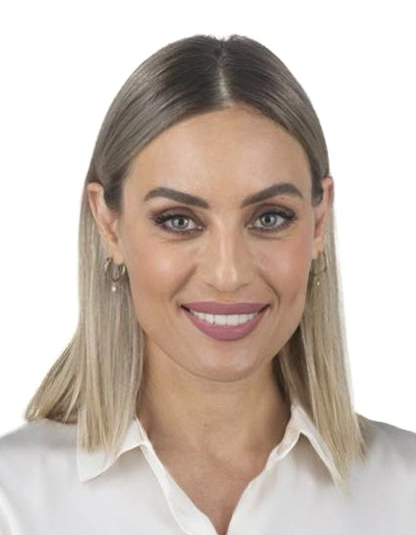
 Debate contributions by Eleonora MELETI
| Rank | Name | Country | Group | Speeches | |
|---|---|---|---|---|---|
| 1 |

|
Lukas SIEPER | Germany DE | Non-attached Members (NI) | 321 |
| 2 |
|
Juan Fernando LÓPEZ AGUILAR | Spain ES | Progressive Alliance of Socialists and Democrats (S&D) | 280 |
| 3 |
|
Sebastian TYNKKYNEN | Finland FI | European Conservatives and Reformists (ECR) | 247 |
| 4 |
|
João OLIVEIRA | Portugal PT | The Left in the European Parliament (GUE/NGL) | 195 |
| 5 |
|
Vytenis Povilas ANDRIUKAITIS | Lithuania LT | Progressive Alliance of Socialists and Democrats (S&D) | 183 |
All Contributions (39)
 Tackling AI deepfakes and sexual exploitation on social media by making full use of the EU’s digital rules (debate)
Date:
20.01.2026 09:02
| Language: EL
Madam President, Commissioner, Minister, millions of women have seen themselves naked online, without ever having undressed and without ever having been able to download the content from the platforms. Between them and me. Simple photos, from Instagram, dressed, everyday, stripped bare with a click of algorithms, without permission, without shame, without consent, without consequences. This is not a side effect of technology. It's sexual exploitation. It's blackmail. It's a digital rape. And of course deepfakes target women again – those who are exposed, those who speak, those who annoy, those who envy and those who avenge them. But let's stop the story. It's not artificial intelligence's fault. It's the platforms that win big and the laws that don't apply. The European Union has digital rules. But do platforms implement them? No, it's not. The algorithm cannot have more rights than the human body. Either we impose immediate removal of illegal deepfake material and sanctions or we demand full responsibility from platforms and admit that the digital future does not require the female body to be an object. I'm sorry, but I can't accept that.
European Citizens’ Initiative ‘My voice, my choice: for safe and accessible abortion’ (debate)
Date:
16.12.2025 19:31
| Language: EL
No text available
European Citizens’ Initiative ‘My voice, my choice: for safe and accessible abortion’ (debate)
Date:
16.12.2025 18:48
| Language: EL
Mr President, Commissioner, ladies and gentlemen, the European Citizens' Initiative 'My voice, my choice' did not come to us by chance, nor did it come to us by ideological consensus. It arrived because European citizens needed to be heard, and we had to give them that voice. It came because there was political responsibility and institutional courage to give the green light to this initiative at any cost. And as shadow rapporteur of the largest political group in the European Parliament, I have consciously borne this great cost. You know it, you recognize it. Thank you very much for that, but also for your support. Today, however, I do not want to speak as shadow rapporteur for the resolution. I want to speak as a woman. Because behind every statistic, behind every resolution, there is a moment, a moment when a woman is alone, scared and called upon to make a decision that will accompany her for the rest of her life. No woman chooses abortion easily. It's not easy, it's unbearable. And what makes it unbearable is not just the decision itself. It is fear, it is stigma, danger and threat. When you deprive a woman of a choice, it's not in the name of morality. It's done in the name of control. And control over women's bodies always causes only pain. This initiative should not be considered a minefield for the Right, nor a pantry for the Left. But some have colored it so much partisanly that it risks losing its essence and the power we want to give it. Women's rights do not belong to political parties. They belong to women. Today's debate is a matter of women's dignity. Dignity should not depend on where you were born. Security cannot depend on how much money you have. Health care should not depend on ideologies. Today the real question is simple and it is one: Do we trust women? Not when it's easy and when it's fashionable, but when it's hard and when it's needed. Do we trust women? Because in a woman's most difficult life, Europe should not be there to judge her. She needs to be there, trusting and supporting her.
EU strategy for the rights of persons with disabilities post-2024 (debate)
Date:
26.11.2025 16:30
| Language: EL
No text available
International Day for the Elimination of Violence against Women (debate)
Date:
25.11.2025 11:10
| Language: EL
Madam President, violence against women remains one of the most persistent pathologies. But let's talk openly. Violence is not just murder and physical abuse. Violence is also emotional abuse, constant demotion, internalized misogyny, hate speech. In all this there are not only male perpetrators and female victims. There are men and women who consciously or unconsciously reproduce stereotypes that want the woman inferior, less capable, less worthy. She must be the one who is left behind, she will be patient, she will not speak, she will endure, she will not work because she keeps the house and the family tied up. Stereotypes that want professions, jobs and sports not to be for women. Behaviors and clothing they cause. Stereotypes that want women to get on the bench because they grow up are no longer young or absolutely beautiful. If that's not violence, then what is? And we live through all this, we pass it on from generation to generation, from homes to schools, from societies to our children – men and women. This narrative needs to change. That's why today I appeal so much to men: become allies – we need you in this fight – as much as women: Never accept that this is the way things are. It's not like that. We lie to ourselves and our children.
Gender Equality Strategy 2025 (debate)
Date:
12.11.2025 19:21
| Language: EL
Madam President, Commissioner, there are many who believe that the issue of equality has been settled. Let's go see if that's the case. Pay gap: women receive 12% lower pay and 37% lower pensions than men. Medicine and health: clinical structures and drug studies are primarily conducted on a male sample, with the result that women are often misdiagnosed and, in some cases, not at all. Gender-based violence: Every ten minutes a woman worldwide is murdered by her husband, partner or family member. At the same time, women are clearly more vulnerable to other forms of violence. Have you ever seen vengeful pornography with a male victim? Nine out of ten victims are women. Citizenship: Don't go far, look around you, at the benches, in the corridors of the European Parliament, and you will understand that women are clearly fewer. Inequality is a reality and we live it, and we want to balance it. The Gender Equality Strategy is a tool that can help us in this direction, safeguarding rights and ensuring that no woman is left behind.
Combating violence against women and girls, including the exploitation of motherhood (debate)
Date:
23.10.2025 07:46
| Language: EL
Madam President, let's talk a little bit about surrogacy: not for her pure form, that is, when a woman becomes a bearer of hope through the supreme act of altruism, but for the other, the darker side of surrogacy, that is, when need becomes a commodity; where vulnerable women are used as coercive means of reproduction; When women promote the process of surrogacy on social networks as a trendy profession, publicly celebrating the money they will receive by giving birth to a child but declaring at the same time happy that they will not be charged with the responsibility of raising him. It is then that the line between aid and exploitation becomes extremely thin. It is then that motherhood ceases to be an act of offering and love and becomes a contract. Europe must lead a regulatory and moral defence effort, with uniform rules, transparency, psychological and legal support for all sides and a clear distinction between altruistic and commercial surrogacy. Only in this way can we protect the sacred right to the creation of life, without allowing it to become a field of exploitation, profit and demonstration. For motherhood, like any form of love, must never be bought, it must only be honored.
Declaration of principles for a gender-equal society (debate)
Date:
09.10.2025 07:12
| Language: EL
Mr President, combating gender-based violence, reproductive rights, equality at work, in education, in health: all are contemporary issues and important priorities of the Women's Rights Roadmap. But do you know what the most common question women get today? Whether work is combined with motherhood. Do you know what the correct answer to this question is? It doesn't exist. No matter what the woman does, she will be judged. If the new mother wants to go back to work, she will be judged as an ambitious careerist who doesn't care about her child. If he has to work for a living, he will be accused of having a child when he cannot raise it. If he doesn't have a child, he'll be targeted. If she tears herself into a thousand pieces to do it all, there will always be those who will drown her in the guilt her child leaves for her job. Balancing work and family life is not a luxury. It should be a right – a right that we need to protect more than ever, with the Women’s Rights Roadmap. The Work-Life Balance Directive is an important step, but its implementation remains uneven. We need better maternity leave systems, fully paid, so that no mother has to choose between work and her child. We need accessible care services, not only for infants but also for older children. The mother's support should not end in the first year of the child, just as her role does not end. We need to ensure that women are reintegrated into the labour market after long leave, with incentives for employers, training programmes, flexible forms of employment that do not stigmatise. And, of course, we need to protect the right to motherhood. No woman should be afraid to get pregnant in case she loses her job. Unfortunately, the system punishes. The work of a new mother is underestimated. Its position is not guaranteed. Opportunities for growth are diminishing. If we want the Women's Rights Roadmap to have substance, then it should give women not only equal opportunities but also equal conditions to make use of them. Europe must become an ally of the mother and not a spectator of her struggle.
Situation in Afghanistan: supporting women and communities affected by the recent earthquakes (debate)
Date:
07.10.2025 17:09
| Language: EL
Mr President, Commissioner, 31 August, Afghanistan: 6.2 Richter and over 6 000 dead and wounded – most of them women and girls, who die because they are forbidden to be helped. In Afghanistan, where underage girls have been blackmailed into marriages since the age of 9, women are banned from speaking in public places, singing, seeing with both eyes, and studying. I will not ask where the activists are, because there are no marches to Afghanistan, where Greta is. But I'll ask what we do. And I ask it as rapporteur for the European People's Party to shape humanitarian aid policy in crisis areas – like Gaza, but like Afghanistan. So we do what is foreseen, we condemn and we impose sanctions. Unfortunately, our effort has no effect. We know it well. We're honored that we're fighting this. Even discussing the possibility of a controlled cooperation with the Taliban, which will by no means constitute recognition of the regime, but a strategic effort for a more peaceful Afghanistan. There can be no peace where there are no women. Commissioner, you are a woman. We must all work together to finally find a solution that does not put us on the same table as the regime, but one that forbids the regime to exist.
Intergenerational fairness in Europe on the occasion of the International Day of Older Persons (debate)
Date:
06.10.2025 17:39
| Language: EL
Madam President, Commissioner, our elderly are not the past. It is the living link that connects us to history and our values. They are the ones who set up the Europe of peace, solidarity, human dignity through wars, crises and hardships. They carry the memory, wisdom and values on which our European edifice was built. That is why today, more than ever, Europe must stand by them in practice, with policies and not just words. With European programmes that support active ageing, access to quality health services and home care for all. With initiatives such as the European Care Strategy, which seeks to support carers, i.e. people who struggle with older people every day. With digital policies that do not exclude but empower older people to remain active, informed, connected to the world. With policies that will combat ageism in every aspect of the labour market. Europe cannot be truly progressive unless it protects those who founded it, because progress is measured not only by growth indicators, but by the respect we show to the people who taught us what dignity means. Let us therefore make Europe a union of generations, where the wisdom of the elderly illuminates the future of all of us.
From institution to inclusion: an EU action plan for deinstitutionalisation, family- and community-based care (debate)
Date:
07.07.2025 18:41
| Language: EL
Madam President, Commissioner, ladies and gentlemen, none of us dream of our old age in an old-age care facility. No one wishes to spend the last years of their life behind the closed doors of an institution. We all want to grow old where we blossomed, where we created, loved and were loved. In our home, in our neighborhood, among people who know us by our first name. Deinstitutionalization is not a formal political reform. It is a profound human need. It is a promise that in the most vulnerable years of one's life no one will be invisible. That we will make sure that the elderly are not forced to part with what gives them meaning, memories, loved ones, familiar environments. As rapporteur on the respective file to address the care gap, my aim is to build people-centred alternatives, to invest in quality care services that reach the door of their home, to support families that bear the burden of care, to empower professional carers who give daily soul and time to stand by the side of the elderly, but also informal carers, the majority of whom are women, who have a difficult role to play, often sacrificing their personal life, work, and even their health, mental and physical. We need a comprehensive European action plan that coordinates Member States, builds on good practices, such as the Home Assistance programme we have in my country, Greece, and directs European resources towards solutions that enhance social reintegration. Because a society that respects its elderly, supports families and gives a voice to all those in need, is a society that honors its past and builds its future with solidarity and dignity. From the foundation, then, we must move to inclusion, from loneliness in the community and from distancing to maintaining and strengthening human relationships.
Combating the sexual abuse and sexual exploitation of children and child sexual abuse material and replacing Council Framework Decision 2004/68/JHA (recast) (debate)
Date:
17.06.2025 08:19
| Language: EL
Madam President, Commissioner, 'why now?' This is the question that victims of sexual abuse are asked when they decide to talk about their trauma, even years after experiencing it. At last, we have the opportunity to put an end to this targeting of victims. It is important to vote on the Directive on the protection of children - victims of abuse. It opens the frame of sexual crimes for the internet as well. It tightens sentences and finally abolishes statute of limitations, allowing child sexual abuse crimes to be prosecuted even decades after they were committed. Because such heinous crimes, since they are not erased mentally, should not be allowed to be erased even legally. The victim has the right to take his time, to realize his abuse and to prepare psychologically so that he can report it. A time-consuming but – above all – arduous process, often prolonging or reviving abuse at second instance. Shame, guilt, fear, repulsion hold back the victim. It takes time. After all, it's never too late for justice and it's never too late for punishment.
Improving mental health at work (debate)
Date:
21.05.2025 20:33
| Language: EL
Mr President, Commissioner, it is finally time to talk about mental health in the workplace. Since the first days in the European Parliament, I have sought to find out what Europe has done about bullying at work. I saw great initiatives. But they were all meant to empower the victim of workplace bullying, not to contain the bully. As if there is no way to deal with the problem. The problem, of course, is not the victim. The problem is the bully, whether male or female, who, because of his authority, position or simply vulgar character, thinks he has the right to discredit, devalue and humiliate people. The bully doesn't understand words, he doesn't have sensitivities. It wants a clear legal framework that defines and punishes workplace bullying. He wants employers to take action to support the victim, not cover up the bully. He also wants a mentality where a bully will no longer be a whimsical but successful, he will be a troublemaker who will have to comply.
Union of Skills: striving for more and better opportunities to study, train or work in the EU and to bring our talents back home (debate)
Date:
12.03.2025 15:12
| Language: EL
Madam President, Commissioner, ladies and gentlemen, among other things, the Union of Skills has two major objectives: make Europe as competitive and inclusive as possible. Education and vocational training are not only learning and skilling tools of the future for a sophisticated and competitive workforce. They are also tools of empowerment, independence and equality for people with disabilities. Physical and digital accessibility through adapting infrastructure, equipment and specially designed learning tools, shaping inclusive education and training programmes such as Erasmus+, funding for technological innovations that will embrace the needs of 92 million Europeans with disabilities, effectively linking this vocational training to the labour market are just some of the policies and actions that can help create a society where everyone has equal opportunities. If we are to be called a society that recognises the value of every human being, we must work on these policies to ensure that every individual has the opportunity to harness their abilities, work, contribute and live independently. Oh, thank you.
Roadmap for Women`s Rights (debate)
Date:
11.03.2025 12:18
| Language: EL
Madam President, the Commission has therefore presented the Charter of Women's Rights and has come to remind, especially to those who forget easily, what the values of the European Union are: equality, freedom, justice and security in all areas and actions of life for women and men. Europe once again makes clear its position that it wants to continue fighting for gender equality. What if gender equality has been a fundamental right since 1957? What if we have been seeing it for years in the Treaty on the Functioning of the European Union? What if to this day, here, in our home, we see setbacks in times and perceptions from which we are struggling to escape. But we will continue this battle. This, of course, will be helped even more by the gender equality strategy, not by the charter. But until this comes into our hands, I will ask a rhetorical question: Is legislation enough to regulate all these social inequalities and injustices that we have been discussing over the years? What law will prohibit sexist men and women from judging us for our dress, for our age, for whether or not we have children? What law will stop patriarchal notions and beliefs of internalized misogyny from finding space in the speech and actions of men and women of all ages around the world? What law will forbid all those who question, reduce and deconstruct the woman of so many roles and so many achievements just because she is a woman? Dear colleagues, beyond the laws, we must work to change the narrative. To form a new collective unconscious. Otherwise, no matter what we do, there will always be professions that aren't for girls. There will always be women who will have to make their life through marriage or motherhood. There will always be crimes of passion, because someone loved his wife and killed her because he couldn't get away from her. Do you hear what we're saying? Do you hear what we've been saying for hundreds of years? This narrative needs to change. And the narrative doesn't just change with laws. The narrative changes with values, it changes with ethos and with education. What we are discussing here is not just laws. What we are discussing is the problem of education, as well as the solution.
Boosting vocational education and training in times of labour market transitions (debate)
Date:
11.02.2025 14:24
| Language: EL
Madam President, Commissioner, ladies and gentlemen, evolution, automation, digitalisation, the economic crisis, the pandemic, the need for a green transition are factors that have put many professions at risk, but have also opened doors to new ones. And those professions that manage to survive, will have to adapt to new data and upgrade. In any case, vocational training, new skills and education will be prerequisites for anyone who wants to stay dynamically in the game and be competitive and innovative. As long as we update ourselves through retraining and use the skills of the future as new software, we will be able to fulfil Europe's vision of being competitive. But you will allow me, as coordinator in the Women's Committee, to pass on the message that the umbrella of lifelong learning can become a powerful weapon for all women as well. For those who love careers, for those who are in an abusive environment and want to leave, but have no resources. For those who once left their jobs for the sake of the family and now ask for a second chance at work, for those who have never worked in their lives, but now want to pursue the dream.
Need to enforce the Digital Services Act to protect democracy on social media platforms including against foreign interference and biased algorithms (debate)
Date:
21.01.2025 10:16
| Language: EL
Madam President, Commissioner, things are simple. In real life out there, the freedom of one stops where the freedom of the other begins. This is because rights and dignity, democracy, are protected by laws. In the parallel digital universe, however, democracy is under attack in its own name by distorted algorithms that, while giving a sense of the circulation of ideas and information in the context of freedom of speech, actually – behind the scenes – intend to direct public opinion, to manipulate it towards all of us. Distorted algorithms guide us on who to vote for, what to believe in, how to shop, how to live. Freedom of speech violates someone else's right to dignity. The European Union, aware early on of the dangers involved, has inspired the Digital Services Act, a truly promising protection plan for all of us. Now we have to convince the platforms to adapt, to comply. We're not even a threat to them. We're not moving the finger. We don't want to shut them down. We want security and democracy and clear digital rights. Because, ladies and gentlemen, I am sorry to tell you this, but if the platforms do not comply in the effort we are making, then all this effort will end up like the instructions of the plane. No one will listen to them when they are given, and when the plane falls no one will observe them.
Recommendation to the Council on the EU priorities for the 69th session of the UN Commission on the Status of Women - EU priorities for the 69th session of the UN Commission on the Status of Women (joint debate - EU priorities for the upcoming session of the UN Commission on the Status of Women)
Date:
19.12.2024 09:43
| Language: EL
Mr President, Commissioner, we still need 286 years to achieve absolute gender equality around the world if we continue to go at the pace we are going now. The good news of the day is that in Europe the numbers are a bit more optimistic. If 100% is absolute equality, we are currently at 71%. We certainly have a long way to go, but we also have some progress behind us, if one realizes that in 2019 we were at 66.9%. While the indicators are good, in the areas of economy, work, health, we still have a lot of work to do. What emerges from the data of the Institute for Gender Equality is that women still do not have access to education, technology professions, politics and positions of responsibility. And the reasons for this are clearly also racial, since a woman, when she dares to break the status quo, faces questioning, devaluation, sexism, disdain. But that's not all. Women and young girls are daily victims of prejudices and norms that are cultivated, reproduced and almost imposed by the media and social media and which fight in every way the value of the uniqueness and diversity of an autoluminous personality, discrediting the woman and making her the prey of massification. This is something that, as rapporteur for the European People's Party and party coordinator in the Committee on Gender Equality, I am very concerned about, and I have demonstrated this with the amendments that I have proposed, the adoption of which at committee level proves not only the position of the European Parliament, but also the urgency of changing this. I therefore call on all of you, ladies and gentlemen, to support our proposals and positions and to justify the European Union's multiannual efforts to create a universal society of justice and equality. Here we envision a woman who is dynamic, a woman who is bold, an independent, self-lit woman, with an opinion, a woman who is free. All over the world. And we will continue to work on it.
Strengthening children’s rights in the EU - 35th anniversary of the adoption of the United Nations Convention on the Rights of the Child (debate)
Date:
28.11.2024 08:55
| Language: EL
I listened carefully to your speech where you insisted and focused on the fact that we cannot ask the state to interfere in the way parents raise their children. However, there are also families that have completely inappropriate parents, parents who neglect their children emotionally, psychologically, do not care for them, and, in much worse cases, parents who rape and sexually abuse their children. In these cases, where will the children get protection from?
Strengthening children’s rights in the EU - 35th anniversary of the adoption of the United Nations Convention on the Rights of the Child (debate)
Date:
28.11.2024 08:29
| Language: EL
Madam President, 35 years have passed since the UN Convention on the Rights of the Child, a treaty which stipulates that all children in the world must be safe, healthy, have access to food, education, medical care, play, technology, happiness. 196 countries from the outset signed and ratified this treaty, because we all recognize that our children need us, they need our protection. We, too, need children, because children are the life of the future in the present. But today, 35 years after the treaty, it becomes clear that a signature is not enough, it does not make it self-evident that it will secure the rights of children around the world. Out there are children who are hungry, who are in danger, who are abused, who are abandoned, who do not go to school, who have no home, who have no country. Children who work, who don't have access to medical care. Children who have been addicted to the Internet since they were four years old. Out there are still children of an inferior god. The modern way of life, armed conflicts, some extreme cultural practices, economic instability, the pathologies of adult society are things for which children bear absolutely no responsibility, and yet they pay for them. And I wonder, if a child comes and looks us in the eye and asks us: Why? Why is all this happening? Why don't you stop them?", what will we say to them?
Recent legislation targeting LGBTQI persons and the need for protecting the rule of law and a discrimination-free Union (debate)
Date:
27.11.2024 16:49
| Language: EL
We have just heard you vulgarly attack fellow human beings who may have been born of the wrong sex or have fallen in love with the same sex as them. I would like to ask you very much, because you have labelled these people mentally ill, to tell us in what capacity you say this – if you are, for example, a psychiatrist – and whether there are any substantiated scientific samples to prove your claims.
Recent legislation targeting LGBTQI persons and the need for protecting the rule of law and a discrimination-free Union (debate)
Date:
27.11.2024 16:21
| Language: EL
Madam President, I think you have all been informed of the fact that a few Member States have decided to ban schools from speaking about inclusive ideas and views concerning the LGBTIQ community, and have even set financial penalties for all those who do not follow the law. I don't want to dwell on this decision anymore, because I don't want to become a partaker of these toxic and regressive homophobic beliefs. I prefer to focus on what the European Union envisions to be. A big hug for all people, where discrimination, racism, homophobia, prejudice, rejection and marginalization have no space. A dormitory of culture, where education and education will be the means to promote principles and values such as inclusion, acceptance, love, respect and solidarity. A Europe that fights to criminalise hate speech, not to punish hate speech and inclusion. I understand that for some it is difficult to get out of the cocoon of homophobia and racism, but for those of us who are not, we must fight not to succumb to any practice that will lead again to the marginalization and exclusion of people. We are here for them too, to be the concrete reinforcement of their voice and their representation. We are here to react when we see education and education being instrumentalised against democracy and human rights, and instead of being vehicles to fulfil our goals, we are sabotaging struggles that have been taking place for years in this room for the LGBTIQ community. Europe must not succumb to this fascism, because, if it succumbs, it has opened the door wide to discrimination and social injustices that we will see spread like gangrene in other fields, which we have been trying for years to cleanse from the carcinomas of racism and hatred. I have only been a Member of the European Parliament for a few months, and from the first moment I came here all I remember is everyone talking about a Europe that is open to diversity. But now I see that there are also a few Member States that do not want to move forward. This, however, should not hold all of us back, nor should members of the LGBTIQ community be left behind.
Urgent need to tackle the gender pay gap (debate)
Date:
26.11.2024 19:22
| Language: EL
No text available
International Day for the Elimination of Violence against Women (debate)
Date:
25.11.2024 16:22
| Language: EL
Mr President, today is the Day for the Elimination of Violence against Women. Not just physical, but all forms of violence. Every year this day arrives, when we count dead, abused, raped, beaten, leveled women, as if we were making a "violence fund". We're not doing something right. Are we not dealing enough with stereotypes? With beliefs about what a woman's place is? Today we often condemn practices in other countries that prohibit women from studying or working. In our own home in Europe, however, we allow models to be reproduced and perpetuated that want the woman to be called the weaker sex, to be considered the property of the partner, with the obligation to have children by sidelining her needs and desires. We condemn the practices of countries that force women into marriage, but we continue to promote those standards that want the woman to end up with a wealthy husband who will secure her financially, even if this entails absolute submission and dependence. And if the woman does not want to marry, then she is targeted as an "old maid". We condemn the practices of countries that prohibit women from speaking, but we here in Europe do not encourage them to speak more. "Don't talk, be patient, it will pass," the victims of the violence hear. 7 out of 8 women who are victims of violence do not dare to talk about it. They try to manage by themselves the shame and guilt that society creates for them anyway. Are you going to break up your house? Don't you think about your children? He can't, you did something to him and he treated you like that.” The victims of violence listen – and this one who finds the courage to speak at 8 again with remorse and guilt ends up fighting. Why do you say it now and not earlier? Why didn't you leave? Victims of violence don't want to listen anymore. They want to talk. And we who speak must be a little quiet if in every word we promote all those toxic stereotypes that will never be changed by any legislation. And if we can't be silent, at least let's change the narrative, the narrative about who we are, about how much we can, about what we want to be the position we choose and deserve. Europe has become accustomed to us in every crisis acting swiftly, effectively and unitedly. Isn't violence against women a crisis?
Abuse of new technologies to manipulate and radicalise young people through hate speech and antidemocratic discourse (debate)
Date:
24.10.2024 09:08
| Language: EL
Madam President, ladies and gentlemen, in my country, Greece, recently, a group of underage girls organised the beating of a classmate via an online platform. The audio messages and visual material that came to light were shocking. The video of the beating went viral. The girl ended up in the hospital and her friends incited people to revenge through hate speech by posting on social media the details of the perpetrators. In Belgium, a man committed suicide after an artificial intelligence virtual conversationalist convinced him to sacrifice his life to stop climate change. In many Member States the platforms themselves are used to polarise and recruit young people for terrorist attacks. It is clear that new technologies are now a new channel for spreading extremist views and recruiting criminals. Europe must react and act. A good start has been made with the rules outlined in the Digital Services Act. But more pressure is needed. We must criminalise hate speech. The anonymity of the internet should be removed when necessary. We need to find a way to harness the dark side of artificial intelligence. It is necessary to control children's access to the internet and to explicitly prohibit it at specific childhoods for the good of all of us. In my country, our government has already incorporated the Digital Services Act. However, the Commission must monitor the implementation of the rule in all Member States. New technologies have much to offer humanity, but they can self-evidently be turned into hard weapons, capable of promoting terror, lies, fear, hatred, violence. It is up to us to change that.