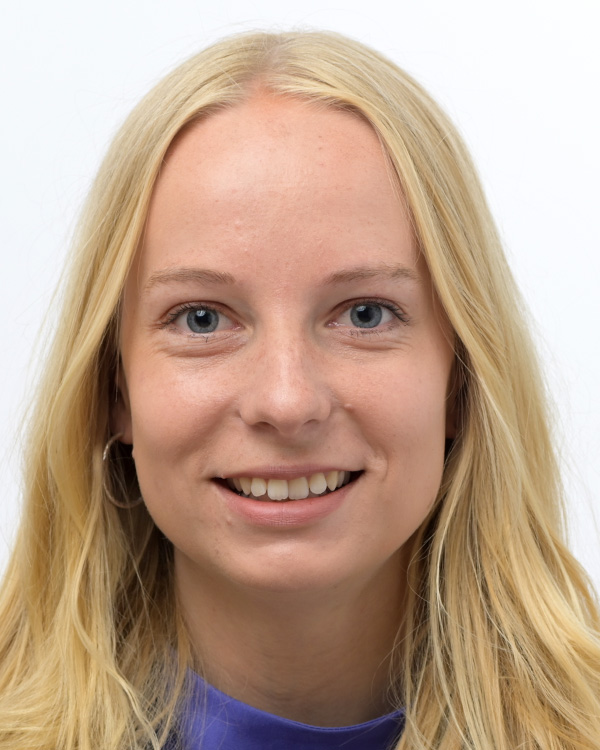
 Debate contributions by Sabrina REPP
| Rank | Name | Country | Group | Speeches | |
|---|---|---|---|---|---|
| 1 |

|
Lukas SIEPER | Germany DE | Non-attached Members (NI) | 239 |
| 2 |
|
Sebastian TYNKKYNEN | Finland FI | European Conservatives and Reformists (ECR) | 216 |
| 3 |
|
Juan Fernando LÓPEZ AGUILAR | Spain ES | Progressive Alliance of Socialists and Democrats (S&D) | 191 |
| 4 |
|
João OLIVEIRA | Portugal PT | The Left in the European Parliament (GUE/NGL) | 143 |
| 5 |
|
Vytenis Povilas ANDRIUKAITIS | Lithuania LT | Progressive Alliance of Socialists and Democrats (S&D) | 140 |
| 6 |
|
Maria GRAPINI | Romania RO | Progressive Alliance of Socialists and Democrats (S&D) | 117 |
| 7 |
|
Seán KELLY | Ireland IE | European People's Party (EPP) | 92 |
| 8 |
|
Evin INCIR | Sweden SE | Progressive Alliance of Socialists and Democrats (S&D) | 88 |
| 9 |
|
Ana MIRANDA PAZ | Spain ES | Greens/European Free Alliance (Greens/EFA) | 82 |
| 10 |
|
Michał SZCZERBA | Poland PL | European People's Party (EPP) | 78 |
All Contributions (22)
 The urgent need to combat discrimination in the EU through the horizontal anti-discrimination directive (topical debate)
Date:
17.12.2025 13:11
| Language: DE
Mr President! I was recently at the Rostock Goalballclub. I was allowed to train there for one morning. Goalball is an inclusive sport in which two teams try to throw a sounding ball into a 9 meter wide goal. All players wear blindfolds. So everyone has the same preconditions, no matter if someone can see or not. This game requires the highest concentration, trust in the team and respect for each other. This is what our political work is all about. Equal opportunities for all. This is the aim of the Anti-Discrimination Directive, which we in the European Union have been waiting for far too long. The promise must be clear. No matter who you are, what you look like, who you love, how old you are or whether you have a disability, you should be able to shape your life freely. Right now we need these clear signals, because equality and tolerance are under attack. And right-wing forces are trying to destroy our cohesion. What particularly impressed me in Rostock was the strong team spirit. These young people oppose increasing hatred and violence with solidarity and fairness. That gives me courage. Let us work together to ensure that this principle applies everywhere in Europe and that we finally start the fight against discrimination!
Condemnation of the terrorist attack against the Hanukkah celebrations in Sydney and solidarity with the victims and their families (debate)
Date:
16.12.2025 20:43
| Language: DE
No text available
Situation in Belarus, five years after the fraudulent presidential elections (debate)
Date:
22.10.2025 09:32
| Language: DE
Madam President, Commissioner! Gossiping – this is what we do here almost every day. One louder and firmer, the other quieter and hesitant. It's hard to imagine people being arrested for gossiping in public. But that is exactly what happens again and again in Belarus. There, women or even young people are punished because they demand justice. They are carrying protests. Those who think freely risk de-registration, imprisonment and the loss of the future. Many of them are now in prison, while others are in exile. In Belarus, it is enough to gossip together to be considered a threat to public order. We can't look away. Political prisoners must be released immediately. At the same time, targeted sanctions against those who order torture and repression are needed, as well as concrete support for Belarusian students, journalists and activists, both on the ground and in exile, through scholarships, visa facilitation and humanitarian aid. Let us applaud the people of Belarus who are clapping for their freedom – loud, clear and with the strength of the centre of this House. Hope for a European future.
Rising antisemitism in Europe (debate)
Date:
07.10.2025 15:55
| Language: DE
Madam President, Commissioner! The anti-Semitic attack by the terrorist organization Hamas two years ago today marks the worst day in the history of Jews since the Shoah. It was also a turning point for Jewish life here in Europe. Since then, we have witnessed an alarming rise in anti-Semitic incidents on our continent: Attacks on synagogues, hate speech online, Jewish students who no longer dare to go to school, and people who hide their identity. In my home region of Mecklenburg-Western Pomerania alone, there was a 77 percent increase in anti-Semitic incidents documented from 2023 to 2024. Anti-Semitism has always been a threat. But today it is louder, more visible and more socially tolerated than we have experienced for decades. It is a test of our European values. We need to be clear: Hatred against Jews cannot be justified in any form – not by politics, not by ideology and not by anger over events in the Middle East. Europe must remain a place where Jews can live safely and with dignity. This is also our historical responsibility. Europe was once hell for Jews. Now Europe should be a home for all and not a place of fear. That's what we have to stand for. Never again is now!
Rising antisemitism in Europe (debate)
Date:
07.10.2025 15:44
| Language: DE
I would be interested if you were to incite such hatred against other groups of people here in Parliament as you can actually stand here and say that you are standing up against anti-Semitism. Exactly that – anti-Semitism, hatred – leads to exactly what you have put forward here. They play different groups of people against each other. This incites hatred. This threatens our European values. In the end, this also threatens Jews who want to live peacefully here: this hatred – this hatred against which we all want to act here.
Role of EU policies in shaping the European Sport Model (debate)
Date:
06.10.2025 16:42
| Language: DE
Mr President, Commissioner! Recently, I just wanted to buy a jersey, a women's football European Championship jersey. No matter where I was looking: Nothing to find on the ground. Instead, the shelves full of men's jerseys, although currently there is no championship. A small moment that shows how big the differences are. And that's what it's all about: One of the central concerns of strengthening the European sport model is equality between women and men in sport. Because women do enormous things: in clubs, as coaches, as functionaries, as athletes. They wear the sport – often in the shade, often in unequal conditions. We rightly demand equal pay, fair promotion, equal visibility. With the adoption of the report on the European model of sport, Europe is clearly committed to a sport based on values, participation and solidarity. Sport is more than just an economic factor. It is a public good, a place where people meet, live in community, overcome borders. This foundation must not be undermined by commercialisation or investor interest. Sport must be open to all – achievable, affordable, regardless of origin, gender, skills or income. Sport is more than a competition. It is an encounter, cohesion and a school of democracy, especially in rural areas, where associations are often the heart of social life. This is where investment is often lacking. Many halls and squares are threatened by closures or urgently need to be renovated. This is especially true of young people. A vicious circle arises: Fewer opportunities to exercise, meet, be active lead to withdrawal, lack of perspectives and community. In short: From the sports field to the sofa. That mustn't happen. That is why we need to strengthen the structures: through reliable promotion, fair opportunities and more room for manoeuvre and compatibility with sport. Europe stands for a sport that is fair, diverse and regionally rooted – a sport that connects, strengthens and leaves no one behind.
A new vision for the European Universities alliances (debate)
Date:
11.09.2025 07:03
| Language: DE
Mr President! A young student from a small town in a rural region. Your parents have never had the opportunity to go on vacation abroad. She is the first in her family to graduate from high school and study. She doesn’t even know how such a study is going, she has no one to ask – questions such as ‘How do I finance my studies?’, ‘Am I good enough?’, ‘Can I do that?’ torment her. For this young woman, Europe seems far away – an idea on paper, but not part of her everyday life. This is where the European University Alliances come in: They enable exchange, innovation and create a new generation of European students. But these opportunities must also apply to everyone. European exchanges, for example via Erasmus+, must not only be for those whose parents can afford them. It must also be available to young people from rural areas with little money or from difficult living conditions. European cooperation is more than just an advantage for the labour market. It shows that Europe is there for everyone. It is the promise that it is not origin that determines the future, but education. I hope that this student gets this chance from the beginning to realize her dreams. And this is what we are trying to do together with the European University Alliances.
European Citizens' Initiative 'Cohesion policy for the equality of the regions and sustainability of the regional cultures' (debate)
Date:
10.07.2025 09:28
| Language: DE
Madam President, Dat Plattdüütsch mutt blieven and a strong cohesion policy too. The proposals on the multiannual financial framework will be presented by the Commission next week. The opening sentence stands not only for one language, but for a whole sense of life. That language, culture and belonging are not old-fashioned, but part of what makes Europe strong. Whether in Mecklenburg-Western Pomerania, near the Sorbs or elsewhere: There are people all over Europe who want to preserve their language, traditions and regional identity – often without much support. This is where cohesion policy comes in. It wants small regions, cultural minorities and regional languages in the EU to finally be taken seriously. Regional culture and language are not a luxury, they are part of our common European identity. We need a policy that supports exactly that, with visibility, with access to education, promotion, cross-border cooperation and with the space to live and speak one’s own language – of course. Dat Plattdüütsch mutt blieven and all the other languages and cultures as well. This will only be possible if regions continue to play a central role in the future multiannual financial framework. I call on the Commission to do so. Because what makes Europe strong is its diversity and cohesion. This only works side by side with the regions.
Strengthening rural areas in the EU through cohesion policy (debate)
Date:
16.06.2025 18:55
| Language: DE
Their presentation and the focus on the farmers misunderstands the gathering. It is not a game for farmers and rural areas. This is the mistake that has happened in recent years. We need to bring the two together to create real future prospects for rural areas. How do you want to ensure that only one thing is focused and you even accuse the cohesion funds of falling into the wrong hands? In rural areas, there are numerous people who work every day with commitment for projects, for civic houses, for encounters. You say these are the wrong hands? Something doesn't go together. They play different people in rural areas against each other. In fact, rural areas must pull together and strengthen cohesion. That's important. How do you want to achieve this if you play the people in rural areas against each other in this way?
Strengthening rural areas in the EU through cohesion policy (debate)
Date:
16.06.2025 18:14
| Language: DE
Madam President, Mr Executive Vice-President! Recently I was in Zislow, a small village in the middle of the rural area of Mecklenburg-Vorpommern. Beautifully located, characterized by people who love their home. The average age is high, young families are missing, and yet you feel something precious – commitment, ideas and cohesion. The rural area is alive. Not because everything is simple, but because people stand up for each other and actively shape their homes. What is needed is not an expression of pity, but real support, because where people design their home with heart and hand, community is created. It is precisely this cohesion that we must promote. We are talking about a Europe that sticks together. This is precisely the aim of cohesion policy. But cohesion can only be achieved if we think along with all regions. Rural spaces are not a side note. They are a habitat for millions of people. They stand for commitment, innovation and community. If we neglect them, Europe will fall out of balance – politically, economically and socially. It is a mistake that the Commission, with its mid-term review plans and the plans for the new multiannual financial framework, is increasingly focusing on industrial centres, putting entire regions on the sidelines. Not with us! We stand for participation instead of dependence, for opportunities instead of emigration, for the right to live in one's own region of origin, with good infrastructure, fair educational opportunities and a strong public service. We stand for a Europe that leaves no one behind.
Ninth report on economic and social cohesion (debate)
Date:
05.05.2025 19:01
| Language: DE
No text available
European Cultural Compass as a driving force for economic competitiveness and resilience (debate)
Date:
31.03.2025 17:38
| Language: DE
Madam President, Commissioner! Culture lives not only in the metropolises, but in the regions, in small places, in committed initiatives. This is where spaces, means and visibility are often lacking. That is why the initiative of the Kulturkompass is all the more important. Culture is more than art and entertainment: It is a link; It creates encounter, understanding and community. It is a space in which differences do not mean separation, but enrich us. At a time when polarisation and exclusion are on the rise, it is all the more important to strengthen this unifying character of culture. It gives us the opportunity to build bridges – between generations, between countries, between realities of life. Culture must be accessible and accessible to all. This is why we need targeted support for structurally weak regions, easier access to funding and, above all, real local participation. This is the only way to make cultural policy more than a compass. It will become a common movement that makes Europe tangible – close, colourful and alive.
European Schools Alliance: potential to achieve the European education area by driving innovation, enhancing mobility and championing inclusivity (debate)
Date:
13.03.2025 14:09
| Language: DE
Mr President, Commissioner! Imagine: a young student from a small town in a rural region. Your parents have never had the opportunity to go on vacation abroad, and financial worries are commonplace. For this young woman, Europe seems far away – an idea on paper, but not part of her everyday life. But she's not alone. Many young people do not have the chance to get in touch with peers from other countries. They lack the opportunity to really experience Europe because it is too expensive, because the school does not offer it or because no one cares about it. This is where the European School Alliance comes in. It offers young people the opportunity to work together across borders, to discover new perspectives and to make friends. Programmes such as Erasmus+ and eTraining allow students to get to know other cultures, practice languages and understand what European cooperation means. But these opportunities must apply to everyone. European exchanges must not only be for young people whose parents can afford them. It must also reach those who find it harder – young people from families with little money, from small villages, from difficult living conditions. School is the key. They can ensure that all young people can participate in exchange programmes, regardless of their parents' income or level of education. But that only works if we break down hurdles and create more opportunities. This is why we need more financial support for disadvantaged students, digital and local exchange formats, more information in schools to help everyone learn about opportunities and more money for programmes such as Erasmus+ and eTraining. European exchanges are more than just an advantage for the labour market. It changes people; It makes you more open, curious and confident. And above all, it shows that Europe is for everyone, not just for some. It is the promise that it is not origin that determines the future, but education. I hope that the student from the beginning of my speech gets this chance. And who knows, maybe at some point she will be standing here in front of you in the European Parliament and is one of the youngest MEPs and is committed to making sure that even more young people want to discover Europe.
Union of Skills: striving for more and better opportunities to study, train or work in the EU and to bring our talents back home (debate)
Date:
12.03.2025 15:05
| Language: DE
Madam President, Thank you very much, Commissioner. Education must be accessible to all, regardless of social background or place of residence. A strong Europe needs equal opportunities. Erasmus+ stands for what makes the EU strong: Exchange, education, equal opportunities. It has opened doors to millions of young people. However, not everyone benefits: What about the young people in rural areas, the apprentices, the craftsmen, the carers? Financial hurdles and lack of information often hold them back; That shouldn't stay that way. We need better funding for Erasmus+, targeted information campaigns. At the same time, we need to better cover the costs so that everyone can afford an Erasmus+ stay. In all the debates on competitiveness, it is important to: Education is a fundamental right. Erasmus+ is not just about strengthening the labour market; it strengthens social cohesion, promotes intercultural competences and makes a united Europe tangible. In short: Erasmus+ not only produces professionals, but also cosmopolitan, committed citizens. Let's have a real Union of Skills Give everyone the same opportunities!
Boosting vocational education and training in times of labour market transitions (debate)
Date:
11.02.2025 14:20
| Language: DE
Madam President, Madam Executive Vice-President! Digitalisation, artificial intelligence and demographic change are rapidly changing the labour market. But this change must leave no one behind. The key to this is vocational training in order to provide everyone, whether at the beginning or in the middle of working life, with the necessary skills to make them fit for the labour market. Programmes such as Erasmus+ or Interreg show how valuable international exchange is. Therefore, we need to further expand the exchange opportunities for apprentices and teachers. However, vocational training must also be promoted, especially in rural areas. Learning does not end with education. Lifelong learning is essential for professionals to keep pace with change. Continuing education is not a luxury, but a necessity. For all the challenges and changes that exist, it is important that we take all people with us and that no region is left behind. The promotion of vocational training is not only an economic but above all a social responsibility. Our task is to ensure that everyone has a fair chance to develop and is actively supported in the transformation of our world of work.
Addressing EU demographic challenges: towards the implementation of the 2023 Demography Toolbox (debate)
Date:
22.01.2025 13:56
| Language: DE
Mr President! A self-determined life in rural areas with good jobs, affordable housing, good education, a barrier-free infrastructure, where young and old live well and gladly. But the reality is often different. More and more people are playing city against country. Women are pushed into traditional roles, young people lack career prospects, and older people have a hard time reaching the necessary care infrastructure. The result: Many people leave their homes and move to cities. That shouldn't stay that way. Local people have the right to shape their future, where they are rooted, and Europe must support them. European cohesion policy offers great opportunities to address precisely these structural shortcomings and to create equal living conditions for all, for example through targeted support for women in rural areas, targeted training, support for start-ups, and improved work-life balance. Such measures strengthen women and also the entire region. They promote social cohesion. We should stop playing young against old, city against country against each other. Our job is to bring them closer together.
Need to detect and to counter sabotage by the Russian shadow fleet, damaging critical undersea infrastructure in the Baltic Sea (debate)
Date:
21.01.2025 15:47
| Language: DE
Mr President! The future of European security is decided in the Baltic Sea region. Submarine cables, pipelines and ports are essential for trade, connectivity and security of supply. But these critical infrastructures are under enormous pressure. The Russian shadow fleet is specifically mapping maritime facilities. Recent damage to submarine cables between Finland and Germany, Lithuania and Sweden clearly shows the threats. We need to act decisively through infrastructure diversification, improved monitoring and coordinated protection measures at European level. Where there are state threats, we need military protection in addition to civilian strategies. A strong alliance of states in the democratic Baltic Sea region is needed to defend values and resolutely counter threats from autocrats. My hometown Rostock has a special role to play in this development. Rostock is not only an important port location, but also a central coordination point for maritime security issues in the Baltic Sea region. This role needs to be further strengthened. We need to take the helm ourselves instead of continuing to expose ourselves to these threats.
Misinformation and disinformation on social media platforms, such as TikTok, and related risks to the integrity of elections in Europe (debate)
Date:
17.12.2024 15:33
| Language: DE
Mr President! Brexit, the re-election of Trump and the elections in Romania: The impact of platforms like TikTok and other social media on our democracy is unmistakable. These events show the consequences of algorithms – driven by autocrats – deciding what content we see. In particular, autocrats try to radicalize young people via social media through anti-democratic, inhumane videos and create a parallel world characterized by hatred, hate speech and the spread of fear scenarios. Where no one else listens to rights, they get unrestricted access to a large audience on social media without being confronted with an actual supervisory authority. There is an increasing disinhibition of right-wing opinions and symbols, true to the motto ‘Get out of the digital space and into reality’. Central information campaigns and media literacy are needed. There is a need for better tracking and monitoring of online hatred, consistent prosecution of hate speech, fake news and incitement to violence offences. Social media should not incite fear and spread hatred and hatred. They are there to build bridges, to bring each other closer, to inspire us. Democracy does not end at national borders or on the Internet. For us, this means telling autocrats to fight there, too, and not making us dependent on the daytime mood of Elon Musk, Mark Zuckerberg or even Vladimir Putin.
Strengthening children’s rights in the EU - 35th anniversary of the adoption of the United Nations Convention on the Rights of the Child (debate)
Date:
28.11.2024 09:50
| Language: DE
Mr President! "We children also have rights – it's clear – and that's exactly what we stand up for" sings the youth band Cringe and Lost from my constituency. Unfortunately, it is often not as clear as it should be. 35 years ago, the UN Convention on the Rights of the Child was adopted. But today almost 25 percent of children in the EU are still at risk of poverty, in Germany just under 17 percent. A recent Eurochild study shows that child poverty has actually increased in 16 Member States since 2022. The EU must consistently implement children's rights, fight poverty, strengthen education and cultural participation. It must promote integration and ensure protection against violence. Your origin must not decide what future you have. Maintaining your rights to protection, education, health and co-determination means giving you the chance to live a self-determined and safe life. This will also strengthen a fairer Europe and our future. Children have rights, that's for sure.
Critical infrastructure vulnerabilities and hybrid threats in the Baltic Sea (debate)
Date:
27.11.2024 13:51
| Language: DE
Madam President, The recent incidents in the Baltic Sea are an alarming signal. On 18 November, the submarine cable C-Lion1 between Finland and Germany was damaged, shortly before another cable between Lithuania and Sweden. Russia and China are stepping up their activities in the region, mapping the Baltic Sea with so-called research vessels, and targeted sabotage seems likely. Such attacks on critical infrastructure are not only unacceptable, they are a direct attack on the stability and cohesion of our society. We condemn this in the strongest possible terms. Our infrastructure is vulnerable. That's why we need more robust cables, satellite solutions and clear resilience plans to prioritize particularly important data transfers. At the same time, the EU needs to invest more in its own infrastructure and strengthen cross-border cooperation. For my hometown Rostock and all of Europe, this is an urgent necessity. Now is the time to act decisively – purposefully and collectively. We cannot allow attacks on our critical infrastructure.
Abuse of new technologies to manipulate and radicalise young people through hate speech and antidemocratic discourse (debate)
Date:
24.10.2024 09:10
| Language: DE
Madam President, New technologies offer great opportunities: They open up access to a world of knowledge and networking. But there is also a downside: The power of the large digital platforms has now grown oversized. It worries me that we rely on the moral notions of the few billionaires who control these platforms. We should not depend on the daytime mood of an Elon Musk, a Mark Zuckerberg or even a Vladimir Putin. The impact of these platforms on our democracy is unmistakable. Brexit was just a taste of what can happen when algorithms decide what content we see. The more radical the content, the more clicks it gets. And the result: a distorted reality that feeds fear, hatred and mistrust of our democratic institutions. This is also what members of the AfD from the European Parliament are embracing here: For example, if they show a clear aversion to immigration, Islam or queer rights on TikTok, fake news and hate speech are often spread. Young people are particularly affected by these developments. There is often a lack of awareness to distinguish between true information and targeted disinformation. The psychological and emotional impact of hate speech and hate speech on young people is enormous; they jeopardise their trust in society, in democracy and in their future. We also see this in the voting behaviour of young people in the eastern state elections in Germany: In Thuringia, according to the research group Elections, 35% of people between the ages of 18 and 29 put their cross at the AfD. We therefore need to make digital platforms more accountable. Clear rules and effective mechanisms are needed to quickly identify and remove hateful and anti-democratic content. We also need to step up our support to civil society organisations fighting such radicalisation and to work together to counter hate speech and fake news. The Internet should remain a place of knowledge and coexistence and not a space that undermines our democracy.
The important role of cities and regions in the EU – for a green, social and prosperous local development (debate)
Date:
23.10.2024 16:49
| Language: DE
Mr President! No voice for the regions? These days it is clear how serious Ursula von der Leyen is about a Europe of regions. According to an internal paper, the Commission plans to centralise key funding in cohesion policy; The regions are left out. This decision concerns key areas such as agriculture, fisheries and regional development. Rural areas in particular are particularly dependent on these subsidies. I come from the Baltic Sea coast of Mecklenburg-Vorpommern. Topics such as demographic change, infrastructure, energy transition have occupied us for decades. How should we strengthen cohesion in the EU if people on the ground are left out? If we leave the decision to the nation states, we risk pitting the interests of rural areas against industrial centers. In addition, Parliament, as the budgetary authority, would also lose influence over these funds. Ecological, social and local development does not come down from above. We must strengthen the regions, instead of depriving them of their voice, for a Europe of regions that grows together and is fair to the people: This is our vision!