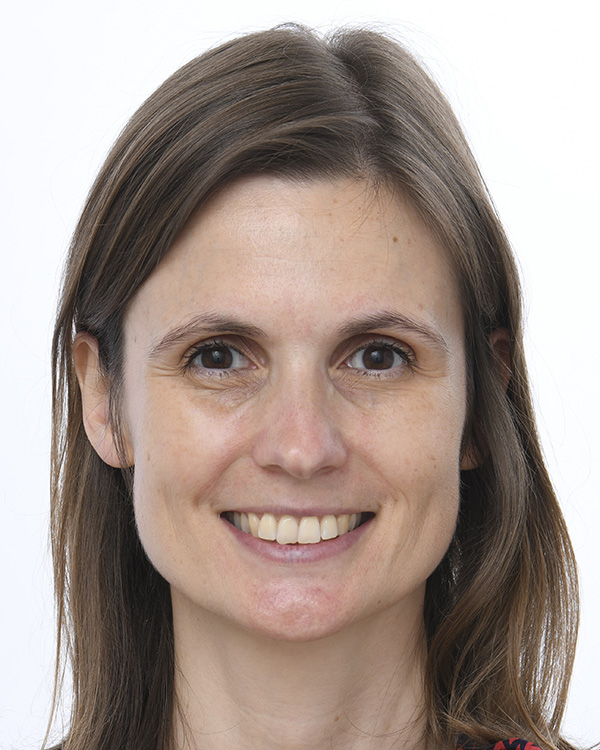
 Debate contributions by Liesbet SOMMEN
| Rank | Name | Country | Group | Speeches | |
|---|---|---|---|---|---|
| 1 |

|
Lukas SIEPER | Germany DE | Non-attached Members (NI) | 321 |
| 2 |
|
Juan Fernando LÓPEZ AGUILAR | Spain ES | Progressive Alliance of Socialists and Democrats (S&D) | 280 |
| 3 |
|
Sebastian TYNKKYNEN | Finland FI | European Conservatives and Reformists (ECR) | 247 |
| 4 |
|
João OLIVEIRA | Portugal PT | The Left in the European Parliament (GUE/NGL) | 195 |
| 5 |
|
Vytenis Povilas ANDRIUKAITIS | Lithuania LT | Progressive Alliance of Socialists and Democrats (S&D) | 183 |
All Contributions (12)
 A new action plan to implement the European Pillar of Social Rights (debate)
Date:
22.01.2026 09:35
| Language: NL
Mr President, on the international stage today it is foolish, foolish, foolish. They are trade tariffs and fall back on the self-interest that strikes the clock. And that brings Europe into an existential crisis. It is urgent that Europe becomes much more assertive. Unfortunately, we cannot rely on military strength. But what we do have, unique and very powerful, is an economic weapon, our market of 450 million people. And our young innovative entrepreneurs urgently need European capital to scale up. But whatever they need, and that is why we are here, is well-educated European workers, human capital. This is too soon forgotten today. Indeed, the EU does not have a large army of its own and does not have many resources of its own. But our people, our employees and our entrepreneurs make a real difference every day. Please, let us make sure that this debate does not go under. It's about skills, skills and more skills. We urgently need that single European market for our employees and for our companies.
EU strategy for the rights of persons with disabilities post-2024 (debate)
Date:
26.11.2025 16:07
| Language: NL
No text available
Second World Summit for Social Development (debate)
Date:
08.10.2025 17:11
| Language: NL
Mr President, ladies and gentlemen, a social Europe is not an unnecessary luxury today, because we are living in a time of multiple crises. However, we must pay particular attention to the needs of our citizens and families. What do they need to feel safe when a war is raging at our external borders? What is needed to achieve the climate goals? What concerns do our citizens have, particularly in terms of job security, in the context of the trade war with Trump? Our focus should not be solely on major geopolitical interests. We must also continue to seek solutions to the day-to-day concerns of our citizens. Only in this way can we close the great gap between the European Union and the daily lives of our people. That is why these additional defence expenditures, however necessary, must not lead to the neglect of our social foundation. Defence protects our borders, but social progress protects our society. Last year’s Eurobarometer survey showed that as many as 88% of Europeans want a stronger social Europe. If we want to deliver on the promise to lift as many as 15 million people out of poverty by 2030, then this is the time to act. We owe that to this large group of people, including 5 million children. Let us use the World Summit on Social Development in Qatar in November to refocus on our UN Sustainable Development Goals, but certainly also on the European Pillar of Social Rights. Let us put the interests of our families – including the new family forms, such as composite families – at the centre.
Presentation of the Stockpiling Strategies - strengthening response capacities for a changing risk and threat landscape (debate)
Date:
09.07.2025 16:36
| Language: NL
Mr President, Commissioner, ladies and gentlemen, health is a basic right and we have been talking for months about preparedness against the military threat on our eastern flank and the economic threat on our western flank. Of course more than rightly so, because defence and economic independence are two essential pillars of our Union and they deserve a lot of attention and resources. However, health deserves that too, because that's why this strategy doesn't come a day too early: purchase and store medical equipment, medicines together. That is a question of logic and a question of efficiency. We really need to follow that path, that paradigm shift that the EU has been doing since COVID-19. We must remain committed to this and urgently work towards a strong Europe in the field of health. Stockpiling for emergencies, that's one thing. However, available and affordable medicines for all Europeans are as follows. At this point, there is still a lot of work to be done.
Presentation of the proposal on Critical Medicines Act (CMA) (debate)
Date:
11.03.2025 14:31
| Language: NL
Mr President, Commissioner, every day we see that the world order is shifting and that international cooperation is becoming increasingly difficult. As an EU, we will have to be strong for strategic sectors and do our own thing. The same goes for the pharmaceutical industry. Because every day, healthcare providers and patients experience shortages of medicines. That's a big problem. The geopolitical instability, combined with our dependence on China and India in terms of medicines, makes us vulnerable. Especially in times of hybrid warfare. Because one geopolitical event, one crazy decision by a certain policymaker or one problem in a factory far away from here can plunge us into an unprecedented health crisis. That's a big problem. Drug shortages can cost lives. All the more reason to tackle this together in Europe with the full impact of our internal market.
The need to address urgent labour shortages and ensure quality jobs in the health care sector (debate)
Date:
11.02.2025 12:30
| Language: NL
Mr President, Commissioner, everyone is entitled to the best possible and closest care. Of course, you need a caregiver for that. And that's where the shoe really sticks today. The figures are quite dramatic. We are short of more than a million doctors, nurses and midwives and by 2030 no less than one in three of them will retire. At the same time, the number of patients in need of care is on the rise. That's a ticking time bomb. It's not just a numerical problem, it's really a systemic crisis. The caregivers and the patient deserve better. Because caregivers deserve respect and appreciation for the work they do, a better wage, a better balance between work and family, but also more mental well-being and autonomy in the workplace. We must also work towards this concentration of specialised care. Because it ensures a more efficient use of caregivers, shorter waiting times for the patient and above all: This saves lives. Here in the EU, we need to work together on that common recognition of diplomas, because labour migration may not always be a success – we really need to focus on language skills training – but it remains a huge opportunity that we must continue to tap into. This is not just a national problem. The vast majority of our Member States are confronted with this. This requires European solutions and European action.
Failure of the negotiations in Busan for a UN plastic treaty and the urgent need to tackle plastic pollution at international and Union level (debate)
Date:
22.01.2025 15:13
| Language: NL
Mr President, our oceans are choked by microplastics and our rivers are clogged with plastic waste. Our food also contains harmful chemicals that can be linked to plastic. According to the OECD, if we continue along this path, we will be moving towards irreversible environmental damage. The figures are staggering: By 2040, we would produce 60% more plastic and plastic waste in our oceans would have doubled or even tripled. This would be a real catastrophe. Doing nothing is not an option. International problems require international solutions. However, a limited number of countries continue to struggle at climate conferences and are sticking sticks in the wheel. These are often countries that produce oil and are looking for alternative sources of income. Europe cannot accept this. Clearly, we need to recycle more and produce less plastic. We urgently need binding agreements, as part of an international agreement. In addition, we must work on harmful substances, which cannot have a place in plastic consumer products that have an impact on our food and our health. If we fail to reach binding international agreements, Europe must not shy away from taking action itself. We in Europe must protect our nature, our biodiversity and our health at all times, regardless of international initiatives. The Commissioner has indicated that more than 100 countries are already convinced to share this international ambition. Let's also convince the last doubters.
Recent legislation targeting LGBTQI persons and the need for protecting the rule of law and a discrimination-free Union (debate)
Date:
27.11.2024 17:03
| Language: NL
Mr President, the reprehensible and offensive statements of the extreme right here in this plenary session unfortunately underline it once again: we have seen that the rights of LGBTQI people have certainly been reduced in recent years, including here in Europe. It looks like the clock is being turned back. Under the guise of "neutral education" and the "protection of traditional values", books are banned, rainbow flags removed and people silenced. It's totally unacceptable. Such legislation is at odds with what the European Union is based on. They are our values. LGBTQI people are now experiencing more discrimination than five years ago and the same applies to relevant civil society organisations in their contacts with certain EU Member States. We must never give up. We must continue to speak out against homophobia and hate speech. In the European Union, we are committed to tolerance, respect and tolerance, regardless of a person's sexual identity or gender identity.
Closing the EU skills gap: supporting people in the digital and green transitions to ensure inclusive growth and competitiveness in line with the Draghi report (debate)
Date:
24.10.2024 07:08
| Language: NL
(NL) Mr President, Commissioner, the green transition and artificial intelligence: That sometimes worries our people and businesses. That's understandable, too. It is up to us, the policy, to provide clarity and certainty. As a European Union, we are at a crossroads. We rightly have the most ambitious climate legislation in the world, but our economy is lagging behind because we do not offer enough room for technological progress. As a result, workers and farmers are sometimes afraid of losing their jobs and their futures. But the good news is: We are able to turn these transitions into opportunities. We will do this by focusing on the greater skills of our people, through education and training. Because human capital is what makes our European businesses strong. Let us be proud of our European social model. The US and China have only one role to play. We really need a comprehensive European funding strategy for education and training. The focus should be on STEM sectors, mathematics and science. Because it is those trainings that bring the professions to the labour market that will enable our companies and our agriculture to become more sustainable and digitalised. With stronger education and training for us Europeans, we will not only succeed in saving the climate and our European economy, but also in strengthening our people. And indeed, that will ensure that Europe can regain its leadership position of yesteryear. Europe is at a crossroads. It is up to us to take the right path.
International Day for the Eradication of Poverty (debate)
Date:
21.10.2024 15:32
| Language: NL
Mr President, ladies and gentlemen, 17 October was the International Day for the Eradication of Poverty. Such a day is of course very important. Even more important is that we pay attention to people in poverty every day. Poverty should never be a taboo. The figures on poverty in the European Union are truly worrying. I therefore welcome the EU strategy against poverty announced by the President of the Commission. We are going to implement that strategy with the broad civil society. We must focus on poverty prevention with a genuine social Europe working towards quality jobs and a genuine European Health Union. We also have an important instrument in our hands with the European Child Guarantee. Homelessness must also be given a prominent place, not only in the European Strategy against Poverty, but also in the Plan for Affordable Housing at European level. All this in cooperation with the European Platform on Combating Homelessness. Only together and with a comprehensive strategy can we truly end poverty.
Ensuring sustainable, decent and affordable housing in Europe - encouraging investment, private property and public housing programmes (debate)
Date:
09.10.2024 12:16
| Language: NL
Mr President, Commissioner, ladies and gentlemen, in recent years we have seen that more and more families are struggling to make ends meet and that housing costs are taking up an increasingly important part of the family budget. For many families, whether they are two-income or single parents, but certainly also for young people, it is often simply no longer possible to buy your own home. We therefore also need a clear vision at European level on how we can make housing decent and affordable. We will have to focus much more than we do today on social housing and on public-private partnerships in order to provide sufficient affordable and social housing. The announced revision of EU state aid rules could be a very important catalyst in this regard in order to develop sufficient affordable and social housing. In this way, we certainly need affordable, energy-efficient and social housing. As the Commissioner has already said, the roll-out of the Social Climate Fund will be essential in this respect. In addition, today I would also like to draw special attention to the most vulnerable, the people who are homeless. They must not fall through the cracks of the net. We must take the situation of the homeless into account in all the initiatives we take at European level for decent and affordable housing. Because specific needs require specific solutions. We will certainly continue to bring this to the attention of the new European Commissioner for Housing to ensure that homelessness is given a prominent place in the European affordable housing initiative.