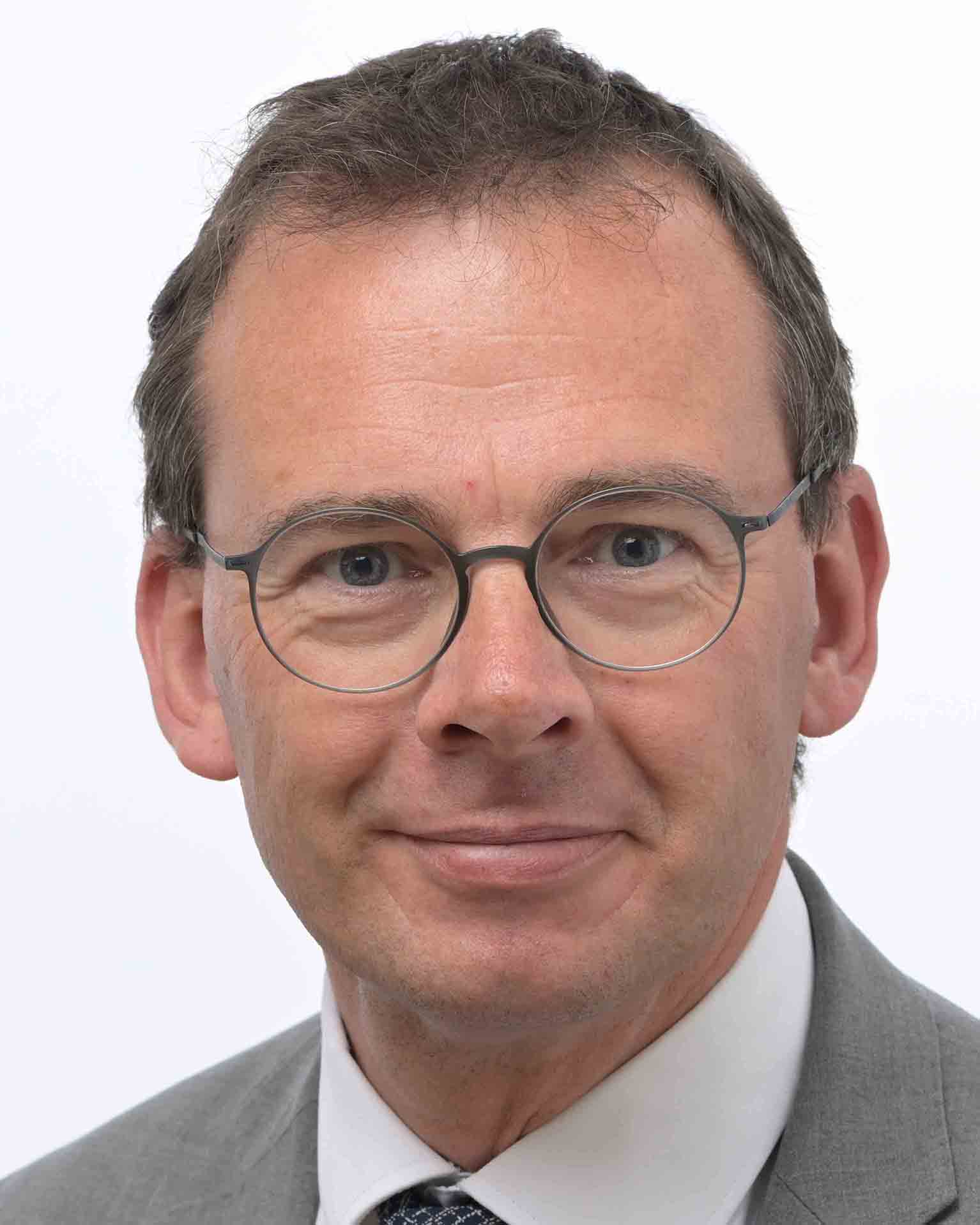
 Debate contributions by Wouter BEKE
| Rank | Name | Country | Group | Speeches | |
|---|---|---|---|---|---|
| 1 |
|
Lukas SIEPER | Germany DE | Non-attached Members (NI) | 321 |
| 2 |
|
Juan Fernando LÓPEZ AGUILAR | Spain ES | Progressive Alliance of Socialists and Democrats (S&D) | 280 |
| 3 |
|
Sebastian TYNKKYNEN | Finland FI | European Conservatives and Reformists (ECR) | 247 |
| 4 |
|
João OLIVEIRA | Portugal PT | The Left in the European Parliament (GUE/NGL) | 195 |
| 5 |
|
Vytenis Povilas ANDRIUKAITIS | Lithuania LT | Progressive Alliance of Socialists and Democrats (S&D) | 183 |
All Contributions (67)
 Drones and new systems of warfare – the EU’s need to adapt to be fit for today’s security challenges (debate)
Date:
22.01.2026 08:52
| Language: NL
Mr President, drones and anti-drone technology are no longer music for the future, but a strategic necessity for our security and our economy. But as with other innovations and other innovative sectors, we often encounter the same barriers. Too little access to finance, too many rules, too little room to grow. Europe must not slow down innovation through fragmented regulation or administrative burdens. We have to be proud of them in the world and we don't have to reinvent the wheel for that. In Ukraine today, unprecedented know-how is being built up on the use and neutralisation of drones under the harshest conditions imaginable. We need to translate this experience into European innovation and security. And let us also play out our own strength points. Flanders, and in particular Limburg, is one of the absolute top regions in Europe in terms of drone innovation. This ecosystem exists. That talent is there. Now we need to further unlock that potential with ambition, trust and decisiveness. This is the only way to achieve a truly European top technology for military and civilian drone applications. Let's work on that.
Case of Joseph Figueira Martin in the Central African Republic
Date:
21.01.2026 19:52
| Language: NL
No text available
European Council meeting (joint debate)
Date:
21.01.2026 10:11
| Language: NL
Mr President, Mr President-in-Office of the European Council, Madam High Representative, narcissistic leaders are not afraid of individual countries playing against each other. We've seen enough of that by now. But they fear unanimous blocks that dare to use their weight. One year of Trump is all about economic coercion and political intimidation. Anyone who thinks this will happen by itself is mistaken. Canada, Switzerland, Japan, South Korea, Australia, New Zealand and the United Kingdom, together with the European Union, form eight strong democracies that believe in the rule of law, mutual respect and rules-based global trade. That's not naive. That's a choice, and it should be a strategy. It should be a foundation for a ‘D8’, a ‘democratic eight’. The European Union must take the lead in this as the engine of a D8. In doing so, economic coercion towards one country must lead to a joint reaction of the other countries, such as an article 5 of NATO, but then economically. This is not a plea for escalation. This is a plea for a credible alternative. The question is not whether Europe is strong enough. The question is whether we are finally ready to use that strength. I hope so.
CFSP and CSDP (Article 36 TEU) (joint debate)
Date:
20.01.2026 18:32
| Language: NL
Mr President, High Representative, in the first twenty days of the new year, countless red lines have already been reached and borders have been crossed. Alliances are falling apart before our eyes and conflicts are spreading everywhere, showing how the world is turning into a mess, and unfortunately not in the right direction. Europe can no longer be under any illusions about this. Naivety is not a strategy. Sticking our heads further in the sand and hoping that the world will be okay by itself is not an option. This report shows that there is only one way to maintain security and prosperity on our continent, namely a more decisive Europe. It is therefore crucial to move forward at European level to support our defence and jointly build our military capacity to become a credible player on the geopolitical chessboard. A new European security architecture is urgently needed, with new, in-depth European cooperation and partnerships with partners such as the United Kingdom and Norway. Moreover, as Commissioner Kubilius also advocates, we must be able to respond more quickly to threats, for example with a European Security Council, and we must also create a European army step by step. If we don't move forward now, when will we? Are we going to wait until Russia has taken over the Baltic states or until NATO is completely torn apart? It is now time to unite our security and prosperity. After all, our credibility vis-à-vis citizens and geopolitics is at stake. The European Union can no longer be a global player, either militarily or economically. We have a strong economy and a prosperous middle class and are the largest trading bloc in the world. Let us use this power to create sufficient military deterrence so that Europe can also become strategically autonomous.
Preparation of the European Council meeting of 18-19 December 2025, in particular the need to support Ukraine, transatlantic relations and the EU’s strategic autonomy (debate)
Date:
17.12.2025 10:39
| Language: NL
Mr Gozi, I think that when it comes to making Europe stronger, it is about two important things. That is to strengthen and increase the competitiveness of our industry. We need to move forward, not back. Or we lose our industry. If 1 million jobs in Europe have been lost in the last four years, if 1 million jobs have been lost in competitiveness, that is more than a wake-up call. And then, when it comes to omnibuses, for example, we have to take steps forward to ensure that these companies stay here. A second important challenge is to ensure that we have a European defence. I hope I can have a partner in that in you, because I know that the far right will not be a partner in that.
Preparation of the European Council meeting of 18-19 December 2025, in particular the need to support Ukraine, transatlantic relations and the EU’s strategic autonomy (debate)
Date:
17.12.2025 10:37
| Language: EN
Mr President, the summit in Berlin brought progress for peace in Ukraine. Let's hope; Let's cross our fingers. Under Friedrich Merz's leadership, Europe has once again fought in the peace process. That in itself is a good thing. But there is also an uncomfortable question: Why did this not happen under the leadership of the President of the European Commission? The answer is painfully clear: because foreign policy remains the painful Achilles heel of our European Union. Because let's be honest, we will no longer be able to count on the United States. We will have to take our own security into our hands. That is what President von der Leyen said earlier. We'll have to do it ourselves. In addition to Article 5, the European Treaties include Article 42(7): mutual assistance, by all means in our power. But the question is: What does that mean in concrete terms today? Today, that means nothing. It's an empty box. Why is it an empty box? Because we don't have European defence. Without defence, we are not really at the table, but rather part of the menu, as has been shown in the past. Much has already been said about the financial support to Ukraine. Leaders must find a solution in the coming days that both supports Ukraine and ensures and strengthens our security, without exposing one country to all possible legal risks, but it requires cooperation, European responsibility and solidarity, rather than pointing a finger at Belgium.
EU Defence Readiness (joint debate)
Date:
16.12.2025 13:00
| Language: NL
No text available
Incentivising defence-related investments in the EU budget to implement the ReArm Europe Plan (debate)
Date:
15.12.2025 17:36
| Language: NL
Mr President, Commissioner, ladies and gentlemen, there is a lot of talk about the importance of a strong European defence. We are not going to defend ourselves by talking alone. We must therefore add the deed to the word. That is exactly what we are doing with this proposal and with the various initiatives that Commissioner Kubilius is taking in this regard. Indeed, an important step towards this is the mini-omnibus, which opens up European civilian research programmes such as Horizon Europe or the Digital Europe Programme to dual use, allowing us to further strengthen our defence investments. Seemingly a small step, but with great effects. This not only destroys the artificial walls between different research areas, but also strengthens cooperation between companies within and outside the defence sector, which will lead to interesting cross-fertilisations. The number of innovations that have been made in this way in the past within a military context is almost endless. Think of the internet, the microwave, GPS. In Europe, too, we must continue to focus on technological progress. That is why we are opening the doors to companies from the defence industry, in order to be able to share their know-how with the civil industry and vice versa. Colleagues, we all agree that we need to invest better and more in defence. However, we need to do this in a smart and balanced way. This means working towards European cooperation and avoiding overlap. This omnibus is a step in the right direction, but it is not an end point. If we want to make Europe competitive and resilient, we will have to continue to focus on a strong European industry, including in the field of defence. Let this be a good start.
Defence of Democracy package (joint debate)
Date:
26.11.2025 17:28
| Language: NL
No text available
EU response to the continuous airspace violations and sabotage of critical infrastructure in the EU originating from Russia and Belarus (debate)
Date:
26.11.2025 13:35
| Language: NL
No text available
EU position on the proposed plan and EU engagement towards a just and lasting peace for Ukraine (debate)
Date:
26.11.2025 10:03
| Language: NL
No text available
Effective use of the EU trade and industrial policy to tackle China’s export restrictions (debate)
Date:
25.11.2025 13:32
| Language: NL
Mr President, ladies and gentlemen, critical raw materials are the invisible backbone of modern life. Without these materials, no defense production, no electric cars, no windmills, no microchips. Europe's future therefore depends on access to the very raw materials that others are now using as a tool of power. For example, China controls large parts of global mining, refining and processing. A single export restriction and an entire European sector could collapse, with hundreds of thousands of jobs at stake. President Xi has long recognized that the country is willing to use that leverage as well. Now that the United States has been able to obtain a temporary suspension of its export restrictions, we now seem to be doubly dependent: We are leaning on China for our supplies and on Washington to keep Beijing in check. Without access to critical raw materials, we lose not only our competitiveness, but also our political autonomy. It is therefore high time for Europe to be able to pursue a straight and decisive policy, based on new partnerships, reinforced by recycling and new refining and production lines.
European Defence Industry Programme and a framework of measures to ensure the timely availability and supply of defence products (‘EDIP’) (debate)
Date:
25.11.2025 08:56
| Language: NL
Mr President, the agreement we are discussing here today does not come a day too early. For too long, our collective security has been undermined by national fragmentation and inefficiency. With EDIP, we are now taking an important step forward towards further integration of our industry, and therefore also our European security. But this shouldn't be an end point. What we are discussing and approving today is necessary, but insufficient. There is still a lot of work to be done to achieve genuine European cooperation. Not with the intention of simply throwing taxpayers' money over the line, but with the intention of using these scarce resources as efficiently as possible. To efficiently protect our citizens from the hybrid and military threats on European territory. If Europe wants to protect its citizens, it needs soft power. But it also needs a lot of power. And that hard power will only come if it is used for a real European defence. Let's all work together.
Ending all energy imports from Russia to the EU and closing loopholes through third countries (debate)
Date:
22.10.2025 20:54
| Language: NL
Mr President, Commissioner, ladies and gentlemen, every euro that goes to Russian gas or oil in Russia is a euro that feeds Putin’s war. Today we say ‘enough!’. By 2027 we will close the crane permanently. Not only out of necessity, but also out of conviction. That is a historic decision, because it is not only about energy, but also about moral responsibility and strategic independence. Europe takes that responsibility, because it is about values, about peace and about security. And I hope that the Council will also take that responsibility. But this choice also requires a vision, Commissioner. The Commission must diversify and strengthen partnerships so that we do not simply shift our dependence, but become truly more autonomous in terms of our energy. And it must urgently, very urgently, provide affordable energy for families and for businesses. Today, Europe is opting for peace, for Ukraine, for responsibility and for greater autonomy.
Stepping up funding for Ukraine’s reconstruction and defence: the use of Russian frozen assets (debate)
Date:
21.10.2025 17:03
| Language: NL
Mr President, Ukraine is our first-line European defence today and deserves our full support. Whatever it takes. But there is a temptation: the quick and easy solution, namely to seize the frozen Russian assets. They look a bit like crown jewels that are in a glass cabinet, secure or not. But they are not, because unlike crown jewels, the frozen assets yield interest, which can be used to pay G7 loans for Ukraine. Remember, we can only use that money once: either for military support, or soon for the reconstruction of Ukraine. On the other hand, there is a bold choice, namely a proposal for a structural European Ukraine Fund. If we Europeanise 2% of our defence spending, we can mobilise EUR 150 billion. EUR 150 billion, while continuing to use interest for Ukraine and supporting Ukraine militarily and financially, and frozen assets can be used for the reconstruction of Ukraine.
Recent peace agreement in the Middle East and the role of the EU (debate)
Date:
21.10.2025 08:33
| Language: NL
Mr President, Commissioner, colleagues, the Gaza agreement and the release of the hostages gave a spark of hope. But today we see again how fragile that hope is and how fragile the ceasefire is in reality. Sustainable peace is more than the temporary silence of arms. Without perspective, without justice and without reconstruction, each stock remains temporary. This is where Europe's responsibility lies. Europe must take the lead by accelerating humanitarian aid, for which we have the funds; by supporting the reconstruction of Gaza; by continuing to put pressure on Hamas and Israel, we have packages of sanctions for that, and by working towards a credible two-state solution, we have the diplomats for that. The new pact for the Mediterranean can usher in a new European direction, but only with strong and concrete measures. We were not present at the conclusion of the agreement or the file. Let us not be absent from its implementation, and use all European resources to that end.
Chemicals (joint debate)
Date:
20.10.2025 16:01
| Language: NL
Mr President, ladies and gentlemen, Commissioner, the European chemicals sector is going through a severe storm. The worst storm since the financial crisis. Just to give you an idea: in the port of Antwerp, in my country, the largest chemical cluster in Europe, the installations only run at 65% of their capacity. This is the lowest level in 44 years. Production volumes are falling, investments are shifting to the United States or Asia. And also in my country, companies such as BASF, ExxonMobil or TotalEnergies announced that they would join or restructure. However, the broad chemical sector in Belgium accounts for one-fifth of industrial employment and one-third of our exports. In that context, we must support any proposal that simplifies the life of our chemical cluster. Today's proposals are not a panacea, but they are a step in the right direction. They streamline procedures and safety assessment, reduce administrative burdens for businesses and ensure faster and more efficient decisions on chemicals. With one assessment per substance, as you have indicated, and a common platform, we strengthen both the protection of people and the environment and the competitiveness of our industry. Less paperwork, more innovation, faster procedures. That is what our European industry, and certainly the chemical industry, needs today. All the support.
The EU’s role in supporting the recent peace efforts for Gaza and a two-state solution (debate)
Date:
07.10.2025 12:24
| Language: NL
Mr President, Commissioner, ladies and gentlemen, two years ago, Hamas carried out a terrible attack on innocent Israeli citizens. 1,200 dead, slaughtered in their homes, on the street and at a festival. Dozens of hostages are still trapped. It's inhuman. We must do everything we can to free them and support all initiatives to do so. However, one crime still does not justify the other. What Israel has unleashed in Gaza since then is not only disproportionate, but equally inhumane. Tens of thousands dead. Whole families have been bombed away. We must continue to condemn this as strongly as we do. We hope that the current talks are a germ for peace. Every step to stop this madness is a step forward. But what then? A ceasefire is not peace. Sustainable peace can only come with a two-state solution – with Israel ending illegal settlements – and with mutual recognition in the region and genuine self-government for Palestine. The European Union's mission is to contribute to this.
Case of Victoire Ingabire in Rwanda
Date:
10.09.2025 20:21
| Language: NL
Mr President, Commissioner, colleagues, dear Rémy and Raïssa, Victoire Ingabire is a Rwandan politician who spent 15 years in the Netherlands as a political refugee. And she's not the only one. It's the third time in a few months that we've been here. The first time was for Jean-Jacques Wondo in Congo, then for Joseph Figueira Martin in the Central African Republic. And now it is about the fate of Victoire Ingabire, as well as her colleagues in Rwanda. Together with her colleagues, she wanted to make a reasonable counter-narrative in Rwandan politics, precisely with the aim of restoring the rule of law and safeguarding human rights again, and this in the aftermath of the Rwandan genocide. Cynically, she, together with her colleagues, is subjected to arbitrary and unjustified detention. In the meantime, we see Visit Rwanda on many football jerseys appear and the World Cycling Championships are organized in Kigali. Isn't that in stark contrast to the repression of the political opposition, of dissenters? We cannot allow that. The immediate release of Victoire Ingabire and her colleagues is a first but also necessary step in the right direction for Rwanda.
China’s unjustified decision to impose duties on imports of pork products from the EU and the need to support European farmers and workers (debate)
Date:
10.09.2025 15:11
| Language: NL
Mr President, Commissioner, the new Chinese import tariffs of 60% on pigmeat are a severe blow to our farmers. Belgium threatens to get the highest rate, while our farmers barely had access to the Chinese market during the period under review. This is not just an unfair commercial practice. That is pure geopolitical pressure and an attempt to separate Member States. Farmers should not be penalised by European plans to introduce additional levies on electric cars from China. We can't allow ourselves to be blackmailed. Commissioner, you are Commissioner for Defence. Our farmers also need someone to defend their interests. All the more so because import duties are not the only problem. The levies come on top of European environmental rules, less agricultural budget and farmers' fear of Mercosur and so on. All this while we are all convinced that strategic autonomy is so important. Our farmers deserve security so that we can remain competitive on that global market and guarantee our food security. That is why I hope that you will take these concerns with you and that measures will be taken against these levies and also measures to support the agricultural sector.
Gaza at breaking point: EU action to combat famine, the urgent need to release hostages and move towards a two-state solution (debate)
Date:
09.09.2025 09:42
| Language: NL
Mr President, Mrs Kallas, ladies and gentlemen, 6,000 deaths – five weeks ago – we were discussing the war in Gaza. Then we asked: When's that gonna stop? 6 000 people were killed. When will Europe finally take action? When are we going to suspend that trade agreement, that association agreement? When will we put pressure on Israel? When will we implement this import ban from the occupied territories? When will we implement a European entry ban? This has to stop! Some Member States, including Belgium, are taking initiatives. But Europe remains deaf. Well, Europe cannot remain deaf. If Europe has any moral responsibility, it must act now. This is what we are doing with Ukraine. We must do the same with regard to the atrocities that are taking place in Gaza. Mr President, Mrs Kallas, take your responsibility, take action and make sure that we do not have to discuss again here next month and say: Another 5,000 people were killed.
Arbitrary arrest and torture of Belgian-Portuguese researcher Joseph Figueira Martin in the Central African Republic
Date:
09.07.2025 19:09
| Language: NL
Mr President, Commissioner, ladies and gentlemen, our compatriot Joseph Figueira Martin has been unjustly detained in the Central African Republic for more than a year. For 411 days, 411 nights, he, his family, his friends have been tormented by uncertainty. All this time he has been tortured, isolated, threatened with death, without any future prospects. It goes without saying that his physical and mental health is rapidly deteriorating. And why? Well, Joseph Figueira Martin came to work for a humanitarian organization to support the local population in the field of health care and education. As always in his professional career, with a passion for the region and a belief in a better future for ordinary people. But that was outside the Wagner group. Colleagues, we all know the stories of this paramilitary organization that spread a lot of horrors in the world from Russia. Joseph Figueira Martin was also kidnapped by the Wagner Group and wrongly accused of espionage and terrorism. These allegations were taken over by the Central African authorities without any evidence. For 411 days without reason, without evidence, imprisoned, tortured. We must put a stop to this. In addition, Russian influence in the Central African Republic is also worrying and afflicting not only Joseph Figueira Martin, but also many others. It is not only a matter of harsh repression through the Wagner Group, but also of extensive disinformation campaigns aimed at weakening Europe. Just as we reaffirm our support to support the security services in the country there. Colleagues, there is already a lot of work to be done in the Central African Republic and that will have to be done step by step. A first step is the release of this innocent European citizen, who only came to share his expertise in the country with the most noble intentions. I ask you all to support this resolution en masse tomorrow, so that Joseph Figueira Martin can return home after more than a year of unjust imprisonment. His family and himself will thank you.
Democratic Republic of the Congo-Rwanda peace deal agreement (debate)
Date:
09.07.2025 17:35
| Language: NL
Mr President, Commissioner, ladies and gentlemen, at the beginning of this year, the violence in eastern Congo flared up again horribly, and we saw the horrific images on television. But actually, we've been seeing these horrific images on television for thirty years. Now a peace deal has been signed. That is a good step in itself, but also a step with a number of questions. The first question, Commissioner, was: Where is Europe in this conflict? Where were we? Was this a peace deal or was this a mineral deal and will at the end of the ride only the mineral deal remain and will the peace deal disappear again? I think that's a crucial question. A question that we as Europe may be able to push in the right direction by ensuring that we will sit down at that table in the future. Because a peace has been signed there, but a number of crucial players, colleagues, do not give at home. The rebel group M23 says: We do not feel held and bound by this peace deal. That, of course, is the essence of the matter. Mr President, Commissioner, ladies and gentlemen, I call on everyone and I also call on you. I call on the European Union. I call on the High Commissioner, the High Representative, to pay more attention to this conflict together. A conflict that has been raging for decades, a conflict that has already claimed millions of deaths, a conflict - you yourself mentioned that - that involves moving 2.5 million internally, in that region alone. There is a peace deal today. That can be positive. Make sure it doesn't become a mineral deal like in Ukraine. We can only do that by sitting at the table as Europe itself, because it is in our interest.
EU-US trade negotiations (debate)
Date:
09.07.2025 14:10
| Language: NL
President, Commissioner, colleagues, tariff increases are political placebos, Professor Richard Baldwin said. Economic nonsense that serves a political purpose. Unlike President Trump, we should not believe in these placebos. Europe’s focus should be: protecting our prosperity, our jobs and the income of our people. Europe does not benefit from escalation. A deal may also limit the damage to our businesses, SMEs and countless jobs. Take this responsibility, Commissioner, but not at the expense of one sector. Distribute the burden across sectors and across Member States. But even with a deal, we as Europe must invest fully in our economy, our independence and our competitiveness. The IMF calculated that European trade barriers cost us EUR 1 700 billion annually. Removing them could bring in EUR 3 800 per European. So, commissioner, deal or no deal? Europe must protect our jobs, our prosperity and the income of our people.
Preparation for the 2025 EU–China Summit - Tackling China's critical raw materials export restrictions
Date:
08.07.2025 08:15
| Language: NL
Mr President, Commissioners, ladies and gentlemen, in this hemisphere we often talk about strategic autonomy when it comes to our defence, when it comes to our food, when it comes to our medicines. The message is always: We need to be able to take more control in order to protect our citizens in the future. This also applies to critical raw materials. Without ever realizing it, they have become the invisible engine of our society. Because without critical raw materials, no smartphones, no electric cars, no windmills. Just for those critical raw materials, we are incredibly dependent on China: 90 %. So we are not really talking about a mere trade imbalance. No, it's about a strategic weakness that China is using. Because China determines whether and in what way critical raw materials can and should be used in Europe. Well, this is unacceptable. At the upcoming EU-China summit, it cannot business as usual be. Europe must not become Beijing's plaything and must therefore be on the table as far as critical materials are concerned, as you have just done, Madam President.