 Debate contributions by Marie-Luce BRASIER-CLAIN
| Rank | Name | Country | Group | Speeches | |
|---|---|---|---|---|---|
| 1 |

|
Lukas SIEPER | Germany DE | Non-attached Members (NI) | 321 |
| 2 |
|
Juan Fernando LÓPEZ AGUILAR | Spain ES | Progressive Alliance of Socialists and Democrats (S&D) | 280 |
| 3 |
|
Sebastian TYNKKYNEN | Finland FI | European Conservatives and Reformists (ECR) | 247 |
| 4 |
|
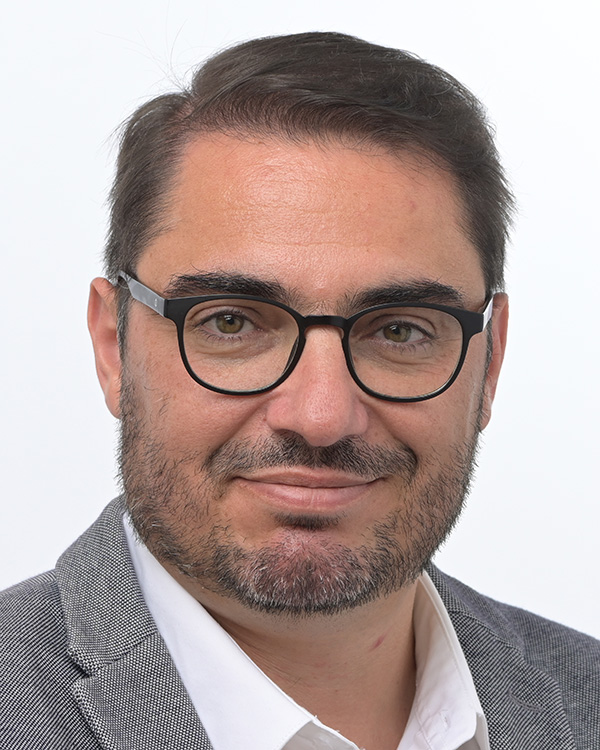
João OLIVEIRA | Portugal PT | The Left in the European Parliament (GUE/NGL) | 195 |
| 5 |
|
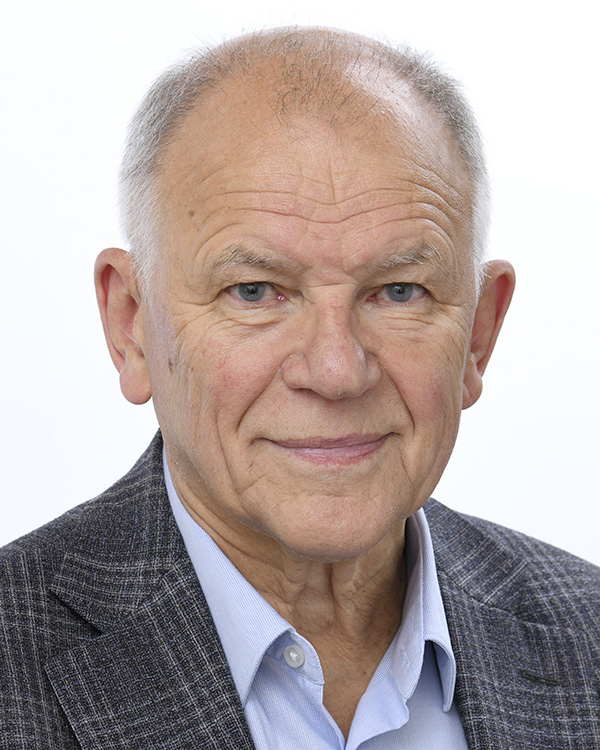
Vytenis Povilas ANDRIUKAITIS | Lithuania LT | Progressive Alliance of Socialists and Democrats (S&D) | 183 |
All Contributions (18)
 Framework for strengthening the availability and security of supply of critical medicinal products as well as the availability of, and accessibility of, medicinal products of common interest (debate)
Date:
19.01.2026 18:10
| Language: FR
No text available
Impact of the geopolitical situation on European patients and their access to medicines (debate)
Date:
15.12.2025 20:22
| Language: FR
Mr President, Commissioner, in 2023, medicines accounted for 60% of pharmaceutical expenditure and 13% of health expenditure in the European Union. It is a strategic sector in an ageing continent, with health systems weakened by COVID-19 and declining public funding. The aggressive US strategy, which is bearing fruit there, is leading us towards a price war that will affect access to medicines on our soil. It makes us quasi-vassals, at the mercy of Chinese products, and doubled by European pharmaceutical companies that negotiate directly with the US government. The result is that many of them choose to move to the United States in exchange for a tariff exemption and fast-track approval procedures. Europe must advocate, with the same military will as it does, a duty of power based, as for the Americans, on the concept of European security, freeing itself from a multilateral legal and regulatory framework that paralyses and strengthens and its production and its local innovation.
Outcome of the UN Climate Change Conference - Belém (COP30) (debate)
Date:
27.11.2025 10:37
| Language: FR
Mr President, more than 25 years of COP for a world that emits more and more CO2. What a failure! Our countries get lost in commitments they can't keep: climate neutrality, the exit from fossil fuels, but also financial flows. Already at COP29, climate finance had been at the heart of the negotiations. The road map, from Baku to Belém, estimates the cost of financing the energy transition of the global South at 1.3 trillion. Last year, we were talking about $300 billion. As we have understood, the European taxpayer's money will be increasingly mobilised. And what hypocrisy, while China and India account for 70% of the world's coal demand and the use of fossil fuels is increasing in the world! We are constantly talking about a just transition, but our peoples see it only as a punitive aspect at the expense of our competitiveness. The defence, at all costs, of the Green Deal, in defiance of any technological realism, will not allow a rapid transformation of the global energy system. It's impossible. On the contrary, a gradual approach based on innovation and energy sovereignty must be defended, using indispensable assets such as nuclear power. That is the vision we stand for.
Breast cancer: the importance of screening (debate)
Date:
23.10.2025 09:10
| Language: FR
Madam President, in France, breast cancer is the leading cause of cancer death among women, with 12,000 deaths per year. It is also the most common cancer. Detected at an early stage, it can be cured in nine out of ten cases with less heavy treatments. While there are national plans that encourage women over the age of 50 to get tested every two years, breast cancer is increasingly affecting young people. The number of cases of all types of cancers has jumped by 80% in 30 years among those under 50 years of age. Young women are more likely to develop more aggressive breast cancer. Several causes are known: population growth and ageing, hormonal and reproductive factors, alcohol, overweight, sedentary lifestyles and tobacco. But there are others that remain to be determined. Regardless of age, screening and screening awareness are essential, while taking care to avoid overdiagnosis and overtreatment. The Government has taken stock of the situation. It is now necessary to ensure the proper funding of research to better understand this disease and to refine diagnostic methods.
World Mental Health Day - addressing the socio-economic factors (debate)
Date:
09.10.2025 09:01
| Language: FR
Mr President, it is well known that: From education to transport to hospitals, mental disorders are a major public health problem. One in four French people is affected, and this figure has accelerated significantly since the COVID-19 pandemic. France has more than 9,000 suicides per year, one of the highest rates in Europe, and mental illnesses are now the leading cause of chronic conditions ahead of cancers and cardiovascular diseases. This situation weighs on a hospital sector already in crisis, where 30% of nursing positions are vacant. And what does the state do? Psychiatry's budget remains depleted due to poor financial reforms, massive bed closures continue, and research is sorely underfunded. Yet mental illnesses can be cured if they are treated quickly, as they often generate precariousness and social isolation. Worse, they jeopardize the success of young people and have important economic and social repercussions. The fight against psychological suffering must be based on prevention from school onwards. Teachers must be trained to identify weak signals, and online resources and better access to counselling must be provided. Mental health must become a strategic priority of public policy.
Summer of heatwaves in the EU: addressing the causes and providing adequate housing and health policies to address record-breaking temperatures (debate)
Date:
11.09.2025 07:44
| Language: FR
Mr President, Commissioner, ladies and gentlemen, a study recently published in Nature has mapped the heat mortality of European cities by 2050, if nothing is done. The figures speak for themselves: more than 25 deaths per 100,000 inhabitants in some major cities in the south, but also sharp increases in the north. According to experts, Europe is warming twice as fast as the global average for several reasons: cities that are often dense and too concrete, which store heat; the ageing of the population; and lastly because we remain largely devoid of air conditioning – 5% in the UK, 20% in the Netherlands, compared to 90% in the US and Japan. It is time to conduct an extensive air conditioning plan on the model of Spain, which has managed to significantly reduce its mortality during the hottest episodes, and in parallel to fight against subsidies for inefficient thermal renovations and other gadgets by directing funds to what works.
Carbon Border Adjustment Mechanism: simplification and strengthening (debate)
Date:
09.09.2025 16:09
| Language: FR
Madam President, Commissioner, ladies and gentlemen, everyone knows that the measures proposed here are clearly insufficient. We have always defended the idea of a carbon tax at Europe's borders, but never in this form. It was necessary to succeed in the tour de force to make believe in a protectionist tool finally, when, by rejection of this same protectionism, one imposes only an environmental measure. The issue of the carbon market is central. It is she who makes this mechanism harmful to our industry, since by removing the free quotas from which she previously benefited, it causes her harm that will never be compensated. In the current economic context – US tariffs, Chinese overcapacity, energy costs – the disappearance of free quotas is another major blow to our competitiveness. The ball is in the court of the States and the Commission. It is their political ecologism that has led us to this situation. It's up to them to get out of their outdated software and enter the 21st century on their own.
Amending Regulation (EU) 2023/956 as regards simplifying and strengthening the carbon border adjustment mechanism (debate)
Date:
21.05.2025 18:36
| Language: FR
Mr President, Commissioner, it is clear that we welcome any simplification of the carbon border adjustment mechanism. However, the measures proposed are far from satisfactory and it is still necessary to ensure that the real expected gains for VSEs and SMEs are firmly motivated by the impact assessment. We must go beyond: calculate the carbon footprint based on the average of the country and not the factory of origin, tax the finished products, maintain free quotas, and not only exports. The issue of free quotas is central. In the economic context that we are going through (US tariffs, Chinese overcapacity, high energy costs), a reduction in free allowances would be another blow to sectors subject to the carbon market, as would the continuous increase in the cost of carbon. What is needed is a real border tax, targeting imports from very emitting countries, if necessary putting pressure on the WTO. Putting in place yet another market mechanism is not the solution and this means achieving a global carbon price, offsetting the end of free allowances with support for our businesses, and avoiding inflation. An early solution would be to stop imposing too restrictive green targets, which cause carbon leakage, and to do everything to relocate our industry and reindustrialize the continent.
European Action Plan on Rare Diseases (debate)
Date:
03.04.2025 07:34
| Language: FR
Mr President, Commissioner, there are currently 7 000 rare diseases identified in Europe, affecting 36 million people. These diseases are chronic, debilitating or even life-threatening, and most are not subject to specific treatments. As for the costs of available therapies, they are exorbitant. In Europe, the average time to diagnose a rare disease is almost five years. The solutions are known: earlier detection – 70% of rare diseases occur during childhood – better training of professionals and raising awareness among young people, as many of them delay medical consultations and ignore the family history of the disease. This European action plan is desirable as long as it helps to reduce disparities between states, to better share knowledge, to stimulate research and development and to improve the socio-professional integration of patients, and as long as it encourages the production of orphan medicines, which would not survive without public funding. But the whole success of this policy is based on national policies supported by the Commission and not the other way around. I would add, ladies and gentlemen, that there is another rare disease affecting democracy in Europe: it persecutes high-ranking political opponents. Yesterday, the AfD in Germany, Romanian candidate Georgescu, the mayor of Istanbul, and now Marine Le Pen. And you're giving lessons in democracy?
Presentation of the proposal on Critical Medicines Act (CMA) (debate)
Date:
11.03.2025 14:17
| Language: FR
Madam President, Commissioner, ladies and gentlemen, our healthcare system is in crisis, our hospitals and pharmacies are short of medicines. Decades of deindustrialisation and import dependency, notably from China and India: This is where free competition and the search for the least cost lead us. The Critical Medicines Act is based on a technocratic and centralised approach. Pooling stocks at European level does not guarantee the proper functioning of our health systems, the management of which remains national. Without reindustrialisation, no production. It means prioritising our companies in public procurement, relocating the production of medicines and active ingredients wherever possible, and protecting our strategic interests from unfair trading practices and economic predation. We want to relaunch production in Europe and reduce our dependencies. How can we ensure that centralised management respects the sovereignty of states? Will the Commission take a protectionist turn, even if it comes back to certain rules of international trade? The challenge is daunting.
Supporting the EU’s most vulnerable regions against devastating effects of climate change, such as the recent cyclone hitting La Réunion (debate)
Date:
10.03.2025 16:40
| Language: FR
Mr President, ladies and gentlemen, the second natural disaster in two months has hit French territory. After Mayotte, the passage of Cyclone Garance, on February 28, 2025, revealed the vulnerability of Reunion to climatic hazards. With gusts of up to 230 km/h at Piton Sainte-Rose, it caused the death of five people and significant material damage, in the order of hundreds of millions of euros: 160 000 households without electricity, 310 000 without drinking water, roads destroyed and agricultural losses estimated at tens of millions of euros. As we speak, thousands of households are being cut off from water, electricity and communications. There is an urgent need to invest in resilient infrastructure, including paracyclonic infrastructure, and to ensure energy autonomy to better prepare the island for these extreme events. This preparation, of course, also involves speeding up the deployment of European funds. I am thinking here of the Restore system, which the recent disasters on European soil have made more necessary than ever. Overseas is an asset for Europe, let’s not forget them.
The need to address urgent labour shortages and ensure quality jobs in the health care sector (debate)
Date:
11.02.2025 12:21
| Language: FR
Mr President, Madam Vice-President, ladies and gentlemen, our hospitals are running out of breath: 3.5 billion deficit for French public hospitals. Our caregivers are exhausted and our fellow citizens struggle to access quality care. The crisis in our health care system is the result of disastrous policy choices: bed closures, stifling bureaucracy, insufficient wages and lack of recognition for our caregivers. Rather than seeking simplistic solutions by facilitating the mass immigration of foreign health personnel, we must first reinvest massively in the training and attractiveness of health professions for our own citizens. Increasing wages, reducing paperwork and ensuring decent working conditions are essential measures to retain our caregivers and attract new ones. The European Union must return to a supporting role and not weaken our health systems by trying to replace the States. Health must remain a national competence.
The situation in Mayotte following the devastating cyclone Chido and the need for solidarity (debate)
Date:
17.12.2024 19:53
| Language: FR
Madam President, ladies and gentlemen, the passage of Cyclone Chido in Mayotte has devastated this French territory, leaving our compatriots bereaved, homeless, without water and essential services. This tragedy once again highlights the vulnerability of our outermost regions to natural disasters, in a context already marked by structural fragilities. Faced with this tragic situation, the European Union must demonstrate that solidarity is not a slogan, but a tangible reality. EU funds will be mobilised without delay: the ERDF to rebuild vital infrastructure – roads, schools, hospitals – and the ESF+ to support affected families and workers, to support economic and social recovery. The European Union Solidarity Fund must also be activated to address the most urgent needs. But this aid, however crucial it may be, must be directed exclusively at our compatriots in Mahora. It must not be diluted in unsuitable projects or undermined by massive and uncontrolled immigration – additional pressure, which Mayotte will no longer be able to bear. Europe must ensure effective, transparent and responsive assistance to ensure the safety, dignity and future of the Mahorais. Mayotte is French, and she deserves support at the height of this ordeal.
Recommendation on smoke- and aerosol-free environments (debate)
Date:
27.11.2024 19:55
| Language: FR
Mr President, ladies and gentlemen, tomorrow we will be voting on a resolution to create smoke-free and aerosol-free environments. If the objective of protecting public health, especially that of children and vulnerable people, is laudable and shared by all, this text goes too far. It is part of the logic of an overwhelming Europe that risks encroaching once again on the competences of the Member States and is based on outdated scientific data. There is no justification for such restrictions, which seem more punitive than protective. Let us remember that public health is a national prerogative and must remain so. Imposing a uniform approach through this resolution violates the principle of subsidiarity. In addition, banning the use of tobacco or e-cigarettes in outdoor spaces such as terraces undermines individual freedoms and threatens the local economy, especially in tourist regions. Protecting our fellow citizens, yes, but respecting their freedom and the sovereignty of nations.