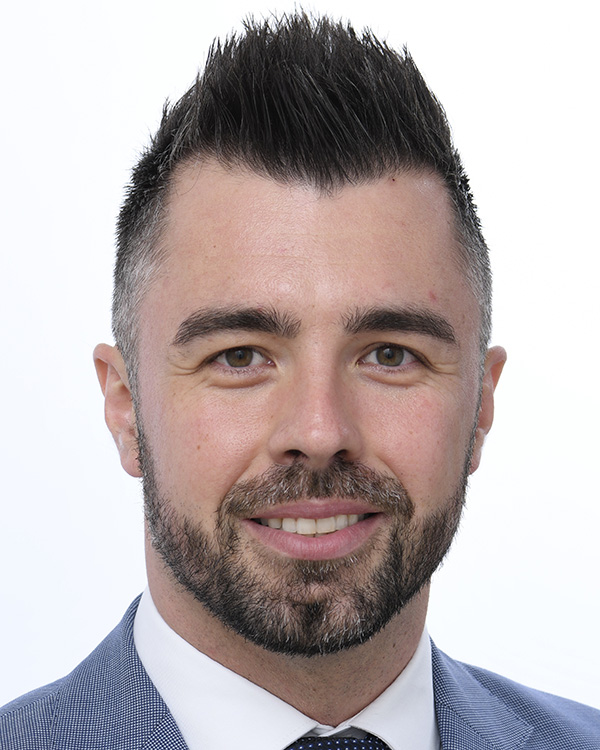
 Debate contributions by András Tivadar KULJA
| Rank | Name | Country | Group | Speeches | |
|---|---|---|---|---|---|
| 1 |
|
Lukas SIEPER | Germany DE | Non-attached Members (NI) | 321 |
| 2 |
|
Juan Fernando LÓPEZ AGUILAR | Spain ES | Progressive Alliance of Socialists and Democrats (S&D) | 280 |
| 3 |
|
Sebastian TYNKKYNEN | Finland FI | European Conservatives and Reformists (ECR) | 247 |
| 4 |
|
João OLIVEIRA | Portugal PT | The Left in the European Parliament (GUE/NGL) | 195 |
| 5 |
|
Vytenis Povilas ANDRIUKAITIS | Lithuania LT | Progressive Alliance of Socialists and Democrats (S&D) | 183 |
All Contributions (41)
 European Action Plan on Rare Diseases (debate)
Date:
03.04.2025 07:47
| Language: HU
I am pleased that, here in the European Parliament, there is at least verbal support for people suffering from rare diseases. At the same time, I would like to ask, if it is really important for your government to help patients with rare diseases, then why was the assessment of individual fairness outsourced from a public body to an opaque foundation? Why was he outsourced to a foundation that does not have to comply with the legal requirements that applied to these applications so far? And why is it that so many families have already received negative responses from this foundation? Why did they do that?
European Action Plan on Rare Diseases (debate)
Date:
03.04.2025 07:21
| Language: HU
Dear Mr President, Two names: Zente, Adin. Two Hungarian children whose stories have been circulated in the Hungarian media. They also suffer from a rare disease, like their 30 million counterparts in Europe. They were lucky: Through community collaboration, they have access to a life-saving cure. However, not everyone is so lucky. Beni, Dominik: young, cheerful, five-year-old children suffering from lethal muscular dystrophy. It's something that has therapy, but it's still unattainable in Hungary. And their parents get up every day in such a way that if they do not manage to collect hundreds of millions of forints, their child will not live to adulthood. The Hungarian government will not help them. Not only does he not help, but he has outsourced the licensing of life-saving, uniquely equitable drugs to a foundation, in order to escape the law and save children's lives. Coordinated action is therefore needed, a common solution. Even if a Member State cannot or does not want to help children and adults with rare diseases, we should help them. Building on the European Reference Networks, we need to ensure that research and drug development are accelerated, that professionals are trained, that centres are built and that cross-border treatments are provided. This requires a Commission action plan, the dedication of Parliament and the joint work of the Member States. Let the new stories tell us about the lives of the children who were saved together.
Recent legislative changes in Hungary and their impact on fundamental rights (debate)
Date:
02.04.2025 15:25
| Language: HU
You are talking about child protection, while according to the Ministry of the Interior, there are already 300 babies in hospital who cannot be accommodated in child protection. These children are 2-3 months old and have already forgotten to cry, because they know that no one cares about them. Do you talk about this? You who appointed a president of the republic whose first act was to pardon a pedophile's criminal assistant? And I haven't even talked about Bese's father, who consecrated Viktor Orbán's office while attending gay orgies, videotaping them and posing with you. She was supported, and the children were left alone.
Social and employment aspects of restructuring processes: the need to protect jobs and workers’ rights (debate)
Date:
12.03.2025 16:00
| Language: HU
Madam President, I'm sorry. Ladies and gentlemen, allow me to ask you a question. How many people would feel safe if they lost their jobs tomorrow? All over Europe, especially in Central and Eastern Europe, this is not a theoretical issue, this is everyday reality. Uncertainty in the workplace is growing. Unpredictable contracts, excessive bureaucracy and outdated registration systems leave many people without work or assistance. And remember, these are not mere statistics, we are talking about real people, families and the future of their children. Workers deserve stability, fair wages and adequate protection. And to do that, we need to act. First, we need to modernise employment services. Office systems are needed to better match the skills and needs of jobseekers with forms of employment, while developing modern and dynamic retraining systems. We need to invest in rural infrastructure so that workers feel safe and do not have to choose between their work and the modern education of their children. New frameworks are needed to strengthen local economies, develop transport networks and create jobs where people live. If we want a truly competitive Europe, we need to look not only at economic indicators, but also at people's quality of life.
Presentation of the proposal on Critical Medicines Act (CMA) (debate)
Date:
11.03.2025 14:14
| Language: HU
Madam President, I'm sorry. We all remember the darkest moments of the pandemic, when our Member States and their hospitals desperately tried to get medicines and people died because of shortages in supply chains. With a fragmented regulatory environment, without cross-border strategies, we lose valuable time in times of crisis, while Member States compete with each other. It is clear to all of us that we need to work together to ensure the provision and equitable distribution of life-saving and critical medicines. The EU must take the lead in providing accessible and affordable medicines to our citizens. To this end, it is essential to harmonise regulation and create an environment conducive to innovation, including antibiotic research. We need to preserve and strengthen pharmaceutical production in Europe to reduce our vulnerability. For critical medicines, we need to set up a common contingency reserve to ensure that there are no temporary shortages of medicines in the Member States. And we need to pay special attention to orphan drugs and the treatment of rare diseases. This requires coordinated action and funding programmes across Member States. The Critical Medicines Act guarantees these and ensures that shortages of medicines experienced during the pandemic will no longer occur in Europe. Because at the end of the day, the only thing that matters is whether the medicine is available to save the patient's life or not.
Silent crisis: the mental health of Europe’s youth (debate)
Date:
12.02.2025 20:06
| Language: HU
Dear Mr President, As a doctor and a fresh parent, I watch with concern as a silent epidemic sweeps across Europe. It is not spectacular, but it puts an enormous burden on young people and families. Social media crawling into every moment of our lives, the increasing availability of age-restricted content and online harassment pose new, unknown challenges for all of us. One in five young people in Europe suffers from mental health problems. In Hungary, nearly 16% of young people suffer from psychiatric disorders. The number of young people aged 15 to 25 who claim to be lonely has quadrupled in recent years, while one in five deaths in the same age group is self-inflicted. The care system is overwhelmed, and families often only get help in private care if they can afford it. Early detection of problems requires not only private care, but also well-trained professionals and an appropriate school environment. We need to speak openly and honestly about these problems, and we need European-level cooperation and modern methods for solving them. Because every child deserves to be helped and become a healthy, happy adult.
The need to address urgent labour shortages and ensure quality jobs in the health care sector (debate)
Date:
11.02.2025 12:40
| Language: HU
Dear Mr President, The European health and social system lacks 1.5 million professionals. In five years, that number will rise to 4 million. With 600,000 doctors, 2.3 million nurses and 1.1 million social workers, Europe will have less than it needs. The shortage of nurses and doctors is particularly acute in the Central and Eastern European region, including Hungary, where 1000 general practitioners are missing from the healthcare system. 1.5 million people do not have access to primary care of sufficient quality and quality, while the number of remaining general practitioners is approaching 60 years of age with their average age. Rural hospitals and paediatric surgeries are closing, while doctors, nurses, patient carriers and assistants are overwhelmed, overachieving to the extreme and trying to keep the healthcare system together. Under the Treaty, Member States are responsible for their own health systems, including ensuring the number of health workers. However, it is clear that some Member States are unable or difficult to cope with this. European doctors, nurses and, above all, patients need more attention. The challenges are similar across Europe. We must therefore act together at EU level, because if we do not, it could cost patients their lives and lead to disaster.
Heat record year 2024 - the need for climate action to fight global warming (debate)
Date:
20.01.2025 18:43
| Language: HU
Dear Mr President, 2024 was one of the hottest summers in history. Climate change is no longer just a distant threat, it is part of our daily lives, and it is taking lives within the walls of hospitals. In Hungary, summer heatwaves have created life-threatening conditions. As a doctor, I've seen elderly patients in a 30-35-degree ward fight for their lives on countless occasions. Doctors and nursing colleagues reported that they are extremely burdened and endanger patients' recovery from high temperatures. High temperatures put an extreme strain on the cardiovascular system, slow wound healing, increase the risk of infection, and lead patients and doctors to mental and physical exhaustion. We need to fight climate change together, which is why I was a member of the European Parliament delegation to the COP-29 climate summit. At the same time, Member States need to prepare their economies and social systems for the effects of climate change. Hungary has failed in both areas, and the Hungarian government has failed. They limit the use of green energies and play out hospital renovations as oligarchs instead of tailoring the hospital care system to patients' needs on a professional basis. We need to act urgently and together. Climate change is part of our daily lives, and every moment we waste puts people's lives at risk.
Need to update the European strategy for the rights of persons with disabilities (debate)
Date:
19.12.2024 08:39
| Language: HU
My fellow Member, I believe that I have provided the facts and precise figures, which continue to show that those who take care of their relatives at home receive between EUR 100 and 200 per month, an unjustly low amount. If you, your government, really care about the situation of persons with disabilities and the situation of their families, then as a first step your support should be increased, because your relatives give their lives to help their relatives with disabilities, and you do not take this into account, you do not support them.
Need to update the European strategy for the rights of persons with disabilities (debate)
Date:
19.12.2024 08:37
| Language: HU
Madam President, I'm sorry. The current Hungarian government has abandoned people with disabilities, their families and the relatives caring for them at home. The support they receive is unjustly low. Home nurses receive between €100 and €200 gross per month, which is below the minimum subsistence level in net terms. This is not only a human but also a national failure. Equal opportunities for young people with disabilities also paint an alarming picture: 30-40% of 18-24 year olds are forced to drop out of school prematurely, compared to only 10% of non-disabled people. The situation in the labour market is also appalling: the employment rate of people with disabilities is 30% lower than that of non-disabled people. This means that there are tens of thousands of people who cannot use their skills and knowledge. As a doctor, I have also seen that healthcare management and the healthcare system in Hungary do not support or provide them with adequate care. I therefore call on the Hungarian Government to pay attention and take care of people with disabilities and, as a first step, to increase the home care allowance to a level worthy of living.
Recommendation on smoke- and aerosol-free environments (debate)
Date:
27.11.2024 20:07
| Language: HU
Dear Mr President, There is growing scientific evidence that e-cigarettes and emerging nicotine products pose significant health risks. A serious problem is that these products have become fashionable among young people. They are often claimed to be less harmful without evidence. They are advertised as veiled fashion and harmless habit, while underestimating their harmful effects on young people. However, the reality is that these products can lead to addiction and long-term physical and mental harm. Proper regulation, education and prevention are key to ensuring that young people are adequately protected and aware of the risks. The EU must send a clear message. We must protect the health of our citizens and protect young people and children from addictive products.
Outcome of COP 29 and challenges for international climate policy (debate)
Date:
26.11.2024 17:27
| Language: HU
No text available
UN Climate Change Conference 2024 in Baku, Azerbaijan (COP29) (debate)
Date:
13.11.2024 18:25
| Language: HU
Dear fellow Members, The climate conference has been held every year since 1995. Yet we see that the effects of climate change are posing increasingly serious challenges. Severe droughts are rendering our agricultural lands infertile, and flash floods affecting the increasingly frequent Carpathian Basin and the Iberian Peninsula are causing enormous damage to agriculture, threatening the homes of our inhabitants and claiming innocent lives. For more than a year, the European Union has been warning us about the health impacts of environmental change and climate change. Nevertheless, some governments, including the Hungarian government, are ignoring the dangers. Substantive action remains to be taken, putting the lives of our children and grandchildren at risk. I consider it important to be an active participant of the climate conference as a member of the European Parliament of the Tisza Party, to represent the interests of the Hungarian and European peoples, so that together we can create a better and more livable planet.
Foreign interference and hybrid attacks: the need to strengthen EU resilience and internal security (debate)
Date:
23.10.2024 18:02
| Language: HU
Dear Madam President, Fidesz MP András László serves Russian interests even on the Day of Remembrance of the Heroes of 1956. In September 2021, the Director-General of the Hungarian National Security Service reported that the Russian secret service had compromised the communication system of the Hungarian Ministry of Foreign Affairs. More than 4,000 workstations and more than 900 servers were affected. The Russian intelligence services had access to all sensitive data. Despite this, after three years, the Hungarian government has not provided an answer as to how this could have happened and what steps it has taken to prevent further intrusions. On behalf of the Hungarian people and all European citizens, I call on you to stand up for whose interests you are serving and how you are defending sovereignty, while at the same time leaving our country and Europe at the mercy of Russia. We cannot allow Fidesz to desecrate the memory of the 1956 heroes over and over again!
World Mental Health Day - need for a comprehensive EU strategy on mental health (debate)
Date:
10.10.2024 09:33
| Language: HU
Dear Mr President, October 10 is World Mental Health Day. Mental health, that is, brain health, is a fundamental right for all people in neurological and mental terms. Research shows that one in four people in Europe suffers from mental health problems in their lifetime. In other words, in Europe, on our continent, more than 100 million people are affected by mental health problems. As a doctor in Hungary, I have had the opportunity to experience the increasing challenges of providing care for elderly people with dementia, increasing depression among working-age adults, and the limited rehabilitation of Hungarians suffering from mental illness. Healthcare professionals, nurses and relatives caring for their family members are under increasing pressure every day. Depression has been one of the leading causes of unemployment across Europe since the COVID-19 outbreak. In Hungary, this situation is exacerbated by political and social circumstances. There is no better proof of this than that Hungary has one of the highest suicide rates in Europe. In our country there are only eight psychiatrists per 100,000 people. This is far less than the EU average. Furthermore, psychotherapy, which is an essential treatment for anxiety and mood disorders, is largely inaccessible in the public service system. EU countries are not investing enough in mental health, which is one of the biggest challenges of our time. It is time for greater support for large-scale research, more dedicated resources and a unified EU strategy.
Urgent need to revise the Medical Devices Regulation (debate)
Date:
09.10.2024 18:41
| Language: HU
Dear Madam President, Before I was elected to the European Parliament, I worked as a surgeon in Hungary. In a country without basic medical supplies, without toilet paper and without soap in hospitals, where health indicators are deteriorating year after year, where tens of thousands of nurses and thousands of doctors are missing from the health care system. Most medical devices are ageing, and underfunded healthcare facilities cannot finance new devices because they owe billions to suppliers. It is not a very encouraging situation for my country's ageing society. The EU revision of the Medical Devices Regulation is a very important matter that cannot be postponed. Urgent action is needed to ensure that patients continue to have access to life-saving and quality-of-life technologies not only in Hungary but also in Europe. We need to make licensing predictable, more transparent and more efficient. If we do not simplify certification processes, reduce administrative burdens and harmonise national regulations, we will lose valuable time and even lives. These measures are essential to keep innovative products in the EU and make them available. Immediate action is vital for the recovery of patients and to support the work of healthcare professionals, because in an operating room, in a critical situation, one thing matters: Is there a way to save the patient's life or not?