 Debate contributions by Anna STÜRGKH
| Rank | Name | Country | Group | Speeches | |
|---|---|---|---|---|---|
| 1 |

|
Lukas SIEPER | Germany DE | Non-attached Members (NI) | 220 |
| 2 |
|
Sebastian TYNKKYNEN | Finland FI | European Conservatives and Reformists (ECR) | 208 |
| 3 |
|
Juan Fernando LÓPEZ AGUILAR | Spain ES | Progressive Alliance of Socialists and Democrats (S&D) | 177 |
| 4 |
|
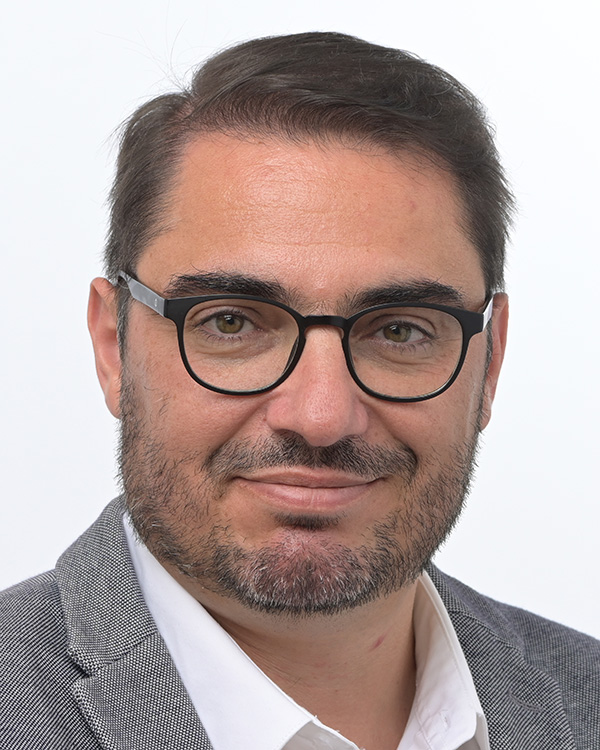
João OLIVEIRA | Portugal PT | The Left in the European Parliament (GUE/NGL) | 134 |
| 5 |
|
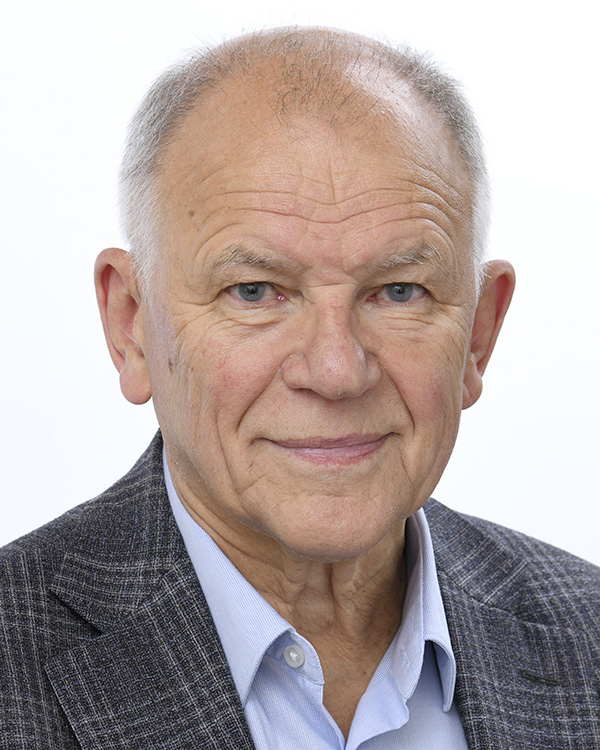
Vytenis Povilas ANDRIUKAITIS | Lithuania LT | Progressive Alliance of Socialists and Democrats (S&D) | 130 |
| 6 |
|
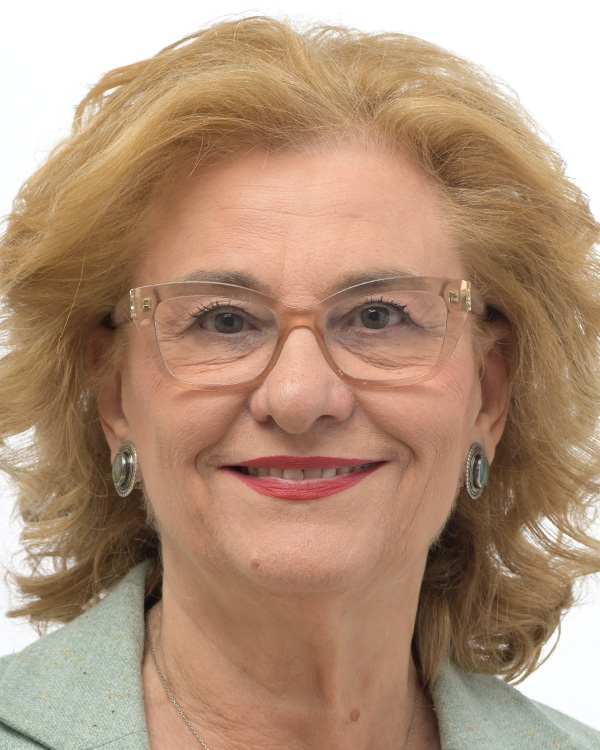
Maria GRAPINI | Romania RO | Progressive Alliance of Socialists and Democrats (S&D) | 112 |
| 7 |
|
Seán KELLY | Ireland IE | European People's Party (EPP) | 89 |
| 8 |
|
Evin INCIR | Sweden SE | Progressive Alliance of Socialists and Democrats (S&D) | 85 |
| 9 |
|
Ana MIRANDA PAZ | Spain ES | Greens/European Free Alliance (Greens/EFA) | 76 |
| 10 |
|
Michał SZCZERBA | Poland PL | European People's Party (EPP) | 73 |
All Contributions (25)
 Outcome of the UN Climate Change Conference - Belém (COP30) (debate)
Date:
27.11.2025 10:01
| Language: EN
Mr President, Commissioner, EUR 111 billion. That is 37 000 wind turbines. That is more than two million batteries. That is a new European electricity grid. But instead, we're spending EUR 111 billion a year subsidising fossil fuels. We are throwing money at a technology that was already outdated yesterday. I am aware that we will not shut down gas turbines or get rid of petrol cars overnight, but that is why we need a plan to, once and for all, transition to an energy system that provides European citizens with clean air, European jobs and lower bills. After this shameful show in Belém, it is time for all EU countries to put action to words. So, Bulgaria, Croatia, Cyprus, Czechia, Estonia, France, Germany, Greece, Hungary, Italy, Latvia, Lithuania, Malta, Poland, Portugal, Romania, Slovakia and Sweden, step up your game. We are expecting to see you in Colombia.
Outcome of the UN Climate Change Conference - Belém (COP30) (debate)
Date:
27.11.2025 09:54
| Language: DE
No text available
Ending all energy imports from Russia to the EU and closing loopholes through third countries (debate)
Date:
22.10.2025 21:02
| Language: DE
Mr President! Russian gas was the most expensive gas we have ever bought, says OMV CEO Stern. For years, the FPÖ has tried to make us believe that we are benefiting from cheap Russian gas – an untruth from which only one person benefits, and that is Putin. The truth is that this Russian gas was the most expensive we've ever bought. Russian gas, which has cost us billions, which has flowed directly from our purses to Putin. But it also cost us our independence. And Ukraine? It costs our Russian gas the most valuable human life. Only today Russia bombed a kindergarten in Ukraine again, with drones that are also financed with European money. It is high time that we finally throw the Russian gas shackles away from us once and for all, break them once and for all and make sure that we will never again be dependent on the warmonger Putin in the future.
UN Climate Change Conference 2025 in Belém, Brazil (COP30) (debate)
Date:
22.10.2025 18:35
| Language: DE
Madam President, To the Right in this House: You always say you are for people, but every word you make here shows the exact opposite – that you obviously don’t care about people. Obviously, you don't care if people run out of drinking water because our water reserves are drying up. Obviously, you don't care if thousands of people lose their homes because of the increasingly hungry flames and unbridled floods. Obviously, you don't care if over 60,000 people die from the heat – older, vulnerable people you always claim to want to protect. They may not care, but I don't care if my daughter still finds a future in which she can live. It's too late to do the minimum. It is time for us to be bold, determined and ambitious. We still have our future in our own hands, but we also have to act accordingly.
Promoting EU digital rules: protecting European sovereignty (debate)
Date:
08.10.2025 14:52
| Language: DE
It is very exciting, because especially in my own country, Austria, we hear so often – especially from the right, from the FPÖ – how evil parties are. But if you look at who implements the bans, it's these FPÖlers: Prohibition of genders, prohibition of veggie burgers and so on and so on. So yeah, I'm afraid the real banning parties are sitting over there.
Promoting EU digital rules: protecting European sovereignty (debate)
Date:
08.10.2025 14:50
| Language: DE
Madam President, With every iPhone, we hold a piece of Trump in our hands – and so do our children. Every time they look on Instagram, a piece of their privacy flows across the Atlantic, right into the hands of tech autocrats and data despots who share neither our laws nor our values. But it is clear: Not Google governs Europe, not TikTok educates our children, and not Elon Musk determines our freedom of expression. We need to get control back. We have created the tools for it. But now we also have to defend them. All companies that want to make money with us must also abide by our rules. That is why we remain clear: our data, our laws!
Promoting EU digital rules: protecting European sovereignty (debate)
Date:
08.10.2025 14:50
| Language: EN
Madam President, I want to thank you for taking all the blue cards and thereby allowing a real debate in this Chamber.
Common agricultural policy (joint debate)
Date:
07.10.2025 15:00
| Language: DE
Madam President, There is no meat in the meat tomato. There is no cheese in the liver cheese, cat tongues are not made of cats. There are no snails in the nut snail, no pigs in pork ears, no trees in the tree cake and no potatoes in a marzipan potato. There is no meat in the Shokovurst. And in the children's schnitzel? Well, I think you understand what I'm trying to get at. That was now a rather long sausage of comparisons and examples. The Duden defines sausage as follows: a food made from crushed meat stuffed into intestines – or something that looks like a sausage in the form of an elongated roll. So please, let's trust the consumers and let's stop with this sausage populism.
Intergenerational fairness in Europe on the occasion of the International Day of Older Persons (debate)
Date:
06.10.2025 17:59
| Language: DE
Madam President, Commissioner, ladies and gentlemen! We know what we owe to the older generations: the reconstruction of our countries, our post-war democracies – the basis for our prosperity today and also the cornerstone of this common Europe from which we can benefit today and on which we can also work. But we must also not close our eyes to what else we owe to the older generations: climate change, which was already known at the time and where nothing was done; a debt backpack, worth 56 000 euros, which my daughter had to carry before she could even walk; a pension system that may just be running out, but in any case has nothing left for us. I'm sorry, but this is not generational justice. Dear older people, we are grateful to you, but we also need you. Join us as we fight for our future and together we will make Europe a project of the next generations.
Implementation and streamlining of EU internal market rules to strengthen the single market (debate)
Date:
11.09.2025 09:03
| Language: DE
Madam President, Our common market is our strength – why do we stand in our own way? It should be clear that if I start a company in Germany, I can also work in Sweden. It must be clear that if I put a product on the market in Poland, I can sell it exactly as it is in Spain. Let's break down the barriers! National walks alone must finally be a thing of the past. It is clear: What applies to products must also apply to people. It cannot be that I am training in Austria, but then I am not allowed to work in France; Of the 6 000 protected professions, only seven are still recognised across Europe. Let us finally create this one market for products and services that can be the basis not only for our common Europe, but also for our prosperity; which can be the basis for opportunities, for people, for companies. Let's finally achieve what we have been promising in Europe for a long time!
A new vision for the European Universities alliances (debate)
Date:
11.09.2025 06:57
| Language: DE
Dear Mrs Dieringer, you say that Hungary makes education without ideology. It was Hungary, in particular, that forbids LGBTQ content in schools, in school books. What is it other than bringing ideology to schools, banning real educational content? Tell me where else this is happening in Europe, I'd be interested!
A new vision for the European Universities alliances (debate)
Date:
11.09.2025 06:46
| Language: DE
Mr President! Over the ocean, Trump puts the shackles on science: Students are expelled, scientists lose their money, and universities are harassed. It is precisely the science that we so urgently need today; The science that today provides the solutions to our problems of tomorrow. And it is precisely this science that can flourish only in freedom. This is precisely why we are working here on our side of the ocean to expand and strengthen this freedom step by step: The Bologna Process, Erasmus+ and thus the university alliances have laid an important foundation on the path towards a genuine education union in a freedom of knowledge. The basis is laid, but there is still a lot to do: the mutual recognition of diplomas, a genuine European diploma, joint funding, European scholarships, joint research projects; the freedom to learn, to research with whom I want, where I want; the cooperation of our universities – this creates real opportunities, opportunities for students, for researchers and ultimately for our future. Thank you for this important report!
Product safety and regulatory compliance in e-commerce and non-EU imports (debate)
Date:
07.07.2025 17:57
| Language: EN
Mr President, Commissioner, first I want to thank colleague De Meo for the very good cooperation on this very important report. Now, speaking as a citizen, as a customer, when I go into a shop, I expect at least three things: I expect the products that I buy to be safe; I expect them to be what I chose; and I expect that if something is wrong, I can go and complain. So why should this be different when I shop online? But far too often we see that when we buy online, the products that we choose are not what they promise to be once they arrive at our doors, especially when they come from third countries and especially when they come from China. Far too often they even turn out to be dangerous. When we look at toys that include harmful chemicals, when we talk about exploding chargers or cosmetics that lack any sort of labelling. And if you want to complain about that, then there is no one to turn to. This cannot hold. When someone wants to sell in the EU, they need to adhere to European law. And we have to make sure that these laws that we create are airtight and cannot be circumvented, as they are right now. We have already got great instruments, as we have heard with the DMA and the DSA. We need to implement them. Yes, there are also still some holes that we need to fill, but I'm sure and I'm certain that this House, together with the Commission, will do so in the next few months.
Electricity grids: the backbone of the EU energy system (debate)
Date:
18.06.2025 16:57
| Language: EN
Madam President, I would like to say thank you, Commissioner, and thank you, colleagues, for this debate. Now, I heard that the far-right in this House is quite worried, so let me address some of those worries. You seem to be quite shocked by the numbers of the investment needed: EUR 584 billion by 2030. Yes, that is a lot of money. But let me put it in perspective: EUR 1.8 trillion by 2030 is what we will spend on fossil fuel imports if we don't change our system. And you as patriots, as nationalists, you must be pleased to hear that we can invest in a grid with only EUR 584 billion, keeping that money in Europe instead of sending EUR 1.8 trillion at the same time to other countries, keeping it in Europe, benefiting European companies, benefiting European workers. I also heard the worry that we need to make sure that interconnections really serve the Member States. Now, I am pleased that this shows support for our report because, let me quote, 'we are asking for binding interconnections based on a needs assessment, to make sure that we build interconnectors that are needed and not just thought of'. I also heard a lot of worry about the energy mix, about nuclear being demonised. Well, I've read this report a couple of times and let me assure you: nowhere in this report is there a demonisation of nuclear. Rather, there is even a mention of the prerogative of nation states to choose their own energy mix. And let me be very clear, when Ms Knafo was saying, 'you don't want nuclear' – well, yes, in my country, for example, we don't want nuclear. But again, isn't that great? It's our prerogative to choose our own energy mix. I also heard worries about fishers suffering from offshore wind; however, we see that they are actually thriving in offshore farms. So, let me thank you again for this debate. I hope I lifted some of those worries, and I'm really looking forward not only to the vote tomorrow, but to working with all of you on the implementation and with you, Commissioner, and the rest of the Commission on getting this forward.
Electricity grids: the backbone of the EU energy system (debate)
Date:
18.06.2025 15:13
| Language: EN
Mr President, Commissioner, just one year ago, I started my days just like everyone else: unplugging my phone, boiling my kettle for my tea and starting my computer to check my emails. Never really thinking about how the electricity that was powering my day actually got into my home. I just took it for granted. Well, over the past year, I've spent my time learning everything I could about our electricity system, how our grids actually really work, remembering the difference between volts and watts and amps and hertz, and realising how simple yet complex electricity actually is. And it has been an absolute pleasure. Now my days still start the same unplugging my phone, boiling my kettle, starting my computer. But now all these processes feel a little bit more special, knowing what it really takes to keep the power flowing. Now I take these ordinary routines for what they are, daily reminders that our electricity grids are in fact the backbone of the EU energy system. The reasons for the need to modernise and expand our electricity grids are pretty straightforward. The ongoing electrification of our industry, our heating, our mobility is putting pressure on the existing systems. The intent to make sure that this electrification is sustained by clean energy sources, and the fact that soon about 70 % of renewables will be connected directly to the distribution grid, demands our existing grid to adapt. But even without these developments, there is need for action. Considering that around 40 % of distribution grids are now over 40 years old. Having established why we need to do something, let's look at what we actually need to do. With high investments at stake and a clean energy union to win, we need to make sure that this grid buildout is done as efficiently as possible. That means strengthening the planning process to make sure that it is robust and integrated, combining the bottom‑up knowledge and responsibility of the system operators with a stronger role for ACER to make sure that the European grid becomes increasingly interconnected. We also need to put a stronger focus on the modernisation and digitalisation of the grids, and create a regulatory framework that will make alternative options to physical build out more economically feasible. Even if we manage to ensure that the buildout is done as efficiently as possible, it is clear that this comes with a price tag. Estimates show that around EUR 584 billion will be needed in the investment in grids by 2030. So we need to strengthen CFE, make sure that national funds are available and proportionately used for grids, and we need to mobilise private capital. But through strengthening the European supply chain and job market, we can make sure that those investments actually benefit European companies and European workers. But we have to be aware that the increase in interconnection can only be successful if we manage to make sure that the individual actors have mechanisms that make sure that the costs are equally as fairly allocated as the benefits are. So a reform of the cross-border cost allocation and the Inter-TSO compensation mechanism is of the utmost importance. It is high time this Parliament puts forward a position and provides a basis for the Commission to use in preparing the grid package, and I want to use this moment to thank sincerely all the shadow rapporteurs, but particularly also their teams, for all the work that we've put into this over the last few months and this wonderful cooperation we were having. Together we are building the energy system of tomorrow, so let's make sure we don't connect it to the grids of yesterday.
Resilience and the need to improve the interconnection of energy grid infrastructure in the EU: the first lessons from the blackout in the Iberian Peninsula (debate)
Date:
07.05.2025 13:54
| Language: DE
Madam President, Commissioner, Minister! Five seconds, then. It took five seconds before the Spanish network collapsed and Spain and Portugal were dark. But it took about the same amount of time until the first speculations were there and, above all, until – and we have already experienced it again here in this House – this situation was used for populism and ideological trenches, ideological struggles against renewables and against the energy transition. The energy transition would have failed. Yes, the investigations are not yet complete, but what we have definitely seen is that we have a grid, a grid that is not and was not prepared for today's realities. What we have seen is that the energy transition can only work if we not only focus on the expansion of renewables, but also expand storage and power grids in harmony. I found it particularly exciting to hear then that supposedly the Energy Union failed, that exactly the interconnectors we have would have been a problem. But the opposite is true. We saw that France could help immediately because we have at least a few interconnectors. So the fact is: We need to invest in our electricity grid, we need strategic planning, we need more interconnectors to have a real European grid. And we also need fair financing so that the budgets and, above all, the transit countries do not suffer as a result. The energy transition needs a grid that it has grown.
Energy-intensive industries (debate)
Date:
02.04.2025 08:56
| Language: DE
Madam President, Mr Executive Vice-President! We have a vision: A clean future where we are independent of oil despots and gas autocrats, where we drive progress and drive innovation. But to achieve this vision, we also need to start at the grassroots level, and in many cases this is the energy-intensive industry, from bricks to steel, but also new industries such as AI. Sustainable homes, but also a Europe-wide rail network and green technology - all this can only be achieved if we can also put our energy-intensive industry on a sustainable footing. And companies are ready – they are already investing heavily in the electrification of their production steps. But this electrification is only sustainable if sufficient clean electricity and the corresponding infrastructure are available. That is why we must also invest massively in the energy transition in the coming years – from the expansion of renewables to energy storage and grid infrastructure. And today is indeed a good day for that, because this seemingly dark day for our industry, this Liberation Day – as Trump calls it – is also an opportunity for us. Because Trump and his frat boys With each decree, it not only drives innovation, but also drives investments in sustainable energies out of the USA. So let's open our doors to these sustainable innovations, to these sustainable investments in the energy transition. Because we have a common vision, and it deserves the energy to become a reality.
Clean Industrial Deal (debate)
Date:
11.03.2025 20:02
| Language: DE
Madam President, Commissioner! 400 billion euros for fossil fuels flow from the European Union every year. Even today, three years after the start of Russia's war of aggression against Ukraine, we still source gas from Russia. It is all the more important that energy in Clean industrial deal It plays such an important role. The question of a complete energy transition, of a resilient, of a secure and of a sustainable energy system is not just a question of climate protection. Energy policy is security policy. We must no longer be dependent on autocrats, nor on those who would like to be. A successful energy transition with a modern, cross-border power grid secures our freedom. A true Energy Union, where the Baltics benefit from solar energy from Spain and Croatia from wind energy from the North Sea: This is a shield for our economy, for our society – no more and no less.
Competitiveness Compass (debate)
Date:
12.02.2025 14:13
| Language: DE
Mr President! Mr Executive Vice-President! Dear members! Europe's economy is under pressure, not because our companies lack ideas or commitment, but because they are structurally disadvantaged. If we want to unleash European entrepreneurship, then we must free it not only from complex rules, but above all from the shackles of expensive oil and gas. European companies pay twice as much for their energy as in the US. That's not balance. I am pleased that the Commission shows in the compass for a competitive EU that we can only drive innovation and growth in Europe and bring it back to Europe if we push ahead with the energy transition with full force. With the Holy Trinity of renewable energies, storage and grid expansion, we are not only putting our economy on a sustainable footing, but also offering cheaper and safe energy sources for our industry, our companies and also our households. Without a strong economy, Europe remains just an idea. We have it in our hands that it remains a success story.
Collaboration between conservatives and far right as a threat for competitiveness in the EU (topical debate)
Date:
12.02.2025 12:24
| Language: DE
Mr President! As an Austrian, let me say more than ever: Cooperation with the extreme right does not bring Europe any further. This should be clear to anyone who takes a look at their agenda. They want to lock us up in national fortresses, a fortress Austria. But a world of fortresses is a pretty gloomy, a pretty lonely world. They not only want to deprive our citizens of their freedom, they prevent our companies from growing beyond their own borders. And then you scold yourself as patriots? Where I come from, it's called different. This is called a traitor. They don't even hide it. If you don't see it, you don't want to see it. I find it all the more frightening when parties that are committed to Europe and appear to be advocating our common Europe turn around in the next breath and reach out to these inciters of Europe. I'm sorry, but that doesn't work out. Ladies and Gentlemen of the People's Party! Open your eyes! Whoever builds a fortress locks himself up. Whoever joins the Right betrays Europe.
EU financing through the LIFE programme of entities lobbying EU institutions and the need for transparency (debate)
Date:
22.01.2025 17:34
| Language: DE
Madam President, Again and again I hear: People deserve to know what happens to their tax dollars. I don't see it that way. Transparency is not something you have to earn first. People have a right to know what is being done with their money. Transparency is not a free choice, it is our duty. And we live in times when more and more people are losing faith in politics. No wonder we hear about bought influence and non-transparent money flows. There can only be one answer: Full transparency at all levels. And that is why I invite everyone – from politics to advocacy to NGOs – to do the same to us neos. We disclose all our revenues and expenses, from the largest donors to the oat milk packer. Only in this way can we regain people's trust, because for us must apply: If you've done nothing wrong, you have nothing to hide.
Restoring the EU’s competitive edge – the need for an impact assessment on the Green Deal policies (topical debate)
Date:
18.12.2024 13:27
| Language: EN
Mr President, Madam Commissioner, dear colleagues, we know what the far-right forces in this House want. They want to go back on the Green Deal. But what does that mean? Going back on the Green Deal means going into a future of floods, of heatwaves, of extremes; a future of water shortages, of ruined crops; a future of high costs, both financially and in human lives. The Green Deal is not only about fighting climate change. It's about creating a better life, a better future for all Europeans. So how do we make it happen? First and most importantly, we cannot go back on our goals – not just for our climate, but for our economy, which needs predictability. Second, we need to make sure that the implementation is made as easy and unbureaucratic as possible. Third, we must make the Green Deal work for everyone, from small businesses to big industry, from urban centres to rural communities. Now is not the time to go back. It's a time to pave the way.
A European Innovation Act: lowering the cost of innovating in Europe (debate)
Date:
16.12.2024 19:49
| Language: DE
Mr President! Welcome, Commissioner! We wanted to make the EU the most competitive and sustainable dynamic knowledge-based economy in the world as early as 2000 with the Lisbon Strategy. Then again in 2010, then in the European Innovation Agenda 2022 and today with the Innovation Act. Again and again the same goals, again and again the same words. Now it is up to us, now it is up to you, Commissioner, to make sure that this time the consequences are different. I've heard a lot about you before, which has the potential to make Europe a real hub of innovation, where private venture capital flows, where laws not only allow but encourage innovation, and where ideas can play in sandboxes and then grow. The Innovation Act There must be no empty wish for the Christ child. Together, we must make sure that the ideas that are born here are also implemented here in Europe and then enrich the whole world from Europe.
A stronger Europe for safer products to better protect consumers and tackle unfair competition: boosting EU oversight in e-commerce and imports (debate)
Date:
21.10.2024 18:44
| Language: DE
Mr President! Yes, in almost every discussion about the EU there is a word like the Amen in prayer: Regulation. The EU as the world regulatory champion and regulation as the ultimate opponent of innovation, following the motto "You, happy Europe, regulate". There is actually an important objective behind the regulations: to protect and support people and companies, to ensure that they are not handed over to producers, to trample on the laws and, in the end, to make a profit even with the lives of their consumers. For this, however, we must make the right regulation, and for this we must also dare to omit sometimes obstructive regulations. We need to give people the assurance that the products they buy online in Europe do not endanger their health or their lives. We must ensure that the rules that apply to European producers also apply to products that come into our households from third countries in our country. We need to make sure that European rules also apply at European level and are not interpreted 27 times differently. The goals are right, the road is still bumpy. But yes, “You happy Europe – regulate”.
State of the Energy union (debate)
Date:
17.09.2024 14:53
| Language: DE
Mr President, Commissioner, Ladies and Gentlemen, Ladies and Gentlemen, Ladies and Gentlemen! So Europe is gradually withdrawing from Russian gas. All of Europe? Not all of Europe. Because a small country in the heart of Europe called Austria is still firmly in Russian hands. Here we have not seen any change for years, no centimeter of movement. This is despite the fact that this European Union, this House, has given us every opportunity to act here. No, this is not an Austrian question, this is a European question, because as long as even one country is dependent on Russia, Europe is dependent on Russia. This makes it all the more important that we continue to move step by step towards our common energy union in the coming years. What is the Energy Union? This is nothing more than the possibility of using European grids to ensure that the excess energy from wind power in Belgium or solar power from Spain goes where we really need it. This means that our energy will be cheaper. This means nothing more than that our energy and electricity costs will fall and our money will stay where it belongs, namely in Europe. It means nothing more than that our energy and electricity costs will pay for our European energy transition and they will no longer pay for Russian bombs raining down on hospitals and kindergartens in Ukraine.