 Debate contributions by Christophe CLERGEAU
| Rank | Name | Country | Group | Speeches | |
|---|---|---|---|---|---|
| 1 |

|
Lukas SIEPER | Germany DE | Non-attached Members (NI) | 239 |
| 2 |
|
Sebastian TYNKKYNEN | Finland FI | European Conservatives and Reformists (ECR) | 219 |
| 3 |
|
Juan Fernando LÓPEZ AGUILAR | Spain ES | Progressive Alliance of Socialists and Democrats (S&D) | 200 |
| 4 |
|
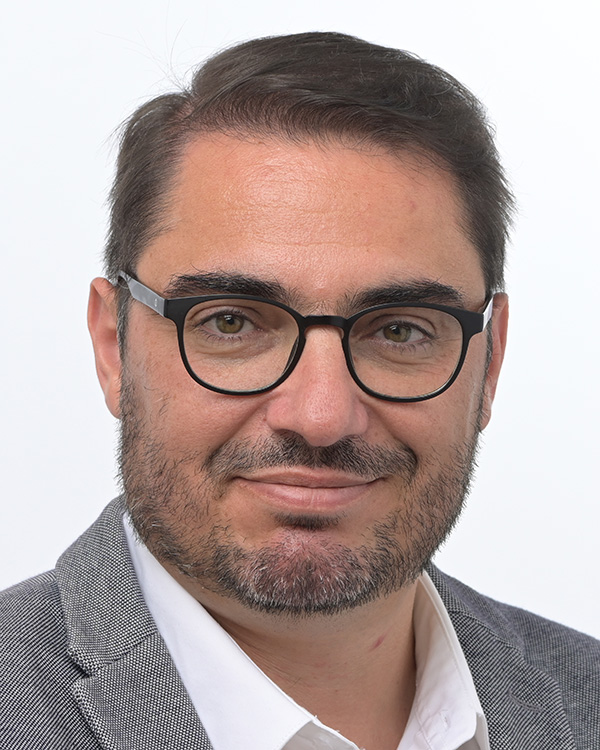
João OLIVEIRA | Portugal PT | The Left in the European Parliament (GUE/NGL) | 148 |
| 5 |
|
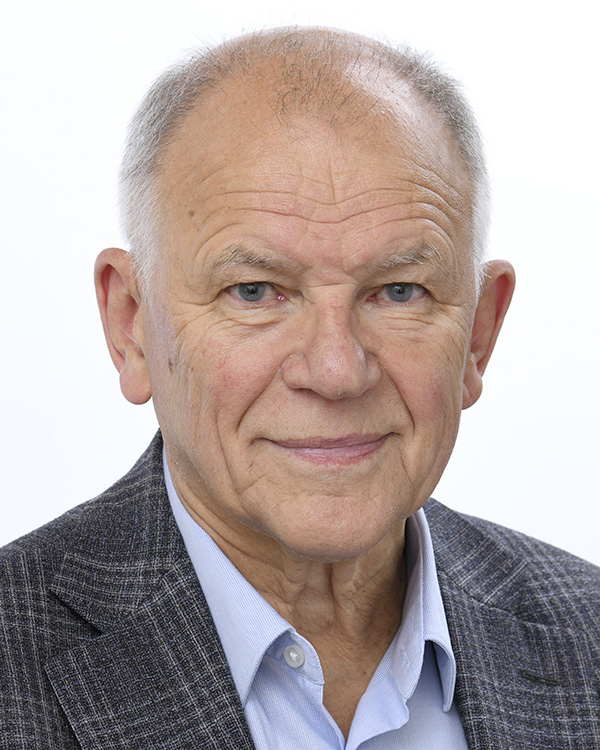
Vytenis Povilas ANDRIUKAITIS | Lithuania LT | Progressive Alliance of Socialists and Democrats (S&D) | 146 |
| 6 |
|
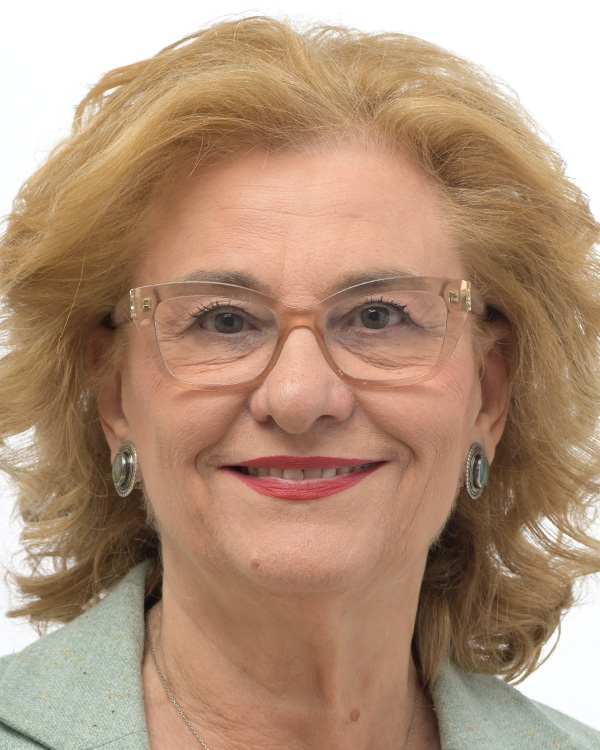
Maria GRAPINI | Romania RO | Progressive Alliance of Socialists and Democrats (S&D) | 121 |
| 7 |
|
Seán KELLY | Ireland IE | European People's Party (EPP) | 92 |
| 8 |
|
Evin INCIR | Sweden SE | Progressive Alliance of Socialists and Democrats (S&D) | 91 |
| 9 |
|
Ana MIRANDA PAZ | Spain ES | Greens/European Free Alliance (Greens/EFA) | 87 |
| 10 |
|
Michał SZCZERBA | Poland PL | European People's Party (EPP) | 79 |
All Contributions (36)
 EU financing through the LIFE programme of entities lobbying EU institutions and the need for transparency (debate)
Date:
22.01.2025 17:32
| Language: FR
Madam President, ladies and gentlemen, there is no scandal in Europe over the management of European funds by environmental NGOs. The only scandal would be to stifle civil society and the diversity of its voices. Yes, the same rules must apply everywhere. But if you think that these associations and NGOs should not be financed by the funds of sectoral policies, then make direct funding to allow them to play their role of counter-power and independent expertise! We need diversity, we need checks and balances, we need to face the power of money and industry with the power of citizens engaged in society. And you need it, as the Commission, if you want to bring European democracy to life and feed your work with this expertise. Last element: When all of us walk the streets of Brussels, do we feel overwhelmed by the lobbying of environmental NGOs and citizens? No. You see on all the street signs the financial lobbies, the industrial lobbies, en masse, who spend billions. So, if you want transparency, make a law to moralise public spending on lobbying at European level!
Failure of the negotiations in Busan for a UN plastic treaty and the urgent need to tackle plastic pollution at international and Union level (debate)
Date:
22.01.2025 15:15
| Language: FR
Madam President, Commissioner, my request, together with the Socialist Group, to hold this debate is to mobilise the European Parliament in support of the Commission, to resume negotiations and obtain a binding treaty on plastics, to reduce their production and eliminate dangerous products. And I hope that these deserted benches, on the right and on the far right, are not a sign of disinterest in this major subject. We know very well why the negotiations failed in Busan. They have failed because of pressure from oil lobbyists, who see plastics as a new alternative outlet in the face of the planned decline in carbon fuel consumption. So yes, if we do nothing, plastic production will double or triple by 2050, the associated greenhouse gas emissions will be multiplied by 4 and represent up to 15% of emissions. Everyone should bear in mind that 22% of existing plastics have ended up in the environment and oceans and only 9% have been recycled. Today, microplastics are everywhere: in water, in air, in our body and in our brain – yes, in your brain too. So today we need a strong mobilisation. The failure is due to the refusal of some countries to cap production, the refusal of the management of hazardous substances, the refusal of financial assistance to the countries of the South and the refusal of a majority vote (not consensus). So for the European Commission as a whole, the challenge is: make Europe an exemplary continent in restricting hazardous substances in plastics – this concerns the REACH Regulation – with associated mirror clauses to protect itself from hazardous products from the rest of the world, and develop recycling and re-use. I hope, Commissioner, that the Commission and the Council as a whole will mobilise to relaunch these negotiations and bring them to a successful conclusion. We need a binding treaty that limits the global production of plastic.
Addressing EU demographic challenges: towards the implementation of the 2023 Demography Toolbox (debate)
Date:
22.01.2025 14:37
| Language: FR
Mr MEP, can you please give me the reference to Leon Blum’s words which argued for the superiority of the white race, since you mentioned it? And since you talk about civilization, can you tell me what was the skin color of the Egyptian pharaohs and what was their geographical origin?
Addressing EU demographic challenges: towards the implementation of the 2023 Demography Toolbox (debate)
Date:
22.01.2025 14:11
| Language: FR
Mr President, I will tell you: I am a little tired of this debate which is limited to blaming women and wanting to deprive them of their rights or to refer to the issue of migration. Why doesn't anyone here, other than socialists and environmentalists, want to talk about fertility? Why does the Council and the Commission refuse to talk about fertility? Quite simply because we are being concealed from a scandal at European and global level. The scandal is that the consequence of environmental degradation is the decline in fertility of women and men, and that this is one of the major reasons for the demographic crisis. If you want to address the demographic crisis, there's a lot to do, but tackle these environmental causes. Review the REACH regulation, fight against the presence of phthalates, bisphenols and PFAS everywhere in our environment. There you will have done a service to Europe, to Europeans.
Restoring the EU’s competitive edge – the need for an impact assessment on the Green Deal policies (topical debate)
Date:
18.12.2024 11:59
| Language: FR
Mr President, Madam Vice-President of the Commission, since the extreme right is allergic to reality, I will remind her of this. There is not, there will not be economic competitiveness in countries hit by climate change, by the collapse of biodiversity, by new chronic diseases linked to pollution and dangerous products. IPBES has just pointed out that 50% of global GDP was based on nature, and all citizens and business leaders know this. The competitiveness of European industry is low-cost energy thanks to the massification of renewable energy. New nuclear is at least twice as expensive, carbon is five to ten times more expensive – at the heart of the Ukrainian crisis. The competitiveness of agriculture is restored, living and productive soil, and the future of European industry is clean and decarbonised industry, not the industry of yesterday. The right and the far right must stop lying to workers. What puts competitiveness at risk is unfair competition from China and weak demand in Europe, not the Green Deal.
Enhancing Europe’s civilian and defence preparedness and readiness (debate)
Date:
14.11.2024 08:59
| Language: FR
Madam President, ladies and gentlemen, crisis preparedness is a matter for society as a whole. This is at the heart of the Niinistö report and I think it is extremely important. We first need social cohesion and citizen mobilization, and insisting on the involvement of associations, but also trade unions, on citizen engagement in civil protection and local solidarities is an essential element. I would also like to emphasise the role of local, municipal and regional authorities, without which there is no crisis preparedness. And finally, insist on vulnerability analysis. Without understanding environmental, social and territorial vulnerabilities, we cannot adapt crisis preparedness to the realities of each territory. And we see every day that disasters do not have the same impact in one region or another. Finally, a word about the message of the far right: no European defence, no European security, no European solidarity. Their message is clear. And what does that mean? It means: Europe alone, crumbled, divided, left to external aggression and unable to respond to climate change.
Signature of acts adopted in accordance with the ordinary legislative procedure (Rule 81)
Date:
13.11.2024 14:11
| Language: FR
Madam President, my point of order is based on Rule 10(3) of our Rules of Procedure. On Wednesday, November 6, during the hearing of Mr. Costas Kadis, our colleague Mr. Droese placed in front of him, clearly for all the deputies and especially for the cameras, a red cap bearing the famous political slogan of Donald Trump. The US is our historical ally, but Donald Trump is not a friend of Europe. Like many of you, I am concerned about the progress of his ideas in this Chamber and about the possible constitution in this Parliament of a right-wing or far-right majority where his friends would weigh heavily. But for today, Madam Speaker, I would ask you to remind our colleague that such fireworks are prohibited during our work, even when they appear on clothing.
Protecting our oceans: persistent threats to marine protected areas in the EU and benefits for coastal communities (debate)
Date:
24.10.2024 13:08
| Language: FR
Madam President, Commissioner, two weeks ago, together with my colleagues from the European Parliament Intergroup on Seas, Rivers, Islands and Coastal Areas, we hosted Ocean Week in Brussels, organised by NGOs. Here is what they told us: First, there is an urgent need to mobilize to restore the health of the oceans. Secondly, there is a need to enforce existing laws – which today are not enforced – and to closely monitor how states are working on the Nature Restoration Regulation. Because 2030 is going to happen very, very quickly. Thirdly, Commissioner, the ocean and its management must be treated as an ecosystem, but this ecosystem approach is not possible under the current Maritime Spatial Planning Directive: it is therefore urgent to initiate its revision. Lately, we need a global ambition – the famous European Ocean Pact promised by Ursula von der Leyen, which will reconcile the health of the oceans with the activities of the blue economy – carried out with this Parliament, with local authorities and with all stakeholders, associative and economic actors.
One-minute speeches (Rule 179)
Date:
21.10.2024 19:42
| Language: FR
Mr President, ladies and gentlemen, on Thursday morning, I was in my hometown of Nantes, alongside the employees of General Electric, which is preparing to cut almost 400 jobs in its factory and research and development centre dedicated to the production of offshore wind turbines. More than a decade ago, when I was vice-president of my region, I worked to create this sector and showed citizens that ecology can create hundreds of jobs: workers, technicians and engineers. Today, I see these jobs disappearing because Europe and France are unable to develop offshore wind projects at a price that would make it possible to remunerate a value chain and European jobs, unable to impose European content where there is, however, significant public support. Our plants may close when we need them to equip new offshore wind farms. Meanwhile, the Chinese are building factories in Scotland and Italy to assemble wind turbines mostly made in China. We talk about industrial policy and competitiveness, but in real life we let green industries collapse and we sacrifice jobs. Will Europe finally wake up, or will it lock itself in this slow collective suicide? It is time to react and fight.
The devastating floods in Central and Eastern Europe, the loss of lives and the EU’s preparedness to act on such disasters exacerbated by climate change (debate)
Date:
18.09.2024 08:02
| Language: FR
Madam President, Commissioner, I too would like to offer my solidarity to the victims and to all the local structures, local authorities and volunteers who are at their side, to offer my greeting to the staff of the European Civil Protection Mechanism who organise European solidarity in the face of these crises, and to say, in the wake of Younous Omarjee, that yes, we need a sufficient solidarity fund, but also a repair and reconstruction fund that does not empty the coffers of cohesion policy. Again, I would like to welcome Commissioner Lenarčič's action because he has implemented the EU's disaster resilience objectives. Now we are waiting for the hearings as we are promised a European preparedness plan, a European civil defence mechanism and a European climate change adaptation plan. It will be necessary to ensure the coherence of all this and to have a real strategy of anticipation, preparation, response and adaptation. In these debates, we must denounce the hypocrisy of the extreme right which confuses the consequences and the causes, which demands a strong intervention but refuses the budgets, which refuses to accept that it is also the consequence of climate change and agricultural policies. Mr. Vondra tells us that we should not deal with mitigation, but only with adaptation, what a cynical and absurd view of things. And finally, I would like to tell you that in Africa, at the moment, there are four to five million people who are affected by floods. There are hundreds of deaths all over Africa and here too, we must stand in solidarity, we must intervene, we must stand with them and finance Africa's development and climate change adaptation policies.
Outcome of the Strategic Dialogue on the Future of EU Agriculture (debate)
Date:
16.09.2024 16:05
| Language: FR
Mr President, yes, the time for change has come. This is the first principle put forward in this report. It is a good principle and it is a good report. But now we're gonna have to take it seriously. I say this to the Commission and to my EPP colleagues: it will be necessary to go to the end of each of the ideas that are proposed. Let me take an example: question the system of aid per hectare and really do more for those who need it most, for small farms, for family farming. Will we find this in the Commission's roadmap, will the EPP defend it in this Parliament? I hope so. I understood that on the far right side, there was nothing to expect: They have no idea, no proposal. They simply want to get rid of this text, which proposes a new path for European agriculture. So yes, let us open the debate in this Parliament, but also in our countries, in our regions, with all the stakeholders, those who have reached consensus in this Strohschneider report. Let us take the consensus seriously, follow these paths and radically transform European agricultural policies.