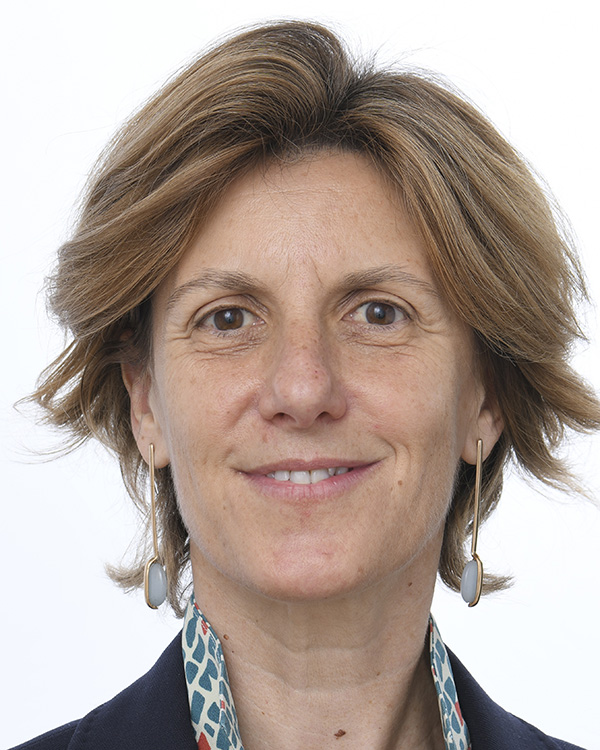
 Debate contributions by Camilla LAURETI
| Rank | Name | Country | Group | Speeches | |
|---|---|---|---|---|---|
| 1 |

|
Lukas SIEPER | Germany DE | Non-attached Members (NI) | 321 |
| 2 |
|
Juan Fernando LÓPEZ AGUILAR | Spain ES | Progressive Alliance of Socialists and Democrats (S&D) | 280 |
| 3 |
|
Sebastian TYNKKYNEN | Finland FI | European Conservatives and Reformists (ECR) | 247 |
| 4 |
|
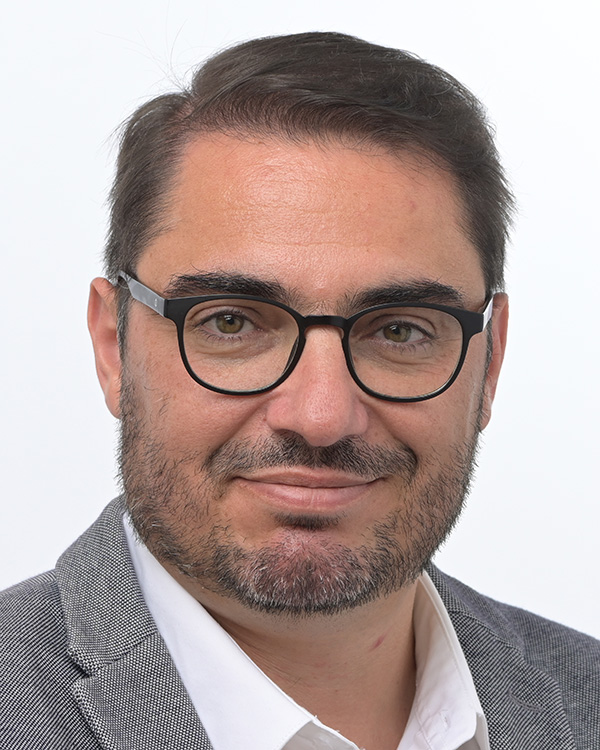
João OLIVEIRA | Portugal PT | The Left in the European Parliament (GUE/NGL) | 195 |
| 5 |
|
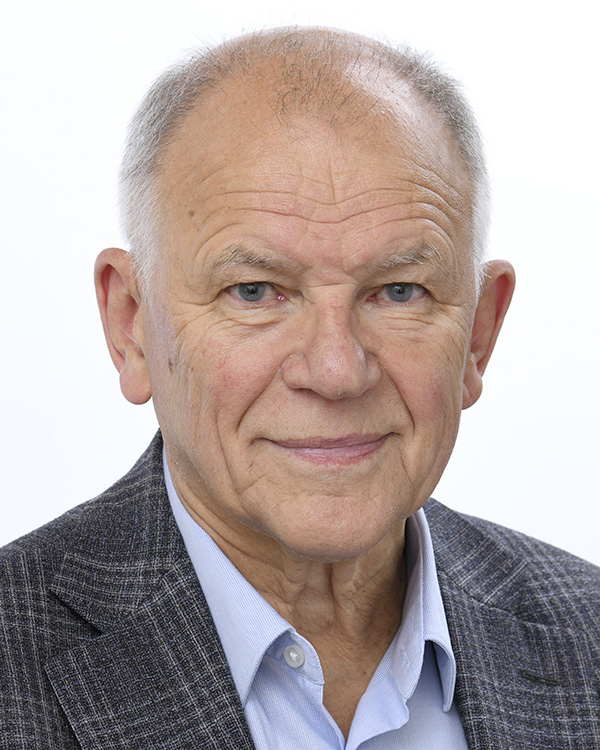
Vytenis Povilas ANDRIUKAITIS | Lithuania LT | Progressive Alliance of Socialists and Democrats (S&D) | 183 |
All Contributions (20)
Madam President, ladies and gentlemen, I would first of all like to thank our colleague André Rodrigues for the work he has done and for the result he has achieved. It is difficult to defend the simplification that is needed to give real answers to people, but without turning it into deregulation. In this case we fought to protect social conditionality, because the rights of those who work the land for us are not negotiable; Perhaps we would have wanted something more on environmental standards, but we managed to maintain those agro-ecological conditionalities that are needed for our health and for the health of the planet – I am thinking of the EUR 3 000 for payments for small farmers, the increase of EUR 75 000 as a contribution for the setting up of young farmers and the clearer instruments for natural disasters. This is important, we always say it: If we don't help young people and if it's not young people who take farms and agriculture into their hands, really, agriculture won't have a future.
 Commission Work Programme 2026 (debate)
Date:
21.10.2025 13:48
| Language: IT
Mr President, ladies and gentlemen, some of the priorities on the social democratic agenda are set out in the programme for 2026: I am thinking of initiatives on quality work, the cost of energy, the fight against poverty, child guarantees. These instruments are consistent with the European Pillar of Social Rights and our demands, but that is not enough. The house has now become a real social emergency. It is good to intervene on short rents and state aid, but we need a structural response, a European social housing fund and a dedicated budget. And then there's the crucial resource node: Without a common lending capacity, without an extended European NRRP, without a multiannual budget that protects social policies, cohesion, the common agricultural policy with dedicated funds, Europe will not be able to respond to the challenges ahead. Today, more than ever, we need political courage, we need a Europe as one state: courage to choose solidarity, to invest in people and to build a Union that really leaves no one behind.
Common agricultural policy (joint debate)
Date:
07.10.2025 13:52
| Language: IT
Mr President, ladies and gentlemen, Commissioner, food, territory and the environment: Farmers take care of all this. For this reason, strengthening their position is a fair battle and ensuring more support and clearer rules and less bureaucracy is a priority. But simplification cannot be synonymous with deregulation and decoupling the common agricultural policy from environmental ambitions and laws is not the right path. Not to mention the right's constant attempt to erase social conditionality. This is not how farmers are protected and the sector is not protected by destroying the rules that protect the climate, soil and water. This CAP came into force only two years ago and we are already at the second simplification. In the meantime, the Commission is presenting us with proposals for new programming which concern us in terms of method and substance. In addition to less money, we risk no longer talking about the common agricultural policy but about the nation's agricultural policy.
Post-2027 Common Agricultural Policy (debate)
Date:
10.07.2025 07:50
| Language: IT
Madam President, Commissioner, ladies and gentlemen, if budgetary flexibility means less money, we say no. On Monday we voted our report on the CAP post-2027 and our no to the single fund was clear to everyone. As socialists we will continue to demand that agricultural funds reach those who cultivate the land and that alongside support per hectare there be more funds for young people, women, rural inland areas and small farms. We have also included fair supply chains and anti-undercost measures, animal welfare and transparent labelling. Social conditionality remains at the core: We paid a visit to Borgo Mezzanone, Foggia, with 5 000 migrants under the slap of the caporalato. The environmental condition also remains a priority, and denying it today – and denying the centrality of the climate challenge – is harmful and irresponsible. At work in these directions we will see you on Wednesday for your proposal.
High levels of retail food prices and their consequences for European consumers (debate)
Date:
07.05.2025 15:16
| Language: IT
Madam President, ladies and gentlemen, food is a right and the fair and just price for all is a factor of equality. In 2023, almost one in ten Europeans could not afford a full meal a day. In 2024, food prices increased by 2.4% compared to the previous year and the geopolitical situation we are experiencing, the conflict on tariffs, will only worsen this figure. Too high prices are driving European households to move towards lower quality products, with heavy repercussions on health and health systems. For many children, especially from the most vulnerable families, European programmes such as school fruit, vegetables and milk provide the only full meal of the day. This is a double challenge because these costs do not turn into gains for our farmers who still earn too little for how much and how they produce. We pay in euros and we earn in cents, they tell me when I meet them in Italy. And they are often the weakest links in the supply chain. Actions such as those on unfair trading practices, better border controls, the reform of the Common Market Organisation can help Europe to respond to this double challenge. Investing in fair and sustainable food is good for people and good for the planet, and Europe cannot afford not to do so now.
A unified EU response to unjustified US trade measures and global trade opportunities for the EU (debate)
Date:
06.05.2025 08:38
| Language: IT
(IT) Mr President, ladies and gentlemen, when we talk about trade wars, we often focus on the adjective 'commercial', but we must put it on the noun 'wars': These are the clear and clear words of President Mattarella. A warning not to forget the history that has shown how commercial hostility can lead to even more serious clashes. The tariffs have already begun to do damage before Trump signed them and then suspended them for 90 days: Companies and workers complain about dramatic situations with goods stranded in ports, also due to uncertainty. Ninety days is the time we have been given to put in place a response that must be compact, European, to foil a trade war that would have enormous consequences for our exports, especially in the agri-food sector, which in 2024 reached 30 billion euros. The tariffs affect strategic sectors such as agriculture, made up of quality products and with respect to which the role played by the made in Italy. They protect products of lower quality. The stakes are too high: We cannot afford division and fragmentation. We are at a delicate turning point in history and how we go through it will depend on our future.
Topical debate (Rule 169) - Social Europe: making life affordable, protecting jobs, wages and health for all
Date:
02.04.2025 12:27
| Language: IT
Mr President, ladies and gentlemen, 'we cannot fall in love with Europe if it is not social'. This is what Jacques Delors said, the person who perhaps worked the most for a Europe that was not only economic, but also linked competitiveness and cohesion. Never before has the social pillar been as fundamental as it is today, because crises have increased and, with crises, inequalities have increased. Economic crisis, pandemic, double transition: Eurostat figures tell us about 22 %, 95 million people in Europe at risk of poverty and social exclusion; The cost of living has increased and 20 million citizens cannot afford quality food and adequate medical care. That is why we have criticised the review of cohesion policy, which gives the possibility to spend funds on the arms industry and critical technologies; €400 billion designed to reduce regional disparities and for cohesion will be reallocated to other objectives. This is an attack on cohesion policy. Let's get back to putting people first: decent work and adequate wages. This for us, right on the path traced by Delors, is European competitiveness.
Guidelines for the 2026 budget - Section III (debate)
Date:
31.03.2025 15:36
| Language: IT
Mr President, ladies and gentlemen, for millions of farmers across Europe, to promote sustainable systems and to provide fair and quality food for all, rural development agricultural policies play a central role. The challenges and crises facing this sector do not allow for a reduction in the financial envelope of the CAP. On the contrary, we need more funds, at least to adapt them to inflation, which has lost billions of euros in recent years. We must do more and do better for the international context, which requires us to strengthen promotion policies for European products; for climate change and drought, which require mitigation and response measures and crisis management tools; for the depopulation of rural areas and the closure of farms, which require new measures for generational renewal and for the creation of quality and decent jobs. The list would still be long. We talk about the care, the care of our lands, the planet, the care of people. We can't afford any slowdowns or setbacks.
A Vision for Agriculture and Food (debate)
Date:
13.03.2025 09:16
| Language: IT
Mr President, Commissioner, ladies and gentlemen, well, the vision for income - as the average wage of farmers has told us, and 40% lower than in other sectors - well, the inland rural areas that are the backbone of our Europe, short supply chains and young people and women. I also pay attention to young women: Only 3% of 12% of companies under 40 are run by women. Let us put at the centre, however, a new common agricultural policy that really reaches everywhere – in Italy, for example, 3/4 of the CAP funds go to the largest farms – and that is a CAP that is attentive to sustainability – she also spoke of the centrality of our soils – and that helps all farmers to innovate. In addition to environmental conditionality, let us not forget social conditionality. We have before us crucial years for the agricultural world, in which dialogue and confrontation between positions that are often different will be essential. This is what we owe to those who, today, with effort and care, continue to devote themselves to agriculture and our food.
100 days of the new Commission – Delivering on defence, competitiveness, simplification and migration as our priorities (topical debate)
Date:
12.03.2025 12:49
| Language: IT
Madam President, ladies and gentlemen, during the first 100 days of the European Commission, the People's Party identifies defence, competitiveness, simplification and migration as priorities. It's not enough for us. Where are the people, the concerns about non-growing wages, quality work, efficient and accessible healthcare, the salvation of the planet and the social resilience of our communities? These must also be the watchwords of this turning point in European history, in which Europe's strategic autonomy and a defence that is truly common must be embodied. An increase in military spending for the 27 national armies is not the solution: For us, common defence means common projects, common purchases, greater coordination for a deterrence capacity that is of the European Union and not of individual states. Security for us does not only mean weapons: This means reviving Europe's political role and defending and strengthening our social model. We cannot think of building a national defence and not a European defence at the expense of cohesion funds and EU funds. Next Generation. It's been a long and difficult 100 days. We will continue to keep the bar straight and we will continue to do so for a strong, free, fair and social Europe.
Commission Work Programme 2025 (debate)
Date:
12.02.2025 08:41
| Language: IT
Madam President, Commissioner, ladies and gentlemen, there is a great deal of simplification and few new legislative initiatives in the work programme that you have presented to us. We Socialists are not in love with legislation as an end in itself and we certainly want to make life easier for citizens, businesses and public administrations. People are at the heart of our policies. But do we give the right answers and make the right policies when we close our eyes or deny the great challenges we face? We need to change our development model and invest in innovation to implement digital and green conversions for a true European industrial policy. We call on this Europe to act, and to do so quickly, with a major joint investment plan. What matters to us, and on which it is worth investing, is the achievement of the objectives that we have already discussed with President von der Leyen and that apply to us and are still those. We are ready to discuss with the Commission and see how best to move forward, but we do not hide a deregulation objective behind the word simplification. We have titles, omnibuses, compasses, simplifications, but we don't know what we want to simplify. Today we need a strong, united Europe, one. Never before have people demanded stable work, fair wages, decent housing and public health. One compass is not enough, we need two: competitiveness, but also the social compass.
Combating Desertification: 16th session of the Conference of the Parties (COP16) of the United Nations Convention (debate)
Date:
23.01.2025 09:05
| Language: IT
Mr President, ladies and gentlemen, desertification must be tackled globally, because it puts biodiversity, water resources and food security at risk and shakes social justice. It is frightening to think that, also due to the effects of desertification and drought, by 2050 more than 200 million people could be forced to migrate. We also see it in Europe: The South is suffering more and more from drought and water shortages. In Italy we have entire regions that remain for long periods without water, also due to incorrect management of water resources. Water – our most valuable asset – is not a commodity, but a right, and we need to incentivise its conservation and reuse and work on water networks. We need to protect and restore our soils, support the shift from intensive farming methods to sustainable farming practices with dedicated funding and resources. If we lose our soils, we lose the planet. The desertification we have seen arrive and also brings, and above all, our imprint: For this reason, we must stop pretending that it does not exist and we must act now.
Challenges facing EU farmers and agricultural workers: improving working conditions, including their mental well-being (debate)
Date:
18.12.2024 16:12
| Language: IT
Mr President, Commissioner, ladies and gentlemen, we have all said this: farmers work in our fields to produce quality food and guard our territory, but their income is still too low. I have promoted a study on fair income in agriculture – I will give it to you, Commissioner – because the forthcoming intervention on CMOs and unfair practices is fine, but we need to make an extra effort to help farmers. In addition to fair income, but linked to this, there is the issue of working conditions: 10 million farm workers are employed across Europe and the living and working conditions of most of them are unsustainable. And when we talk about migrants and seasonal, conditions get worse. For this reason, the social conditionality of the CAP and the adoption of directives such as the minimum wage are good, but in the next programming we must take another step: strengthen conditionality and bring it to countries where it does not yet exist and increase the number of inspections, which is still too low. Let us set up a table where Member States report on the number of inspections they carry out and the outcome of these inspections. Only starting from the state of the art could we all do more and win the important challenges we face.
The important role of cities and regions in the EU – for a green, social and prosperous local development (debate)
Date:
23.10.2024 16:43
| Language: IT
Mr President, ladies and gentlemen, in 1968 Jean Rey, then President of the Commission, said that regional policy was like the heart of the human body: He had to bring economic life to all the territories. Since then, regional policy has become cohesion policy and is worth one third of the budget. This beating heart has worked – sometimes with difficulty – but it has worked and will have to continue to do so, because we need it more than ever. Divergences and inequalities are increasing and investment in cohesion is crucial. In left behind places Populism and disaffection for Europe are lurking. Cohesion policy can help the sense of European belonging, but the centrality of regions and municipalities is essential. Without regions and cities, the heart of cohesion policies does not reach all parts of the European body. The essential mission for municipalities and regions is to build themselves as institutions for growth, a theme chosen not by chance in the motivation of this year's Nobel Prize for Economics, on the relevance of institutions for economic growth. No centralisation of European spending; Yes to the involvement of municipalities and regions.
Empowering the Single Market to deliver a sustainable future and prosperity for all EU citizens (debate)
Date:
21.10.2024 16:26
| Language: IT
Madam President, ladies and gentlemen, thank you to Enrico Letta for his report. Alexander Langer said that ecological conversion can only succeed if it appears socially desirable: This is why we need joint investment in Europe, because the Green Deal It is a necessary revolution that impacts on the development model and on people's lives, and in people it can generate fear. If we can achieve this, we will have the citizens by our side, the most competitive companies and a stronger Europe. The US, China and India are moving fast and in this direction – Europe cannot afford to fall behind. The answer is a Community system of State aid: we need to integrate circular economy principles to drive sustainability and competitiveness. Freedom to move, Letta also says in the report, must be a choice – today it is not. One third of the European population lives in regions that have been immovable for years: Inland areas of Europe. Here we win the challenge of sustainable growth, made up of common investments, able to guarantee services of general interest so as not to leave anyone behind.
Presentation of the programme of activities of the Hungarian Presidency (debate)
Date:
09.10.2024 09:10
| Language: IT
Madam President, ladies and gentlemen, common values are the basis on which the Union was built. The same ones that you, President Orbán, are also questioning here today. This means working towards the end of Europe, not wanting to change it as it claims. He threatened to send migrants to Brussels as if they were things because he doesn't want to pay the fines. Today other delusional claims about migration policies, not to mention his retrograde look at ecological conversion. It is through blackmail, populism, denial of rights that it acts. Unfortunately, we have also seen this on the occasion of his support for Ukraine and on the occasion of his visits to Putin, Trump, in the way he has used his role. As prime minister, he has undermined justice and the fight against corruption, attacked freedom of the media and education, squeezed civil rights and harmed the interests of the Union. There is consistency in Europe. We will continue to denounce the danger you represent: Pursuing the power of nations to achieve collective impotence.
Outcome of the Strategic Dialogue on the Future of EU Agriculture (debate)
Date:
16.09.2024 16:35
| Language: IT
Mr President, ladies and gentlemen, from the outcome of the strategic dialogue on the future of agriculture we have appreciated the method, bringing together and involving all the players in the sector (agricultural associations, environmental associations, animal welfare associations), but also the merit, recognising the need to finance the ecological transition through complementary funds to accompany it, the attention to animal welfare and the disbursement of the funds of the common agricultural policy for all farmers, in a fair way, especially for those who need it most: small and medium-sized enterprises, inland farmers, women and young people. We have five years to turn these indications into concrete actions. We need to be quick. This is also a way to respond to the issue of the fair income of those who guarantee our food and in this sense, too, we will work and fight as socialists and democrats for the respect of the rights of those who work in agriculture. This will be our job in the coming years.
Statement by the candidate for President of the Commission (debate)
Date:
18.07.2024 08:36
| Language: IT
Madam President, Mrs von der Leyen, ladies and gentlemen, the Strategic Agenda 2024-2029 calls very clearly for action on the issues of democracy and the rule of law. And it's not just Orbán, who is trying to weaken the European project. We were clear right from the start: We are open to discussing with you the programme of the next Commission, but we are not open to any kind of agreement with the sovereignists. Seek their votes would have a very high price for European integration and this is true today, but it is also true for the future. The strategic agenda focuses on industry and competitiveness – new technologies, new jobs, new markets to lead the green and digital transitions. We, as Socialists and Democrats, have asked you for a commitment to Green Industrial Act But, alongside this, new public investment capacity. To remain competitive, Europe needs to continue on the path of common investment set out in NextGenerationEU. Public investment is crucial, otherwise it will not be a just transition for businesses and workers, nor for farmers. The implementation of the Social Pillar requires progress on the implementation of the Minimum Wage Directive and a European initiative to abolish free internships. Our group also said no to the externalisation of borders: We need each country to play its part in the reception of migrants, otherwise human trafficking will continue to grow. Today we want commitments on dates, numbers and concrete initiatives, and we will also ask for them from the Commissioners-designate in the hearings after the summer. It gives these answers not only to us today, but to all the citizens who have been waiting for them for too long.