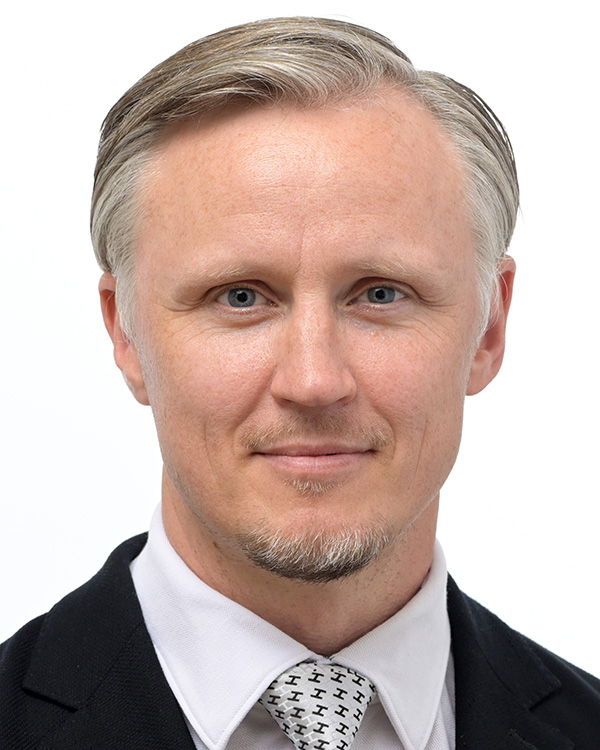
 Debate contributions by Rihards KOLS
| Rank | Name | Country | Group | Speeches | |
|---|---|---|---|---|---|
| 1 |

|
Lukas SIEPER | Germany DE | Non-attached Members (NI) | 321 |
| 2 |
|
Juan Fernando LÓPEZ AGUILAR | Spain ES | Progressive Alliance of Socialists and Democrats (S&D) | 280 |
| 3 |
|
Sebastian TYNKKYNEN | Finland FI | European Conservatives and Reformists (ECR) | 247 |
| 4 |
|
João OLIVEIRA | Portugal PT | The Left in the European Parliament (GUE/NGL) | 195 |
| 5 |
|
Vytenis Povilas ANDRIUKAITIS | Lithuania LT | Progressive Alliance of Socialists and Democrats (S&D) | 183 |
All Contributions (51)
 Drones and new systems of warfare – the EU’s need to adapt to be fit for today’s security challenges (debate)
Date:
22.01.2026 08:41
| Language: EN
Mr President, dear colleagues, first, congratulations to the rapporteur, Reinis Pozņaks, on a strong report. It matters that this is led by a Latvian. On the EU's eastern frontier, capability matters more than intent. My years in the national guard and in politics have taught me this: drones matter because they change tempo. Whoever sees first, decides first and can act first. Ukraine shows that, clearly, speed, iteration and integration beats perfection. What this report gets right is its focus on systems. Compatibility and interoperability now decide advantage – how well sensors, autonomy and command connect. Europe has strong technology, but without alignment multiple forces never become one. Here is the core mission: agree on common European standards for autonomous and interoperable drone systems first – architecture before mass production, software before scale. If we lock in fragmentation, we lock in delay. If we build common systems, capability follows.
Brutal repression against protesters in Iran (debate)
Date:
20.01.2026 16:08
| Language: EN
Mr President, dear colleagues, the protests in Iran have been bloodily suppressed. Security forces cleared the streets with live fire, mass arrests and internet blackouts, and no one knows how many thousands have been killed. Families are forced to pay the regime to recover the bodies of their massacred children. This is how the Islamic Republic maintains control. Over the years, the EU has engaged with those responsible for these atrocities. Senior diplomats attended presidential inaugurations, condolences were issued when the 'Butcher of Tehran' died. These were conscious political decisions that granted the regime international legitimacy while it shot its own citizens. We sanctioned individuals and kept trading with a regime that arms Russia's war against Ukraine and plots assassinations on European soil as a partner. The IRGC is the centre of this system of repression and global terror. The legal basis to designate it as a terrorist organisation is settled and has existed for years, and the Parliament has demanded it for years. The Council meets this Thursday. There is time for one more decision. Stop biding for time, designate IRGC now and High Commissioner – please do name those Member States who still resist this decision.
Phasing out Russian natural gas imports and improving monitoring of potential energy dependencies (debate)
Date:
16.12.2025 08:19
| Language: LV
No text available
Incentivising defence-related investments in the EU budget to implement the ReArm Europe Plan (debate)
Date:
15.12.2025 18:25
| Language: EN
Madam President, thank you colleagues for the debate. So overall, it has shown a broad recognition that this regulation is a significant milestone. Let me conclude by underlining what this finally represents and how we arrive there. From our outset, Parliament approached this work with a clear understanding: Europe cannot afford slow, fragmented responses to its security challenges. Our objective was to make sure the Union's existing tools deliver more and do so faster for defence readiness, and this is exactly what the regulation does. I just wanted to convey a message to the horseshoe political spectrum here in this House, to the far left and to the far right: you have been misled or have not read the regulation. We, the European Parliament and the Commission, we do not create the new funds. Actually, what we do right now, it is existing multifinancial framework, not creating new monies. Another one: we are not funding multinationals. We are actually empowering these small and medium enterprises and start‑ups in particular. That is at focus. The US is not being procured, it is actually limited to the EU and EEA countries. So therefore, do not be misled with those who want to you to be misled. The Parliament's most significant achievements in these negotiations was really securing Ukraine's association to the European Defence Fund. This was the Parliament's position from the start. It was not the Commission's proposal nor the Council's mandate. Parliament held its positions consistently until the very end and this House secured the agreement. This is a major strategic gain for Europe and for Ukraine. More broadly, Parliament ensured that this outcome is particular rather than symbolic. We defended the key safeguards, including the civilian character of Horizon Europe, while allowing target support for where it is generally needed, and we secured flexibility for Member States, including the option to reallocate the cohesion resources towards defence‑relevant projects. But of course, substance alone does not explain the result. The quality of cooperation in this Parliament does, and I really want to thank all the shadows for their professionalism and clarity throughout this process. We did not always start from the same position, but we stayed focused on the essentials and that made our position stronger. I also would like to thank the presidency and the Commission for their engagement during the trilogues. In the end, to conclude, this regulation is not the end of our work on Europe's defence readiness, but it sets a clear standard for how we should proceed: focus on impact, avoid unnecessary complexity and act with the seriousness the current security environment demands.
Incentivising defence-related investments in the EU budget to implement the ReArm Europe Plan (debate)
Date:
15.12.2025 17:23
| Language: EN
Mr President, colleagues, Commission, today we discuss a regulation that is also sometimes labelled 'mini omnibus', only because it runs to the end of this MFF. In substance it is not 'mini' at all. It delivers targeted but significant changes to how the Union uses existing programmes for defence‑related and dual‑use priorities. It reflects a simple fact: Europe is operating in a security environment that is anything but normal, and our instruments must finally match that environment. This regulation does not create new funding lines. Instead, it aligns and strengthens five existing programmes – the Digital Europe programme, the Connecting Europe Facility, the Strategic Technologies for Europe Platform, Horizon Europe and the European Defence Fund – so they can support defence and dual‑use projects in a coherent and operational way. This is the approach the Commission proposed, and together with the Council, Parliament has sharpened and completed it. Let me outline what will now be possible that was not possible before. First, and most consequentially, Ukraine will be associated with the European Defence Fund. This was a Parliament demand from day one. It recognises Ukraine's defence‑industrial capacity and ensures it will become part of Europe's defence ecosystem. It is strategic, it is operational and it sends the right signal at the right moment. Second, we open the Horizon Europe EIC Accelerator to dual‑use and defence‑relevant innovation. This is a targeted, temporary derogation limited to this MFF. The civilian character of Horizon remains the foundation, but we remove an artificial barrier that held European innovators back. Startups, SMEs and mid‑caps working on critical technologies will finally be able to access support. We secured strong eligibility and ownership safeguards: participation is limited to the EU, EEA and Ukrainian entities, with clear rules on foreign control. This is about strengthening our technological base and protecting it. Third, Parliament expanded the Digital Europe programme to address real vulnerabilities: hybrid threats, cyber resilience and the development of AI factories. The front line of security today is digital as much as physical, DEP now reflects that. Fourth, STEP will include a dedicated strategic sector for defence technologies. This aligns the programme with Europe's actual capability needs and gives Member States a consistent framework for prioritisation. Fifth, the Connecting Europe Facility now includes explicit support for dual‑use transport corridors, energy logistics, fuel networks and counter‑mobility infrastructure. These elements are essential for military mobility, for NATO reinforcement and for the resilience of critical infrastructure. The European Defence Fund also becomes more agile, with simplified procedures for disruptive projects and streamlined processes for SMEs. These adjustments matter for delivering capability faster. The regulation also introduces important flexibility for Member States. It allows the voluntary relocation of unspent cohesion resources towards defence‑relevant projects under CEF, STEP and the Digital Europe programme. This gives governments the option to support dual‑use infrastructure, digital resilience and critical enablers without additional strain on national budgets, and this responds directly to what Europeans are asking of us. Across recent Eurobarometer surveys, defence and security are top of mind for European citizens. Support for a common defence policy is at record levels. Colleagues, defence is no longer a taboo for European funding, and this regulation reflects that shift. It gives Member States real tools without increasing the EU budget, and sets a precedent for how the Union should approach defence spending: targeted, coherent and based on real capability needs. This regulation is not symbolic. It is operational and it shows that the principle of acta non verba is alive and well.
EU’s diplomatic strategy and geopolitical cooperation in the Arctic (debate)
Date:
25.11.2025 20:59
| Language: EN
Madam President, dear colleagues, as the rapporteur stated, the EU still operates under its 2021 Arctic Strategy – a document built around climate, sustainable development and cooperation. All important. But the world that strategy was written for no longer exists. The Arctic has become a frontline of hard power, hybrid threats and strategic competition. Russia has turned the region into a militarised zone, reopened Soviet bases, expanded the Northern Fleet, forward-deployed nuclear-capable aircraft and is now shifting towards submarine-based deterrence under its Bastion doctrine. These are preparations for leverage, not stability. China, meanwhile, calls itself a 'near-Arctic state' and quietly buys influence through ports, cables, energy infrastructure and digital systems – recreating the dependency patterns Europe already learned the hard way. The AFET report adopted in November pushes for exactly what has been missing: a more robust EU presence, a security-orientated posture, deeper partnerships with Arctic democracies, and even openness to future EU membership. So what do we need? A strategy fully aligned with NATO. Real investment in Arctic domain awareness – surveillance, undersea cable protection, secure satellite communications. Support for Arctic-relevant dual-use technology under EDF, EDIP and ReArm. Cooperation with democratic partners in Arctic on resilience and critical minerals. And sanctions that actually target Arctic-specific threats, including Russian LNG transshipments and military-linked shipping. The Arctic is not a vacuum. If Europe doesn't shape it, others will – and we won't like the result.
European Defence Industry Programme and a framework of measures to ensure the timely availability and supply of defence products (‘EDIP’) (debate)
Date:
25.11.2025 09:10
| Language: EN
Madam President, dear colleagues, yes, EDIP is needed, and many colleagues have previously already elaborated on the details. But EUR 1.5 billion for nearly three years, divided among 27 Member States, is not a serious response to the reality we are facing. That is roughly EUR 18 million per country per year. It does not get you very far in defence terms. It barely gets you started. At the same time, the EU can mobilise EUR 300 billion for the Global Gateway. So, for infrastructure projects around the world, hundreds of billions; for Europe's own defence industry in wartime, one two-hundredth of that. It sounds ridiculous because it is. EDIP is an important shift in thinking, yes. But the willingness to actually fund our defence still isn't there. We keep saying we understand the times we live in, but we are clearly still budgeting as if nothing has changed. If this is the EU's idea of 'ramping up', we are obviously not ready to do that. Better late than never, yes. But it's still much, much too little.
Ending all energy imports from Russia to the EU and closing loopholes through third countries (debate)
Date:
22.10.2025 20:33
| Language: EN
Mr President, dear colleagues, Europe has come a long way in cutting its dependence on Russia's energy. Gas, oil, coal – we’ve reduced it all. But partial progress is not victory. Every tanker of Russian LNG that still arrives in Europe, every barrel relabelled through India, every Rosatom contract operating quietly here in Europe – they all keep feeding Kremlin’s war machine. Dependence on aggressors is not a market choice; it’s a strategic and an expensive mistake. You all know this. Today, around 20 % of Europe’s nuclear reactors still depend on Russian nuclear fuel. In 2024 alone, over EUR 700 million worth of nuclear materials came from Russia. Rosatom is operating under the radar in critical parts of our energy sector. We must fully phase out all Russian energy imports, including nuclear. We must close loopholes, sanction intermediaries, and put an end to Russia’s role in Europe’s nuclear supply chains. We must invest in diversification: hydrogen, modular reactors, and new nuclear supply chains built with trusted partners, not authoritarian regimes. Energy independence is not just a national priority – it is a Union-wide security imperative.
The need for a united support to Ukraine and for a just and durable peace concluded on Ukraine's terms, with Europeans and without surrendering to Vladimir Putin's conditions ahead of the foreseen Budapest summit (debate)
Date:
22.10.2025 14:41
| Language: LV
Dear Chair, Colleagues, Since Russia’s full-scale invasion of Ukraine, Russia has carried out at least 37 000 airstrikes against Ukraine and dropped more than 33 000 bombs on Ukrainian cities and its people, even beyond what is being dropped on the front lines. Against the backdrop of various peace summits and negotiations, the ghost of ‘peace in exchange for territory’, which has historically been known as a ‘transaction’ increasing the threat of war and not contributing to peace, continues to return. The aggressor continues to play the usual thesis about the causes of war from the 9th century onwards, which is a cynical mockery typical of the Kremlin, both for those involved in the negotiations and for the international rules-based order. Europe should not continue to voice its concerns at this time, but should immediately adopt the new sanctions and ensure continued arms deliveries to Ukraine, allowing it to do what diplomacy failed to stop and push back the aggressor and destabilise its war machine inside Russia. It is absurd that there are still Member States trading with Russia that have added more to its war treasury than they have provided support to Ukraine. Support decreased by 50% in 2025. It's a shame and embarrassment to us.
Institutional consequences of the EU enlargement negotiations (debate)
Date:
21.10.2025 11:48
| Language: EN
Mr President, dear colleagues, imagine being Moldovan: reforming, resisting Russian pressure and watching the door to the EU stay shut. Or being Ukrainian: bleeding on the battlefield for European values while the Union debates 'absorption capacity'. Many in this Chamber do not remember what EU accession actually means. I do. I remember Latvia's path clearly – it was demanding. We reformed, we adapted, we compromised, because there was a goal within reach. And because it was credible, it was empowering. We believed in Europe because Europe honoured its word. That is what is now at stake, not just institutional capacity, but the very credibility of the Union's work. A candidate country can do everything right and still be blocked, not because of its failures, but because of ours. If institutional reform is needed, then do it – not to delay enlargement, but to enable it. Reforms should serve enlargement, not the other way around. Enlargement isn't about sending a message, it's about shaping reality.
Institutional consequences of the EU enlargement negotiations (debate)
Date:
21.10.2025 11:16
| Language: EN
Madam Bischoff, some of your words were really deeply insulting. You referred to the ECR as fundamentally destroying the foundations of the EU. Could you please elaborate on this loud statement and give concrete examples of where the ECR is shattering the fundamental principles of the EU? Concrete – not just some Polish sentences – concrete cases!
EU strategy with regard to Iran’s nuclear threat and the implementation of EU sanctions resulting from the snapback mechanism (debate)
Date:
08.10.2025 17:53
| Language: EN
Madam President, dear colleagues, Iran’s nuclear programme is no longer just a regional problem ‑ it’s a direct threat to European and global security. The regime is enriching uranium far beyond any civilian need and shutting out IAEA inspectors ‑ this is not ambiguity, it is escalation. The E3 triggered the snapback mechanism, all nuclear-related UN sanctions are back in force. The EU has gone further ‑ freezing Iranian central and commercial banks, cutting off oil and gas imports, banning gold and sensitive equipment, and closing our airspace to Iranian cargo. This is the right path ‑ but let’s not pretend sanctions matter if they’re not enforced. Iran arms Russia, fuels regional proxies, and rejects oversight. Appeasement got us here. Strength is overdue. And still ‑ still! ‑ the Islamic Revolutionary Guard Corps is not listed as a terrorist organisation in the EU. This is the same force that brutalises Iranians, funds terrorism, and supplies weapons used against Ukrainian civilians. How many times must this Parliament call for the IRGC to be designated as a terrorist organisation before the Council acts? Both the Council and the Commission say we are for diplomacy. I say yes to diplomacy, but to hard diplomacy.
The EU’s role in supporting the recent peace efforts for Gaza and a two-state solution (debate)
Date:
07.10.2025 11:21
| Language: EN
Mr President, dear colleagues, you don't have to be pro-Israeli or pro-Palestinian, but you should be pro-fact. We must not confuse immediate conflict management with long-term political solutions. The peace plan is a response to war. It outlines tactical steps: ceasefire, humanitarian aid, hostage release. A two-state solution may sound noble, but what is being built? A state with no functioning institutions, no elections in nearly two decades and systematic corruption. This plan does not create a Palestinian state. It explicitly rules out Hamas – as it must. No serious state can emerge under the shadow of a terrorist organisation. Rebuilding Gaza will take at least a decade. The question is not only 'who pays?', but 'who leads and guarantees the process?', because it certainly cannot – and should not – be the European Union. Regional countries – Egypt, Jordan, the Gulf – must take responsibility. Peace cannot be outsourced, nor can it be financed endlessly by Europe. The EU's role must be principled, realistic and conditional – tied to regional ownership and general reform. Anything else is wishful thinking.
The EU’s role in supporting the recent peace efforts for Gaza and a two-state solution (debate)
Date:
07.10.2025 11:10
| Language: EN
Mr Botenga, your colleague Boylan, in her speech mentioned the necessity to provide aid, humanitarian aid. We know there is a legal reason for the sea blockade, for obvious reasons. And, let alone, last week there were almost 1 500 aid trucks sent into Gaza. But could you please elaborate? And have you asked your colleagues who apparently were detained by the Israel Defence Forces what the reason was for MEP Hassan and others to toss their mobile phones overboard into the sea? What was so incriminating in their phones that they had to do such a thing?
Implementation of EU-US trade deal and the prospect of wider EU trade agreements (debate)
Date:
10.09.2025 13:30
| Language: EN
Mr President, dear colleagues, I guess there is a confusion. We are not talking about the EU-US trade agreement. We are talking about a political deal. So there is a long way ahead to actually reach the trade deal. But trade in general is good and freer trade is even better. So this principle really has underpinned decades of the EU-US cooperation. And while this new arrangement is imperfect, a deal, even a political one, is better than no deal. But we need to be serious. Tariffs are back and they are not balanced: 15 % of the most EU goods, while US exports enjoy broad exemptions. That is not a sustainable model for the world's two largest democratic economies. We welcome the political will to avoid escalation, but political will must now be followed by structure, transparency and enforcement. Our businesses are still operating in a grey zone. Legal ambiguity, regulatory inconsistency. That is not how to strengthen transatlantic supply chains, especially not in a global environment where authoritarian regimes are aggressively consolidating influence. So three things must be pushed for. First, a formal review mechanism with a fixed deadline. Second, a clear legal framework that gives EU exporters predictability. And third, but not least, a roadmap, ambitious but realistic towards a barrier-free transatlantic trade area. That is what will keep the EU-US partnership competitive, resilient and strategic.
EU-US trade negotiations (debate)
Date:
09.07.2025 13:01
| Language: EN
Mr President, dear colleagues, the ECR Group stands for strong transatlantic ties and maximum free trade with our closest ally, the United States. Yet what do we see? Endless reports from the Commission, but too little real diplomacy. Apart from Commissioner Šefčovič, leadership has been passive. Where are the presidents of the Commission, of the Council or of this House? Some say the doors are closed: well, look for the windows. Words won't resolve the tariff war, presence will. So if you want results, go to Washington and stand firm with and support Šefčovič. Trade tensions are nothing new: we have weathered them before by negotiating hard and standing united when it matters the most. Our standards and values are not for sale, but that does not shut down the doors for the talks. Our principles must be the starting point for the true zero-tariff zone that makes both sides wealthier and stronger. Anything less costs our workers and businesses dearly. We must stop sending the wrong signals: when talks get tough, turning to China, a systematic rival, is not an option. We stand with our democratic ally across the Atlantic. Some here hide their push for division and protectionism behind strategic autonomy. In reality, barriers hurt our own workers and businesses first. This extension to 1 August must not be wasted. We need to match words with real political action and secure an agreement that protects Europe's jobs and competitiveness. The alternative is economic self-harm.
Preparation for the 2025 EU–China Summit - Tackling China's critical raw materials export restrictions
Date:
08.07.2025 08:08
| Language: EN
Madam President, in two weeks the EU lands in Beijing to mark 50 years of relations with China. It looks like a celebration; in truth it is a stress test. Trade still tops EUR 739 billion, yet our deficit is EUR 292 billion, and exports are falling. State-subsidised overcapacity floods our market while China’s stays selectively closed. As Commissioner Šefčovič fights in Washington to shield European jobs from blanket US tariffs, Beijing slaps duties on medical devices and cognac, rations rare-earth licences, and declares it 'cannot accept' a Russian defeat in Ukraine. Treat the summit as business-as-usual and we tell Washington and Moscow that Europe swaps security for cheap batteries. After five decades China is still no responsible partner. We need thorough de-risking: tighten investment screening, rebuild critical supply chains with trusted allies, and enforce WTO rules wherever Beijing undercuts fair competition for European workers, business and innovation. Speak with one transatlantic, not transactional voice. Autonomy built on dependency is not autonomy at all.
Upcoming NATO summit on 24-26 June 2025 (debate)
Date:
18.06.2025 08:51
| Language: EN
Madam President, dear colleagues, at The Hague, NATO must face reality. Russia is not a 'challenge', it is an enemy, and we must continue to call it that. It does not act alone: Iran, North Korea and China stand behind it, forming an authoritarian axis and fuelling each other's aggression. This is not regional. This is systematic. Europe must stop hiding behind US guarantees, NATO's strength must grow to meet threats in Europe and beyond, and it is time to go back to basics. If the US shifts focus, Europe must defend itself and carry its share. The proposed 5 % GDP target for defence is a necessity, not because GDP ratios win wars – they don't. Strength, capabilities and action do. Ukraine cannot be sidelined. Its future is inseparable from NATO's security. And finally, while the NATO-Russia Council absurdly still exists, perhaps we could instead invite Putin to the following address in The Hague: Oude Waalsdorperweg 10. I'm sure the ICC would gladly receive him.
Situation in the Middle East (joint debate)
Date:
17.06.2025 19:11
| Language: EN
Dear colleagues, as we debate, yet again Iran has launched another barrage of missiles towards Israel. And Iran's constitutional doctrine calls for Israel's destruction. This is not rhetoric. It's a state policy. Tehran arms Hamas, Hezbollah, the Houthis, and supplies and co-produces missiles and drones with Russia to aid its expansionist war on Ukraine. Its nuclear programme adds a new layer of existential threat not only to Israel, but to global security. The UN Atomic Agency confirms Iran has stockpiled highly enriched uranium far beyond a civilian purpose. This is a nuclear weapons ambition. Nothing else. Israel is now dismantling Iran's missile, drone and nuclear infrastructure. All targets are military. Every destroyed facility reduces Iran's capability to threaten Israel, Ukraine and potentially Europe. Every eliminated operative weakens the entire authoritarian axis. The humanitarian tragedy in Gaza is undeniable. But the root cause is Hamas, armed, financed and directed by Tehran. Remember this: authoritarian axis feeds on fear.
Signature of acts adopted in accordance with the ordinary legislative procedure (Rule 81)
Date:
16.06.2025 15:15
| Language: EN
Madam President, I would like to make a point of order under Rule 202. The EU sanctioned Kremlin propaganda outlets like Russia Today and Sputnik, banning their broadcasts for spreading disinformation and justifying Russia's aggression. And yet, today, these same sanctioned outlets remain freely accessible inside this Parliament on the internal network, Wi‑Fi and visitor devices. After months of notification, letters and discussions to the President and Bureau, nothing has changed. This is not a technical issue. This is an institutional failure. When we demand sanctions enforcement across the EU but fail inside our own House, we move from double standards into complicity. The legal basis is clear. The EU Court of Justice upheld the sanctions. National regulators have acted. The European Parliament must not be the last safe haven for sanctioned Kremlin propaganda. We call again for immediate action, a full blocking and compliance audit, binding internal guidelines and accountability.
80 years after the end of World War II - freedom, democracy and security as the heritage of Europe (debate)
Date:
08.05.2025 07:55
| Language: EN
Madam President, dear colleagues, for Western Europe World War Two ended in May 1945, but for millions in Central and Eastern Europe, Latvia included, the end of the tyranny meant the beginning of another. Soviet tanks replaced Nazi boots. Freedom was postponed for nearly five decades. Nazi crimes were prosecuted at Nuremberg, justice was served, and rightly so. But there was no Nuremberg for Communism, no tribunal for the gulags, the deportations, the erasure of Baltic independence. Europe's memory remains divided. This is no accident; it's by design. The Kremlin today wages war not only on Ukraine, but on historical truth itself. It denies the Molotov-Ribbentrop pact, glorifies Stalinism under the banner of liberation, and brands our resistance as fascism. Historical revisionism is a weapon, a tool to legitimise aggression, blur guilt and erase the suffering of nations. A united Europe demands a united memory, one that condemns all totalitarian regimes. There can be no reconciliation without truth and no security if lies go unchallenged.
EU support for a just, sustainable and comprehensive peace in Ukraine (debate)
Date:
07.05.2025 08:41
| Language: LV
Dear Chair, Dear colleagues, It is the fourth year since Russia's full-scale invasion of Ukraine. The outcome of this war – Ukraine’s victory or loss – will determine the security of Europe, the West and the world as a whole over the coming decades. The defeat in Ukraine can mark the decline of the West. Victory can restore geopolitical credibility, legitimacy of norms and institutions. If we are interested in second global stability, we need to limit, limit and stop existing and potential aggressors. A just peace can only be achieved by following the pre-conditions set by Ukraine, based on international law and the UN Charter. A just peace cannot mean transferring or following the Moscow dictate of neutral or disarmed Ukraine to sovereignty or territorial integrity of Ukraine. For peace processes taking place in different formats, we, the European Parliament, need to define the principles and basic principles of the European Union for a just peace in Ukraine. Ukraine’s accession to the European Union – as part of the Ukrainian people’s victory in achieving its long-established goal – must move rapidly and persistently, and the European Commission must do so now. Because the truth is simple: Ukraine is Europe.
A unified EU response to unjustified US trade measures and global trade opportunities for the EU (debate)
Date:
06.05.2025 08:31
| Language: EN
Mr President, dear colleagues, the US tariffs are harsh, but they remind us how critical it is to deepen, not weaken, our transatlantic bond. In a world of fast-moving competition, while we debate, others – especially authoritarian regimes – are moving fast to dominate emerging technologies and critical raw materials. This is the time to align. We need permanent EU trade representation not just in Washington but in the wider US, to identify, negotiate and remove the barriers that still hold back transatlantic trade. But we must do so without compromising our standards: food, safety, security, etc. Targeted coordination on critical sectors and technologies is what we should be locking in on. That includes improving customs processing, eliminating red tape, and other measures that slow innovation on both sides of the Atlantic. And while I rarely quote Elon Musk, I'll agree with him on this: Europe and the US should aim for a 'zero-tariff zone'. So a stronger, freer trade relationship – rooted in trust and common democratic ground – is in both of our interests.
Safeguarding the access to democratic media, such as Radio Free Europe/Radio Liberty (debate)
Date:
01.04.2025 17:15
| Language: EN
Mr President, cear colleagues, Radio Free Europe/Radio Liberty has been a pillar of democratic resilience since the Cold War, reaching into dark corners where propaganda thrives and truth is a threat. Today, it still does in Russia, Belarus, Iran, but also in EU candidate countries and even within the Union itself, where independent media remain under pressure. Recent developments in Washington expose how fragile its funding is. US support has been restored for now, but the long-term risk remains. And in that vacuum, authoritarian regimes gain ground. Europe must act, not out of nostalgia, but because democratic media are strategic assets in the fight against disinformation and authoritarian influence. Any EU support must be long-term, insulated from political shifts and conditional, not on content, but on clear goals, democratic values and impact. We either fund truth or let the others distort it.
CFSP and CSDP (Article 36 TUE) (joint debate)
Date:
01.04.2025 11:21
| Language: EN
Madam President, dear colleagues, the EU's credibility as a geopolitical actor depends on three things: coherence, speed and resolve. First, we must strengthen the EU's External Action Service with the political weight, intelligence capabilities and coordination tools needed to act, not just react. Second, conditionality must not be optional. Every euro, every agreement – from trade to development aid – must reinforce our strategic goals and core values. No more partnerships à la carte. Third, we must expand trade agreements with like‑minded partners, reducing dependency on systematic rivals. And finally, enlargement. The process must move faster with clear criteria, yes, but without letting internal blockers sabotage the will of candidate countries determined to join our Union. Power unused is power lost. And, Madam High Representative, please break this curse that for seven years in a row, the High Representative hasn't paid respect in person the CFSP conferences. That is a disgrace.