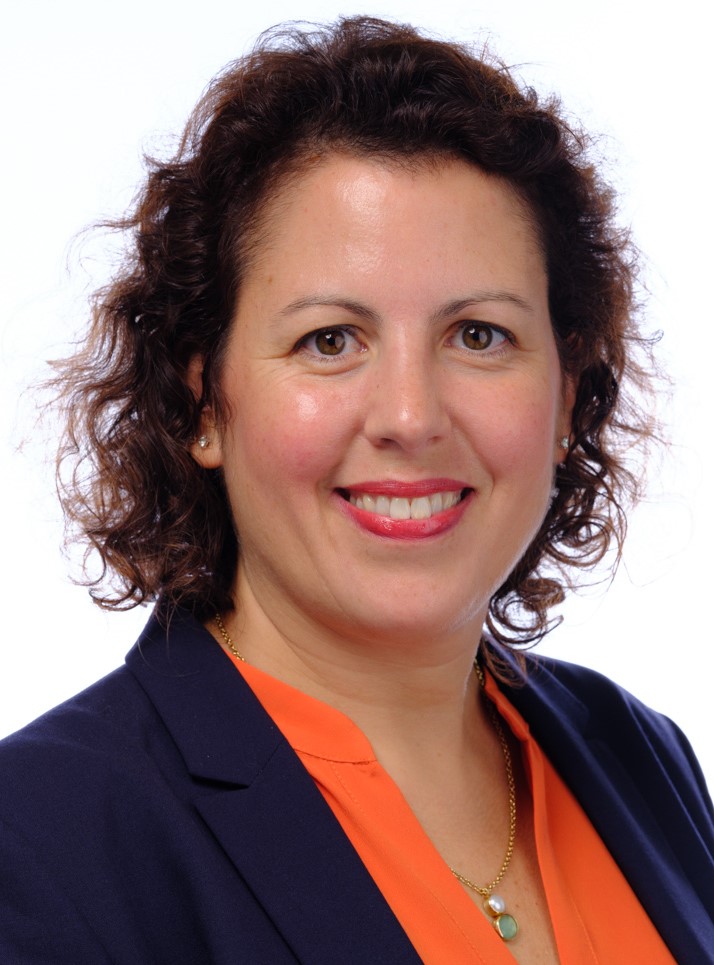
 Debate contributions by Manuela RIPA
| Rank | Name | Country | Group | Speeches | |
|---|---|---|---|---|---|
| 1 |

|
Lukas SIEPER | Germany DE | Non-attached Members (NI) | 321 |
| 2 |
|
Juan Fernando LÓPEZ AGUILAR | Spain ES | Progressive Alliance of Socialists and Democrats (S&D) | 280 |
| 3 |
|
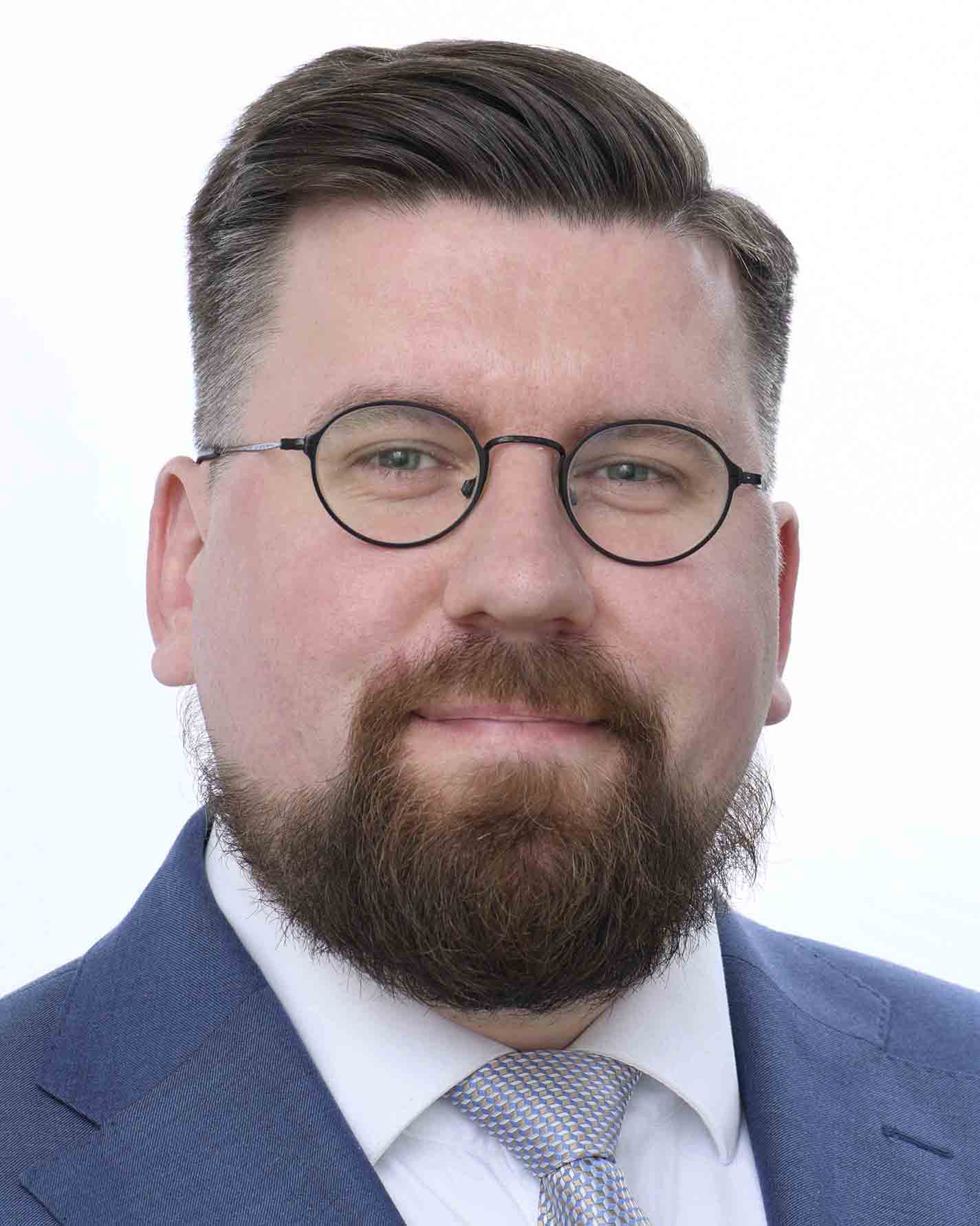
Sebastian TYNKKYNEN | Finland FI | European Conservatives and Reformists (ECR) | 247 |
| 4 |
|
João OLIVEIRA | Portugal PT | The Left in the European Parliament (GUE/NGL) | 195 |
| 5 |
|
Vytenis Povilas ANDRIUKAITIS | Lithuania LT | Progressive Alliance of Socialists and Democrats (S&D) | 183 |
All Contributions (14)
 Discontinuing seasonal time change (debate)
Date:
23.10.2025 13:25
| Language: DE
Madam President, And the marmot salutes forever if we change the time twice a year. And the marmot salutes forever when everyone gets upset about it again. And yet nothing happens. The European Parliament's decision has been on the table for six years. For more than six years we have known: The benefit is minimal, the damage noticeable. But no one knows – and my colleague, who has just spoken, does not seem to know – that it is only because the Member States cannot agree, even though there is clear evidence: No one saves energy by changing the time. Millions of people suffer from sleep and concentration problems. Children, the elderly, the chronically ill – all feel what this artificial time shift with the biorhythm does. And yes, even animals confuse the time change, with sometimes dramatic consequences. During this time, for example, there are more wild accidents, more wild animals that die from road traffic. Citizens want the end of the time change, and now. Hopefully, yesterday's news from Spain will bring movement into play. Because Spain wants to abolish the time change. I have one and a half minutes of speaking time here in plenary, but I do not need that at all, because the only thing there is to say on this subject is to the Member States, that is to say to the Council: Listen to the people, get rid of this absurd practice! You have the blessing of Parliament. It would be a clear signal that shows all skeptics: Europe listens to its citizens and acts pragmatically, close to its citizens and rationally.
Audiovisual Media Services Directive obligations in the transatlantic dialogue (debate)
Date:
23.10.2025 07:24
| Language: DE
Madam President, Cultural policy is non-negotiable, and neither is our right to protect it. When we were in the U.S. with the Committee on Culture and Education, many cultural professionals envied our media laws to encourage Europe's courage to promote diversity instead of sacrificing it to the market. The AVMSD guarantees access to European works, protects our languages, our media pluralism and our democratic culture of debate. Working with our American partners is important, no doubt about it. But Europe must not be naive. This is not about protectionism, but about cultural self-determination, fair competition and respect for the creatives who keep our identity alive. We are not just consumers of content. We are the guardians of our cultural diversity. My appeal to the Commission: Let's defend our European cultural model together! The AVMSD is not a bargaining chip. We owe this to our creatives, to all of us and to the European idea itself.
Key objectives for the CITES COP20 meeting in Uzbekistan (debate)
Date:
22.10.2025 19:09
| Language: DE
Mr President, Commissioner, Minister, ladies and gentlemen! The CITES COP-20 Conference on International Species Protection is just as important as COP30 on Climate Action. Climate protection and species protection are inextricably linked. Without healthy ecosystems, there is no stable climate and without biodiversity, there is no future. The CITES Convention, which turns 50 this year, is our most important instrument in the fight against global species loss. Without this agreement, many species – such as tigers, rhinos, sea turtles – would already be extinct, as CITES regulates trade in more than 40 000 endangered animal and plant species. This trade includes billions of dollars and hundreds of millions of copies annually. It is about living animals and plants, but also a large selection of products, such as wood, medicines or leather goods. But the illegal wildlife trade continues to increase. It is now the fourth largest form of organised crime in the world. It destroys ecosystems, ruins habitats and accelerates species extinction. Unfortunately, online trading also poses many new risks in this area. We therefore need to modernise CITES and adapt it to the new challenges. The EU has a special responsibility: As one of the largest markets for both legal and illegal natural products, we need clear rules and strong enforcement. International trade in wildlife must be legal, sustainable and traceable. CITES is more than just a protection agreement. It is also a tool for fair, transparent and sustainable trade that empowers local communities without destroying nature. But for this to succeed, political will and a clear goal are needed. That is why we are asking the Commission specifically: What are the key strategic objectives of the EU at the upcoming CITES conference in Uzbekistan? And how far is the EU with the implementation of the 2022 Action Plan against Wildlife Trafficking? What concrete progress has been made to address existing shortcomings and increase effectiveness? Together with my S&D colleague César Luena, I will lead the European Parliament's delegation to CITES COP 20 in Samarkand. In the resolution, which was adopted by a large majority in committee and on which we will vote tomorrow, we have clear demands: Threatened animal and plant species need better protection, we need legally binding instruments to combat ivory trade in the EU. There are still too many voluntary rules. We need to promote digitalisation and data exchange, for example when issuing and reviewing import applications. There is too much duplication at the moment. For this, we also need improved traceability of CITES-listed species, for example through TRACES. Such an EU information system on wildlife trade would be very effective with a low administrative burden. We need to deepen cooperation with other international agreements, such as the Kunming-Montreal Agreement. We renew our demand that only those wild animals that are on a list may be kept as pets. Many citizens who purchase an exotic animal are not even aware of whether it is a protected species. They would have more clarity and certainty. We need to understand the fight against wildlife trafficking as part of our environmental and security policy. We therefore call for cross-border wildlife crime to finally be recognised as organised crime. What is particularly important to me: Species that are illegally procured and brought to Europe must not be legally resold. There must be no loopholes. In the U.S., by the way, this strong law already exists. It was first introduced in 1900. Colleagues protecting wild fauna and flora is a win-win situation for the whole world – not only ecologically, but also economically. We need to value wild animals and plants more, because they make an immense contribution to biodiversity, which is so crucial for our survival. COP20 offers us the opportunity to set the course – for better protection of endangered species such as elephants, big cats, rhinos, corals, sharks or eels, for a consistent fight against wildlife crime, both online and offline, and for a CITES fit for the challenges of our time – climate change, biodiversity loss, zoonotic risks. That is why I ask for your support for the resolution so that we can go to COP 20 with strong demands for Uzbekistan.
Promoting EU digital rules: protecting European sovereignty (debate)
Date:
08.10.2025 15:11
| Language: DE
Madam President, You don't have to talk about it for long: The concentration of power and data in the hands of fewer tech companies from the US and China is weakening Europe. It threatens and manipulates democratic discourse through algorithms and disinformation. It is therefore high time to create competitive European alternatives. These include cloud services, AI systems, digital infrastructures and secure data spaces Made in Europe, which meet our standards and have social added value. Very important: That doesn't mean copying one-on-one the American model based on advertising finance and data monetization. On the contrary: The European model should be based on the common good and fundamental rights. In order for this to become a reality, European alternatives must be used from day one. This is also a call for politicians, member states, EU institutions and everyone to use them for their communication and not X or similar other American models. A sovereign Europe starts here!
A new vision for the European Universities alliances (debate)
Date:
11.09.2025 06:40
| Language: DE
Mr President! Yesterday, in her State of the Union address, Commission President Ursula von der Leyen spoke about the need for Europe to take action where others are retreating, citing science as an example. She is one of the valuable global goods – how right she is about it. That is why it is right and important that we address the European University Alliances, because they can make an important contribution when it comes to the attractiveness and international competitiveness of the EU. Because they are about much more than just mobility or shared curricula: It is about a learning environment that is shaped by our common European values, basic democratic principles, academic freedom, inclusion and, last but not least, excellence. In a world marked by increasing geopolitical tensions, digital disruption, rapid innovation spurts and a shortage of skilled workers, our universities need to be more than just academic institutions. They must be engines of autonomy, innovation and resilience. The experience of the university alliances already shows what is possible if we invest in common goals and in cooperation with European added value: Forward-looking developments are being initiated; This also applies to cooperation with Ukraine. But these alliances also face problems: fragmented, unsecured funding, lack of legal status, bureaucratic hurdles and – yes, this is also a problem for many universities – the separation of teaching and research. We should think both together in the EU funding logic. Resolving some of these obstacles is in the works. We have yet to address other issues, such as the creation of a European deal. Let us give the European Higher Education Alliances the tools they need to move from projects to long-term cooperation, with positive effects on the European Higher Education Area as a whole. This report provides impetus to transform the European Education Area from a vision to a reality. That's why we should support him broadly.
EU action on treating and preventing diseases such as cancer, cardiovascular neurological diseases and measles (debate)
Date:
08.05.2025 13:33
| Language: DE
Madam President, Cancer and cardiovascular diseases are among the health threats of our time. Good is: Many of these diseases are preventable. A central lever here is healthy nutrition. Healthy eating should not be a luxury. If we are serious about precautionary measures, then we must make healthy food cheaper, for example by reducing VAT on fruit and vegetables. At the same time, we need to tackle unhealthy, highly processed products. Because they not only burden our body, but also our health system and thus the general public. Our children are particularly vulnerable. Advertising for unhealthy foods targeted at them does not have to be. Children should learn what is good for their bodies, not what sells best. Equally important is the informed consumer. If you want to shop healthy, you need clearly understandable nutrition labels. But we also need to talk about mental illness and here about the excessive consumption of social media, especially among adolescents. Studies show that constant scrolling, overstimulation, and digital stress can increase the risk of depression and concentration problems. That is why we urgently need to ensure that our children are better protected at European level. This includes education at school, but also education of parents and a stronger responsibility of the platforms. Addictive algorithms pave the way for a new widespread disease, even at a very young age. Health is more than the absence of disease. It starts with education, protection and the right political framework for a healthy Europe.
Outcome of the recent COP16 biodiversity negotiations in Rome (debate)
Date:
02.04.2025 17:17
| Language: DE
Mr President! The failure of the 16th. The COP16 conference in Colombia was dramatic given that it is estimated that up to 150 species die every day around the world. Biodiversity is the foundation on which our health, our food and our security stand. In addition, more than half of economic output on a global scale depends on functioning ecosystems. So this is not about a bit of nature conservation, but about our livelihoods. It is therefore crucial that the post-negotiation in Rome has achieved joint funding, clear reporting and control mechanisms and the implementation of the global biodiversity framework – this is a key step. It shows the will of 200 nations to stop the rapid extinction of species. But this is also clear for us in the EU: After Rome, it is not the celebration that begins, but the work. Funding must be respected; more genuine protected areas are needed and investments must be made in a way that is compatible with nature. The following applies to the next climate protection conference in Brazil: Species protection is not a secondary issue, but both must go hand in hand, otherwise we will intensify the problems.
Combating Desertification: 16th session of the Conference of the Parties (COP16) of the United Nations Convention (debate)
Date:
23.01.2025 09:12
| Language: DE
Mr President! Desertification is one of the most pressing problems of our time – not only in Africa or Asia, but also in Europe. Thirteen EU countries in Southern, Central and Eastern Europe are already affected. Soil dehydration is also progressing in other parts of Europe. In the future, deserts could also be created here. That there is an urgent need for action, this awareness was not sufficiently present at the COP16 in Riyadh. There is definitely not enough being done in the EU either. Problems are progressive soil sealing, deforestation, too intensive land use, incorrect management. Climate change with droughts and heavy rain events is also accelerating the loss of fertile soil. It is therefore crucial that we in Europe adopt the EU Soil Law alongside an effective water strategy – as a first important step towards more soil protection and against desertification. Desertification is like climate change. It is much cheaper and easier to take countermeasures now than to reverse things when the damage has already occurred. Because then it's too late.
Failure of the negotiations in Busan for a UN plastic treaty and the urgent need to tackle plastic pollution at international and Union level (debate)
Date:
22.01.2025 15:40
| Language: DE
Madam President, Global plastic pollution requires a comprehensive approach that goes beyond just waste management. We have to start with the far too high production of plastic. 400 million tons are produced each year. We need a binding UN treaty that takes into account the entire cycle of plastics, from production to disposal. Plastic production is projected to triple by 2060. What to do now? Produce and use less plastic globally and in the EU, ban hazardous chemicals, improve product design to be able to recycle better and more, and provide enough funding. Over 100 countries, including the EU, have shown a clear stance in Busan against a minority of oil-producing countries. This strong majority must continue. This year we have to reach an ambitious agreement. Plastic is polluting our oceans and drinking water, endangering human and animal health, and exacerbating the climate crisis.
Strengthening children’s rights in the EU - 35th anniversary of the adoption of the United Nations Convention on the Rights of the Child (debate)
Date:
28.11.2024 09:39
| Language: DE
Mr President! Children in Europe and worldwide are still too much affected by poverty, discrimination, digital risks, psychological distress or lack of access to education. Progress is far from enough. 20 million children in the EU are growing up in poverty. Mental stress, such as anxiety and depression, continues to increase in Europe, exacerbated by social pressure and the constant presence of digital media. For example, in Belgium, suicide is the leading cause of death among children and adolescents. Children need spaces for deceleration and support to meet these challenges. Children expect us to leave them with a future worth living. This includes a healthy planet. We must continue to strengthen and protect children's rights. They need to be more involved in policy-making and an impact assessment on children's rights needs to be carried out. We need to focus on preventive measures and invest in family care. Our children deserve it, and the future demands it from us.
Outcome of the UN Biodiversity Conference 2024 in Cali, Colombia (COP16) (debate)
Date:
25.11.2024 19:24
| Language: DE
Madam President, Climate change is about how humanity survives on Earth. Species protection is about whether it can do it at all. That's why the motto of the 16th World Nature Conference "Peace with Nature". However, it should be noted that: There is currently a war against nature. The environment and species are perishing at a breathtaking pace. We are also internationally far from achieving the stated goals for the protection of nature. We humans boast of being the crowning glory of creation, but still fail to preserve it. The damage to biodiversity cannot be repaired. There will be no technological solutions. Ecosystems are too complex for that. What's gone is gone! That's why it's so important that we put people back in priority categories. We must make the preservation and production of natural habitats more important than others. You have priority. Because an intact nature in this world is existential, especially for us industrialized countries, for our prosperity and for our well-being. After all, it was agreed in Colombia to better combine nature and climate protection. Synergies are important here, including for the next climate conference in Brazil. In the EU, however, Member States in particular are now called upon to do their homework by immediately implementing the Nature Restoration Act in order to present ambitious climate plans by 2025. After the negotiation, action is now required.
Abuse of new technologies to manipulate and radicalise young people through hate speech and antidemocratic discourse (debate)
Date:
24.10.2024 09:35
| Language: DE
Madam President, We are talking about a new addiction: Recommendation algorithms have most young people firmly under control on social media. This means: If you watch a video, you get unsolicited more and more, sometimes more extreme content. Young people often have no choice, they can no longer get away from it. Not only does the risk of addiction increase, hate speech and hate speech can also radicalise them – before elections, this is even a threat to democracy. It is a good thing that the Commission is here against addictive algorithms. Digital Services Act applied, but that is not enough. The reporting obligations of platforms need to be improved in terms of quality, preferably by having their reports audited by external auditors. Further videos should only be displayed if you actually die. Digital literacy needs to be taught in schools so that they learn to critically scrutinise information and sources. You should get an AI driver's license. The fact that students are allowed to do their homework using AI is certainly not a solution. Let us take care of our children and young people, they are our future!
Tackling the steel crisis: boosting competitive and sustainable European steel and maintaining quality jobs (debate)
Date:
23.10.2024 09:49
| Language: DE
Madam President, No other industry, such as the steel industry, can be so well anchored to the conversion to climate-neutral production methods, which is urgently needed, but this industry is under great pressure. Especially the massive cheap imports from third countries such as China and India are adding enormously to our steel industry. That is why we also need more European awareness. In order for Europe to become a pioneer, we need the green lead market steel, which needs customers and buyers. Who would be better buyers than us Europeans themselves? In public procurement, the following shall apply: Our bridges, wind turbines and others are to be made of European steel. This would also include CO2-Reduce the footprint of end products. But it must also apply to private consumers: Cars, washing machines, drilling machines, etc. should be labelled ‘Made in Europe’. Consumers will then be able to make informed purchasing decisions – for job retention, better environmental protection, better working conditions, greater global independence and protection against supply bottlenecks.