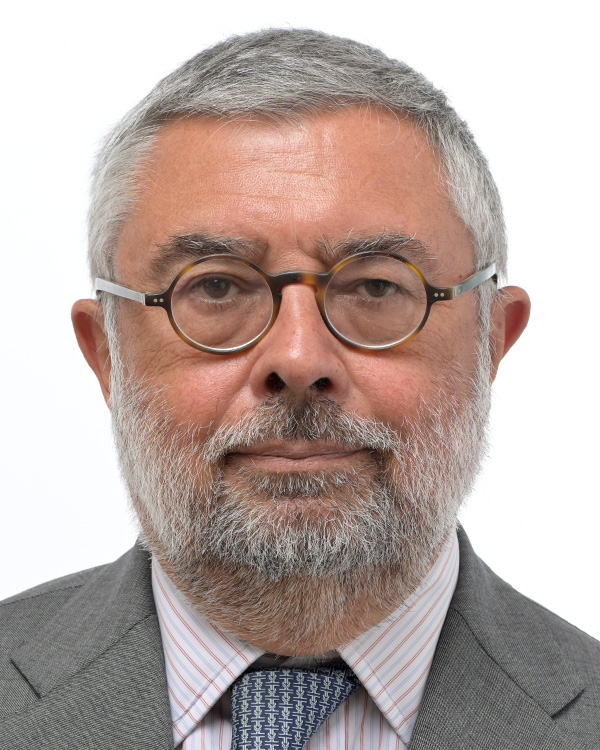
 Debate contributions by André ROUGÉ
| Rank | Name | Country | Group | Speeches | |
|---|---|---|---|---|---|
| 1 |

|
Lukas SIEPER | Germany DE | Non-attached Members (NI) | 321 |
| 2 |
|
Juan Fernando LÓPEZ AGUILAR | Spain ES | Progressive Alliance of Socialists and Democrats (S&D) | 280 |
| 3 |
|
Sebastian TYNKKYNEN | Finland FI | European Conservatives and Reformists (ECR) | 247 |
| 4 |
|
João OLIVEIRA | Portugal PT | The Left in the European Parliament (GUE/NGL) | 195 |
| 5 |
|
Vytenis Povilas ANDRIUKAITIS | Lithuania LT | Progressive Alliance of Socialists and Democrats (S&D) | 183 |
All Contributions (27)
 Restoring control of migration: returns, visa policy and third-country cooperation (topical debate)
Date:
21.01.2026 14:58
| Language: FR
Mr President, ladies and gentlemen, the European Union cannot deny the failure of its migration policy. Having abandoned the idea of making Frontex a tool for migration control, it has given up protecting its borders. However, re-establishing migration control is crucial, especially in our outermost regions. Guyana, Mayotte and the West Indies are gateways to illegal immigration from Suriname, Comoros, Central Africa, Dominica or Haiti. This situation can only be aggravated by the Pact on Migration and Asylum, which will further disaggregate flows rather than preserve them for us. The right to asylum is too valuable to be misled by the lack of enforcement of expulsion decisions. It must be issued from the countries of origin, in embassies and consulates. In addition, a person who has been rejected must be returned to his or her country. Visas must once again become a diplomatic tool. States that refuse to cooperate in the return of their nationals must be punished. Finally, cooperation with third countries must be based on responsibility and reciprocity. Aiding development is not accepting migration blackmail!
30th anniversary of the signing of the Dayton-Paris Peace Agreement (debate)
Date:
18.12.2025 08:34
| Language: FR
No text available
Fishing opportunities 2026: ensuring the sustainability of fish populations, marine ecosystems and coastal communities
Date:
26.11.2025 18:49
| Language: FR
No text available
Criminal intimidation against investigative journalists in the EU: the attempted attack on Sigfrido Ranucci (debate)
Date:
21.10.2025 15:32
| Language: FR
Mr President, ladies and gentlemen, the recent attack on Sigfrido Ranucci is serious. To attack the press is to attack democracy. Beyond this drama, let us denounce the hypocrisy raging in the French media; freedom of expression and freedom of the press are variable in geometry. Christine Kelly, a great CNews professional working on this freedom of expression, reports in her latest book that she suffered death threats and lived under close protection. There was no official outrage at this. At the same time, Mr. Legrand and Mr. Cohen, public service figures, are caught colluding with the Socialist Party against political opponents, without anyone moving too much. The French public audiovisual service, financed by taxpayers, has become politicized and far from its mandatory duty of reserve. Freedom of the press must be defended for all, and not only for those who relate a thought that they consider to be politically correct. That is true democracy.
EU political strategy on Latin America (debate)
Date:
07.10.2025 19:24
| Language: FR
Madam President, ladies and gentlemen, I am speaking tonight as an alternate member of the Delegation for relations with the Federative Republic of Brazil, which represents 91% of Mercosur’s trade. The European Union's political strategy towards Latin America, which is in fact only an exposition of short-term commercial interests, needs to be rethought. Latin America and Europe, united by links of civilisation and culture, deserve better than this vision. In line with the von der Leyen method of maximum opacity, the draft agreement with Mercosur is to the detriment of French agriculture and to the benefit of the German automobile. It opens our markets to products that do not meet our health and environmental standards. How can we explain to French and European farmers, beef and sugar producers, that they will have to face unfair competition based on ridiculous production costs and the use of banned substances in Europe? Such a policy is not fair trade, it is an outright scuttling of our agriculture. This strategic document of the European Union also ignores a major asset of Europe on the American continent: the French department of French Guiana. This department makes our country a power directly present on the South American continent. Despite this, Brussels still treats Guyana as a distant periphery, when it should be at the center of all its policy in Latin America. In reality, Europe's policy towards Latin America must first be that of sovereign nations, cooperating as equals, and not the expression of a market sacrificing our assets on the altar of free trade.
European Citizens' Initiative 'Cohesion policy for the equality of the regions and sustainability of the regional cultures' (debate)
Date:
10.07.2025 09:11
| Language: FR
Dear colleague, with regard to climate change, you give me the opportunity to talk about the specificity of tropical climates, which are most often those of the outermost regions of the French overseas territories, whether in the Indian Ocean or in the Caribbean. I note that European standards are not at all adapted to these climates, particularly as regards agriculture or fisheries. Commissioner Fitto has made some positive announcements on this subject, and I would like to thank and encourage him.
European Citizens' Initiative 'Cohesion policy for the equality of the regions and sustainability of the regional cultures' (debate)
Date:
10.07.2025 09:09
| Language: FR
Madam, I am sorry, but as a French citizen, I speak and understand French, and I did not understand your question.
European Citizens' Initiative 'Cohesion policy for the equality of the regions and sustainability of the regional cultures' (debate)
Date:
10.07.2025 09:07
| Language: FR
Madam President, Commissioner, ladies and gentlemen, adapting the European Union’s cohesion policy to the new challenges of the times is a legitimate ambition. We are all the more sensitive to this because our outermost regions – I am of course referring here to the French overseas territories – combine the handicaps of insularity and remoteness. The richness of their cultural heritage, added value for France, also remains too little known. As poor parents of cohesion policy, these regions need to be given more attention. Adjustments to the regulatory framework, such as those announced by Commissioner Fitto, are a step in the right direction. However, the principle of solidarity between regions cannot be translated forever into a systematic transfer of funds from net contributor States, such as France, to the same net beneficiaries, to the detriment of our troubled territories. As for rule of law conditionality, which punishes people by freezing funds on ideological grounds, it constitutes an unacceptable diversion from the vocation of cohesion policy, which is to reduce development gaps.
2023 and 2024 reports on Bosnia and Herzegovina (debate)
Date:
08.07.2025 17:28
| Language: FR
Madam President, ladies and gentlemen, Bosnia and Herzegovina is a state artificially kept alive by the Dayton Accords and in which only the Republika Srpska operates. However, the conviction of President Dodik by a contested and questionable court of justice is fuelling centrifugal tensions in Bosnia. Yet it would be illusory to think of promoting a unitary Bosnian state without damage. Its emergence would result in the marginalisation of Serbs and contribute to the growing Islamisation of the region. Such a project would turn its back on the historical complexity of the Balkans and create the conditions for future confrontations. The duty of Europeans is to stabilise the Balkans. How? By respecting the Dayton Agreements – and thus the Republic of Bosnia and Herzegovina – and by supporting a constructive dialogue between Belgrade and Zagreb. The Patriots for Europe Group calls for compliance with these guidelines and the broad balances of the Balkans, which are, in reality, the only guarantees of peace within this region.
European Ocean Pact (debate)
Date:
17.06.2025 09:17
| Language: FR
My dear colleague, as you can see, I am a French Member of Parliament and my first concern concerns French territorial waters, which are the object of lusts not of the United States, but of China and many other great powers. So let's not be naive, these great powers have in mind to exploit the seabed and submarines in order to recover rare metals, polymetallic nodules, which will be in the 21st century what oil will have been in the 20th century. Let us not be naive and look at things with lucidity, let us clearly see that the great powers, the United States, China and Russia, all the great powers have in mind the exploitation of rare earths from the seabed and submarines.
European Ocean Pact (debate)
Date:
17.06.2025 09:14
| Language: FR
Madam President, ladies and gentlemen, Commissioner, Nice has just hosted the United Nations Ocean Conference. While we must salute the role of France, a great ocean power, we deplore a lack of discernment about the lusts aroused by the French Exclusive Economic Zones (EEZs). These risks that weigh on our EEZs, the second largest in the world, are as well proven in the scattered islands as in the Mozambique Canal, off Mayotte, but also in Clipperton or in the South Pacific. All these French lands are coveted, threatened, intimidated by major foreign powers, with the risk of having to give up some of their EEZs and resources in the seabed and underwater. On this issue that affects the future of France, the UN says little, reinforcing the inclination of the international community to block the mining of funds. In addition to the United Nations, the Europe of regulation now also applies to the ocean floor. The pact for the Ocean bears the mark of this supranational yoke which France will have to discard in order to become again a first-rank power capable of exploiting respectfully, but freely, its seabed...
Strengthening rural areas in the EU through cohesion policy (debate)
Date:
16.06.2025 18:16
| Language: FR
Madam President, Commissioner, ladies and gentlemen, let me welcome Mr Nesci's excellent report. While it covers 4/5 of the European Union, rural areas remain disadvantaged, receiving three times less funding than urban areas. However, it performs essential functions: spatial planning, food security and the transmission to rising generations of our historical, cultural and biodiversity heritage. The Nesci report gives a quantified assessment of this relegation of the rural world in Europe. A world where young people are scarce, a demedicalized world, digitally delayed, without housing, schools, shops and places to live. With such a balance sheet in continental Europe, imagine for a second what it means to be rural in an outermost region of overseas France. It is to be perished in what is already the ultraperiphery, it is the double penalty. And we can't solve it. I associate myself all the more with the proposals made in this report because it pays real attention to the overseas countries. Our specifically ultramarine proposals on very high-speed broadband coverage in rural areas, crop diversification for food self-sufficiency and the development of small rural businesses have been accepted, and I thank the rapporteur for that. There is still a long way to go, but the political balances in this House allow us today to influence the European Union's major choices. This is what we will continue to do tirelessly for our peoples and nations, both in continental Europe and overseas.
The European Water Resilience Strategy (debate)
Date:
06.05.2025 17:03
| Language: FR
Madam President, Commissioner, ladies and gentlemen, while Europe claims to be building a resilience strategy for water, let us recall a little-known reality: in 2025, a large number of French overseas residents live without regular access to drinking water. This is particularly the case in Mayotte, where water is inaccessible every third day and the public authorities are slow to set up the second desalination plant. Vice-President Fitto witnessed this unworthy reality during his recent visit to Mamoudzou. This problem also affects the West Indies and French Guiana, which suffered its worst drought in a quarter of a century in 2024. In the outermost regions, our compatriots must also deal with old networks and a significant loss of resources. Added to this is the poor ecological status of a third of our waters and, of course, chlordecone in the West Indies which, for another seven centuries, will defile the waters, defile the land, defile the bodies. These unworthy situations have lasted too long. Access to water is an inalienable right. Act now to make it a reality.
European oceans pact (debate)
Date:
02.04.2025 13:38
| Language: FR
Mr President, ladies and gentlemen, the French people are sovereign. That must be the case. Therefore, allow me to rise solemnly in the face of the attack on democracy that is the political judgment pronounced last Monday against Marine Le Pen. That being said, ladies and gentlemen, the European Ocean Pact must be a lever for asserting the maritime interests of European states. We must therefore, beyond our reflection on this pact, provide Europe with a European Maritime Agency. I propose to establish it on Reunion Island, an overseas region of France, in the Indian Ocean. Faced with the maritime ambitions of the major powers, this strategic location would strengthen the European presence in the Indo-Pacific. In addition, France, thanks to its overseas territory, has the second largest maritime domain in the world and is present on all oceans, assets that Europe must exploit through this European agency. A European Maritime Agency would thus coordinate the surveillance, protection and sustainable use of our maritime areas while supporting our fishermen and maritime industries. With it, let's make Reunion Island the pillar of our European maritime policy.
Secessionist threats in Bosnia and Herzegovina and the recent escalation (debate)
Date:
12.03.2025 21:20
| Language: FR
Mr President, ladies and gentlemen, representatives of the Parliament of Bosnia and Herzegovina, ladies and gentlemen, the request that the President of the Serbian entity, Milorad Dodik, be questioned by the Federal Prosecutor's Office of Bosnia and Herzegovina is not only an infamy; It's also a serious fault. In the already troubled context of our continent, the duty and responsibility of the European Union is to stabilise the Western Balkans, not to throw oil on the fire, adding another hotbed of tension in Bosnia and Herzegovina. Therefore, let us stop fighting Banja Luka, in violation of Dayton's spirit. Let us stop supporting provocative measures, such as the judicial proceedings, which are actually political in nature, launched by a constitutional court and a prosecutor's office that are illegitimate in the eyes of the Republika Srpska. Above all, let us stop applying a double standard, which does not honour the European Union and risks reopening the wounds of the past. So let's apply the Dayton Accords, just the Dayton Accords and all the Dayton Accords. Let us deploy all the virtualities of coexistence and development that it contains, rather than indulging in pyromania.
Cutting red tape and simplifying business in the EU: the first Omnibus proposals (debate)
Date:
10.03.2025 18:34
| Language: FR
Madam President, ladies and gentlemen, this evening we are debating administrative simplification. The outermost regions that make up our overseas territories in France are directly concerned by this need for simplification. They face a bureaucracy that hinders their economic development and prevents local actors from thriving. These administrative burdens, often imposed by the European Commission, are a straitjacket for entrepreneurs, farmers and ultramarine fishermen. How can we create jobs and boost these regions when so many of these projects are hampered by endless procedures and inadequate standards? An advance on revenue guaranteed by the European Union should also be introduced. This tool would allow local businesses to better access financing and prevent projects important for the development of our overseas territories from being stillborn due to funding delays. It is time to simplify procedures and adapt regulations to the realities of the sea. The European Union has chosen to integrate the outermost regions since 1992, creating the outermost regions. It must not be a brake, but a real support for their development.
Powering Europe’s future - advancing the fusion industry for energy independence and innovation (debate)
Date:
20.01.2025 20:33
| Language: FR
Madam President, ladies and gentlemen, hostility to civilian nuclear power and the war in Ukraine have created the conditions for a serious energy crisis. Households and businesses pay a high price for the European electricity market. Nuclear energy is therefore the only one capable of ensuring the energy independence, competitiveness and decarbonisation of our economies. The ITER artificial sun project marks the ideal of scientific progress. It will reproduce the natural fusion of the Sun, a decarbonised and unlimited source of energy. Indeed, the energy efficiency of nuclear fusion is four to ten times higher than that of fission. Its waste generation is very low. Based in France, ITER is the largest scientific project in the world. It involves 35 countries, including China, Russia and the United States. It is certainly not without its difficulties, but it shows that technological revolutions are based on scientific cooperation between nations and not on federalised projects, driven by above-ground bureaucracies.
Heat record year 2024 - the need for climate action to fight global warming (debate)
Date:
20.01.2025 19:08
| Language: FR
Mr President, ladies and gentlemen, a point of agreement with my colleagues from the other groups: 2024 was the warmest year on record by the World Meteorological Organization. Due to their geographical specificity, the outermost regions of the European Union are the first victims of this climate change. The Maroni basin, the largest river in the French department of Guiana, has been suffering from a rainfall deficit in recent months. In Guyana, the drought is now extreme and almost permanent. Thus, since October, the canoes that use the river to connect with the 40 000 inhabitants of municipalities far from the coast have stopped. This prevents goods and people from being transported to these remote areas. It undermines students’ education and access to administrative and health services. The State seeks to ensure continuity of supply of basic necessities, but cannot act alone. In these circumstances, the European Union’s consideration of issues related to the specificities of the ORs in general, and Guyana in particular, is essential and must guide the European Commission’s action.
The situation in Mayotte following the devastating cyclone Chido and the need for solidarity (debate)
Date:
17.12.2024 19:36
| Language: FR
Madam President, Commissioner, ladies and gentlemen, last night I posted a message of support to our fellow Mahorans and this morning I had this reply in the comments: Thank you, sir. I have no news of my parents or grandparents.” This morning too, I spoke as much as possible, as communications are bad, with my colleague Anchya Bamana, MEP Rassemblement national de Mayotte. She said to me: Andre, you know, everything, absolutely everything is destroyed: there is no electricity, fuel is rationed, and there is no water to drink. We need water urgently." What more can we say to illustrate this tragedy in Mayotte, which is mourning hundreds, and certainly thousands, of deaths? Cyclone Chido took away housing and infrastructure. Some 100 000 people no longer have a roof over their heads. Hunger is felt. Looting and epidemics threaten. Without a sea and air connection, the island is cut off from the world. Only the resources of the army make it possible to provide a start of aid, from the island of Reunion. President Metsola said yesterday, and I thank her for that, as I thank Commissioner Fitto for having the same words: “Mayotte is Europe.” But I do not forget that the French Members of the Left and of Renew voted against my proposal to add to the agenda of 15 June 2023 a debate on the vital urgency of water supply for our overseas compatriots. On that day, ladies and gentlemen, you demonstrated that your political quagmire and sectarianism were stronger than the public interest. I also remember that you protested against the Wuambushu operation to restore order and destroy slums, which Chido turned into the tombs of thousands of poor people. You now have the opportunity to make up for it by asking, like us, the European Commission, for the Solidarity Fund to be activated in the event of a natural disaster and for it to be increased in view of the immensity of the damage. Mayotte won't be able to get up on her own. The European Union will have to play its full part in this, including by contributing to the investments of the Reconstruction and Resilience Plan against future climate shocks, which we are sure to tackle. This tragedy in Mayotte is the sad and cruel culmination of a long process of abandonment – abandonment to migratory flooding, chronic crime and underinvestment. Let us hope that this historic and deadly disaster, caused by political blindness and culpable negligence on the part of successive governments, will give way to a concrete commitment on the part of France and the European Union to our fellow Moroccans, but also to all overseas populations.
Right to clean drinking water in the EU (debate)
Date:
16.12.2024 19:10
| Language: FR
Mr President, Madam President, Commissioner, ladies and gentlemen, it is surprising, in the 21st century, to mention the difficulties of access to drinking water. However, these deficiencies remain a major problem for France overseas due to unstable and limited access. Our compatriots pay the double penalty of the inefficiency of the public service and the absence of such a basic right as that of access to drinking water. This is the result of negligent planning of public investments by the French government, and this is particularly true in Mayotte. Moreover, at the time, I had asked for a debate on the subject, which had not received the support of any of the political groups in the Chamber. Mayotte, now hit by Cyclone Chido, is facing water shortages more than ever. This is also the result of other environmental disasters, such as chlordecone pollution in the West Indies, which has permanently polluted water and soil and poisoned people. Finally, the lack of drinking water is the consequence of a historic drought in regions that are nevertheless home to considerable water reserves, such as Guyana. Commissioner, in the face of this unacceptable situation, which I have been unrelentingly denouncing here for years without being heard, I call for the overseas regions to be included as a priority in the European Commission's interventions in favour of access to drinking water. France pays a cheque for €27 billion; it is entitled to expect from the Commission a concrete expression of solidarity with its outermost regions.
Foreign interference and espionage by third country actors in European universities (debate)
Date:
28.11.2024 10:35
| Language: FR
Mr President, France is subject to foreign interference in the university. In 2021, a report from the Senate fact-finding mission referred to a policy of aggressive Chinese influence in the university. The Senate emphasized the importance of control and prevention mechanisms. Behind a facade of cooperation, China deploys all its influence in order to benefit from our research and development and manipulate the academic integrity of our institutions. This strategy is at the edge of intelligence and influence politics. Behind the reality of academic partnerships between Chinese and European universities are attempts to control European scientific discourse. Exploiting the porosities of our academic systems, other powers, such as Azerbaijan – which also engages in subversive activism in overseas France – Russia or some Gulf states employ similar methods. It is therefore necessary to increase transparency on the extra-European funding of universities and to develop a European ranking of universities respecting academic freedoms, but also to introduce credible sanctions against any interference. The European university must remain a sanctuary of knowledge, open to ideas and innovations from the rest of the world. So let us preserve our universities of dynamics that do not participate in any way in the elevation of knowledge, but constitute games of geostrategic influences that do not say their name.
One-minute speeches on matters of political importance
Date:
25.11.2024 20:38
| Language: FR
Mr President, since September, the French in Martinique have rightly protested against the excessive cost of living. The causes are of course national – such as dock dues, freight prices and the weight of oligopolies – but also European. Overseas France is specifically exposed to free trade treaties, including the one looming between the European Union and Mercosur. On this subject, since September 13, farmers have been engaged in a vast protest movement in metropolitan France. The overseas also participates, like the food market gardeners of Martinique, who are organized since this autumn in a defense committee. In 2020, our Members took part in drawing up the transitional provisions for the EAGGF to extend aid for overseas farmers for two years. The European Union must do better by increasing the envelope of this guarantee fund to modernise agricultural techniques, improve soil irrigation and work towards agricultural diversification. In the same way, it must refound a decentralised POSEI, halving the time taken to obtain aid. Martinican agriculture suffers. The European Union cannot turn a blind eye.
Protecting our oceans: persistent threats to marine protected areas in the EU and benefits for coastal communities (debate)
Date:
24.10.2024 13:22
| Language: FR
Madam President, Commissioner, ladies and gentlemen, the overseas territories enable France, the second-largest exclusive economic zone in the world, to be at the forefront of protecting the oceans: a global environmental priority, of which marine protected areas are the most prominent element. We are therefore concerned about the threats to the Scattered Islands, now claimed by Madagascar. These islands are referred to as oceanic sanctuaries of primitive nature. They are the global reference laboratories for studying the influence of climate change, as they are free of any human presence, making them models of naturalness. It is essential that the European Union strongly supports French sovereignty over the Scattered Islands. Faced with the devouring appetite of a major global and hegemonic power exploiting the Republic of Madagascar in the Indian Ocean, how could the European Union lose interest in this natural sanctuary? How could the European Union lose interest among its islands in the one that symbolically bears its name – Europa? In this part of the world, no one is fooled by the Malagasy claim to annex the Scattered Islands. To guarantee the future of these territories and their biodiversity, the European Union must integrate this geopolitical reality into its strategy for the protection of the oceans, but also into its diplomacy.
Outcome of the Summit of the Future: transforming global governance for building peace, promoting human rights and achieving the sustainable development goals (debate)
Date:
08.10.2024 17:33
| Language: FR
Madam President, ladies and gentlemen, what efforts does the Commission intend to make to ensure that European industry benefits from the production of nickel in New Caledonia, a French territory that holds 29% of the world's reserves and the third largest producer in the world in 2023 of this ore coveted by China? Does the European Commission have a clear vision? I doubt it. Without affirming its solidarity with France in the face of foreign interference in its overseas territories, the Commission could have argued for our common interests in sustainable development at the Summit of the Future. Nevertheless, our group can only endorse the desire to manage energy resources sustainably. In this regard, France, with its expertise in the field, its strategic depth and resources sometimes poorly exploited overseas, can contribute to the sustainable development of our continent. I come back to New Caledonia nickel, a strategic raw material for the manufacture of batteries in our automotive industry, and therefore for the immense work of the energy transition. I solemnly repeat it here: New Caledonia contributes to Europe's strategic autonomy. Let us therefore act in the direction of our common interests, those of the Pacific region, which would have everything to lose from a de facto annexation of this territory by a hegemonic power. The European Union must guarantee a future for the New Caledonian nickel industry. We propose that, like Greenland, an association decision be adopted between the European Union and New Caledonia, providing for EIB intervention alongside that territory. By moving from words to deeds, let us act to ensure that France and the European states have a safe and environmentally friendly supply of nickel.
Outcome of G20 ministerial meeting in Rio-de-Janeiro and fighting inequality (debate)
Date:
17.09.2024 19:52
| Language: FR
Madam President, Commissioner, ladies and gentlemen, who wants to take over France from overseas? Brazil's G20 presidency has identified the growing confrontation between the United States and China as a priority for its upcoming summit in Rio. This confrontation poses a threat to the whole of a world experiencing a number of hotbeds of tension at risk, whether, among others and as everyone knows, in the Middle East or on the Russian-Ukrainian borders. However, this confrontation leads to a number of factors of instability that are particularly worrying for our countries, and in particular for France's overseas territories. We are convinced that this global competition, between hyperpowers in search of new strategic positions and new sources of raw materials, has taken the French overseas departments and territories hostage. It is this same competition that increasingly directly affects the peace and prosperity of local populations, objectives that were expressed at the G20 ministerial meeting last July. The G20 is the embodiment of multilateralism. Its objectives were based on mutual respect among States and therefore on non-interference in internal affairs. In this regard, what is happening today in different territories of overseas France, victims of obvious foreign interference, especially in New Caledonia, but also in Martinique or Mayotte, must question us as to the sincerity of some leading protagonists within this G20 summit. We therefore expect Rio to be an opportunity for France and the European Union with it to solemnly recall the refusal of any interference and the inalienable nature of French sovereignty over its entire national territory. We will therefore be very attentive to the expression of the solidarity of the members of the G20 in view of the difficulties that France of the great sea is going through today, this distant France which brings to our country, as well as to Europe as a whole, a cultural and human added value, but also a maritime projection and leading strategic resources.