 Debate contributions by Cristian TERHEŞ
| Rank | Name | Country | Group | Speeches | |
|---|---|---|---|---|---|
| 1 |

|
Lukas SIEPER | Germany DE | Non-attached Members (NI) | 239 |
| 2 |
|
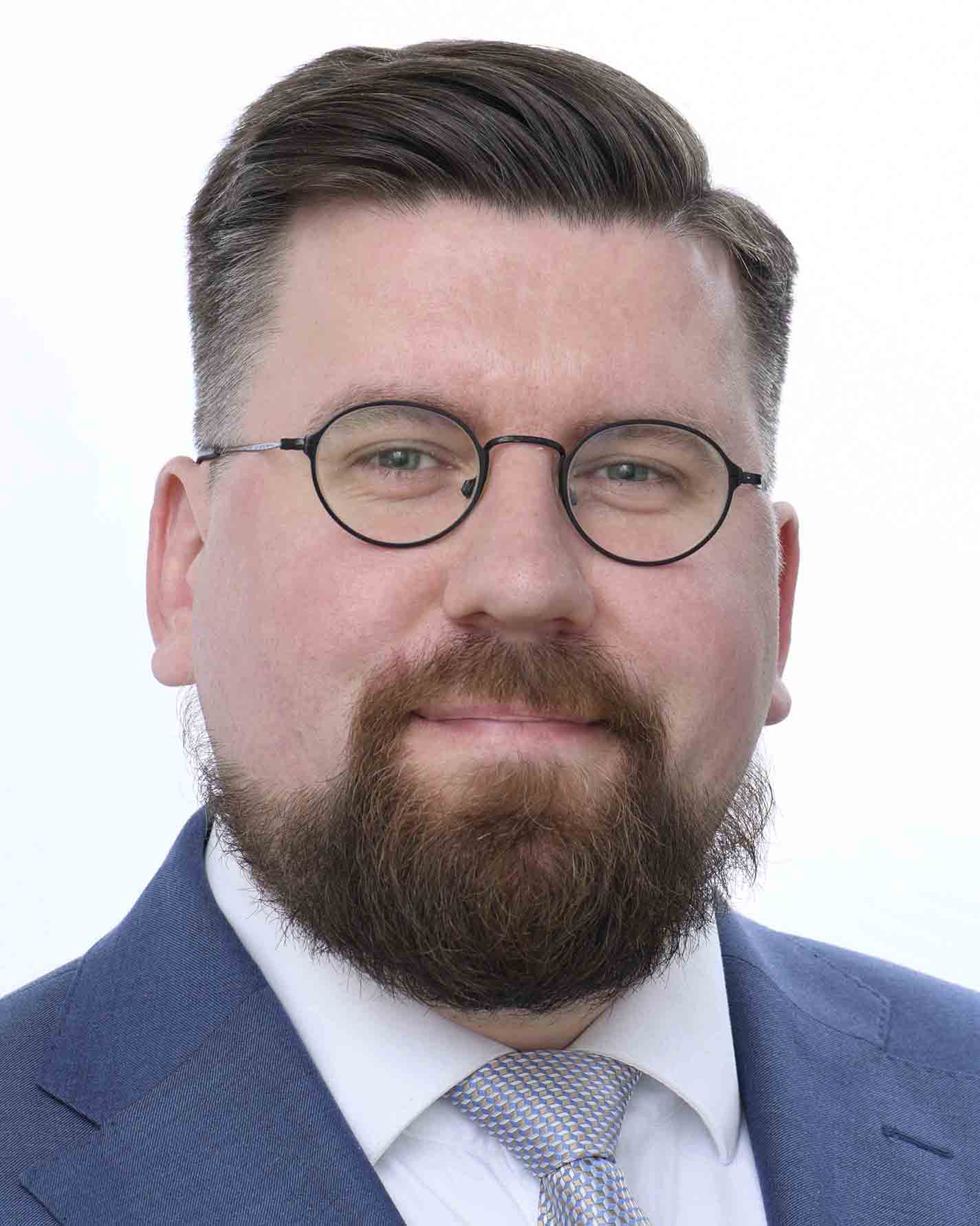
Sebastian TYNKKYNEN | Finland FI | European Conservatives and Reformists (ECR) | 216 |
| 3 |
|
Juan Fernando LÓPEZ AGUILAR | Spain ES | Progressive Alliance of Socialists and Democrats (S&D) | 191 |
| 4 |
|
João OLIVEIRA | Portugal PT | The Left in the European Parliament (GUE/NGL) | 143 |
| 5 |
|
Vytenis Povilas ANDRIUKAITIS | Lithuania LT | Progressive Alliance of Socialists and Democrats (S&D) | 140 |
| 6 |
|
Maria GRAPINI | Romania RO | Progressive Alliance of Socialists and Democrats (S&D) | 117 |
| 7 |

|
Seán KELLY | Ireland IE | European People's Party (EPP) | 92 |
| 8 |

|
Evin INCIR | Sweden SE | Progressive Alliance of Socialists and Democrats (S&D) | 88 |
| 9 |

|
Ana MIRANDA PAZ | Spain ES | Greens/European Free Alliance (Greens/EFA) | 87 |
| 10 |
|
Michał SZCZERBA | Poland PL | European People's Party (EPP) | 78 |
All Contributions (41)
 Strengthening rural areas in the EU through cohesion policy (A10-0092/2025 - Denis Nesci)
Date:
17.06.2025 20:50
| Language: RO
Mr President, I strongly support the report on strengthening rural areas in the European Union through cohesion policy, because these regions deserve a proper plan for sustainable and balanced development. It is essential to support rural people and agriculture by reducing regional disparities, combating depopulation, ensuring food security, increasing resilience to natural disasters and promoting local cultural heritage. Financial support should be targeted at small businesses, farmers and community initiatives that can generate jobs and economic stability. Access to education, healthcare and infrastructure must not be an urban privilege, but an equal right for all European citizens, wherever they live. Rural areas are a microuniverse and true cultural and identity landmarks of European nations. They are the precious legacy left by past generations, and we have a moral duty to protect it and pass it on to future generations.
Combating the sexual abuse and sexual exploitation of children and child sexual abuse material and replacing Council Framework Decision 2004/68/JHA (recast) (A10-0097/2025 - Jeroen Lenaers)
Date:
17.06.2025 20:48
| Language: RO
Mr President, the report on the proposal for a directive to combat child sexual abuse addresses an extremely serious and urgent problem. Unfortunately, however, the text has been compromised by the infiltration of ideological elements such as gender ideology, which have nothing to do with the legal purpose of this endeavour. Sexual abuse, exploitation of minors and production of child pornography material are appalling realities that call for a firm, clear and unified response from the European Union. I fully support effective, concrete and well-founded legal measures to combat these crimes. The fight against crime, however, is done through legal instruments that require clarity and precision in expression, not ideological ambiguities. Thus, the introduction in the report of ambiguous and imprecise ideological formulations, such as the reference to LGBTQ+ children, seriously dilutes the central objective - the protection of all children, regardless of context. Children must be defended equally, not divided on absurd ideological criteria. Hormonal interventions or fluid concepts of identity have no relevance in the context of preventing abuse or combating crime. They confuse and weaken the message of the Directive. That is why I have chosen to abstain from this vote.
2023 and 2024 reports on Moldova (debate)
Date:
17.06.2025 15:25
| Language: RO
Mr President, dear colleagues, the integration of the Republic of Moldova into the European Union is a partial reparation of the historical injustice committed by Stalin and Hitler through the Molotov-Ribbentrop Pact, which in 1940 led to the annexation by the USSR of Bessarabia, which was part of Romania. This Soviet occupation brought profound suffering to the Romanian population in Bessarabia: ethnic cleansing, organised starvation, deportations, systematic murder and persecution. Among the victims of Soviet oppression was the Orthodox Metropolitanate of Bessarabia, under the jurisdiction of the Romanian Patriarchate. In 1940, it comprised over 1,000 churches and 30 monasteries. Many were imprisoned, destroyed or desecrated by the Soviet communists. More than 50 Romanian Orthodox priests who refused to come under the jurisdiction of the Moscow Patriarchate were assassinated and others deported by the atheist communist authorities. Even after the fall of the communist regime and the independence of Moldova, the Metropolitanate of Bessarabia continued to be discriminated against, being officially recognized only in 2002, after a decision of the ECHR. I invite you to support the amendment I have made to this report, which recognises the Metropolitanate of Bessarabia as a victim of Soviet oppression.
One-minute speeches on matters of political importance
Date:
16.06.2025 19:48
| Language: RO
Mr President, ladies and gentlemen, in order to reduce the price of electricity, it is imperative to abandon the current system that sets the price of energy on the basis of the marginal price, which requires that the most expensive type of energy dictates the price of the entire market. This model has become inefficient and unfair, especially at a time when the share of cheaper renewable energy is increasing. If 10% of energy is produced on coal, which is more expensive, it is absurd that the remaining 90% of energy consumed, produced from renewable sources that have lower production costs, should be sold at the same price as energy produced on coal. We need an energy pricing system that covers real production costs and makes a profit for firms, but by no means the kind of cost, as is currently the case, that produces huge profits for firms but makes products and services inefficient. Giving up the marginal price for energy pricing is imperative for reducing the price of energy in Europe, which will lead to poverty reduction and the protection of families.
One-minute speeches on matters of political importance
Date:
21.05.2025 20:47
| Language: RO
Mr President, I was the first voice in the European Parliament that, since the beginning of the pandemic in 2020, has drawn attention to the abusive nature of what Ursula von der Leyen is doing. Under the pretext of fighting the COVID-19 virus, we have actually witnessed the largest corruption in the history of the European Union, with catastrophic effects on people’s health and lives. Billions of euros of public money were spent on billions of doses of vaccines under secret contracts negotiated by Ursula von der Leyen, which are still not published in full, as is the case with Pfizer. On 14 May 2025, the General Court of the EU condemned the Commission for refusing to disclose personal messages between Ursula von der Leyen and Albert Bourla, CEO of Pfizer, negotiating that contract. The General Court classified that conduct as maladministration. But I say that what Ursula von der Leyen has done is a crime against humanity. I call for a committee of inquiry to be set up into these negotiations by Ursula von der Leyen and for those responsible to be held to account. Transparency and fundamental rights, including the right to life, cannot be negotiated.
2023 and 2024 reports on Serbia (debate)
Date:
06.05.2025 19:34
| Language: RO
Mr President, dear colleagues, I will vote against the report on Serbia, because it does not reflect in a balanced way the reality on the ground and the specific challenges that this country is facing. Serbia obviously needs to continue reforms and align with EU standards, but the report omits real progress and risks damaging trust between the EU and Serbia. Belgrade has taken concrete steps in dialogue with Pristina and in cooperation with the EU and Frontex on fighting illegal immigration. These efforts deserve recognition. Serbia also met all the criteria for opening cluster 3, but the Commission has not advanced the process. The EU also has a responsibility in shaping the regional context. The recognition of Kosovo's independence has created an extremely dangerous precedent, which has been used by Russia to justify illegal annexations from Georgia and Ukraine. Serbia has demonstrated consistency and determination in its proximity to European values. It is therefore essential that this commitment is supported and not discouraged. I encourage Serbian leaders to continue firmly on the path of integration, with the conviction that Serbia's place is with us in the European Union.
Discharge 2023 (joint debate)
Date:
06.05.2025 14:57
| Language: EN
Madam President, dear colleagues, the 2023 discharge report for the Court of Justice of the European Union, for which I served as the leading rapporteur, highlights both the court's notable achievements and the areas where further progress is needed. Together with my colleagues from all political groups, we made this report more comprehensive. For that, I thank them. The report notes progress on transparency, especially by streaming some hearings live and publishing written submissions. We urge the Court to go further by broadcasting all hearings, archiving them online and allowing citizens to access case files. One issue that the report touches on only briefly – but which deserves deeper reflection – is the growing tension between the supremacy of national constitutions and the primacy of the EU law. The constitution of each Member State is the supreme law within its territory. It expresses the sovereign will of the people, affirmed through a referendum, and forms the basis of the national legal order. By contrast, the principle of primacy of the EU law ensures that European law prevails over conflicting national legislation, a principle essential to the uniform application of the Treaties. However, the primacy cannot and must not override the supremacy of national constitutions. The CJEU does not have a mandate to override national constitutions. The EU is not a federal state, but a union of sovereign nations that have voluntarily agreed to share certain competences without surrendering their constitutional sovereignty. Yet in several recent rulings, including some involving Romania, the court asserted a form of jurisprudential federalism, expanding its authority beyond what was democratically agreed upon in the Treaties. This is not only legally unfounded, but democratically dangerous. Let us be clear: the EU was created by the EU Member States, not the EU created the Member States. No nations will accept having its constitutional sovereignty absorbed by an unelected bureaucracy in Brussels. This is why we must return to the Union's foundational principles. The answer is not confrontation, but dialogue.
Discharge 2023 (joint debate)
Date:
06.05.2025 12:50
| Language: RO
Mr President, dear colleagues, the report on the 2023 discharge of the Court of Justice of the European Union, for which I was lead rapporteur, highlights both the Court's achievements and the issues where further improvements are still needed, as well as some fundamental challenges. On this occasion, I thank my colleagues from all political groups for the contributions they have made to make this report clearer and more comprehensive. An important achievement of the Court in 2023 was the continuation of the reform of the judiciary, in particular through the partial transfer of competences from the Court of Justice to the General Court, which reduces the length of trials. As regards the rule of law, the report highlights a number of cases in which the Court has emphasised the importance of protecting the financial interests of the European Union. However, in some judgments, the wording used by the CJEU suggests that this defence can be carried out even to the detriment of fundamental rights, such as those pertaining to a fair trial. We have therefore introduced an amendment which reaffirms that the protection of the financial interests of the European Union must be done in full respect of the fundamental rights of citizens, including the guarantees of a fair trial. The EU must not repeat the mistakes of totalitarian regimes in which the public interest justifies abuse. Money and goods cannot be above human dignity and fundamental rights. Another important progress is in the area of transparency, where the CJEU has started transmitting hearings online. With this report, we ask the CJEU to continue this work by broadcasting all hearings live and archiving them online so that interested parties can access them. The report also welcomes the decision of the CJEU to publish, with some exceptions, documents submitted in preliminary ruling proceedings after their closure. This will significantly improve the justice system. One aspect that the report addresses only tangentially, but which deserves a deep reflection, is the growing tension between the supremacy of the Constitution and the priority of European law. The Constitution, on the one hand, is the fundamental and supreme law of a state. It expresses the sovereign will of the people, enshrined in a referendum and forms the basis of the national legal order. European Union law, on the other hand, has its own principle of priority, which presupposes that European rules take precedence over conflicting national rules in order to ensure consistency in the application of the Treaties. However, the CJEU cannot interpret the Treaties as contributing to and giving European law primacy over national constitutions, as this would undermine the sovereignty of the Member States themselves. The EU is not a federal state, but a creation of national states that have retained their sovereignty and have only voluntarily shared powers. Unfortunately, in several recent decisions, including those concerning Romania, the Court is attempting a federalization de facto by the case-law of the European Union, conferring on it powers which the Treaties do not confer on it. Such an approach is not only illegal, but directly contradicts the will expressed by European citizens who explicitly rejected the draft European Constitution in a referendum. Until then, the states created the European Union, not the Union created its member states. The EU must remain what it was meant to be: a union of states cooperating for the common good of citizens, not a bureaucratic overstate that extends its authority beyond the democratic will of citizens. The CJEU does not have jurisdiction to annul the constitutions of the Member States. For this reason, constitutional supremacy must be defended. Attempts by the CJEU to abusively expand European competences will lead to potentially destructive institutional crises for the entire European project. No nation will allow its sovereignty to be confiscated by an unelected bureaucracy. That is why we must return to the founding principles of the EU, as set out in the Treaties. In conclusion, the coexistence between the supremacy of the Constitution and the priority of European law is a tense but necessary one. The solution is not confrontation, but dialogue. A sincere and loyal dialogue between the constitutional courts and the CJEU, in a balance that respects both the priority of European Union law and the democratic sovereignty of the Member States and the primacy of their constitutions.
One-minute speeches on matters of political importance
Date:
05.05.2025 19:46
| Language: RO
No text available
Establishment of a European Day of the Righteous (debate)
Date:
03.04.2025 08:23
| Language: RO
Mr President, dear colleagues, we must pay tribute to those who, in times of terror and oppression, had the courage to resist dictatorship and fight for freedom, dignity and truth, risking their own lives. Motivated, most often by the Christian faith, to help one's neighbor, we find examples of people who have risked their lives for others all over Europe. Romania underwent two dictatorships in the 20th century, one fascist and one communist. We have countless examples of Romanians who risked their lives saving Jews from deportation during the Nazi occupation of Romania. We also have, during the communist period, Romania's prisons full of men and women who had the courage to help partisans fighting against communism. Many worshipped God differently than the communists wanted, or listened to Radio Free Europe. Commemorating these fighters is not only a gesture of respect for the past, but also a necessary lesson for the future. Tyranny and oppression may take new forms, but our duty remains the same: to defend the fundamental values of freedom, democracy and human rights. Let us never forget the courage of those who fought against fascism and communism and make sure that their sacrifice remains forever.
Collaboration between conservatives and far right as a threat for competitiveness in the EU (topical debate)
Date:
12.02.2025 12:31
| Language: EN
Mr President, dear colleagues, there is not a collaboration between conservatives – if you mean the ECR Group and others on the right who are not in power in the EU – that threatens the bloc's competitiveness. Instead, it is the irrational regulations pushed by the Left, Greens, Socialists and Renew and sometimes even EPP that are currently undermining Europe's economic growth. Absurd policies based on utopian ideology rather than economic realities, such as the Green Deal, have led to higher taxes, increased energy costs and excessive regulations, all of which are suffocating European businesses. The current taxes already make the EU less competitive, but more will come. The aviation fuel tax and the carbon border adjustment mechanism will further drive businesses out of Europe, forcing companies to relocate to less restrictive markets. If the Left, Greens, Socialists and Renew truly want to restore European competitiveness, they must support conservative proposals for massive tax cuts and radical deregulation. The time for the neo‑socialist ideological experiment is over. Europe needs more economic freedom, not socialist restrictions.
Wider comprehensive EU-Middle East Strategy (debate)
Date:
11.02.2025 15:38
| Language: EN
Mr President, dear colleagues, two major topics must be at the centre of the EU Middle East strategy. First, stop rewarding the bad behaviour: the European Union allocates hundreds of millions of euros to the Palestinian Authority, which continues to implement the 'pay-for-slay' programme, based on which families of terrorists who have killed or injured Israeli citizens get a pension. As long as individuals are incentivised – even with money – to kill other people, there will not be peace. Second: start the de-radicalisation. Even as we speak, UNRWA schools are using textbooks that indoctrinate Palestinian children to hate Jews, motivate them to kill Jews, and teach them that violence is the method to achieve their political aspirations. Educations shape minds and societies. Today, however, Palestinian textbooks glorify terrorism, promote martyrdom, and incite children to violence rather than teaching them coexistence and how to pursue political aspirations through non-violent means. I call, therefore, that no money be given anymore to the Palestinian Authority and UNRWA schools until the 'pay-for'slay' programme is abolished and the schools' curriculum is de-radicalised.
Misinformation and disinformation on social media platforms, such as TikTok, and related risks to the integrity of elections in Europe (debate)
Date:
17.12.2024 16:06
| Language: RO
Mr President, colleagues, before talking about the cancellation of the presidential elections in Romania, I think it would be appropriate for all those who speak on this topic to read the decision of the Constitutional Court of Romania, because what we heard during this debate is absolutely hallucinating. I have heard some say that it is imperative to censor the TikTok platform in Europe and others say that there has been an attack on democracy by that decision. I'm reading a paragraph to understand what really happened in Romania: “There has been voter manipulation and distortion of equal opportunities of electoral competitors through non-transparent use and in violation of electoral legislation, digital technology and artificial intelligence in the conduct of the electoral campaign, as well as through the financing of the online campaign from undeclared sources.” We therefore have undeclared funding and the use of information technology against or in violation of the law. That's the problem. Before we talk about censorship, it is important to ensure that the financing of all election campaigns is transparent.
One-minute speeches on matters of political importance
Date:
16.12.2024 20:45
| Language: RO
Mr President, ladies and gentlemen, the agreement with Mercosur, as agreed by Ursula von der Leyen, is a threat both to Romanian and European farmers and to our food security and the health of Europeans. On the one hand, the absurd Green Deal policies, which call for reducing farmland and limiting carbon emissions, are already driving up the price of agricultural products and food, leading to the impoverishment of the population. On the other hand, with the Mercosur agreement, the European single market opens up for agricultural products grown in South America, which do not even respect the growing and environmental conditions in Europe, but also generate huge carbon emissions, having to be transported tens of thousands of kilometers. Between the Mercosur agreement and the aberrant Green Deal policies, Romanian and European farmers are being destroyed by the European Commission, and citizens, for lack of alternative or because of high prices, will be forced to consume food that can make them sick. Saving the planet must start with supporting local farmers, who produce food as close as possible to those who consume it. It is unfair to make compromises with the health of the population. That is why I am asking you to block the Mercosur agreement until these problems are remedied.
Activities of the European Ombudsman – annual report 2023 (debate)
Date:
16.12.2024 17:02
| Language: RO
Madam President, dear colleagues, Emily O'Reilly deserves and must be praised in the European Parliament for carrying out her duties in favour of the citizens of the European Union. I was one of those who supported her election in 2019 as Ombudsman, and her work during her five years in office was an example of independence, professionalism and determination that the next Ombudsman must follow. One example of determination was the inquiry that the European Ombudsman made into the European Commission's refusal to publish text messages between Ursula von der Leyen and Pfizer's head Albert Bourla, which Emily O'Reilly dismissed as maladministration, or maladministration. In Romania, if a mayor or public official negotiated privately, secretly, contractual clauses on billions of euros, public money, he was in jail, and Romania would have been given as an effective example of the fight against corruption. I congratulate Emily O'Reilly for having the courage and perseverance to investigate this abusive behaviour of Ursula von der Leyen, when other institutions remained silent. I urge you to support this report, especially Amendment 7, which calls for the publication of all contracts signed by von der Leyen with vaccine companies.
Strengthening Moldova's resilience against Russian interference ahead of the upcoming presidential elections and a constitutional referendum on EU integration (debate)
Date:
08.10.2024 14:42
| Language: RO
Mr. President, dear colleagues, the existence of the Republic of Moldova is the result of the Hitler-Stalinist Ribbentrop-Molotov pact, based on which countries in Europe were divided between Nazi Germany and the Soviet Union. In 1940, Bessarabia, which was part of Romania, was annexed by Soviet Russia, becoming the Soviet Socialist Republic of Moldova. In 1991, after the dissolution of the Soviet Union, this republic gained its independence, becoming the Republic of Moldova, which we want today as an integral part of the European Union. The population of this country has been subjected to a program of russification to erase its identity and subjugate it by assimilation. That's why their language has changed, from Romanian to Russian, spelling, from Latin to Cyrillic, identity, from Romanian to Moldovan. Today, the citizens of the Republic of Moldova have the same hopes and ideals that everyone in Eastern Europe had: to live in freedom, democracy and prosperity. Through specific Soviet means, such as disinformation, manipulation, active measures and other means specific to hybrid warfare, the Kremlin wants to keep the population of the Republic of Moldova in its own sphere of influence. It is imperative to give clear signals to the citizens of the Republic of Moldova that we are on their side. That is why I call for the inclusion of the Republic of Moldova in the roam like at home area.