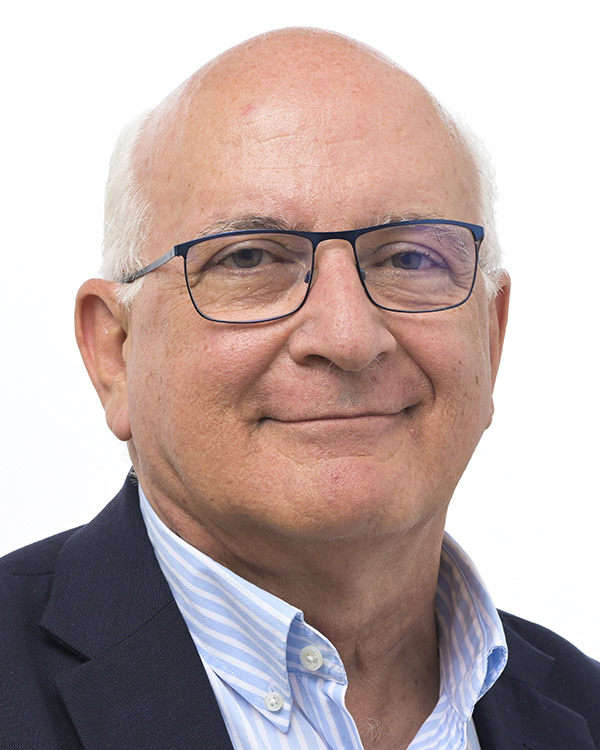
 Debate contributions by Javier ZARZALEJOS
| Rank | Name | Country | Group | Speeches | |
|---|---|---|---|---|---|
| 1 |

|
Lukas SIEPER | Germany DE | Non-attached Members (NI) | 321 |
| 2 |
|
Juan Fernando LÓPEZ AGUILAR | Spain ES | Progressive Alliance of Socialists and Democrats (S&D) | 280 |
| 3 |
|
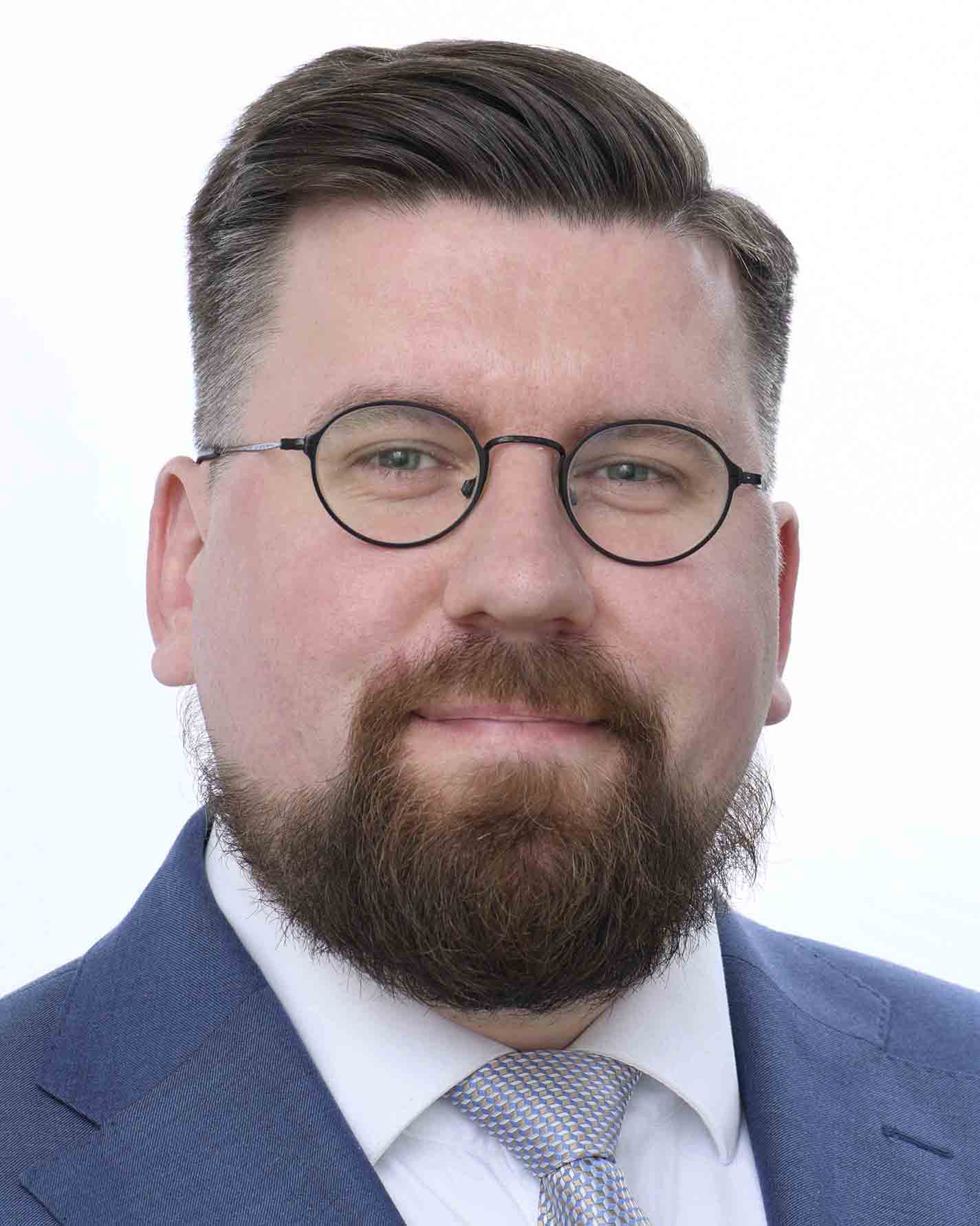
Sebastian TYNKKYNEN | Finland FI | European Conservatives and Reformists (ECR) | 247 |
| 4 |
|
João OLIVEIRA | Portugal PT | The Left in the European Parliament (GUE/NGL) | 195 |
| 5 |
|
Vytenis Povilas ANDRIUKAITIS | Lithuania LT | Progressive Alliance of Socialists and Democrats (S&D) | 183 |
All Contributions (41)
 Restoring control of migration: returns, visa policy and third-country cooperation (topical debate)
Date:
21.01.2026 14:46
| Language: ES
Mr President, Madam Vice-President, in 2023 there were 400 000 irregular entries into the European Union. In 2025, 178 000. These developments show that, when the institutions of the European Union align themselves on the same objectives, we achieve results. We have seen it with the Pact on Migration and Asylum, we see it with the visa suspension mechanism or with Frontex agreements. Well, we know, however, that only one in five return orders is actually executed. And we are talking about return orders, not arbitrary expulsions; decisions taken after a legal procedure determining who can and cannot be legally on the territory of the Union. We know what are the false recipes of demagogic populisms and their dangerous lies, and we also know the positions of an irresponsible left, with the appearance of moral superiority, but without any commitment to the effective fulfillment of the law. Well, when we are discussing the Returns Regulation we have to make an appeal to responsibility, because without credible and enforceable returns there is no trust in the system, and without trust there can be no sustainable immigration and asylum policy. Let us abandon, therefore, those misguided narratives that continue to block progress with the idea that migration management and the protection of fundamental rights are separate or even conflicting areas. Not in Europe.
Situation in Venezuela following the extraction of Maduro and the need to ensure a peaceful democratic transition (debate)
Date:
20.01.2026 17:58
| Language: ES
No text available
Tackling AI deepfakes and sexual exploitation on social media by making full use of the EU’s digital rules (debate)
Date:
20.01.2026 08:31
| Language: EN
Madam President, the challenge, I think, is clear: we must prevent that AI becomes a child sexual abuse machine. In 2025, the international Internet Watch Foundation identified 3 440 AI videos of child sexual abuse, compared to only 13 in 2024. So in terms of policy, we need urgent action on the exploding spread of CSAM online, and that is why we are negotiating with the Council the CSAM regulation. But let's be clear, there shouldn't be double-talk on that. So our concerns must be matched by a meaningful and effective regulation. We also need strong enforcement of existing safety rules, including the DSA, to make sure that companies embed safety-by-design tools from the very beginning. And yes, we need to ensure also that the recast CSA Directive criminalises the use or possession of CSA image generators or material produced using such models and we must consider seriously an independent testing of AI systems to ensure they cannot generate CSAM. Non-consensual sexualised content, whether real or AI generated, is exploitation and an act of violence that has to be confronted and fought.
EU strategy for the rights of persons with disabilities post-2024 (debate)
Date:
26.11.2025 16:03
| Language: EN
Madam President, Commissioner, with this report we take an important and meaningful step for the future of disability rights in Europe, and I would like to commend the work of our rapporteur, Rosa Estaràs, along with the political groups. Over the past years, the EU strategy for the rights of persons with disabilities has made considerable progress, showing what is possible when we strongly uphold a shared commitment. The truth is clear that, despite these achievements, too many people with disabilities still face fragmented support, barriers for free movement and unequal access to opportunities. Their fundamental rights – our shared European values – are not fully guaranteed. The Committee on Civil Liberties, Justice and Home Affairs takes note that it is necessary to continue efforts in order to address the remaining gaps relating to the free movement of persons with disabilities, and the mutual recognition of disability rights across the EU. We join the call on the Commission to present, without delay, an updated and ambitious study for the rights of persons with disabilities 2025-2030, ensuring that no one in Europe is left behind.
Protection of minors online (debate)
Date:
25.11.2025 18:17
| Language: EN
Madam President, Commissioner, it is indeed valuable to hold debates and organise numerous events in this Parliament on the protection of minors online. These discussions help raise awareness. But awareness is not enough. Children cannot be protected by speeches alone. And that is why, from the committee responsible for the online protection of minors, data protection, law enforcement and judicial cooperation – the LIBE Committee – I would like to deliver a clear call to action. A call to all actors, to all stakeholders. The situation of children in the online environment is seriously deteriorating on all counts, not only considering exposure to pornography, addictions, betting, self-harm, recruitment by organised crime. Well, we must work together with a strong sense of responsibility and determination and make the most of our respective positions and roles in the legislative process. Every minute we lose without producing effective legislation, every excuse we hear for not taking action, means more children harmed, more lives shattered, more lives ruined.
Enhancing police cooperation in relation to the prevention, detection and investigation of migrant smuggling and trafficking in human beings; enhancing Europol’s support to preventing and combating such crimes (debate)
Date:
24.11.2025 18:21
| Language: EN
Madam President, Commissioner, we must welcome the adoption of this report. It represents both a commitment to our shared security and recognition of the work that Europol and national law enforcement authorities perform. So I think the work of our rapporteur Jeroen Lenaers and the shadow rapporteurs deserves to be commended. Migrant smuggling, human trafficking – these have become highly profitable activities for organised crime. In this case, I would say that the victims are particularly vulnerable. Most of them, women and children, are exposed to all sorts of abuse. Lack of national jurisdiction or the ineffective enforcement of it makes impunity the rule. The fight against this despicable criminal business is not only about safeguarding our borders, but also about preventing and fighting massive violations of human rights. So we must ensure that our response remains as agile, innovative and resilient as the threats we face. This is a remarkable step forward, and we need to put in place more effective cooperation through data exchange, better and broader data processing, and the strengthening of operational arrangements. The business model of traffickers has to be disrupted to its roots. A clear message has to be sent – on the one hand to the criminals, as we step up our fight and our capabilities and, on the other hand, a message to reassure our citizens, a message of social responsibility, clear priorities, closer cooperation and more effective protection of our territory, which must be denied as a workplace for human traffickers.
Delayed justice and rule of law backsliding in Malta, eight years after Daphne Caruana Galizia’s assassination (debate)
Date:
21.10.2025 12:35
| Language: ES
Mr Agius Saliba, thank you very much for your question, because you give me the opportunity to state the following. First, I am very pleased with all the progress that is being made in strengthening judicial independence. I would still like to point out the many advances that are pending. Moreover, I believe that respect for judicial independence is incompatible with the attacks that judges are suffering in Malta for investigating these corruption cases.
Delayed justice and rule of law backsliding in Malta, eight years after Daphne Caruana Galizia’s assassination (debate)
Date:
21.10.2025 12:33
| Language: ES
Mr President, Madam Vice-President, today we not only remember the murder of Daphne Caruana. We also recall that the rule of law is the backbone of the European Union and we must therefore insist that the rule of law is a duty and a responsibility of the Union. If we lift the veil of the Commission's always-measured language in its rule of law report, we see that very little progress has been made. Ladies and gentlemen, eight years have passed - eight years! - and, after eight years, the instigator and mastermind of the crime is at large, and senior officials who have hindered the investigation have not been prosecuted. Eight years after the thirty-two recommendations of the Council of Europe Group of States against Corruption, only four have been adopted. Eight years later – eight years later! – the Commission tells us that there has been no progress in the protection of journalists or in media freedom. Eight years - eight years later! - after the murder, when the judges act, they are accused of political terrorism. And eight years later, people linked to the Prime Minister's Office have destroyed the floral offering in memory of Daphne Caruana. Eight years. We can talk, therefore, about what has been done, but let us talk about what has not been done in these eight years, because that will be our commitment and the best tribute to the memory of Daphne Caruana.
Changing security landscape and the role of police at the heart of the EU’s internal security strategy (debate)
Date:
21.10.2025 09:46
| Language: ES
Mr President, Commissioner, this is a debate, that of the central role of the police in the Union's internal security strategy, which has taken a long time to take place and that is why we have to draw conclusions. Too often we get the impression that, in defining security strategies, we simply take the police for granted, we take for granted their professional commitment, which exists. That is why we must begin by honoring a political and moral imperative, and that is to protect those who protect us. Without police, without security forces, without law enforcement agencies, there is no rule of law and no exercise of freedoms. The police in the service of democracy is the rule of law. And the truth is that there have never been so many physical, verbal and digital attacks against public safety professionals. Therefore, if we want an effective security strategy, we must strengthen the primary instrument of that strategy, which is the security forces. In this sense, the police should be considered a risky profession, and we are committed to it. We need to ensure the overall improvement of working conditions and comprehensive support services – including psychological support – for law enforcement personnel; we need to make progress in harmonising the criminal treatment of security forces and their professionals at European level; There is an urgent need to substantially improve the provision of human, material and technological resources in order to close the scandalous gap between the capacity of the police and the advantage of criminal organisations.
EU strategy with regard to Iran’s nuclear threat and the implementation of EU sanctions resulting from the snapback mechanism (debate)
Date:
08.10.2025 17:39
| Language: EN
Madam President, Commissioner, Iran is in serious breach of basic obligations with regard to its nuclear programme. But this is hardly news. The introduction of sanctions is therefore both welcome and long overdue. The sanctions should be meaningful, fully enforced and closely monitored. But let's not forget that this is not the issue. The real issue is the Iranian regime, which is a challenge that requires an entirely new approach of our policy towards Teheran. With the Iranian regime in place, there will be no peace in the region. The Ayatollahs took good care to destroy the Abraham Accords through their proxies: Hamas, Houthis and Hezbollah. And now, as the new opportunity for peace emerges in the region, Tehran will do whatever they can to disrupt the peace process. With the Iranian regime in place Russia will continue to have a useful ally in its aggression against Ukraine. With the Iranian regime in place, brutal repression with no legal or moral limits will continue to fall on anyone who dares to challenge the tyranny. Over 1000 people executed in the first nine months of 2025. So at this point, let me ask, why do Iranian ambassadors live so comfortably in European capitals? And why is the listing of the Revolutionary Guard as a terrorist organisation still not included in the sanctions adopted, despite the consistent and strong request from this Parliament? Dear colleagues, many Iranians inside and outside Iran risked their lives. They deserve to be supported, to be protected and to share their commitment for a free and democratic Iran.
Rule of law and EU funds management in Slovakia (debate)
Date:
10.09.2025 18:25
| Language: ES
Madam President, Commissioner, the rule of law is not an internal matter. In the European Union, the rule of law can and must be the subject of common concern and corrective action. That is why, in affirming the legitimacy of Parliament's action, I would like to start by condemning the harassment suffered by our colleague Tomáš Zdechovský during his mission in Bratislava as a member of the Committee on Budgetary Control. Protecting the integrity of the rule of law is not an interference, it is an obligation. And the Treaties enable and oblige us to do so. Parliament is doing its duty. Madam President, we are talking about the delegitimisation of judges, attacks on journalists and the media, pressure on civil society organisations. We are talking about the dismantling of units specialized in the fight against corruption. We are talking about legislative reforms to favor political and personal associates, especially in the field of corruption. We are talking about the systematic use of urgent parliamentary procedures, without the participation of the sectors and subjects concerned. Yeah, maybe some of this all sounds familiar. No, we are talking, in this case, about Slovakia, but we do not believe that these are the only challenges and that this catalogue of threats is restricted to a single country. That is why we have to expand our radar and raise our demands so that other violations, other threats and other risks do not escape the democratic imperatives that compel us all.
Safeguarding the rule of law in Spain, ensuring an independent and autonomous prosecutor's office to fight crime and corruption (debate)
Date:
18.06.2025 14:32
| Language: ES
Mr. President, Mr. Commissioner. Rule of law in Spain: well, in September last year, the Prime Minister publicly stated that he was willing to govern without Parliament. Said and done: the Government has not submitted the draft Law on the General State Budget to Parliament for two years, despite the constitutional obligation to do so. He has broken all records in the production of decrees, with more than 150 since Mr. Sánchez is president. The decree law has become the ordinary source of legislative production. Pedro Sánchez is president under a political pact by which he granted amnesty to those convicted and accused of sedition and embezzlement, whose support he needed to govern. The General Council of the Judiciary has had to come out in defense of judges investigating cases of corruption in the face of slanderous attacks by the Government. And is that the brother of the president of the Government is being prosecuted for influence trafficking and prevarication and the wife of the president of the Government is being investigated for influence trafficking, corruption in business, misappropriation and professional intrusion. It is that the last two Secretaries of Organization of the Socialist Party, number two effective in the hierarchy, are being investigated before the Supreme Court for criminal organization and bribery. And is that the Attorney General of the State has been prosecuted by the Supreme Court for a crime of disclosure of secrets and remains in his post. Professional associations have already spoken out against the reforms that the Government wants to introduce. But do you know what your problem is, gentlemen of the Socialist Party and its partners? That more is coming. And you don't know exactly how much more is going to come out.
The Commission’s 2024 Rule of Law report (debate)
Date:
17.06.2025 13:32
| Language: ES
Madam President, Commissioner, Article 2 of the Treaty on European Union is very clear, it leaves no doubt as to the essential character of the rule of law as the cornerstone of the Union. Without the rule of law there is no European Union and this is neither an abstract nor an indefinite concept and, therefore, this Parliament has wanted to strengthen the instruments of control, monitoring and surveillance of the rule of law. The report clearly points out that these challenges persist: attacks on judicial independence and harassment of judges, concentration of power without effective counterweights, lack of effective protection of journalism, information pluralism, attacks on the integrity of democratic processes, setbacks in the fight against corruption. And yes, it is true that not all cases are the same, but neither should we look only at the usual suspects. States that have so far enjoyed sound institutional standards present very worrisome problems. And yes, I am referring to Spain, with an amnesty law whose constitutionality continues to be questioned and whose legitimacy is even more questioned, when one sees the purpose of forming a government majority through impunity, or the reform of the General Council of the Judiciary, which the Commission has urged and which has not yet occurred. Or this unusual situation in which the Attorney General of the State has been formally prosecuted by a judge of the Supreme Court and continues in his position. Or the government-orchestrated campaign to intimidate journalists and slander judges investigating corruption cases. What we demand of some of us must be demanded of all of us and, therefore, at the same time as we strengthen the annual report, we also want to demand that the Commission use this instrument...
Combating the sexual abuse and sexual exploitation of children and child sexual abuse material and replacing Council Framework Decision 2004/68/JHA (recast) (debate)
Date:
17.06.2025 07:12
| Language: ES
Madam President, Commissioner, the directive on which we are debating here today is a great achievement that deserves our support and, of course, the recognition of the work done by the rapporteur, Mr Lenaers, as well as the shadow rapporteurs. We can never stress enough the extraordinary gravity of this problem. All indicators – the rapporteur has given us some of them – show that children in general are an increasingly vulnerable risk group. And we cannot forget that the treatment and protection we afford our children are indicators of the decency of our societies. If we take the 2011 Directive as a reference, we see that the response has been flawed, it has been uneven, it has been clearly insufficient, and therefore, for us to produce effective results in this new strategy, we need two things. On the one hand, decisive action by the Commission to ensure the timely and proper transposition of the provisions of the Directive into national law – this has not happened so far and I believe is a fundamental commitment that the Commission has to make. And secondly, to supplement this Directive, as stated in the explanatory memorandum, with a permanent framework – a Regulation – for the fight against and prevention of online child sexual abuse material. As stated in the explanatory memorandum, this directive and the proposal for a regulation, on which the Member States have not yet agreed a negotiating position, need each other and are therefore two crucial elements if our child protection strategy is to succeed.
Presentation of the New European Internal Security Strategy (debate)
Date:
01.04.2025 13:55
| Language: ES
Mr President, Madam Vice-President, Commissioner, first of all, I think it is fair to congratulate you on the presentation of this internal security strategy of the Union, which means the fulfilment of a commitment, and of a commitment in a timely manner, and which allows us to be able to define a strategy that has to be consistent and that has to be appropriate to the nature and gravity of the threats. A document that is not only an analysis, that is not only a roadmap, but it must be an operational commitment that allows us to measure the progress that is being made in this area through the initiatives promoted by the Commission. We are not threatened only as individuals, we are threatened as systems of coexistence. Our institutions and our own democratic systems are under threat. And, again, I find nothing when I say that the key that we have to face is our ability to fulfill, is the delivery. And at this point I think it is essential that we strengthen those executive instruments that will define the capacity to make good the commitments that are assumed in the strategy. I am referring to the European agencies Europol, Eurojust, Frontex, the European Union Agency for Asylum, the European Union Agency for Fundamental Rights, eu-Lisa, CEPOL and, now, AMLA and the EPPO. We need to equip them - and in that sense the MFF is going to be final - and consider the necessary improvements in the regulation of their mandate. We have before us work that does not allow for easy solutions and in which the institutions, starting with Parliament, are sure that they will cooperate.
Need to ensure democratic pluralism, strengthen integrity, transparency and anti-corruption policies in the EU (debate)
Date:
31.03.2025 18:49
| Language: ES
Madam President, Commissioner, the European Parliament is a very important institution but it is not an island. We talked about the problems affecting transparency in the European Parliament but we cannot forget the context, and that context today demands that the European Union be increasingly visible and have a growing intervention in anti-corruption policies. Firstly, because too many governments in the European Union are struggling to get rid of democratic controls, too many governments are proposing laws. ad hoc to interfere in judicial processes that affect corrupt, too many governments that make partisan use of the prosecution. Secondly, because Europol is warning us day after day, report after report, of an increasing risk of organised crime infiltrating the real economy. And that has a translation, which is corruption: corruption of public servants, corruption of our companies, corruption of legislators. Thirdly, because with these premises we are trying to generate a culture of impunity and, therefore, we, from the Group of the European People's Party, and also representing a very majority voice in Parliament, have opposed pardons, amnesties for the corrupt, legislative reforms that suppress or lighten the criminalization of corruption crimes. This must be a growing and visible commitment on the part of the European Union.
100 days of the new Commission – Delivering on defence, competitiveness, simplification and migration as our priorities (topical debate)
Date:
12.03.2025 13:56
| Language: ES
Mr President, Madam Vice-President, no one can deny that in these hundred days what has appeared very clearly are the great challenges that the Commission has before it. Simplification will probably be the least if we compare it with immigration, with defence, with competitiveness. To this must be added the negotiation of a financial framework that will not be easy, which will require important decisions on the financing of the Union, and the concern we must maintain for the rule of law. To that, moreover, we must add that, if in recent years we have had to face the Trojan horse of the populist left by Putin, now we are also facing the Trojan horse of the populist and Trumpist extreme right in Europe. It is therefore not going to be easy, among other things, Madam Vice-President, because for too long too many States have been spending and legislating without restriction and want to continue to do so. We therefore need a strong Commission - not at the expense of Parliament, but with Parliament - to meet these great challenges before us.
Presentation of the proposal on a new common approach on returns (debate)
Date:
11.03.2025 15:28
| Language: ES
Madam President, Commissioner, this is a good proposal and it is a good proposal to start with because it is a regulation, not a directive - and when we are trying to unify and harmonise immigration policies, in this case return policy, that is an essential instrument - and because we agree with the approach of this proposal: clearer obligations for subjects to be repatriated, facilitating and encouraging voluntary return, enhanced coordination... In short, it is a proposal that will make the mafia business much more difficult, among other consequences. But we have to keep the ambition and, of course, the mandatory return orders must be kept on the Commission's work horizon and in this Parliament's discussion. Parliament devoted particular attention to ensuring fundamental rights and safeguards in the negotiation of the asylum and immigration package. This proposal can be discussed, but it certainly cannot be disqualified on the basis that it does not respect these rights and those of unaccompanied minors. We care very much about the Commission's role in negotiating with third countries, which is going to be key to success, and about the Commission's own role in promoting and enabling the implementation of the Regulation. This isn't going to be a routine, this isn't business as usualThis is a challenge that affects all the institutions of the Union.
Systematic repression of human rights in Iran, notably the cases of Pakhshan Azizi and Wrisha Moradi, and the taking of EU citizens as hostages
Date:
22.01.2025 18:55
| Language: EN
Madam President, Commissioner, Iran again. Death and oppression brought about by the Islamic theocracy. Hostage taking, among others, of European citizens, mass executions are the tools of repression used by a faltering regime. The Supreme Court, on the same day by the same judge, upheld the death sentence on Pakhshan Azizi, but also on Behrouz Ehsani and Mehdi Hassani. In 2024, it's been said, over 1 000 executions; 12 prisoners were hanged in New Year's Day. So in the current reshaping of the strategic scenario in the Middle East, it is high time to define and implement a fresh approach to Iran. A new approach that must start by standing firmly behind the Iranian people, and the democratic and secular resistance of Iran.
Links between organised crime and smuggling of migrants in light of the recent UN reports (debate)
Date:
22.01.2025 16:32
| Language: ES
Madam President, Commissioner, the issue we are debating today places us before the probably most inhuman, shameful and cruel dimension of the migration challenge. We certainly have a humanitarian challenge, but, above all, at this point we have a huge criminal challenge to which we have to respond. Europol has identified more than 800 criminal organisations, which are no longer mafia-style organisations organised and structured in a hierarchical way, but rather versatile organisations, functioning as networks, with transnational components, and which can use various forms of crime and criminality; These include, without a doubt, human trafficking. Therefore, we need a police and judicial response and, therefore, we also need information, we need to implement technological instruments, we need coordinated external action on countries of origin and transit, and we will have to act through the partnership policy, which must be enhanced in this mandate.
Need to ensure swift action and transparency on corruption allegations in the public sector to protect democratic integrity (debate)
Date:
18.12.2024 18:18
| Language: ES
Well, corruption in other countries is better known to nationals of other countries. The truth is that when we talk about corruption, we are talking about a crime that is committed at national level, but that can be extended to the European institutions. When we talk about the rule of law, when we talk about corruption, when the Commissioner himself makes his annual rule of law report, he makes country-by-country analyses and recommendations. As far as the fight against corruption at European level is concerned, we strongly support the work of the European Public Prosecutor's Office, OLAF, and we are committed to the new Anti-Corruption Directive, the rapporteur of which is here.
Need to ensure swift action and transparency on corruption allegations in the public sector to protect democratic integrity (debate)
Date:
18.12.2024 18:16
| Language: ES
Mr President, Commissioner, five days ago the President of the Supreme Court and the Council for the Judiciary had to come to the defence of Spanish judges after the Prime Minister, Mr Sánchez, I quote, spoke of a judicial harassment operation against him. Weeks earlier, the judge in charge of the criminal case against the woman of the President of the Government was the subject of three criminal complaints with intimidating purposes that were later declared inadmissible: genuine strategic lawsuits against public participation directed against a judge in the legitimate exercise of his or her functions. The Attorney General of the State already knows that he is being investigated; the wife of the president of the Government, the brother of the president of the Government, the former number two of the president of the Government ... Well, what is the response of the Government of Spain? First, the lie: We just heard it about supposedly convicted companies. What and in what sentences? Second, cite The Economist, the same magazine that a few weeks before said that Sánchez presides over a minority coalition government that governs with an increasing cost to the quality of Spanish democracy and its institutions. What is it, that this The Economist Isn't that good, Mr. Moreno? Spain, and I regret to say it, suffers from a serious problem that is the persistent, virulent and aggressive attack on judicial independence, and this situation has to end. It is therefore very important that Parliament and the Council agree soon on the new anti-corruption directive, but as important as the law is that we protect the independence of the judiciary and support judges when they investigate and when they judge.
Strengthening children’s rights in the EU - 35th anniversary of the adoption of the United Nations Convention on the Rights of the Child (debate)
Date:
28.11.2024 08:43
| Language: ES
Madam President, Commissioner, child protection is one of the most accurate indicators of justice and decency in a society. And, this being so, the first conclusion is that we have to do more and that we have to do it together. The exposure of many children to risks of poverty – one million in Spain – and exclusion is a reality; As is a reality the abuse they suffer, especially girls, who are victims of alleged cultural practices that are neither respectable nor legitimate nor legal. It is a requirement to create stronger opportunities through education. And we have new challenges: exploitation, in a wide range of forms, and sexual abuse online y offline, which is a very serious problem that is growing to absolutely unacceptable levels. Because it is also unacceptable that, while this Parliament reached in the last mandate a very broad consensus on the regulation for the prevention of child sexual abuse content online, the Member States have not yet been able to reach a common position that would allow us to start negotiations. It's a shame and it's inexplicable: Hence my appeal. There is a lot of talk about the future in this gallery. Well, when we talk about the future, we should remember that the future is precisely our boys and our girls.
The increasing and systematic repression of women in Iran
Date:
27.11.2024 18:31
| Language: EN
Madam President, Commissioner, violence against women in Iran is state-sponsored and institutionalised. How many women have been executed? How many girls and women assaulted, beaten or lethally hurt? Women are the most powerful force for change. That is why the regime targets women: the ayatollahs fear them. Maryam Akbari Monfared is one of the longest-held female political prisoners in Iran: she has been in prison for 15 years without one single day of leave. The regime's judiciary kept her in prison for an additional five years, and in January this year they condemned her to an additional three years on fabricated charges. Her crime? She was seeking justice for her three brothers and one sister executed in the early 80s during the massacre of political prisoners. A mother of three daughters, she was taken to Evin prison to, they say, provide some explanation at midnight, 29 December. She never returned home. From inside prison, she wrote: 'Finally, one day, I will sing the song of victory from the summit of the mountain, like the sun.' So be it.
Fight against money laundering and terrorist financing: listing Russia as a high-risk third country in the EU (debate)
Date:
13.11.2024 20:59
| Language: ES
Mr President, Commissioner, Russia has to be included in the list of high-risk third countries for money laundering and terrorist financing for at least two reasons. Firstly, the Union must exercise its leadership to curb activities that are seriously dangerous, all the more so in view of the FATF's failure. Secondly, it is a question of coherence. It makes no sense that, while building a political, legal and financial defence against Russia, we should leave open a huge door for Russia to escape the effects of sanctions and continue to finance destabilising activities in Europe. The European Union must act, demonstrating its autonomy and determination. There is more than enough evidence to take this step. Right now, 10,000 North Korean soldiers are fighting the war of aggression against Ukraine alongside Russia. Europol already warns of the infiltration of organized plots into the illegal economy. We know how Russian oligarchs act and how their assets are often linked to sanctions evasion and money laundering. Russia has to be on this list and it is regrettable that it is only now that we are considering it.