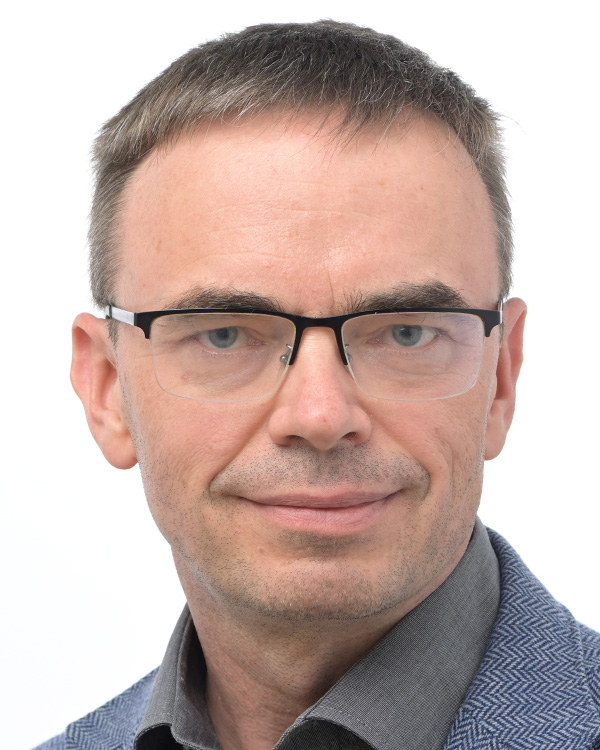
 Debate contributions by Sven MIKSER
| Rank | Name | Country | Group | Speeches | |
|---|---|---|---|---|---|
| 1 |

|
Lukas SIEPER | Germany DE | Non-attached Members (NI) | 321 |
| 2 |
|
Juan Fernando LÓPEZ AGUILAR | Spain ES | Progressive Alliance of Socialists and Democrats (S&D) | 280 |
| 3 |
|
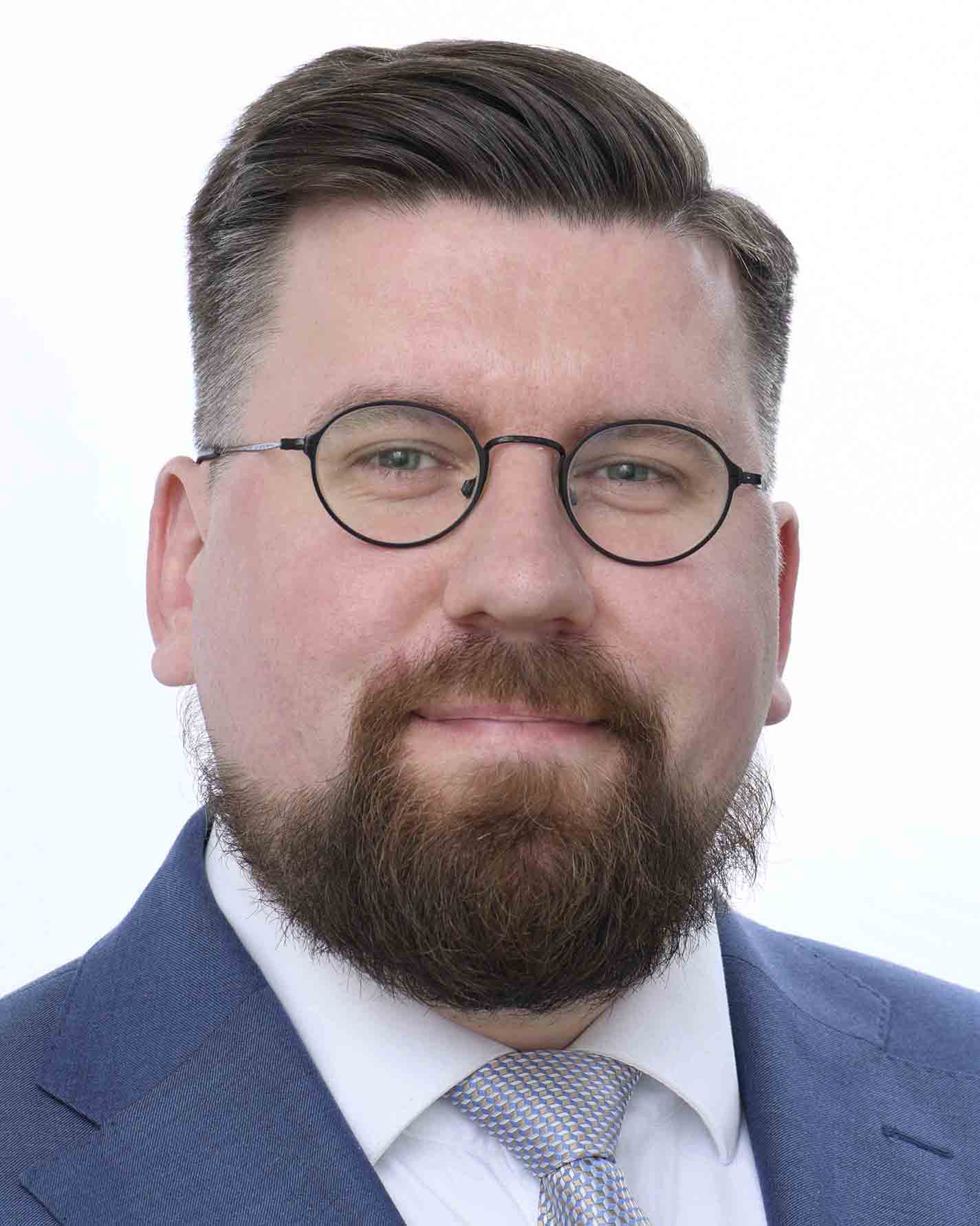
Sebastian TYNKKYNEN | Finland FI | European Conservatives and Reformists (ECR) | 247 |
| 4 |
|
João OLIVEIRA | Portugal PT | The Left in the European Parliament (GUE/NGL) | 195 |
| 5 |
|
Vytenis Povilas ANDRIUKAITIS | Lithuania LT | Progressive Alliance of Socialists and Democrats (S&D) | 183 |
All Contributions (24)
 CFSP and CSDP (Article 36 TEU) (joint debate)
Date:
20.01.2026 19:10
| Language: EN
Mr President, colleagues, we have previously spoken about de-risking in connection to our response to the global rise of China. Today, we need to speak of de-risking also in the context of the transatlantic relations. We have seen how excessive reliance on the US can involve not only benefits but also risks. As a purely transactional administration in Washington can and occasionally does turn these dependencies into a tool of blackmail, even against its traditional allies. If we want to be able to manage those risks, we have to acknowledge that the number one policy area where we have been overly dependent on the US is military defence. It is a very tech-heavy, innovation-intensive, innovation-intensive and expensive policy area. To become more autonomous and less dependent on American we simply have to take over a significant part of the financial cost involved, and that means starting to spend serious money.
EU response to the continuous airspace violations and sabotage of critical infrastructure in the EU originating from Russia and Belarus (debate)
Date:
26.11.2025 13:37
| Language: EN
Madam President, dear colleagues, the escalating violations of our airspace and confirmed acts of critical infrastructure sabotage by Russia and Belarus are not to be taken lightly. They are deliberate acts of hybrid war. A grey zone campaign designed to test our resolve and create fear among our citizens. Our response must be united and resolute. When it comes to incursions by manned military aircraft, this is not hybrid. Fortunately, we have robust protocols and NATO capabilities in place. We do not need to reinvent the wheel. However, our response must be fully proportionate and fully coordinated but firm, including by kinetic means if necessary. Second, the threat from drones and physical sabotage is intensifying. We condemn these criminal acts, obviously, but condemnations are not sufficient. The attack on the Polish rail line was an attack against our security, but also against our logistical support to Ukraine. To defeat these usually low‑cost but often high‑impact threats, more cooperation is needed. We must move urgently from defensive management to proactive deterrence, including by developing the drone wall by 2027. Finally, Russia and its cronies are doing all of this to intimidate our populations and to distract us from standing with Ukraine. The targeting of aid corridors and attempts to sow anti‑Ukrainian sentiment are explicit goals of this hybrid war. We must not be distracted. Instead, we must increase our support to Ukraine and ensure that it prevails because our collective security is inextricably linked to theirs.
United response to recent Russian violations of the EU Member States’ airspace and critical infrastructure (debate)
Date:
08.10.2025 08:31
| Language: EN
Madam President, dear colleagues, Russian violations of our airspace have recently become more frequent and also more provocative. It's clear that Putin is trying to seek out our vulnerabilities, test our resolve and unity, and create confusion and a sense of vulnerability among our citizens. Our response must be united and resolute. Let me make three brief points. First, when it comes to incursions by manned military aircraft, we do have – both nationally and through NATO alliance – most of the procedures and protocols in place to deal with these situations. We also collectively have the capabilities to identify, intercept and, if the threat posed by the invading aircraft requires, to take it down. However, we must be ready to bolster our posture and presence, particularly in the easternmost and most vulnerable Member States. Second, drones are a relatively new threat, but it is a rapidly growing threat. The drone wall is a great concept, but we must acknowledge that in real life it is going to be a very intricate combination of different measures and capabilities, and not all of them are there today. So we must proceed with the sense of utmost urgency. And finally, Russia is doing what it's doing in large part to distract us from standing with Ukraine and providing all the support Ukraine needs to fight off Russia's criminal war of aggression. We must not be distracted. Indeed, we must increase our support to Ukraine and make sure it prevails in its just fight against the aggressor.
Strengthening Moldova’s resilience against Russian hybrid threats and malign interference (debate)
Date:
09.09.2025 17:36
| Language: EN
Mr President, Commissioner, dear colleagues, earlier today, we had the chance to listen to a very clear and powerful address by Moldovan President Maia Sandu. And I am happy to say that her words express exactly the same sentiment that forms the core of the resolution that we are going to be voting on tomorrow. As President Sandu stressed, the outcome of the parliamentary elections that will take place on 28 September is going to be crucial for the future direction of the country, but it is also going to be a test for all of Europe. This election will decide whether Moldova manages to consolidate its democratic path towards EU membership, or is going to be pulled in a different direction by the external forces that want to derail the legitimate aspirations of the Moldovan people and also want to destabilise our continent. By those dark forces, of course, I mean Putin's Russia and its proxies. Our Parliament's resolution on strengthening Moldova's resilience is a direct response to the challenges of this critical moment. It's a statement of unwavering solidarity built on three central pillars. First, we strongly condemned Russia's malicious interference, or what President Sandu called an 'unlimited hybrid war' of 'unseen scale'. The resolution denounces these actions from illicit financing and vote-buying to a broad variety of disinformation and intimidation operations, and calls on Russia to respect Moldova's sovereignty and integrity. Secondly, we remain committed to helping Moldova to boost its resilience against these malicious operations. The tactics that Russia is deploying against Moldova are a blueprint for future similar operations targeting other European nations. And finally, we remain committed to supporting Moldova's European aspirations. The impressive progress Moldova has made is a testament to its commitment to reform process, and we must recognise these achievements by upholding the principle that a candidate country's path to EU membership is determined by its own merit. We therefore urge the Council and Commission to swiftly open talks on the first clusters.
Upcoming NATO summit on 24-26 June 2025 (debate)
Date:
18.06.2025 07:31
| Language: EN
Good echo. Important things first. Happy Birthday! Dearlocation, let us make three brief points. First of all, on defence spending, I think it's absolutely imperative that our leaders at the NATO summit agree on increasing our defence spending. But when this agreement has been reached, implementation is key. I vividly remember the NATO summit in Wales in 2014, when agreement was reached to ramp up defence spending to 2 % of GDP. And now, fast-forward 11 years and more or less two thirds of the members have met that commitment. So implementation is key. Also, I think we need to avoid a situation where our leaders meet around the NATO table and make a pledge and then a few weeks later they meet around EU tables and act as if they have never heard about that pledge. Let's be honest: This has happened in the past, so there needs to be a unity of effort between our two organisations. Second, I don't think that any one of us can or could call the NATO summit a success unless a strong pledge is made to continue and quite increase our support to Ukraine. This is the outstanding security crisis and we must meet this challenge. separately, I think it's imperative that NATO maintains a values-based alliance, an alliance where every member state inside mutual defence of democracies as their own vital national-security issue, that we do not allow the alliance to morph into a conditional transactional organisation where security of fellow members is fungus as a service to be provided for cash.
2023 and 2024 reports on Moldova (debate)
Date:
17.06.2025 15:54
| Language: EN
Mr President, I would like to use these two minutes first of all to thank all the colleagues for this very constructive debate and all the shadow rapporteurs for the very constructive negotiations – the same spirit I sensed during a few months back when we debated the growth facility. I think that there is, really, very much a shared sense of purpose among all the pro-European groups in this Parliament. There has also been great cooperation with the Commission, particularly Commissioner Kos, and also with the Council, led by the Polish Presidency. I think that we all sensed the same spirit and unity of purpose during the debate today. We, the European Union, have demonstrated has demonstrated our true commitment to Moldova's European aspirations. Most recently, when the Commission speedily launched the energy assistance package during the energy crisis, and then when we adopted the Growth Facility in record speed. The Moldovan people and Moldovan authorities have also demonstrated that commitment in re-electing a pro-European president and in enshrining the European integration into the constitution, and in pushing ahead at full speed with the reforms. But, obviously, this is not a time to rest on laurels because the Kremlin has not given up their sinister designs. So we must keep on working and also the Moldovans must keep on working well beyond the upcoming parliamentary elections. So we still have a lot of work cut out for us. Regarding the amendments, I fully concur with colleague Halicki, and I ask for all of your support during the final vote on the report tomorrow.
2023 and 2024 reports on Moldova (debate)
Date:
17.06.2025 15:07
| Language: EN
Mr President, colleagues, Commissioner Kos, today, Moldova is a candidate country to the European Union. And how successful it is in its aspirations is of course, of crucial importance for the Moldovan people's future welfare and freedom. However, Moldova's success or failure also matters for the future of our Union and indeed our continent. Moldova has embarked on an ambitious and challenging path of reforms. The report we are discussing today highlights significant strides the country has made in the past few years. Under the leadership of its pro-European governments and president, and driven by the will of Moldovan people, it has demonstrated commitment to democratic principles even in the face of immense external pressures. Its dedication to strengthening the rule of law, combating corruption and reforming its justice system, though still requiring a sustained effort, demonstrates a clear trajectory towards aligning with European standards and values. Our unwavering support for Moldova's sovereignty, independence and territorial integrity is crucial. The geopolitical landscape surrounding Moldova, marked by Russia's aggressive and destabilising actions, demands our vigilance and solidarity. During the constitutional referendum and presidential elections last year, we witnessed Russian interference and malign information operations on an unprecedented scale, and there is little doubt that we will see a repetition of those hostile operations during the run up to this year's parliamentary vote. Therefore, the report underscores the need for continued financial assistance, technical expertise and political backing to help Moldova navigate complex reforms and bolster its resilience against Moscow's hybrid warfare, disinformation campaigns and economic coercion. We must ensure that our support translates into tangible improvements for the Moldovan people, strengthening their trust in the European path. But beyond delivering immediate, tangible benefits for the people, the reforms also have a strategic objective of transforming the country into a vibrant, sustainable and competitive economy. The report recognises efforts to foster a more stable and attractive business environment, essential for economic growth, and for integrating Moldova into the EU single market. Progress in areas such as energy security is particularly commendable, reducing reliance on single sources and enhancing the nation's strategic autonomy. However, the report also points to the ongoing need for structural reforms to improve competitiveness, attract foreign investment and create sustainable jobs. We must advocate for policies that facilitate this economic transformation, ensuring that Moldovan businesses and citizens can fully benefit from closer ties with the European Union. Furthermore, the report emphasises the importance of civil society engagement and media freedom. A vibrant civil society and independent media are indispensable pillars of any functioning democracy. The role in holding institutions accountable, advocating for reforms and informing the public cannot be overstated. We must continue to support these vital actors, providing them with the necessary tools and protection to operate freely and effectively. Inevitably, the report also acknowledges areas where further action is required. These include full implementation of judicial reforms, consistent application of anti-corruption measures, and ensuring the protection of human rights and fundamental freedoms. The EU's role in these areas has become even more crucial following the substantial rolling back of the US international commitments. Also, the situation in the Transnistria region remains challenging, and the report reaffirms the EU's commitment to a peaceful and comprehensive settlement based on Moldova's sovereignty and territorial integrity. In conclusion, we must remain steadfast partners for Moldova, providing our support, guidance and encouragement. By investing in Moldova's future, we are also investing in the future of our continent and our Union.
CFSP and CSDP (Article 36 TUE) (joint debate)
Date:
01.04.2025 10:51
| Language: EN
Madam President, High Representative, colleagues, Europe's security situation obviously is extremely serious. Russia's aggression against Ukraine has brought large‑scale conventional war back to our continent and its outcome, if negative, threatens to overthrow the international rules‑based order altogether. Certain first steps by the Trump administration in the US have further exacerbated this already dire situation and, in this situation, Europe will have to emerge as an anchor of stability in our immediate neighbourhood as well as a defender of the rules‑based order globally. For this to happen, two things are needed. First, the EU will have to unwaveringly support and uphold international law, support the inviolability of international borders, sovereignty and territorial integrity of states, but also accountability for war crimes and crimes against humanity everywhere, from Russia to Palestine. Secondly, we have to back up our principal positions by real capabilities. That involves real money. On the level of Member States, we simply have to get rid of these huge discrepancies when it comes to defence spending and the military support for Ukraine. On the EU level, it means providing adequate budgetary means for all the noble instruments we have created for supporting our industries and filling the existing capability gaps. And obviously, real money is also needed if we want to fill some most critical gaps left by the US withdrawal from the international cooperation. Finally, we need to take a holistic approach to security, making sure that while we rightly focus on external threats, we do not leave our own societies more vulnerable to rising illiberal and populist sentiment on our continent.
White paper on the future of European defence (debate)
Date:
11.03.2025 17:00
| Language: EN
Madam President, colleagues, the fragile entire security situation around us makes it absolutely imperative that we improve our ability to deter our adversaries, but also, if and when necessary, fight and win wars. The dramatic reversal, of course, by our traditional American allies further underscores the need to achieve European strategic autonomy and industrial sovereignty. It actually underscores that some dependencies that we used to regard as security guarantees may, in this changed situation, prove to be vulnerabilities instead. A stronger focus on defence and defence industrial base is not merely expenditure. It actually provides a boost for our economic competitiveness and economic activity. But it's also important to see that this additional impetus to our economic growth be shared equitably across our Union. It has been said that we need to spend smarter and do more together, but it is obvious it's inevitable that we also need to start spending more, both at EU level, but also in our national budgets, where, let's be honest, the bulk of our defence spending and also capability generation will continue to happen. We must be open to considering all novel ways of financing our ambitious programmes, both public and private sources. But while it may be tempting to think that at this critical time everything except defence can be put on the backburner, this is not the case, because there are two types of challenges our democracies face, both external – of military nature – but also internal. We must not provide additional fodder for the pro-Putin illiberal sentiment.
European Council meetings and European security (joint debate)
Date:
11.03.2025 09:21
| Language: EN
Madam President, colleagues, a wise person once said that tactics is the art of using personnel and arms to win battles, whereas strategy is the art of using battles to win wars. Much has been said about how we need to rebuild European defence and security in the medium- to long-term, and I agree with most of it. Meanwhile, the decisive battle for Europe's future is playing out on the front lines in Ukraine and needless to say, following the very dramatic reversal, of course, by our American allies, the outlook has changed to worse. So we need to step out, and we need to fill the gap left by Americans. And we need to do it now. It's not a matter of months or years, it's a matter of hours, days, maximum weeks. If we fail in Ukraine, if Ukraine falls, then we will not merely be back to square one, we will be in a much, much darker place, starting to rebuild Europe's security from shambles. We must not let this happen.
Establishing the Reform and Growth Facility for the Republic of Moldova (debate)
Date:
10.03.2025 20:02
| Language: EN
Madam President, I would like to add my words of gratitude to, first of all, my co-rapporteur, Siegfried Mureşan, but also to all the shadow rapporteurs from the two committees. We had some very substantive discussions and debates, but I think there was very much a shared sense of urgency and also a shared sense of purpose. And the same can be said about the trilogues, so I would like to also thank the Commission, particularly Commissioner Marta Kos, as well as the Polish Presidency and Ambassador Agnieszka Bartol, for those very, very constructive negotiations that helped us to come to a swift and very good outcome. I'm also reassured by the debate here in this plenary hall today. I think that there is a very strong degree of unity and also a shared sense of purpose, with a very few exceptions. I do believe that Moldova, at this critical moment, needs our help, and I do believe that we also need Moldova. It's not perhaps the largest of the European countries, but it is far too important to be neglected. They deserve their place in our Union.
Establishing the Reform and Growth Facility for the Republic of Moldova (debate)
Date:
10.03.2025 19:03
| Language: EN
Madam President, Commissioner Kos, dear colleagues, we worked in a very good spirit of cooperation – the two co-rapporteurs as well as the two committees responsible for this file. Establishing a Reform and Growth Facility for the Republic of Moldova is significant in several ways. Moldova is a candidate country which, despite a multitude of different challenges, has a pro-European government that is truly committed to carrying out an ambitious reform agenda. As demonstrated by the constitutional referendum as well as the presidential election last year, a majority of Moldovan people also see their country's future in our Union. The growth facility – which at EUR 1.9 billion for the years 2025 to 2027 is the largest ever financial support package for Moldova – demonstrates that the European Union is also living up to our end of the bargain, and is helping Moldovan people and the country's institutions to prepare to assume the responsibilities of an EU Member State as soon as possible. There is a real urgency to our action. The Commission submitted its proposal for the growth facility, which was modelled on the Western Balkans facility, last year. Since then, the already previously complicated political and economic situation in Moldova has become even more challenging, exacerbated by the energy crisis that was caused by the discontinuation of gas supply by Russia's Gazprom. Meanwhile, the true extent and nature of Russia's brazen interference in Moldova's democratic processes has become increasingly apparent. We do understand the existential nature of these challenges. Therefore, I would like to commend the Commission for the decision to provide emergency energy assistance to Moldova, launching the comprehensive energy strategy. I would also like to underline how swiftly we managed to complete our parliamentary debates on the growth facility, and the interinstitutional negotiations with the Council and Commission. Meanwhile, even despite the unprecedented swiftness of these talks, we managed to strengthen the facility by raising the pre-financing rate that my co-rapporteur already mentioned and increasing the non-repayable component of the facility by another EUR 100 million, to a total of EUR 520 million. I am optimistic that after the adoption of the growth plan, the implementation of the facility will start delivering towards the long-term strategic goals of boosting Moldova's economic competitiveness, and making its institutions and its energy infrastructure more resilient. It will also help the country to further strengthen its ability to withstand and resist attempts by malicious external actors in Russia to interfere in Moldova's democratic processes. But alongside the strategic transformation of Moldova's economy, it is also important for the implementation of the facility to make an immediate positive impact on the Moldovan people's lives. Let us recall that, even before the recent acute energy crisis, Moldova's economy had suffered a lot because of the effects of Russia's aggression against Ukraine. So there is a real urgency, and we need to show that we are truly committed. In that light. I would also like to commend the Polish Presidency, which is working hard to see the opening of the first clusters in the accession negotiations. During the AFET visit to Moldova less than two weeks ago, we saw the magnitude of the challenges, we saw who we are up against, but we also saw the dedication of Moldovan pro-European leaders. I hope that at tomorrow's vote Parliament will once again show our overwhelming support to the legitimate aspirations of the Moldovan people to live in a democratic, prosperous and European country.
Continuing the unwavering EU support for Ukraine, after three years of Russia’s war of aggression (debate)
Date:
11.02.2025 10:25
| Language: EN
Mr President, dear colleagues, three years into this war, the fundamentals have not changed. The consequences for European security of a potential Russian victory look as dire today as they did three years ago. So we have to get our act together and start giving Ukraine what it needs in quantities it needs to win this war. And we should admit to ourselves that whatever the resolution of the war in Ukraine, Russia will remain a clear and imminent threat to Europe's security, so we also have to dramatically improve our defences, including our defence industrial capability. One thing has changed, though: pro-Russian populists are in a stronger position today than they were three years ago, both in this august chamber as well as in an increasing number of European capitals. This underscores the need to protect and strengthen our democratic structures, which in turn underscores the need for just and responsible social policies in Europe, for democracy and social stability at home are directly linked to our ability to provide sufficient support to Ukraine.
Uniting Europe against actors hostile to the EU: time to strengthen our security and defence (topical debate)
Date:
22.01.2025 12:07
| Language: EN
Madam President, colleagues, European security is at a precarious point. While Russia's bloody war of aggression against an EU candidate country – Ukraine – is grinding on, we are also seeing an increase in provocations and acts of sabotage against EU Member States' interests and infrastructure, and ever bolder attempts by Russia and others to wage hostile information operations and interfere in our democratic processes. In order to meet these extraordinary challenges we need to get our act together. This inevitably involves an increase in defence expenditure, both in individual Member States as well as at the Union level, to properly finance our joint instruments and programmes, to boost our defence industrial capacity, to maintain our technological sovereignty, address critical capability gaps and improve our overall resilience and readiness to act. Increasing our defence spending and improving our defence industrial capacity and competitiveness are almost universally recognised as priorities by pro-European political forces, and so is the need to continue our assistance to Ukraine in the fight against Russian aggressors. But in these uncertain times, it is absolutely imperative that there is strong public support in all our societies for what the political leaders see as our strategic goals on the global stage. It is deeply alarming that some of the hostile information operations in our partner countries, but also within the EU, are bearing fruit, boosting the standing of anti-EU and pro-Russian parties and politicians, and weakening the cohesiveness of our societies and our ability to swiftly respond to external threats. It is also deeply unsettling to see that actors from countries we regard as our allies are starting to engage in similar activities. Improving our defence readiness will not come for free. That is a significant price tag that our taxpayers will have to pay. In order to make sure that the European people continue to rally behind our efforts to protect our territories, our democracy and European values we need to make sure that we see this important endeavour through in a responsible and socially just way, without alienating large swaths of our societies and making them vulnerable to the machinations of our adversaries.
The democratic backsliding and threats to political pluralism in Georgia (debate)
Date:
08.10.2024 15:28
| Language: EN
Mr President, dear colleagues, I have been working with Georgia for many years now, and I believe that I can call myself a friend of Georgia. One thing that has never failed to impress me during those years has been the commitment of Georgian people to their Euro‑Atlantic and European aspirations. Truly, the support for these aspirations has been overwhelming in Georgian society. Unfortunately, recently we've seen that the conduct of the government and the governing party are in a very stark contrast to the commitment of the people to those ideals and aspirations – indeed, the adoption of laws that severely hinder or limit the operation of NGOs and civil society, that harass minorities, including the LGBTIQ community. These are steps that are totally in contradiction to the declared European aspirations of Georgia. Our European institutions and European Union Member States have been extremely supportive of Georgia, granting the candidate status – albeit conditionally – to Georgia. But this is not a path that is irreversible. Unfortunately, the authorities of Georgia seem to be working against those aspirations. Obviously, it goes without saying that the good conduct of elections is absolutely imperative when it comes to a country with European aspirations, but pluralism and democracy go far beyond that, and we truly expect Georgia to live up to its commitments that it has expressed in words, but so far not in deeds.
Continued financial and military support to Ukraine by EU Member States (debate)
Date:
17.09.2024 07:53
| Language: EN
Mr President, it is over two and a half years since Russia waged its full-scale war of aggression against Ukraine, and we can see some signs of war fatigue setting in, not just in Ukraine, but also in the European Union, unfortunately, also in this House. We must not let this happen. For one fundamental truth about this war has not changed. If we allow Putin to win, the result would be catastrophic, not only for Ukraine as a sovereign country, but also for Europe's own security and future prosperity. And for the whole international rules based order. We have declared over and over again that we are going to stand with Ukraine for as long as it takes. Let me say two things. First, how long it takes directly depends on how much and how quickly we give by way of ammunition and weapons deliveries. And second, declarations of support are just nice words. Without swift and complete implementation, words won't make the difference on the battlefield. So I urge all of us to make good on our promises and give Ukraine what it needs to defeat the aggressor on the battlefield, and keep the country running for its citizens so that they can keep believing in a better future and in Europe. Regarding restrictions on the use of Western long-range weapon systems, Ukraine cannot be expected to win if it is forced to fight with its hands tied. Hitting Russian military targets and supply lines in Russia is not provocative or escalatory. It is purely defensive, for it will limit the aggressor's ability to go on killing Ukrainian women and children and destroying Ukrainian infrastructure. Conversely, allowing Russia to win is ultimately escalatory, for it will send Putin a message that he can indeed sit us out. And it is possible, indeed in our times, to expand one's territory by military force and do so with impunity. This is something that we simply cannot afford. We cannot let it happen.
The need for the EU's continuous support for Ukraine (debate)
Date:
17.07.2024 07:47
| Language: EN
Madam President, dear colleagues, I think it is very symbolic and very important that we kick off this new mandate by renewing our pledge of support to Ukraine against the barbaric aggression launched by Putin over two years ago. But obviously, making symbolic statements alone is not sufficient. We have to back it up by real deeds. That means we have to give more weapons and ammunition, we have to do it more quickly and we have to lift all the restrictions that today hinder Ukraine’s ability to effectively hit back against the aggressor. Let’s be honest: we can only say that Europe has done enough when the liberation of all of Ukraine has been achieved, when Russian war criminals, including President Putin, have been brought to justice, and when Ukraine has finally assumed its rightful place among the community of Euro-Atlantic nations.