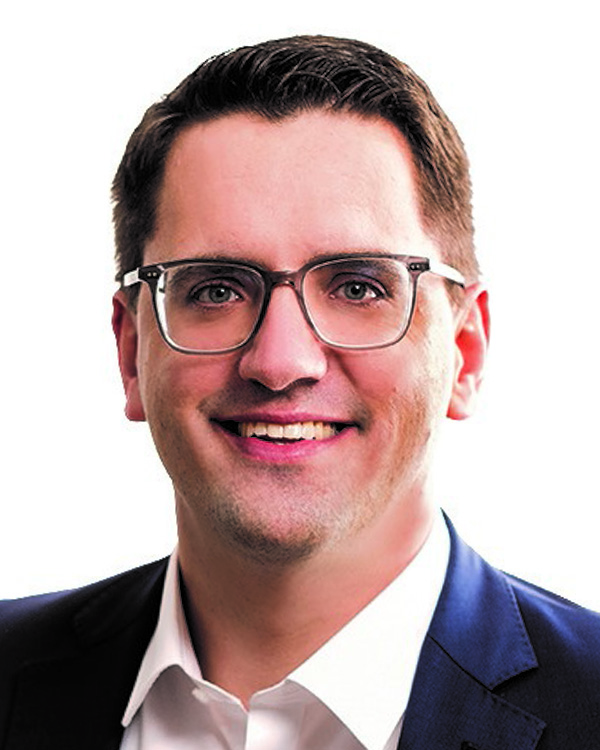
 Debate contributions by Christian DOLESCHAL
| Rank | Name | Country | Group | Speeches | |
|---|---|---|---|---|---|
| 1 |

|
Lukas SIEPER | Germany DE | Non-attached Members (NI) | 321 |
| 2 |
|
Juan Fernando LÓPEZ AGUILAR | Spain ES | Progressive Alliance of Socialists and Democrats (S&D) | 280 |
| 3 |
|
Sebastian TYNKKYNEN | Finland FI | European Conservatives and Reformists (ECR) | 247 |
| 4 |
|
João OLIVEIRA | Portugal PT | The Left in the European Parliament (GUE/NGL) | 195 |
| 5 |
|
Vytenis Povilas ANDRIUKAITIS | Lithuania LT | Progressive Alliance of Socialists and Democrats (S&D) | 183 |
All Contributions (6)
 Public procurement (debate)
Date:
08.09.2025 17:56
| Language: DE
Dear Mr President, Commissioner, ladies and gentlemen, Public procurement decides on schools, roads, hospitals, in short: about the daily lives of the local people. And it moves over €2 trillion a year, almost 14% of our GDP. Ten years after the last reform, it is clear: We need new rules that focus on speed, clarity and practicality. Our municipalities in particular are reaching their limits in public procurement law. Anyone who wants to renovate schools or build roads must not get stuck in bureaucracy. That is why we want to relieve small and medium-sized clients, so-called KMAs, just as we already protect small and medium-sized enterprises, SMEs, in the internal market. A second point: Construction is becoming more and more expensive, so the thresholds must finally be adjusted in line with inflation. An example: In 1996, when we joined the agreement in the World Trade Organization, the threshold for construction was 5 million euros. Now, 30 years later, it stands at 5.5 million. This means: If we were to use only EU inflation, it would have to be between 9.5 and 10 million. Thirdly: We need to strengthen our SMEs and our economy, i.e. reduce unnecessary complexity, use digitalisation and support those who create jobs and apprenticeships. For us in the EPP it is clear: Procurement must once again be what it is at its core – a tool to address current challenges. Environmental and social criteria can play a role, but mandatory requirements for all would be the wrong way to go because they weaken our single market. This compromise is balanced, puts the single market at the centre and strengthens it. At the same time, the proposal is not naive about the challenges around us; we need reliable European supply chains and we need to talk about a European preference. This is not protectionism, it is realism. I would like to thank you for your cooperation and for your support for this report.
Strengthening rural areas in the EU through cohesion policy (debate)
Date:
16.06.2025 18:11
| Language: DE
Madam President, dear Vice-President, ladies and gentlemen, In a few days, the European Commission will present its proposal for the new Multiannual Financial Framework. Now is the right time to send a clear signal to the Commission with our own-initiative report on strengthening rural areas in view of the next EU budget. Because one thing is clear: If we want to keep Europe together, cohesion policy must be at the top of the agenda – financially and politically. It is our strongest tool for equal living conditions across the Union. I am convinced that our policy must be designed to ensure that rural areas become future spaces in Europe in the future. I am grateful that we were able to include many of our priorities in the report. One point that was particularly important to me is that we want to support border regions within the European Union in a targeted manner. I am convinced that Europe is growing together at its internal borders; Not in the Brussels offices, but where daily life takes place. This is why we need more room for manoeuvre for cross-border cooperation, but still an important issue for foodies. I am grateful that we have positioned the European Groupings for Territorial Cooperation to take greater ownership in the future. Centralization? A clear no! It is important to us that we continue to give regions the right space in cohesion policy. More centralism usually means more bureaucracy, less speed and less effectiveness. I am grateful that we have succeeded in better anchoring water management in order to prevent natural disasters in the future. One point that I still find very important is that in this report we have also succeeded in promoting, for example, Europe's cultural heritage with European funds in the future. I am convinced that, for example, we must continue to support churches in the coming years. They are the cultural and Christian foundation of Europe.
Single Market Strategy (debate)
Date:
21.05.2025 17:42
| Language: DE
Mr President, Mr Vice-President, ladies and gentlemen! The European single market is undoubtedly one of the greatest achievements of our Union and the foundation of our economic success. But we are not exploiting these potentials. On the contrary: Bureaucracy, outdated rules and national loneliness are slowing down the single market in many places. The Commission presented a new strategy today. This is to be welcomed and we are by their side when it comes to deepening the single market. What we need now is speed, concrete action and clear priorities. Especially for my home country Bavaria, the EU internal market is indispensable. More than half of our exports go to the European Union. Hundreds of thousands of jobs depend on it, not only for corporations such as Siemens or BMW, but above all for medium-sized companies. If we completely remove the barriers to trade in the single market, German industry alone can grow by 200 billion by 2035. This growth is right on our doorstep – we must finally expose it. But what are we experiencing today? Internal trade costs, some of which are higher than customs duties for third countries. That's why I say: We need a real cut in bureaucracy. One in, one out Not enough, we need One in, 27 out. As long as each member state implements European requirements differently, the internal market will remain a patchwork. The Single Market is not a detailed project for a panel of experts, it is our growth anchor, our economic life insurance in uncertain times.
Improving the implementation of cohesion policy through the mid-term review to achieve a robust cohesion policy post 2027 (debate)
Date:
01.04.2025 16:07
| Language: DE
Mr President, Mr Executive Vice-President, ladies and gentlemen! As a Bavarian MEP and regional policy spokesperson, I am committed to ensuring that cohesion policy, with its €392 billion, has a targeted impact where it is needed. I welcome the Commission's positioning presented today. There needs to be adjustments in the programmes, there needs to be a sustainable cohesion policy. However, I would like to return to three important points. Our SMEs are the backbone of our economy. Bavaria and Germany are strong because we rely on a decentralized economic structure. Funding must not only benefit large companies, but must also take into account small and medium-sized enterprises. City and country must go hand in hand. Article 174 of the EU Treaties provides for support to regions with different levels of development, in particular rural areas and areas undergoing industrial change. When we talk about urban development, we always look at rural areas. We need a policy that creates stability. The current challenges – from geopolitical tensions to economic upheavals – demonstrate the importance of a good and well-thought-out cohesion policy. I would like to thank you for the cooperation so far and hope for good further discussions.
A stronger Europe for safer products to better protect consumers and tackle unfair competition: boosting EU oversight in e-commerce and imports (debate)
Date:
21.10.2024 18:38
| Language: DE
Mr President, Commissioner, ladies and gentlemen! A T-shirt for three euros, a jacket for seven or a children's plush toy for a few cents: E-commerce retailers like Temu or Shein flood our markets with aggressive marketing strategies and dumping prices. In 2023 alone, Shein and Temu together exported 9,000 tonnes of freight to Europe every day. With their unfair practices, they put enormous pressure on our online retailers, but also on our shops in our beautiful inner cities. While they adhere to strict European regulations, Temu and Shein violate product safety, working conditions, sustainability, copyright and data protection requirements – with no noticeable consequences. However, there is actually no lack of rules, but rather of their consistent enforcement. E-commerce platforms such as Temu or Shein cleverly exploit gaps in market surveillance and the import of goods to their advantage. Lack of intra-European networking in data exchange, inadequate customs controls and the customs regulations currently still in force favour the often unaudited import of goods from abroad in bulk packages with a low value of goods. Yes, it is important to encourage the lifting of the duty-free regime for goods under EUR 150 as part of the EU customs reform, and I thank the Commission for that. We need to see these new rules come into force and enforced as soon as possible. It is not about promoting protectionism, it is about fair competition – when our inner cities are swept empty and our European online retailers are destroyed, it is too late.