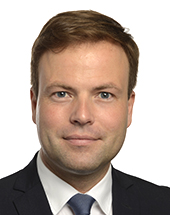
 Debate contributions by Sven SIMON
| Rank | Name | Country | Group | Speeches | |
|---|---|---|---|---|---|
| 1 |

|
Lukas SIEPER | Germany DE | Non-attached Members (NI) | 321 |
| 2 |
|
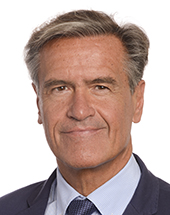
Juan Fernando LÓPEZ AGUILAR | Spain ES | Progressive Alliance of Socialists and Democrats (S&D) | 280 |
| 3 |
|
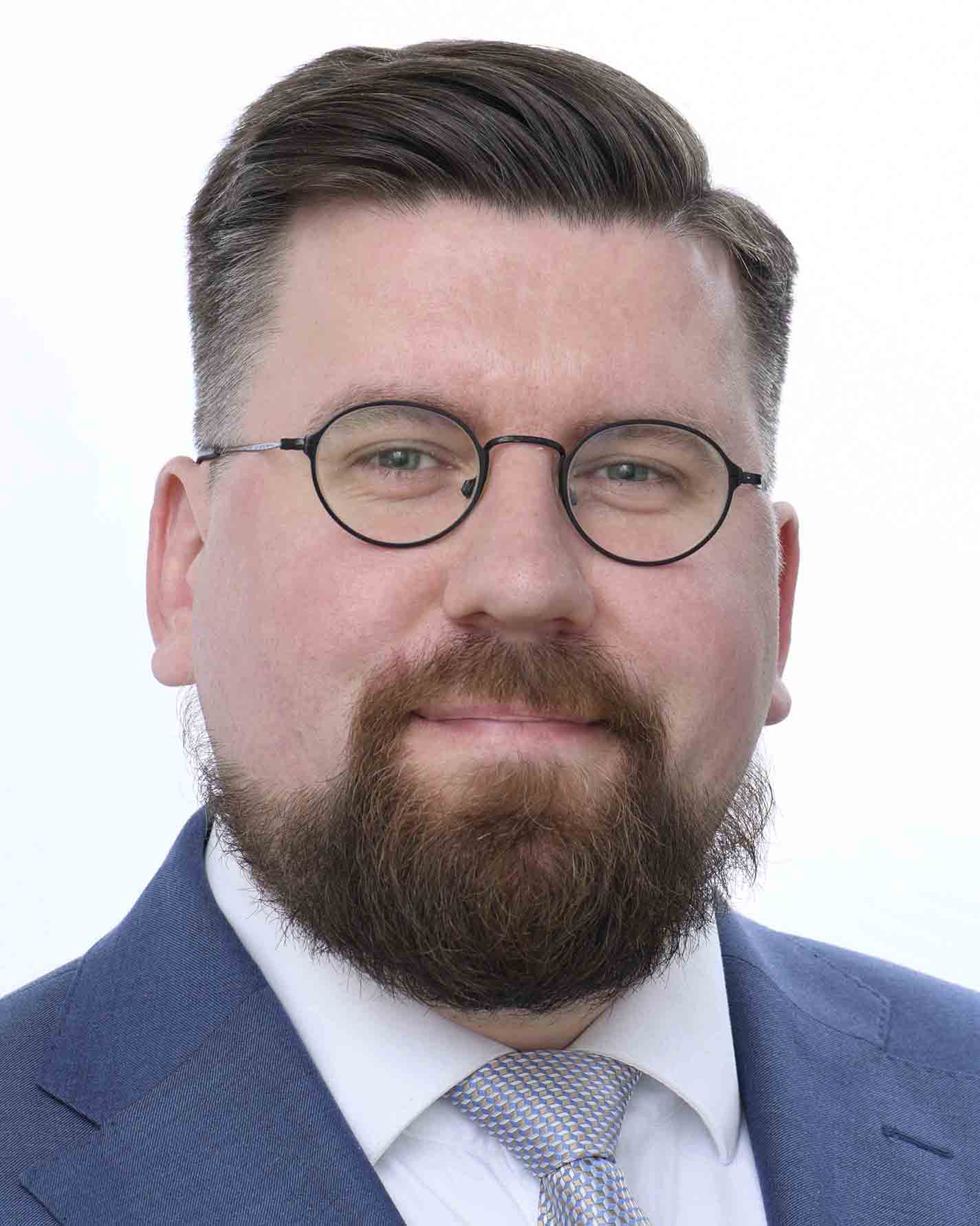
Sebastian TYNKKYNEN | Finland FI | European Conservatives and Reformists (ECR) | 247 |
| 4 |
|
João OLIVEIRA | Portugal PT | The Left in the European Parliament (GUE/NGL) | 195 |
| 5 |
|
Vytenis Povilas ANDRIUKAITIS | Lithuania LT | Progressive Alliance of Socialists and Democrats (S&D) | 183 |
All Contributions (17)
 The 28th Regime: a new legal framework for innovative companies (debate)
Date:
19.01.2026 17:22
| Language: DE
Madam President, Commissioner! Colleagues! We're all upset about Donald Trump's irrational tariff policy at the moment, rightly so, but there's one thing we have in our hands: abolish the de facto tariffs within the European Union that we impose on ourselves in Europe. The European single market is the foundation of our economy, but still unfinished to this day. Instead of one market, we already have the 27 different rule books mentioned above: Company law, insolvency law, labour law, all national. For companies, growth becomes an administrative project. While companies in the US or China are scaling into unified markets, expansion in Europe means new contracts and new hurdles. The differences are like internal tariffs. The International Monetary Fund quantifies it: 44% in the case of goods and 110% in the case of services. So if we want to move forward, we need an optional European company law, not too much small-to-small again. We must move forward here, but we must convince the Council that this is the European moment when we finally implement it.
Institutional consequences of the EU enlargement negotiations (debate)
Date:
21.10.2025 11:01
| Language: EN
Yes, indeed, thank you very much for this question. I think that a mistake in the construction of the institutional setting with the Lisbon Treaty is that we have a political union, fortunately, now, and the problem here is that the European elections do not have any effect on the composition of the Commission – that should be changed. At the moment, national governments nominate a commissioner. Okay – the European Parliament can vote or not vote for the European Commission president, but we should have a government in certain policy fields with federal structures, which can be voted in and voted out of office. This is my concrete proposal. Thank you.
Institutional consequences of the EU enlargement negotiations (debate)
Date:
21.10.2025 10:58
| Language: EN
Mr President, Commissioner, Europe once again stands at a historic crossroads and, colleague Stoyanov, of course the decision has a geopolitical meaning and, we all know, colleagues, such windows of opportunity open and they also close again. Too often we have opened them only to close them half-heartedly afterwards, and each time the disappointment in the Western Balkans has grown. This is about our credibility, our stability and our ability to act in an increasingly dangerous world. When Europe hesitates, others fill the vacuum, but not with our values, rather with their interests. Enlargement is not an act of idealism. It is an act of European self-assertion, yet a Union that grows without institutional renewal grows into its own incapacity to act. We need structures that make decisions possible, and institutions can be elected and unelected. Because the ability to act without democratic legitimacy would be a pyrrhic victory. Colleagues, we need more federal mechanisms in key policy areas where no Member State can act alone, but we also know the appetite for treaty change is limited in many capitals, if not all. That is why we must proceed wisely, step by step, with concrete reforms that create the ability to act without breaching centralism in Brussels. Those who want a larger Union tomorrow must have the courage to renew it today, and must seize this historic window before it is too late.
Rising antisemitism in Europe (debate)
Date:
07.10.2025 15:55
| Language: DE
Mr Körner, I did not know that Mr Mazurek laughed or should have laughed at the Auschwitz extermination camp. It helps us with the topic, as so often, only education, education. It's usually uneducated. In the case of Mr Mazurek, when I heard the speech here, I thought it was just stupidity. Anyone who expresses himself as he does, who on a day when we had a touching, moving memorial hour here in the house today with the brother of a victim, one who is still in the hands of Hamas in the Gaza Strip, and who then expresses himself and pretends that insults against white people are somehow comparable to what Jews are unfortunately experiencing again in Europe at the moment, is somehow not present in his senses.
Rising antisemitism in Europe (debate)
Date:
07.10.2025 15:52
| Language: DE
Madam President, Commissioner! Mr Mazurek, I think you have just spoken nonsense and cannot put yourself in the shoes of people of Jewish faith, which puts pressure on them – in Germany, in Europe, throughout Europe. Two years after Hamas's barbaric massacre on October 7, Jews in Europe are once again living in fear, and this is really not comparable to what you have presented here, which is supposed to also exist against white people. No, colleagues, in Manchester, in Berlin, in Paris: Synagogues under police protection, schools with security zones. On our streets, anti-Semitic slogans are being openly chanted again, calls for the destruction of Israel, justifications for terror, relativizations of the Shoah. At our universities and in the cultural sector boycott calls and defamation campaigns. The attitude becomes the yardstick. Artists and lecturers are tested for origin and attitude. Exhibits such as those of the Israeli conductor Lahav Shani in Belgium are no longer an isolated case. 80 years after the Shoah, Israel's anti-Semitism has once again become acceptable under the guise of alleged criticism of Israel or the government of Israel. The truth also includes: Part of the incitement is nurtured by those who have fled to us from war and persecution. At the commemoration hour here in the House today, the Ambassador of Israel said – I quote – that Israel is certainly not doing everything right. Certainly not. But those who want to defend freedom and democracy must protect Jewish life, unconditionally, visibly, every day.
Lessons from Budapest Pride: the urgent need for an EU wide anti-discrimination law and defending fundamental rights against right-wing attacks (topical debate)
Date:
09.07.2025 11:18
| Language: DE
Madam President, The Budapest Pride Parade has attracted more people this year than ever before. So the ban did exactly the opposite of what Viktor Orbán wanted to achieve. Colleagues, we can discuss many things, including whether the form of protest is always helpful. We must also talk about it when parts of society and European institutions move away from liberal principles and use symbols of an identitarian model of society that puts collective belonging above individual freedom. But one thing must be clear in Europe forever: The right to demonstrate applies! Freedom of assembly is a fundamental pillar of the European legal order, and the ban on the event in Budapest, as well as the Hungarian law, which illegally restricts freedom of assembly under the ridiculous pretext of child protection, is a clear violation of this fundamental right. That is also not a question, dear colleagues, of interpretation, interpretation or legal-cultural differences. You know that I am always in favour of a differentiated approach, including in Hungary, but here, Commissioner, the case is very clear, and that is why the whole thing has to be dealt with legally. Don't wait! An infringement procedure at this point is appropriate, because the fundamental rights, the individual enforceable fundamental rights, that is the special thing about Europe. That's what makes us special. But they are not a gift, not even given forever. That is why every day we need to have the courage to defend them – clear, loud and uncompromising.
The Commission’s 2024 Rule of Law report (debate)
Date:
17.06.2025 13:52
| Language: EN
Madam President, Commissioner, colleagues, the European Commission's rule of law report is more than just a technical assessment, it is a political compass. It reminds us that the rule of law is not an abstract principle, but the very backbone of our Union. For the European Union, law constitutes the very basis of its existence. But let us be clear: credibility demands consistency. Double standards undermine trust within the Union and beyond. Pointing fingers without self-reflection weakens rather than strengthens our position. The European Parliament's report should be a call to dialogue, not a tool for division. We are facing rule of law problems in numerous Member States: unresolved murders of journalists, corruption, surveillance scandals and interference in press freedom. The Commission's rule of law report does identify such issues. However, in public debate and political rhetoric they are often addressed in an unbalanced manner – we focus on one or two problems. And yes, colleagues, deficits include us as well. If we expect others to uphold the rule of law, we must apply the same standards to ourselves, including our own rules of procedure, which are handled quite flexibly from time to time. We must lead by example, with respect for our own rules. Only then will our voice in the world remain strong and credible when we speak about the rule of law.
Amendments to Parliament’s Rules of Procedure concerning the declaration of input (Article 8 of Annex I to the Rules of Procedure) (A10-0086/2025 - Sven Simon) (vote)
Date:
17.06.2025 10:46
| Language: EN
Madam President, colleagues, with this report, the Constitutional Affairs Committee is proposing to amend Article 8(1) of Annex I to our Rules of Procedure, according to which rapporteurs shall list the entities or persons from whom they received input on matters pertaining to the subject of the file in an annex to their report or opinion. In practice, it has become apparent that the wording 'entities and persons' is unclear, and there has been uncertainty as to which input must be included in the annex. The amendment proposed today addresses this issue. First, it limits your obligation as rapporteur to listing only those contributions that you have actually included in your report or opinion. Second, it narrows the scope to interest representatives registered in the Transparency Register and authorities of third countries. Unfortunately, colleagues, this is not the only provision with unclear wording in our Rules of Procedure, and when obligations are too vague or open to interpretation, there is always a risk that colleagues may find themselves subject to public criticism, even in the absence of any wrongdoing. That is why further amendments will be needed and we will come up with further proposals. Today's amendment will remove the ambiguous wording, while still addressing the intention of the provision, so I ask for your approval.
Discharge 2023 (joint debate)
Date:
06.05.2025 13:42
| Language: DE
Mr President, ladies and gentlemen, ladies and gentlemen! The Committee on Budgetary Control's investigations speak for themselves: For years, the European Commission has funded NGOs to lobby MEPs and Commissioners. A special report by the European Court of Auditors confirms: Between 2021 and 2023, several billion euros went to NGOs without a clear overview of their use. NGOs are part of our democracy, but they become a problem in a liberal democracy when they are funded with substantial state or European funds to distort the free competition of ideas and opinions and push through their political agenda. It therefore needs consequences. NGOs must be subject to the same transparency obligations as companies and disclose their sources of funding. It also raises the question – probably the more important question – of how much funding is justified at all if NGOs: non‐Governmental Organizations – on close‐Governmental Organizations will be. How many of these funds could have been invested so much more meaningfully in defence or European infrastructure?
A revamped long-term budget for the Union in a changing world (debate)
Date:
06.05.2025 11:02
| Language: DE
Mr President, ladies and gentlemen, In my view, the European Parliament's draft for the next Multiannual Financial Framework sets the right priorities. It calls on the Commission to put in place effective instruments to promote innovation. He is focusing on targeted investments to strengthen our defence industry and calls for greater transparency in the allocation of funding. The report by former ECB President Mario Draghi has clearly shown: Europe is at risk of losing out in global competition. He was very clear: We're going to die a slow death if we don't totally turn around and turn around. The mistakes of past budgets must not be repeated. Funding must be measured by its European added value, not by its political opportunity. Every single euro must be subject to clear controls and proof requirements. At the same time, new debts must not, in the long term, contribute to jeopardising the European Union's ability to act. As a result, however, competitiveness cannot be bought, but must be developed. It comes from bold structural reforms and the reduction of bureaucracy and clear incentives for companies.
Need to ensure democratic pluralism, strengthen integrity, transparency and anti-corruption policies in the EU (debate)
Date:
31.03.2025 19:15
| Language: DE
Mr. Friend! My colleague Loránt Vincze has already given the answer: Democracy is also part of the rule of law. An election took place in June and there are now other majorities in this Parliament. We will carry out the procedure now. Then we will see the majorities and, if necessary, terminate this agreement if there is a new majority for it in the new Parliament. You have to get used to the idea that you did not succeed in overcoming democracy, but with elections in June last year, a change took place, and that is exactly what we are implementing – if necessary by cancelling this agreement.
Need to ensure democratic pluralism, strengthen integrity, transparency and anti-corruption policies in the EU (debate)
Date:
31.03.2025 19:12
| Language: EN
Madam President, colleagues, the European Union was founded on the rule of law, which means there are clear rules on how to deal with crimes. The following order needs to be applied: suspicion, investigation, Indictment and then, if necessary, conviction. We often follow the process in the reversed order. But the fight for the rule of law can only be successfully waged if it is carried out using constitutional means. This includes the presumption of innocence, the separation of powers, and the immunity of Members of Parliament, which should be lifted in a legally sound procedure if there is cause to do so. Where the rule of law is applied, it is also clear which institutions prosecute crimes: the police, the Public Prosecutor's Office and, at the European level, OLAF and EPPO. Parliament must cooperate with these authorities and, if necessary, initiate its own investigations. However, this must also be done with within the framework of legal procedures. In another case, the European Court of Justice has just confirmed that we have some catching up to do in our own House when it comes to legal procedures. Today, we discuss allegations again, although I would like to know what actually happened to the allegations of the past – Kaili, Krah, von der Leyen. Always the same pattern: accusation, arrest and then what is the outcome of this allegation? By the way, the current case, like all the others, has nothing to do with morals or ethics. The accusation here is a criminal offence. And, as I said, we have OLAF, EPPO and the national authorities to investigate. They should now do their work and while they do, we should do our best to avoid giving the impression that the European Union is a corrupt institution. It is not.
Guidelines for the 2026 budget - Section III (debate)
Date:
31.03.2025 15:39
| Language: DE
Mr President, ladies and gentlemen. The guidelines for the 2026 budget of the European Union set the right priorities: The report focuses on European competitiveness; calls for investment in research of more than 3% of gross domestic product and stresses the need for an integrated European energy market. It is right to focus on strengthening funding opportunities for the European defence industry. As long as we source 80% of Europe's arms supplies to Ukraine from abroad, Europe will remain dependent on security policy. In the long term, however, Europe's challenges cannot be met with the current financial framework. Without a reform of own resources, the European Union will not be crisis-proof or receptive to new members. And by the way, we also have to repay the debt from the budget – unfortunately, we always forget that at the moment when it seems opportune to us to be able to solve all conceivable problems simply always with new debts.
100 days of the new Commission – Delivering on defence, competitiveness, simplification and migration as our priorities (topical debate)
Date:
12.03.2025 13:50
| Language: DE
Mr President, ladies and gentlemen, 100 days of the European Commission: In fact, time for a first review. A change of mindset has started, a change of course. The fact that the left side of the house is not pleased with this, I am pleased again. You thought you had overcome democracy and this whole left-wing, illiberal course continues – but an election has taken place. And that is why it is good, Commissioner, that the new Commission is now focusing more on economic competitiveness and security. This is good because you have noticed that small-scale regulation and excessive bureaucracy have long prevented the European Union from reaching its full potential. The central question you always have to ask yourself: First, do we need regulation at all? And secondly, will regulation achieve the goal you want to achieve? This is not the case in the area of the Green Deal and many other regulations that have left the European continent behind. Therefore: Congratulations on the bus packages. You have to imagine that we managed to create 13,000 new regulations in five years – the Americans got by with 3,000. Congratulations on the proposals in the field of defence – however, the legal basis is wrongly chosen and we must now finally wake up to jointly develop and produce European weapons so that we can become autonomously defence-ready.
Enhancing Europe’s civilian and defence preparedness and readiness (debate)
Date:
14.11.2024 09:48
| Language: EN
Madam President, colleagues, ladies and gentlemen, we must confront the fact that, in defence, Europe is utterly unprepared. The numbers are clear: while the European Union maintains 178 different weapon systems, the United States operates with 27. Our defence industry is paralysed by inefficiencies and fragmentation. In supporting Ukraine, we have procured 80 % of our military supplies from outside the European market. That doesn't make sense. Last November, President von der Leyen put forward urgently needed reforms to strengthen the European Defence Agency and accelerate industry production. So far, Member States have shown an alarming lack of engagement. Putin sees the West as weak. That, we must change! We Europeans, ladies and gentlemen, must move beyond the zero-sum game of national interests and become capable of defending ourselves.
Strengthening Moldova's resilience against Russian interference ahead of the upcoming presidential elections and a constitutional referendum on EU integration (debate)
Date:
08.10.2024 15:11
| Language: EN
Mr President, colleagues, Moldova finds itself at a crossroads ahead of its elections. Will the country continue its path of European integration? Or will it be dragged into an oligarchic past? This choice will shape the country for a generation, and this choice must be taken by the people of Moldova and them alone, without foreign interference. Yet at the same time, we as Europeans have to live up to our own responsibility. It is not enough to say that Moldova's place is in Europe. We need to follow this statement with political action. We need to do more to make the promise of a European future credible. To the critics of enlargement in my own country and across western Europe, let me remind you of what Pope John Paul II famously said. Europe needs both wings of her lungs, the western and the eastern, to breathe freely. If we don't act accordingly, others will fill the vacuum that we leave. European unification, colleagues, will only be complete if it includes the Europeans in Moldova.
One year after the 7 October terrorist attacks by Hamas (debate)
Date:
07.10.2024 16:22
| Language: DE
Madam President, ladies and gentlemen. I would like to begin by repeating what Daniel Caspary and the previous speaker said: Commissioner Borrell, it is already a late insight for a High Representative for Foreign Affairs and Security Policy of the European Union to realize today, after the end of your term of office, that we Europeans do not play a role in the region, although we are perhaps the only ones who could mediate in the conflict as honest negotiators. October 7 marks a turning point. Hamas' barbaric massacres were designed to lead to the situation we are witnessing today. The statement ‘Never again’ has become a ‘yes, but’ in many places. We can't let that happen. Too many Jews no longer feel safe here in Europe. They are afraid to live in Europe again. We must never accept that. A society that is silent about anti-Semitism is complicit. And so today's message must be: We stand with Jews in Europe – not only in words or gestures, but in actions against all forms of anti-Semitism.