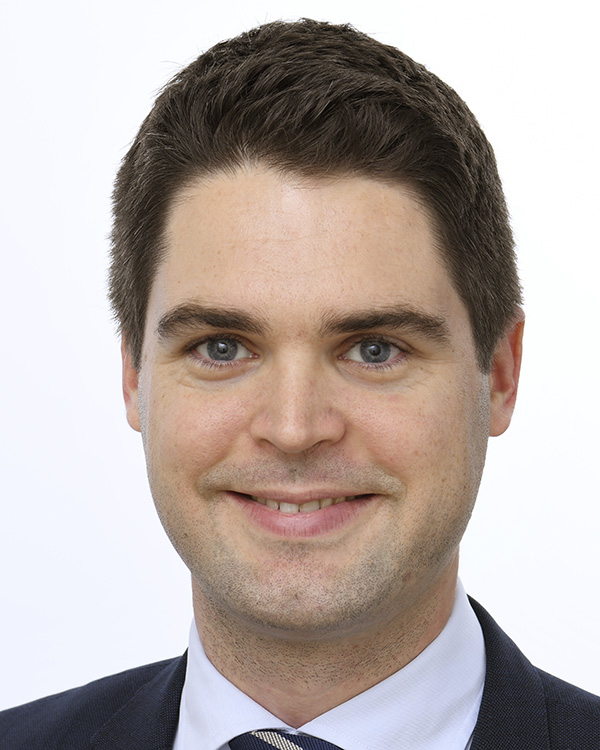
 Debate contributions by Karlo RESSLER
| Rank | Name | Country | Group | Speeches | |
|---|---|---|---|---|---|
| 1 |

|
Lukas SIEPER | Germany DE | Non-attached Members (NI) | 321 |
| 2 |
|
Juan Fernando LÓPEZ AGUILAR | Spain ES | Progressive Alliance of Socialists and Democrats (S&D) | 280 |
| 3 |
|
Sebastian TYNKKYNEN | Finland FI | European Conservatives and Reformists (ECR) | 247 |
| 4 |
|
João OLIVEIRA | Portugal PT | The Left in the European Parliament (GUE/NGL) | 195 |
| 5 |
|
Vytenis Povilas ANDRIUKAITIS | Lithuania LT | Progressive Alliance of Socialists and Democrats (S&D) | 183 |
All Contributions (44)
 Restoring control of migration: returns, visa policy and third-country cooperation (topical debate)
Date:
21.01.2026 14:30
| Language: HR
Dear Chairman, colleague and colleague, restoring control over migration also means restoring Europe's damaged credibility. Too many decisions are still not implemented, visa rules are abused and cooperation with third countries is not always fully consistent. Europe can no longer afford passivity on this issue and it is good that the rules, but also Europe's attitude towards migration, change. We now need a single and effective return procedure that works effectively, with more operationality on the ground and clear consequences for non-compliance. We also need a visa policy, including the visa policy of candidate countries, which will not tolerate the abuse of migration routes in our immediate neighbourhood and which will be a tool for European security and migration management, not a means to put additional pressure on our borders. And thirdly, yes, we also need strong and effective cooperation with countries of origin and transit, including through the organisation of return centres. Union support through the European Border Management and Visa Support Fund, which will create an even better framework for the coordination of migration, will also be crucial. Ultimately, it is about protecting Schengen, defending our borders and upholding the rule of law.
European Council meeting (joint debate)
Date:
21.01.2026 10:03
| Language: HR
Dear Chairman, the brutal speed of a world that is never more dangerous, the noise of the post-factual era in many of our fellow citizens is confusion, uncertainty, and more and more fear. The first and true answer to this must be the absolute unity of Europe. Regardless of the political differences here in the European Parliament, regardless of national differences, in responding to everything that tests our unity, in responding to threats and threats, with a little more self-esteem and with a little more guards and European leaders. Threats and blackmails are not something, without any dilemma, that we need and can agree to, human, national, civilizational, and perhaps especially when they come from our allies. However, the realities of the new world can no longer be ignored. It is up to us to boldly adapt Europe to the new era that is coming and that is here, whether we like it or not, without blindly relying on anyone but our own forces. This means in particular that after four years of bloody imperial war in Ukraine, we must continue to strengthen our defence capabilities, continue to deepen the internal market, cut administrative costs, but also free trade with the world, South America, India, Indonesia. Preserving Europe today does not mean preserving the status quo, it does not mean preserving our comfort or habits, but ensuring our relevance. A Europe that believes in itself...
30th anniversary of the signing of the Dayton-Paris Peace Agreement (debate)
Date:
18.12.2025 08:38
| Language: HR
No text available
Preparation of the European Council meeting of 18-19 December 2025, in particular the need to support Ukraine, transatlantic relations and the EU’s strategic autonomy (debate)
Date:
17.12.2025 09:45
| Language: HR
I think it is clear to all of us, at least here in the European Parliament, that we are at the beginning of a long difficult process, that 2026 will be marked by intense, dynamic talks also here in the European Parliament, but also perhaps even more so among the Member States; there is no predetermined outcome of such discussions; that the European Commission's proposal from July this year practically united the Parliament here, that our concerns and concerns are clear, but also that we will fight together in this house for this and that agricultural policy preserves its identity and that cohesion policy remains the central policy of the European Union.
Preparation of the European Council meeting of 18-19 December 2025, in particular the need to support Ukraine, transatlantic relations and the EU’s strategic autonomy (debate)
Date:
17.12.2025 09:43
| Language: HR
Thank you very much for the question, but also for a little more time to explain the point of view on just that, on one of the key topics and this week's leaders' meeting around the multiannual financial framework where the key will be to balance the first pillar focused on cohesion, on the policy that is, according to the Treaties, the central policy and the European project, and on the other hand with a new focus on competitiveness, which, clearly, as the European People's Party we support. But as I say, I think that the balance between the first and second pillars should contribute to the balanced development of all European regions, but also to making Europe more competitive with other global players.
Preparation of the European Council meeting of 18-19 December 2025, in particular the need to support Ukraine, transatlantic relations and the EU’s strategic autonomy (debate)
Date:
17.12.2025 09:40
| Language: HR
Dear Chair, colleagues, in crucial moments of truth for Europe, in dangerous and increasingly dangerous times, the time has come to take on historical responsibilities: and for European security, for European competitiveness, but also this week at the meeting of European leaders and for the equal development of Europe. The time has come to completely reject misconceptions, economic, energy and social experiments, for the absolute unity of Europe in response to threats and threats. The time is coming for more self-esteem, for more guards, and for decisive financial support in Ukraine so that it can achieve a just and sustainable peace. The time has come for a little more self-criticism, including here in the European Parliament about the weaknesses Europe has inflicted on itself: overregulation, meaningless bureaucratic rules, but also a chaotic policy of verse migration. The time is coming to embrace the reality of the new world in which Europe lives, the time is coming to embrace the reality of the results of the elections that took place more than a year ago, the time is also coming for the first serious discussion and debate on the long-term budget, on a key geopolitical instrument that will test the unity of Europe and that must not further divide Europe, but on the contrary, reduce differences. That is why we have a responsibility and cooperation here in the European Parliament without blindly relying on anyone and we have ourselves. And it is up to us to bring Europe into a new... (Chairman interrupted the speech).
2026 budgetary procedure: joint text (debate)
Date:
25.11.2025 14:31
| Language: EN
Mr President, Commissioner, dear colleagues, at a moment when Europe faces growing global pressure, we needed a budget that strengthens our strategic direction and I think that we can proudly say that we delivered one. Thanks to our lead negotiator, Andrzej Halicki, thanks to Matjaž Nemec and the entire conciliation team, Parliament secured an agreement that restores EUR 1.3 billion cut by governments. I think that it is also safe to say that the agreement reflects Parliament's priorities. First of all, targeted strategic investments that strengthen Europe's resilience and competitiveness. In practical terms, this meant that we secured EUR 362 million in top‑ups for programmes that deliver real added value, from Horizon Europe to CEF transport and energy, to civil protection, support for SMEs, ESF+ to strengthen skills and employment, Erasmus+ and EU4Health. At a time of heightened security pressures, Parliament ensured stronger resources also for Frontex, Europol, military mobility and the Border Management and Visa Instrument. Dear colleagues, I think that it is quite clear that, in any case, this is not and has not been a budget of celebration, but it is definitely a budget of direction for the Union in the next year, and the budget that keeps Europe moving forward. Thank you to everyone who has delivered.
Enhancing police cooperation in relation to the prevention, detection and investigation of migrant smuggling and trafficking in human beings; enhancing Europol’s support to preventing and combating such crimes (debate)
Date:
24.11.2025 18:49
| Language: HR
No text available
The new 2028-2034 Multiannual Financial Framework: architecture and governance (debate)
Date:
12.11.2025 16:59
| Language: HR
Dear Chair, Commissioner, colleagues, I see this Commission proposal as the first concrete sign that the voice of the Parliament is being heard and the concerns this time are being taken seriously. Preserving the identity of the Common Agricultural Policy, protecting the amounts for more developed and regions in transition, a minimum of 10% for rural areas are more than technical details and clearly show the direction to continue. A direction in which investments in balanced development, food production and decent living also in rural areas remain an integral part of the European story and not just a historical footnote in the budget, clearly and with a focus on competitiveness and security. At the same time, one should not be misled – many conceptual flaws and ambiguities persist, including the role of Parliament and regions in shaping national plans. Linking the objectives of the European Semester with investments may sound logical, but the intertwining of the logic of economic reforms with balanced territorial development obviously carries serious risks. We will discuss all this in negotiations and now it is time to start working properly.
Preparation of the European Council meeting of 23 October 2025 (debate)
Date:
22.10.2025 08:42
| Language: HR
After years of moral blackmail, years of dormancy, lulling, Europe is waking up and reversing some bad trends. But the European Union is still missing and needs a little more guards, self-esteem, common sense and innovation. That is why, following new hybrid attacks from the east, the European Council has a responsibility to restore Europe to a healthier economic base, competitiveness and energy independence, following drone provocations in the fourth year of war on the European continent. This is impossible with dogmatism of any kind, without nuclear energy and with blind reliance on anyone. This is impossible without safe borders and a credible return policy, without unburdening the economy and simplifying regulation. More than ever, however, the absolute necessity of unity is imposed. And between Member States, but also colleagues, here in the European Parliament. And our seriousness will be tested in the coming months to move away from failed economic social experiments, to return to our foundations and to what has made Europe a great and economic power, and that is why we will all have to show together that we are truly at the level of the task.
General budget of the European Union for the financial year 2026 – all sections (debate)
Date:
21.10.2025 19:13
| Language: EN
Mr President, Mr Commissioner, dear colleagues, here we are in this perhaps late night debate on the annual budget for the next year, and the hour may be late, but the topic definitely deserves our full attention, since we are discussing the priorities that go much beyond this Chamber and all this in times of global uncertainty, but also growing competition in the world where the EU needs a budget that also can meet citizens expectations, and not only for the next year, but also for the MFF that we are discussing these days as well. The main idea of the Parliament here is to restore the 1.3 billion for key programmes cut by the Council, compared with the Commission's draft budget. We cannot accept the cuts that would weaken the Union's strategic objectives and we need strong investment in research, in energy and transport connectivity as well, and in small- and medium-sized enterprises where the backbone of the European economy. In the context of security challenges, we must also ensure additional resources for internal and external security. The discussions have maybe been long and at times also difficult also in the Parliament, but also within our Groups. But they have in the end led us to a fair and balanced compromise. In that sense, I really congratulate both of the rapporteurs to Andrzej and Matija, and I really invite you to support the outcome support, because with tomorrow's vote, we enter the final stage of negotiations with the Council, a crucial step towards reaching a balanced agreement. And I hope that in the continued engagement with the Commission, we can count on the support of the colleagues.
Polarisation and increased repression in Serbia, one year after the Novi Sad tragedy (debate)
Date:
21.10.2025 18:10
| Language: HR
A year after the tragedy of Novi Sad, the Serbian society is still key, and Vucic's regime is now generating a grotesque political psychosis and a permanent state of emergency. Instead of reforms, instead of releasing from the mythological narratives of the past, instead of breaking privileged ties with Russia and aligning with the European acquis, European foreign and visa policy, Serbia is increasingly moving away from both European values and the rule of law. We observe a regime collapsing inside, in the shadow of mass protests, violence and the deepest divisions since the Milosevic era. At the same time, the process of joining Europe has long become an empty phrase and no longer attempts to conceal it. It is bizarre that support for Serbian accession to the European Union is today greater in Croatia than it is in Serbia itself. The policy of European indulgence has completely collapsed, and credibility can now only be restored by facing a difficult reality, supporting the right pro-European forces, but also a firmer attitude towards all those who undermine European values.
Commission Work Programme 2026 (debate)
Date:
21.10.2025 13:57
| Language: HR
The Commission's work programme for next year comes at a time when Europe has virtually no alternative but to prove in practice that it can act effectively and decisively. There are clear challenges ahead: security is being undermined, the economy is being shaken, and more and more citizens' trust in the European institutions is being undermined. This is why I call on the Commission to focus on three key objectives in the coming year, based on this programme. First, Europe's security in the growing uncertainty of war conflicts. Second, enhancing competitiveness, including through simpler public procurement rules and energy independence, and third, reducing the bureaucratic burden that stifles innovation and entrepreneurship, including through the introduction of the 28th regime. When planning and adopting any new European rules, we call for an extremely conservative and cautious approach, so that often in good faith they do not end up creating new additional burdens. The new regulation needs to be reduced to what is strictly necessary, with a focus now on simplification, impact evaluation and smart implementation, in particular of key acts such as the Pact on Migration and Asylum or the Artificial Intelligence Act. There will be no concrete results without a meaningful long-term budget focused on the right priorities and balanced development of all European regions. It's time to get back to the basics. It is time to go back to common sense policies, but also to the cooperation of all those who want the good of Europe.
Institutional consequences of the EU enlargement negotiations (debate)
Date:
21.10.2025 11:59
| Language: HR
Dear Chairman, Commissioner Kos, colleague and colleague, enlargement is a strategic priority of the European Union and requires adjustments, primarily of the candidate and to some extent of the European Union. However, only a minority of strategic key national decisions are taken by unanimity at European level. Yes, it is not always easy, that some, unfortunately, also brutally abuse it, but naive arguments and illusions are that over-voting other, smaller and medium-sized member states would bring more unity. Exactly the opposite. I think it is quite clear to predict that this would lead to an even greater loss of trust between Member States and then to problems in the implementation, for all, of the whole European Union. That is why we believe in a Europe where key strategic decisions are built, not imposed, in a Europe where trust between Member States is built, where there will be even greater efficiency, because it is possible to improve the way decisions are made, but also where the rights of all Member States will be protected.
Promoting EU digital rules: protecting European sovereignty (debate)
Date:
08.10.2025 14:58
| Language: HR
Dear Chair, Europe today does not dictate the pace of technological development, but tries to follow it with difficult steps. Draghi's diagnosis of a stunted European economic power unfortunately refers especially to the digital sector. Key European barriers are not a lack of talent or even a lack of resources, but above all too much bureaucracy, fragmented markets and a weak translation of research and knowledge into application. If we want digital policy to be at the service of Europe, at the service of people and entrepreneurs, we need simplification of regulations, faster procedures, as well as more investment in European innovation. Digital advancement, of course, is not an end in itself, but the goal is to create a space where the best minds stay here. start-ups grow and develop in the Single Market. Alongside our European values, freedom, privacy protection and democracy.
Revision of the Visa Suspension Mechanism (debate)
Date:
06.10.2025 18:55
| Language: HR
Dear colleague and colleague Commissioner, freedom of movement in Europe is a value that must be preserved. We are still witnessing the real pressure of migration with loopholes in the system, which unfortunately continues to be massively abused. When legal entry is turned into a shortcut for abuses, the problem undermines not only the whole system, but also the trust of European citizens. That is why I welcome the changes that will provide better safeguards and that the visa-free regime can be stopped in different scenarios, which, unfortunately, have long been too well known to us. First, we must be able to stop the instrumentalisation of migration. On the eastern land border of the European Union, the jump is around 200 percent in 2024. A direct consequence of Russian hybrid action through Belarus. Second, the uncoordinated visa policies of our European neighbours are still a problem. Perhaps the most exotic example we can remember today is the wave of migrants from Burundi entering European territory through Serbia after unilateral visa decisions. And how many such changes have spilled over to our borders and to our policemen. Therefore, the thesis that this is a kind of closure of Europe is completely missed. This is the protection of Europe. A Europe where Schengen is safe and the pressure on frontline countries, such as Croatia, is lower. In the end, this is also a message about restoring the damaged trust of citizens. Distorted also because of failed policies in the past, but also unfortunately sometimes because of our European naivety. Thank you, congratulations on the suggestion and let's go so far.
Investments and reforms for European competitiveness and the creation of a Capital Markets Union (debate)
Date:
08.09.2025 15:53
| Language: HR
A year has passed since the publication of the Draghi report, which once again underlined that while America and China dictate the rules of the new industrial revolution, Europe risks remaining a passive observer. Europe has swayed and European competitiveness is lagging behind. That's why the report was more than a diagnosis. We know and understand the problems very much. The report also called for concrete action to restore Europe's strength and ambition. This report enumerates all those measures, reforms and investments that can bring technological breakthrough and economic resilience to Europe and calls for a general mobilisation, for speeding up decision-making, for simplifying the rules that are necessary, for an administrative burden that is unavoidable, but without a financial dimension focused on competitiveness that corresponds to this vision, everything remains a dead letter. Public funds must act as a catalyst for private investment, using budgetary guarantees and financial instruments to scale investments in strategic sectors. The only option is therefore to unite capital markets and try to finance all available funds to the maximum.
The EU’s post-2027 long-term budget: Parliament’s expectations ahead of the Commission’s proposal (debate)
Date:
09.07.2025 09:00
| Language: HR
The Honourable Chair, the Honourable Commissioner, our colleagues, we expect a proposal in a week to show if Europe has the strength to act as a serious community. The stakes are high and the ball is now with the Commission. Parliament's position is quite clear and quite simple and we know what to expect. In Croatia, as in other, most other Member States, European funds are a key investment driver. For this reason, it is essential that in cohesion policy local and regional communities remain involved, remain central, and not that European funds become just a collection of national plans under excessive centralisation by the Commission. We need new own resources, but also without burdens for families, for citizens, for businesses, as one of the imperatives is also to reduce bureaucratic burdens for end-users.
Institutional and political implications of the EU enlargement process and global challenges (debate)
Date:
19.06.2025 07:56
| Language: HR
I don't think it's benevolent, actually, your question. What we can certainly say is that Ukraine, which is also fighting for its existence, but which is fighting for its people and for European values, has an ambition to join the European Union. When and how this will happen is not easy to answer, it will not happen overnight in any case. However, what exists as an ambition I think we should respect and on our part that we must do order in the enlargement policy as well. And in this sense, we need to do everything we can to help a country now in a state of war, and we hope that one day our colleagues will come here from Ukraine as well.
Institutional and political implications of the EU enlargement process and global challenges (debate)
Date:
19.06.2025 07:53
| Language: HR
Dear Chairman, colleagues, Russian influence, Chinese investments and anti-European regional actors who do not share our European values strengthen their presence precisely where Europe hesitates. The credibility of European enlargement policy is built precisely through a stronger partnership with countries and actors who share the aspiration towards a common future, but also through stronger policies towards those who undermine Europe and who undermine European values. In this context, the Growth Plan for the Western Balkans certainly represents an opportunity for deeper integration and concrete change, but without a clear political message, without a clear aspiration and seeking a clear commitment, it will remain only a framework without content. North Macedonia, a country that, despite the Commission's multiple recommendations, is still waiting for negotiations to begin, is an example of political injustice that also undermines faith in the European project. In Bosnia and Herzegovina, separatist messages, separatist policies on the one hand, but also unrealistic unitarist ambitions on the other, are exhausted. Montenegro is fighting for its European and pro-Western orientation. Naively and in this debate sound illusions that overvoting within the European Union will lead to greater unity. This is not possible, it is counterproductive not only for smaller and medium-sized Member States, but also for the whole of Europe. This is why we need to be clear, we need to be present, but we also need to work together to take all positions into account.
Implementation report on the Recovery and Resilience Facility (debate)
Date:
17.06.2025 11:38
| Language: HR
Dear Chair, the idea contained in this report of a targeted 18-month extension for those projects that are mature, objectively able to be implemented on time should be supported. I do not think that European funds can be an end in themselves and that in this way we can prevent, as I said, that on the one hand these funds do not remain unused, but on the other hand, what can be even worse, to be, and what is currently, unfortunately, happening, to be used quickly and inefficiently. That's why I support this 18-month extension.
Implementation report on the Recovery and Resilience Facility (debate)
Date:
17.06.2025 11:35
| Language: HR
With all its shortcomings and challenges, the Recovery and Resilience Facility has proven to be a historic response to both the real test of European solidarity and one of the greatest crises of our time. Deeper economic fragmentation between Member States has been prevented and a common instrument has enabled unprecedented investments, with concrete reforms that strengthen the resilience and competitiveness of our economy. At the same time, the added value and real effects of this instrument are yet to be fully seen over time. Many projects are still under implementation and some of them risk remaining unfinished. The key question is no longer just how much we will be able to use, but also how. How smart, purposeful and long-term impact each euro will be for our society and economy. Therefore, it is also reasonable to consider a targeted 18-month extension of the deadline for the implementation of those projects that have already started but which, due to objective circumstances, will not be able to be completed within the set deadlines. With this approach, we prevent funds from remaining unused or, worse, from being used quickly rather than efficiently. Croatia, both per capita and per capita, is among the most successful. This I think is not a coincidence, but this mechanism in any case gives momentum in Croatia, but also at the national level and therefore we need to draw good lessons from it.
A revamped long-term budget for the Union in a changing world (debate)
Date:
06.05.2025 11:05
| Language: HR
Dear President, Commissioner, colleagues, in a world where the ruthless logic of geopolitics returns and security is no longer guaranteed, Europe needs a long-term budget that fits the new reality – politically ambitious, fair, but also financially sustainable. Through technically complex Excel tables and figures, the key political decisions on the essence of what Europe is today will actually be ahead of us: a test of Europe's ability to take greater responsibility for our defence, for long-term competitiveness, for sustainable growth and strategic autonomy, especially in key sectors and critical technologies. At the same time, experience proves that cohesion cannot be understood as charity, but that it is a strategic investment in development and modernization, thanks to which Croatia today is rapidly catching up with the more developed parts of Europe. For this reason, balanced development is necessarily a central pillar of the European budget, with the imperative of simplifying rules and taking into account national and local specificities. Congratulations to the rapporteurs on their work with a clear message that the Parliament must play a full role in the design and scrutiny of the budget and I call on the Commission to take Parliament’s proposals into account. And I wish us all success in this important, if not most important, job of the mandate.
Conclusions of the European Council meeting of 20 March 2025 (debate)
Date:
01.04.2025 08:50
| Language: HR
The past few years have been marred by postmodern illusions. Peace and security in Europe are no longer taken for granted, and free trade is no longer seen as a magic wand for liberal democracy. Real politics, sometimes brutal, is just beginning to write new rules. At the same time, history teaches us that protectionism has never led any nation to prosperity because tariffs harm everyone. Today, the world is changing faster than European reflections. If Europe is to remain relevant, it must be neither naive nor sluggish. Despite the difficulties, we have trade and economic strength, the potential of 450 million people. We need a profound mental change now. Less choreography and more concrete results in reducing administrative burden, smarter defence investments, partnerships with third countries in preventing irregular migration, as well as a common capital market. No excuses, no waiting, no illusions.
Guidelines for the 2026 budget - Section III (debate)
Date:
31.03.2025 15:40
| Language: EN
Mr President, dear Commissioner Serafin, dear colleagues, the annual budget for the next year is one of the final budgets in the multiannual financial framework. With limited fiscal space, it is necessary, therefore, to set clear priorities. Among them, in the face of the deep growing geopolitical threats, must be the need to strengthen European defence and security policies, stronger investments in strategic capacities and Europe's ability to respond to crises. In addition, it is crucial to ensure continued support for an effective migration policy and the protection of our external borders. At the same time, we need to invest in productivity and competitiveness so that Europe remains a global leader, but also a safe and prosperous home for its citizens. In this context, but also in the context of the negotiations on the MFF, the adoption of the guidelines carries significant political weight. In recent years, unfortunately, the Parliament did not always adopt its own guidelines. We all have, therefore, the responsibility not to allow such a signal of weakness to be repeated. I welcome the proposal on the budgetary guidelines by Andrzej Halicki, our rapporteur, and I really welcome this responsible approach and hope that we will continue like this also with the vote this week.