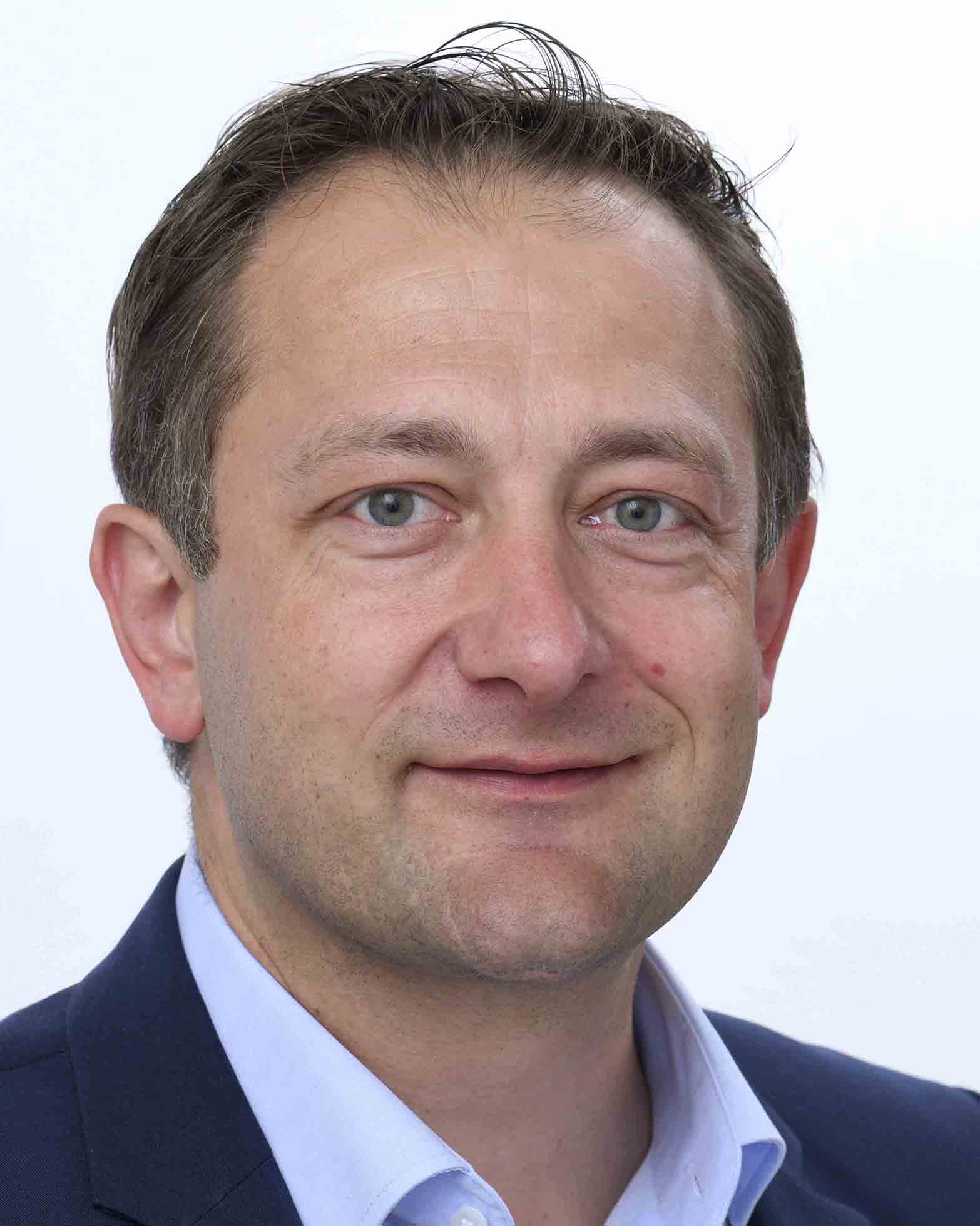
 Debate contributions by Christophe HANSEN
| Rank | Name | Country | Group | Speeches | |
|---|---|---|---|---|---|
| 1 |

|
Lukas SIEPER | Germany DE | Non-attached Members (NI) | 321 |
| 2 |
|
Juan Fernando LÓPEZ AGUILAR | Spain ES | Progressive Alliance of Socialists and Democrats (S&D) | 280 |
| 3 |
|
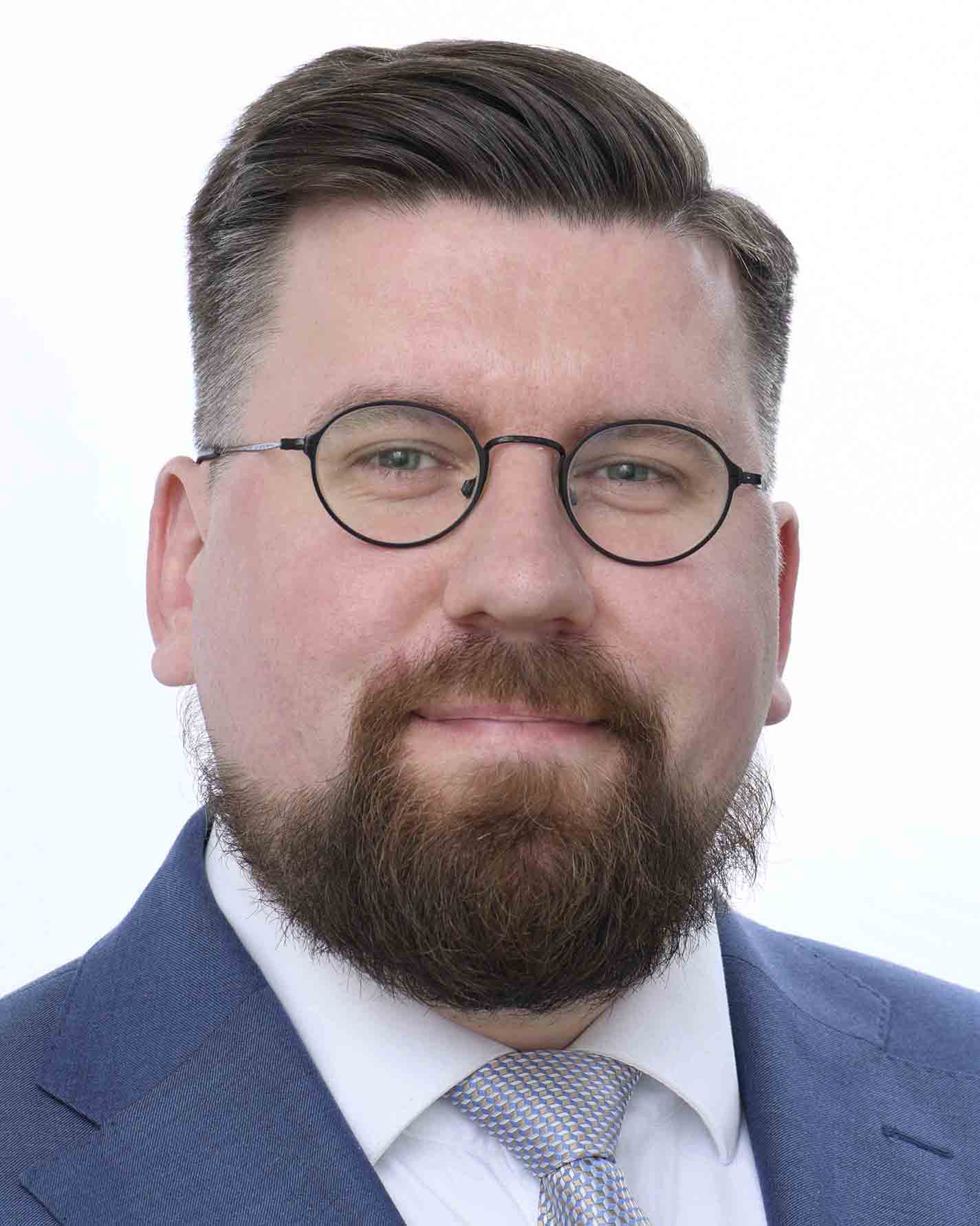
Sebastian TYNKKYNEN | Finland FI | European Conservatives and Reformists (ECR) | 247 |
| 4 |
|
João OLIVEIRA | Portugal PT | The Left in the European Parliament (GUE/NGL) | 195 |
| 5 |
|
Vytenis Povilas ANDRIUKAITIS | Lithuania LT | Progressive Alliance of Socialists and Democrats (S&D) | 183 |
All Contributions (26)
Madam President, I would like to thank you all for the discussion today. I also welcome the very broad support on the package, which, based on your reactions, also strikes a balanced approach because it achieves simplification without decreasing the capacity of our policy to reach sustainability objectives. I also understand that some of you would have preferred a slightly different result – maybe a little bit more ambitious. But I just would like to remind you that not only the rapporteur but the shadow rapporteurs as well – Mr Motreanu, Ms Singer, Mr Flanagan, Mr Kubín, Mr Waitz, Ms Vrecionová and Mr Stoyanov supported this as well. I believe they all belong to one of the political groups in this room. This is of course the nature of a compromise – everybody needs to give in something to ensure that simplification in the end reaches the farmers in 2026. I think this is a very clear deliverable for next year. We had estimated in the initial proposal that it would relieve our farmers on the administrative burden side by EUR 1.6 billion annually, the administrations EUR 210 million annually. This has, of course, been enlarged. The scope has been enlarged by the co-legislators. So we are speaking of something much bigger now, and this will be felt. I hope our farmers will as well recognise the efforts that we have made in this year in the mandate. I look to Ms Crespo – you have mentioned as well the other topics that we have addressed this year: the Unfair Trade Practices Directive that we brought over the finish line; the wine package, which is a substantial relief for a sector under pressure. And we are about to close as well the file on the common market organisation to deliver better prices for the farmers. And this just in one year, I think that is very important. We know, of course, how important simplification is to our farmers because – some people have mentioned it – farmers choose this job not to sit behind the computer mainly and fill in forms and eventually get fines if after 12 or 14 hours work a day they make a mistake. That is not why they have made this job choice. That is why we need to bring down this bureaucracy. This is not an effort that is done in one single piece of legislation or a change of that. I think we have to think it further. Again, Mr Lins mentioned the other simplification packages. This is something I heard when I went to the Member States. Mainly it is not the CAP that is too complicated, but it is a lot of other legislation from different policy areas and, as well, national and sometimes regional legislation. So we need to do this all together. Also when we look into the future – we are co-legislators. So it is not just the Commission making a proposal, it is as well the Parliament and the Council contributing to that. I have sat on your side and I have to say, afterwards, I often proposed amendments or proposed amendments where I did not ask the question, 'how is this going to be? Is this going to be hugely administrative, burdensome or not?' During the next reform, let's work together and ask ourselves the questions: what is really helping, what is really forward looking and what is truly burdensome? That is as well our shared responsibility. I look forward to working together with all of you to make it as simple for our farmers as possible, and to let them work and produce and make a living of their work. Let's do this together.
Madam President, honourable Members, to finish this very dynamic year, this debate comes at a very important moment in time. I refer, of course, to the important votes here in Parliament, but also the discussions by the leaders in the European Council on Thursday. And it is important to acknowledge the concerns farmers have. In last year's protests, reduction of administrative burden was one of their key demands, and it is likely to come up again this week when farmers take to the streets in Brussels. Farmers want to spend time working on their farms, not filling in reports after long days of work, and then eventually making a mistake that is then heavily fined. They want to build sustainable businesses and to be rewarded fairly for the work they are doing. They want to provide a decent living for their families and want to have basic services in rural areas, such as childcare or medical care, and in the current geopolitical and economic circumstances they are worried about their livelihoods. Honourable Members, earlier this year, in our vision for agriculture and food, we promised farmers that we will address these concerns, including by simplifying the common agricultural policy and the broader simplification package. In May, I presented a significant and meaningful package of simplification to CAP rules. The rapporteur has mentioned many of them, and we worked very closely together, and we delivered on our promise. The new rules should enter into force before the end of the year, so your vote tomorrow is a very timely one. All parties can be pleased with the outcome that was reached in a very short time, making the package truly useful for the remaining years of the current CAP. And this is an important signal to the sector that, when needed, we act together very swiftly, and I very much welcome the flexibility and contribution of the European Parliament. You brought important elements to the table that further strengthened the package, such as the increase of support for business development of smaller farms from the proposed EUR 50 000 to EUR 75 000. And what do the approved measures entail? They will reduce the administrative burden by, for example, recognising the environmental benefits of organic farms – they will be considered green by definition. And they increase also the flexibility by, for example, allowing Member States to exempt farmers from ploughing their land every five years to avoid conversion to permanent grassland. And they will help smaller farms make better use of the CAP support by increasing the simplified payment to small farmers to a maximum of EUR 3 000. On green conditionality, we achieve a better balance between obligations and incentives also thanks to the amendments by the European Parliament, and they will allow Member States to better reward farmers for their contribution to the environmental objectives for protection of peatlands and wetlands, as well as Natura 2000 areas. The Commission has a formal statement on GAEC 5 tillage management reducing the risk of soil degradation, including slope consideration, which has been sent to Parliament's services for inclusion in the verbatim record of this debate. More generally reflected in the package is the fact that one size does not fit all when it comes to agriculture, and this is also the spirit of our future CAP. I managed to travel to all 27 Member States at least once in the first year of my mandate, and I can say we are very diverse, but this represents the richness of our agriculture as well, and we will also therefore encourage Member States to take on board as many simplification elements as possible in their CAP strategic plans. The Commission, of course, stands ready to accompany the process and support Member States in their amendments to maximise these benefits. Once again, thank you very much for your good cooperation we had on this file, and this will be filed on the farms by next year. And I think this was a very important common effort. Common statement (in writing) "The Commission’s approach is to maintain the objective of GAEC 5, to ensure minimum land management reflecting site specific conditions to limit soil erosion, while ensuring that implementation remains practical, risk-based and fair to farmers, and fully consistent with the overall simplification, sustainability and crisis-response objectives of the Common Agricultural Policy. Since 2024, as a result of the first CAP simplification amendment, Member States have a greater degree of flexibility to define and implement GAEC 5. As a result of the adoption of this simplification omnibus and taking into account the 2024 simplification act, the Commission will review by 31.12.2025 the documents clarifying legislation, as part of its continuous simplification drive, to make sure that Member States may fully benefit from simplifications available upon the entry into force of this Regulation. The content of any such documents will be clarified and where necessary modified, reflecting the new legal framework and the need for a proportionate and pragmatic implementation of rules."
 Incentivising defence-related investments in the EU budget to implement the ReArm Europe Plan (debate)
Date:
15.12.2025 18:23
| Language: EN
Madam President, thank you very much for this very important debate. At a moment of great geopolitical danger, we are finally taking action and together we are equipping the Union with the instruments needed to protect our citizens. The 'mini omnibus' is small in name, but a big step forward for our defence readiness. Let us move forward together on our other defence proposals as well and let us do so swiftly, because we cannot afford any further delay. Our goal is to deter Russian aggression, prevent war and preserve peace. Our policy is more production, less dependency – which would represent a huge weakness – but our purpose remains peace in the end. The European Union is first and foremost built as a Union of peace and I think we have to remind ourselves of that as well. When it comes to defence of this peace and our defence industry in the EU, there are those countries that are small and those that do not know each other. That is why I think it is very important that we move ahead quickly. Mr Cepeda mentioned, as did Mr Zoido, that the reply needs to be European, so the nationalistic way is not the right way to go: we need to work closer together, make the Union of defence work. I think that is the ultimate goal: to deter other forces, like Russian-style aggressors, from doing what they are doing currently in Ukraine.
Incentivising defence-related investments in the EU budget to implement the ReArm Europe Plan (debate)
Date:
15.12.2025 17:28
| Language: EN
Mr President, honourable Members, I believe we can say that this is a very proud day. The political agreement on the mini‑omnibus on defence was agreed in just one sitting, just one trilogue, and that is exactly the kind of speed and efficiency we need when our defence readiness is at stake. And so, I thank the rapporteur Mr Kols, I thank the shadow rapporteurs in this House and, of course, the Danish Presidency as well for all their efforts and speed. And tomorrow, with your formal adoption of the agreement, we take another important step forward to strengthen Europe's defence readiness. The mini‑omnibus is small in name but big in results, or, as our French colleagues said during the trilogue: petit mais costaud. The mini‑omnibus is a central element of the ReArm Europe Plan and a key part of the mid‑term review of cohesion policy and essential to the Defence Readiness Omnibus, and we are mobilising our European funds for our defence: innovation funds, technology funds and digital funds, Horizon Europe, European Defence Fund, the Strategic Technology for Europe Platform, the Digital Europe Programme, and the Connecting Europe Facility. And we are amending five major instruments, enabling faster, more coordinated and more predictable investments into Europe's defence, technological and industrial base. And the mini omnibus makes it easier to use these funds for defence and dual civilian‑military use and makes it easier for the European Defence Fund to support disruptive technology and our talented small and medium‑sized companies. I am also very glad that this agreement on the mini omnibus allows the association of Ukraine with our nearly EUR 8 billion European Defence Fund, and this is a milestone. It deepens the EU‑Ukraine defence cooperation. It boosts Ukraine's resilience and supports Ukraine's integration into Europe's defence industry. And we will also benefit from it. Ukraine's experience and capabilities are indispensable for Europe's long‑term defence readiness, and the mini‑omnibus is a key part of our strategy for defence, as outlined in the White Paper on Defence Readiness, which we presented in March. And since then, we have presented many initiatives and proposals preparing the ground to ramp up defence spending and production and achieve military and defence readiness. And delivery on defence readiness is now increasingly urgent. Now Russia increases its attacks on Ukraine, its provocations in Europe and America pivot towards the Indo‑Pacific. And so, in short, the mini‑omnibus is mini in name, but maxi in results, and I urge you to swiftly approve it. On a final note, it took one and a half years to agree on EDIP – the European Defence Industry Programme – maybe not so long compared to other proposals, but much too long for defence readiness. And the agreement on the mini‑omnibus you reached in just a few hours. I call on you show the same speed, efficiency and determination when moving forward on our proposals now before you on our big Defence Readiness Omnibus that massively cuts red tape so defence can ramp up production, and on our military mobility regulation to quickly move troops and equipment in times of crisis. And the situation is urgent, ladies and gentlemen. Delay is very dangerous, and Putin will not wait for us. Our ability to deter and defend depends on our ability to pass good laws and to pass them quickly. But that is for tomorrow. So today, my congratulations again to the rapporteurs and to the entire plenary that will hopefully adopt this.
Murder of Mehdi Kessaci - urgent need for ambitious European action against drug trafficking (debate)
Date:
15.12.2025 17:21
| Language: EN
Mr President, thank you all for your very valuable contributions to this debate. It is really encouraging to hear how strong the support is for us to take action on drugs and organised crime, and this across all political groups in this hemicycle. I believe that is how we can honour as well the memory of Mehdi Kessaci. It is also encouraging that you have addressed all aspects of the problem: the security problem, the prevention problem and the treatment as well. We know that Member States take different approaches, but for the Commission, there is no question of a trade‑off. We must tackle all sides of the drugs problem to succeed and we need to do it in a more coordinated manner. For this, we are looking forward to working with you on all these files and all these issues in a more precise way and a more fast way as well, to deliver that these catastrophes do not happen anymore. To Amine, I would like to express on behalf of the entire European Commission, my sincere condolences for you, for your family and for all the friends of Mehdi.
Murder of Mehdi Kessaci - urgent need for ambitious European action against drug trafficking (debate)
Date:
15.12.2025 16:39
| Language: EN
Madam President, honourable Members of this House, we have seen too much violence on Europe's streets, too many young lives taken, and wherever drug trafficking exists, it leaves a trail of violence, corruption, disrupted communities and lives destroyed. In my opinion, there is only one way for us to honour the memory of Mehdi Kessaci: we must take stronger action because the situation with illegal drugs in the EU is getting out of control. Already now, 50 % of all homicides in Europe are connected to drug trafficking. Now is the moment for us to turn this around. The new EU drugs strategy and action plan will do precisely this, with actions that we can deliver on right away. You might ask, how are we going to do this? First, let me make clear that the money and power that killed Mehdi did not come from criminal activity in France alone. Marseille is one of many ports that serve as a gateway for traffickers to enter the whole EU market. If we want to stop that money and power, we need a truly European approach. We need to enable our authorities involved in the fight against drug trafficking to work together better, especially when it comes to information sharing and joint activities, and on how we fight organised crime. For that, we need our agencies to step up: Europol, the EU Drugs Agency, Frontex and the new EU customs authority. Let's start by making sure they have the resources and the mandate to fulfil that role, and that they cooperate seamlessly together. We must equip our law enforcement, customs, border and judicial authorities with the tools they need and I am thinking in particular of data access and retention. Ensuring modern detection tools and standards at maritime ports like Marseille is vital. Through the European Ports Alliance, the EU funds customs control technology and fosters public‑private cooperation to prevent our ports from becoming drug trafficking havens. We must build upon and expand on this work. Saving lives is not just about security – just as important are prevention and treatment. Every young person who never starts on drugs is one customer less, hopefully even one life saved. When we free a drug user from addiction, not only do we turn that person's life around, but we also deprive the violent criminals of the money they need to commit even more violence. Finally, the EU must act where the EU added value is biggest: in our relations with third countries. Here, we can bring the size and weight of the entire Union to the table to ensure our security priorities are supported by our partners. Already we are making good progress, but there is a lot more we can do. For all these actions, we need the support of this Parliament to succeed. So, my plea to you on this is: let's work together on all sides of the political spectrum to turn the tide on illegal drugs.
Common agricultural policy (joint debate)
Date:
07.10.2025 15:17
| Language: FR
Madam President, ladies and gentlemen, first of all I would like to thank you for this open exchange, I will not comment on all the subjects that have been discussed and that have no direct link with the two proposals that I hope we will adopt tomorrow. The European Commission took the demonstrations of our farmers almost two years ago seriously. These had three main demands. One of them was to put in place fairer prices for their production, to enhance the value of their work and not to question their position in the food chain. With M's reportme Imart, we give them that opportunity. I hear some contest contracts in writing. I would like to remind you that we also have a directive on unfair commercial practices. In this context, when farmers request a contract, the other party is obliged to provide it to them. So we're giving our farmers more visibility and access to a right they already own. I don't see where the problem is. I also hear those who say that we should not put cooperatives at risk. We have provided a derogation for cooperatives whose statutes contain rules that result in some sort of contract. Everything is planned. I am sure that, through interinstitutional negotiations, we will find solutions that do not endanger well-functioning models, while ensuring the security of a stable income for our farmers. The second claim at the demonstrations was to reduce the administrative burden. I have listened well to what our farmers have told us, what you have told us and what the Member States have proposed to set feasible actions under the current common agricultural policy. Since these demonstrations took place two years ago, it is important to do what we can without losing ourselves in details, because perfection is sometimes the enemy of good. I was on your side of the House during the last parliamentary term. As Mr Häusling has said, we sometimes tend to complicate things too much with the amendments we are proposing to the European Parliament. We need to be aware of this and think twice about it. I therefore reply to Mr Häusling: indeed, we should work together to avoid this complexity in future texts from the outset. I really hope that we will find a large majority around the two texts I proposed at the beginning of the mandate and I would like to thank the rapporteurs and shadow rapporteurs for all the work they have done. Our farmers will thank you for that.
Common agricultural policy (joint debate)
Date:
07.10.2025 12:59
| Language: EN
Madam President, honourable Members, first of all, I would like to thank you for the opportunity to exchange on these two important files that I have put very early on already in my mandate. I especially would like to thank the two rapporteurs, Céline Imart and André Rodrigues, for their work, as well as their shadow rapporteurs, to have delivered so quickly on these important files. Time is of the essence for these two proposals to also start having an effect on the ground because our farmers need to feel that something is changing. Our farmers are eagerly awaiting European solutions to address some of their most pressing needs: a supply chain that works for farmers and simpler operating rules. The CMO proposal is about giving farmers a stronger position in the food supply chain. We must create rules that increase their bargaining power and ensure fair opportunities, and this is precisely what the proposal does. I am pleased to see that many of your amendments align with this goal. Some might be going beyond our initial proposal and some anticipate also proposals the Commission made in the frame of the future CFP proposals, but I am open to explore them constructively, such as those on origin labelling, for example. One of the crucial elements of our proposals are the written contracts. Written agreements are not about imposing prices or adding red tape, as I hear way too often. They are essential for certainty and trust, and a key tool to fight against unfair trading practices. Ms Imart has used the example of buying shoes, I would like to use the example of buying a car. When you buy a car or sign up for an energy provision for your home, for example, we naturally contract in writing because we expect clarity about what we will get and a certain security about our rights as well. There, I think my question would be: should farmers be entitled to any less? I believe that the answer is clearly no. Let me now move on to the simplification package. Simplification and the administrative burden, I think that is something I heard from our farming community in all the Member States I have travelled to so far. Simplification is also to be seen as part of our competitiveness agenda and I have therefore put forward a package of simplification that I consider is balanced and pragmatic, but preserving the targeted nature of this proposal is, of course, crucial. Our proposal strikes the right balance between the urgent need to further simplify certain aspects of our policy, while at the same time ensuring that we avoid disruptions in the last two years of the implementation of the current CAP. Equally, we must maintain the ability of the CAP to achieve its objectives. So, the proposal is targeted in a way that it is better adapted to the situation of, for example, organic young farmers or farmers affected by natural disasters. It encourages the use of simplified payments for small farmers, a single control on farms and less data submission for our farmers. You made a number of proposals that I can welcome there, like reinforcing data interoperability or increasing the coverage of lump sum payments for small farmers. On the other hand, I also see certain amendments that raise some concerns. For example, extending rules on the decommitment or weakening risk management changes that deviate considerably from our proposal. These are particularly worrying, but I must express certain reservations on the changes which cover a number of important good agriculture and environmental conditions. These changes would cumulatively undermine the attainment of the CAP's climate and environmental objectives, and can also delay the agreement on this file, given the Council's position. Such amendments seriously put at risk the timely adoption – I would just like to remind you that we have to deliver on this file still this year, preferably in the month of October already, in order for our farmers to feel this simplification during the next calendar year. So, this is our common challenge to deliver on that and find solutions that are quickly applicable. We owe this to our farmers. I am looking forward to the constructive work on that with you in the trilogues that we can hopefully start soon.
Post-2027 Common Agricultural Policy (debate)
Date:
10.07.2025 08:36
| Language: EN
Madam President, honourable Members, let me first of all start by thanking you for your thoughtful contributions, the broader lines of which I share and the entire Commission shares. I would like to particularly give thanks again to Carmen Crespo Díaz and all the people that have worked together with you to get the report done by this Monday in order to be able to take your input on board. I think it is very important, as I said, that I fully share many of the reflections voiced here, especially the call for a strong CAP able to deliver on multiple economic, social and environmental challenges. I quoted Sicco Mansholt at the beginning, and this has been repeated by my colleague Jessika Van Leeuwen and I think also Bert-Jan Ruissen mentioned our Treaty obligations. I think these Treaty obligations ensure food security, ensure a fair income for our farmers, but ensure as well affordable food for our consumers, and this is more important than ever. I think what we have to say as well is that you can't win a war on an empty stomach, and you can't build a continent on an empty stomach. Therefore, I believe that we are on the same idea that the identity of the common agricultural policy needs to be maintained. Many of you mentioned that – that we also need to maintain a big 'C' for common in the common agricultural policy. Also, I believe all of you shared that we need a coherent toolbox for the first and the second pillar obligations. I think rural development depends heavily on the common agricultural policy, and that needs to be taken into account. Mr Flanagan also mentioned that the structure of the common agricultural policy currently is not too bad, and that we have to build on the successes and maybe fix what is not working ideally. That is why I always pledge that we need an evolution of the common agricultural policy and not a revolution. This is largely shared as well by the ministers when I meet them at the Agrifish Council. Also, what most of you said is that we need the appropriate financial firing power in order to deal with the many challenges. The challenges have not become fewer over the last more than six decades; I think they have become greater. We face huge geopolitical challenges from the Russian war of aggression in Ukraine and the consequences, but as well from trade tensions with other economies, and also climate change and environmental challenges. I think these challenges have become bigger. Therefore, I also believe that we need to keep up the financial support for our farmers. But as you know, whatever the Commission proposal will be, it will heavily depend on what the Member States will be willing to contribute to that budget. So I think that is very important to recall and to work on that as well. Another shared point that I heard from many of you, and that is as well central in the vision for the future of agriculture and food, is the challenge of generational renewal, because currently, less than 12 % of our farmers in the European Union are below the age of 40, and the average age is above 57 years of age. In some Member States it's better; in some it's even worse. So I think that is a huge challenge that we need to take into account. But when we speak about that, there will as well be discussions that may be more painful. Some of you ask for more support financially for young farmers. Well, if we give more to one, we have to take it from somewhere. So this discussion will of course have to be addressed; that is very clear. Many of you mentioned a fairer distribution as well, but when it becomes fairer, there will always be winners and losers. That is something that we need to address together. In autumn, I will present a strategy for the generation renewal. And many of you have mentioned it is not only the EU policy, it is also initiatives that need to be taken at national level. They need to work together when it comes to, for example, pension systems, etc., and better support for young farmers. I think there is a lot that can be done in synergies between European and national politics. So this is very important to me. It is very dear to my heart because we can always speak about food security, but if there is nobody left to do it anymore, then we have a problem and then we will face dependency. I will never want to be dependent on somebody else outside the European Union for the quantity and the quality of our food that we consume three times a day. I think that has to be acknowledged. Also, when it comes to challenges such as climate change and environmental protection, I don't see the farmers as the problem. They are the first victims of climate change, but I also say they are our best line of defence. So that's why I want the farmers to be part of the solution and not of the problem. Therefore, it is our common duty to enable our farmers to be part of the solution – to design policies that are up for the task, to give incentives that are up to the task and sufficiently attractive for the farmers to allow them to combine productive agriculture with protecting our resources. I think that will be the key challenge, and therefore I would like to work together with you, and your own-initiative report is very helpful in that sense as well. I, of course, hope for a strong budget for the common agricultural policy to be able to tackle the many challenges that we are facing. Therefore, I am counting on your support and I will continue my fight in that direction.
Post-2027 Common Agricultural Policy (debate)
Date:
10.07.2025 07:01
| Language: EN
Madam President, honourable Members, dear colleagues, thank you very much for putting this important point up for the plenary debate today. I believe this is a testimony of how important the common agricultural policy is for this House. I can reassure you that it is equally important for the European Commission. The CAP is one of our oldest policies at the heart of the European project. In December 1964, Sicco Mansholt stated: 'the governments, the Member countries burnt the individual boats in which they have sailed home to the harbours of national agricultural policy. Henceforth there is only a common policy, a policy of European solidarity.' This statement is as relevant as it was 60 years ago. The CAP is a true common policy, a policy of solidarity, an anchor of European food sovereignty and an integral part of European integration. While in the 1960s, we were rebuilding our continent after the devastation of the war, we are now building a stronger Europe. A stronger Europe, that can withstand the multiple challenges it is facing. The security architecture that we relied on for decades can no longer be taken for granted. Russia's unprovoked aggression has brought war back to our continent. Extreme weather events are more and more frequent due to climate change. The new normal is anything but normal. Therefore, our future budget and our policies must keep pace with that changing world. Yet, if the changing geopolitical realities teach us one thing, it is the strategic importance of food production. You cannot build a strong continent on an empty stomach, ladies and gentlemen. This was the driving force behind Mansholt's policy and it is just as relevant today. Therefore, as the Commission President stated, in our next budget, there will be a central place for cohesion policy and the common agricultural policy. Our regions and our farmers will always be at the heart of the Union. The Commission fully acknowledges that the CAP plays a pivotal and strategic role in maintaining Europe's food sovereignty at all times, in particular in the current challenging geopolitical setting. At the same time, thanks to our farmers, the EU is also a major exporter of food, contributing to global food security. Our farmers and rural areas feel the increasing pressure, from the impact of global uncertainties and climate change to the major challenge of generational renewal. At the same time, they are, as custodians of their land, making great efforts to contribute to our environmental and climate objectives, while ensuring also food security. The Commission's communication, 'The Road to the next Multiannual Financial Framework', clearly puts food security among the key priority areas for funding in the future MFF. But our CAP must be modernised and better adapted to today's challenges. We need a common agricultural policy that is fit for purpose and better targeted, enhances environmental and social outcomes, and fosters thriving rural areas. For this, we have over time built a policy with a coherent toolbox that helps provide a fair income for farmers, safe and affordable food for consumers, and respect for the environment we work in. I fully agree that we need to maintain this coherent toolbox, and the commonness and integrity of the common agricultural policy. I want to reassure you that we are working in this direction. While we should build our future based on our past successes, we need a CAP that is simpler and finds the right balance between incentives, investment and regulation, and must ensure that farmers have a fair and sufficient income. With the simplification package, we have chartered the way for the future CAP by streamlining overlapping requirements and prioritising incentives, building on the current eco‑schemes and agri‑environmental measures, while reducing red tape for our farmers and administrations. We intend to continue on this path and I hope that this Parliament will soon have a common position on that simplification package in order to deliver for our farmers already for the next calendar year. This will be crucial that they feel that our efforts are felt on the farm as well. We will also make sure our policy is better targeted, in particular towards the farmers that actively farm and contribute to our food security and the preservation of the environment. We must improve also the fairness in the distribution of funds. Our tools have to deliver the most disadvantaged sectors and regions. We have many regions in the EU that depend on livestock as the only source of income. The added value the EU can bring to these regions is real and is tangible. Without agricultural activity, land abandonment will cause demographic, environmental and societal problems. In certain regions, we would even have a security problem on top. Look at our eastern border regions that I visited, the Baltics and Finland, which have a common border to Russia, and I have to say, without agriculture and forestry, there would not be much economic activity and human presence left, and that would represent a huge weakness to us. In this sense, these freedom farmers greatly contribute to the EU's line of defence. I would also like to emphasise the crucial role that cohesion policy plays in strengthening our rural areas and regions. Investments in local infrastructure, transport, clean energy, SMEs, broadband, health and education all enhance economic and societal cohesion. This is of growing importance in the context of ensuring the right to stay for all in the place they call home by supporting what a community needs. Furthermore, the mid‑term review of cohesion policy provides incentives and flexibilities for objectives such as water resilience, housing, energy transition, and greater competitiveness and innovation. It also provides specific incentives to eastern border regions, which face the dual challenge of increasing security and relaunching their economies. Furthermore, with the rising uncertainties due to climate and geopolitical impacts, the EU must continue ensuring an adequate safety net for our farmers in the form of risk and crisis management – a true unity safety net to alleviate the pressure and de‑risk the operations of our farmers and food industry. Honourable Members, these elements must, in my view, be recognised when we shape our future policy and also spend the future budget, while we are building on the success of the CAP. This has brought us up here till today. How exactly to do that will be the subject of the discussion with the co‑legislators and with you. Therefore, I look forward as well to hearing your views. In conclusion, I believe that the new financial framework presents an opportunity to build on the current CAP and to strengthen our policy response to achieve competitiveness, resilience, innovation and sustainability objectives in a more effective manner, while also ensuring that solutions are designed by taking into account local specificities and sectorial challenges. Finally, I would like to thank as well especially the agriculture committee for accelerating its work on the own‑initiative report by Ms Crespo Díaz. This will also allow me to take on board the main points and the main requests of this House when it comes to designing the future of our common agricultural policy, and that is how it has to be. I would like to thank you as well for that very valuable contribution.
European Schools Alliance: potential to achieve the European education area by driving innovation, enhancing mobility and championing inclusivity (debate)
Date:
13.03.2025 14:34
| Language: EN
Mr President, honourable Members, the design and development of the European Schools Alliance is still in its very early days. That is why a debate like the one today is so useful, and the outcomes will feed into the design of the pilot. After the pilot, the success of the European Schools Alliance will depend on the next Erasmus+ programme and, of course, the future multiannual financial framework. This is why we believe we must give priority to investment in people, in pupils and their skills. We have to invest where it matters the most. You will be part of the debates, and we hope that the budget for the next Erasmus+ programme will match the expectations that some of you – like Mr Negrescu and Mr Petrov have mentioned – including for future European school alliances. To build a true Union of Skills, to make the European Schools Alliance a success, we need your support and we know we can count on you to make a difference.
European Schools Alliance: potential to achieve the European education area by driving innovation, enhancing mobility and championing inclusivity (debate)
Date:
13.03.2025 14:02
| Language: EN
Mr President, honourable Members, last week, Executive Vice-President Roxana Mînzatu delivered the Union of Skills package, and she presented it to you yesterday. The Union of Skills is a bold and ambitious package which strives to equip people with the right skills, starting with basic skills, and to support balanced cross-border mobility and free movement of knowledge and skills. The Union of Skills, with the European Education Area as a key enabler, will help to lay strong foundations for learning. A key objective of these efforts is ensuring that everyone has the basic skills they need to thrive in life. Currently, one third of 15-year-olds struggle with real life mathematics, one quarter fail to understand basic texts, and 43 % of eighth-graders lack basic digital skills. Most countries have either declined or shown no improvement. This concerning trend demands immediate action. One of the first deliverables of the Union of Skills is the action plan on basic skills. The first objective of this action plan is to set an ambitious target by complementing the existing target on basic skills as follows. By 2030, the share of underachievement in literacy, mathematics, science and digital skills should be less than 15 %, whereas the share of top performance in literacy, mathematics and science should be at least 15 %. For this, we will pilot a basic skills support scheme as from next year. In addition, we will pilot in 2026 the first European school alliances with the support of the Erasmus+ programme. The European school alliances aim to foster better cooperation and mobility among schools across Europe, acting as a catalyst to enhance the learning and teaching of basic skills. These alliances will test innovative teaching methods, curricula and competence frameworks, including in collaboration with local authorities. To support this, we will work to make mobility a standard in schools. Indeed, what better way to learn citizenship than by exchanging with learners from another country and culture. This is what opens the mind. The alliances will lead the way towards structural, strategic and sustainable cooperation between schools across Europe. They will provide a new format of cooperation both for schools and for school authorities, and they will serve as a springboard, enabling the transfer of knowledge and of innovative best practices at all levels. Erasmus+ has highlighted the benefits of learning, mobility and cross-border cooperation. However, national school systems often face obstacles that prevent them from fully reaping these benefits, lacking the legal autonomy needed. Schools rely heavily on local, regional and national authorities. The European school alliances will help address these barriers, ensuring all schools have equal access to opportunities. They will support teachers' professional development and contribute to the future EU teachers and trainers agenda. To conclude, let me say that we are glad to see your interest in this initiative and we look forward to hearing your views and ideas on how together we can shape the European school alliances to offer Europe's children the best possible start in life.
A Vision for Agriculture and Food (debate)
Date:
13.03.2025 09:39
| Language: EN
Mr President, honourable Members, thank you very much for this open and frank first exchange of views on the vision on the future of agriculture and food. I have the feeling that most of you are quite positive about this new direction – a new Commission that is going and putting farmers back in the centre and is also not afraid to speak about productivity in the farming and food‑producing sector. I believe this is very important due to the geopolitical challenges that we are going through. You all remember one year ago that the farmers took to the streets and they had three main concerns they expressed. One was reciprocity in standards. We are addressing this reciprocity, and we are taking the first steps now, and it is clearly stated in the vision. They ask for fairer prices. In the first ten days of the new mandate of this Commission, we presented a targeted amendment of the Common Market Organisation Regulation and the Unfair Trading Practices Directive. And we will deliver as well on the third part, which was clearly the administrative burden that was too heavy for the agriculture and food‑producing sectors. So I'm very keen to present, already in the month of April, a first simplification package based on the common agricultural policy, but more needs to follow. I have travelled to several Member States, and most of the concerns I got were not related to the common agricultural policy; it was the overlap of several European laws, but as well of national laws. So we have to work and deliver by the end of the year – and I clearly stated this and it is also part of the vision – a cross-cutting simplification package that will really touch to the farms and that is well needed. So on the three main concerns, we are delivering concretely now as well. But, of course, you are right when you say you are lacking some details on one part or the other. And, of course, you are right that the proof of the pudding will be in the tasting afterwards. And there I believe it is very important that we take up now the workstreams that are identified in this vision together, not only with the European Parliament, but as well with the newly created European Board on Agriculture and Food, which brings together not only the farming community, but also the entire food value chain and other citizens and NGOs. This is very important to depolarise the debate and find common solutions, and I think this will deliver. Of course, we have to be very aware as well, as some have stated, of concerns about the 'common' or the 'c' in 'common agricultural policy', which will remain very important as well to have a fair level playing field between the Member States and our different farming communities. I believe it is also important that we speak about the next steps, and there are very many workstreams on livestock, generation renewal. Those need to be addressed together, and I think that will bring us all together forward. Then, of course, we have several other initiatives. I haven't yet mentioned the wine package, although some of you have mentioned the High‑Level Group on Wine. There as well we intend to deliver the proposal already in the month of April to be able to get relief to that sector too which is very much under pressure. I am looking very much forward to doing this work together with you. I think it is very important that we keep up the depolarising debate and put the farmers in the centre of the discussion, not only here, but I think it's very important that, in general, the policies are meant not in opposition here from one side to another. That is not being helpful. Let's work in the interest of the farmers. A lot has been delivered, and I'm looking forward to future exchanges. For those who are members of the AGRI Committee, we will see each other on 19 March. I'm ready to discuss further in detail with a little bit more extended time, and I'm very much looking forward to that good cooperation.
A Vision for Agriculture and Food (debate)
Date:
13.03.2025 08:00
| Language: EN
Mr President, honourable Members, dear colleagues, the first 100 days of our mandate were dedicated to delivering on what we promised and doing this in close cooperation with those who are most concerned: the farming and the food sector. Since I became Commissioner, my 'boots on the ground' promise has taken me already to eight Member States, and when I speak to farmers, I hear a strong call for stability and predictability, and also for the recognition of the crucial role that farming and rural areas play in Europe's economy, security and strategic autonomy. Many of you recognise those calls as well. In these changing and challenging times, we need a clear perspective and a coherent policy response for everyone involved in guaranteeing our food security and food sovereignty. They need to see that their future will be prosperous. The vision for agriculture and food recently adopted by the Commission aims to provide the direction and response to these needs. It is the Commission's policy roadmap to engage and take action with you and all stakeholders of the agri-food system on the future of food and farming in Europe. Our messages, dear colleagues, are very clear: farming, fishing and food are strategic sectors and a critical asset for Europe. They must be preserved across the continent, and the vision identifies European food sovereignty as an integral part of the EU security agenda. Our policies will continue supporting farmers and the agri-food sector in producing safe foods, protecting rural landscapes, traditions and livelihoods. In Europe, farming is highly diverse and so our policies must be tailored to the local needs. While facing many challenges, farmers, fishers and the food industry are part of the solution for achieving a future-proof agri-food sector. We will design the solutions pragmatically and in consultation with them. Consultation and dialogue, dear colleagues, are not just words. The vision is the result of close engagement and consultation with many different stakeholders from the agri-food sector and all relevant institutions, including the European Parliament. The work does not stop here. The vision is only the beginning of further cooperation and dialogue to develop the initiatives together. This College is committed to overcoming the polarisation that we have lived too much in the past, and that is why I am very glad to be with you today to present the vision and hear your ideas for the way forward. We started from a very simple and guiding question: how to build and support and agri-food system that is attractive for current and future generations – today, tomorrow and in 2040. We want a new agriculture and food sector to be – and I quote from the vision itself – 'attractive, competitive, future-proof and fair' and built on dialogue and partnership between the players of the food chain and powered by innovation, knowledge and research. The vision contains four priority areas to provide direction and stability. For each one, it identifies specific policy responses that focus on all three dimensions of sustainability. First, an attractive and predictable agri-food sector that ensures a fair standard of living and leverages new income opportunities. For this, we must help the sector draw on all sources of income. We will help farmers to get a better return from the market by addressing the principle that they should not be forced to systematically sell their products below the production cost. The coming UTP review will be instrumental for achieving this. Secondly, public support from the Common Agricultural Policy remains essential to support farmers' income. The Commission will make future CAP support simpler and more targeted towards those farmers who need it most, creating better incentives for ecosystem services and giving further responsibility and accountability to Member States. We will also help the sector to leverage new income opportunities, such as from the bio-economy or carbon-farming, agri-tourism can also provide farmers with a complementary income. Furthermore, in 2025, I will present a strategy for generational renewal. As you know, currently only 12 % of the EU farmers are below the age of 40. This is a huge challenge and we need to address it if we are serious about food security and food sovereignty. Therefore, we will have to bundle not only our European efforts, but as well the national efforts to get there. Secondly, a competitive and resilient agri-food sector in the face of global challenges. Our farmers insist on fair global competition, and the vision clearly states that we will push for a fairer, global level playing field by better aligning – and in line with international rules – our domestic production standards with those applied to imports, notably for pesticides and animal welfare. To advance in this area, we will start work on implementing the principle that hazardous pesticides banned in the EU should not be allowed back into the EU via imports. I always say, 'if a product is a threat to human health or pollinators in the EU, it is as well outside'. If we still import those products, neither the consumers nor the farmers understand this. Therefore, I believe it is very important that our standards also need to be better controlled because it is good to have high standards, but without checks this is of course inefficient. Then, the agri-food sector is strongly affected by different crises. I think that is not a secret and we will develop a more comprehensive approach to risk and crisis management. We enforce incentives for farmers to boost farm-level adaptation and improve access to affordable insurance and de-risking tools for primary producers. Lastly, I want to present two simplification packages in 2025 to reduce the administrative burden for farmers and the entire agri-food value chain. The first focus will be on the CAP, while the second will look at the broader EU legislation package. Another important initiative will be the work that we will carry out for the livestock sector. As the vision says clearly, livestock remains an essential element of EU agriculture and we will work on making it more competitive, resilient and sustainable. Thirdly, we need a future-proof agri-food sector that works hand in hand with nature. To guarantee the sector's long-term resilience and competitiveness, we need to preserve healthy soils, clean water and air, and the EU's biodiversity. To support this, we must continue to implement and enforce the legislation that we already have. In the future, we must also create better incentives for farmers and agri-food actors who are delivering ecosystem services, and make sure that climate and biodiversity action go hand in hand with competitiveness. For this, there will be some key drivers, such as a more advanced toolbox under the Common Agricultural Policy, a voluntary on-farm sustainability compass, certified carbon farming, as well as measures to accelerate the access to biopesticides to the EU market. The fourth priority area is about strengthening the link between food and consumers and promoting fair living and working conditions in vibrant and well-connected coastal and rural areas. Addressing the gap in the availability and affordability of services for citizens in rural and coastal areas, including in the outermost regions, is key to address the need for an effective right to stay for all European citizens. To boost the vitality of these areas and to tackle these issues, we will strengthen synergies between EU funds and present and updated EU rural action plan and rural pact. At the same time, annual food dialogues with everyone involved in the food system will help to reconnect people with the food they eat and address many of the most pressing issues, including food reformulation and affordability. And finally, we will bring knowledge and innovation, research, skills and digital solutions closer to the farmers. They will play a key role in supporting the agri-food sector to carry out this initiative. And I know that many of you have as well good ideas, this is, of course, the beginning of a path towards a more sustainable agri-food system – more sustainable economically, socially and as well as environmentally – and I'm looking forward to having a good discussion with you on the different workstreams that we have identified in this vision.
Secessionist threats in Bosnia and Herzegovina and the recent escalation (debate)
Date:
12.03.2025 21:39
| Language: EN
Mr President, honourable Members, many thanks for this debate. The Commission remains unequivocally committed to Bosnia and Herzegovina's EU accession perspective as a single, united and sovereign country. The sovereignty, territorial integrity and constitutional order of Bosnia and Herzegovina must be respected. Bosnia and Herzegovina has the historic opportunity to open EU accession negotiations. Its citizens want a European future, and it is the responsibility of political actors to make it a reality. We urge all political actors to renew the focus on progressing on the EU path with resolute action to take the relevant steps. The EU path brings multiple benefits for the country's citizens. Bosnia and Herzegovina is key for the Western Balkans, whose future is in the European Union. EU accession is the agenda with real gains and real benefits for everyone. It is the agenda that brings prosperity, stability and peace. And it is the agenda which we need to work together on. The Commission will continue supporting Bosnia and Herzegovina in this endeavour with all its instruments. We continue to follow developments very closely, including the possibility of Republika Srpska adopting a new constitution for the entity.
Secessionist threats in Bosnia and Herzegovina and the recent escalation (debate)
Date:
12.03.2025 21:10
| Language: EN
Mr President, honourable Members, one year has passed since the historic decision of the European Council to open EU accession negotiations with Bosnia and Herzegovina. It seems the reform enthusiasm has evaporated, and Bosnia and Herzegovina has again entered into an institutional and political crisis. To get back on track, we call on all political actors to continue taking resolute action to finalise reforms in line with the EU acquis and European standards. In this regard, it is crucial to continue addressing the relevant steps to move forward on the EU path. It is what the vast majority of the citizens of Bosnia and Herzegovina expect. The Commission continuously supports the country in this endeavour. Despite the turbulence in the ruling majority, the adoption in Parliament on 30 January of the Law on Personal Data Protection – a precondition for cooperation with Eurojust – and of the Law on Border Control was a good signal into the right direction. We need further progress and this means, in particular, the adoption of the Law on Courts and the Law on High Judicial and Prosecutorial Council being fully in line with European standards. The appointment of a chief negotiator also remains important. Let us also remind Bosnia and Herzegovina not to lose the opportunity of over EUR 1 billion of investments through the Growth Plan for the Western Balkans. Therefore, it is important for the country to submit its reform agenda without further delay. It is even more important in view of the Western Balkans Leaders' Summit on the Growth Plan in Skopje next week on 19 and 20 March. Contrary to the progress on the EU path, recent actions by the Republika Srpska leadership following the first instance ruling in the criminal trial against Milorad Dodik on 26 February present a serious setback. On Thursday 27 February, the Republika Srpska National Assembly adopted four laws in urgent procedure, including to ban state level judicial and police bodies from operating in the entity, to set up a separate Judiciary Council and to target NGOs as foreign agents. These legal acts undermine the constitutional and legal order of Bosnia and Herzegovina and the functionality of its institutions. Specifically, the Republika Srpska law on foreign agents adversely affects democratic values and threatens fundamental freedoms, marking a step backwards. These actions directly contradict the repeated commitments of the Republika Srpska entity leadership to advance on the EU accession path of Bosnia and Herzegovina. The EU therefore urges all political actors to renew the focus on progressing on the EU path. On Friday 7 March, the Constitutional Court of Bosnia and Herzegovina issued interim measures suspending the application of all legal acts adopted by the Republika Srpska National Assembly on 27 February. As we have recalled on several occasions, the EU expects all political actors to respect the decision of the Court of Bosnia and Herzegovina, to acknowledge its independence and impartiality, and to refrain from actions that may deepen divisions and create further tensions. Further, last week, the operational commander of EUFOR-Althea decided to temporarily increase the size of its force by activating the reserves as a proactive measure aimed at assisting Bosnia and Herzegovina in the interest of all citizens. An increased and visible EUFOR presence is directly related to its task of supporting the authorities of Bosnia and Herzegovina in ensuring a safe and secure environment for all citizens. Dear colleagues, to conclude, the EU answer has been firm and unequivocal. We now expect the Republika Srpska authorities to respect the decision of the Constitutional Court of Bosnia and Herzegovina to suspend the laws threatening the legal order. We urge all political actors to enter into dialogue rapidly, to de-escalate the situation and to focus efforts on delivering progress for citizens, including on the EU path. Progress on the EU path is the best guarantee for stability in Bosnia and Herzegovina, and has multiple benefits for the citizens of the country. The Commission remains committed to Bosnia and Herzegovina's accession perspective as a single, united and sovereign country. Thank you for your attention and I am looking forward to a fruitful discussion.
Frozen Russian assets (debate)
Date:
12.03.2025 18:19
| Language: EN
Mr President, honourable Members, I believe that the discussion today has clearly shown that we need to continue to show our unwavering support to Ukraine. With the support by Europe and our partners, Ukraine will be in a position to achieve a just and lasting peace. For this reason, the assets of the Central Bank of Russia shall remain immobilised until Russia pays for the damage it has caused in Ukraine. The Commission fully supports exploring all possible avenues to aid Ukraine in obtaining compensation from Russia, consistent with our respective legal systems and international law. We need to continue to signal to Russia that our support to Ukraine will be sustained, broad-based and steadfast. Looking ahead, our priority is to work closely with international partners to ensure the successful completion of the IMF programme to guarantee that Ukraine has sufficient resources to counter Russia's aggression. This includes ensuring the full implementation of the G7 ERA loan initiative by all G7 partners in the coming months. To conclude, let me also add that we need to be mindful of the challenges that lie ahead of us, especially in a context where the EU will need to step up its efforts to support Ukraine's defence and financial needs. Thank you for letting have the opportunity to participate in this very important debate.
Frozen Russian assets (debate)
Date:
12.03.2025 17:25
| Language: EN
Mr President, honourable Members, thank you for the opportunity to contribute to this debate on Russian frozen and immobilised assets. As you may well know, the restrictive measures on these assets are a key element of the sanctions adopted by the EU in close cooperation with Western partners against Russia. Let me first clarify upfront that Russian assets are subject to different restrictive measures, depending on whether they are public or private assets and on their ultimate owner. As part of the sanctions imposed by the EU on Russia in response to its war of aggression against Ukraine, the assets of the Central Bank of Russia held by financial institutions in the Member States have been immobilised since February 2022. The immobilised sovereign assets held in the EU are worth EUR 210 billion and represent the largest share of such immobilised assets worldwide. This is the most relevant and sizeable part of the Russian assets under EU sanctions, for the purposes of today's debate. In May 2024, EU Member States agreed to set aside the extraordinary profits of Russian immobilised assets and to use them for the benefit of Ukraine. The assets and reserves of the Central Bank of Russia should remain immobilised until Russia pays for the damage it has caused to Ukraine. The position has been repeatedly affirmed by the G7 countries and the European Union. The prohibition of transactions on these assets generates an extraordinary cash accumulation on the balance sheets of central security depositories. EU central securities depositories prudently manage the cash balances and thereby earn an interest income. These extraordinary and unexpected profits could reach about EUR 3 billion per year, after tax of course, subject to the prevailing level of interest rates. These interest revenues and profits do not constitute sovereign assets and do not have to be made available to the Central Bank of Russia under applicable rules, even after immobilisation ends. The decision to re-allocate the interest, revenues and profits to support Ukraine is made within the windfall contribution framework, which was adopted in 2024 following thorough discussions in the ad hoc Council working party established for that same purpose. This allowed us to take the necessary implementing actions to fulfil the commitments made by the European Council and the G7 leaders to provide Ukraine with approximately EUR 45 billion in loans, to be repaid by future flows of extraordinary revenues from immobilised Russian assets. This money will be used to support Ukraine's urgent budgetary, military and reconstruction needs. As part of the G7-led extraordinary revenue acceleration (ERA) loans initiative, in January 2025, the European Commission disbursed the first EUR 3 billion tranche of its exceptional macro-financial assistance loan for Ukraine, which will be repaid with the proceeds from immobilised assets of the Central Bank of Russia in the EU. Additional disbursements will follow throughout this year, bringing total support to some EUR 18 billion. The Commission warmly thanks the European Parliament for its swift action to approve this MFA loan. This underscores the unwavering commitment of the EU and its G7 partners to support Ukraine in its fight for its freedom, recovery and reconstruction. There have been calls in the past to proceed towards the confiscation of these immobilised assets. This is being discussed with Member States and with our international partners currently. The Commission remains open to discuss any legally and financially sound options to continue pressuring Russia to stop its war of aggression. At this stage, the Commission's priority is to operationalise the G7 ERA loans and to make available funding to Ukraine.
Adoption of the proposal for a Parenthood Regulation (debate)
Date:
12.03.2025 17:23
| Language: EN
Mr President, honourable Members, as mentioned earlier, with this proposal, the Commission aims to ensure the continuity of parenthood status between Member States so that all children can fully enjoy their rights in all Member States for all purposes. By requiring the recognition of parenthood, Union law does not interfere with the Member States substantive family law, which is a competence of the Member States. However, with the proposal, Union law would require the Member States' mutual recognition of parenthood beyond the existing rights under free movement law, to strengthen all children's rights in cross-border situations without leaving any child behind. And, as Ms Bricmont rightly said, it is now up to the Member States to come to a conclusion and a mutual recognition. And that is where the ball lies now currently. Parliament and the Member States, and the current and upcoming Council presidencies, can continue to count on the full support of the Commission in the effort to reach a well-balanced solution in this essential piece of legislation for our citizens. And please let me conclude by saying we should, in all our efforts, put the best interest of the children into the centre of the discussion, irrespective of who their biological or non-biological parents are.
Adoption of the proposal for a Parenthood Regulation (debate)
Date:
12.03.2025 16:40
| Language: EN
Madam President, honourable Members, let me start by thanking the European Parliament for its positive opinion on the Commission proposal on the recognition of parenthood between Member States. And let me also thank the European Parliament for its continued interest in the ongoing legislative discussions on the proposal in the Council, as shown by this oral question on the matter. Member States are already required by Union law on free movement to recognise parenthood established in another Member State for the purposes of children's rights under the European Union law, and this includes their right to travel or to take up residence in another Member State, their right to obtain a travel documentation or their right to be treated equally in a host Member State on all matters within the scope of the Treaty. The Court of Justice confirmed in 2021, in its judgment in the V.M.A. case, that this recognition obligation also applies to children with same-sex parents, even if the Member State where recognition is sought does not allow parenthood by same-sex couples. Indeed, the recognition in a Member State of parenthood established in another Member State is essential for the right to free movement. But families may still face difficulties in having the parenthood of their children recognised in another Member State for all purposes, that is, beyond the existence of children's rights under free movement law, notably for the purposes of children's rights under national law, such as their right to inherit from either parent in another Member State, to receive financial support from either parent in another Member State, or to be represented by either parent in another Member State on matters such as schooling and health. It is with this in mind that the Commission adopted the proposal under discussion and considered that, in line with international law, the Treaties and the EU Charter of Fundamental Rights, the proposal should require Member States to recognise parenthood established in another Member State for all children, irrespective of how the child was conceived or born and irrespective of the child's type of family. The proposal does not affect substantive family law, which is a competence of the Member States, and the proposal is an essential element to build a Union of equality and implements the EU strategy on the rights of the child. Moving now to the two questions you have asked. In the oral question first, the Commission has followed and supported thoroughly the ongoing discussions in the Council, which, however, need time, and mostly for two main reasons. First, the proposal is a measure of family law with cross-border implications. The Member States have different approaches towards certain matters of family law. They therefore want to ensure that the proposal does not affect their competences to adopt rules on substantive family law, such as their rules on the definition of family adoptions or their rules on surrogacy. In addition, as the proposal needs to be adopted by unanimity, every Member State needs to be on board for every sensitive matter under discussion. Second, the proposal is technically quite complex. The proposal aims to facilitate the recognition of parenthood by harmonising the Member States' rules of private international law, that is, the rules on international jurisdiction, applicable law on the recognition of judgements and authentic instruments, and by creating a European certificate of parenthood such as you have mentioned it. Currently, beyond existing rights under free movement law, each Member State addresses the recognition of parenthood according to different principles and procedures. Therefore, the Member States want to ensure that they find the provisions of the proposal acceptable from their policy viewpoint and that their authorities will find the provisions clear. In view of the various policy and legal facets of the proposals, since the adoption of the proposal, the Commission has at all times lent its assistance to the Member States, both in the Council and in bilateral discussions to clarify points, address their questions and listen to their concerns, to try to find common ground with other Member States. Likewise, the Commission has always been available to discuss with all the Council presidencies technical and policy solutions within the scope of the proposal, to help the discussions progress. The Commission also considers that all Member States have approached discussion in the Council on the proposal in a constructive manner, and that progress is gradually being made. Concerning your second question here. If unanimity cannot be reached in the Council, the Commission recalls in this matter that, as the proposal goes beyond recognition of parenthood for the purposes of rights under EU law, it has to be adopted pursuant to Article 81(3) of the Treaty on the Functioning of the EU, under the Union's competence to adopt measures on family law with cross-border implications. As the European Parliament noted in its oral question, this means that, after having consulted the European Parliament, the proposed regulation must be adopted by unanimity in the Council. Given that important provisions must still be discussed in detail, it is not possible at this stage to predict how negotiations will unfold. However, Member States will eventually need to take a stand on whether they can support the proposal resulting from the negotiations in the Council. And if unanimity cannot be reached in the Council, the Commission remains ready to consider possible avenues at that precise moment.
Challenges facing EU farmers and agricultural workers: improving working conditions, including their mental well-being (debate)
Date:
18.12.2024 17:34
| Language: EN
Mr President, honourable Members, I believe that your interventions have confirmed the worries and the interests of this Parliament for working conditions and farmers mental health at work. I want to thank you for that, because this is, for me, a very valuable input to me and my services related as well to other services, because it is not only agricultural policy we are talking here about, we are speaking about health policy, employment policy and work policy. So I think it is very important that we take this on and work together for a better future, for our agriculture and for better conditions for our farmers and farm workers. I think that will be very important. I also think we have to pay special attention to young farmers and women in agriculture because they face the biggest challenges and biggest discriminations. So I think there is a lot of work to be done. I want to reiterate something that Jessika van Leeuwen has said. I think it is very important here to take a break, to take deep breaths and consider the situation. And I think we are all worried here in this Parliament about the situation of our farmers, of our farm workers, and that the situation is not good. I think we agree as well on many of the causes. It is very important that we see financial reasons are one of the worries that our farmers have for various reasons, because they don't get the right income from their work that they are doing. But we need to address this together and we have now proposed ‑ I am only 18 days in the mandate now ‑ but we have already proposed a review of the common market organisations to strengthen the farmers' position in the value chain. We have proposed as well a modification of the Unfair Trading Practices Directive as well, to avoid that farmers and primary producers are exploited. And I think it is very important to work, and you have all mentioned it, too much administrative burden for our farmers. Everybody agrees. So let's work on it. The Commission has delivered a first package in the beginning of the year. I think we can do even better. And I will be working very closely, and I hope I have your support as well, to look into further simplification that our farmers can be out on the farms, do their work there, and I think that will help them a lot as well to to go further. And I think you have as well mentioned other factors that are very important. The modernisation of this sector. We need more investment in the sector that our farmers and farm workers are using the most recent tools. That will be very important because with old working material, accidents are more frequent. We need to make sure they get the right education as well when they are working with dangerous instruments or with hazardous pesticides. So I think this will be very key as well. We have also to invest in youth, because it is almost impossible now to bring up a new farm and to make this happen. So I will be working with this already for the vision for the future of agriculture and food production that we will present to you in February as well, with a dedicated pillar on the social aspects and on the work-life balance, which is a very important point. We will also be very strong on the international side. It has been mentioned very prominently today as well, even if it was not the content of the discussion, but we need to be better prepared to take away the fears that certain of our farming sectors might have. And I think that, more generally, we need to give back the pride to our agriculture and farming sector, because that is something that they suffer the most about. And I think this is going well. Acknowledging the work that they are doing, the progress that they are doing that will be key for us, and I hope that we can bring aside the oppositions from one side to another, from that side to this side, because I am, as I said, less than three weeks ago, I was sitting on that side of the table. I hope for constructive work with you together, because what is at stake is the future of agriculture, is the future of farmers, and is the future of healthy farmers and a community. And there we need to work together and deliver together.
Challenges facing EU farmers and agricultural workers: improving working conditions, including their mental well-being (debate)
Date:
18.12.2024 15:30
| Language: EN
Mr President, honourable Members, I am very glad that my first plenary debate as Commissioner for Agriculture and Food immediately gives me the opportunity to exchange with you on such a crucial topic: working conditions in agriculture. And I think it is closely linked to the discussion we just had before. Farming indeed is a very demanding job, both physically and mentally, and farming can be a very lonely job as well, and cause suffering and mental health issues. We cannot be immune to these stories that real farming life writes out there, and we need to act where we can – at EU, at national and also at local level. We also need to see these issues in the longer-term perspective of generational renewal. As a Commission, we need to think about the long-term security of our continent, including on food, and to do that, a lively and healthy farming community is indispensable. Honourable Members, farming is not a job that scores well on work-life balance. This is compounded by uncertain or fluctuating earnings. Excessive red tape is a major stress factor for farmers, who are busy filling out forms rather than working in their fields. Often, income support comes late and the market doesn't give the prices that our farmers will need. Increasingly unreliable weather conditions due to climate change pose additional challenges, and society does not always recognise farmers' vital role in providing healthy food and preserving our land. This can lead to high levels of stress and can lead to mental health problems and disorders, such as depression and in some cases, sadly, even suicide. Among farmers, suicide rates in certain Member States are 20 % higher than the national average in other sectors. Furthermore, fatal accidents at work are more than double in the agriculture sector when compared with all other sectors, and without even considering the many accidents of self-employed farmers that are assumed missing in this incidence rate. The Commission takes these problems very seriously and is taking actions. In 2023, the Commission adopted a Communication on a comprehensive approach to mental health. Special attention is paid to farmers' mental health and Member States are invited to take the necessary steps, particularly on prevention and awareness-raising. The European Agency for Safety and Health at Work has just published an important report on Mental health in agriculture: preventing and managing psychological and psychosocial risks for farmers and farm workers. The report explores psychosocial risks and how they affect farmers and farm workers, and it highlights some international good practices addressing farmers' mental health. Possible discrimination that surrounds mental health problems are also addressed by guidelines provided to the Member States. As regards accidents at work, the Commission pursues in its EU Strategic Framework on Health and Safety at Work for 2021-2027 an ambitious 'vision zero' approach to work-related deaths in the EU, including in agriculture. This involves investigating and addressing the root causes of accidents, improving data collection, increasing awareness and strengthening enforcement. The Strategic Framework also calls on Member States to provide training to farmers via farm advisory services, to increase their skills and awareness of health and safety rules on farms, including safe use of chemical substances, in particular, plant protection products. The common agricultural policy can support these policy initiatives. Specifically, financial support for improving workers' conditions can be given, and the farm advisory service that Member States must make available to farmers under the CAP can be instrumental in raising awareness on mental health and accidents at work through specific advice to farmers. This leads me to social conditionality, and for the first time in the CAP's history, the rights of workers to safe and healthy working conditions have been enshrined in the CAP legislation via a social conditionality mechanism. This mechanism ensures that farmers receiving direct payments and certain rural development support see these payments linked to respect for a set of rules under the social legislation. If they do not, their CAP payments may be reduced in proportion to the gravity of the infringement. Currently, six Member States are already applying it, while the rest will follow as of next year, 2025. We are happy to see that France, Austria, Luxembourg and Italy implemented social conditionality already from 2023, and Spain and Portugal did so from 2024. By establishing social conditionality, the co-legislators clearly signalled that addressing mistreatment of workers in the farm sector is an important issue, and that public money is not granted to employers who do not respect the EU's social legislation. The current mechanism has, however, its limitations. For example, in certain sectors – fruit and vegetables, wine, pigs, poultry and several others – farmers do not receive direct payments and, consequently, are not covered by this instrument. DG AGRI is currently carrying out a study on this mechanism, and we will assess the findings to enrich our reflections. Our objective will be to make our common agricultural policy targeted, and find the right balance between incentives, investments and regulations. I am now looking forward to get your very important input on this topic, and I'm looking forward to a good discussion.