 Debate contributions by Lukas MANDL
| Rank | Name | Country | Group | Speeches | |
|---|---|---|---|---|---|
| 1 |
|
Lukas SIEPER | Germany DE | Non-attached Members (NI) | 229 |
| 2 |
|
Sebastian TYNKKYNEN | Finland FI | European Conservatives and Reformists (ECR) | 213 |
| 3 |
|
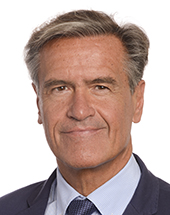
Juan Fernando LÓPEZ AGUILAR | Spain ES | Progressive Alliance of Socialists and Democrats (S&D) | 187 |
| 4 |
|
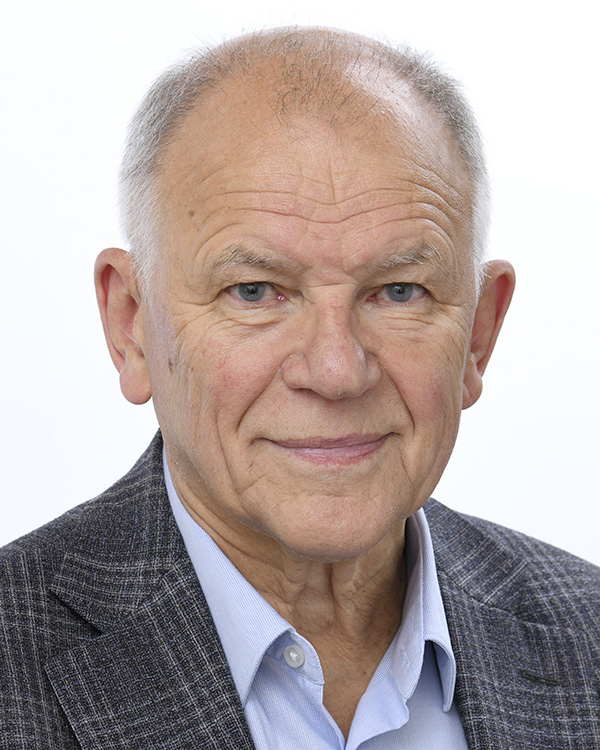
Vytenis Povilas ANDRIUKAITIS | Lithuania LT | Progressive Alliance of Socialists and Democrats (S&D) | 139 |
| 5 |
|
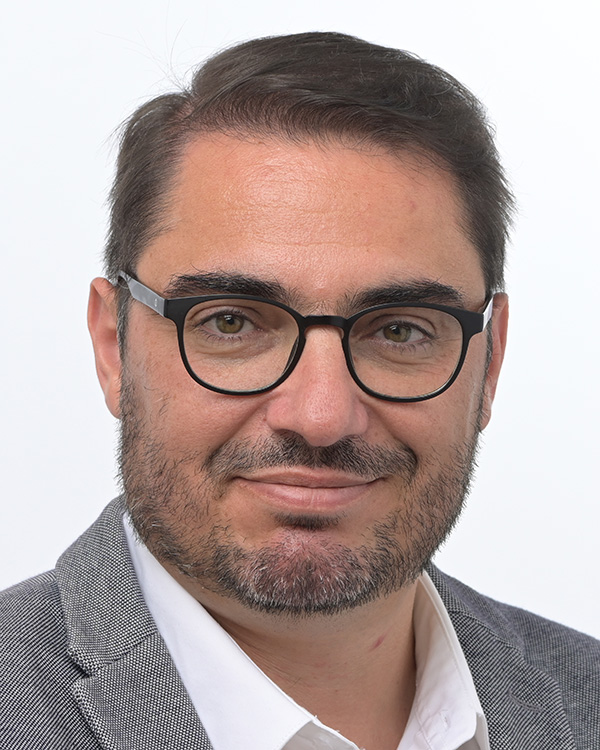
João OLIVEIRA | Portugal PT | The Left in the European Parliament (GUE/NGL) | 138 |
| 6 |
|
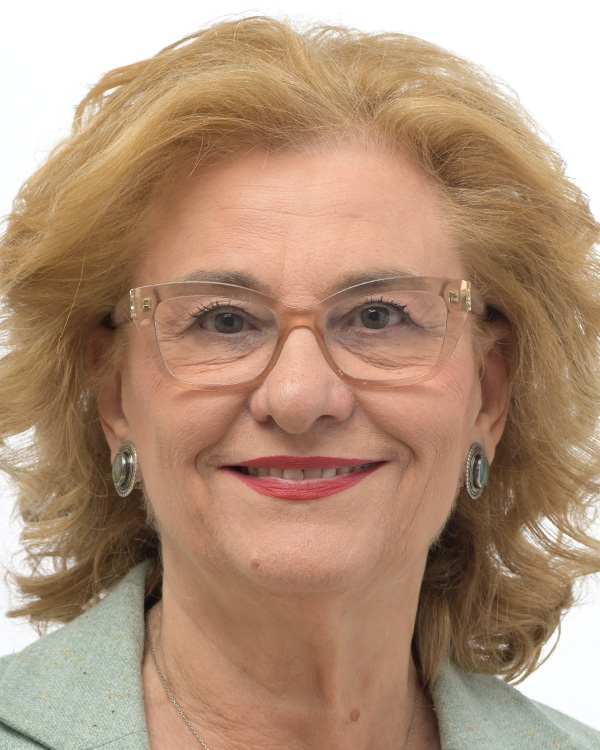
Maria GRAPINI | Romania RO | Progressive Alliance of Socialists and Democrats (S&D) | 114 |
| 7 |
|
Seán KELLY | Ireland IE | European People's Party (EPP) | 91 |
| 8 |
|
Evin INCIR | Sweden SE | Progressive Alliance of Socialists and Democrats (S&D) | 86 |
| 9 |
|
Ana MIRANDA PAZ | Spain ES | Greens/European Free Alliance (Greens/EFA) | 81 |
| 10 |
|
Michał SZCZERBA | Poland PL | European People's Party (EPP) | 76 |
All Contributions (54)
 Recent developments in Palestine and Lebanon (debate)
Date:
16.12.2025 21:23
| Language: EN
Mr President, ladies and gentlemen, the debate is about recent developments in Palestine and Lebanon. The developments are very different. In Lebanon, Hezbollah is weaker than ever; in Palestine, Hamas is still not yet fully defeated. In Lebanon, we have a bright future already close in reach with an election next year. After the Pope's visit, there was a lot of confidence in the country. In Palestine, UNRWA is still around. We need more trustworthy organisations of international funding, we need support for a proper future, on the way to a two-state solution which can only be – in one generation or more – really applicable. It is a huge difference. The future for the region is the Abraham Accords. The Abraham Accords are starting exactly like the European integration once started: with cooperation among former enemies in economic dimensions and then in other dimensions, and this led to peace, freedom, prosperity. This is what we all have to wish for. All the countries in the region – no matter whether Palestinians, Lebanese or the others – would be affected.
Condemnation of the terrorist attack against the Hanukkah celebrations in Sydney and solidarity with the victims and their families (debate)
Date:
16.12.2025 20:46
| Language: EN
Mr President, colleagues, when I was reading early morning on Monday after the horrible attack in Sydney, Australia, in a Jewish newspaper about the matter of fact that the hero Ahmed Al‑Ahmed was a muslim, is a muslim, fortunately, since he survived the attack. It touched me deeply and it reminded me of what I have stated time and again in this plenary and elsewhere that Islamism and Islam is not the same. Islamism is an ideology of hatred, anti-Semitism, violence, brutal terrorism. Islam is a religion as other religions and deserves the same freedom of religion. How many times have we talked in this very Parliament about anti-Semitism and where it leads to, and about the responsibility of the vast majority of people who are not anti-Semites, to make proper dwelling for Jewish people possible. And how many times it was of doubt whether we are coherent in Europe of doing that. So Australia is not Europe, but we must not underestimate the threat that's also here. It's also in the Member States of the European Union that's everywhere in the world. So this horrible attack, while we mourn the victims, we must even strengthen our efforts to make proper dwelling for Jewish people possible and to fight anti-Semitism in all its forms.
Escalating repression of the Baha'is in Iran
Date:
26.11.2025 19:42
| Language: EN
Mr President, dear colleagues, ladies and gentlemen, the Iranian regime has been a threat to the outside and to the inside. The Iranian regime is weaker than ever before after the attacks on 7 October 2023 against our civilisation, I would say, because the Iranian regime was behind it, and the Iranian regime had to pay the bill for it and still has to pay the bill for it. But I care for the people in Iran. No matter what religion or ethnicity, everybody deserves a proper life. This is exactly what the difference is between us and our values in Europe and beyond, and the approach of the Iranian regime. I have been sanctioned by the Iranian regime since January 2023, and I am absolutely aware of the fact that the Baha'i and other minorities are even more under threat than ever before, because the regime is so weak that it tries to do everything to remain in power. We must not allow the regime to get away with that.
The situation of Christian communities and religious minorities in Nigeria and the Middle East, and Europe’s responsibility to protect them and guarantee freedom of conscience (topical debate)
Date:
26.11.2025 12:55
| Language: EN
Madam President, colleagues, ladies and gentlemen, first, for the vast majority of people on this planet, spirituality, religion is a major part of their identity. Only because in Western Europe it is only slowly increasing that we have this understanding, we must not forget to have that in mind and take that into account when we reach out to the world. Secondly, Islam and Islamism are two different things. Islam is a religion. Islamism is a terrible terrorist ideology, very harmful. And most harmed by Islamism is Islam itself, because it disappears as a religion from the public sphere if Islamism is too present, and Islamism is also the grounding for persecution of Christians in Nigeria and elsewhere, but mostly in Nigeria today. And we have to fight that by fighting Islamism and by keeping up religious freedom. I want to, in particular, commend the activities of our Vice-President Antonella Sberna in that specific field of religious freedom, which is of utmost importance also in the very interests of Europe's core values.
Escalation of the war and the humanitarian catastrophe in Sudan (debate)
Date:
25.11.2025 15:18
| Language: EN
Mr President, Commissioner, thank you very much for your speech and the EU's efforts so far. I think we should align with those who also take efforts for stabilisation, for future peace, and for proper dwelling and dignity. That is what we wish for everybody and especially for the people in Sudan due to this largest humanitarian crisis in the world. It has been the largest crisis since 2023, but I cannot avoid to make the remark that we might have been covered with some crisis regions, which we, ideologically driven, focused more on for a very long time. But now we focus on the largest crisis we have on Earth, especially on this very day, which is also the International Day for the Elimination of Violence against Women. Rape as a weapon of war is widely used in Sudan. This is something that is absolutely unacceptable and it has to be addressed, as well as humanitarian aid, meaning also humanitarian access. This is something that will be a precondition for what the Commissioner has just pointed out as EU help, EU support. Humanitarian access is a precondition for that. Politically speaking, we are confronted again with an actor we already pretty much know: the Muslim Brotherhood. So, I think the European Union politically should support the efforts of the so‑called 'Quad' – meaning the US, Saudi Arabia, the UAE and Egypt – to achieve a ceasefire, and to support a peaceful and sustainable resolution of the matter. This would be the political approach the EU should take.
Effective use of the EU trade and industrial policy to tackle China’s export restrictions (debate)
Date:
25.11.2025 13:23
| Language: EN
Madam President, there is this saying about the so‑called elephant in the room. It might be that in the past it was meant for various different things. Today, my impression is that it is meant for China, because after each and every discussion we have, in whatever capital of Member States or on the European level, in the end somebody would state that it was a very interesting discussion, but there is the elephant in the room: we have not talked enough about China. But still, we talk about China and it is becoming more and more, but I would advocate for talking with China more. China is called by the Strategic Compass of the European Union an economic competitor, a strategic partner and also a systemic rival. I know from encounters with Chinese officials that the systemic rival dimension is not very well received. It is obvious that we have different values: human dignity, individual freedom – the death penalty would be something that is absolutely not compatible with European values – but we have to talk with China to de‑risk without to decouple, and to diversify our risk in many different fields of economy and other fields.
30th anniversary of the Barcelona Process and the new pact for the Mediterranean (debate)
Date:
24.11.2025 19:53
| Language: EN
Madam President, Commissioner, colleagues, the pact for the Mediterranean is of the utmost importance for Europe and for Europe's global outreach, for Europe's strength to the outside, for obvious reasons: we are close neighbours. All the countries close to the sea, no matter whether it's Europe or North Africa or even the Middle East, are in the end, on a global scale, compared to the rest of the world, close neighbours. Why would we let other powers on this planet – who might seek confrontation against us instead of cooperation with us – why would we allow them to influence Africa in general, North Africa in particular, and also other parts surrounding Europe, even Europe itself, more than we ourselves do? We involve ourselves in our own destiny. We get involved in our own pathway forward if we cooperate in the Mediterranean. This is why it's of utmost importance that this will be a success – a success in terms of the economy, a success in terms of security, and also a success in terms of fighting illegal migration. We need the partners to fight illegal migration. We need security also in terms of confronting hybrid threats. We need economic success, and as Ronald Reagan once stated, 'The best social program is a job,' I think the best development aid is economic cooperation – and this is what we have to seek with our partner countries in the respective regions.
Enhancing police cooperation in relation to the prevention, detection and investigation of migrant smuggling and trafficking in human beings; enhancing Europol’s support to preventing and combating such crimes (debate)
Date:
24.11.2025 19:03
| Language: DE
No text available
The first European Annual Asylum and Migration report and the setting up of the Annual Solidarity Pool (debate)
Date:
12.11.2025 15:38
| Language: DE
Madam President, Ronald Reagan has quoted in his time that one can go to Germany or to France, but he won't be a German or a Frenchman, but he could go to America and become an American. This is not true at the time of the current US administration, but it can be a pattern of what it means to come to Europe and become a European. On the other hand, there is the tolerance paradox of Sir Karl Popper, who says: "Tolerance against intolerance does not work." And there have been many who are intolerant of our European civilization, and Europe has not been able to face it together for ten years. That's why it's so nice and a special day, a good day, to be able to say today: After ten years, Europe has unified access. Europe treats together what Europe must tackle together as a challenge. And that this succeeds under a commissioner from Austria, Magnus Brunner, is particularly beautiful, but Magnus Brunner did it for the whole of Europe. And so we can look to the future and cope with integration with those who are there. Because that is what burdens citizens the most.
Renewing the EU-Africa Partnership: building common priorities ahead of the Angola Summit (debate)
Date:
21.10.2025 20:16
| Language: EN
Mr President, Commissioner, thank you very much for this deep dive into the important matter of the EU-Africa Partnership. And, in the long term, there is not much on the planet that matters more to Europe, to Europe's future, than the EU-Africa Partnership, since this is nothing other than an important, a close, a deep and meaningful neighbourhood –it's neighbourhood. Some might think, when they think about Africa, in all its diversity, it would be about development, and development is important. Some might think it would be about migration, and migration is important. Some might also see it's about youth – strong youth – in Africa, striving for prospects. Some might think it is about business partnerships, and I want to clearly emphasise and underline that these things are connected. Actually, when it comes to development, time and again I quote Ronald Reagan, who said, 'The best social programme is a job'. And the same is true for development – the best development aid is economic partnership. This is why Global Gateway is of the utmost importance in our EU-Africa partnership, but also when it comes to other parts of the world, to try to influence the rest of the world under the umbrella of other values than the values we strive for. Then, time and again, I underline – also to our African partners – that it's the EU that is trustworthy, it's the EU that's rule-of-law based, and it's the EU that's reliable in the longer term. And this is why partners in the EU and partners in Africa belong together for the better of the population of both.
Commission Work Programme 2026 (debate)
Date:
21.10.2025 14:18
| Language: EN
Mr President, what a pity the Commission President left our plenary debate about the Commission work programme. But I'm more than happy that the most experienced commissioner, Vice-President Maroš Šefčovič, is with us this afternoon, because it is an important matter we have to discuss. I kindly ask the Vice-President to convey the messages of this plenary debate to the Commission President. I have to say, I voted for her in her first election six years ago, in her second election one year ago – even while the Member States didn't even provide us with more than one candidate for this position, but this is all a future perspective – and I have defended, as has the majority of this House, the Commission President against the confidence vote we had here. Having said that, I really want to ask the Commission President to not allow herself to get distracted by these confidence votes from the extremists of this House. Because when I was thinking in the beginning of this mandate that now the right policies will be taken from the side of the European Commission in terms of deregulation for our economy and, of course, also in terms of security and to tackle the crises of our times, then I think it was a positive, optimistic approach of the beginning of a mandate. We must not allow ourselves to be distracted because one extreme wants to destroy our economy, the other extreme wants to destroy our security. We have to take care of both in Europe – our economy and our security – because both are existential. We need a Europe with more freedom to the inside and more strength to the outside. Therefore, I kindly ask the Commission President to remain a friend of freedom in that sense, and a leader in terms of security for Europe.
The decision to impose a fine on Google: defending press and media freedom in the EU (debate)
Date:
20.10.2025 17:00
| Language: DE
Mr President, ladies and gentlemen. When it comes to our Europeans' access to the digital age, to social media, to artificial intelligence, it's not just about a company, even if it's a big one, it's not just about a platform, it's about how we deal with the risks and how we deal with the opportunities. Fear is a bad adviser. This principle is very, very important, but the fear is very different from the fear, the fear of the risks, which are evident, which are there, which often already occur. Only today, a teacher from Tyrol in my home country Austria wrote me how much addiction potential for children and adolescents – and actually everyone – is already in social media, where, due to artificial intelligence in algorithms, much is designed for addiction, which people then develop in one way or another. That's dangerous. At the same time, as a friend of freedom, I also want innovation in Europe. I don't want us to be consumers of what is invented and produced and distributed in other parts. I want European companies to have the freedom to innovate in the field of artificial intelligence, based on European values. And ultimately, I want freedom, freedom of expression, freedom of the press to be not only the freedom of the loudest and the most extreme, and perhaps the most nude, but really the freedom of the voices reflected, the quiet voices, the marginalized. All this can only be achieved with a corresponding human contribution to the digital age.
New Strategic EU-India Agenda (debate)
Date:
07.10.2025 18:13
| Language: EN
Mr President, Commissioner, colleagues, while here in the European Parliament we have to discuss and vote on confidence votes against our Commission's President from the extreme right and from the extreme left, which is already kind of a shame, the Commission's President has just visited India and reached out for prosperous future cooperation. There are not many things sustainably so important as this. The reason is India is not only the biggest country on Earth, it is also the country where Europe can prove its strength to the outside in the very fields we Europeans care about. I have already fought my election campaigns with the clear message. I want Europe to thrive, with more strength to the outside and more freedom to the inside, of course. India, in terms of labour, in terms of people, in terms of education, in terms of skills, and in all the many other fields colleagues have already mentioned, from technology to security, is and will remain and become an even more important partner for us Europeans. So let's go for it.
Situation in Afghanistan: supporting women and communities affected by the recent earthquakes (debate)
Date:
07.10.2025 17:02
| Language: EN
Mr President, Commissioner, Minister, today marks 7 October. After 11 September 2001, the world took care of Afghanistan, but it didn't work out well. After 7 October 2023, we will see whether the world takes care of the Palestinian territories and where it will lead, because the ideology of different rights for men and women, the ideology of treating not only men and women differently, but also boys and girls, different communities differently, leads always from bad to worse. This happens in many kinds of ideological regimes, and this happens in Islamist regimes especially, and these days in particular. This is why the earthquake of 31 August is a big tragedy. It caused more than 2 000 losses in terms of lives and many other victims, and the European Union must take care of it. Humanitarian aid is provided by the European Union, and the EU remains the largest donor of humanitarian aid on Earth, also in this case. But women are affected more and girls are affected more, and communities which are not supported by the regime are affected more. This is what we must not allow to happen anywhere on Earth. And this is why humanitarian aid also must come along with a clear political message for human dignity.
Gaza at breaking point: EU action to combat famine, the urgent need to release hostages and move towards a two-state solution (debate)
Date:
09.09.2025 09:47
| Language: EN
Madam President, first, I want to make the remark that also during this war and after this war, we in this Chamber have to talk to each other also on different matters. This is why I advocate for a bit of a de‑escalation in the language. I hear 'shame, shame, shame' all the time and things like that – I do not think this is the way to deal with it. Secondly, the whole mess has been started by the Iranian regime. I am very happy, Ms Kallas, that we have you here and not your predecessor during these times and generally, but I also want to remind you that the Iranian regime is very much aligned with the Russian regime at the moment. These are those who fight the political West, which we are supposed to defend, I think. The Iranian regime might already regret this attack, but it is still there and Hamas is also still there. Usually, we are against political Islam, we are against Islamic terrorism. Usually, we are for democracy. Israel is a vibrant democracy. Of course, I am very much in favour of supplying help to Gaza. I very much recognise that Israel itself is also supplying help to Gaza. I am not against the two‑state solution. I am for a two‑state solution, but after a long process of deweaponisation of the Palestinian territories.
Outcome of the Conference on the Financing for Development in Seville (debate)
Date:
09.07.2025 18:02
| Language: EN
Mr President, I should like to thank the Commissioner for his courageous speech. I'm happy to have for the development policies and efforts of this Parliament such a champion in the European Commission when it comes to sustainable development. I am also happy that the European Parliament today managed to decide, in our voting, on a very particular specific message. Namely, we welcome the outcome of the fourth international conference on financing for development in Seville as a significant effort to reform the international financial architecture, readdress the cost of borrowing and scale up investment to close the financing gap for sustainable development. The very clear message that we have taken today, and since there is a lot at stake when it comes to development, is that it's often about life and death, and it's about opportunities for generations because there's a lot at stake. I want to speak very parliamentarily as a parliamentarian today. We have decided on that today because we were not able to decide before Seville here in the European Parliament. And the reason was not Charles Goerens, who was the rapporteur for this file, whom I commend for his efforts and for his excellent work in the negotiations – very compromise-oriented, and this is what it should be about. But after these negotiations, this compromise was targeted by amendments. We didn't have a chance for majorities – nearly all of them, except one. And this hit. And this is why last time we couldn't decide on Seville. This can be a lesson for all of us to stick together, because it's a lot at stake, as I have mentioned, to find positive compromises and to contribute to sustainable development in the best sense we can as the European Parliament.
Institutional and political implications of the EU enlargement process and global challenges (debate)
Date:
19.06.2025 07:41
| Language: EN
Very interesting that you said you have asked the question several times and not received an answer; then it might be the case that the question is the problem, not the answer. That's the one side. The other side is, I mean, we have still a war ongoing. Putin and Russia's aggression against Ukraine. We have on the table several ideas of new Member States, which are not yet official candidate countries. Ukraine is officially a candidate country. But we need also here the holistic approach. We have six Western Balkan countries. We have the Eastern Partnership countries. We will have a future Europe for future generations, which will be entirely one integrated Europe in unity with freedom and peace and prosperity. This is what we have to thrive for. And polemics or extremism will not work on this path ahead.
Institutional and political implications of the EU enlargement process and global challenges (debate)
Date:
19.06.2025 07:38
| Language: EN
Mr President, Commissioner, colleagues, we need a Europe with more strength to the outside and more freedom to the inside. And at the moment, we are experiencing an era when the European Commission contributes a lot to a Europe with more freedom to the inside: deregulation, simplification, competitiveness – that's what we were thriving for for a long time and what's happening now. But we also need a Europe with more strength to the outside for the sake of European values, for the sake of the interests of the Europeans of this generation and of generations to come, and that means fostering the enlargement process. We have to be aware of the fact that the so-called 'methodologies' of accession to the European Union just haven't worked. They haven't worked for many years. I remember at the beginning of the last mandate, here, we were more or less obliged to define a new methodology for the enlargement process. Did it help? No, not at all. While many European countries, nearly all of them, want to be part of the integrated Europe, of the European Union, the best shape our continent ever had in history, while this is the case on one side, on the other side, we are reluctant and stuck in bureaucracy, in so-called 'methodologies', when it comes to enlargement. We need a more holistic and a more visionary approach here.
Return of Ukrainian children forcibly transferred and deported by Russia
Date:
07.05.2025 19:11
| Language: DE
Madam President, Commissioner, ladies and gentlemen, Today we are discussing the return of those Ukrainian children who were abducted from Ukraine in the course of the Putin-Russia war of aggression. You have to keep that in mind, and you have to tell that to the whole world – and you have to tell that to those who keep trying to relativise. They're the smallest, they're the most vulnerable. It is those who would be most reliant on the help of other people on whom Putin-Russia commits its war crimes. I have no doubt that Russian parents love their children as much as all parents love their children. But I can't imagine anyone approving what's going on with these kids. The children must be brought back. This must be part of any future peace agreement for a free Ukraine, and without retraumatization and without new traumatization, these children must be brought back. They deserve a future in freedom and a future in the knowledge of their Ukrainian identity.
Targeted attacks against Christians in the Democratic Republic of the Congo – defending religious freedom and security (debate)
Date:
01.04.2025 19:33
| Language: EN
Madam President, dear colleagues, dear honourable High Representative/Vice-President Kallas, first, I want to again emphasise, as I do time and again, the difference between Islam and Islamism, between the religion of Islam and the harmful ideology of political Islam, between the religion that deserves and enjoys all the rights of religious freedom, on the one side, and Islamism – a violent, harmful ideology causing bloodshed all over the world. It's important to emphasise that because we Europeans, we the European Union, defend religious freedom and we also defend ourselves against attacks of Islamism, and we defend those who would be attacked by jihadists, by Islamists all over the world. This is exactly what we do with today's resolution, because Christians were killed and tortured because they were Christians, because they are Christians. That's the reason why I want to praise and appreciate, High Representative, your clear stance when it comes to our adversary in Moscow and everything related to that. I want to draw attention to the fact that Moscow is aligned with Tehran, Pyongyang and Islamism, and our adversaries to the east are more or less on the same table against Europe. We have to see the connection. This is also what we address to the outside and to the inside to fight this kind of attacks against our civilisation.
EU Preparedness Union Strategy (debate)
Date:
01.04.2025 14:45
| Language: DE
Madam President, My Italian is just enough to agree with what you have just said, Madam President, and I thank you very much for that. Commissioner, ladies and gentlemen! It is important that we invest in civil protection in Europe in these times. It is important that the new European Commission sets clear priorities for security and for the economy, for the economy and for security and for the interconnections between them. Of course, civil protection is also part of security. Responsibility is always the responsibility of others. We do not only provide civil protection for ourselves – to a certain extent selfishly – but also for all people in our society and also for future generations. That's why it's so important to invest now. We have prepared – in my penultimate period here in the European Parliament, I was allowed to negotiate this, the Civil Protection Mechanism. It has also had a positive impact on forest fires, when European Member States worked together to combat these natural disasters. What was important back then, and what is important now, and what I would like to recommend to you, Commissioner, is that we think in a subsidiary way. In Austria, it is the Civil Protection Association and the fire brigades, of course always together with the Federal Army and professionals in all areas and volunteers in all areas, who cooperate on a subsidiary basis so that civil protection can really succeed and civil protection can succeed, and to develop this European civil protection not centrally, but also with those affected on the ground, that seems to me to be so important. Then we are on the right track.
Severe political, humanitarian and human rights crisis in Sudan, in particular the sexual violence and child rape
Date:
12.03.2025 20:21
| Language: EN
Mr President, Commissioner, colleagues, humanitarian organisations call Sudan and the situation there literally one of the worst humanitarian nightmares of recent history. So, rightly, late at night now in the European Parliament, we use the time to reflect on this worst humanitarian nightmare of recent history. We all know the Russian attack against Ukraine is close geographically and is also close to our way of life. But there are also other crises on earth. In terms of quantity, Sudan is one of the major crises, and also in terms of cruelty – even sexual violence is used as a weapon of war in this crisis. Many among the most evil powers on our planet are present in Sudan, among others: Islamist terror, Islamist ideology and violence, as well as Putin's Russian forces who try to exploit the soil and to torture the population there as well. I thank Hilde Vautmans and the other co-negotiators on this file and I'm happy that we explicitly mention the World Food Programme in this file, which has rightly received the Nobel Peace Prize a few years ago. Three World Food Programme workers were killed some time ago in Sudan. And we can see that the funding of the World Food Programme today is the same as ten years ago, while the number of starving people is four times as much as that time. And my proposal today is that maybe it can be, even in these times, a cooperation project between EU and US to provide more funding to the World Food Programme, because fighting starvation must be something that's common ground for the EU and US.
100 days of the new Commission – Delivering on defence, competitiveness, simplification and migration as our priorities (topical debate)
Date:
12.03.2025 14:01
| Language: DE
Mr President, Commissioner, ladies and gentlemen! I did not make it easy for me to give Ursula von der Leyen a boost of confidence for a second term of office as President of the Commission. I have also received many critical e-mails from citizens for this voting behaviour, which I have made transparent. However, after 100 days of this new European Commission, I can say that I would do it again because there is no ‘continue as before’ with regard to the old period. We discussed intensively with Ursula von der Leyen before her election here in the European Parliament that there must be a way out of this over-regulation, that Europe must take the path that Montesquieu described with the truly liberal principle: If there is no need to make a law, then there is no need to make a law. And now with the excellent proposal on migration, with the excellent proposal on the so-called Omnibus package on deregulation, with the Global Gateway that will increase our competitiveness, and with security policy, there are many good reasons to see Europe's stability secured in a high-wave world.
The need for EU support towards a just transition and reconstruction in Syria (debate)
Date:
11.03.2025 21:19
| Language: EN
Madam President, Commissioner, colleagues, I visited Syria three years ago. In the main place, I met with international organisations present there. Already then their recommendation was to make exceptions in humanitarian cases from the sanctions, which would have been important and which remain important, while sanctions also remain important, as long as we don't know whether jihadists have turned. Have we learned our lessons from the other so-called 'Arab Spring', which was nothing but the change from winter to winter in many Arab countries? We don't yet know. The outrage and violence last weekend show a different picture. We should align with international organisations, Commissioner. We should align with organisations important for us in Europe, especially in the field of border management, such as the UNODC. We should also align with our strong partner in the region, Israel, which has taken care to ensure that the military threat from whatever regime will not increase but decrease, and which takes care of stability in the region, in the buffer zone there.
Presentation of the proposal on a new common approach on returns (debate)
Date:
11.03.2025 16:08
| Language: DE
Madam President, Commissioner, ladies and gentlemen, Very often, like many colleagues who criticise over-regulation, I have criticised the inability of the European Union to cope with illegal migration from this lectern. And now the new European Commission is coming into action at a considerable pace. Yesterday we discussed the fight against overregulation here because the European Commission made a good proposal, and now, so early in the mandate, there is the proposal for deportations – if only one in five who are not allowed to stay is deported – so far this is bad. This proposal from the European Commission, if it is implemented, if it survives the parliamentary process well here in the House or perhaps even gets better, will lead to those who deserve and need asylum because they have a right to it, which is also obtained in the EU. But the vast majority of those who come illegally and have no right to asylum can be deported faster and more effectively. Full support for the Commission and for Commissioner Magnus Brunner on this path!