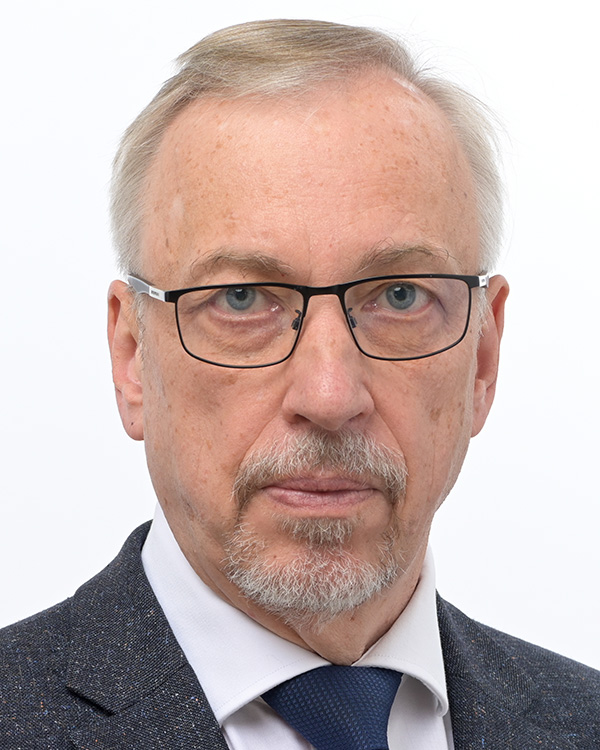
 Debate contributions by Bogdan Andrzej ZDROJEWSKI
| Rank | Name | Country | Group | Speeches | |
|---|---|---|---|---|---|
| 1 |

|
Lukas SIEPER | Germany DE | Non-attached Members (NI) | 321 |
| 2 |
|
Juan Fernando LÓPEZ AGUILAR | Spain ES | Progressive Alliance of Socialists and Democrats (S&D) | 280 |
| 3 |
|
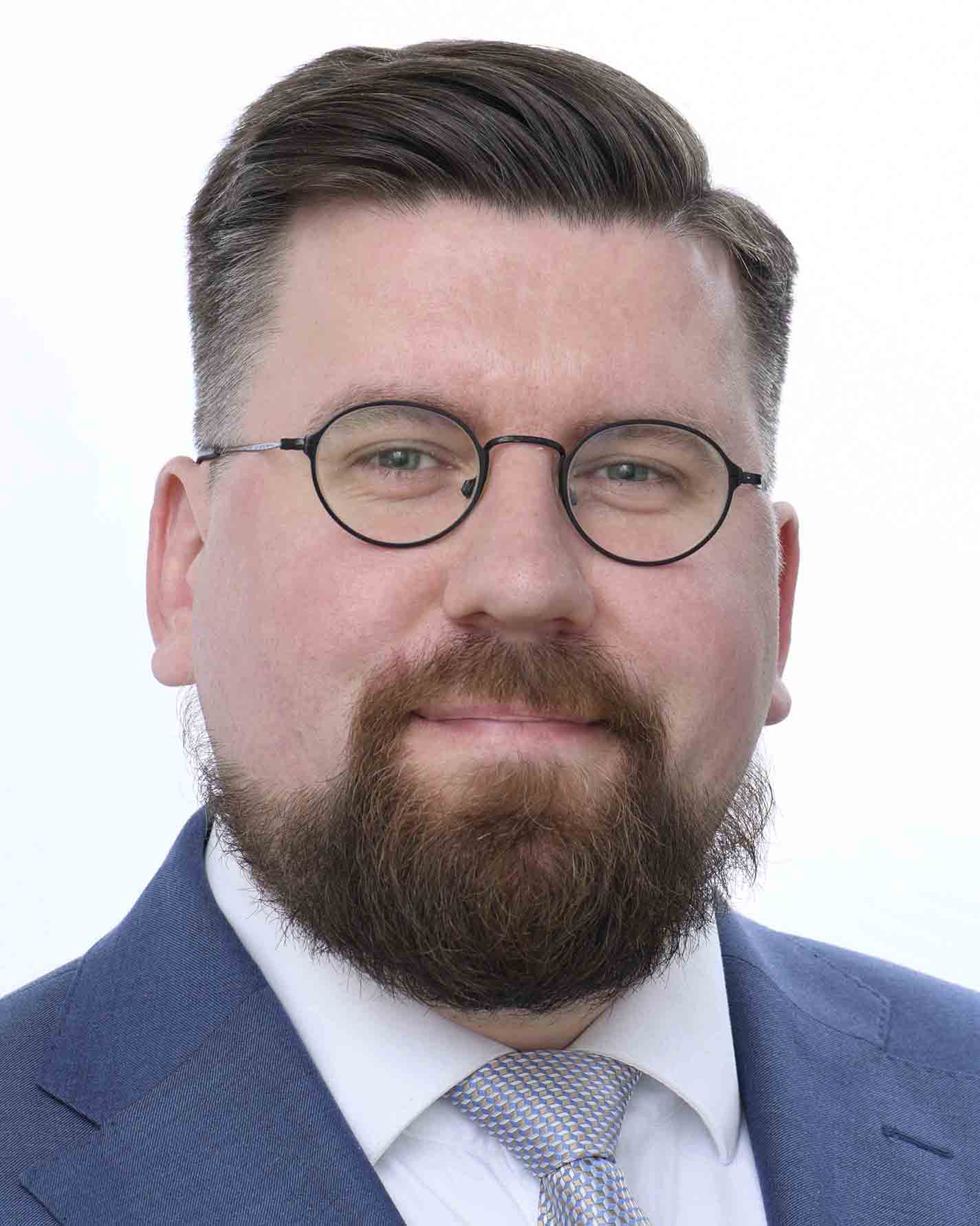
Sebastian TYNKKYNEN | Finland FI | European Conservatives and Reformists (ECR) | 247 |
| 4 |
|
João OLIVEIRA | Portugal PT | The Left in the European Parliament (GUE/NGL) | 195 |
| 5 |
|
Vytenis Povilas ANDRIUKAITIS | Lithuania LT | Progressive Alliance of Socialists and Democrats (S&D) | 183 |
All Contributions (20)
 Online piracy of sports and other live events: urgent need to address unsolved issues (debate)
Date:
21.01.2026 18:40
| Language: PL
Mr President, thank you very much. Mr. Commissioner, I'm sorry. In this room, we all have either a favorite team, or a favorite discipline, or a favorite, respected athlete. And we know perfectly well how much it costs to educate such an athlete, to bring him to form. Parents are needed, sponsors are needed. We need all those people who are willing to help financially to make this sport, discipline, athlete develop. Unfortunately, these illegal broadcasts, this theft, which is taking place on an unprecedented scale, that is, taking away from these athletes those hopes that are related to material conditions, to be their successors, to, in short, individual disciplines develop. We have to fight piracy because it is robbing, in short, our outstanding athletes, our clubs, our disciplines. We know that the Digital Services Act (DSA) aimed to ensure that what is illegal in the real world is also illegal in the digital world, including the internet. Unfortunately, it seems that the tools that have been used are insufficient. The improvement over the last two years is minimal. It is therefore with great pleasure that I read the words of the Commissioner. If we are aware of problems, if we are aware of scale, we should deal with it. Today, however, we parliamentarians will expect and support more effective action from the Commission. We will, in short, support not only the athletes themselves, but those employees of all possible sectors who will make sure that the athletes themselves, the teams themselves, are not robbed by illegal television broadcasts.
Attempted takeover of Lithuania’s public broadcaster and the threat to democracy in Lithuania (debate)
Date:
21.01.2026 17:43
| Language: PL
Madam President, I'm sorry. In general, we do not talk enough about public media, about the work of journalists, about freedoms, freedom of expression, also about the fight against fake news, about security. Therefore, the situation in Lithuania has become a good pretext for this topic to actually appear. We are aware that the attempt to carry out the reform is not an attempt to carry out a technical reform, but a general disruption of the de facto functioning of public media in this very important country for us. In the last decade, I want to make this very clear, we have seen it in Europe – I stress: in Europe, many attempts at political interference, including even a complete takeover of radio stations, TV stations or even specific periodicals. That must be disturbing. It is always dangerous – and I stress it – to violate the Media Freedom Act. It is this act, after all ours, that should prevent what we observe in many countries, in many situations, that is, simply exerting enormous political pressure to build concrete messages for specific political needs. We must remember that finding the truth, finding the comfort of journalists' work is our task, also as politicians. We know the pattern of taking over public media, because we have observed it, among others, in Hungary, partly also in Slovakia, and we know what the consequences of such activities are. Media freedom is not a marginal issue, it is the foundation of democracy. He who attacks, destabilizes our democratic order. Therefore, the expectation that the Commission will always be active in this area is correct. Journalists themselves should feel that they have a right and specific institutions on their side that, in short, protect these rights.
Audiovisual Media Services Directive obligations in the transatlantic dialogue (debate)
Date:
23.10.2025 07:27
| Language: PL
Madam President, I'm sorry. We must, of course, bear in mind that cultural policy is primarily a competence of the Member States. We stress on several occasions, including in this resolution, that the principle of subsidiarity is not only the principle of the division of competences, but is also a fundamental safeguard for cultural diversity. This is why the fifth paragraph, the last paragraph of the resolution, is so important. It is worth quoting it in its entirety: "we call on the Commission to firmly reject any attempt to consider the AVMSD as a trade distortion and to defend the AVMSD as a legitimate regulatory instrument mechanism. It is important not only for ensuring the protection of cultural diversity, but also for sovereignty and our soft power. Culture for us is not only an important element of internal politics, but also of defending Europe’s sovereignty.”
Role of EU policies in shaping the European Sport Model (debate)
Date:
06.10.2025 17:14
| Language: PL
Mr President, thank you very much. Mr. Commissioner, I'm sorry. Thank you very, very much. It is said that everyone knows about sports and politics. As everyone knows, everyone has an idea, everyone has ideas, everyone has a specific observation. Include it all in this report? There was no such possibility. The report could be too extensive, too detailed and, in short, weaker. So I want to thank you very much, but I want to thank you very much for a certain restraint, for building a situation in which these most important things have actually been isolated and, in short, defended. I would like to stress once again: Not everything can be included in this report. We often underestimate the work of our staff. I would like to close this issue with words of thanks to Mrs Kasia Bieniaszczyk, who has already worked on the second report on the European model of sport, and this is a special distinction. And one more thing I have to say. We must also fight piracy, piracy that takes away athletes' salaries, which is a kind of theft. We are also talking about this in the report, modestly, but we are talking about it because it is very important that, in short, salaries for athletes are dignified, fair and not taken away by such activities as well. I hope that this work will also inspire the European Commission and make the finale as follows: the heart of European sport will beat even harder. Commissioner, thank you very much. I would also like to thank all the organisations that participated in the hearings for their contributions to the discussion.
Role of EU policies in shaping the European Sport Model (debate)
Date:
06.10.2025 16:09
| Language: PL
Mr President, thank you very much. Mr. Commissioner, I'm sorry. Sport in Europe is under enormous pressure. Commercialization is gaining momentum. Foreign investment is growing, creating models focused primarily on profit. Another threat is playing league matches or other regular sports competitions outside Europe. We welcome UEFA's decision today to oppose this. At the same time, what worries me very much, the number of volunteers, so necessary primarily for mass sport, is decreasing. These challenges apply to many sports. Their scale and complexity appear to be increasing, putting the resilience of the European sport model to an additional test. It is no longer possible to take for granted the fundamental values that make sense of sport. These values are: honesty, openness, solidarity or simply the principles of fair play. My report is a call to action. stresses the urgent need to protect and strengthen the European model of sport. Sport must remain true to its core values both on and off the pitch. The vote on this report also comes at a crucial moment as the European Commission prepares to outline a long-term strategy for European sport policy next year. We are keeping our fingers crossed for the Commissioner's work. The recent ruling of the European Court of Justice – worth quoting – on sport governance and the rights of athletes provides a clear opportunity for stronger action. As part of these activities, we ask for clear guidelines on the application of European Union law, including competition law, above all, of course, in the field of sport. We need to help athletes overcome various challenges, such as insufficient social protection, the increasing intensity of sport and the increasingly tight calendar of various competitions. That is why we need stronger protection of the rights of athletes, with a particular focus on people with disabilities and minors. It should be borne in mind that the autonomy of sport can only be maintained through good governance, which is why we need to open the door to greater participation more broadly. This means more space in the decision-making process not only for athletes, but also for supporters. To this end, I propose the creation of a sectoral social dialogue committee for professional sport at European Union level, in which all sport-related stakeholders can speak. Financial solidarity is an important issue. There is a growing gap between the financial elite in professional sport and the amateur level, at which most young people start their adventure with sport. We call on the Commission to carry out an analysis of support for various studies on sport in Europe, in particular to map existing financial solidarity mechanisms and redistribution systems to ensure a fairer distribution of resources. We also stress the need to support local sports clubs and organisations through programmes such as Erasmus+. Every day, millions of Europeans walk, run, go to the gym or engage in various forms of physical activity. Promoting sport at all levels is essential for building a healthier and more active society. This is especially true for the youngest people. Therefore, key proposals in the report include improved infrastructure, accessibility, increased funding for sport and physical activity under Erasmus+. I believe that increasing the number of volunteers involved in sport and recognising their key role will contribute to the development of sport across Europe. As rapporteur also for the future Erasmus+ programme, I would like to assure you here that Parliament will fight for as much money as possible, including for sport. In conclusion, we still have a lot of work to do, but today I would like to thank all our co-rapporteurs for all the opinions expressed. They are valuable and contribute to this report.
A new vision for the European Universities alliances (debate)
Date:
11.09.2025 06:52
| Language: PL
Mr President, thank you very much. Science, research, education, education – these are the most important elements that determine whether a country or a continent is doing well or succeeding. I am pleased that on this occasion – the occasion to talk about universities, about science – we are accompanied by the Commissioner responsible for finance, for the budget. His announcements regarding the expansion of the Erasmus+ programme are very, very important to us. We know what cooperation between universities, universities, in short, looks like: It's going very well. It runs primarily through the 65 alliances that we talked about during this debate. These are five hundred and seventy pairs of universities that participate in this program. The rapporteur draws attention to this. I want to thank her very much. Laurence Farreng has done a fantastic job and we are delighted that such consensus has been reached on the occasion of this report. And it should be remembered that not only did the debate, the discussion, about the report itself run smoothly, but on this occasion we made a summary of this work, which took place in recent years between universities. Did everything go perfectly? Certainly not, but most of this cooperation shows that it makes sense, firstly, that we have higher efficiency and that almost half of the students studying in Europe benefit from this agreement. Undoubtedly, these agreements are the driving force behind Europe – not only in the field of science, but also in the development of all those elements that make up modern technologies and, in short, this positive financial effect. At a time when insecurity is increasingly felt, this is an additional, even more important issue.
State of play of implementation of the European Media Freedom Act in the Member States (debate)
Date:
08.07.2025 11:48
| Language: PL
Mr President, thank you very much. I am watching this debate and I must say that those who are most critical of this act are those who fear the influence of foreign and hostile powers in Europe when it comes to spreading their own propaganda. What is the most important? Freedom of the media, we must remember, is not only a right, it is our shared responsibility. It is crucial to promote respect for diverse views, the development of civic awareness and media education that will allow audiences to better verify sources of information. In my view, the European Media Freedom Act expresses a clear position. Freedom of speech is the foundation of democracy. It is not a privilege, but a duty. Member States are required to ensure that public service media providers are editorially and functionally independent and provide their audiences with a plurality of information and opinions. I look forward to the establishment of this new EU body, the European Board for Media Services, although of course not without some criticism. I remember various experiences in this matter, which did not always end well. Let's remember what is in this act: protection of editorial independence, non-use of spyware against the media, transparency of advertising, protection of online content, respect for copyright. I am convinced that we are able to make some progress with this act.
A unified EU response to unjustified US trade measures and global trade opportunities for the EU (debate)
Date:
06.05.2025 08:54
| Language: PL
Mr President, thank you very much. Mr. Commissioner, I'm sorry. Mr. Secretary of State! We all know that decisions about taxes, including customs duties, should not be made overnight. They should not be implemented overnight. We know very well that most items, goods are created not in daily cycles. It is created in a very complicated production chain by economic operators. These economic operators expect, in short, stability. They calculate, count, estimate their costs. Objects also do not move in the world at the speed of light. They are transported one way or another, but it takes time, patience, certain costs. So the main appeal today is that all such decisions should be made sufficiently in advance, so that they do not take place overnight, so that they do not cause devastating effects when it comes to economic calculations. On this occasion, one thanks. The Polish Presidency is coming to an end. I was proud of her when I was a minister. I'm proud of her right now. I would like to thank Minister Adam Szłapka very much for his constant, adequate presence at all our sessions. We will have another one in Strasbourg and then we will keep our fingers crossed for the Danish Presidency. All the best!
Situation of European academics and researchers in the US and the impact on academic freedom (debate)
Date:
31.03.2025 18:18
| Language: PL
The United States, with the Statue of Liberty, in the field of science can become the negation of its own key ideas. First verbal interference, then financial interference, and in the final, regulations on restrictions on research come not from the Kremlin, but from the White House. American universities are beginning to be instructed, restricted in the topics of work, and the Department of Education with the signature of the president has been abolished. More than 40 universities, including Yale, are being prosecuted – attention – for violating their civil rights. There are two particularly sensitive areas, specific barometers of freedom. It is the world of culture and the world of science. I do not want to make further assessments of the policy of a key country in the world. Today, I rather want to respond positively to the first proposals of our European universities. We invite you to the Old Continent and researchers, and scientists, and students. We will guarantee them academic freedom, the conditions for finding the best solutions, both to ensure progress in medicine and to monitor climate change.
European Cultural Compass as a driving force for economic competitiveness and resilience (debate)
Date:
31.03.2025 17:23
| Language: PL
Madam President, thank you very much. Mr. Commissioner, I would like to thank you. Work on the European Cultural Compass is ongoing. The Commissioner spoke of this. Expectations for new tools, strategic frameworks are located not only in artistic circles, and this is what I wanted to emphasize. It should be borne in mind that the cultural sector in Europe accounts for around 8 million employees and EUR 200 billion in revenues. There is a chance that the study will be completed by the end of this year, as the Commissioner has just said. However, additional conditions must be met in order to be satisfied, and in particular to be highly effective in exploiting the potential of the creative industries. Firstly, financial reinforcement is needed, especially for programmes such as Erasmus+ and Creative Europe. We have these programs, instruments around 20, but I have specifically mentioned these two because they are of particular importance. Secondly, support for educational programs, education of artists themselves, but also further efforts to remove various barriers to access to culture. Thirdly, to see the risks, opportunities and appropriately address new projects using artificial intelligence. Proper implementation of the relevant act requires precision, speed and relevance. Finally, notice the appeals of the artistic circles themselves, their critical remarks on copyright and the protection of their authentic creations. We must pay attention to the need to support people in the cultural world when it comes to their mobility and the creation of modern work workshops. Let's not forget the promotion itself. We have here in Europe so many valuable objects, works, various works, to use them both economically and on prestige.
Establishing the Reform and Growth Facility for the Republic of Moldova (debate)
Date:
10.03.2025 19:14
| Language: PL
Madam President, I'm sorry. Enjoys the pace of work. I would therefore like to start by thanking the two rapporteurs and the committee. Thank you very much for this effective cooperation, both at parliamentary level and between committees. Thanks to this, we have a quickly developed new financial assistance instrument, an opportunity to be also a source of support for Moldova in the long term. We know what Moldova is in. After all, it is a small country, struggling with various crises, located on the border of many conflicts, today having a modest energy reserve. It aspires – hopefully – to be a stable member of the European Union. As rapporteur for the opinion of the Committee on International Trade, I am pleased that the final compromise includes both mechanisms to facilitate long-term economic development processes and conditions for building a functioning and competitive economy. This is not help without conditions. Thank you very much to everyone working together on this new mechanism.
Foreign interference and espionage by third country actors in European universities (debate)
Date:
28.11.2024 10:40
| Language: PL
Mr President, thank you very much. We move between extremes, and that's never good. Between openness and naivety in general, and the possible protection of all our interests, including, of course, the results of scientific research, the work of universities and scientific institutes. I must say that these cases from Norway or Germany should teach us something. They should primarily lead to a situation in which a gradation is determined for specific topics, types of research. Which should be open and which, in short, should be protected? I will immediately say that according to my assessment, yesterday's information that we have the same number of patents as the United States, but only 30% of the implementation, also results from something. It turns out that some of the patents are used outside Europe. Some of it is stolen and some of it is used illegally. It is important, I repeat: classification, strategy, building a hierarchy of values. What should be open at all, what should not be closed in some glass open-air museums, security open-air museums, and what should be closed from spies, from foreign powers that benefit from our achievements and our money?
Protecting the EU budget and ensuring that EU funds do not benefit entities or individuals linked to terrorist or Islamist movement (debate)
Date:
09.10.2024 20:18
| Language: PL
Madam President, thank you very much. Ladies and Gentlemen, In the discussion about the budget should not be missing at least a few sentences relating to the concern for education itself, scholarship programs. Undoubtedly, the Erasmus+ programme is a special value with a huge achievements. This is not only an exchange program, but it must be remembered that it is a kind of window on the world of young generations. I am convinced that exchange, education and scholarship programmes are areas that should be particularly protected and systematically strengthened. It happens, however, that an error may occur during the implementation of a specific task: a dishonest beneficiary or an unreliable one pursuing a specific purpose. Such examples are rare, but they do exist. However, they should never be used to question or undermine key tasks, in this case educational goals. Let's keep that in mind. The budgetary resources of the European Union must be used in accordance with the key values: counteract exclusion, create conditions for overcoming various barriers, create a favourable climate for openness, tolerance and mutual respect. The Erasmus+ programme is not the only project that deserves special attention, but it is particularly important.
The devastating floods in Central and Eastern Europe, the loss of lives and the EU’s preparedness to act on such disasters exacerbated by climate change (debate)
Date:
18.09.2024 07:13
| Language: PL
Madam President, thank you very much. Floods, hurricanes, earthquakes, fires and even volcanic eruptions are all types of natural disasters that affect European Union countries. They all have a common denominator: They bring with them human dramas. Today we are facing a gigantic flood in Central and Eastern Europe. This means, it results in a huge amount of human suffering, including animals, and of course material losses. We cannot be indifferent to these events, nor react with delay. Empathy, sensitivity, seeing the scale of the drama matters. Also, of course, an adequate response. We've done a lot already. The European Earth Observation satellite system Copernicus was created. A lot of European Union funds have been allocated for critical infrastructure, including, for example, the European Investment Bank (EIB) and the European Investment Bank (EIB). Racibórz reservoir, which at the moment is of great importance for the protection of the capital of Lower Silesia, Wrocław. Cooperation between countries and services has been improved, but what is more important today is what to do next. First, the urgent activation of the EU Civil Protection Mechanism with a full budget, fast payments and dedicated financial lines. Secondly, modifying, making more flexible and broadening the operation of the European Union Solidarity Fund. Thirdly, the financial and operational reinforcement of the tools resulting from the operation of satellite systems with greater and faster availability. And fourth, to update, modernise and financially strengthen these instruments for recovery and resilience. A broader reflection is needed. Many threats to increase the scale of the effects of catastrophes are also the result of human activity, senseless excessive deforestation, limiting natural polders, concreteose in cities, nonchalance in the way nature is treated. I also wanted to draw attention to this. This is also felt by the youngest generation. For this reason, it has its own mission – to change the approach to nature, the development of this older generation. From my ministerial experience and, above all, the presidency of Wrocław, a city which was affected by a similar scale of disaster in 1997, I would like to state that it is necessary to: firstly, to appreciate the work of urban planners, to respect citizens' rights, to secure critical infrastructure. Finally, on behalf of the EPP Group, we support the content of the resolution and pay tribute to all the life-saving and material services involved.
Continued financial and military support to Ukraine by EU Member States (debate)
Date:
17.09.2024 09:33
| Language: PL
Madam President, thank you very much. We're not at point zero. We have a different situation than when we observed the annexation of Crimea. We learned a lesson in some way. Then I'll remind you the reaction was almost non-existent. First of all, it was not adequate. Today, the newly elected European Parliament starts with a resolution, with a resolution on support for Ukraine and multi-layered support. What is missing, on the other hand, is primarily speed, efficiency, size, but also compliance in certain reactions. In part, I share Stoltenberg's view that countries should make individual decisions because they have the opportunity to do so. In part, because I believe that such acceptance, so that it is faster, more adequate, better, more should be a joint decision, a collective decision. This is important because the security related to our eastern border affects, potentially, practically half of the European Union countries. I emphasize that today we need faster, better, more, more adequately, so that in short we do not pay the price for tardiness.
Need to prevent security threats like the Solingen attack through addressing illegal migration and effective return (debate)
Date:
16.09.2024 18:53
| Language: PL
Mr President, thank you very much. I probably won't have the opportunity later, so today I wanted to thank you, at this point, for the debate about the floods. Undoubtedly, for those who are struggling with the element at the moment, it matters. I would like to stress once again that empathy can never be too much. I want to start with empathy. Today, it is enough to ask Europeans what is most important to them – what is the greatest value in terms of such an institution, such a family as the European Union creates? Undoubtedly, freedom and freedom of movement. The freedom of movement of people, the freedom of movement of goods, but also, for young people, for example, the chance to elect a minister of education. If we ask these 450 million citizens, they will recognize that we are dealing with imponderables, with the most important values that should be protected. On the other hand, of course, there is the expectation of building a safe Europe, a Europe where these citizens, moving from different places to different places, will feel safe. However, one important concept, one important category, must not be forgotten: adequacy. All actions, all proposals should be on the one hand effective, but on the other hand adequate.