
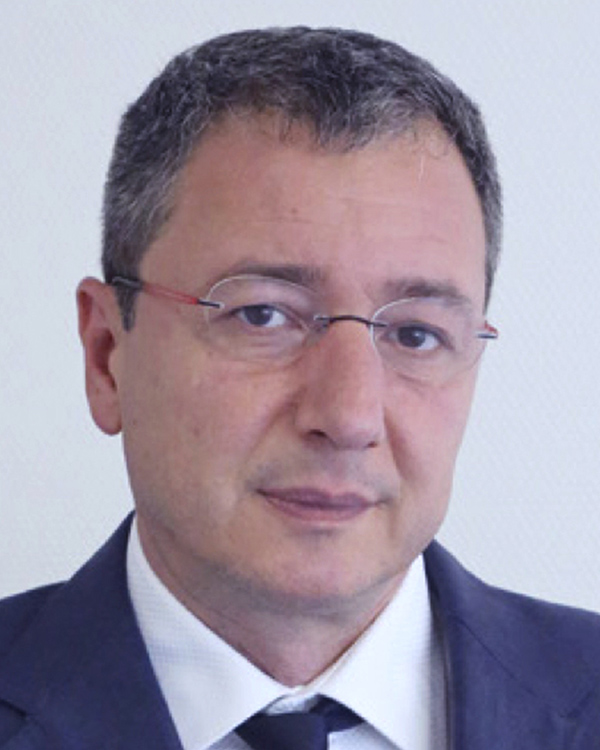
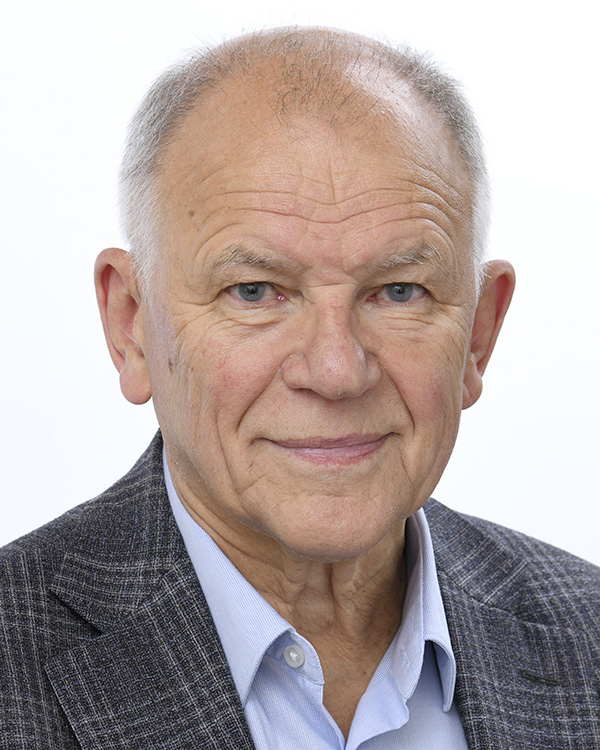
 Debate contributions by Dario TAMBURRANO
| Rank | Name | Country | Group | Speeches | |
|---|---|---|---|---|---|
| 1 |

|
Lukas SIEPER | Germany DE | Non-attached Members (NI) | 321 |
| 2 |
|
Juan Fernando LÓPEZ AGUILAR | Spain ES | Progressive Alliance of Socialists and Democrats (S&D) | 280 |
| 3 |
|
Sebastian TYNKKYNEN | Finland FI | European Conservatives and Reformists (ECR) | 247 |
| 4 |
|
João OLIVEIRA | Portugal PT | The Left in the European Parliament (GUE/NGL) | 195 |
| 5 |
|
Vytenis Povilas ANDRIUKAITIS | Lithuania LT | Progressive Alliance of Socialists and Democrats (S&D) | 183 |
All Contributions (20)
 Grids package and tackling raising energy prices through robust infrastructure (debate)
Date:
16.12.2025 09:50
| Language: IT
No text available
A new legislative framework for products that is fit for the digital and sustainable transition (debate)
Date:
20.10.2025 18:26
| Language: IT
Mr President, ladies and gentlemen, thank you very much to my fellow Members for this excellent report. However, I would like to point out one overlooked area: Additive manufacturing, better known as 3D printing, and its role in the digital transition and sustainability. It can boost local businesses and jobs, save materials and energy, contribute to the circular economy with spare parts, flexibility and resilience of supply chains: The latter is an issue that the current geopolitical context makes relevant. The reliability of 3D products is now similar, or even higher, than that of traditional products. But EU standards, including harmonised standards on which the possibility of placing on the market inevitably depends, make it difficult to fully realise these potentials, as they are designed for traditional manufacturing materials and processes. The problem therefore arises of identifying legislation ad hoc, with a philosophy that allows both flexibility and certainty as to the characteristics of the products. The process of creating this appropriate regulatory philosophy is neither obvious nor immediate, so it would be appropriate to start it as soon as possible and I make myself available to colleagues and the Commission to move forward on this issue.
Europe’s automotive future – reversing the ban on the sale of combustion cars in the EU (topical debate)
Date:
08.10.2025 12:13
| Language: IT
Mr President, ladies and gentlemen, we import 2 million tonnes of fossil fuels every day. Every time a tank is emptied, we must attach ourselves to the barrel of an oil pipeline or a tanker, like needy breastfeeders to the bottle. It is also known that among the first objectives of a conflict we find refineries and oil pipelines. Do you think that no one would be tempted to hit a pipe, an oil tanker or a gas tanker in transit to Europe? Reliance on critical materials is partially true for electricity, but once in the Union they are reusable, potentially indefinitely. And the batteries recharge with electricity, which we can produce in-house. An electrified renewable generation energy system with smart grids and distributed storage, of which electric cars will be a component, is a thousand times more resilient. Finally, today, in the face of the exceptional progress of batteries, in terms of durability, capacity and reduced use of critical materials, talking about technological neutrality is as if Apple had been asked, in the 1990s, not to produce computers anymore, but to start selling typewriters.
Summer of heatwaves in the EU: addressing the causes and providing adequate housing and health policies to address record-breaking temperatures (debate)
Date:
11.09.2025 07:49
| Language: IT
Mr President, ladies and gentlemen, trees. How are trees useful in mitigating urban heat islands? Reduce the costs of cooling buildings, sequester CO2, make the hot asphalt cooler, improve health. How wonderful, the trees! For reforestation, including in cities, the Union has allocated substantial funds from the NRRP, which is good for the Union. Less good, having provided too many derogations from the nature restoration law, as diabolical is the legalized principle of compensating the cutting of trees with the promise to plant them elsewhere. But a mature tree has a certain and substantial mitigation and adaptation function, which replanted young trees, if they survive the heat, do not perform. With the excuse of redevelopments and compensations, in Italy, urban avenues and microforests are being cut, as in Rome, to make room for a stadium. How true it is that the way to hell is paved with good intentions, and hell is already in our cities! We have to face it today, no compensation, face it now! A climate crisis is not a football crisis.
Need for the EU to scale up clean technologies (debate)
Date:
08.07.2025 12:25
| Language: IT
(IT) Mr President, ladies and gentlemen, I recall that the regulation to strengthen the European ecosystem of zero-emission technologies already included, in 2023, in the initial proposal of the European Commission, an annex with some precise strategic technologies to be supported: from photovoltaic to wind, from batteries to heat pumps, from electrolysers to network technologies. However, the text adopted in 2024 deleted this list, which would have given industry a clear direction on what needed to be produced in Europe and contains – instead – a large number of other technologies, without this increase being followed by a corresponding and adequate increase in economic allocation. The Communication of the Clean Industrial Deal I think it's a replica of something I've seen before: Lots of things, little focus and little money. There are more than obvious cases of how this myopia can cause irreparable damage, we have seen it in the past with photovoltaics, we see it with the 'automotive, we will see this with heat pumps produced in China, which are about to invade the European market. It is unthinkable to close the competitiveness gap without a massive investment package, with massive European public aid in strategic sectors for the production of green and digital technologies, where Europe has become marginal. Without adequate funding, these projects will remain pious illusions on paper and Europe will continue to lag behind and lose resilience, competitiveness, jobs and purchasing power.
Electricity grids: the backbone of the EU energy system (debate)
Date:
18.06.2025 15:32
| Language: IT
Mr President, ladies and gentlemen, Buckminster Fuller is best known as an architect for the geodesic dome, but he was also a visionary engineer. Here I want to report some of his thoughts of over forty years ago, today very current. His proposal to solve poverty and many of the international conflicts was in the development, I quote, of "a global energy grid, an electricity grid for which we are all connected to the same grid. Suddenly there would be no more problems, no international conflict. Our new economic base would no longer be gold or the dollar, but the kilowatt hour. He presented a plan, in his words, "to use our growing technical capabilities in the construction of high-voltage and superconducting transmission lines, and to achieve a worldwide electricity grid that integrates the time zones of the two hemispheres, the daytime and the nighttime, thus rapidly increasing the operational capacity of the global energy system and, at the same time, the standard of living in an unprecedented feat of international cooperation." The European electricity grid is an indispensable virtual storage tool, compensating for the intermittency of renewables, so electrons will flow without borders. The Spanish sun will set the Swedish steel mills on fire and the Baltic wind will cool the Neapolitan condominiums. I would like to thank the rapporteur and her colleagues. This text contains a fundamental contribution to achieving the real Union, the Energy Union, without more obstacles, borders, emissions and geopolitical dependencies.
Russian energy phase-out, Nord Stream and the EU's energy sovereignty (debate)
Date:
21.05.2025 19:16
| Language: IT
(IT) Mr President, ladies and gentlemen, it is clear to our economy more than to Russia that the Union is trying to hit Russia through sanctions that have hitherto been rather ineffective, but above all detrimental. Instead of developing with increasing conviction renewables, storage, electricity grids and efficiency capable of guaranteeing real and permanent sovereignty, the Union is increasingly relying on liquefied gas, with suppliers who certainly do not excel in respect for human rights and democracy. Lo shale gas The US being transported to Europe has a greater climate impact than coal, and Trump has already threatened tariffs on the EU if the EU does not buy its LNG. Finally, numerous press reports reveal that the US would be interested in controlling pipelines to the European Union, including Nord Stream. In the future, the EU may find itself buying gas both in the east and in the west but, unlike in the past, only through US intermediaries. We should talk about these things instead of just further sanctions: We may not be moving very intelligently.
The role of gas storage for securing gas supplies ahead of the winter season (debate)
Date:
07.05.2025 17:17
| Language: IT
Mr President, ladies and gentlemen, I wanted to tell you that lately I have too often failed to understand the meaning of many decisions that are made here. And this is one of them. Yesterday, the Commission proposed a plan to stop Russian gas imports; So we're going to rely even more on U.S. gas. But it seems that Trump, not even he, is now a sufficiently reliable partner. Tomorrow we will vote on a regulation to fill the gas storages and make sure we have enough gas to get through the winter. Many groups, including those that did not support the Industry Committee's proposal, consider the existing obligations to be excessive, distorting markets and raising prices. For this reason, the Industry Committee has greatly reduced mandatory fillings, including structural flexibilities not linked to the reduction and dependence of gas use. However, if we don't stoke enough, we expose ourselves to Trump's blackmail, in this case: When we need gas for our homes and businesses, we will then be forced to buy it at any price. With this reduction in storage we will find ourselves driving a car on a dark and perilous road, without lights and without insurance.
Action Plan for Affordable Energy (debate)
Date:
13.03.2025 10:04
| Language: IT
Mr President, Commissioner, ladies and gentlemen, on Friday a Bloomberg report - which I know is not a collective of a social centre - estimated that with ETS2 gas prices for households will rise by 20% already from 2027 and by 43% in 2030. The ETS2 has been proposed and negotiated to artificially increase gas prices, to guide energy-plant choices and to reduce emissions. My group and I are strongly in favour of decarbonising transport and heating, but this must be achieved without making it unsustainable for households, businesses and public administrations, which are already burdened by energy costs, industrial economic stagnation and low tax revenues. Now that gas is already very expensive for exogenous reasons, this mechanism needs to be urgently reviewed. The Social Climate Fund is probably not enough. I would have expected proposals for changes in an action plan called for accessible energy: There is nothing, but we are still in time to correct the shot. The cost of electricity from gas should be decoupled and the price of gas should not be increased.
Clean Industrial Deal (debate)
Date:
11.03.2025 19:13
| Language: IT
Madam President, ladies and gentlemen, the Green Industrial Deal begins: The European industrial base is essential for competitiveness. Europe is grappling with geopolitical tensions, a stagnant economy and technological competition. Therefore, it "needs an business plan Transformation, really? We didn't really notice! While the US and China subsidized the industry, we had the Green Industrial Plan without subsidies to support it, nor decoupling the price of electricity from gas, just to name a few. And we still have Europe as the leader on this and Europe as the leader on this. As we become the last and risk staying there. Today again only 100 billion on the plate of already existing funding! The following could be objected to: There's no money. Then, here comes ReArm Europe $800 billion for defense. It's the rabbit from the cylinder! It becomes clear that the real EU industrial plan is the conversion of war, obviously at the expense of taxpayers. Maybe with a new war, which always raises GDP. At least have the courage to tell your readers!
US AI chip export restrictions: a challenge to European AI development and economic resilience (debate)
Date:
11.02.2025 18:21
| Language: IT
Madam President, ladies and gentlemen, the Commission, I believe it is now clear to everyone that Europe cannot depend entirely on third parties for its strategic assets. Today we are paying for the consequences of so many mistakes that have made us extremely fragile, both because of the sought-after deterioration of relations with some of the BRICS, and today because of the recent aggressive geopolitical posture of the United States, a trading partner that was considered reliable, but clearly wrong. There is therefore a need for a rapid change of course both for the development of our strategic autonomy, and in the multilateral relations to be recovered with the rest of the world, which we cannot continue to look at with an attitude that is still first in the class and dividing it into good and bad. We must act and decide in the exclusive and long-term interest of the European Union's resilience with new economic, industrial and trade policies, not just for the EU's citizens. chipbut in all strategic sectors such as steel, cloud, search engines and all technologies for the energy and digital transition. Politics must direct finance and industry, and not the other way around, even with the heavy intervention of the public hand.
A European Innovation Act: lowering the cost of innovating in Europe (debate)
Date:
16.12.2024 19:52
| Language: IT
Mr President, Commissioner, ladies and gentlemen, I will tell you a story. In the eighth parliamentary term, I have already dealt with innovation, in particular 3D printing. Later, back in civil society, in 2020 I participated and won a Horizon Europe call for third parties from the Fraunhofer Institute, proposing the use of additive manufacturing in the production of innovative toys. The output of the project has shown extremely promising possibilities also from the perspective of the European New Bauhaus, which combines design, innovation and sustainability. However, the complexity of current European standards makes it de facto impossible to certify many products made in additive manufacturing: not even a well-known brand of bricks with millions of investments in 3D printing can fully comply with European standards, not because of real safety problems but because these standards were born and designed for a different type of production. Toys are just one example. They are not the only products that have difficulties to be placed on the market: There are also construction products, spare parts, some medical or personal protective equipment and others. Updating technical standards and harmonised standards would allow the real uptake of this technology to benefit not only European SMEs, but also the economy, the resilience of supply chains, the reduction of emissions and the improvement of the entire life cycle of products. I therefore call on colleagues and the Commission to take account of these critical issues, of which I have described a direct experience, while also maintaining and improving consumer safety and protection requirements, with specific labelling of input materials for 3D printing that guarantees their reliability and healthiness, thus facilitating the certification of the final product.
Rise of energy prices and fighting energy poverty (debate)
Date:
27.11.2024 14:55
| Language: IT
Madam President, ladies and gentlemen, comrades and comrades, in 2022 we saw the price of electricity triple and the costs are still unsustainable today. All citizens and businesses are permanently in energy poverty and low competitiveness. The antihistorical principle of merit order It still links the price of kilowatt hours to the price of gas, leading to costs, volatility, political dependence and conflicts caused by known factors: geological, geopolitical and speculative. Yet at all political and media levels, from different political parties, both local and national, as here in Europe, many are resisting with a terrorist and denialist narrative towards local communities, saying that renewables will destroy the territory, even the economy. The existing solution is ready for use: today a mix of more renewables, more hydroelectric, more energy storage. In order for electrification to prove its convenience to everyone, disarticulating this toxic narrative, it is central to definitively decouple the price of the renewable kilowatt-hour from the fossil one: It also serves peace.
Enhancing Europe’s civilian and defence preparedness and readiness (debate)
Date:
14.11.2024 08:39
| Language: IT
Madam President, ladies and gentlemen, I am here today to bring a different word – to use the words of Erri De Luca – to the contrary. Because after we had disastrous floods in Central Europe in September – with thousands displaced, thousands displaced also in Emilia Romagna, the tragedy in Valencia with 200 dead – we are here to talk about ammunition. dual use, when the real enemy for our continent is climate change. We have destruction and deaths and our response capacity must be made more resilient, strengthening civil protection to make the territory resilient, restoring hydrogeological security. We need to train the population and our armies to deal with landslides and floods, droughts and heat islands. We have the knowledge for necessary solutions based on natural sciences and we have the technologies, satellites, artificial intelligence, drones, early warning systems: Let's use them to save lives, not for ammunition and other cannons.
Closing the EU skills gap: supporting people in the digital and green transitions to ensure inclusive growth and competitiveness in line with the Draghi report (debate)
Date:
24.10.2024 07:41
| Language: IT
Mr President, ladies and gentlemen, the United States and China are competing for supremacy in new technologies, such as electric mobility and artificial intelligence, while we, with our failed economic and industrial policy, have lost decades and positions and are also retreating in the policies of education and digital education for the new generations. Our industry is not growing enough, not least because it is not cultivating enough and protecting natural intelligence. In this gloomy scenario, our societies suffer, instead of governing them, the effects of digitization. It is a social and medical emergency: the phenomenon ofaddicction digital and impoverishment of psycho-relational capacities, caused by permanent and unconscious exposure to new digital technologies. It is therefore a moral imperative to make parents and children more aware of the side effects of pervasive digital and artificial intelligence. I call on Parliament and the Commission to launch specific monitoring and prevention programmes, especially for young people. For once, in the face of new technology, we prevent instead of cure.
Ensuring sustainable, decent and affordable housing in Europe - encouraging investment, private property and public housing programmes (debate)
Date:
09.10.2024 13:32
| Language: IT
Mr President, ladies and gentlemen, the right to housing is a fundamental human right, enshrined in the Charter of Fundamental Rights of the European Union, and closely linked to other rights, such as decent work and wage security. However, Europe is facing a growing housing emergency due to the lack of adequate and affordable housing, with an unacceptable impact on energy poverty, health, quality of life and even the level of education of millions of individuals and households. The European policies of thehousing They must therefore not only encourage the energy-environmental efficiency of dwellings, but also ensure that tenants, especially the most vulnerable, are not the victims of unsustainable rent increases or evictions after requalifications. It is therefore a moral and ethical imperative that within the renovation wave there are urban regeneration and public building programmes that respond to the needs of the most vulnerable, with integration into a broader and holistic vision, including the adoption of digital platforms and innovative tools to facilitate access to information, speeding up requests for and provision of social housing.
The crisis facing the EU’s automotive industry, potential plant closures and the need to enhance competitiveness and maintain jobs in Europe (debate)
Date:
08.10.2024 14:03
| Language: IT
Mr President, ladies and gentlemen, this crisis, not only of industry, is the result of having encouraged industrial relocation and the transfer of know-how for decades, including in strategic products such as batteries, and of having insisted on the endothermic engine. I think it is right that we have accelerated now towards decarbonisation and electrification. However, the laudable objectives of the Green Deal have not been followed by the necessary expansionary economic and financial policies. Indeed, the Stability Pact has returned and the ECB has raised rates. While the economy is galloping in the United States, thanks to theInflation Reduction Act, and in China, with state aid, the leaves are not like in autumn on the trees. We are opposed to revising the deadlines already set but we call for European aid to industry and buyers, tax credits and lower interest rates, as well as more basic electric cars without unnecessary luxuries: four wheels, one motor, modular batteries; more electric cars for the people, for families, affordable, less fine dust in the city.
The devastating floods in Central and Eastern Europe, the loss of lives and the EU’s preparedness to act on such disasters exacerbated by climate change (debate)
Date:
18.09.2024 08:42
| Language: IT
Madam President, ladies and gentlemen, we express our closeness to the European citizens affected by Cyclone Boris and call for the Solidarity Fund to be activated swiftly to restore flooded territories and make them more resilient to climate change. Such destructive events are recurrent in every corner of the planet, with a frequency that erases all previous statistics. They are repeated in every place, nation and continent, without distinguishing between forms of government, political affiliation, skin color and income and, above all, without distinguishing between those who deny climate change and those who care about it. The destruction of goods, infrastructure and human communities will affect less those who introduce adaptation policies in their territories, while the historical, political and above all moral responsibility falls today, all, on those who hinder decarbonization actions, babbling about green ideology and excessive costs. Those who are now in favour of European emergency aid should also consistently support support climate prevention, adaptation and mitigation policies within and outside the Union.
State of the Energy union (debate)
Date:
17.09.2024 14:26
| Language: IT
Mr President, Commissioner, ladies and gentlemen, with the Green Deal in 2019, a wave of hope has passed through Europe for those who care about its future, sovereignty and strategic autonomy, climate stability and all that follows for health, peace, freedom and independence. However, we are very concerned about the change of pace that the Green Deal has undergone since it moved from protecting ladybugs to industrial and economic policies, about the nuclear hype – we wonder with whose uranium – and about carbon capture: I wonder if it makes sense to hide CO.2 under the carpet. We're worried about the bills: we wonder why, in the reform of the electricity market, to ensure stable and affordable prices for businesses and families, we did not have courage, separating the cost of the kilowatt hour produced by gas from the renewable one. We are concerned about taxonomy, new dependencies on liquefied shale gas and its emissions, and when the Court of Auditors challenges the actual emissions of recovery and resilience plans. Finally, we citizens are all very concerned about the return of austerity and the political direction taken again in favor of the nuclear, war and even fossil industry.