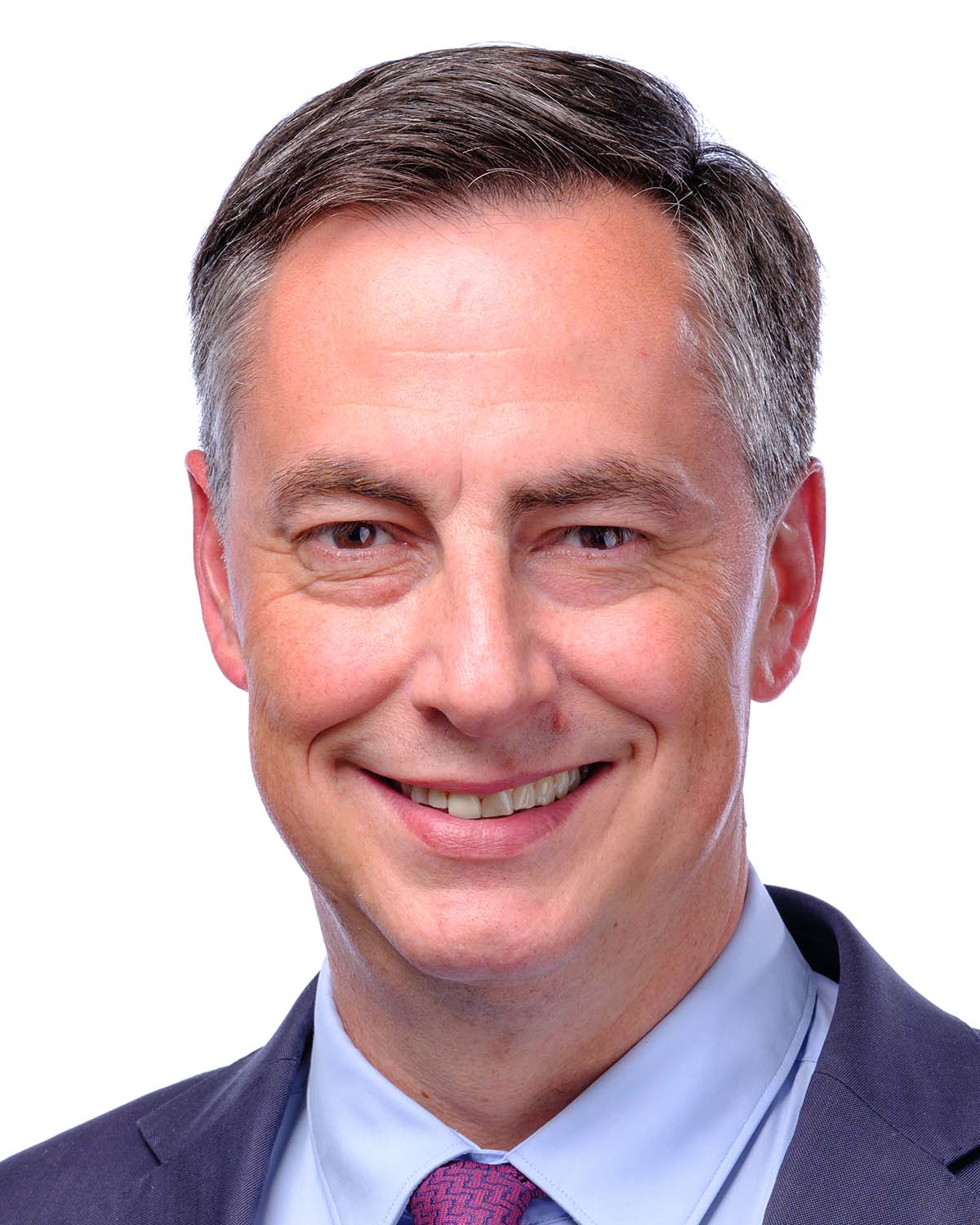
 Debate contributions by David MCALLISTER
| Rank | Name | Country | Group | Speeches | |
|---|---|---|---|---|---|
| 1 |

|
Lukas SIEPER | Germany DE | Non-attached Members (NI) | 321 |
| 2 |
|
Juan Fernando LÓPEZ AGUILAR | Spain ES | Progressive Alliance of Socialists and Democrats (S&D) | 280 |
| 3 |
|
Sebastian TYNKKYNEN | Finland FI | European Conservatives and Reformists (ECR) | 247 |
| 4 |
|
João OLIVEIRA | Portugal PT | The Left in the European Parliament (GUE/NGL) | 195 |
| 5 |
|
Vytenis Povilas ANDRIUKAITIS | Lithuania LT | Progressive Alliance of Socialists and Democrats (S&D) | 183 |
All Contributions (49)
 CFSP and CSDP (Article 36 TEU) (joint debate)
Date:
20.01.2026 19:45
| Language: EN
Mr President, colleagues, I have listened very carefully to the entire debate. I believe it is a strong signal that most of the political groups in this House act in concert towards a stronger common foreign and security policy. I would hope to see this reflected during the final vote tomorrow noon. European citizens desire a strong and confident Europe that can do both: defend our values and assert our geopolitical interests. The European Union must complement its traditional raison d'état as a normative power with that of an external security provider. The High Representative and the Commission are explicitly invited, dear Kaja Kallas, to use this year's CFSP report also as a guide for their priorities. The recently announced European security strategy will be a good place to start. Parliament will follow up on our expectations. At the end I would in particular like to thank the shadow rapporteurs, all the involved staff members and also the team of the High Representative Vice-President for the constructive cooperation on the report and also tonight's open debate.
CFSP and CSDP (Article 36 TEU) (joint debate)
Date:
20.01.2026 18:11
| Language: EN
Madam President, thank you for giving me the floor to kick off this debate on the annual CFSP and also the annual CSDP report. The first days of this year, 2026, have certainly already demanded our full attention. If we step back from the daily headlines, we see a double epochal shift. The international order forged after the Second World War based on law, institutions and cooperation is unravelling. The Russian war of aggression against Ukraine has shattered Europe's post-war security architecture and its impact is global. Authoritarian voices are rising, cooperation is giving way to confrontation. And meanwhile, our closest ally is turning away from the very order it once helped to build. We risk returning to a world where 'might makes right'. Some say we are already there. Tomorrow, noon, we are set to adopt the report that comprehensively analyses the shifting dynamics. For those who take the time to unpack it, I believe the CFSP report is much more than just a review of last year's events. It can provide orientation, it can identify priorities, it can set expectations, and it can translate principles into political direction. These expectations are structured, as I see it, around four core priorities. First, defending the rules-based international order. We do not emphasise this out of nostalgia, but out of necessity. A world without rules, where borders are redrawn by force or economic pressure, may offer short-term gains to a few, but it definitely guarantees long-term losses for everyone. Insecurity, weakened institutions and destroyed trust are the inevitable result. Second, setting non-negotiable positions we consider inviolable. Sovereignty and territorial integrity are not optional, they lay at the heart of the United Nations Charter, and they lie at the heart of our own security. This is why Ukraine can continue to rely on our support. And this is why legitimate security interests, including in the High North and the Arctic, can never justify questioning borders, including those of our Member State, the Kingdom of Denmark. Borders are not negotiable, sovereignty is not optional. The use of force cannot be normalised. Interests can be discussed, fundamental rules cannot. Third, deepening cooperation on shared interests. Defending rules does not mean acting alone. We are betting on partnerships for the future, not on the lowest common denominator, but on the greatest possible scope for joint action. And we invite all who share this ambition to join us. And fourth, it is about increasing the visibility of EU action abroad. For Europe to be credible in this environment, our action must not only be coherent, it must also be visible. This is not an act of self-promotion. Our partners need to know where the European Union stands, where we are engaged, and that our commitments are reliable. All of this, in the end, dear colleagues, requires a Europe that is sovereign, without closing itself off. A Europe that is open to partnerships, but not naive. It is a Europe that can assert itself precisely because we believe in cooperation, and it is a courageous Europe, conscious of its strength, aware of its choices, and ready to use them.
Brutal repression against protesters in Iran (debate)
Date:
20.01.2026 15:41
| Language: DE
Mr President, Madam High Representative, ladies and gentlemen! As my previous speakers have already mentioned, I would also like to underline that since the so-called Islamic Revolution was proclaimed in 1979, the mullahs' regime has established a system of repression and terror. The human rights situation in Iran has been catastrophic for years. The number of executions is among the highest in the world. Today, Iran may be facing the most profound domestic political and social changes since 1979. It offers a unique opportunity to noticeably improve the situation of women and to initiate a fundamental change towards more freedom and democracy. What matters is: The systemic question is being asked more openly than ever before. The regime responded to the protest with an open call for execution – an act of mass state violence. The mullahs are ready to cross any border to stay in power. The European Union must significantly increase the pressure on the regime. Unfortunately, we are far from that in sanctions policy. The sanctions imposed so far hardly impress – least of all the mullahs. The hope of deterring Iran from the nuclear threat through negotiations alone has failed, and the associated renunciation of tougher sanctions has unfortunately not brought the desired success. Now, ladies and gentlemen, it is time to use all instruments consistently, first and foremost to finally list the Revolutionary Guards for what they are – a stripper of terror.
The deepening democratic crisis in Georgia (debate)
Date:
17.12.2025 16:39
| Language: EN
Mr President, madam Minister, Commissioner, ladies and gentlemen, yesterday the European Parliament honoured Mzia Amaglobeli, a courageous representative of Georgia's pro-democracy movement, as one of the two Sakharov Prize laureates of this year. That Georgians are fighting to defend their democracy speaks volumes. The country was once a frontrunner of the Eastern Neighbourhood Policy. Colleagues have already pointed out that democratic decline marked by state capture, a severe crackdown on civil society and electoral fraud should concern us all. Commissioner McGrath, the Eastern Partnership was conceived in more optimistic times. It delivered connectivity and reforms and helped to bring Ukraine and Moldova onto a clear European path. But it obviously lacks effective tools to prevent democratic backsliding or to respond to sustained malign influence, as we now, unfortunately, witness in Georgia. The deepening democratic crisis in Georgia reminds us that a solid neighbourhood policy and, in the same spirit, our enlargement policy must be clear, credible and conditional standing against those who undermine this and standing with those who choose Europe, the great people of Georgia.
EU Defence Readiness (joint debate)
Date:
16.12.2025 13:35
| Language: EN
Mr President, dear Commissioner, dear colleagues, the European Union thrives on the free movement of people, goods, services and capital. Yet a soldier in uniform cannot cross a border without official permission. When heavy equipment is being moved across borders, weeks of planning, permits and slots in crowded rail networks are needed. In future, our defence readiness, as previous speakers have pointed out, will be measured not in days or even weeks, but in hours of action. Dear Commissioner Apostolos Tzitzikostas, in this context I welcome the Commission's action plan on military mobility, and it is in this context that northern Germany plays a pivotal role serving as a hub for troop deployments to and through Europe; just think of ports like Wilhelmshaven, Bremerhaven, Emden or Rostock. A Europe that can deploy swiftly is a Europe that deters effectively.
Post-election killings and the deteriorating human rights situation in Tanzania, including the case of imprisoned opposition leader Tundu Lissu
Date:
26.11.2025 19:20
| Language: EN
Mr President, dear colleagues, what happened before, during and after the elections in Tanzania was regrettably no surprise. This was not an irregularity, but the systematic destruction of democratic competition. These elections were marred by state‑sponsored political repression, targeted abductions and manipulation. The outcome was decided well before 29 October. It began with the suffocation of civic space and the silencing of free media. It continued with the banning of political assemblies and opposition parties, and it became undeniable with the imprisonment of nearly every leading opposition representative, above all, the leader of Chadema, Mr Tundu Lissu. For nearly 250 days, my personal friend Tundu Lissu has endured solitary confinement, possibly facing a death sentence simply for demanding free and fair elections, but this is not just about one individual fate. This is the textbook example of how an authoritarian regime weaponises the law to eliminate its opponents. On election day and the hours that followed, the regime showed its true colours when the internet was shut down, when protesters were beaten, shot, abducted and jailed. Madam Commissioner, I call on the European Commission and I call on the European External Action Service not to slip back into business as usual. I will spare you the diplomatic language used in recent statements, but the tone was certainly not as clear as it should have been. Tanzania's continued pivot from the rule of law, reform and good governance demands a genuine assessment of our bilateral relationship. Colleagues, if we truly stand for democracy and human rights, we cannot stop at words. Let us use every tool at our disposal to hold those in power accountable. Tomorrow, this House will send an unmistakable message: all EU funds channelled through state‑controlled entities must be frozen immediately. The European Union must not use its fund to subsidise oppression. The time to act is now. All political prisoners must be released immediately and with no conditions. Urgently required is an independent and credible investigation into all killings, abductions and enforced disappearances. The great people of Tanzania, they deserve new, free and credible elections. Thank you and free Tundu Lissu now.
Implementation of the EU-UK Trade and Cooperation Agreement (debate)
Date:
26.11.2025 14:57
| Language: EN
Madam President, dear Commissioner, this second implementation report on the Trade and Cooperation Agreement shows indeed that EU-UK relations have entered a more stable and more constructive phase. I thought this was also evident at last week's meeting of the EU-UK Parliamentary Partnership Assembly in London, when exchanges were substantive and serious on both sides. Economically, the fundamentals of tariff- and quota-free trade are working, yet the administrative burden remains heavy, especially for small and medium-sized enterprises facing diverging standards, complex SPS rules and additional certificates. The new security and defence agreement, signed in London in May, finally provides a structured framework for our cooperation in this area. With negotiations underway on a possible British participation in SAFE, we can strengthen the interoperability and reduce costs provided that the outstanding issues on financing and industrial participation are resolved. Commissioner Šefčovič, I sincerely hope that they will be resolved. Overall, with the TCA, we have a solid foundation and a shared willingness to move forward constructively and pragmatically. Let us continue to do that on exactly that path.
EU’s diplomatic strategy and geopolitical cooperation in the Arctic (debate)
Date:
25.11.2025 21:06
| Language: EN
Madam President, Madam Commissioner, ladies and gentlemen, the Arctic is no longer a remote periphery. It has rapidly turned into a geopolitical frontier. Climate change is accelerating competition for resources, opening new sea routes and drawing global powers into a region that was once defined by cooperation. With Denmark, Finland and Sweden – three of our EU Member States, our Arctic nations and all of them now fully fledged NATO allies – the European Union has both responsibility and leverage. European security does not stop at the Baltic or the North Atlantic. It extends deep into the High North. As the European Union, we have a responsibility and a strategic interest in ensuring that the Arctic remains a zone of peace, sustainable development and international cooperation. But this vision, as speakers have pointed out, is increasingly challenged by Russia's militarisation, its expansive territorial claims and its hybrid activities. China's growing presence adds another layer of strategic complexity. This is why we need a more assertive Arctic diplomacy of the EU; an Arctic diplomacy that strengthens our resilience against hybrid threats, ensures the protection of critical infrastructure – from undersea cables to satellite systems – and guarantees that the opening of new Arctic sea routes does not become an open invitation to coercion or destabilisation. Let me thank the AFET Vice‑Chair for this very good report.
Stepping up funding for Ukraine’s reconstruction and defence: the use of Russian frozen assets (debate)
Date:
21.10.2025 16:04
| Language: EN
Madam President, as we have just heard, the debate on the use of Russian frozen assets requires a very careful balance between political responsibility, legal feasibility and financial stability. In my view, the new proposal on the table is both bold and necessary. We can provide Ukraine with an interest-free loan of nearly EUR 140 billion, using assets of the Russian central bank that have been frozen here in the European Union. Politically, this plan leaves no doubt: the European Union stands with Ukraine, and the Kremlin will only regain access to its funds once it has fully compensated Ukraine for the destruction it has caused. Legally, this mechanism can be designed with a clear EU legal framework, provided the political will is there. A decision at the European Council on Thursday would enable legislation to be put forward in order to start payments next year. Financially, the mechanism safeguards the integrity of the financial system, because to use the frozen Russian assets for so-called reparation bonds leaves the Russian assets technically untouched. Ukraine must be in the strongest possible position before, during and after any ceasefire. We must ramp up the pressure on Russia's economy until Putin is ready to make peace. To use the full value of Russia's immobilised sovereign assets would provide Ukraine with the resources it needs. Thank you. Go for it, Commissioner.
Recent peace agreement in the Middle East and the role of the EU (debate)
Date:
21.10.2025 07:09
| Language: EN
Madam President, Madam Commissioner, for one week there is renewed hope for a genuine, lasting peace in the Middle East. But hope alone will not sustain peace. There are many actors determined to sabotage this process; first and foremost, the terror organisation Hamas itself. Indeed, Hamas attacks on Palestinian civilians and its refusal to disarm make the ceasefire increasingly fragile. What the region needs now is our engagement, and what the European Union must offer is a united Middle East strategy. We ought to focus our energy where Europe can make a real difference. Let us work with regional partners to reinforce and deliver humanitarian aid as quickly as possible. Let us support key regional actors – the United States, the Gulf states and Israel's Arab neighbours – in securing the ceasefire. The willingness of several Arab countries to commit themselves politically, financially and diplomatically is, in itself, a breakthrough. Let us counter those who thrive on instability, for example Iran, and ensure that opponents to peace cannot derail it. Let us keep the prospect of a negotiated two-state solution alive, however distant it may seem today. Above all, let us resist the temptation to divide ourselves further. We must focus on the common denominator that unites us – our unwavering commitment to peace.
New Strategic EU-India Agenda (debate)
Date:
07.10.2025 17:50
| Language: EN
Mr President, Madam Commissioner, it is indeed now three weeks ago that the European Commission presented the joint communication on a new strategic EU-India agenda. It entails more than 60 concrete deliverables. This is welcome. I can underline what the Commissioner said: India is indispensable to Europe's global reach and resilience. However, dear colleagues, let us be cautious. The European Union sometimes tends to overpromise. It is not the scale of our commitments, but our capacity to see them through that will, in the end, define our credibility. India is, in some ways, a strategic litmus test for the European Union. It doesn't fit neatly into our categories of like-minded partner. The world's most populous country is not and has never been willing to be bound by traditional alliances. Instead, India pursues cooperation à la carte, guided by its own national interests. This poses a challenge, but also an opportunity for the European Union. If we act pragmatically, we can build real progress in three key areas. First: trade and technology, where a free trade agreement could open vast opportunities. Second: connectivity and clean energy, where India's growth and our global gateway align. And third: security and defence, where our joint maritime operation in the Indian Ocean already points the way forward. So, dear Commission, less rhetoric, more delivery. Only then can the EU-India partnership live up to its thriving potential.
Strengthening Moldova’s resilience against Russian hybrid threats and malign interference (debate)
Date:
09.09.2025 17:58
| Language: EN
Mr President, Madam Commissioner, ladies and gentlemen, dear colleagues, as we have heard from so many speakers tonight, and rightly so, as the Republic of Moldova approaches parliamentary elections later this month, the stakes are high – not just for the country, but for Europe as a whole. These elections on 28 September are not only about the future political direction of Moldova. They are a test of trust in democratic institutions, and a test of our commitment to defending democracy where it is most under attack. The European Parliament's resolution to be adopted tomorrow builds on our growth plan for Moldova, investing in economic resilience, democratic governance and strategic infrastructure. It is a signal of our long-term commitment. I can only echo what colleagues have said: Moldova's security is Europe's security, and we stand with the brave Moldovan citizens in their democratic choice.
2023 and 2024 reports on Albania (debate)
Date:
08.07.2025 16:49
| Language: EN
Madam President, Madam Commissioner, dear colleagues, since becoming a candidate in 2014, Albania has indeed made progress. Yet major reforms remain imperative. The 2023 and 2024 reports on Albania have highlighted persistent challenges. The parliamentary elections in May this year took place in a deeply polarised environment. There were frequent parliamentary boycotts, constant confrontations and a lack of real dialogue. As we just heard, our election observation delegation, led by our colleague Michael Gahler, confirmed that these elections were competitive, yet marred by the abuse of public resources and vote buying. The Central Election Commission's limited enforcement failed to ensure a level playing field. The road ahead demands more than technical fixes. It requires political will and broad consensus. Real reform cannot come from a party alone. It requires dialogue, trust and inclusivity between all Albanian political forces. The European Union, and especially this European Parliament, stands ready to support Albania's reform efforts, but the commitment must come from within.
Situation in Belarus, in particular the release of political prisoners (debate)
Date:
08.07.2025 16:01
| Language: EN
Madam President, ladies and gentlemen, as colleagues have already mentioned, the recent release of a number of political prisoners in Belarus indeed offers a glimmer of hope amid a dark reality. Yet over a thousand remain unjustly imprisoned still. Belarus remains a battleground for truth. Journalists and dissenters face brutal repression, but their courage shines as a beacon for change. I recall the words of Sviatlana Tsikhanouskaya in this House. She said, 'the EU from Lisbon to Minsk is a nightmare for Putin, but for us it is a reality we strive to live in'. Not despite, but precisely because of, the recent releases, we must stand firm, strengthening sanctions and supporting those who risk everything for freedom. Dictatorships thrive when alternatives seem absent. The European Union is that alternative, empowering the democratic forces of Belarus to keep the dream of democracy and the rule of law alive. The future of Belarus belongs to its brave citizens and not to the dictator in Minsk.
Protecting Greenland's right to decide its own future and maintain the rule-based world order (debate)
Date:
06.05.2025 15:33
| Language: EN
Madam President, Madam High Representative / Vice-President, dear colleagues, I can only underline what so many colleagues from all the different groups have already argued this evening: the extent and the quality of any engagement with the United States should be decided in Nuuk. Greenland is a self-governing part of the Kingdom of Denmark. Greenland is sovereign and Greenland will decide its own future. The European Union will always stand for sovereignty, territorial integrity and the rules-based world order. The Arctic is indeed changing. Strategic interests are indeed rising, but our values must remain firm. That's what I wanted to say as a North German neighbour of Denmark.
Preparation of the EU-UK summit (debate)
Date:
05.05.2025 16:14
| Language: EN
Madam President, dear Commissioner, dear colleagues, as previous speakers have already mentioned, the upcoming EU‑UK summit marks a pivotal moment to recalibrate our partnership. Ever since the Windsor Framework, agreed in March 2023, we have seen greater political stability in our relations. The much anticipated EU Security and Defence Pact could be a real milestone. Enhanced cooperation in military mobility, joint research and development, and cyber resilience – this is all urgently needed. The EU and the UK should rise to the occasion and ensure an agreement that also fosters deeper cooperation on intelligence sharing, sanctions coordination as well as foreign information manipulation and interference. Yet, a mature partnership should go beyond security and defence. The Commission has put substantial proposals on the table on everything from energy to youth mobility. We should deepen cooperation in further key sectors: energy interconnectivity and offshore renewables in the North Sea, financial services through regulatory equivalence, and a pragmatic sustainable fisheries arrangement for the time after 2026. As for the Trade and Cooperation Agreement, the TCA is due for review next year. Long‑term stability in our relations is more important than ever. Commissioner Šefčovič, we look forward to discussing the outcome of this summit with you in the Foreign Affairs Committee.
CFSP and CSDP (Article 36 TUE) (joint debate)
Date:
01.04.2025 12:10
| Language: EN
Madam President, I would just like to thank the shadow rapporteurs, all the involved staff members and also the team of the High Representative and Vice-President for the constructive cooperation on this report and also today's open debate. I have listened carefully to all the members who took the floor in the last 90 minutes. My impression is that most of the political groups and the majority of colleagues in this House want to act in concert towards a stronger common foreign and security policy. I do hope to see this reflected during the final vote tomorrow. The High Representative and the Commission, dear Kaja Kallas, are both explicitly invited to use this report as a guide for their priorities. Rest assured that we in the European Parliament will try to follow up also on your expectations.
CFSP and CSDP (Article 36 TUE) (joint debate)
Date:
01.04.2025 10:32
| Language: EN
Madam President, High Representative/Vice‑President, ladies and gentlemen, dear colleagues, our Interinstitutional Agreement stipulates in part two, section G, paragraph 43, that each year, the Council Presidency will consult the European Parliament on a forward‑looking Council document, which will be transmitted by 15 June for the year in question, setting out the main aspects and basic choices of a common foreign and security policy. Since 2010, this task has been delegated to the HR/VP. Dear Kaja Kallas, welcome therefore, to your first debate on the main aspects and the basic choices of our CFSP and the CSDP in plenary. Dear colleagues, tomorrow at noon, we will hopefully adopt Parliament's CFSP report, reacting to the assessment of the former High Representative, and we do so amidst rapid and radical uncertainty. A world where authoritarian actors are trying ever more aggressively to mark out their zones of influence through military might, political pressure, and economic control. Our report comprehensively analyses these shifting dynamics. In fact, with 1 019 amendments at the committee level, and another 167 at the plenary level, the negotiation team was compelled to conduct an even more meticulous review than initially expected. I would like to thank everyone who has been involved in this extraordinary task. As a result, the text has expanded to, let me put it this way, unprecedented lengths. For those who actually take time to unpack it, this CFSP report is much more than a mere review of last year's events. It also outlines a strategic direction and sets clear expectations from our side for our executive. These expectations are structured along four distinct priorities. First, addressing the consequences of the Russian war of aggression against Ukraine. Let me be very clear, any attempt to blackmail Ukraine into surrendering for the sake of a peace deal will only empower the aggressor. Putin must not achieve through negotiation what he failed to secure on the battlefield. In the coming weeks and months, we will stand united together as steadfast partners of Ukraine. We will ensure Ukraine has the means to liberate its people and deter further Russian aggression. Second, resolving conflict and supporting peace in the Middle East. Our current strategy in the Middle East is obviously not fit to account for the political realities of the region. The atrocious attacks committed by Hamas on 7 October set the entire region on fire. An arc of instability has since settled from Khartoum to Baghdad, and Europe is not left untouched. Thirdly, asserting interests through strategic partnerships. Whether it be Mr Putin's imperialism or the escalation in the Middle East, all these developments significantly increase the pressure on the European Union to build alliances and to mobilise partner countries, from our closest neighbours to those who are far away but need us most. And finally, let's not forget that we are, as a European Union, the undisputed world champion in development cooperation. Yet, recent developments have highlighted the poor understanding of the EU's perspective in some of our partner countries around the world and this therefore limits our political influence. So it is time to act with confidence. Our actions must speak as loudly as our words and they must be seen. I look forward to an interesting debate this noon. Once again, I would like to thank the shadow rapporteurs and all those involved behind the scenes for working on this extensive report.
White paper on the future of European defence (debate)
Date:
11.03.2025 16:59
| Language: EN
Madam President, dear Commissioner, ladies and gentlemen, I can echo a lot of things that have been said already in this debate, but not a single word of my previous speaker. After numerous wake-up calls we have discussed here, Europe's moment of truth has finally arrived. We're not starting from scratch. In March 2022, the 27 heads of state or government adopted the Strategic Compass. A year later, the Commission published the European Defence Industrial Strategy, and we also adopted ASAP and EDIRPA and agreed on the capability development priorities. All these initiatives are slowly but surely pushing Member States to step outside their national corridors in pursuit of a genuine European Defence Union. But now we really have to make a great leap. Therefore, dear Commissioner Kubilius, the white paper must build on these achievements, and propose regulatory and programmatic initiatives at European level, rather than confining itself to a description of threats and shared needs. You, dear Commissioner, and the HR/VP have a chance to significantly steer this debate. I look forward to discussing the white paper thoroughly at committee level.
Establishing the Reform and Growth Facility for the Republic of Moldova (debate)
Date:
10.03.2025 19:17
| Language: EN
Madam President, Madam Commissioner, ladies and gentlemen, two weeks ago, I had the privilege of leading the three-day AFET mission to Chișinău. It was indeed a timely visit, just a few days after the provisional trilogue agreement on the Moldova Reform and Growth Facility, which previous speakers have already explained. In Chișinău my impression was – and I felt – a profound sense of optimism surrounding the transformative potential of a EUR 1.9 billion facility, because it offers much more than just financial assistance: it brings hope for a brighter future. The facility will significantly improve the country's infrastructure. Thanks to our support as a European Union, Moldova can finally reduce its dependence on Russia. But this brings me to a critical point. With more and more malign interference and an intentionally orchestrated energy crisis, the Kremlin is trying to destabilise Moldova's democracy and foster discontent ahead of the upcoming parliamentary elections in autumn. Moldova embodies Europe's core values, showing unwavering solidarity with Ukrainian refugees, demonstrating remarkable resilience in the face of Russia's blackmail, and displaying immense courage in aligning the country's future with a united Europe. President Maia Sandu has done tremendously in addressing the impact of the war on Moldova's doorstep, while bringing the country closer to the European Union. Our message to the people of Moldova is and remains: we hear you, we see you, and we will stand by you.
US withdrawal from the Paris Climate Agreement, the World Health Organisation and the suspension of US development and humanitarian aid (debate)
Date:
12.02.2025 16:54
| Language: EN
Madam President, dear Commissioner, ladies and gentlemen, the American retreat from international institutions and agreements was in many ways a move to be expected from President Trump. These reckless decisions have far‑reaching risks and repercussions. Specifically, I want to shine a spotlight on just one of the most devastating impacts, which hasn't been mentioned yet this evening: the suspension of US humanitarian aid and its dire consequences for global demining efforts. At this very moment, 58 countries are contaminated by landmines, 28 are grappling with the traces of cluster munitions. These devices cripple and kill, particularly in active conflict zones like Ukraine. Just yesterday, we heard the speaker of the Verkhovna Rada outline the dire needs of his country. In 2023, the United States contributed nearly USD 310 million to mine action, making up 39 % of global support. Without American funding, life‑saving demining operations are grinding to a halt. In return, the delivery of humanitarian aid is obstructed, economic development hindered and post-conflict reconstruction delayed. While the European Union cannot fill the gap left by the US alone, let us take a leading role. Every EU Member State is a party to the Anti-Personnel Mine Ban Convention. We have already pledged millions of euros for mine clearance, but we need to ensure this commitment is reflected also in the next multiannual financial framework.
Wider comprehensive EU-Middle East Strategy (debate)
Date:
11.02.2025 14:53
| Language: EN
Madam President, Madam Commissioner, ladies and gentlemen, dear colleagues, geography dictates that developments in the Middle East are always of key interest to the European Union. Yet things are as they are. Our influence in the region is at a low. A fragmented patchwork of strategies has failed to account for the political realities of the region, and internal divisions amongst our Member States have hindered meaningful impact. Amid claims of double standards, a shifting balance of power and an unpredictable US administration, you, dear Commissioner, together with the High Representative, will have to find common ground amongst our 27 Member States on issues where certainly no easy answers exist. Our strategy must indeed prioritise the two‑state solution for a sovereign Israel and the Palestinian Territories, based on the 1967 borders and with Jerusalem as the shared capital. This is, in the end, the only sustainable path to peace. We should therefore resist the temptation to address only the immediate crisis in Gaza but attend to all obstacles that prevent the realisation of the two‑state solution. An effective Middle East strategy must treat the mullah regime in Iran for what it is: a mastermind of instability and terror. The fall of the Assad regime in Syria was a strategic blow to Iran, one that didn't go unnoticed with Hezbollah either. After two years of political stalemate, the new government in Lebanon offers hope for much‑needed recovery. Let us use the leverage, this momentum, to break Iran's so‑called axis of resistance. And finally, while we admittedly have limited influence in the Middle East, we can constructively engage countries that do: Türkiye, the Gulf States, Egypt and Jordan. The High Representative has indicated that the new Middle East strategy might take longer than originally planned. Indeed, let us not act in haste. This strategy must be prepared carefully. But, dear Commissioner, I would ask you to also consult the European Parliament, because here there is a wealth of expertise, and I believe it would be highly beneficial to consult us before finalising the new strategy.
Need for actions to address the continued oppression and fake elections in Belarus (debate)
Date:
21.01.2025 17:24
| Language: EN
Mr President, dear Commissioner Kubilius, ladies and gentlemen, as a number of speakers previously have already pointed out, it is actually for the seventh time that Belarus is staging the ritual of electing Mr Lukashenka as President, in a climate of fear and repression against free media, civil society and genuine opposition. Over 1 300 political prisoners – including nearly all of Lukashenka's former rivals – remain imprisoned for challenging the fraudulent 2020 elections. Opposition has been eradicated and Belarusians abroad have been robbed of their voting rights. And still, hope is not lost. Belarusian democratic forces, led by Sviatlana Tsikhanouskaya, continue their tireless fight for freedom. I recall her words in this House: 'the EU, from Lisbon to Minsk, is a nightmare for Putin, but for us it's a reality we strive to live in'. The European Union needs to act as a multiplier of these efforts. On the one hand, we will financially and politically support the democratic forces. On the other hand, we will put Lukashenka and his henchmen under even stricter sanctions by mirroring those adopted against Russia.
Need to detect and to counter sabotage by the Russian shadow fleet, damaging critical undersea infrastructure in the Baltic Sea (debate)
Date:
21.01.2025 15:17
| Language: DE
Mr President, Madam Vice-President, ladies and gentlemen. With NATO's Baltic Sea summit in Helsinki earlier last week, the issue of the Russian shadow fleet has arrived at the highest political level, and that was also overdue. Because with a really terrible flood of marauding oil tankers, whose ownership is unclear and whose risks are also underinsured, Russia is deliberately circumventing international sanctions. According to a recent announcement by the German Press Agency, 12 billion euros are pumped into the Russian war coffers every month. The Shadow Fleet has become one of the most important financial lifelines for Russia in its war of aggression against Ukraine in violation of international law. Therefore, EU ministers should quickly consider what measures international maritime law allows to tackle the shadow fleet and hold Russia responsible for its aggression in Ukraine.
Geopolitical and economic implications for the transatlantic relations under the new Trump administration (debate)
Date:
21.01.2025 12:24
| Language: EN
Madam President, dear Commissioner, ladies and gentlemen, dear colleagues, as we have heard today during this debate, the United States is and remains our most important NATO ally and our biggest trading partner. This means, if we want or not, we need to proactively explore common interests with the new Trump administration, even when our priorities don't always align. And indeed, we witnessed yesterday that our positions differ on important issues, sadly. We need to prepare responses. The European Union should anticipate US foreign policy shifts and their potential challenges, preparing our responses more in advance. We need to rally partners. We are not alone here in Europe in our concerns about the next four years. We must rally our like‑minded partners to minimise disruptions and adopt a coordinated approach. And finally, we need to deliver on key goals. If there is any time for us as the European Union to act swiftly, it is now. And unity is key. Remaining transatlantic and becoming more European will be the way forward.