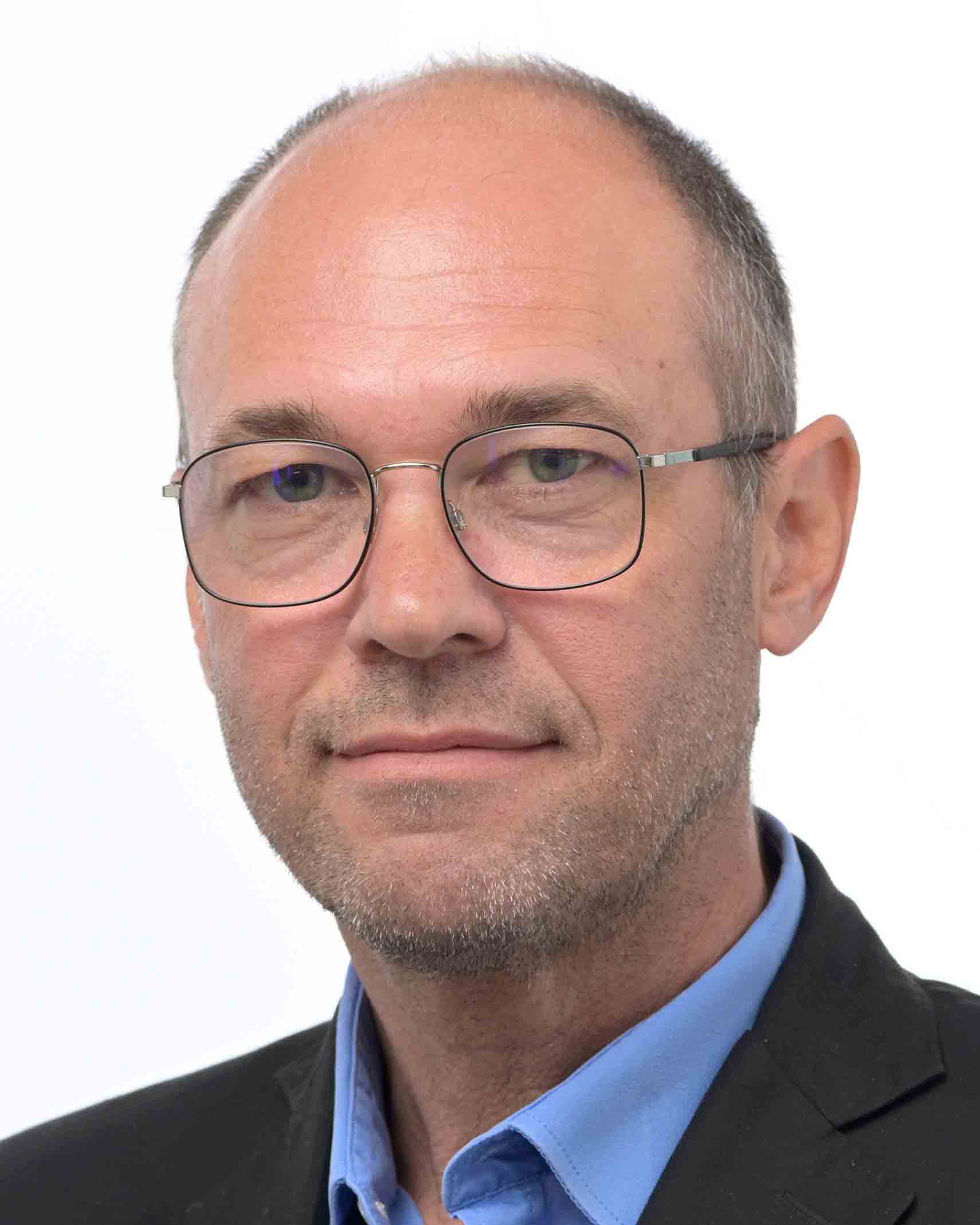
 Debate contributions by Davor Ivo STIER
| Rank | Name | Country | Group | Speeches | |
|---|---|---|---|---|---|
| 1 |

|
Lukas SIEPER | Germany DE | Non-attached Members (NI) | 321 |
| 2 |
|
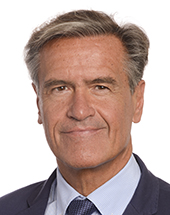
Juan Fernando LÓPEZ AGUILAR | Spain ES | Progressive Alliance of Socialists and Democrats (S&D) | 280 |
| 3 |
|
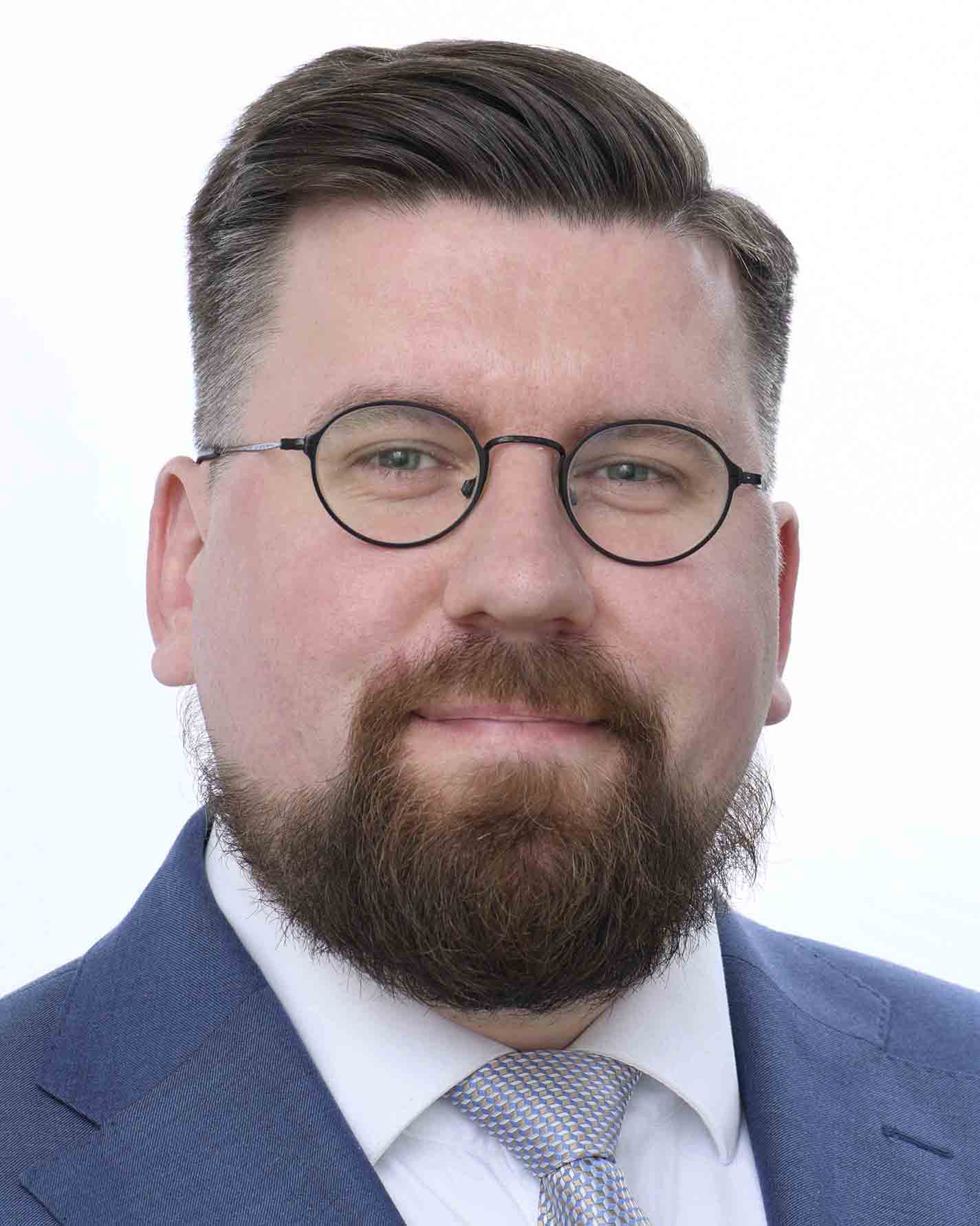
Sebastian TYNKKYNEN | Finland FI | European Conservatives and Reformists (ECR) | 247 |
| 4 |
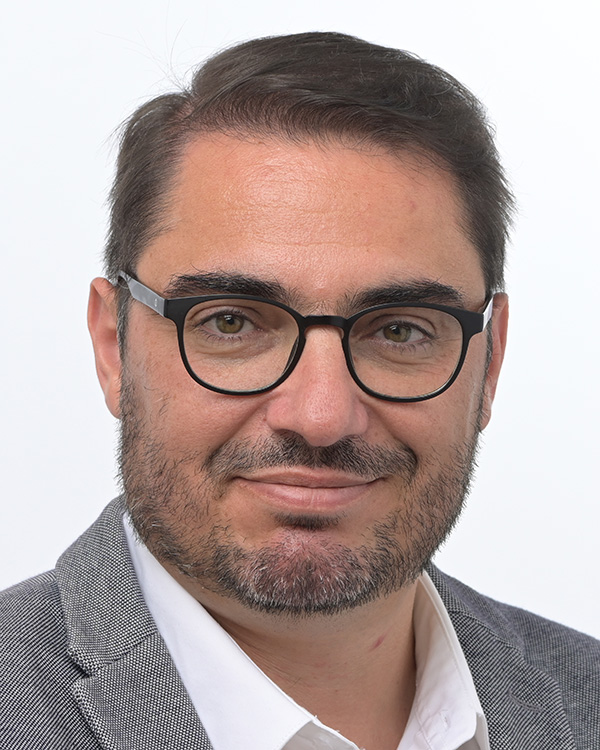
|
João OLIVEIRA | Portugal PT | The Left in the European Parliament (GUE/NGL) | 195 |
| 5 |
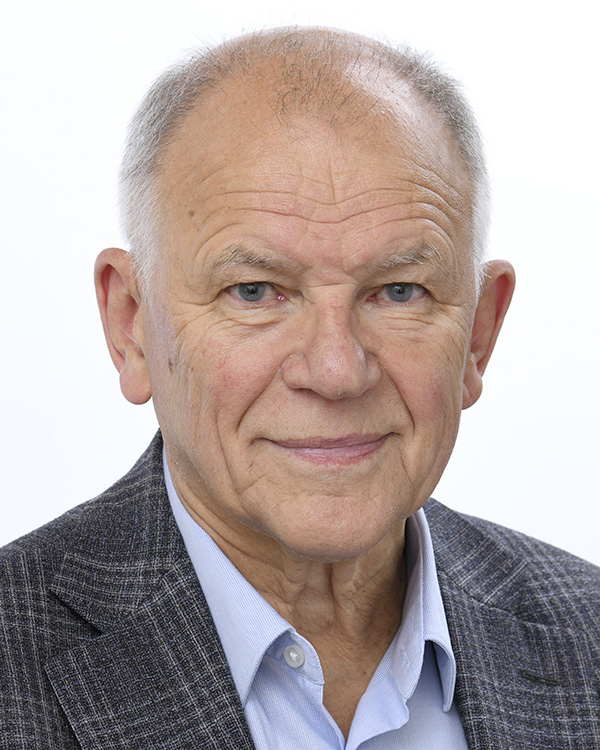
|
Vytenis Povilas ANDRIUKAITIS | Lithuania LT | Progressive Alliance of Socialists and Democrats (S&D) | 183 |
All Contributions (109)
 Presidential elections in Honduras, the non-recognition of the outcome by the incumbent administration and the attacks on opposition members of the National Assembly
Date:
21.01.2026 19:41
| Language: ES
Madam President, ladies and gentlemen, what has happened in Honduras and why are we debating this resolution today in the European Parliament? Because there was, obviously, a new attempt in a government in Latin America to ignore the will of the citizens that was expressed in the vote. There was an attempt to retain power, even though the popular vote went in another direction to what was the government's political sign. It is a similar situation - not identical, but similar - to what Nicolás Maduro did in 2024, when he did not want to recognize that the Venezuelan people said "no" to him and changed and wanted González Urrutia to be the president. That was worse, because he stole the election and declared himself victorious. Here it was not so much, but yes, with this decision of January 10 of President Castro, it was tried not to allow the transition seeking a recount, although the electoral mission of both the European Union and the Organization of American States (OAS) validated the result and concluded that the electoral process had been in accordance with international standards. And in addition, that decree that President Xiomara Castro had signed had no legal basis, because if anyone was competent to make such a decision it was the National Electoral Council. What was done? Intimidate the members of the National Electoral Council and, in addition, attack the opposition, even with a physical attack suffered by deputy Gladis López. For what? To avoid peaceful transition. What is there to support now? Obviously, take care of the vote, that this peaceful and democratic transition takes place, a transfer of command and respect the will of the citizens of Honduras.
European Council meeting (joint debate)
Date:
21.01.2026 10:42
| Language: HR
Dear Chairman, today we are talking about an independent Europe, which requires a European Defence Union and strengthening our economy. Both require access to critical raw materials, and we cannot do so unless we support the Mercosur agreement, which we will decide in a matter of minutes. Of course, we also need to reduce Europe’s dependence on foreign trade and strengthen our internal market. We have Letta's report, we need to implement it faster. And finally, energy policy, in the past mandate, was defined exclusively by climate objectives. This is no longer sustainable in today's world. Environmental concerns must of course be at the heart of our energy policy, but geopolitical goals, strengthening our economy, strengthening our competitiveness and achieving our geostrategic autonomy must be at the heart.
Human rights and democracy in the world and the European Union’s policy on the matter – annual report 2025 (debate)
Date:
20.01.2026 20:17
| Language: EN
Madam President, 15 years ago, over 50 % of the population in the world were living in democracies. Today, that is less than 30 %. So obviously Fukuyama was wrong when he thought about the end of history and that democracies will finally win over autocracies. However, in many critical areas that we have mentioned today, I would like to use this opportunity to mention also a success story. I was the chief observer in Bolivia for the elections there. After 20 years of one hegemonic party – the Movement for Socialism – we were organising, we were supporting, we were trying to be with our Bolivian friends to support them in a democratic transition. And there were a lot of fears that they would not succeed. However, we supported the electoral commission to be independent, to be professional, and they managed to do that. And the most important thing: the citizens of Bolivia, when they saw us with their European cap, they saluted us because they saw in the European Union a guarantee that the democratic process will be respected. So there is a lot of bad news, but we also need to be aware of our success stories.
CFSP and CSDP (Article 36 TEU) (joint debate)
Date:
20.01.2026 19:29
| Language: EN
Mr President, well, as the rapporteur has rightly said, the European Union has always supported a rules-based order. The problem is that that order is disappearing, if it has not disappeared already. So we need to adapt and act quickly. I see here three points. First, to speed up our investment in defence if we want to get some sort of strategic autonomy. Second, we have a very important vote tomorrow on Mercosur. I think we cannot afford not to support the deal with Mercosur if we want to be a geopolitical actor. All the talk about global Europe or Europe as a geopolitical actor would be just wishful thinking without that deal. Third, enlargement. I think we need to move forward with enlargement, but we also need to put the alignment of candidate countries with the European CFSP at the heart of the accession negotiations. This is extremely important if we want to have a successful enlargement and if we want to adapt to this new world.
Situation in Venezuela following the extraction of Maduro and the need to ensure a peaceful democratic transition (debate)
Date:
20.01.2026 17:39
| Language: ES
Madam President, Madam Vice-President, first of all, no Democrat should regret the fall of Nicolas Maduro. His dictatorship caused millions of emigrants, hundreds of political prisoners, corruption, drug trafficking and an appalling impoverishment of the Venezuelan people. Secondly, the abuses of power by a dictatorship – it is true – do not entitle a superpower not to respect international law, but international law cannot be an excuse for the systematic violation of the Universal Declaration of Human Rights and for the international community to do nothing about it. The international community and, in particular, those governments and political forces that have collaborated closely with the Chavista dictatorship have failed the Venezuelan people, and are therefore the last to talk about international law. Thirdly, this Parliament recognized Edmundo González Urrutia as president-elect, although many did not want to vote on that occasion. That recognition allows us today to insist that both González Urrutia and María Corina Machado must participate in a transition to democracy in Venezuela. Talleyrand told Napoleon that you can do many things with bayonets, but you can't sit on them. The use of force can overthrow a dictator, but it is not enough to gain legitimacy. The legitimacy of the transition process can only be given by the inclusion of the democratic forces led by María Corina Machado.
Territorial integrity and sovereignty of Greenland and the Kingdom of Denmark: the need for a united EU response to US blackmail attempts (debate)
Date:
20.01.2026 13:35
| Language: HR
Dear Chairman, this is not just Greenland, but a serious crisis in transatlantic relations and therefore it is not the time for panic moves, to throw ourselves into the hands of the Chinese, as some advocate, but for a clear and firm position. The position that we are open to cooperation with the United States on security issues, on common security, but we do not accept any blackmail. We will certainly know how to deal with these threats about customs. This has already been proven in the past and the European Union has the tools to deal with it. But for our message to be credible in the long run, we must clearly build European defence capabilities and thus reconfigure our transatlantic relations, our partnership with the US and beyond Trump.
30th anniversary of the signing of the Dayton-Paris Peace Agreement (debate)
Date:
18.12.2025 08:27
| Language: HR
No text available
Mass kidnapping of children in Nigeria, including from St Mary's Catholic school in Papiri
Date:
17.12.2025 19:46
| Language: HR
The Honourable Chairman, the mass abduction of children from the Catholic School of St. Mary in Papyri is indeed a crime that shakes the conscience. Hundreds of children were abducted from a place that was supposed to be a haven of learning, care and faith. Although some children are freed, many children and teachers are still imprisoned and their families live in fear and uncertainty. This tragedy cannot be viewed in isolation. It is taking place in the broader context of persistent violence against Christian communities in Nigeria, and therefore we really need to ask ourselves what the European Union is doing on this issue, what the European Commission is doing. The minimum would be for the European Commission to finally appoint, after 13 months, a Freedom of Religion Envoy. I would ask the Commission to give us, who are in the Club of Christian Democrats, one reason to continue to support this Commission that has promised this, and after 13 months has not yet fulfilled its promise, to appoint an envoy.
Arbitrary arrest and sentencing of academics Bahruz Samadov and Igbal Abilov in Azerbaijan
Date:
17.12.2025 19:33
| Language: HR
The Honourable Chairman, in this plenary room two years ago, then as a member of the Parliamentary Assembly of the Council of Europe, I participated in the debate on de facto exclude the Azerbaijani delegation from the work of the organisation for human rights violations. I voted in favour of this resolution, but I also put in place a mechanism for Azerbaijan to return. Why? Because I think it is important to talk about the protection of human rights, but it is important to have an open channel of dialogue precisely because of the geopolitical importance of our relations with Azerbaijan in today's world, in today's geopolitical circumstances. So it is necessary to remain principled and say, as we will now with this resolution, what we think about human rights violations, but to leave open this channel of dialogue when we also have certain geopolitical interests to do so.
The deepening democratic crisis in Georgia (debate)
Date:
17.12.2025 16:54
| Language: HR
Over the past year, we have witnessed continued democratic backsliding in Georgia, with pressures on independent media, intimidated civil society, selective use of the judiciary and the adoption of legislation that runs counter to basic European standards. The implementation of the Foreign Influence and Foreign Agents Act remains a direct challenge to freedom of association and expression, despite repeated warnings from the European Union. By granting candidate status, Georgia was given a chance that, unfortunately, the authorities, against the will of the citizens, decided to ruin. The European Union has therefore decided that Georgia’s accession process cannot continue without full respect for democratic principles of the rule of law and fundamental rights. This, of course, is also a message to the other candidates that there is no discount on membership criteria. But we have to say, the responsibility does not lie with the Georgian people. Public support for the European path remains strong and citizens have repeatedly demonstrated their commitment to democratic values. Therefore, the European Union should, as announced, step up its support for civil society, independent journalism, democratic institutions, with the consistent and transparent application of conditionality, and - and sanctions against those undermining democratic norms.
Phasing out Russian natural gas imports and improving monitoring of potential energy dependencies (debate)
Date:
16.12.2025 09:05
| Language: HR
No text available
The situation of Christian communities and religious minorities in Nigeria and the Middle East, and Europe’s responsibility to protect them and guarantee freedom of conscience (topical debate)
Date:
26.11.2025 13:04
| Language: HR
No text available
EU position on the proposed plan and EU engagement towards a just and lasting peace for Ukraine (debate)
Date:
26.11.2025 10:41
| Language: EN
Madam President, dear colleagues, the Commission President said today that the pressure should be put on the aggressor, not on the victim. I fully agree with that, but then we need to move from words to action. That means, among other things, that we should ban the import not only of gas, but also of oil. That is the position of this Parliament, and it is about time that the Council also agrees on that position to ban all the imports of Russian oil, starting in January 2026. The Commission knows very well that all the technical conditions are there for the Member States that are still importing oil from Russia to replace that, using, for example, the Adriatic pipeline. They can do that. All the technical conditions are there. It is just a question of political will. So, we need to move from words to action because actions mean far more than words; they speak louder than any words. Acta non verba.
Escalation of the war and the humanitarian catastrophe in Sudan (continuation of debate)
Date:
25.11.2025 16:16
| Language: HR
The humanitarian crisis in Sudan continues and deepens as the civil war between the Sudan Armed Forces and the so-called Rapid Support Forces escalates. We have an arms embargo, but it is not respected, of course, because we have an internal struggle for power, but also because those weapons are supplied from the outside. Precisely because we have one geopolitical background, one regional [background] because we need to look at the conflict in Sudan in the broader context of the wider Middle East and the reorganization of relations there, and that is why we will see that factors from the Middle East are present in some way in this war, but also globally because, as we know, China is very present. Sudan is an important point in the Silk Road because of gold, minerals, but also for other reasons, and therefore we must help humanitarianly, but also become a geopolitical factor in order to be able to really deal with those causes of this conflict.
Conclusions of the European Council meeting of 23 October 2025 (debate)
Date:
13.11.2025 08:55
| Language: HR
Dear Chair, we want a Europe that is competitive, secure and therefore we need to reduce energy dependencies. Since Europe does not have enough fossil fuels, of course we have to go to renewable sources. And in this sense, the green transition is also very much geopolitically relevant to reduce our dependence on Russia, if you will, also on the United States or the Gulf. But if we go with unrealistic goals in climate law for our industry, we will also increase dependencies on another superpower - China, Chinese technology, because we cannot achieve these goals unless we go into deeper dependence if we want in such a time as we set ourselves to achieve these goals. I therefore welcome that the Council is now ready, e.g. to postpone ETS2 for one year, as this would raise housing prices for our citizens. I think it should be delayed for at least three years, but not wasted that time, but invested in renewables as geothermal, where we have our technology. The Commission promised to adopt an action plan. We expect him to do so as soon as possible.
EU political strategy on Latin America (debate)
Date:
07.10.2025 19:33
| Language: HR
Dear Chair, I started my speech in Spanish, I will finish in my mother tongue, in Croatian. If nothing else, out of respect for the great Croatian emigrant community in Latin America, but also for the sake of emphasizing that Latin America must be important not only for Spain, for Portugal, who of course have historical relations with Latin America, but for the entire European Union. I think that a huge number of MPs have at least some further relatives who once emigrated to Latin America and that is another additional link. As the Commissioner said, today we find ourselves in the geopolitical context of the fragmentation of the international order when it is extremely important to find, rediscover and consolidate relations with our allies, with countries that share our values, and this is precisely the case with the countries of Latin America. Of course, there are some problems here. We could hear something about it today, but I would like to point out here that this report on the European Union's strategy towards the whole of Latin America is not a country report. Of course, we have mentioned the most authoritative examples of violations of human rights or political rights, and that is why I think this report is both balanced and objective. In this regard, I would like to underline the importance of this moment on the eve of Summit What will the European Union have with the countries of Latin America and the Caribbean, because I think we need to be aware of the fact that in 2025 the two regions that will grow the least economically in the world are Europe and Latin America. The answer to this must be greater cooperation so that both regions benefit from it. Finally, I would like to thank all the shadow rapporteurs. Of course, the colleagues who participated in their amendments in the Committee, as well as in the Committee on Development for an opinion, which contributed to this resolution.
EU political strategy on Latin America (debate)
Date:
07.10.2025 18:41
| Language: ES
Madam President, Commissioner, with this resolution we are going to define Parliament's priorities and message in view of the next EU-CELAC summit. In a world with less multilateralism and more fragmentation, Latin America cannot be left out of our strategic thinking. On the contrary, it must be understood as our natural ally, with which we share not only centuries of history, but also the same values and the challenge of acquiring strategic autonomy avoiding dependencies on other global powers. Without this alliance with Latin America, Europe will never be a geopolitical subject; And without closer ties with the European Union, Latin America will also not be able to achieve its strategic autonomy. That is why we advocate a bi-regional alliance, a transatlantic European-Latin American area of peace, democracy and prosperity. Like us, the peoples of America love freedom, and this must be the computer concept of our relations. Freedom to be able to relate more closely our societies, our economies, with agreements such as the one reached with Chile, Mexico or Mercosur. The conclusion and implementation of these agreements will send a clear message to the world that democracies can trade with each other freely, without raising tariff barriers, but respecting human rights, labor rights, consumer rights, and protecting the environment. Freedom also includes freedom from the scourge of drug trafficking, corruption and organized crime. And that is why we seek to intensify bi-regional cooperation in the field of security and expand it in the field of justice. It is also clear that Europe must help to address the root causes of many of these ills and, therefore, we cannot give up financing for development in Latin America. In this regard, Global Gateway is an essential element of our policy, particularly in attracting investments in strategic sectors. But there is a need for greater transparency, parliamentary scrutiny and, in addition, the overriding objective of development policy, which is to eradicate poverty, must not be neglected. Freedom as a computer principle also requires us to act more decisively in defense of democracy and against authoritarianism. That is why we demand the release of all political prisoners. Today in particular, I refer to Jan Darmovzal, a Czech citizen, and to the more than 800 political prisoners in Venezuela, several of them European citizens. We demand that Maduro's dictatorship immediately cease the repression of civil society and the opposition. We also condemn the involvement of mercenaries in the Russian aggression against Ukraine and demand that the Council impose sanctions against those responsible for the persistent violation of human rights in Cuba. We also seek the activation of the democratic clause for the systematic violation of human rights in Nicaragua and the expansion of sanctions against the Ortega-Murillo clan. Although these are the worst dictatorships, we also see with concern the erosion of democratic values, of the system of checks and balances, in other countries of the region, notably in El Salvador. That is why we hope that the Santa Marta summit will include a debate on democratic principles and human rights and that the final declaration will clearly defend our values. The resolution includes 16 concrete recommendations for Santa Marta to agree on closer cooperation in defence of democracy, peace, security, prosperity and sustainable development by investing in the digital transition, renewable energy, education and health, and also in social welfare with a bi-regional care pact. We seek the creation of a permanent institutional space that, between summit and summit, coordinates efforts and monitors the progress achieved. Without ignoring the challenges, Europe and Latin America are called today to take a more leading role in international relations. This resolution is a contribution in that regard and a call for action to develop between the two regions a transatlantic area of peace, democracy and prosperity.
New Strategic EU-India Agenda (debate)
Date:
07.10.2025 18:31
| Language: EN
Mr President, Madam Commissioner, the new strategic EU-India agenda is a timely and adequate response to the process of weakening multilateralism and fragmentation of the international order. The geopolitical competition between the United States and China is reshaping trade and international relations, affecting all of us. Therefore, if we don't want to remain a mere spectator, we need to adapt and move fast. It is in that context that we need to understand this new approach to India as well, for example, as the strategic partnership with Latin America that we will discuss later on. Of course, we are aware that there are areas of disagreement with India – a BRICS founding member. Yet, if we manage to get an FTA with India to boost defence and technology cooperation and improve connectivity, current differences could be overcome by the geopolitical gains of a mutually beneficial relationship.
The EU’s role in supporting the recent peace efforts for Gaza and a two-state solution (debate)
Date:
07.10.2025 12:05
| Language: HR
First of all, I would like to express today my solidarity with the families of the victims and hostages that Hamas still holds in captivity. Today, October 7th, we must once again remember that Hamas, with its terrorist attack on Israeli civilians, has begun this new tragic chapter of the war in the Middle East. Hamas should not be rewarded for this. Hamas must disappear from Gaza so that Palestinians can be truly free and Israelis can be safe. Europe must support the White House's peace plan, the ongoing negotiations in Egypt and if successful in its implementation. The two-state solution will not be achieved through speeches and resolutions that are more aimed at the domestic public than on the actual achievement of peace. The White House's plan should therefore be supported. It is currently the best chance for peace, for the liberation of hostages, for the cessation of Israeli attacks on Gaza and the suffering of civilians, for the security of Israel and for the realization of the Palestinians' right to be their own.
Situation in Colombia after the wave of recent terrorist attacks (debate)
Date:
09.09.2025 18:47
| Language: ES
Mr. President, the violent once again terrorize Colombia and threaten regional stability, democracy and Colombian sovereignty itself. Terrorist and narco groups have made it clear that the government-driven strategy of total peace has unfortunately not worked, but it was also interpreted by these groups as a "Free Stone!" for their nefarious plans. The Catatumbo massacres, the terrorist attacks against civilians and security forces, the assassination of Senator Uribe... are clear signs of the strengthening and proliferation of organized crime and terrorism, also linked to transnational structures. Therefore, it is essential to avoid a further escalation of violence in Colombia and to offer our support and cooperation. It is also important that political and social actors – first and foremost the authorities – avoid polarisation and inflammatory discourses. Finally, it is necessary for the European Union to include in the list of terrorist organizations the Gulf clan, the dissident factions of the FARC and the cartel of the Suns.