| Rank | Name | Country | Group | Speeches | |
|---|---|---|---|---|---|
| 1 |

|
Lukas SIEPER | Germany DE | Non-attached Members (NI) | 239 |
| 2 |
|
Sebastian TYNKKYNEN | Finland FI | European Conservatives and Reformists (ECR) | 216 |
| 3 |
|
Juan Fernando LÓPEZ AGUILAR | Spain ES | Progressive Alliance of Socialists and Democrats (S&D) | 191 |
| 4 |
|
João OLIVEIRA | Portugal PT | The Left in the European Parliament (GUE/NGL) | 143 |
| 5 |
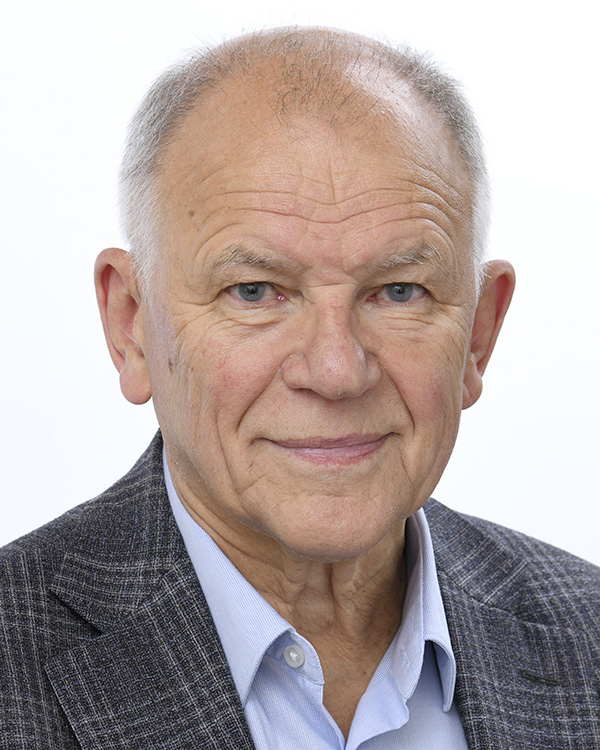
|
Vytenis Povilas ANDRIUKAITIS | Lithuania LT | Progressive Alliance of Socialists and Democrats (S&D) | 140 |
| 6 |
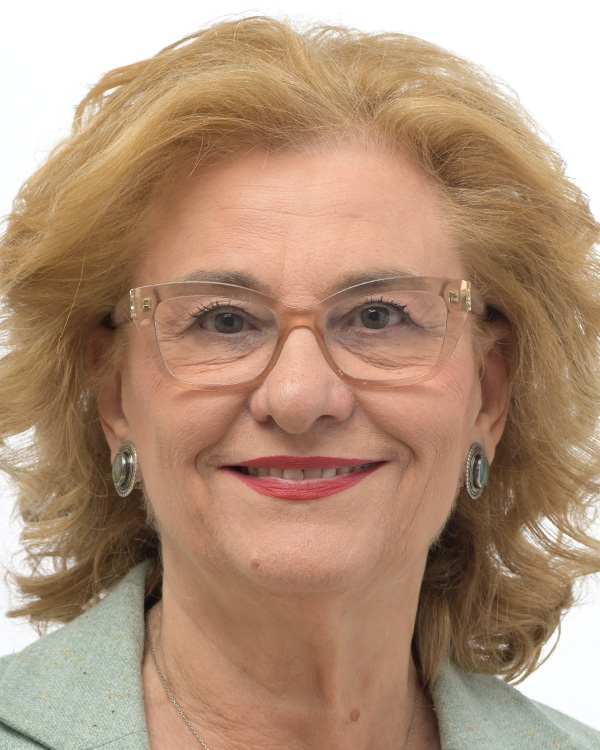
|
Maria GRAPINI | Romania RO | Progressive Alliance of Socialists and Democrats (S&D) | 117 |
| 7 |
|
Seán KELLY | Ireland IE | European People's Party (EPP) | 92 |
| 8 |
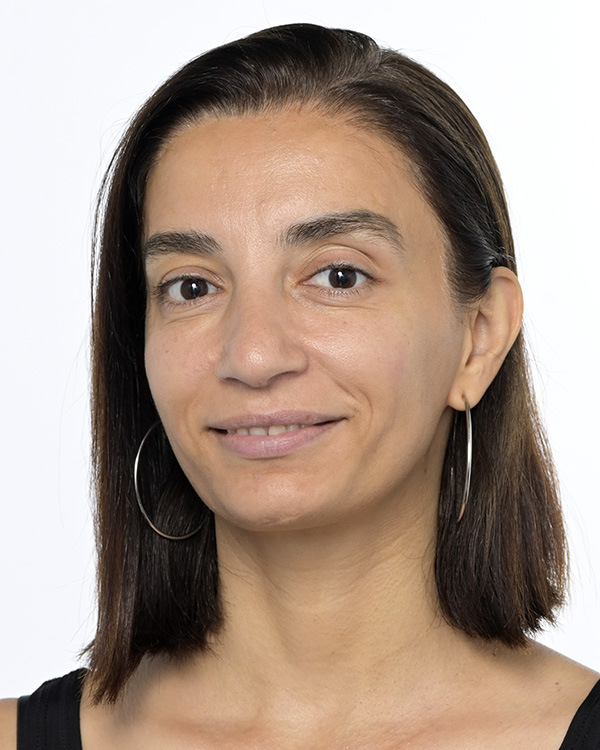
|
Evin INCIR | Sweden SE | Progressive Alliance of Socialists and Democrats (S&D) | 88 |
| 9 |
|
Ana MIRANDA PAZ | Spain ES | Greens/European Free Alliance (Greens/EFA) | 82 |
| 10 |
|
Michał SZCZERBA | Poland PL | European People's Party (EPP) | 78 |
All Contributions (29)
 Recent developments in Palestine and Lebanon (debate)
Date:
16.12.2025 21:31
| Language: EN
Mr President, thank you very much. I was listening carefully to your questions, to your statements. First, following the State of the Union address of President von der Leyen, a number of measures have been proposed to Member States, and they remain on the table. It depends on the Member States. On the West Bank – I already said at the beginning, but I can repeat – I can agree with you that while the attention of the world is focusing on Gaza, we must not lose sight of the broader objective, the work towards the two-state solution, so that Israelis and Palestinians can live side by side in peace and security. So, we call on Israel, once again, to de-escalate the situation in the West Bank, including East Jerusalem, and to reverse the E1 settlement plan that further undermines the two-state solution. This is what I said in my introductory speech. On Lebanon, as I said earlier, yesterday we had the first EU-Lebanon Association council in the last eight years. Their foreign minister was there; we were discussing at length. So, as you know, the Lebanese Government's recent announcement of measures aimed at establishing the monopoly of the state on holding weapons – this is what they are trying to do, but they are not there yet. It's a landmark decision which we welcome as an important step towards strengthening the Lebanese state and implementing UN Security Resolution 1701. So, they are trying to establish the monopoly, but as you know, Hezbollah is still there. The re-establishment and full respect of Lebanon's sovereignty and territorial integrity is essential, and this is what we share. As you know, we are providing – and I already said this – substantial support to Lebanese Armed Forces through the European Peace Facility and NDICI, and we are fully committed to stepping up cooperation to this effect. On products, on banning trade from the settlements and the implementation of an advisory opinion from the ICJ, as it was highlighted by the European Council on 27 June and again on 17 October 2024, the European Union has repeatedly recalled the need to fully implement obligations under international public law, which are legally binding, as interpreted by the International Court of Justice. This is what stays on trade. The EU implements a differentiation policy towards Israel and occupied Palestinian territories, whereby goods originating from Israeli settlements in occupied territories since June 1967 do not fall within the scope of the EU-Israel Association Agreement and therefore are liable to most favoured nations. So, just to know what is at stake. I was listening carefully to your statements, to your questions. Of course we are doing what we can. The development in the Middle East is moving fast, as you know, so your contributions are really valuable. But of course, they are full of empathy, which I understand, and I share your empathy, of course, and full of emotions. So we have to see what is possible at this moment and this is what we are trying to do. There is a peace plan, and we have to try to make it work. We are looking at the second stage of this peace plan, as you know, we are looking forward. We are ready to work with the governance structures stipulated in the UN Security Council Resolution: first, the Board of Peace; second, the transitional governance administration and Palestinian technocratic committee. We are also prepared to assume responsibility with a seat on the Board of Peace. This is what we are doing, and we are trying to be present there. Two weeks ago, I was in Washington, and I raised this with the interlocutors at the United States Department of State, concretely with US Under Secretary Lewin. And this was raised and they know our position. So, let's see whether we can achieve this or not. As I said, we have to be realistic and see what is possible. We are looking to the tentative composition of these bodies. They said that it will be decided in the coming days, and to see how the European Union can better engage and support. You know that the European Union has always been clear that any credible recovery effort in Gaza must be Palestinian-owned and Palestinian-led, with the unity of Gaza and the West Bank, this is the position, both politically and economically. The Palestinian technocratic committee will be critical, and it should pave the way for a transition of responsibility to the Palestinian Authority in line with points 9 and 19 of the Comprehensive Plan to End the Gaza Conflict. I somehow sense a common willingness to confront difficult realities and to work towards peace and stability in the region. We all know that the road may be rocky – and the road is rocky, and the road has been rocky, all of you know – but as the European Union, we are stepping up our support together with all international partners who are engaging to, I mentioned earlier, the Palestine Donor Group. We are trying to do what we can and I am glad that we are engaging also as Team Europe. This is also important. I hope that we can count on your support and the expertise of this House. Because as I was listening to you, I see that you are visiting the region and you know the situation on the ground, so your help is also important and precious. So now I think that there is a unique opportunity and a unique window of opportunity in the Middle East, and yes, it is our joint responsibility. So thank you so much. And let's see what we can do.
Recent developments in Palestine and Lebanon (debate)
Date:
16.12.2025 20:53
| Language: EN
Mr President, honourable Members, there have been a number of important developments over the last few weeks, and I am pleased to say that, as the European Union, we are engaging substantially and contributing to peace and stability in the region. We had, as you might know, the first meeting of the Palestine Donor Group on 20 November in Brussels, and it was a milestone event. The meeting was co-chaired by the European Union and Prime Minister Mustafa from the Palestinian Authority. It represented an important platform to demonstrate broad support for a reformed Palestinian Authority. It was also a good opportunity for the Palestinian Authority to demonstrate its progress and commitment to the implementation of the reform agenda. This is crucial both for the effective governance of Palestine in the framework of a two-state solution and to build trust with donors. We indeed managed to generate support from the international community, and we also received additional pledges by Member States to support the Palestinian Authority through our PEGASE mechanism. This reconfirms the added value of PEGASE in supporting the provision of key basic services to the Palestinian citizens. The Palestine Donor Group also generated support for Gaza's recovery and reconstruction, and there is a consensus on the preservation of Gaza's territorial integrity. The other major development was the adoption – as I am sure you follow – of UN Security Council Resolution 2803. It can advance a lasting peace. The European Union stands ready to contribute to stability, recovery and reconstruction and provide expertise, including in the Board of Peace for Gaza. We propose the redeployment of the EU Border Assistance Mission to the Rafah crossing, EUBAM Rafah, and to enhance the EU policy mission for the Palestinian territories, EUPOL COPPS. Building on our humanitarian aid, we are also ready to contribute to the provision of basic social services, also to the rehabilitation of infrastructure in Gaza and to help strengthen its governance and administration. At the same time, we continue our support for reforms of the Palestinian Authority. They are key for a credible path to Palestinian statehood. Let me say that it is of great interest and great importance that we use an integrated approach to the reconstruction of Gaza. We want to link European, United States and Arab roles. They must be anchored in support of Palestinian self-governance and integrate security and civilian efforts. In short, whatever we contribute to Gaza's recovery must be effective, financially sound, and in line with our broader political perspective for Palestine. Let me therefore add this with regard to the West Bank: I note with great concern the critical situation as settler violence has intensified during the olive harvest and settlement expansion has increased. This is not in line with international law, nor are Israel's military operations and restrictions of movements. Now, I would like to draw your attention to Lebanon, because this is also the topic. Yesterday afternoon we held the first EU-Lebanon Association Council in the last eight years. This is a strong signal of our reinforced commitment to deepening our ties with the country. I left no doubt about our unwavering support to Lebanon's stability, recovery and reform process. I also renewed our offer to launch a strategic and comprehensive partnership with Lebanon once the conditions are met. This partnership could strengthen our cooperation on security, defence, trade, financial cooperation or participation in European Union programmes and initiatives, to mention but a few areas. For us to commit to macro-financial assistance, however, Lebanon must progress on the reforms. These reforms are needed to rebuild state institutions and the banking sector, and we passed a clear message yesterday: these reforms are a sine qua non. They are not only a precondition for additional support, but first and foremost for Lebanon's economic recovery and long-term stability. The situation in Lebanon remains extremely fragile. The ceasefire must be respected by all sides. We welcome the government's efforts to establish the state monopoly on arms. In this regard, the European Union is providing support to the Lebanese Armed Forces for land and sea border security, and to the internal security forces' capacity. To conclude, developments in the Middle East are moving fast. In this complex and rapidly evolving situation, it is important that we act with a cool head and with a clear compass to achieve peace, stability and ultimately prosperity in the region. Our efforts are guided by a strong sense of collaboration, both with countries in the region and with all international partners who engage in promoting peace, security, recovery and reconstruction. Thank you very much. I am looking forward to your comments and your positions.
30th anniversary of the Barcelona Process and the new pact for the Mediterranean (debate)
Date:
24.11.2025 20:25
| Language: EN
Madam President, thank you very much for this very fruitful debate. This debate shows how important the Mediterranean is. So, we heard a lot of different ideas, but I have been listening carefully and where all of us agree, or the majority of us agree, is that the Mediterranean is an important region, that the Mediterranean should be a bridge and that the Mediterranean should not be the region of conflict. This is something where almost all of us agreed. On the pact: the pact is not yet another bureaucratic document. The pact is a genuine pact. What we wanted to achieve is that we cooperate with the people, governments, civil society, academia and researchers from the Southern Neighbourhood. This is the idea and this is what we want to achieve. Of course, as I said, it is a living document, it can be edited, and this is exactly why we will come with the action plan in the first quarter of the next year. I invite all of you to come on board to DG MENA. DG MENA is the first entry point, a new Directorate-General, which has been established or was established exactly for this. So, if you have any ideas which are concrete so we can put them in our action plan, which will be adopted by the Commission, as I said, in the first quarter of the next year. There were many questions here, some diverging views, but I really want to clarify the situation with Erasmus+, because many of you, especially people from this side, were somehow speaking against Erasmus+. At this moment, we have 1.5 million students in Europe who use Erasmus+. Out of this 1.5 million, we have only 4 500 students from the MENA region, so it is less than 0.3 % of all Erasmus+ students. So this is something which I wanted to share with you. But on Erasmus+ once again: what is Erasmus+? People come and go back. It is not to create brain drain in their countries. It is to have brain circulation. They bring back new skills, new perspectives, new networks and this is our main goal. I said there's three pillars. The first pillar is people at the centre. When I say people there, it is also human rights, it is everything about that. But one of the – I have to repeat – one of the flagship projects will be an alliance of Mediterranean universities. What we want to achieve is to connect the region. We know that young people connect easier so we want to create an alliance or network of Mediterranean universities – not to build new premises, but to add to the existing curricula in the university of Beirut, the university of Alexandria, the university of Naples, of Barcelona, Marseille. To add curricula on the Mediterranean, whatever it may be, be it cultural heritage, be it religion, be it sports, be it tourism, be it history. It is about that and Erasmus+ is only an instrument which can help with this. The second pillar is about economies. We want to invest. This is also to invite European companies to invest in that part of the world. We want to help develop these countries. It is public money, but it is also private money. This is very important. By developing these countries, by opening new jobs, we are addressing root causes of migration. We are opening new jobs for these young people to work there. If they want to come, to reply to Mr Aguilar, we are creating legal pathways. Legal pathways are the only way how they can come to Europe. They can come, but what are we doing? You know, we signed three talent partnerships by now – with Egypt, with Tunisia and with Morocco. It means that we are balancing the needs with the governments of these countries in order to get people here in Europe. We do not want to take all their doctors, all their engineers. We want to balance this because we also need for our labour, the European labour market, we also need people here. We have to admit this. Artificial intelligence, robotics will not be able to replace humans. It can replace some services, but we need people, we need human capital. There is a question now, there are many of you who asked the question, so I cannot reply individually, but I remember what Lukas Mandl was saying: if you are not there, who is there? We are leaving the space for some other people, for some other powers, for China, for Russia. There is an old saying: you are not allowed to choose your neighbours. We have neighbours. This is our neighbourhood. We are the closest neighbours to our Southern Neighbourhood and we have to reinvest in our partnership and this is what we have been doing. It is not that we want to have these people in Europe, that we are inviting migrants. It is not about that. It is about how to try to make this region peaceful and prosperous. Of course, Gulf countries were mentioned. Gulf countries are also very important because without the Gulf there will not be peace, security and prosperity. We badly need Gulf countries on board, especially for the Middle East situation, be it for Syria, be it for Lebanon, be it for Gaza and so on. So it is all about it. Someone mentioned the Palestine Authority – not the Palestine Authority, but the Palestine Donor Group. The Donor Group was not for donations. It was to discuss the Reform Agenda of the Palestinian Authority. This is about that. There are more than 60 participants in that Palestine Donor Group. So, we are doing all that we can in order to reinvest everything for the Southern Neighbourhood, to help these countries, to assist these countries and at the same time to have benefits also for us. This is why I mentioned in my introductory speech that it is a win‑win-win situation. On financing: it is important, I know, but at this moment I can only say that there is a proposal that we double our Global Europe Fund from EUR 21 billion to EUR 42 billion. It is in your hands now in Parliament, also in the Council, let's see. This is also to show that this is not only a symbolic move from our side, but that this is real, really real. On Türkiye: there are many questions on Türkiye. Türkiye is not part of this since they are an enlargement country, so they are not among these 10 Southern Neighbourhood countries, but of course, we think of our pact beyond the geographical situation. This is why I mentioned the Gulf and I also want to mention Mauritania, it is also important. We want to work in a 'Team Europe approach' and the Global Gateway is a role model, you are right. The Mattei plan is also important. It is also a role model where we see that we can follow this. So, there is much more to say, I know, but there is not enough time to reply to all these questions. Maybe we can organise another debate on this to discuss this because I think that the Mediterranean is the most important region for Europe, and it is the place where we have to find common ground and not be divided. Thank you so much for this debate.
30th anniversary of the Barcelona Process and the new pact for the Mediterranean (debate)
Date:
24.11.2025 19:22
| Language: EN
Madam President, honourable Members, thank you very much for having this debate tonight. When we look at the Mediterranean region, a lot has happened. We have witnessed war and destruction and many lives lost. But more recently, positive and encouraging developments have had the upper hand. Fragile as it may be, there is a ceasefire in Gaza, including a long-term peace plan. And just last week, we held the first meeting of the Palestine Donor Group in Brussels under the leadership of the European Commission. Two days ago, we held the Days of Dialogue in Damascus for the first time – we have brought the Dialogue home to Syria. This is of crucial importance to the civic space and for the inclusive transition of the country. The pact for the Mediterranean, presented together with High Representative Kallas last month, provides a great opportunity to restart and strengthen cooperation with our partners around the Mediterranean. In a few days, we are marking the 30th anniversary of the Barcelona Declaration, the beginning of the Barcelona Euro-Mediterranean process. We are taking this opportunity to launch the pact for the Mediterranean at ministerial level, together with our southern partners. In the Commission, and in close cooperation with High Representative Kallas, we have been working on the pact since day one of this mandate. As you know, we have not started from scratch, we are building on the agenda for the Mediterranean from 2021. But we are, however, really making a shift. We have changed our methodology. We are using a bottom-up approach and we are creating a partnership of equals. This reinforced partnership is grounded in co-ownership of equal partners and joint responsibility. We are building a common Mediterranean space and we are also connecting to the Gulf countries with their economic and political footprint in the region through triangular cooperation. We are going much more granular with this pact. We have more than 100 concrete initiatives and actions to tap into the full potential of our cooperation. Let me briefly outline the three pillars of the pact. Firstly, we are putting people at the centre. We want to invest in higher education, professional training and jobs, and we are also promoting a common space of cultural exchange, sport and tourism. With the creation of a Mediterranean university network, we can help lay the foundations for a network or alliance that will enable skills development across the board and the entire region. Another example is the doubling of Erasmus+ opportunities for southern Mediterranean students, researchers and academic staff. And I want to be clear here: it is about brain circulation, not brain drain. And let me briefly address the disinformation on Erasmus+ which has emerged here in the corridors. Some are arguing that Erasmus+ promotes migration from the south. This simply is not true. Erasmus+ is a temporary exchange system, promoting skills development for the entire Mediterranean. It has been functioning for some time now to the benefit of all societies. Just to clarify this Erasmus+ story. We have a second pillar where we want to untap the potential of our economies in all areas of common interest, for instance, through trans-Mediterranean renewable energy initiatives, so-called T-MED. It will match ready-to-go projects with public and private financing, it will create quality jobs in future-proof sectors and T-MED will provide for economic and social prosperity. At the same time, we can substantially reduce our collective carbon footprint and increase our energy security. So we are speaking about decarbonisation of the region, we are speaking about new jobs, we are talking about development of these countries. So it's about a win-win-win situation. And finally, the third pillar of the pact. We are strengthening cooperation on security, preparedness and migration management, which we have been discussing a few minutes ago. Here we will step up our cooperation on civil protection, for example, through a joint firefighting hub in Cyprus. We will strengthen judicial and law enforcement cooperation to respond to cross-border threats and organised crime. We will also strengthen and we will try to prevent radicalisation. And, last but not least, we will fight irregular migration and migrant smuggling while opening more legal pathways for labour migration. Through this pact, we want to empower people, especially women and youth. We want to promote democratic participation, civil society engagement and a more inclusive society. We will also establish a youth parliamentary assembly, bringing together young representatives from across the Mediterranean region. The protection of human rights and the rule of law will remain key for a flourishing business environment that brings prosperity and opportunity for citizens. Now we are moving on to the pact's implementation. Our services are now working on the development of the action plan, which we hope to finalise in the first quarter of next year. This debate offers an excellent opportunity to collect your input for the action plan. We need active engagement at all levels: local, regional, national and European. The pact must first of all be grounded in local realities, and I am particularly thankful to the Committee of the Regions and to MedCities, to mention just a few. We are also involving the Union for the Mediterranean with its unique convening power. The marking of the 30th anniversary of the Barcelona Process, which I mentioned at the beginning, is taking place at the Union for the Mediterranean forum this Friday. This ministerial meeting will endorse a new vision statement, a strategic reform setting up priorities for the organisation for the future. This is a sign of our collective appreciation for their role and its format to advance cooperation in the Mediterranean. So I am looking forward to a fruitful debate on these different topics, and maybe in concluding remarks, I can reply to some of your questions.
Enhancing police cooperation in relation to the prevention, detection and investigation of migrant smuggling and trafficking in human beings; enhancing Europol’s support to preventing and combating such crimes (debate)
Date:
24.11.2025 19:19
| Language: EN
Madam President, dear Members, I want to thank all the Members who have supported this very important initiative. I would also like to thank the Polish and Danish Presidencies for their work. You know that we can take an important step in the fight against migrant smuggling today and in our efforts to control our borders and stop illegal migration. But of course, this is only one step. On 10 December, President von der Leyen will host the second conference of the Global Alliance to Counter Migrant Smuggling. In the pact for the Mediterranean, which we will be discussing in a minute, there is a whole pillar, pillar three, which is devoted to migration and security, so we will discuss it later in order to join forces on this topic, even beyond the European Union. In the coming months, as you know, there will be many more initiatives related to migrant smuggling and Europol to work on together, each with questions and issues that will require your careful attention. I am sorry that Mr Reuten left, because he had a question. Oh, you are there! I was looking at your seat. So, Europol's mandate will be renewed, as all of you know. This will certainly allow all stakeholders to work even better together. We have been listening to you. You will have, and we will have, the opportunity to discuss this issue again together with the co-legislators in the framework of the new Europol mandate. My hope is that we approach all of those coming initiatives with the same spirit of compromise as we did today, and that we can focus on this matter, as you have shown this evening.
Enhancing police cooperation in relation to the prevention, detection and investigation of migrant smuggling and trafficking in human beings; enhancing Europol’s support to preventing and combating such crimes (debate)
Date:
24.11.2025 18:14
| Language: EN
Madam President, dear Members, first of all, I would like to congratulate rapporteur Lenaers, but not just him, but also the shadow rapporteurs and all the others who have worked diligently on this file. According to Europol, as you rightly said, the estimated worldwide profits from migrant smuggling amount to between EUR 4.7 billion to EUR 6 billion annually. That is a global figure, but a lot of this money is made by smuggling migrants into the European Union, undermining our migration systems and abusing our asylum rules. What is worse: a lot of this money is used by criminal networks to cross-finance other crimes, trafficking in human beings, drug trafficking and violent crime. Worst of all is the fact that all this money is generated through the exploitation of the world's most vulnerable. Victims of smuggling risk their lives for the lies the smugglers told them or are telling them. The smugglers' profits come on the backs of the victims' families, who are indebted – often for years. Many victims die on the journey. It is not the usual way we speak in this House, but let us call it what it is: migrant smuggling is evil. Therefore, honourable Members, we have a duty to mobilise all our resources to fight against it. Strengthening Europol's role in this fight is an important part in that effort. The agency already plays a big part in our collective efforts to fight the smugglers. Last month, Europol co-organised a hackathon of online accounts linked to smugglers across the central Mediterranean route, resulting in hundreds of leads for investigators to follow. With a compromise text, we will be able to go even further in four important areas. First, strengthening interagency cooperation by establishing the European Centre Against Migrant Smuggling within the European Regulation, including representatives from Eurojust and Frontex. Second, strengthening coordination of all relevant actors, in particular, by setting out that the management board of Europol will adopt rules on how this centre operates. Third, improving information sharing. This was the main gap we identified when preparing the initial proposal, and I am pleased that the compromises we have reached allow us to fill this gap. Finally, providing the necessary resources to Europol to fulfil its broadened mission with an additional EUR 50 million, including a budget for an additional staff of 50 people and EUR 20 million to scale up Europe's biometric capabilities as well. This is once again to thank the co-legislators for their work so far, and I am looking forward to your discussion.
Recent peace agreement in the Middle East and the role of the EU (debate)
Date:
21.10.2025 08:53
| Language: EN
Mr President, I was listening carefully to all your interventions, but I can agree with the last speaker: yes, I agree that we should speak with one voice, but let us clarify. First of all, everybody was mentioning the European Union; what is the European Union? All of us are aware the European Parliament is very important, but there is the Commission, which I represent here today, and there is also the European Council. So the European Council – yesterday, I was present at the Foreign Affairs Council together with HR/PV Kaja Kallas and, if I have enough time, I will try to summarise the discussion in the Council just to be on the safe side. All of the ministers insisted on the enhanced role of the EU, and that we need to have a role in the future peace plan and reconstruction effort. It was agreed to ensure more humanitarian aid and access to NGOs, as well as journalists, to Gaza – both CSDP missions need to be properly utilised and it needs to be seen how their role can be enhanced. As the European Union is the main supporter of the two-state solution, they stressed that it is up to the European Union to keep the Palestinian Authority alive, while there remains a need to support and push their reform efforts, as I said in my introductory remarks. In the dialogue with Israel, it needs to be stressed that Israel should not undermine the Palestinian Authority, notably linked to withheld tax revenues. Sanctions linked to Hamas are on the table, while restrictive measures against Israel will not be removed but kept on the table for now. These could be used either for NGOs, for media access or to push for tax revenues. Lastly, the European Union will look into how to use its leverage, how to be part of the Board of Peace and the European Union will continue diplomatic efforts with all sides. So everybody is doing what is under the remit of their role. Now, before my concluding remarks, I will try to reply to some of your questions. On Syria – although it is not the topic today, I have to reply to Ms Langensiepen. I was there four months ago, spoke with different components, I am still in contact with different components of society, not only with the government. My first meeting was with the civil society organisations, so we heard both sides – it is not only about the government, we are very cautious. But at the same time we have to assist them, we have to help them. The new opportunity will be the days of dialogue, which are organised for 15 November in Damascus and in some other cities in Syria. So we are trying our best, but it is not easy. Sorry – this was not the topic, but everything is connected with the Middle East. On supporting peace initiatives, I agree: peace remains to be built, as all of us know. The Commission suspended our bilateral support to Israel – this is within our remit and we suspended this – but at the same time, we continued working with Israeli civil society. We allocated EUR 10 million for 2021–2024 under the NDICI programme and EUR 5 million for 2025–2027 is in the pipeline now for supporting peacebuilding initiatives via Israeli and Palestinian civil society organisations. On Hamas, we have to be clear, as I emphasised here on 7 October, there is no role for Hamas in the future of Gaza and we need a strong Palestinian Authority. We do not need to repeat this, I hope all of you agree on this here. Hamas has been on the terror list, as all of us know, since 2001 with a dedicated sanctions regime. The Commission implements rigorous safeguards to ensure that no person or entity receives EU funding if they are involved in criminal and unethical practices, including terrorist financing and terrorist offences. We use our PEGASE programme that is under my remittance in DG MENA, so we are following this closely. Someone asked: when will the Middle East strategy come out? It is part of my mission letter to work on the Middle East strategy together with the HR/VP, but, as you know, firstly we have to try to solve the situation on the ground. We are acting already and setting the base for peace through support to the Palestinian Authority. All of you know that our actions in the Middle East speak loudly; we stand for peace, I do not see anyone who is not in favour. We stand for stability and we stand for Palestinian and Israeli children. We gave EUR 1.6 billion to the Palestinian Authority for this year, next year and 2027. We gave EUR 1 billion to Lebanon – this is about the Middle East strategy. We gave EUR 2.5 billion to Syria, over the course of time, and we have given, at this moment, EUR 500 million to Jordan. So we are acting now before the Middle East strategy is on the table because that is only the document – this brings stability. On the future, on the Middle East strategy – of course, first of all, consolidating durable stability, supporting inclusive democracy in Syria and Lebanon, which is connected. Of course, Gaza's reconstruction will be a priority and, of course, as I already said, we have to strengthen EU missions on the ground. Now a few words on sanctions – as you know, we will regularly assess how the situation evolves both in Gaza and the West Bank, and we will report in relevant Council formations on this. In Gaza, as the first phase of the ceasefire has been agreed, the second phase will be critical. All of you are prudent and, of course, it will be critical to lead to a permanent ceasefire and to offer guarantees or security and governance in Gaza. So details on the second phase are not clear yet. This is something which I have to say here, something which is very important for the Palestinian Authority too – we urge Israel to release the clearance revenues collected from April 2025 by Israel and due to the Palestinian Authority, they owe this money to them. So this is something which we urge them, as well as the continuation of correspondent banking services and the issue of access to Israeli shekels. Just to make you aware – if we were not the biggest payers for the Palestinian Authority, they would not have survived. Just to understand what the European Commission is doing at the moment. As I said when you mentioned the European Union, it is all of us. So we have to, as you said, speak with one voice, which is not the case at the moment, but we are coming closer to consensus, I think. This is the reason why I read my conclusions from the Foreign Affairs Council. To finish with closing remarks, I know that I have exceeded my time, but since the topic is very important, I am trying to reply to all of your questions. I want to underline, and I think all of us agree, that the European Union is ready to have a strong role to play along the principles of the US peace plan. We are ready to support Gaza's recovery and reconstruction, and we know that it will require enormous international effort with strong coordination among partners. What we would like to do with this 20-point plan is: to continue the reform of the Palestinian Authority; support the recovery and reconstruction of Gaza; ensure a neutral third-party presence at the Rafah crossing with Egypt; support the capacity of a future international stabilisation force; ensure Palestinian governance from day one; and mobilise all relevant Commission tools at our disposal. To recall President von der Leyen's State of the Union speech when she announced a support package for Gaza – we have not forgotten this. As I mentioned in my introduction, we will set up a Palestine Donor Group and the first meeting is convened for 20 November at the margins or on the eve of the November Foreign Affairs Council – I don't know now exactly. The objective is to have an EU-led Palestine Donor Group of like-minded partners, donors and so on together; I do not want to expand on this because I already talked about this. It will allow for discussions on the future engagement of Gaza, and we also invite Israel to join us because without them, we cannot have lasting stability. This is something which we have to admit, unfortunately, but this is true. In the meanwhile, we continue to emphasise the necessity of urgent humanitarian aid delivery – this is what my colleague Lahbib is working on. Achieving demilitarisation and the transitional governance will be vital and will require careful coordination of the engagement of all stakeholders. Who will convince Hamas? Let's talk about it – they should be convinced to lay down arms. We don't want to use military force, so it is important to convince them to lay down arms. The European Union stands ready – we as the Commission, but also, I hope, all components of the European Union – to contribute to this effort. We will continue supporting the two-state solution, and this is our long-standing goal. We will continue to support the unity of the West Bank and Gaza, and we want a reformed Palestinian Authority to play a central role in the revival of Gaza. To conclude, the recovery and reconstruction of the Strip must be a Palestinian-led process, and this is what we are aiming for. Once again, thank you for all your engagement, not only this morning but all the time. The European Union is ready to work with partners to provide support, and we will allocate a dedicated support package for Gaza's recovery and reconstruction – this is part of my mission letter. Thank you for your for all your support and let us continue working together.
Recent peace agreement in the Middle East and the role of the EU (debate)
Date:
21.10.2025 07:02
| Language: EN
Madam President, dear colleagues, Excellencies, ladies and gentlemen, first of all, thank you for providing the opportunity to follow up on the debate which we had on 7 October, and to address the major developments which took place in the meantime. As you know, the situation is evolving rapidly, yet it remains deeply fragile – in particular, with regards to the ongoing dynamics in Gaza and its broader implications for the Middle East. In that context, what can be the role of the EU? I am aware that some of you, dear Members, are travelling to Israel and Palestine next week, and I very much welcome your engagement. The Gaza conflict remains at the heart of regional politics. Despite the recent ceasefire and the hostage release deal between Israel and Hamas, the humanitarian situation in Gaza remains catastrophic. The first phase of the agreement has shown promising signs, with the release of hostages and political prisoners. This is a major achievement and an immense relief for their families. However, we must see tangible progress on three critical fronts. First, the full release of all deceased hostages also; the withdrawal of the Israeli army along the agreed lines; and the substantial and unimpeded flow of humanitarian aid to Gaza. The European Union is uniquely positioned to play a pivotal role in this delicate situation. We stand ready to contribute to the comprehensive 20-point plan aimed at stabilising the region, whilst also continuing to engage both with the Palestinian Authority and the Israeli Government. First, the European Union can play a crucial role in supporting Gaza through immediate and large-scale humanitarian aid, working through key partners. This involves increasing aid deliveries via the Humanitarian Air Bridge and exploring all access routes, including the Cyprus corridor. Additionally, we can scale up medical evacuations of Palestinian patients to Europe through the EU Civil Protection Mechanism. We can also consider deploying European civil protection resources to support critical operations, such as search and rescue, rubble removal and decontamination. In the humanitarian context, the European Union will remain a steadfast supporter of the United Nations and its agencies. In fact, the United Nations' presence is indispensable to achieving immediate humanitarian relief. But we also need the United Nations to transition from emergency assistance to comprehensive recovery and overall stabilisation, in view of supporting and empowering Palestinian institutions. Secondly, the European Union has the tools to support security arrangements. The mission EUBAM Rafah is ready to redeploy and ensure a third-party presence at the Rafah Crossing Point. EUPOL COPPS could consider extending police training activities further to Gaza. We are also assessing the ways to finance and provide expertise for disarmament, demobilisation and reintegration. However, this needs to be rooted in a clear political process. Thirdly, we have a keen interest to contribute to governance arrangements. We explore membership in the Board of Peace oversight body, while we can also provide technical support to the technocratic Palestinian committee. Governance also comprises the reform of the Palestinian Authority that we would like to jointly monitor via the newly established Palestine Donor Group, to which I'll come back later. On governance issues, the European Union has also been consistently clear on the need for the role of the Palestinian Authority in the future of Gaza. Fourth, on reconstruction, President von der Leyen announced, in her State of the Union speech here, a dedicated support package for Gaza's recovery and reconstruction. The Commission is currently evaluating options, given the rapidly evolving situation on the ground. Dear colleagues, let me assure you that the European Union remains steadfast in its support for the two-state solution. Providing a clear political horizon for the Palestinians is not just a matter of immediate necessity, but is crucial for the successful implementation of the peace plan. In this respect, the European Union will take forward the work of the Global Alliance based on its renewed mandate at UNGA in a follow-up to the New York Declaration. On our side, we will mobilise all relevant Commission tools at our disposal and we will start with the first meeting of the Palestine Donor Group soon, around the date of 20 November, jointly with the Palestinian Authority – we hope in the margins of the next Foreign Affairs Council in November. This Palestine Donor Group will serve a twofold objective. First, to establish a platform for the Palestine Authority to present the implementation of its reforms agenda and attract more donors and regional partners. And second, to coordinate efforts for Gaza's recovery and reconstruction, once conditions allow. In conclusion, the Middle East stands at a critical juncture, as all of us know. While the recent developments in Gaza offer glimmers of hope, sustained and concerted efforts are required to ensure lasting peace. Thank you so much for listening and I am looking forward to your exchange.
The EU’s role in supporting the recent peace efforts for Gaza and a two-state solution (debate)
Date:
07.10.2025 12:41
| Language: EN
Madam President, thank you dear members for your remarks – I was listening carefully. Just to conclude – the European Union remains, as you know, a steadfast proponent of the peace in the Middle East. We are committed to the two-state solution. But let me reply to some of your questions which were repeated. To Mr Botenga on sanctions, also some others such as Ms Montero: as you know, sanctions on the extremist ministers and on violent settlers and further sanctions against Hamas members – this was adopted by the Commission and proposed to the Council on 17 September. Also, there is a partial suspension of trade-related provisions of the Association Agreement. We are aware that it will be difficult to find majorities. I am talking about the Council, and I know that any action will be too much for some and too little for others. This is what we are saying – to be adopted, this Commission's proposals require EU Member State support by unanimity and qualified majority, respectively. We are not putting on hold – I have to mention this – support to fight antisemitism and, among others, for Yad Vashem. We are not touching support for both Israeli and Palestinian civil society. To reply on genocide – as you know, the Commission will respect all rulings by the multilateral system based on international law and the universality of human rights. On the flotilla, because the flotilla was mentioned several times – of course, as you know, the Commission has remained in regular contact with Member States and with Israel regarding the humanitarian situation in Gaza. We reiterate their consistent call for rapid and unimpeded delivery of aid. We respect the humanitarian commitment of those that were aboard the flotilla. In the European Union, everyone, as all of us know, has the right to exercise such activism and freedom of assembly. This is a core pillar of our values. Freedom of navigation under international law must be upheld and no attacks or any use of force against the flotilla, including drone strikes or seizure, are acceptable. To end this reply, all consular authorities have been in charge and ensured consular protection to their citizens. This is the reply to some of your questions. Just to conclude, the path to a sustainable peace should be built on inclusive dialogue, as you know, and respect for international law. We need to learn from the lessons of the past, and we need to build on the momentum of the New York conference, which was co-led by France and Saudi Arabia. I have to mention the Global Alliance for the Implementation of the Two-State Solution which is supported by the European Union and is best placed to sustain the political horizon and credible pathway to Palestinian statehood, which includes both Gaza and the West Bank, with the Palestinian Authority as the only viable partner. We want to achieve demilitarisation, effective transitional governance and establishing the International Stabilisation Force. These three elements are vital for sustainable peace and they will require careful coordination and stakeholder engagement. The European Union has a key role to play as the longest standing supporter of the Palestinian Authority and its reform agenda. Since someone asked now 'what has the European Union done?' and someone said 'nothing, nada' – I just wanted to reiterate we are the biggest donor and supporter of the Palestinian Authority, because, if we are speaking about dialogue, about negotiations, we need both of them to sit at the table. So we need a strong Palestinian Authority to sit at the table and no Hamas – once again, I have to mention this. So this is our position. We also reiterate the indispensable role of the United Nations, also UNRWA, which continues to be an important partner in delivering assistance. In close coordination with the international partners and with the United Nations World Bank, the European Union will play a key role in the recovery and reconstruction process through the Palestinian donor group. This donor group can now be the main forum to bring together like-minded partners, including all EU Member States, regional stakeholders and signatories of the New York Declaration. This is the moment to invite all of them to participate on board this donor group. This effort will revolve around the recovery and reconstruction strategy, which can be led by a reformed Palestinian Authority. This will safeguard Palestinian ownership, set parameters and offer an umbrella and credibility to individual initiatives. The dedicated instrument for Gaza and the European Union which is being developed will considerably back up this convening role. As I already said, the Palestinian Authority should be stronger and there is no place for Hamas.
The EU’s role in supporting the recent peace efforts for Gaza and a two-state solution (debate)
Date:
07.10.2025 10:34
| Language: EN
Madam President, dear Members of the European Parliament, as you heard, on this day two years ago, we woke up to the terrible news of an attack that caused at least 1 195 victims and led to 251 hostages that have been held captive by Hamas. I want to welcome the members of the families of the hostages who are present today in Parliament, maybe not in this chamber. In these two years, pain and suffering have been the reality of Israelis and Palestinians. Heartbreaking images are spreading all over the world. In these two years, violence and war have continued, causing more than 65 000 reported Palestinian victims and instability in the broader Middle East region. In these two years, the humanitarian situation in Gaza has become unbearable. President von der Leyen recalled during her State of the Union address, one month ago, that what is happening in Gaza has shaken the conscience of the world. The European Union has continuously called for a ceasefire, for the release of all remaining hostages and the resumption of humanitarian aid to the Gaza Strip, working tirelessly with regional and international partners. Honourable Members, I would like to once again reiterate that the European Union has been, and is, the largest humanitarian donor in Gaza. Two weeks ago, the Commission announced an additional EUR 50 million in emergency humanitarian aid to deliver life‑saving assistance both in Gaza and the West Bank. This will bring the total humanitarian allocation to Palestine to almost EUR 220 million this year. Returning from an exceptionally important UN General Assembly week, it is clear for me that we need to be unequivocal in our support of the multilateral system. In this context, we believe that only with the United Nations and its agencies in a central role can the badly needed humanitarian surge work. In this regard, the Commission takes good note of your plenary resolution of 11 September, where you called for the mandate and funding of UNRWA to be reinstated in full, with strong oversight and accountability. Guaranteeing immediate support in the short term is essential, but we need to keep the longer‑term political perspective in mind. Europe's goal has always been the same: real security for Israel and a safe present and future for all Palestinians. We are now at the key moment of the decision of whether this terrible war will finally come to an end. The European Union has welcomed the 20‑point plan on Gaza presented by the United States. We remain a steadfast proponent of peace in the Middle East. The plan presents a credible framework in this direction. The European Union stands behind the plan's critical elements. First, no role for Hamas – no Hamas –, no displacement, no annexation – including of the West Bank –, no threats emanating from Gaza to its neighbours and no military operations. A number of elements are now being negotiated in detail but the European Union will play its part in the implementation of the plan. We are encouraged by Israel's positive reaction to the peace plan and call on its leadership to work towards its implementation in good faith. We also note Hamas's stated readiness to release all hostages and end the conflict, while urging it to engage credibly and constructively in the process, including through disarmament, and the renunciation of any claim to post-war governance. We also welcome the joint statement by Arab and Muslim foreign ministers. Regional leadership will be a critical enabler in every step of the implementation of this plan. It is important, however, to emphasise that transitional arrangements should pave the way for lasting and sustainable peace. A credible pathway towards Palestinian statehood and the two‑state solution will be key, based on the principles endorsed by a large majority of UN member states. The European Union supports a clear role for the Palestinians in the future of Gaza. To this end, the European Union will continue to support the Palestinian Authority to implement the needed reforms as they have been proposed by the Palestinians themselves. The Palestine Donor Group, announced by President von der Leyen in this House, will serve as a forum to check progress on this endeavour. Let me recall that the European Union is the biggest provider of external assistance to the Palestinians. We presented a programme worth EUR 1.6 billion for 2025 to 2027, with the aim to support the Palestinian Authority and the Palestinian population. The emergency funding package, announced in the margins of the UN General Assembly, is an important step for stabilising the fiscal situation of the Palestinian Authority, and it can be dispersed through the European Union's robust funding system, 'PEGASE'. In New York, we signed a EUR 400 million loan from the European Investment Bank to the Palestine Monetary Authority. This loan will support small and medium enterprises in the West Bank that are the backbone of the economy. The European Union is also ready to support the Palestinian‑led recovery and reconstruction of Gaza through dedicated instruments, as announced by President von der Leyen. This needs to be coordinated and discussed with all stakeholders in the context of the economic development plans proposed by the United States President. The Palestine Donor Group, which will hold its first meeting soon, by the end of the year, including regional partners, will be crucial in bringing together European initiatives and coordination efforts. Beyond supporting governance agreements, the European Union can make concrete contributions to the implementation of the plan via various instruments at its disposal. Achieving demilitarisation and effective transitional governance and establishing an international stabilisation force are vital. This all will require careful coordination and stakeholder engagement. We have experience in this respect and we can bring it to the table. First, the European Union could support the proposed interfaith dialogue and the platform via existing peacebuilding programmes. And the European Union is also well positioned to continue supporting regional integration in the Middle East. To end, dear colleagues, dear Members, the tragedy in Gaza must end. Now is the time to begin the process of building a better future for Israelis, for Palestinians and for the entire region.
Arbitrary sentencing of Franco-Algerian writer Boualem Sansal and journalist Christophe Gleizes (debate)
Date:
07.07.2025 19:32
| Language: EN
Madam President, honourable Members, thank you for this debate. In these difficult times when democratic principles and human rights are increasingly challenged, it is important to show that the European Union continues to uphold and promote these fundamental values. This debate also shows that the European Union has not forgotten the writer Boualem Sansal, and is now expressing solidarity to the journalist Christophe Gleizes. I hope this can be of some relief to them in the difficult situation in which they find themselves. Mr Leggeri and Madam Maréchal, if they are still here, were talking about suspension – European Union financial assistance to Algeria does not entail direct transfer of funds to Algerian public authorities. The European Union finances projects of common interest implemented in the country by international organisations, European public bodies and development agencies, private companies and civil society organisations, just to clarify this situation. To conclude, I would like to assure you that human rights will continue to be a fundamental part of our dialogue with the Algerian authorities. We will remain fully engaged on the case of Boualem Sansal and now of Christophe Gleizes. Thank you so much for this debate.
Arbitrary sentencing of Franco-Algerian writer Boualem Sansal and journalist Christophe Gleizes (debate)
Date:
07.07.2025 19:19
| Language: EN
Madam President, good evening, dear Members of the European Parliament. It is with dismay that we find ourselves here again debating the imprisonment of Boualem Sansal. On 1 July, the Court of Appeal of Algiers has confirmed his five-year prison sentence, handed down at first instance on 27 March. We had hoped that during the appeal hearing, the judicial authorities would finally consider that the facts which motivated the arrest of Boualem Sansal are protected by the right to freedom of expression. These hopes have been disappointed. Moreover, two days earlier, on 29 June, the sports journalist Christophe Gleizes has been sentenced at first instance to seven years. He has been charged with 'apology for terrorism', despite what appears to be an empty case file. These convictions are based on articles in the Algerian Penal Code that are vague and subject to various interpretations. This appears in contradiction with the Algerian Constitution, which explicitly protects freedom of expression. I hope that the Algerian legislature will look into this possible contradiction in order to address it. In the meantime, Boualem Sansal and Christophe Gleizes should not remain in prison. Boualem Sansal, who is advanced in age and in poor health conditions, is in prison since November last year. Christophe Gleizes, before being convicted, has been 13 months under judicial supervision, during which he was held in Algeria with a ban on leaving the country. It is therefore extremely important that a solution allowing their release is found quickly. Dear honourable Members, Algeria is a close neighbour and important partner of the European Union. Algeria is a partner for the upcoming New Pact for the Mediterranean. Article 2 of the European Union-Algeria Association Agreement stipulates that respect for democratic principles and fundamental human rights constitutes an essential element of the Agreement. On this basis, the European Union has repeatedly raised the case of Boualem Sansal with the Algerian authorities. The High Representative / Vice-President was personally involved and intervened directly. I have also done so in my contacts with the Algerian authorities. I assure you that the European Union will continue its efforts to secure the release of Boualem Sansal and, now, of Christophe Gleizes.
Deteriorating situation in Gaza following the non-extension of the ceasefire (debate)
Date:
11.03.2025 22:14
| Language: EN
Madam President, honourable Members, thank you very much for your contributions. I have been listening carefully. In my introductory statement, I already said a lot. So, against all odds, there are also opportunities with the dire situation in Gaza. As a short-term measure, we need to focus on the resumption of full access to humanitarian aid. After all, it is about the most pressing needs of the population on the ground, as I already said: food, clean water and health services and, of course, electricity. The longer-term path to recovery and reconstruction will be complex and challenging. I already explained that there is a plan, but let's see, which was endorsed by Arab countries. We are looking into it, and let's see, but there are some preconditions, meaning a ceasefire which should hold and last. We want to go this path together with our partners in the region and with the Palestinian people. The relocation of the population or the questioning of the territorial integrity cannot have a place in a sustainable solution in Gaza. There were some diverging views here, but I am grateful for the vast support you have shown this evening. I think that parliamentary diplomacy is also very important. Your outreach, your expertise in state-building could be essential for the future of Gaza. Gaza's reconstruction needs the backing of all of us. So, once again, the Commission, Member States and Parliament in a team Europe spirit.
Deteriorating situation in Gaza following the non-extension of the ceasefire (debate)
Date:
11.03.2025 21:35
| Language: EN
Madam President, Council President, honourable Members, we are very worried by the evolution of the situation in Gaza and the threats to the fragile ceasefire. We continue to call on both parties to ensure that the ceasefire lasts and that all hostages can and will be released. The first priority for Gaza currently is to resume full access to humanitarian aid. Let us recall that there are 3.1 million people who are affected by 15 months of conflict ahead of the January ceasefire. The local population should not again suffer from the hostilities from all sides. The European Union and its Member States are among the biggest financial supporters of the Palestinians, and currently the largest donors to the Palestinian Authority and to UNRWA. It has already mobilised an additional amount of EUR 120 million for humanitarian assistance. Since the onset of the Gaza crisis, this brings our total contribution to EUR 450 million. The package of essential services includes food, clean water, healthcare and shelter. So far, 4 500 tonnes of humanitarian cargo have been transferred via humanitarian air bridge flights to Gaza. The European Union has also expanded its civil protection mechanism for medical evacuations in Gaza. A blockage of the delivery of humanitarian assistance and interruption of services such as electricity would have devastating consequences for the population on the ground. Second, the extension of the ceasefire or a move to the second stage of the ceasefire and release of all hostages are the only ways to permanently end the hostilities, and it would allow us to start the early recovery and reconstruction of Gaza. While European Union efforts are currently focusing on scaling up humanitarian support, we are also preparing for a long recovery and reconstruction phase. On 18 February, the European Union released its Gaza Rapid Disaster Needs Assessment, together with the United Nations and the World Bank. This assessment looks at the damages, losses and needs. It estimates that EUR 49 billion are required over the next decade. The Egyptian-led reconstruction plan came to similar conclusions. Housing requires the largest share of recovery needs – about 30 % – followed by the health sector, commerce and industry, and agriculture and food. Given the magnitude of needs, the European Union cannot act alone. The international community must take collective and coordinated efforts to support Gaza's recovery and reconstruction. This is why we are working closely with our Arab partners. We welcome the Arab Recovery and Reconstruction Plan that was endorsed at the emergency summit of the League of Arab States in Cairo on 4 March. We are studying the technical details of the plan in order to identify and create possible synergies, and we look forward to the upcoming international conference on Gaza that Egypt will host soon. Large-scale recovery and reconstruction can only start when there is stability on the ground. This includes arrangements on the governance and security of Gaza. We firmly reject any attempt of relocation of the population or of territorial change in Gaza and the West Bank. Discussions on the recovery and reconstruction of Gaza must involve the Palestinians. The Palestinian Authority is their legitimate body. When it comes to Gaza governance, we see the Palestinian Authority as the only viable partner. This is why we are committed to supporting a reformed Palestinian Authority and avoid its fiscal collapse. Last year, the Commission disbursed almost EUR 400 million in emergency funding to address the most urgent needs. We are now preparing a multi-year, comprehensive programme for the Palestinian recovery and resilience. It is based on the reform agenda of the Palestinian Authority, and we are encouraging Israel to support it by releasing withheld tax revenues. We hope that other regional stakeholders, including in the Gulf, will also support this approach. Finally, I want to highlight the essential role that UNRWA has played. It has delivered more than half of the entire emergency response in Gaza over the last 15 months. As a provider of many essential services to Palestinians, also beyond Gaza, UNRWA has an important role. They are a humanitarian and development actor. As European Commission, we will continue our support to the Palestinian refugees and to the UN agency. Let me finish by saying that I am looking forward to high-level political dialogue with the Palestinian Authority in April. It will take place on 13 or 14 April and will be a good occasion to take stock of the reform achievements. We must not forget the central role of the Palestinian Authority and the role which it will have in the day after in Gaza. Thank you and I am looking forward to your debate.
The need for EU support towards a just transition and reconstruction in Syria (debate)
Date:
11.03.2025 21:26
| Language: EN
Madam President, dear Members of the Parliament, thank you for your contributions to this debate. All of us know, and all of us agree, that Syria's transition is in the making, that the path to stability and prosperity is long, and that the challenges are numerous, but we should remain there. This is something I hope all of us agree on. Only a few words on the latest outbreak of violence. So we welcome, as I already said, the announcement by the interim authorities to support the investigative commission which is being established. Everything must be done to prevent any such crimes from happening again. This is why I said at the beginning that they had to translate their commitment into action. On the Brussels conference, once again we think that it is a very important one, and a little bit different than earlier. For the first time, the Syrian interim authorities have been invited together with the United Nations, alongside Syria's neighbouring countries and other regional partners. There will be two different panels and two different pledges. One will be to address the immediate needs of the Syrian people, with the focus on socio‑economic recovery. At the same time, it will be addressing the serious humanitarian needs which still exist. On the different groups, some of you mentioned the Christians and the protection of Christian minorities or communities. You all know that the new authorities in Damascus have a major responsibility to ensure the protection of all components of society and to refrain from acts of vengeance. We are sure that this their task, but let's see what the future will bring. Of course, we have to protect all Syrians in their diversity, based on the equal rights of citizens. Once again, a very important issue is to support the inclusive transition in Syria, because it is critical for the regional security. On returns – returns cannot and should not be rushed. In the context of a very fragile transition, something which we want to see is whether and at what moment Syria will be proclaimed a safe third country. So let's see how this will go. On sanctions, we have already suspended sectoral sanctions, but now let's see how to proceed with financial sanctions. We know that American sanctions are already there. So let's see. All that we have been doing in January and February at the Foreign Affairs Council has been in a gradual and irreversible manner. I want to thank you for the support you have shown this evening. Syria's reconstruction will need the backing of all of us – of the Commission, of the Member States and of Parliament – in a Team Europe spirit. Parliamentary diplomacy, outreach and expertise in state‑building are of the essence at this critical juncture for Syria. What is important is that we here in Europe remain united and committed, and Syria's future depends on our collective action today. So we are looking forward to the resolution, which I hope will be voted tomorrow.
The need for EU support towards a just transition and reconstruction in Syria (debate)
Date:
11.03.2025 20:45
| Language: EN
Madam Chair, Presidency of the Council, honourable Members, thank you for having this very timely debate on Syria. The resolution that you will adopt tomorrow is the first of this Parliament after the fall of the Assad regime, and it is a vital contribution to the further shaping of the European position. When we last debated the situation in the country, here in this House in mid-December, the former Assad regime had just been toppled. Three months after, while the fall of the regime represents clearly a historic window of opportunity and hope, the challenges the country is facing remain immense. Three out of four Syrians depend on humanitarian aid. This includes essential areas such as food insecurity, water and housing, but also health and education. Around half of the population are without clean water. After 14 years of war, Syria's economy is in ruins. The GDP loss is estimated at EUR 740 billion, and in its current trajectory, it may not regain pre-war GDP levels before 2080. The poverty rate today is at 90 %. Two thirds of Syrian people live in extreme poverty. Around half of the children in Syria are not attending schools, and energy production has fallen by 80 % compared to pre conflict levels. In addition to the economic catastrophe, there is an overwhelming human tragedy that needs healing. Syria mourns over 618 000 casualties and 113 000 missing persons. Coming from a country with missing persons, I understand that not knowing the whereabouts of your loved ones is unbearable. More than 12 million Syrians have been forcibly displaced, out of which 7.5 million being internally displaced and almost 2 million living in camps. Moreover, tensions in the south and the recent escalation in coastal areas show us clearly how fragile the security situation remains. The European Union condemns strongly any form of violence against civilians. A swift investigation must be conducted. The investigative commission established is a welcome commitment that needs to be translated into action. However, there are also positive developments. The agreement reached between the Syrian authorities and the SDF is an extremely positive step that could pave the way for increased stability. A resurgence of civil war or Daesh must be prevented at all costs. Overall, the situation remains quite volatile and we need to remain vigilant. It is vital that Syria's territorial integrity, unity and sovereignty must be respected, not least by the neighbouring states. The European Union has been leading international efforts and support since 2011. We kept Syria in the political forefront. We have invested, jointly with our Member States, more than EUR 35 billion in support of Syrians in Syria and in the region. This is the moment to keep our leading role and step up our support to Syrians at this historic point and we have been doing so over the last three months. Last month, I had the opportunity to participate in the Paris conference on Syria, in the so-called 'Aqaba format', alongside interim Foreign Minister Al-Shaibani and international partners. Three key conclusions emerged from the meeting. First, a peaceful and inclusive transition in Syria and Syrian stability are critical to overall regional security and the European Union. We want this transition to be Syrian-led and Syrian-owned, guided by the respect of international law, human rights, fundamental freedoms, pluralism and tolerance among all components of society. The organisation of the national dialogue and the appointment of the Constitutional Committee are steps in the right direction. We must keep supporting the Syrian authorities so that these ambitious endeavours do not slide into delays. A swift conclusion of the government-formation process will be another step, with many more hopefully to follow. Second, while refugee returns are now a realistic perspective, with millions hoping to go home, returns cannot and should not be rushed in the context of a very fragile transition. The international consensus is clear: improving conditions inside Syria must be prioritised and we want returns to be sustainable and in line with international standards. Third, on sanctions, the European Union has responded to the international call for support, sending a powerful message in support of Syrian people. We suspended sectorial sanctions in energy and transport, and introduced new exemptions to allow the banking sector to re-engage with Syria on transactions associated to these sectors, as well as on transactions needed for reconstruction. As you are aware, the sanctions relief is rolled out gradually and is reversible. We will regularly assess if the conditions in Syria allow for further suspensions. The European Union is prepared to scale up its support for Syria's recovery and future reconstruction. We intend to scale up our development assistance inside Syria in key areas such as access to basic services, support to livelihoods and economic recovery. Our approach will be gradual and proportionate to the steps taken by interim authorities in view of an inclusive transition. As a tangible sign of our continued support and building on the last eight years, the European Union is preparing the ninth edition of the Brussels Conference on the future of Syria and the region. The conference will be organised on 17 March. It will mobilise funds from the international community to support the immediate needs of all Syrian people in the early stages of the transition. The funds pledged would be mobilised both in Syria and in refugee hosting-countries, with uncertainty concerning US assistance and decreasing pledges worldwide, the European Union assumes its increased responsibility to ensure that assistance reaches those in need. We are keen to cooperate in a coordinated manner with like-minded partners in the region and beyond. Our reconstruction efforts will be aligned with the upcoming New Pact for the Mediterranean and these bilateral partnerships and regional investment agendas. The reconstruction of Syria must go hand in hand with strengthening Syria's state institutions, and capacity-building is existential. Accordingly, we intend to call on the technical expertise from Member States. The electricity sector, for example, is an area where immediate support would be helpful. Syria's electricity infrastructure is of Western origin and where we can help, we should. Let me conclude by underscoring the paramount importance of justice and accountability. One can build all the houses and the roads, but the key remains reconciliation. The European Union will continue to support the different accountability mechanisms as Syria moves forward with its transitional justice. In this context, as also in the context of reconstruction, Syria's vibrant civil society within the country and abroad plays a vital role. The European Union remains a strong supporter of civil society actors and diaspora networks. We will keep supporting them in their historic task of rebuilding their country. Thank you very much and I look forward to your questions.
Escalation of violence in the eastern Democratic Republic of the Congo (debate)
Date:
11.02.2025 16:59
| Language: EN
Mr President, honourable Members, thank you for your interventions – I will try to reply to some of your questions. The European Union's position is clear and has remained consistent throughout the discussions with both partner countries. The Commission will not support concrete investments in mineral processing for which the origin is uncertain. In Rwanda, current European Union support focuses on professionalism in the mining sector, for instance supporting skills of miners and digitalisation of licenses, as well as ensuring safe working conditions, including the fight against child labour and enhancing compliance with international safety and environmental standards. On suspending the Memorandum of Understanding, suspending could be self-defeating as it would remove the basis for this engagement with Rwanda and undermine an incentive to ensure responsible mineral production and trade by Rwanda. On sanctions against Rwanda – for several years, the European Union has had in place a regime of restrictive measures in view of the situation in the Democratic Republic of Congo, which complements the United Nations' sanctions. These have targeted, among others, the leadership of the armed group M23 and two Rwandan military officers. This is a dynamic process – the European Union is closely monitoring the conflict in the Democratic Republic of Congo, and can at any time extend the list of persons and entities targeted by its measures, if, of course, all Member States agree. Once again, I will repeat to Ms Vautmans – on the Commission financial allocation to Democratic Republic of Congo, the EUR 60 million are the initial allocation for the Democratic Republic of Congo under the Humanitarian Implementation Plan for the Great Lakes. Of this, as I said, we already allocated EUR 25 million in an emergency selected process to six partners and our rapid response mechanism in the Democratic Republic of Congo. As soon as we have more clarity on the situation and feasibility of the interventions by other partners, we will allocate the remaining EUR 35 million. It is too early to say whether the Commission can make available further funding, but we will certainly undertake efforts to do so and we then count on Parliament's support. To complement the funding, we are also looking into the possibility of organising a humanitarian air bridge into Goma, as soon as the airport will be open, and once partners' transport needs are clear. To conclude, the European Union will continue its efforts to bring humanitarian assistance to those in need despite all the difficulties. But it is clear that the humanitarian aid is insufficient in view of the dimension of the crisis, we are aware of that. So we must use all the political tools at our disposal to urgently bring an end to this fighting, all of you know, and this is what we can do only together.
Escalation of violence in the eastern Democratic Republic of the Congo (debate)
Date:
11.02.2025 16:16
| Language: EN
Mr President, honourable Members, dear Minister Szłapka, what is happening in the Democratic Republic of the Congo is not a new crisis; it is an escalation of the crisis within the crisis. The humanitarian situation is devastating. Already before the latest developments, there were 800 000 internally displaced persons around Goma, cramped in heavily populated sites for displaced persons. Since the attack on Goma by M23 and the Rwanda army, many displacement sites are now reported to have been emptied. Some occupants have fled to other neighbourhoods of Goma; others have attempted to return to their villages in the Masisi and Rutshuru territories, which are currently under M23 control. The risk of forced closure of the remaining sites is high due to the policy of M23, which opposes the presence of this kind of sites in areas under its control. There are reports from Goma of around 3 000 deaths caused by the fighting, with bodies in the streets and overloaded morgues. All hospitals in this town are overcrowded and many are operating at twice their capacity. The threat for epidemics such as cholera is growing. Humanitarian actors are slowly coming back now that the fighting is over, and assessments for restarting the response as soon as possible are ongoing, notably at sites for displaced and medical facilities. However, the response is severely hampered by the security situation and by a lack of available commodities, as many warehouses of humanitarian aid agencies were broken into and looted during the fighting. The airport of Goma was damaged in the fighting and is not operational for humanitarian aid flights. Humanitarian access to the most vulnerable people has been limited and remains a challenge where fighting is taking place. We need urgent political action to secure a humanitarian truce, ensure the protection of civilians and enable full humanitarian access. The European Union has insisted on key humanitarian messages to all parties in conflict: keep borders open for refugees and humanitarian workers; allow humanitarian corridors where appropriate and ensure principled humanitarian access; ensure the protection of civilians and respect for international humanitarian law, particularly with the increased risk of gender-based violence in this context; preserve the safety of humanitarian staff, health workers and medical facilities; engage in negotiations for a humanitarian truce. It is imperative that the airport in Goma reopen for humanitarian flights to allow our partners to resupply their looted stocks and to bring in much-needed life-saving equipment. The European Union stands ready to continue supporting the humanitarian response. The European Union alone is the second largest humanitarian aid donor in the DRC – Democratic Republic of Congo. We have allocated EUR 112 million in humanitarian aid to the Democratic Republic of Congo last year. EU Member States are also strongly contributing to this response. As a response to this new crisis within a crisis, the Commission has accelerated the disbursements of its initial 2025 budget for the Democratic Republic of Congo of EUR 60 million. We are currently establishing which humanitarian partners still have the capacity to effectively intervene. On that basis, we have preselected the first six partners already on 27 January, while the fighting for Goma was still raging for urgent interventions of EUR 25 million of the EUR 60 million announced, and we are ensuring that these funds will be disbursed without delay.
Wider comprehensive EU-Middle East Strategy (debate)
Date:
11.02.2025 16:04
| Language: EN
Mr President, honourable Members, thank you for your interventions, for your feedback and your comments, which are very useful. This debate shows clearly that the Middle East region is a very important and crucial region for Europe. But more united and active European involvement is of paramount importance. I will try to reply to some of your questions. First of all, we are not silent. This is not the case. As we said in January at the Foreign Affairs Council, the Palestinian people have suffered greatly and both Israelis and Palestinians deserve peace. This was one of the conclusions, and all of us know this. The ceasefire is a positive development, but now we have to take steps in order to bring these hostilities to an end and to keep stability and peace in the region. From our point of view, once again, this requires a two-state solution. That is why the European Union is supporting the Palestinian Authority in its reforms to allow it to return to govern Gaza. So this is what we are doing. The international community must work with Palestinians to rebuild Gaza. We would welcome a proactive role from the United States in this reconstruction or reconstructing process. It is also worth recalling that among the five key conditions set by the Commission President last year on Gaza, one was the essential part of the future Palestinian state, and that there should not be any further displacement of Palestinians. This is something that we are saying and that was the conclusion of the Foreign Affairs Council in January. On Palestinian social protection law: yesterday, the new social protection law was signed by the Palestinian President Abbas and it is now to be officially published. The law replaces all existing allowances, including the payment to the families of the prisoners and martyrs. This decision is fully in line with the reform matrix as agreed between the European Commission and the Palestinian Authority. So we certainly welcome this step by the Palestinian Authority. On UNWRA: the European Commission will continue to support UNWRA both politically and financially. Precise amounts are being defined according to our NDC Global Europe regulation, and that's it. Last year, the European Union disbursed EUR 92 million to UNWRA following – very important – the Commission's monitoring of the implementation of the conditions that were agreed for funding. So we were monitoring the situation. On the EU-Israel Association Council and high-level dialogue with the Palestinian Authority: the EU-Israel Association Council will take place on 24 February, with 27 European ministers, as you know, who will be participating. The meeting will be the opportunity to discuss the situation in the Middle East, including the conflict in Gaza and EU-Israel cooperation. The high-level dialogue with the Palestinian Authority will take place in the margins of the 17 March Foreign Affairs Council. The Palestinian Authority will be represented by Prime Minister and Foreign Minister Mustafa. Regarding the Gulf: someone said that he or she is in favour of coordination of the Gulf countries. Of course, this is exactly why Gulf countries are under my portfolio, Mediterranean – although we know that geographically they are not Mediterranean – we 100 % agree with this. So we have to work with the Gulf Cooperation Council but, of course, bilaterally, because they are also, as you know, diverse. So increasing engagement with the Gulf will be a very important component here. You remember this is what I said at the beginning: since the signature of the strategic partnership with the Gulf from 2022, we are trying to to increase engagement with all six countries. Last but not least, the European Union's approach to the Middle East, as all of us know, should ensure a full synergy with the proposals to be made under the new pact for the Mediterranean, which I mentioned, which will be done in consultation first with this House, in consultation with Member States, but also in consultation with those on the other shore of the Mediterranean. So this is something which we will be doing in the next 5 or 6 months. As I said, this debate is important, and I have to mention diplomatic efforts, which included first calling for the protection of civilians in line with international humanitarian law, then redoubling our humanitarian engagement in the region, then calling for dialogue between Israel and these neighbour countries to continue to keep stability and peace in the region. And, of course, we are seeking long-term solutions which bring peace and security to everyone. To conclude: yes, Europe wants to be a player. We have a role there and this is something which we want. Of course we have to increase our role and this is what we are doing. So, as you know, we are saying that we are payers and not players – we want to be players, both payers and players, not only payers – and this is something which is important. So once again, I can agree with some of you: no cooperation with terrorists, deradicalization, no hate speech, and, of course, promoting democratic values or our common values. On our dear colleague HR/VP: we work in synergy on the Middle East strategy. It's also part of my mission letter, so we are working together on this, so this is something which should be mentioned here. She is working with us and she will be with you as soon as possible.
Wider comprehensive EU-Middle East Strategy (debate)
Date:
11.02.2025 14:47
| Language: EN
Madam President, Minister Szłapka, honourable Members of the European Parliament, it is an honour to be here to present the Commission's foreseen contribution to the European Union-Middle East strategy. The wider Middle East is a region of key importance for the European Union in terms of geopolitical positioning, security and stability, and economic cooperation. It is also one of the most volatile areas in the world with multiple conflicts having strong humanitarian consequences and repercussions on regional and global politics in terms of peace, security and the global order, but also migration, energy and economics. The current disruptive and uncertain environment requires a strong signal of enhanced European engagement in the Middle East peace process. The ceasefire in Gaza, the fall of the Assad regime in Syria, and the election of a new leadership in Lebanon present an unprecedented opportunity for political transition, and strong European presence and engagement is required in these cases too. This new reality calls for a fresh and comprehensive approach and the European Union engagement to ensure a more impactful European role in the Middle East, to stabilise the region and anchor countries more closely to the European Union. Peace and stability in the Middle East are an overarching European interest. Key to this is a permanent peace agreement between Israel and the Palestinians, based on the two‑state solution, which is the only way to ensure peace and security for both peoples. In seeking to revive a political horizon towards the two‑state solution, the European Union should work closely with like‑minded partners, the G7 and with regional partners. Also, thanks to its long‑lasting financial engagement, the European Union is well placed to play a leading role in the post-conflict stabilisation and early recovery, reconstruction, security and support to the future governance in Gaza. For the European Union, a revitalised Palestinian Authority is the only viable partner and we will continue to push and support for much needed reforms and modernisation. The European Union has for many years promoted the development of relations between Israel and the countries of the region in the understanding that normalisation of their bilateral relations will be beneficial to all parties, and represents a fundamental step for the stabilisation of the region as a whole. We continue to see further regional integration as an asset for a comprehensive and lasting peace for the entire region, and stand ready to work to this end together with our regional and international partners. We should also identify and support new forms of cooperation that can bring significant opportunities on a variety of horizontal topics that are strategic for the region, from natural resources to clean energy, critical minerals, and access to its growing, educated workforce. The IMEC project, which is the India‑Middle East‑Europe Economic Corridor, has been endorsed at G7 level to promote transportation and communication links between Europe and Asia through the Middle East, and if strategically designed, it can also be a key deliverable of an enhanced Middle East peace process. It is time for the European Union to use its convening power, as well as its financial clout, incentivising reforms, allowing a stable transition, taking full part in the process of reconstruction, and providing an offer for economic prosperity. Increasing the engagement with the Gulf countries will be another key component. Political and financial support from key Gulf countries will be particularly important to the European Union's efforts to reignite the Middle East peace process. Since the signature of the 2022 EU strategic partnership with the Gulf, the European Union has sought to increase its engagement with the six GCC partners – Bahrain, Kuwait, Oman, Qatar, Saudi Arabia and United Arab Emirates – which are emerging as important geostrategic players. Last but not least, the European Union's approach to the Middle East should ensure its full synergy with the proposals to be made under the new pact for the Mediterranean, both in terms of enhanced bilateral economic cooperation partnerships, but also in terms of regional and thematic initiatives. The European Union should reflect on leveraging on its biggest strengths: the internal market, the creation of mutual investment opportunities, and corridors for cooperation in key sectors such as energy, water and digital connectivity. Dear Members of the European Parliament, during my hearing, I made it clear that I view working with you, honourable Members of this Parliament, as an essential ingredient of my professional DNA, and as key to successive initiatives and to the formation of a stronger European unity. Against that background, I will be careful listening to you today and to your suggestions of what shall be the key principles and key components of the European Union's approach to the Middle East.
Addressing EU demographic challenges: towards the implementation of the 2023 Demography Toolbox (debate)
Date:
22.01.2025 14:54
| Language: EN
Mr President, honourable Members, I have been listening carefully to all of the debates since 09:00 this morning, this being the most important one, of course, due to my portfolio. I understand that this is a political arena and all of you are speaking either from your own political background or from your party background, but I want to go back to my introductory statement just to repeat some issues. First of all, now I am even more convinced than I was at the beginning of the debate how broad the issue of demography is, how horizontal it is, and how important it is. Just to say a few words on the Commission, five years ago, President von der Leyen decided to establish a new portfolio and demography because we were aware that there is a problem in Europe. Now, 2 or 3 months ago, she decided to establish a new portfolio on housing because we understood that this is a big problem not only in Lithuania or not only in France, but also in Ireland, everywhere across the board. This is the reason why we have now a new portfolio and we will be dealing with this. This is very important to repeat again. When we started this demography portfolio, we started with Demography Report I, with Demography Report II, after COVID, after Brexit, this was the reason, after the migration crisis and so on. Then we came out with the Green Paper on Ageing. Then we came out with the Child Guarantee. Then with the CARE package. Then with the long-term vision for rural areas. Then with the talent harnessing initiative, the so-called brain drain initiative. And then the last document was the demography toolbox. It was, as I said, at the request of the Council. I highlighted at the beginning that demography – when we talk about mortality rates, fertility rates and birth rates – it's about Member States' competences. We are sticking to the Treaty. But, when we talk about creating conditions, and this is what we have been doing all the time, this is the reason why many of you mentioned cohesion policy here. Cohesion policy is key, of course. What is my key ambition? Trying to insert into the budget – someone was speaking about budget – a demography budget line. Although it's scattered all over different lines. This is one. And to be totally open to you – this was not in my speaking points, but I want to make you aware of what is going on – my initial ambition as of the beginning of my former mandate – although I know that you might not be in favour of creating new burdens, new institutions – but my final ambition would be in the mid-term, not to say long-term, to create an EU agency for demography because someone has to deal with it in one place. Of course, I will need your support for this. I will need the support of the 27 Member States, which is not easy, and, of course, my institution, which is the Commission. Just to let you know, because I have been listening about this wherever I went to the 27, I visited almost all Member States during my mandate, and everybody was talking about what you have been talking today, but in fact, we need one central place. We have one in the Commission, but this is not enough, and this is the reason why I want you to share this with you today. Once again, today's discussion is not a discussion about migration, but migration is part of the equation. It's not about migration. It's about parents – I mentioned parents in the first pillar. It's about families. We are trying to do everything in order to make young people feel that they can have children. But we are doing this indirectly. We are not doing this directly because this is Member States who can support the different measures, what we heard from different MEPs. So it's about parents. It's about women. 8 million European women – I don't know whether you are familiar with this – are not in the labour market. Not because they don't have their CVs, they don't have their diplomas, because they cannot afford care: either a nursery home for their parents or childcare for their kids. So this is what we have to change. This is also about gender. Only 450 000 men are out of work and 8 million women, which means that we have big disparities in gender. This is also about gender. When I was speaking about young people, we are speaking about upskilling, reskilling because they have diplomas, but the problem is that education is slower than the development of technologies and the labour market. They have diploma and then they have to upskill or reskill because their diploma doesn't match to the needs of the labour market. This is the problem and we want to change it. Of course, within these two pillars, it's about housing also. Housing is a key problem nowadays and we have to deal with it. And this is why I said at the beginning, cohesion policy as of 2027 and even earlier, we'll deal with this phenomenon. When I was speaking about older people, this is the third pillar, it doesn't mean that we can impose 'you have to work after 65'. You know what happened in some Member States – I mentioned France – when they wanted to change the pension age. So we cannot impose anything from the Commission side. But it's about thinking about longevity. If we know that we live in the last five decades, in the last 50 years, we live ten years more, that means that we may have to work more. But I know that this is, for some people, blasphemy. But I'm saying this without any problems, you know. So some of those who want to work, let them work. Those who want to retire, let them retire. So this is something we have to flexibilize: working hours. And we have to think about this and to recommend to Member States, as I already said. Then we come to the fourth pillar, because this human capital is not enough. We have human capital. We somehow try to find in all these three pillars maximum, but it's not enough. Then we have to talk about legal policies, legal migration. As I said at the beginning, many SMEs and others – I don't want to repeat – they need people. They need labour. Of course, how are we doing this? It's not about randomly using these people, but we are creating talent partnerships, talent pools. We already have talent partnerships with 4 or 5 Member States. And this is what my colleague, the Commissioner for Home Affairs, has been working on. So this is how we think about this. Otherwise we cannot solve the problem of Europe. Yes, you can tell me there is artificial intelligence, there is robotics, that some of these services can be replaced. But you can't replace humans with all of this. So this is the reason why we badly need human capital and this is what it is all about. So why am I saying this? I'm saying this because when I talk about demography, I'm talking from the angle of competitiveness. This is all what we have been talking about. This is the first priority of this new Commission. And knowing what's going on, even with our allies in the States, but knowing what's going on with India, China, we have to stay competitive. And this is all about human resources, about us. So I just wanted to share with you that I was listening carefully and I understood what it is all about. But we somehow need to understand that Member States have to play their part there. They are different due to political realities and political landscape, so you cannot impose, but we can recommend. Someone said that we need demographic indicators: yes, we inserted demographic indicators in the European Semester. So we have now demographic indicators there. So the European Semester, every half year, you can find the figures there which is I think super. So let me be clear, having children is a personal choice, it's not something which we can impose. Having a family is also a personal choice. Of course, as I said indirectly, we are creating an environment. Cohesion policy is key here. But otherwise, of course, someone mentioned the freedom to stay. This is part of Enrico Letta's report, when he said this is the fifth freedom: freedom to stay. Freedom to stay means that you have decent wages, that you have decent housing, and then you decide whether you migrate because you want to get to another country or you stay in your region. So the disparities are great, are huge, we have to work on it, and this is all about the economy and competitiveness in the end. So how to solve this competitiveness? On differences like urban and rural, east and west, young and old, we want to quit with this. Of course, not to make Europe really be convergent and cohesive. This topic should be mainstreamed. And I hope you understood that this is not an easy job. But I told you that my final ambition would be creating one focal point; it could be an institute or agency or bureau, I don't know, but someone has to deal with this in a very organised and serious manner. We are doing it, but this in the Commission is not enough. I really want to thank you for creating the intergroup on demography. This is also something, but little-by-little maybe this could be also a committee. And, of course, we depend on the Council and Member States whether they will support the idea or not. I don't know whether it's mature enough at this moment, but it could be during the course of this mandate, I hope that I will be able to offer the idea of creating a European agency. Thank you very much for this very interesting debate, and let's stay in touch.
Addressing EU demographic challenges: towards the implementation of the 2023 Demography Toolbox (debate)
Date:
22.01.2025 13:10
| Language: EN
Mr President, Presidency of the Council, honourable Members, I am happy to have the opportunity today to discuss with you one of the most prominent challenges for our societies, demographic change, and to outline where we are with the implementation of the Demography Toolbox. It is very good that we are having this debate here in this House within the first 100 days of this Commission. In fact, as all of you know, people across Europe live longer, healthier lives and this, for a start, is a very positive development with a lot of opportunities. Just think of the older generation who now have more time with their grandchildren, or who may be able to be in the labour market longer if they wish. However, a working-age population in decline comes with increased pressure on labour markets, on public budgets, Member States' social welfare and pension systems and our economic productivity. In a nutshell, demographic change affects Europe's competitiveness. It's all about competitiveness, as you know, it's not about birth rates, it's not about fertility rates, although this is also important, but it's Member States' competence. So we don't interfere in the Member States' competence but according to the Treaty we can interfere in this and this is something that the Member States asked us to assist and to help with and this is what we have been doing. This is why the European Council of June 2023 called on the Commission to develop a Demography Toolbox, and we did indeed embark on a multifaceted journey during the previous Commission mandate and I already had the privilege of overseeing the process back then. You know that demography was my first portfolio during the last mandate and this time I have been assigned the portfolio on the Mediterranean but also on demography and this is also important to say, although it's not mentioned in the title. I'm happy to say that at the General Affairs Council – GAC – in December 2023, Member States endorsed the Demography Toolbox and our intention is to support its implementation. The Demography Toolbox provides a comprehensive set of European Union policy tools that are available to support Member States in managing demographic change and its impacts. It builds on best and promising practices from across the Union and complements national-level action, as I already said. It is structured around four pillars. The first pillar focuses on support for parents. The aim is to better reconcile family aspirations and paid work. This includes ensuring access to quality childcare and a healthy work-life balance. What we also need to consider here is the care strategy, for instance, with regard to the parents of the parents, grandparents or the older population generally. In this context, we should aim to ensure that the many people who currently provide informal, long-term care to family or friends will, in the future, be able to participate fully in the labour market. And this will increase public revenues and employment in the long-term care sector. The second pillar focuses on supporting and empowering children and younger generations. This includes developing their skills, facilitating their access to the labour market and providing access to affordable housing. Just think of the rent for inner city accommodation. For example, in many places housing is becoming more and more expensive, as all of you know, and this is why we have a dedicated portfolio for affordable housing in this Commission. This was the reason for establishing a new portfolio. The European Child Guarantee aims to counter social exclusion by guaranteeing children in need effective access to key services, such as free early childhood education and care. This is a flagship initiative of the ambitious European Union Strategy on the Rights of the Child, which we endorsed also for the first time during the last mandate. The third pillar focuses on supporting older generations and sustaining their welfare. In a longevity society it must be possible for older employees to remain active for longer, but it is again Member States' competence so we don't want to interfere, but we can recommend and think about flexible working hours. At the same time, we need to ensure an adequate income in old age and access to high quality and affordable long-term care. The fourth pillar is about tackling labour shortages through managed legal migration. This is sometimes very sensitive, but this is something which we cannot omit here. While the employment rate in the European Union has reached a new record high more than half of all companies report labour shortages, and the situation is even worse with SMEs, 74 % of which suffer from a lack of skilled workers. While prioritising the activation of our domestic workers and local employment, legal migration from non-EU countries can help fill gaps at all skill levels. Why am I saying this? Because in the first pillar I was talking about parents, about women, about gender, in the second pillar, about youngsters whose diplomas don't match the needs of the labour markets and in the third, there are some older people who would like to work but cannot work because of the limitation of retirement. So we have enough potential there, but still it's not enough. And we need to talk about legal migration. There are already several European instruments to facilitate the recruitment of qualified workers in the European Union. The aim is to enhance legal pathways for international labour mobility: the revised Blue Card Directive, the Talent Partnerships and the proposal for the set-up of the Talent Pool, on which we hope to progress quickly in the legislative process. The Action Plan on Integration and Inclusion 2021-2027 supports Member States with effective integration of legally residing migrants. It includes actions that aim to improve employment opportunities and recognition of qualifications of migrants, developing inclusive education and training. Dear Members, I have mentioned just a few examples of the tools that are available to Member States. The Communication is a comprehensive set of policy choices available to Member States. It is my firm belief that in addressing demographic change, gender equality, non-discrimination, fundamental rights, including children's rights, and intergenerational fairness and solidarity should be at the heart of these policy choices. We should also not forget to ensure equal access to education, employment, health and housing for vulnerable groups and give everyone an equal chance to thrive. The Toolbox recognises the need to take on board the territorial dimension of demographic shifts. I think we all know examples of rural regions that experience the phenomenon of population decline and outward mobility of young people, the so-called brain drain. The country where I come from is no exception. In this regard, the Commission has stepped up efforts to counter the risk of territorial disparities. We want to aim at transforming all EU regions into dynamic, talent-driven locations. Our communication on harnessing talent in Europe's regions is a contribution to this task. The Talent Booster Mechanism is being fully operationalised. It provides hands-on technical assistance to some of the most affected regions and funding for reforms and innovation, which is already materialising, with projects on the ground in 70 plus regions and cities. Also, regional and urban policy has a strong bearing. The ninth Cohesion Report, published in March last year, provides insights on how cohesion policies can help Member States address demographic change. It is very well possible, for example, to develop a lively research and innovation environment to secure a functioning long-term infrastructure of valuable intergenerational projects also outside urban centres. When we come to the implementation, let me also refer to my mission letter for this term. Steering the implementation of the Demography Toolbox is one of my main tasks linked to demography during this Commission's mandate. We have already made some progress and I thank you for the numerous contributions from this House but there is still work to be done. Several actions of the Toolbox Communication are ongoing or planned for the near future. To mention just a few: first and foremost, we are embarking on a Union of Skills. This is a priority for this Commission. I already mentioned this this morning when we talked about competitiveness and Council conclusions. The idea is that an older workforce would need considerably more upskilling to support technological change, decarbonisation and digitalisation. I mentioned lifelong learning this morning. Central to this will be, first, embedding lifelong learning into education and careers, and second, supporting the training and career prospects of teachers. The mid-term review of cohesion policy programmes, due this year, provides an excellent opportunity to reassess the situation of regions facing demographic challenges. The allocation of cohesion policy funds can be adapted to demographic needs where necessary, and this is what we are doing. There will be a doubling of European Union support for housing. This is very important to mention, just to know that cohesion policy will be a little bit different. Further, the Joint Research Centre has started the transformation process of the Atlas of Demography, which is an online platform that shares research and data on the effects of population change on European Union policies. The review of the Work-Life Balance Directive in 2027 will give an opportunity to assess whether the rules still fit the evolving working practices. It is important for our societies that we foster the reconciliation of work and care responsibilities for both working women and men with care responsibilities. In addition, I think we should reflect on other labour market reforms meant to tackle longevity, such as the possibility to have flexible retirement paths. To conclude, demography is a horizontal issue, as all of you know, and this is why the work of mainstreaming demographic concerns in relevant policy proposals at the level of the European Union, and their impact assessment is ongoing. I have also been tasked with ensuring that the European Union facilitates Member States' efforts to address their demographic challenges. This will require regular dialogue and exchange at all levels. Our discussion today is a very good and excellent contribution, a valuable contribution to this task. What we need is a whole government approach involving all actors in the economy and society, in a democratic and inclusive manner. Tackled in this way, demographic change can be managed to strengthen Europe's resilience overall. Just to let you know that the Spanish Presidency conclusions recommended that Member States establish demography ministers or ministers at their level and this is what we are aiming for. At the moment, there are only three Member States that have these demography ministers but I think – and this is a recommendation of course and it depends on the political situation and on coalitions – this is something which is good. Only Italy, Greece and the country I know best have these ministers. In this spirit, I look forward to listening to your fruitful exchange and I thank you very much. I know that I exceeded the time, but this was necessary. Later on, I'll give my concluding remarks.
Uniting Europe against actors hostile to the EU: time to strengthen our security and defence (topical debate)
Date:
22.01.2025 13:06
| Language: EN
Madam President, honourable Members, first of all, I would like to thank Ms Strack‑Zimmerman in particular for initiating this debate. She hasn't heard me, but okay. The debate illustrates the importance of continuously strengthening our security and defence posture. This means with the financial resources, military equipment, but more importantly, with the strong will and commitment, not only in response to Russia's war of aggression against Ukraine, but also to other threats: emerging conflicts around the globe and challenges posed to our resilience. For example, the European Union needs to act urgently to ensure guaranteed access in an unrestricted manner without third‑party dependencies when it comes to satellite connectivity. The IRIS2 space flagship programme will fully and concretely address this imperative. We have the capacity to equip our Union with the tools we need. To this end we must remain united, as our unity is what makes us strong. The white paper on the future of European defence will pave the way for our future actions, and we will have a say on it. The Commission will set the ambition high, also with regard to tackling cyberattacks and hybrid attacks. But it will be in the hands of Member States to implement it. Here I am referring to the Council. On the role of the European Parliament, the European Parliament is an important stakeholder in the implementation of defence ambitions as co‑legislator of the European Union defence programmes – the European Defence Fund, ASAP for ammunition, and now EDIP. As co‑decider of the next EU budget, the European Parliament has a significant impact on our level of ambitions at the European level, and in particular in ensuring an ambitious defence budget in the next MFF. Once again, Ms Strack‑Zimmerman, because you didn't hear it at the beginning, I want to thank you in particular for initiating this debate. We are looking forward to this Parliament, relying on you, but also to the Member States.
Uniting Europe against actors hostile to the EU: time to strengthen our security and defence (topical debate)
Date:
22.01.2025 12:01
| Language: EN
Dear honourable Members, to respond to the complex threat landscape, we have made the defence and security of our citizens a top priority of this Commission's mandate. Russia's brutal and unprovoked aggression against Ukraine now enters into its third year. Our adversaries are increasingly using hybrid threats to undermine and influence our democratic and economic systems and our institutions. Cyberattacks, information manipulation, interference in campaigns, arson, vandalism, sabotage against our critical infrastructure (notably the recent subsea cable incidents), instrumentalisation of migration, as well as an outright military aggression – this is all part of one single threat continuum. We need to be united to strengthen our security and defence, to build a genuine defence union. In the last few years, we have taken important steps forward, notably in support of Ukraine. I will repeat what was said by the Council: the Commission's agenda is based on the conviction that the best investment in European security is investing in the security of Ukraine. The European Union has also invested in our defence industrial readiness with the following tangible initiatives: the European Defence Fund, the Act in Support of Ammunition Production, and through support to the joint procurement of defence products through the European defence industry reinforcement through common procurement Act (EDIRPA). We will have to ramp up our defence production to address the defence capabilities gaps and the shortfalls in military material. This means spending substantially more but also better. As the European Union, we provide added value, European scale, European coordination and European funding to support joint funding or joint investment across the board, not just on ammunition but in all areas of defence production. The European defence industrial strategy and the proposal for a European defence industry programme are important building blocks for this. We should also not forget the key potential of building synergies when funding dual‑use technologies. The role of the European Parliament as co-legislator is vital in order to rapidly deliver an ambitious European defence industry programme (EDIP) and support the Commission's agenda. We also need modernisation and innovation and we need to get to work on our projects of common interest – our defence shields for air and for space. To prepare the way ahead, the forthcoming white paper will address the military capabilities, defence industry and funding which is required in order for the European Union and for our Member States to step up rapidly, in line with NATO capability targets. Security and defence remain intrinsically linked with transatlantic security. Together with the white paper on defence and the Union preparedness strategy, which will respond to different threats, scenarios and security challenges, as well as the new cybersecurity crisis management blueprint, the new European internal security strategy will set the stage for the European Union's work on preparedness, security and defence. The internal security strategy will cover all threats, both online and offline. We will ensure, and this will ensure, that security is integrated in European Union legislation and policies by design. In parallel, our security calls for improving our ability to cope with many armed conflicts and surging crises in the European Union's wider neighbourhood. The European Union's 22 common security and defence policy missions and operations are testament to the global volatile security environment. With the European Union's rapid deployment capacity, we have an important new military tool to help in crisis situations, for example, the rescue and evacuation of our citizens. To conclude, strengthening the European Union's security and defence capabilities requires a comprehensive, cross-sectoral, cross-border approach. And we count on the European Parliament's support in putting the European Union on track to protect our people.
Presentation of the programme of activities of the Polish Presidency (debate)
Date:
22.01.2025 11:28
| Language: EN
Madam President, Prime Minister. Honourable Members, I sincerely thank you for this debate and your contributions to the challenges we are facing with regard to the crucial security items. They have been neatly addressed by the Polish Presidency. To a very large degree, we see a sense of shared purpose and a joint determination in this House to tackle the priorities of the Polish Presidency, and to do this in a spirit of joint ownership and close collaboration between our three institutions. Those security topics are indeed challenges, but they are also opportunities. Let us think of three mutual gains that we can achieve. First, the European Union has to and will become more resilient towards malign security threats. Second, we can become more self-sustaining in the production of vital resources and commodities that we would otherwise have to import. Third, we will be able to become stronger together with other international partners or players. If we work hard and with a sense of unity, we will be able to preserve key elements of the European way. As the Commission, we are glad to be in tune with the priorities of the Polish Presidency, and we are equally glad to count on the joint determination of this House and the Council Presidency to constructively work on timely agreements and on current and upcoming legislative files in this area. It is a crucial and rewarding approach to think in a whole-of-society security dimension. It is in this spirit that the Commission is looking forward to closely working with you on the implementation of the priorities of the Polish Presidency.